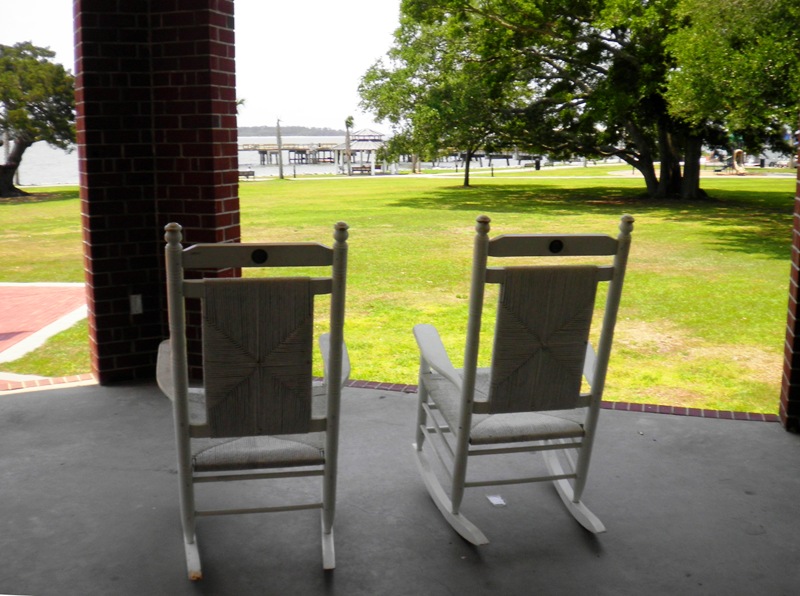
Grief Update — Twenty-Three Months

Twenty-three months ago my life mate/soul mate died. There are times when his goneness from my life is as fresh as the day he died, and other times, like today, I can take it in stride. Of course, I’m dealing with a bad cold right now, and I need to keep my focus firmly on myself since grief depresses the immune system, so I’m not allowing myself to think of his being dead, and I’m not allowing myself to think of all the lonely years ahead.

Whether I take my new life in stride, or whether I dissolve into tears, it still comes down to the same thing — that he is dead. The world seemed to dim the day he died, and in all these months, the brightness never returned. I don’t know if it ever will.

People keep telling me not to live in the past, yet at the same time, they tell me that he lives in my memory. Seems contradictory, doesn’t it? My memory is the past. (Or is the past my memory?) And anyway, it’s impossible to live in the past. It’s . . . passed. Even if I could go to the past, where would I go? So much of our time together was unhappy. How could it have been otherwise with his ill heath? Even thoughts of our incredible meeting almost thirty-six years ago bring me sadness. I remember how intelligent and vibrant, wise and radiant he was, and then I remember his end where he was so drugged he could barely string two words together. But I loved him at the beginning and I loved him at the end and I still love him today.

They tell me love doesn’t die, and apparently that is true, but what does one do with a love that has no end? It’s like live wire with no grounding. Some day, I imagine, I will find a grounding, perhaps in my writing.

Today, for the first time in a long while, I felt the joy of writing. (And I had the concentration for it, something that has been missing for the past few years, not just since his death, but during the hellacious two years that preceded it.) I’m collaborating with other Second Wind Publishing authors on Rubicon Ranch, and today I had to write my chapter. My character is easy to write — she is struggling to survive the death of her husband, and somehow death keeps finding her. Art imitating life? Or just my finding it impossible to imagine being anyone else but a woman struggling to survive the loss of her mate?

The struggle for survival and autonomy still forms my days. Even when I don’t think of him, I know he is absent. Even when I don’t consciously yearn for him, something deep inside me reaches out for him. We were deeply connected for a very long time, and twenty-three months doesn’t even begin to lessen that bond.


Meeting the Challenges of the Second Year of Grief

A couple of weeks ago I talked about The Five Major Challenges We Face During the Second Year of Grief:

1. Trying to understand where he went.
2. Living without him
3. Dealing with continued grief bursts.
4. Finding something to look forward to rather than simply existing.
5. Handling the yearning.

There are other challenges, of course, some unique to each individual, but all the challenges are dealt with the same way: By continuing to feel the pain when it erupts rather than turning away from it to satisfy the concerns of those who don’t understand; by taking care of ourselves even when we don’t see the point; by trying new things.

In other words, we meet the challenges of the second year by living. It sounds simple, but nothing about grief for a life mate/soul mate is simple. By living, we begin to move away from our pain, but we also move away from the person we loved more than any other. For some bereft, this feels like a betrayal of their love — how can you continue to live when life on this earth is denied him? For others, it seems like a betrayal of themselves — how can you become the person you need to be without betraying the person you once were?

It seems an impossible situation, yet life does continue whether we will it or not.

In my case, I’ve been meeting the challenges of the second year the same way I met the horrendous challenges of the first year. I take long walks almost every day, I exercise (stretching, weight-lifting) two or three times a week. I dance to a couple of songs most days, hoping to train myself to feel lighter in spirit and maybe even learn to have fun — whatever that is. I also try to eat a salad every day and stay away from sugar. At least, that’s the goal. I’m very disciplined for several days, following everything on this list, and then I decide the heck with the list — treating myself is more important than doing the right thing.

Either way, I am moving away from the life we once shared. And I am living.

Grief: Feeling The Absence

I must be getting a grip on my grief despite the recurring upsurges of sadness because more and more I’m seeing the bizarreness of the process rather than simply experiencing it. On Friday, it will be twenty-two months since my life mate/soul mate died and though I’ve never felt his presence the way some people sense a connection with their dead mates, sometimes I feel his absence as if it’s a living entity.

I was sitting in the dentist chair yesterday, waiting alone for the verdict on my gum infection, when all of a sudden I started crying. We’d always gone together to the dentist, doctors, optometrists, etc, and yesterday, sitting alone, I could feel that he wasn’t waiting for me. I could actually sense that he wasn’t in the reception area, could feel the substance of his absence like a white hole (as opposed to a black hole). Just one more bizarre aspect of grief.

Oddly, I didn’t realize what a comfort his presence was at such times until it was gone. I took his presence for granted (not him — I never took him for granted), but it was as if his presence were part of the very air I breathed, and now that he has disappeared from my life, I’m stuck breathing the standard nitrogen/oxygen mix. And it’s not enough.

I don’t mind that I don’t feel his presence. If he still exists somewhere, I hope he has something more thrilling to do than watch over me, and I certainly hope he has something more thrilling to do than wait at the dentist’s office for me. But . . . I truly don’t understand how he can be dead. Don’t understand where he has gone. Don’t understand what death is. Don’t understand what life is, either, to be honest.

All I know is that he is gone from my life, and never again will I feel the comfort of his presence.

But it makes me wonder: did he feel the comfort of my presence? I was there at the end of his life. I was there when he took his last breaths. I hope he felt my presence the way I used to feel his. I hope it gave him comfort. Hope it still does.

Grief Update: Twenty-one Months

Twenty-one months ago, my life mate/soul mate died. How much is a month in grief time? A year? If that’s the case, then today I have reached my 21st birthday in the world of grief. Sometimes it feels as if twenty-one years have passed since his death, our shared life so distant that it could be a dream conceived in present-day loneliness. Other times, it seems as if a mere twenty-one days have passed, as if he recently left — or I did — and soon I will be going home to resume my life with him. Sometimes the pain of separation feels old, as if it is a long-faded scar, other times it feels fresh and raw. Sometimes I see him as clearly as if we’d just parted, other times I have to struggle to remember what he looked like.

During the first year after he died, I was focused on getting through the pain so I could start a new and wonderful life. Somewhere deep inside, beneath thought, resided the feeling that only a great good could offset such a trauma, and I wanted to be ready to embrace my new life. Perhaps something wonderful will happen, but so far, I’m still struggling with the same old life, still struggling with a vast and unending loneliness.

I’ve been making friends, trying to assuage my loneliness, but always I feel his absence. He was the only person who ever truly listened to me, listened beyond my words to the truth of what I was saying, and no matter what I said, he never filtered it through his own  prejudices, opinions, and emotions, but could talk dispassionately and intelligently about even the most passionate subjects. Electric energy crackled between us when we went on one of our ping-ponging conversational excursions from history to music to movies to philosophy to books to science and back again to history.  I know I should be grateful for having him as long as I did, and I am grateful. I should be glad we were able to converse the way we did since that is something so few people have. And I am glad. But still, life is bleak without his being here to pong my pings, conversationally speaking.

I’m trying not to think about where to go from here, trying to trust in the rightness of my path wherever it will take me, but to do so somehow makes me complicitous in his death, as if I’m agreeing it was right that he died. Oddly, back then, I was glad he died. He’d suffered enough, and death was the only way to end his agony. The further away I get from his death, the worse it gets because I only remember that he died. How can he be dead? I don’t even know what “dead” means, just that he is gone from this earth, and has been gone for twenty-one months.

I Am Not Grieving Inappropriately

I recently received a message from a woman who is concerned that I’m still counting sad Saturdays — she’s worried that my grief for my dead mate is going on too long and keeping me from living. I appreciate her concern and her continued prayers (just as I appreciate the concern and prayers from all of you), but the truth is, except for readers of this blog, no one knows I still have my sad times. I don’t hide myself away from life, I’m not missing from life, and I’m not missing life. I miss him, of course, and I hate that he is missing from this life, but that particular sorrow is something I accept as part of my life.

There is nothing wrong with sad times, and there is no reason to fear sadness. Depression is dangerous, but not all sadness is depression, nor does all sadness lead to depression. Sometimes sadness is melancholic or nostalgic — a seasoning of life rather than a banishment of life, a reminder not to take life for granted. For several months now I’ve been hesitant to continue posting about grief since such posts show me (perhaps) in a pathetic or needy light, but there are too many misconceptions about grief that we accept as truth, and I want people who have lost the most significant person in their life to know that they do not need to put aside their sorrow simply to placate others. It is their grief and they need to feel the sorrow, not ignore it. Experiencing grief and processing it are how we learn to be whole again (or as whole as is possible).

The first year after such a traumatic loss, one struggles to survive the psychic shock. The second year one deals with the effects of the ongoing loss and begins to look ahead more often than one looks behind. Since I am still in my second year, I don’t know what the third and fourth year bring — perhaps occasional upsurges of grief or a continual (though diminishing) struggle to comprehend life and death and loss. People who have been on this journey and come out of it mostly intact, tell me that it takes four years before one completely gets back the joy of living. So I am still within the normal bounds of grief.

For some people, grief is a time of shutting themselves away, of forgetting that they have other people in their life who need them, and if this goes on too long, they might need to seek professional help, especially if there are children involved. For me, though, and for others who are grieving appropriately, this is a time of opening up, of showing our vulnerability, of admitting that life is not always happy or fun. And in doing so, we make connections to help us rebuild our lives.

If I had hidden my sadness, if I had followed my natural inclination to bear my pain in silence, my life would have been much diminished. You and all the people I met since I began this journey nineteen months ago have added so much to my life that it tells me what I already know: I am not grieving inappropriately.

A Great Love Story

I’m working on my grief book, typing up my grief journal entries. I thought this would be a book about grief, but it seems more like a love story, which is so very ironic. Soon after I met my life mate — my soul mate — I quit my job to write. I wanted to tell the story of a great love that transcended time and physical bonds, told with wisdom and beauty. I sat down to write, and  . . . nothing. Back then, I thought all one had to do to write was to sit down, pen in hand, and let the words flow. Well the words didn’t flow. So I put off my dream of being a writer and went about the business of living. Years later, while going about the business of dying (his dying) I started writing again just to get out of my head, to get a respite from my life. I eventually learned how to write, but I always wrote slowly . . . until I started a grief journal and posthumous letters to my mate. Those flowed. And now it turns out that this grief book could be that love story I always wanted to tell. Life sure plays games with us!

Several people have told me they envied me my great love, but I’ve hesitated to tell the truth: it didn’t feel like love. We never had much of a romance. After a few brief years of hope and happiness, our love was sublimated by the constraints of his growing ill-health. It seemed that our cosmic love devolved into the prosaic things of life: cooking meals, doing errands, struggling to keep our retail business alive. And then it devolved further into simply surviving. Getting through the days as best as we could. We thought we’d stopped loving each other. We thought we were ready for the coming separation — he to death, me to life alone.

His hospice nurse, who got to know us both very well, told me she didn’t think he and I knew how much we loved each other. And apparently that was true. That mystifies me — how could we not  have known? We always knew we had a deep connection, though we never understood it and at times we both railed against it in our struggle to maintain our own identities, but we took that connection for granted. And what is that connection if not love?

In my foolish youth, I thought I’d still be able to feel his presence when he was dead, but I only feel his absence, and maybe that’s enough to remind me that love is not all hearts and flowers and passion. It is not what you feel. It is what you do. It is being there for each other. And, until the very end, we always were.

I Am a Fourteen-Month Grief Survivor

Fourteen months sounds like a long time, doesn’t it? Plenty of time to get over the death of one’s lifemate/soulmate/best friend. And yet, those who have been where I am today know you don’t ever truly get over it. You deal with it, you get on with your life, but there is always that niggling feeling of something being not quite right.

I still feel bad for him that he’s gone, that he suffered so much, that he died too young, that he is no longer here to enjoy something as simple as eating a bowl of his chili. (Though the batch I made today in his honor wasn’t worth coming back from the dead for. The kidney beans were overcooked, the onions undercooked.)

I still feel sad for me, that I’ll never get to see him again in this lifetime, that we’ll never get to do all the things we planned, that his smile exists only in my memory, that I’m alone. I’m glad we had all those years together, but that doesn’t ease the loneliness he left behind. It is odd, but for some reason I never expected to be lonely. I’m used to spending time alone, I know how to entertain myself, and I’m quite capable of taking care of myself (though the thought of growing old alone makes me panic at times). I also have more friends now than I’ve had in many years. But still, I’m lonely — lonely for him specifically, and lonely in general. Perhaps my loneliness is another stage of grief rather than a character flaw. Perhaps someday it, too, will pass, as have other manifestations of my grief.

One stage of grief I am clinging to is anger. Not rage, just a quiet pilot light of anger. I accept that he is dead in the sense that I know he will never be coming back (though I still long desperately to go home to him, still yearn to see him one more time). But I cannot accept the rightness of his death. It seems so terribly wrong that death was the only resolution of his illness, the only solution to his pain. And that does anger me. Anger is generally considered to be a negative emotion, but during the past few months I’ve found that in small doses, anger is a positive thing. Anger can give us the strength to survive. Anger can give us the energy to do things we couldn’t do under normal circumstances. Anger can give us a feeling of control in uncertain times. Anger can keep us going when we want to give up. Anger can give us the courage to live with the injustice of death. Anger can motivate us to find solutions to problems, can motivate us to undertake dreaded tasks, can motivate us to change our lives. So, yes, I’m clinging to whatever vestige of anger I can. It’s the only way I can get through these lonely days.

I am now more aware of the years looming in front of me than the years behind me, those years we shared. I’ve been saying that I don’t know who I am now that he’s gone, but I do — I’m still me. Still the person I’ve always been, just older and sadder. I’ve mostly untwinned our lives, no longer see me as half of a couple. And yet, something is missing. I don’t cry much any more, but sometimes I find myself crying for . . . I don’t know what.

It’s a relief to be telling the truth. I’ve been keeping upbeat the past few weeks — preparing for my presentation at the writers’ conference, traveling, being around people who only know me as an author, posting photos of my adventures. It was wonderful, but it’s only half my story. The adventure ended, and now here I here I am. Fourteen months of missing him, and still counting.