Life, Grief, and Entropy

For just a moment yesterday, while I was walking in the desert, all seemed clear to me. Well, all as related to my grief that is. I could see that things happened the way they needed to. My life mate/soul mate and I could not continue the life we’d been living. We were trapped in an untenable situation, not just because of his health and our finances, but because the place we were living was stifling us. There was nowhere to walk except a 600-yard-long road, nothing to do we hadn’t already done a hundred times, nothing to see that we hadn’t seen a thousand times, but we couldn’t leave. He was too sick to survive a move. Besides, he was comfortable where he was.

Those years of entrapment seemed to go on forever, the only changes being a continual worsening of his health, a continual increasing of his pain, and a continual deadening of my senses.

We were living a classic example of entropy. Entropy is a measure of the amount of energy that is unavailable to do work, and it tends to increase in closed systems. In other words, in a closed system, things break down and stop working. Because of his health, we could not do anything to stop the entropy of our lives. We could only endure.

And then one day, he was set free from his pain-wracked body and cancer-ridden brain. And I was set free from the horror of entropy.

It seemed to me, yesterday, that our lives worked out as they should have. That in a terrible way, we both got what we needed.

I felt at peace most of the day, but the feeling didn’t hold. Last night, the thought “But he’s dead!” hit me. And so sorrow descended once more.

I can see, though, that such moments of clarity will increase until I can finally accept that yes, he is dead, but so what? Someday, I will be dead, too. Meantime, I live to battle entropy another day.

Grappling with Death

A friend has been dealing with a spate of deaths in her life, and she’s trying to understand the purpose of them. I hope she succeeds. Death is so very hard to deal with, and the worst part is the seeming senselessness of it. I’ve been grappling with the subject for more than two years now, ever since the death of my life mate/soul mate, and I haven’t a clue what the purpose of death is. Well, of course, I understand the purpose on a global scale — the species needs to be constantly revitalized — but on a more personal scale, what is the purpose of these deaths? Of any death?

I know why my life mate had to die — his body was destroyed by an invading army of malignant cells, and he could no longer function — but is there any purpose to his death?

There certainly isn’t any purpose for me. I thought I’d feel free once I no longer had to live under the constraints of his illness, and maybe someday I will feel free, but for now, I’m lonely, sad, angry at times, and miss him always. Perhaps his death is a growth experience for me, but if he hadn’t died, I wouldn’t have needed to grow in this particular direction. And anyway, his death is way to big a price to pay for something so paltry.

Was there a purpose for him other than to be done with his suffering? This leads me to the equally unanswerable question of why he had to suffer in the first place. Who chose for him to suffer? He sure as heck didn’t — he did everything he could to live a healthy life, but pain dogged him all his years. (I’m sorry, but if your belief system suggests that we choose our pain, I don’t want to hear about it.)

Even if there is a purpose to death, one that we are ill equipped to understand, who chooses who gets to live and who has to die (or is it better phrased, “who gets to die and who has to live?”). Is there a moving finger writing our deaths, or is it blind chance? Blind chance doesn’t seem to be any way to run a universe, but what do I know? I don’t even know how to run something as commonplace as a car. I can drive, but making the car run when something goes wrong is beyond me.

Maybe someday my friend and I will be able to understand the purpose of death, but I doubt it, at least not while we are alive. (I just realized — every time I write about some facet of death, I post it under the category of life. I wonder if there is a clue in that.)

The Two-Year Anniversary of the Worst Day of My Life

The worst day of my life was not the day my life mate/soul mate died. That particular day was sadly inevitable, one I actually had looked forward to. He’d been sick for so long and in such pain, that I was glad he finally let go and drifted away. After he died, I kissed him goodbye then went to get the nurse, who confirmed that he was gone. She called the funeral home, and I sat there in the room with him for two hours until they finally came for him. (They came in an SUV, not a hearse. And they used a red plush coverlet, not a body bag.) I might have cried. I might have been numb. I don’t really remember. All I know is that I sat there with him until almost dawn. I couldn’t even see his face — they had cleaned him and wrapped him in a blanket — so I just sat there, thinking nothing.

The worst day of my life came fifty-five days later, exactly two years ago. I spent all day cleaning out his closet and drawers, and going through boxes of his “effects.” He had planned to do it himself, but right before he could get started, he was stricken with debilitating pain that lasted to the end of his life, and so he left it for me to do. I would not have undertaken the task so early in my grief, but I had to leave the house where we’d lived for two decades and go stay with my 95-year-old father, who could no longer live alone.

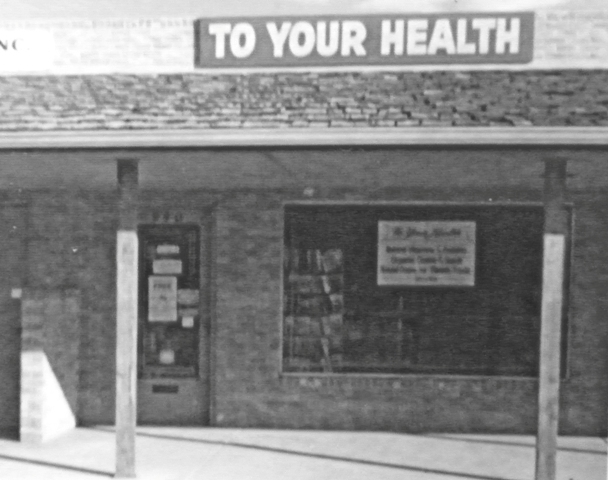
I knew what to do with most things because my mate had rallied enough to tell me, but still, a few items blindsided me, such as photos and business cards from his store To Your Health (where we met). Every single item he owned was emotionally laden, both with his feelings and mine. The day was like a protracted memorial service, a remembrance of his life, a eulogy for “us”.

How do you dismantle someone’s life? How do you dismantle a shared life? With care and tears, apparently. I cried the entire day, huge tears dripping unchecked. I have never felt such soul-wrenching agony. I’ll never be able to do anything else for him, so the work and my pain was my final gift to him. I was glad I could do that one last service, but I sure don’t want to ever go through anything like that again.

The only good thing about living the worst day of your life is that every day afterward, no matter how bad, will be better than that day.

I’m not particularly sad today — the sadness came yesterday. Despite it being Saturday, my sadder day, and a day of sporadic tears, I woke with a smile. I’d dreamt we were cleaning out the house (which is odd considering that I did not remember until afterward that today was the anniversary of when I went through his effects). In the midst of the usual chaotic dream images, there was one short clear moment. We were sitting side-by-side. He smiled at me, kissed me gently, and I rested my head on his shoulder.

This was the first time in almost two years that I’d dreamt about him. It was lovely seeing him again, if only in my dreams.

Was a Horoscope Ever More Wrong?

On a jaunt around the internet, I happened on my horoscope for 2012.

The year 2012 is going to be favorable for you. You will surprise your partner and add some spice to your relationship. Harmony will be there, but you will have to put in more effort on your life partner to keep him satisfied.

An explosion of emotions is most likely to happen in the second half of the year. Neither you nor your life partner will be ready to compromise. If the relationship is already dead, it is no use giving any advice. You will be more inclined to retreat and you will feel more comfortable with some distance between you and the outside world. It is your way of regaining your strength. Your partner might be surprised by your wish for solitude if you refuse to share certain moments with him — that’s why it is essential you talk to him to avoid any misunderstanding.

Well, they got one thing right — the relationship couldn’t be deader. It’s hard to add spice to a relationship when only one of the people in the relationship is still alive, or to satisfy someone who has been dead for two years. There isn’t much space for compromise between the living and the dead. Nor is there any need to avoid misunderstandings.

(I thought I could write an amusing rebuttal to this horoscope, but apparently I’ve run out of “amusing.” I don’t seem to have the knack of black humor, and I see nothing to laugh at when it comes to death. Perhaps death is too important not to joke about, but I can’t make light of it. Death devastates the living, and grief for sure is no joking matter.)

When Grief Has You

People tell me I shouldn’t dwell on grief, on death, on life without my life mate/soul mate, but I don’t dwell on any of those subjects — they dwell in me. His death broke something inside me, so now there is a crack where the abyss seeps in. Unlike other people who have lost a mate, I never get signs that I might perceive as coming from him, no signs of any kind, just this abyssmal feeling.

A friend who lost her husband a year ago kept a journal all through his dying, and during the past year, she has used her journal to remind her of the various anniversaries of his dying and death, but I don’t need such reminders. My reminders dwell in me, in my body. I’ve been very sad the past couple of days, and I couldn’t figure out why the upsurge in grief, and then it came to me. Yesterday was the anniversary of the day I got the call that he’d been cremated, and today is the anniversary of the day I picked up his ashes. What a terrible, terrible day that was and so fresh in memory, it feels as if it were two weeks ago instead of two years.

I’d stopped by hospice to get a pillowcase of ours they had misplaced (I’d brought a bunch of pillows for him since he liked being propped up). I was frantic to get that pillowcase back, not that it had any sentimental value, but I felt so shattered and scattered, I needed to bring everything together as much as I could. From hospice, I went to pick up his ashes. I had to wait for the funeral director. She’d been attending a children’s party, and was late for our meeting. The urn I’d ordered had been discontinued, which she neglected to tell me, so she handed me his ashes in an ugly brown plastic box (she called it a temporary urn, but it was just a box). It was much heavier than I expected. People talk about ashes (except in the funeral business where they are too cutely called “cremains”), so I expected them to weigh almost nothing, but the “ashes” are actually bits of bone and other inorganic matter, the part of the body that was never alive. And they are heavy.

I drove the sixty-five miles home with tears streaming down my face. I brought him inside, set him on the bed, but I couldn’t bear to see the naked box or to be reminded it contained all that was left of him. I finally wrapped his robe around the box. And I haven’t unwrapped it since.

Time does not heal all wounds, but time does pass, and I’m letting it. I don’t hold tightly to my memories, don’t hold tightly to my grief in an effort to feel close to him, but still, grief does surface, often when I don’t expect it. Like yesterday. Like today.

Some people have expressed admiration for the way I analyze grief, but mostly I’ve just tried to put into words what we are all feeling. When grief has you, you can only go along for the ride. There is no analysis, no thought, just feelings. For months after he died, I kept dropping things. I could not get a grip on anything. Couldn’t get a grip on my thoughts, either. Just had to let grief flow.

One of my blog readers is worried about how she will deal with her grief after her husband dies, but the truth is, you don’t deal with grief. It deals with you.

Two Years and One Day of Grief

Today I embark on my third year of grief since the death of my life mate/soul mate, and I am now in uncharted territory.

The first year of grief passes in a blur of angst, emotional shock, myriad physical reactions, painful surprises about the nature of loss and grief, and the almost impossible effort of going through the chores of living.

The second year of grief is one of learning to deal with the truth that he is dead, and that there is nothing you can do about it. No matter how well you deal with your grief, no matter how you rise to the challenge of life without him, he is not coming back. You knew this, of course, but now it has seeped deeper into your consciousness, and you feel it with every breath you take. Because of this, the second year (or at least parts of it) can be worse than the first. What makes the second year even harder to face is that you’ve used your grief card. Everyone thinks you should be over your grief, and they have little patience for your continued tears. They urge you to get on with your life, but they don’t understand that this is how you are getting on with your life.

The third year of grief is . . . I don’t yet know since this is only the first day of this new year. Today feels no different from yesterday or the day before, and I don’t imagine tomorrow will feel any different.

During the past two years, I’ve been looking for the bedrock of my new life — the thing, the idea, the place, whatever that bedrock might be — that gives me a foundation on which to build a future. Mostly, I’ve been waiting for my grief to dissipate so I can find my way, but the truth is, I will always grieve for him, though perhaps not as actively as I have been, because he will always be dead.

Acceptance is supposed to be one of the stages of grief, but I’ve never actually reached that stage (nor did I experience most of the supposed stages of grief). I cannot accept that he is dead for the simple reason that it’s not my place to accept it. Acceptance to me suggests that it is okay, and I will never believe that it is okay for him to be dead (even though I do understand the necessity of it). Perhaps acceptance only means that I accept the reality of my continued sorrow and loneliness.

People tell me that you never do get over such a grievous loss, but that after three to five years you rediscover the importance of living. It might be easier to meet the future head-on if I’m not expecting my sadness to dissipate. Maybe this is my bedrock — the missing, the yearning, the sadness, the loneliness. If so, I just need to accept that they are part of my life, and build from there.

Two Years of Grief

A year ago today, my life mate/soul mate died of inoperable kidney cancer. Wait . . .  what am I saying? One year? No. It’s been two years since he died. What a strange error to have made, yet perhaps it’s understandable. The night he died is still so very clear, as if he’s been gone only months, not years.

On the recommendation of his hospice nurse, I’d taken him to the hospice care center in the hopes that they could figure out how to regulate his drugs to give him the most lucidity and the least pain. It crushed my heart to take him there. I never got to talk with him again — he was in a drug-induced coma for those last five days of his life. I think he was at peace the final two days, though. All the time he was there, his breathing sounded like moaning, and I worried that he was in pain, but during his next-to-last day he exhaled a few melodious-sounding breaths, as if he wanted to reassure me he was okay.

He once told me that if it ever came to his being in a facility, he didn’t want me to visit, but how could I not? Even though the care center was sixty-five miles away, I went there every day, but I left early enough so I could get home before dark. The irony is he agreed to go so I could get some rest, but I never did sleep those nights. I was too worried about him.

His last night, Friday night, I didn’t go home. A few snowflakes fell and I used that as an excuse to stay. Also, I was restless, sensing the end was near. So I waited.

Around 1:30 in the morning, his breathing changed. Became harsher. I went to his side, said it was okay for him to leave, that I would be all right. At 1:40, he took a breath. His Adam’s apple bobbed once. Twice. And then he was dead. I kissed him by the side of his mouth. Waited a few minutes before I went to get the nurse.

I like that I got to tell them he was gone rather than have them tell me.

The nurse confirmed that he was gone. She called the funeral home, and I sat there in the room with him for two hours, just waiting. I might have cried. I might have been numb. I don’t really remember. I couldn’t even see his face — they had cleaned him and wrapped him in a blanket — so I just sat there, thinking nothing until almost dawn, when they came for him. (They came in an SUV, not a hearse. And they used a red plush coverlet, not a body bag.)

I followed them outside, watched them put him in the SUV and drive away, then I left. The highway was dry, but about halfway home, I skid. (I must have hit a patch of black ice, because there was no indication that patch of road was any different from what I’d already traveled.) I went careening, around and around, back and forth, my car totally out of control. I thought I was going to die, but oddly, I never left the road. The car finally came to a halt facing the wrong way on the highway. I was fine. So was the car. I remember wondering if he had stopped by on his way out of this world to leave me a final reminder to be careful, or maybe he was shaking his ghostly head, thinking that after his being gone only two hours, I was already getting careless.

He always worried that I wasn’t careful enough. I’m trying to be careful. Trying to take care of myself. I hope he’s taking care of himself.

The past two years have been agony for me. I know there was no way he could have continued to live considering the vast extent of the tumors. I know death was the only way to set him free from his excruciating pain. When he died, I truly was relieved. And yet . . . he was my best friend, my playmate, my business partner, my life companion. He was the one person who listened to me, who was always there for me. (As I was for him.) Even though I can see the necesssity of his death, I hate that he’s gone from this earth.

Not one of the previous 731 days have passed without my missing him. Even as I go on with my life, even as he and my grief recede further from me, I will continue to miss him. He was a good man. The earth is poorer for his death.

Grief — Two Years Minus Five Hours

In five hours, it will be exactly two years since my life mate/soul mate died of inoperable kidney cancer. He and I shared so much that even as I am getting to where I can accept the situation, even accept that I might find peace or possibly happiness, I can’t forget that it’s at his expense. I wonder what this feels like from his perspective. I know he wants me to go on, to get what I can from life — he told me that — but still, where is he in all this? At some point, our separation has to be complete, doesn’t it? I have to realize that whatever I say or think or do has no affect on him — it can’t change anything that happened. It can’t bring him back. And I don’t want him back — his death was too hard-won.

Iron Sam, the dying hit man in my novel Daughter Am I, told my hero Mary that a person experiences death only once. Well, my mate’s dying was my experience of death. The utter undoableness of it — the finality — shocked me to my core (and still gives me that falling-elevator feeling of panic when I think of his being dead). That shock must be what can only be experienced once. A prognosis of my own death probably won’t have the same impact on me as his diagnosis. Will I have his strength, his courage? I won’t have him, and that might not be a bad thing. Maybe my death will be easier to handle if I know I’m not going to devastate anyone when I go. (I think about that, how hard it must have been on him to know he wouldn’t be here to comfort me after he was gone.)

People always talk about finding someone to grow old with (and oh! I so do not want to grow old alone), but I’m not sure growing old with someone is a blessing. Lately, I’ve been seeing a lot of very old couples (this area is filled with hospitals, doctors offices, oncology clinics, pain treatment centers, nursing homes) and I try to imagine what it would be like for the two of us to deal with each other’s old age infirmities. I’m glad he’ll be spared that. It was hard enough for him to die without having to worry about my dying, too.

I wish he were waiting for me on the other side of grief so we could start a new life together, and in a way he will be there — he is still so much a part of me. Maybe literally a part of me. If we’re all made of stardust, if everything is commingled, how much more commingled are we who spent so many decades in each other’s company! The biorhythms of people who live together ebb and flow in sync. Benign and not so benign viruses carry cell information from one to the other, intermingling physical bodies on a cellular level. As one of my fellow bereft reminded me yesterday, “The heart puts out an electrical field which is measurable and it intertwines with the electrical field of the other loved one and when that is gone, the body knows it and feels the loss.”

I’ve heard that every seven years a person’s cells completely turn over, so that in seven years you become a different person. In seven years, then, maybe I won’t feel such yearning for him since he will no longer be written into the fabric of new cells. But beyond the physical commingling, there are all the movies we watched together, the books we shared, the thousands upon thousands of hours of electric conversation, the ideas we developed, the businesses we created — all those are part of me.

But  there is so much that will never be part of my life again. His smile nourished my soul, his laughter warmed my heart, his voice soothed my ears, his wise counsel eased my mind.

How have I survived such enormous losses? One day a time, that’s how. Sometimes one tear at a time. And so two years (minus five hours) have passed.

Anniversaries of Grief

I don’t know why certain anniversaries loom so large in our lives, but for whatever reason, the anniversaries of grief are immense. At the beginning of my grief over the death of my life mate/soul mate, a minister friend told me that always on the anniversary, even if I’m not consciously aware of the date, I will feel an upsurge of grief. This is only my second anniversary, with perhaps dozens still to come, but I can already see the truth of his words. Grief comes from somewhere deep within, somewhere deeper than thought, somewhere deeper than volition. And it keeps track of time.

People who have not experienced a grievous loss often think that grief is a choice. Sometimes, especially when young children are involved, the remaining parent can put off grief to focus on the childrens’ needs, but still, grief will surface at the anniversary. Later in life, this grief will surface again, perhaps when the last child leaves home, or when a beloved pet dies. I know a woman who went from taking care of a dying husband to taking care of her aged mother. She didn’t grieve after the death of her husband because of this new focus, but the death of her mother about destroyed her. For most of us, though, grief cannot be denied. We embrace it or it embraces us, and we reap the whirlwind.

This anniversary phenomena does mystify me, though. I’ve been experiencing a devastating grief upsurge, and yet nothing significant happens on the anniversary to count for all the sorrow. In fact, if last year is anything to go by, the day itself will be peaceful, bringing with it a quiet gladness that he was in my life. But the anniversary is not the end of anything. In fact, it is the beginning of something even worse — the beginning of another year without him. Another year where he is dead. Another year of trying to build a future on the ashes of our shared past.

The worst thing, of course, is that I’ve had two years of living in a world where he does not exist. The sheer goneness of him builds rather than dissipates. He is more gone now than he was two years ago, and next year he will be even more gone. Apparently, one can get used to anything, so eventually I’ll simply get used to the feeling of emptiness he left in the world, perhaps even learn to look beyond the blank space on Earth he once inhabited.

I hope, of course, I will be able to find a new life. Or do I mean a new focus? Because, of course, this is my life and always has been. It was my life before I met him, it was my life while we were together, and it is still my life, as alien as it feels. And as much as I hate that he is dead, as much as I fight the idea that I am still alive, the truth is that he is, and that I am.

Counting Down to the Second Anniversary of Grief

I’ve been on a grief hiatus for a few months — no major upsurges of grief — but yesterday, for no apparent reason, I started crying, and I’ve been crying on and off ever since. I’ve been trying not to think of the upcoming two-year anniversary of my life mate/soul mate’s death, trying to look ahead to the future, trying to find something to be passionate about (or at least something to hang my life on). Despite the exhaustion of attempting to put a good face on the seemingly bleak future, I thought I’d been doing well.

And then came the tears.

It still surprises me that the body remembers even when the conscious mind doesn’t. I’d forgotten that yesterday was the two-year anniversary of the last time we talked, the last time we were together in our home, the last time we touched. But something deep inside, something beneath thought, remembered. And grieved.

Two years ago yesterday, the hospice nurse expressed concern for us. I hadn’t slept in I don’t how many days, and neither had he. Some people, as they near death, suffer from what is called terminal restlessness. In his case, the rapidly growing tumors, his impossibly fast heart rate, the morphine, and various other factors made it impossible for him to be still. He wanted/needed to be on his feet, moving, always moving. And since he was too weak to be left alone, I would pace with him.

That last morning at home, the nurse suggested that he go to the hospice care center for a five-day respite, and he and I agreed. He knew I needed sleep (though ironically, I got very little sleep those days) and I thought they would adjust his dosages to give him the most alertness and the least pain. But they never tried. They dosed him with tranquilizers to keep him in bed, and he never had another moment of consciousness.

Those days were exactly two years ago. And I remember them as clearly as if they were happening now. I watched him die. I was there at the end. As agonizing as that was, I know there are worse things. I might not have been there when he took his last breath. I might not have witnessed the very moment he left my life. I might not have been able to say good-bye. Unlike many bereft, I don’t have to deal with those regrets.

For a long time I regretted taking him to the hospice care center — I felt as if I’d deprived him of one more day at home, one more day of lucidity, but in the end, I suppose there was no other choice. He’d stopped being able to swallow, the morphine made him disoriented, and the tranquilizers they prescribed to stop the terminal restlessness made him delusional. I’m glad he doesn’t have to deal with his body any more, but oh, I so wish I could see him once more, or talk to him on the phone, or go back to his store where we spent so much time when we were young and new.

I hope death feels better from the other side than it does from this side, because the only thing that brings me peace is the belief that he is no longer suffering. It’s strange to think that the very moment his suffering ended, mine began. I never expected to grieve. He’d been sick for so very long that his death came as a relief, but when the truth hit me, it hit with the force of a cyclone. And two years later, I am still whirling from the pain.