Meeting the Challenges of the Third Year of Grief

The challenges we face during the first year after the death of a life mate/soul mate (or any other significant person in our lives who connects us to the world), are too great to enumerate. It’s all we can do to cope with the seemingly endless chores of laying our beloved to rest while dealing with the emotional shock, the physical pain, the psychological affront that are our constant companions. Sometimes the first anniversary of his death is one of peace when we realize that we managed to survive the worst year of our life, but then we wake up to the second year and find a whole other set of challenges to meet.

The five main challenges we face during the second year after the death of a life mate/soul mate are:

1. Trying to understand where he went.
2. Living without him
3. Dealing with continued grief bursts.
4. Finding something to look forward to rather than simply existing.
5. Handling the yearning.

There are other challenges, of course, some unique to each individual, but all the challenges are dealt with the same way: by continuing to feel the pain when it erupts rather than turning away from it to satisfy the concerns of those who don’t understand; by taking care of ourselves even when we don’t see the point; by trying new things.

In other words, we meet the challenges of the second year by living. It sounds simple, but nothing about grief for a life mate/soul mate is simple. By living, we begin to move away from our pain, but we also move away from the person we loved more than any other. For some bereft, this feels like a betrayal of their love — how can you continue to live when life on this earth is denied him? For others, it seems like a betrayal of themselves — how can you become the person you need to be without betraying the person you once were?

The third year of grief seems to be a year of transition with only one new challenge — beginning to rebuild our lives. (We still have upsurges of sadness, still miss our loved one, still yearn for him, but these feelings are not as prominent as they once were.) Most of us no longer feel that continued life is a betrayal of our love because we understand that we had no choice in the matter, either in his death or in our continued life. Nor do we feel we are betraying the person we once were — we are no longer that person, though we have not yet developed into the person we are to become. Most of us are still trying to figure out who that person is and what that person wants and needs.

Many of us third-year bereft are caught in circumstances beyond our control — we are taking care of aged parents, new mothers, grandchildren. Although this transition between our old coupled life and our new life alone seems to be a time of stasis, we are still rebuilding our lives day by day, becoming who we need to be. We are also beginning to look beyond this transitional stage to what will come after, which is a sign of life and hope for the future even if we are not yet feeling hopeful.

By now, some bereft are ready to be in a new relationship, and they too seem to be in a transitional stage — not yet in a relationship but looking for possible partners. In other words, dating. I can’t even begin to go into the challenges such bereft face; it seems an impossible task, to go from where they are to where they want to be.

A few people jump into a relationship too soon, and then have the added grief of an aborted love affair. Some find that while they want emotional intimacy, the would-be partner only wants physical intimacy. Complicating the typical adult dating woes of ex-wives, grown children, incompatible schedules, is the date’s incomprehension of the bereft’s grief. Too often, he doesn’t want to hear about the deceased, which leaves the bereft dangling in an emotional limbo, because how can you have a meaningful relationship with someone who denies that which once gave your life meaning?

Others in this third year of grief are not looking for a new relationship, though they wouldn’t turn love down if it came their way.

Whatever the challenges we bereft have to deal with in this third year of grief, we will meet them as we did all the other challenges we have faced: with courage, perseverance, and strength.

***

Pat Bertram is the author of Grief: The Inside Story – A Guide to Surviving the Loss of a Loved One. “Grief: The Inside Story is perfect and that is not hyperbole! It is exactly what folk who are grieving need to read.” –Leesa Healy, RN, GDAS GDAT, Emotional/Mental Health Therapist & Educator.

Like Pat on Facebook.
No Life in My Life

I am heading toward the two-and-a-half-year anniversary of the death of my life mate/soul mate/best friend. The breath-stealing pain that I endured for many months has dissipated, so much so that I have a hard time believing I ever went through such agony. The all-encompassing loneliness that followed the pain has also dissipated, and I am comfortable with the idea of growing old alone (or if not comfortable, at least tolerant of the possibility).

I’ve even gotten over the horrendous feeling of always waiting. Not waiting for something. Simply waiting. Nothing has changed, of course, except my attitude. I am training myself to be in the present, to be me, to believe that nothing is important but what is right here, right now. It’s working — I am more at peace than I have been in a long time.

But . . . there is no life in my life, no spring in my step, no spark in my spirit.

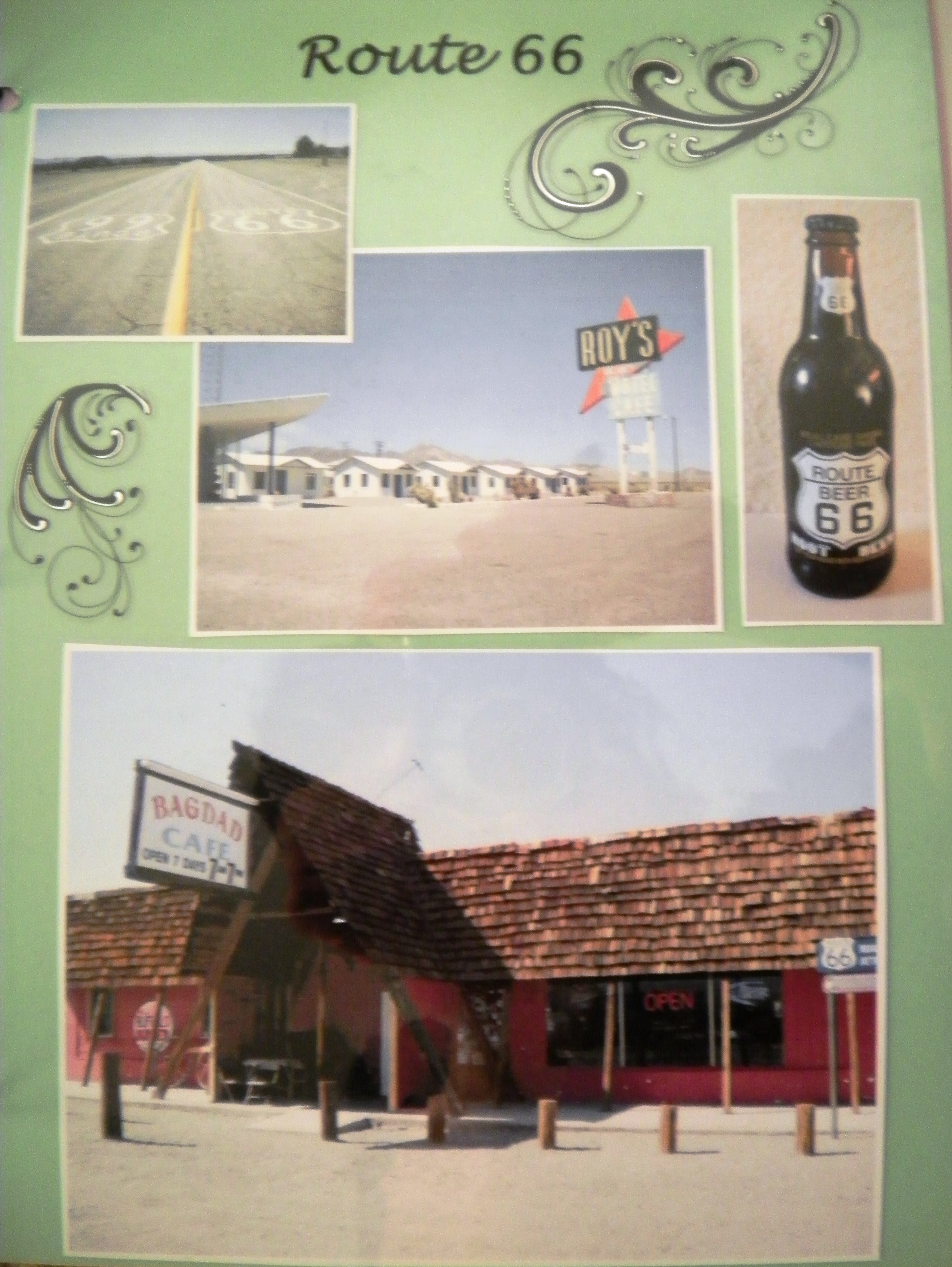
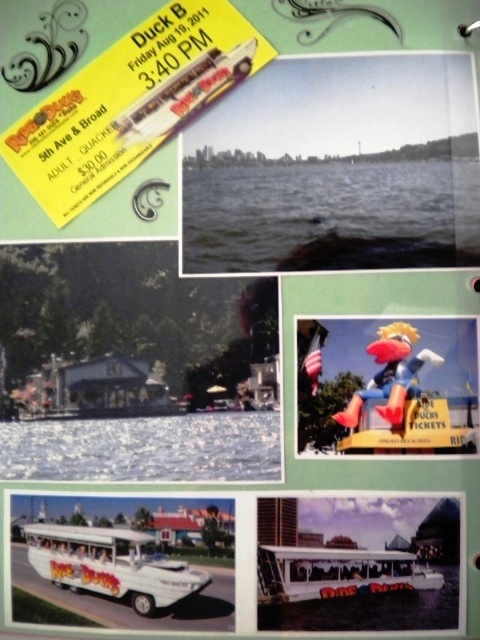
I’m not a sentimental person. I seldom kept keepsakes and I never chronicled my life with photos, but now I do both to prove to myself that yes, I am alive, and yes, I am doing something with my years. It feels as if I have done nothing but stagnate the past two years, and yet I have that scrapbook of paper memories showing me the truth:

Since October of 2010, when I started keeping the scrapbook, I have spent time on both USA coasts, hiked in the desert and on sandy beaches, climbed lighthouses and rocky knolls, ridden an amphibious vehicle and the world’s largest traveling Ferris wheel, fed ducks and sea gulls, walked along rivers and around lakes, visited ghost towns and overgrown cities, trekked the length of four piers on four different beaches, gone to art exhibits and historical museums, attended fairs and festivals, learned to shoot guns and amazing photographs. I’ve traveled alone and with friends on planes, trains, and automobiles. And I have tasted hundreds of different foods, some delicious, some that can barely be considered edible.

So why do I feel as if there is no life in my life? Do I need to be in love to sparkle with vitality? I hope not. I hate the thought that my well-being rests in someone else’s hands. The truth is probably more prosaic — although I am not actively mourning, I am still grieving, still disconnected from the world. After the death of the one person who connects you to the world, it takes years to find a different way of connecting. All of these experiences I have mentioned are ways to keep me busy while the real work of reconnecting to the world is going on deep inside.

Besides, the experiences were good ones.


Review of Grief: The Great Yearning

What a wonderful author Pat is. I found Grief: The Great Yearning so well written and it shows you, as the reader, the full extent of grief at losing a loved one.

I totally recommend you read this author’s books. She has a way with words and knows how to capture her reader right from the start.

Grief: The Great Yearning is an emotional ride and I promise you, you will need a hankie when reading, but I am so glad I have read it and I wish Pat every success with this book.
— review written by Sylvia Kerslake

***

Excerpt from Grief: The Great Yearning

Day 39, Grief Journal

I detest this roller coaster of emotions, though it’s not a roller coaster since there are no ups, only downs. It’s more of a side-to-side shimmy.

I woke this morning in tears. I am still depressed. Still feel way too much mental and physical pain. Still scream for him.

Someone suggested that I concentrate on the enrichment he brought to my life and less on my loss. It’s too soon for that, though — even good memories bring about a spate of grief. I hate feeling so maimed. I hate feeling that there is no one just for me any more. I hate feeling so damn alone.

At the grief group yesterday a woman said she wished her divorced daughter would find someone to grow old with. As if that’s all that was necessary — to find someone. I did have someone to grow old with, and now I don’t. Even if I come out of this okay, he will still be dead, so how is that okay? Damn it! This is not the way our lives were supposed to be!

I’ve been reading old Reader’s Digests, and boy, are those enough to scare a person half to death — stories of awful diseases, dreadful problems of aging, terrible accidents, all the horrors the world has to offer. And from now on, whatever happens to me, I’ll have to deal with it alone.

We always tried to be safe, to be healthy, and still, he got sick. A mutual acquaintance said to me, “How could he have let himself get sick like that?” What??!! As if he chose to get cancer. Sheesh. A woman at the grief group mentioned that this county has a higher than normal rate of cancer. Could that have been a factor? Even if it is, it doesn’t change anything.

I hope he didn’t suffer too much at the very end.

I miss him. I miss working with him, talking with him, watching movies with him, laughing with him. I miss our shared hopes for a better future. It’s a good thing I have so much to do — getting my car ready for the trip, getting ready for the yard sale—otherwise I’d just sit around feeling even sorrier for myself.

I have to steel myself to go on. I will not molder for the rest of my life. If I’m going to be here on Earth, I want to live, laugh, love. But not yet. I’m not ready to let go of my grief. It’s all I have left of him.

***

Grief: The Great Yearning is available from Amazon (both print and kindle), Second Wind Publishing (at a $2.00 discount!), and Smashwords (download the first 20% free in any ebook format).

Being Open to the Possibility of Joy

Helen Howell does one-card Joie de Vivre tarot readings on Facebook, and just out of curiosity I asked her, “Does the card promise me joy?” I have never been a joyful person, have never really thought happiness was that important —other things have always mattered more: contentment, truth, friendship. Still, it seemed the logical question to ask of a Joy of Living card. And this was Helen’s response:

To answer your question of does the card promise you joy?

The Joie de Vivre has given me the Sun reversed.

Had this card been up the upright I would have said a definite yes, but the card is telling me there has been some disappointments from the past that still are with you. It says there can be happiness and joy, but for now it’s you that seems to be clouding it for yourself.

I wonder if the disappointment angle comes from maybe not totally getting the acknowledgement or success you hoped for in some part of your life? I think too this card is telling me that there has been a loss of something or someone that has taken the light out of your life a little. Did that loss provide the joy for you?

In this card the figure wears a suit of yellow, that’s the colour of mental activity. It seems to indicate that you have been thinking about things, giving a great deal of mental energy to this, but also note he wears a cloak of soft purple and that shows me that you have an awareness of this.

I like how the seahorse has green leaves around the sun flowers on its tail and also how a plant is growing in the foreground. Green symbolizes for us balance, adaptability, growth and potential. It seems to suggest that there is the potential here to adapt to circumstances better and bring things back into balance that will bring you the joy you hope for.

This is a number 19 card and it breaks down to 1+9 = 10 – this is the number of endings and beginnings all in one. It shows us that something has to be released before a new start can be made.

It appears to me that the Joie de Vivre is telling me that you need to stop blocking the joy from your own life. Be aware of how you think about certain things and this in turn will allow you the potential to adapt better to certain circumstances, which will result in a happier you.

I hope this has helped in some small way. I ask that you give me feedback and if you liked the reading.

I attach a link to the card, but remember this shows the card in an upright position and I drew it in reversed.

Thanks for allowing me to read for you.

Helen @ https://www.facebook.com/profile.php?id=1270902251

And here is my response:

Very interesting, Helen. I lost my life mate two years ago, and I am still struggling with grief. It’s not that the joy has gone out of my life, because I have never been a joyful person, but that the meaning has gone out of my life. I’m trying to find meaning in my life, in his death, in my writing, in the future. And yes, I think about it. And yes I am aware of how much mental energy I am giving to such thoughts.

Actually, I need balance more than joy. His death threw me and the world off balance, and my grief caught me by surprise since I knew he was dying. But I never understood what his goneness from my life would mean, never understood that it would bring me such an awareness of death, that it would shatter me.

This has been a time of great growth for me, and yet this is only the first part of my journey back to life. I’m taking care of my 95-year-old father, and when he is gone, I will have to find a place to live, a reason to live, something to care about. I’ll have to completely start over. I’m trying to see the good in that, but since I haven’t a clue what to do or where to go, mostly I’m just waiting.

I don’t know how to let go of my grief. Supposedly it takes three to five years, so perhaps it’s too soon.

***

What particularly interested me was Helen’s comment that I seem to be clouding my own happiness since other people have suggested the same thing, but to be honest, I don’t know how to dispel the clouds. Perhaps time and a willingness to face whatever life brings will take care of the matter. Or, as Helen points out, maybe I just need to be aware of how I think about certain things.

Throughout this grief journey of mine, the only future I’ve been able to envision is one of continued sadness and loneliness, and I’ve tried to prepare myself for such a life. But just because all I can see are sadness and loneliness, it doesn’t mean that’s all there will be. There could be joy. Maybe that’s all the Joie de Vivre card is telling me — be open to the possibility of joy.

Grief and Our Lizard Brain

Last August I posted a couple of bloggeries about the American Psychiatric Association’s decision to consider grief a medical disorder that needs to be treated as major depression. (Grief is Not a Medical Disorder and One Woman’s Grief.) As I explained, there used to be a bereavement exclusion in the description of major depression in the APA’s Diagnostic and Statistical Manual of Mental Disorders, but they have taken that exclusion away, and now more than a few days of pain after losing even a life mate or a child is considered a crisis. There can be “a few days of acute upset and then a much longer period of the longing, the tearfulness. But typically sleep, appetite, energy, concentration come back to normal more quickly than that.”

A therapist friend who also lost her mate reminded me of this recently. She wrote, “The DSM-V team is still trying to say that someone two weeks after a huge loss of any kind who is still showing symptoms (like depression) is mentally ill. That is the world of Psychiatry. Lots of mental health folks including me are rebelling as that book is the bible and they are desecrating people who grieve. . . .”

After studying grief from both the inside (my grief) and from the outside (communicating with hundreds of others who have suffered grievous losses), I’m not certain that grief is a psychological matter, let alone a medical one. I have suffered a couple of severe depressions in my life, so I am familiar with that black pit, but grief is something completely different (though depression can be a side effect at times).

Grief seems to be more visceral than mental, coming from somewhere far beneath conscious or even subconscious thought, perhaps from a place known informally as our “lizard brain.” The lizard brain is the pre-verbal part of us that communicates with the rest of the body by means of chemical and electrical signals. It automatically controls our bodies and our survival mechanisms, such as breathing, heartbeat, body growth and maintenance, establishing territory and nesting, the fight/flee/freeze response to threats, and the ability to adapt.

Perhaps most grief could be considered emotional or mental distress. When my brother and then my mother died, my “acute upset” lasted a few days, and within a month, I was back to normal, so my grief fell right in line with the American Psychiatric Association’s guidelines. But when my life mate/soul mate died, I felt such grief I had no words for it. (I’ve spent the last two years looking for the words, hence all my writing about grief.) I felt a feral, animalistic pain, from somewhere so deep inside I’d never been there before. I felt as if my psyche was a bloody stump where he had been ripped away.

When you are profoundly connected to another person; when their well-being is as important to you as your own; when the two of you share the air you breathe, the electrical emanations from your hearts and brains, the atoms in the atmosphere, the cell information that gets passed one to the other via viruses, you grow so entwined that in many ways you become a unit. And your lizard brain adapts.

When your loved one dies and the unit is dissolved, your lizard brain goes into a panic. Where is the rest of you? What happened? What do I do? Do I freeze you? Make you run? Make you fight? It sends so many chemical and electrical signals throughout your body, setting off a cascading series of hormonal reactions, that it leaves you feeling bewildered and traumatized. This is all in addition to your so-called “normal” grief. (Since the lizard brain also controls reproduction, this could account for the overwhelming arousal some people feel when dealing with a mate’s dying.)

When your loved one remains dead, the lizard brain comes to understand that it, too, will die. And then it really goes into a panic. Until that moment, it only knew survival. Life. But now it also knows death. It feels what death means. And consequently, so do you. Despite the psychiatric world’s belief that grief needs to be treated as major depression, no amount of drugs or therapy or medical intervention can undo this new knowledge.

So much of grief is about pain, yearning, angst, loneliness, but it is also about panic — that falling-elevator feeling you get when you remember you will never see your loved one again in this life. It is the panic of finding yourself in a suddenly alien world. And it is the panic of a creature who has no words to communicate what it feels. At the beginning, I used to scream. It was the only way I had of giving voice to the realization of my mate’s death, but the screams did not come from my lungs. They were visceral, like the screams of a tormented beast.

Grief has taught me many things. I’ve learned how to bear the unbearable. I’ve discovered that by daring to be vulnerable I can reach out and touch strangers as they touch me. And I know, with utter certainty, that beneath my conscious mind, beneath my subconscious, there lies a creature so primal that until two years ago, it did not know it was finite. And now it grieves.

When Grief Has You

People tell me I shouldn’t dwell on grief, on death, on life without my life mate/soul mate, but I don’t dwell on any of those subjects — they dwell in me. His death broke something inside me, so now there is a crack where the abyss seeps in. Unlike other people who have lost a mate, I never get signs that I might perceive as coming from him, no signs of any kind, just this abyssmal feeling.

A friend who lost her husband a year ago kept a journal all through his dying, and during the past year, she has used her journal to remind her of the various anniversaries of his dying and death, but I don’t need such reminders. My reminders dwell in me, in my body. I’ve been very sad the past couple of days, and I couldn’t figure out why the upsurge in grief, and then it came to me. Yesterday was the anniversary of the day I got the call that he’d been cremated, and today is the anniversary of the day I picked up his ashes. What a terrible, terrible day that was and so fresh in memory, it feels as if it were two weeks ago instead of two years.

I’d stopped by hospice to get a pillowcase of ours they had misplaced (I’d brought a bunch of pillows for him since he liked being propped up). I was frantic to get that pillowcase back, not that it had any sentimental value, but I felt so shattered and scattered, I needed to bring everything together as much as I could. From hospice, I went to pick up his ashes. I had to wait for the funeral director. She’d been attending a children’s party, and was late for our meeting. The urn I’d ordered had been discontinued, which she neglected to tell me, so she handed me his ashes in an ugly brown plastic box (she called it a temporary urn, but it was just a box). It was much heavier than I expected. People talk about ashes (except in the funeral business where they are too cutely called “cremains”), so I expected them to weigh almost nothing, but the “ashes” are actually bits of bone and other inorganic matter, the part of the body that was never alive. And they are heavy.

I drove the sixty-five miles home with tears streaming down my face. I brought him inside, set him on the bed, but I couldn’t bear to see the naked box or to be reminded it contained all that was left of him. I finally wrapped his robe around the box. And I haven’t unwrapped it since.

Time does not heal all wounds, but time does pass, and I’m letting it. I don’t hold tightly to my memories, don’t hold tightly to my grief in an effort to feel close to him, but still, grief does surface, often when I don’t expect it. Like yesterday. Like today.

Some people have expressed admiration for the way I analyze grief, but mostly I’ve just tried to put into words what we are all feeling. When grief has you, you can only go along for the ride. There is no analysis, no thought, just feelings. For months after he died, I kept dropping things. I could not get a grip on anything. Couldn’t get a grip on my thoughts, either. Just had to let grief flow.

One of my blog readers is worried about how she will deal with her grief after her husband dies, but the truth is, you don’t deal with grief. It deals with you.

Two Years and One Day of Grief

Today I embark on my third year of grief since the death of my life mate/soul mate, and I am now in uncharted territory.

The first year of grief passes in a blur of angst, emotional shock, myriad physical reactions, painful surprises about the nature of loss and grief, and the almost impossible effort of going through the chores of living.

The second year of grief is one of learning to deal with the truth that he is dead, and that there is nothing you can do about it. No matter how well you deal with your grief, no matter how you rise to the challenge of life without him, he is not coming back. You knew this, of course, but now it has seeped deeper into your consciousness, and you feel it with every breath you take. Because of this, the second year (or at least parts of it) can be worse than the first. What makes the second year even harder to face is that you’ve used your grief card. Everyone thinks you should be over your grief, and they have little patience for your continued tears. They urge you to get on with your life, but they don’t understand that this is how you are getting on with your life.

The third year of grief is . . . I don’t yet know since this is only the first day of this new year. Today feels no different from yesterday or the day before, and I don’t imagine tomorrow will feel any different.

During the past two years, I’ve been looking for the bedrock of my new life — the thing, the idea, the place, whatever that bedrock might be — that gives me a foundation on which to build a future. Mostly, I’ve been waiting for my grief to dissipate so I can find my way, but the truth is, I will always grieve for him, though perhaps not as actively as I have been, because he will always be dead.

Acceptance is supposed to be one of the stages of grief, but I’ve never actually reached that stage (nor did I experience most of the supposed stages of grief). I cannot accept that he is dead for the simple reason that it’s not my place to accept it. Acceptance to me suggests that it is okay, and I will never believe that it is okay for him to be dead (even though I do understand the necessity of it). Perhaps acceptance only means that I accept the reality of my continued sorrow and loneliness.

People tell me that you never do get over such a grievous loss, but that after three to five years you rediscover the importance of living. It might be easier to meet the future head-on if I’m not expecting my sadness to dissipate. Maybe this is my bedrock — the missing, the yearning, the sadness, the loneliness. If so, I just need to accept that they are part of my life, and build from there.

Two Years of Grief

A year ago today, my life mate/soul mate died of inoperable kidney cancer. Wait . . .  what am I saying? One year? No. It’s been two years since he died. What a strange error to have made, yet perhaps it’s understandable. The night he died is still so very clear, as if he’s been gone only months, not years.

On the recommendation of his hospice nurse, I’d taken him to the hospice care center in the hopes that they could figure out how to regulate his drugs to give him the most lucidity and the least pain. It crushed my heart to take him there. I never got to talk with him again — he was in a drug-induced coma for those last five days of his life. I think he was at peace the final two days, though. All the time he was there, his breathing sounded like moaning, and I worried that he was in pain, but during his next-to-last day he exhaled a few melodious-sounding breaths, as if he wanted to reassure me he was okay.

He once told me that if it ever came to his being in a facility, he didn’t want me to visit, but how could I not? Even though the care center was sixty-five miles away, I went there every day, but I left early enough so I could get home before dark. The irony is he agreed to go so I could get some rest, but I never did sleep those nights. I was too worried about him.

His last night, Friday night, I didn’t go home. A few snowflakes fell and I used that as an excuse to stay. Also, I was restless, sensing the end was near. So I waited.

Around 1:30 in the morning, his breathing changed. Became harsher. I went to his side, said it was okay for him to leave, that I would be all right. At 1:40, he took a breath. His Adam’s apple bobbed once. Twice. And then he was dead. I kissed him by the side of his mouth. Waited a few minutes before I went to get the nurse.

I like that I got to tell them he was gone rather than have them tell me.

The nurse confirmed that he was gone. She called the funeral home, and I sat there in the room with him for two hours, just waiting. I might have cried. I might have been numb. I don’t really remember. I couldn’t even see his face — they had cleaned him and wrapped him in a blanket — so I just sat there, thinking nothing until almost dawn, when they came for him. (They came in an SUV, not a hearse. And they used a red plush coverlet, not a body bag.)

I followed them outside, watched them put him in the SUV and drive away, then I left. The highway was dry, but about halfway home, I skid. (I must have hit a patch of black ice, because there was no indication that patch of road was any different from what I’d already traveled.) I went careening, around and around, back and forth, my car totally out of control. I thought I was going to die, but oddly, I never left the road. The car finally came to a halt facing the wrong way on the highway. I was fine. So was the car. I remember wondering if he had stopped by on his way out of this world to leave me a final reminder to be careful, or maybe he was shaking his ghostly head, thinking that after his being gone only two hours, I was already getting careless.

He always worried that I wasn’t careful enough. I’m trying to be careful. Trying to take care of myself. I hope he’s taking care of himself.

The past two years have been agony for me. I know there was no way he could have continued to live considering the vast extent of the tumors. I know death was the only way to set him free from his excruciating pain. When he died, I truly was relieved. And yet . . . he was my best friend, my playmate, my business partner, my life companion. He was the one person who listened to me, who was always there for me. (As I was for him.) Even though I can see the necesssity of his death, I hate that he’s gone from this earth.

Not one of the previous 731 days have passed without my missing him. Even as I go on with my life, even as he and my grief recede further from me, I will continue to miss him. He was a good man. The earth is poorer for his death.

Grief — Two Years Minus Five Hours

In five hours, it will be exactly two years since my life mate/soul mate died of inoperable kidney cancer. He and I shared so much that even as I am getting to where I can accept the situation, even accept that I might find peace or possibly happiness, I can’t forget that it’s at his expense. I wonder what this feels like from his perspective. I know he wants me to go on, to get what I can from life — he told me that — but still, where is he in all this? At some point, our separation has to be complete, doesn’t it? I have to realize that whatever I say or think or do has no affect on him — it can’t change anything that happened. It can’t bring him back. And I don’t want him back — his death was too hard-won.

Iron Sam, the dying hit man in my novel Daughter Am I, told my hero Mary that a person experiences death only once. Well, my mate’s dying was my experience of death. The utter undoableness of it — the finality — shocked me to my core (and still gives me that falling-elevator feeling of panic when I think of his being dead). That shock must be what can only be experienced once. A prognosis of my own death probably won’t have the same impact on me as his diagnosis. Will I have his strength, his courage? I won’t have him, and that might not be a bad thing. Maybe my death will be easier to handle if I know I’m not going to devastate anyone when I go. (I think about that, how hard it must have been on him to know he wouldn’t be here to comfort me after he was gone.)

People always talk about finding someone to grow old with (and oh! I so do not want to grow old alone), but I’m not sure growing old with someone is a blessing. Lately, I’ve been seeing a lot of very old couples (this area is filled with hospitals, doctors offices, oncology clinics, pain treatment centers, nursing homes) and I try to imagine what it would be like for the two of us to deal with each other’s old age infirmities. I’m glad he’ll be spared that. It was hard enough for him to die without having to worry about my dying, too.

I wish he were waiting for me on the other side of grief so we could start a new life together, and in a way he will be there — he is still so much a part of me. Maybe literally a part of me. If we’re all made of stardust, if everything is commingled, how much more commingled are we who spent so many decades in each other’s company! The biorhythms of people who live together ebb and flow in sync. Benign and not so benign viruses carry cell information from one to the other, intermingling physical bodies on a cellular level. As one of my fellow bereft reminded me yesterday, “The heart puts out an electrical field which is measurable and it intertwines with the electrical field of the other loved one and when that is gone, the body knows it and feels the loss.”

I’ve heard that every seven years a person’s cells completely turn over, so that in seven years you become a different person. In seven years, then, maybe I won’t feel such yearning for him since he will no longer be written into the fabric of new cells. But beyond the physical commingling, there are all the movies we watched together, the books we shared, the thousands upon thousands of hours of electric conversation, the ideas we developed, the businesses we created — all those are part of me.

But  there is so much that will never be part of my life again. His smile nourished my soul, his laughter warmed my heart, his voice soothed my ears, his wise counsel eased my mind.

How have I survived such enormous losses? One day a time, that’s how. Sometimes one tear at a time. And so two years (minus five hours) have passed.

Still Confounded by Grief

For two years, my reaction to the death of my life mate/soul mate has bewildered me. I knew he was dying and I’d spent over a decade preparing myself for that eventuality. I thought I’d accepted the inevitable, but now I see I was merely resigned (and perhaps exhausted). Still, I am independent-minded, always have been. I know how to do things on my own, know how to entertain myself, know how to take care of myself. I’ve never been afraid of being alone, never been one to hide behind pretty lies or protective fantasies. And yet his death devastated me as much as it confounded me. In fact, after almost two years (two years minus two days, to be exact; 729 days) I still feel lost, still feel broken.

Not all deaths affect people the same. My mother died three years before my mate, and my brother died a year before that. My grief for them was what I used to consider “normal.” I missed them and felt bad that they were gone, but my life went on without any major upheavals. But when my mate died, it was a cataclysm, affecting every part of my life. And the strong connection we always had, a cosmic-twin sort of connection, was broken.

The day before my mother’s funeral, I broke my ankle, so I spent her viewing at the emergency room and I spent her funeral at the bone specialist. It turns out that what I had was a very bad sprain, so bad that when the ligaments tore away, they cracked the bone.

I realize now this same sort of thing happened when my mate died. Whatever connection we had was so strong that when he was torn away from me and our life, it fractured me. This fracture had nothing to do with my being weak or too dependent on him or unwilling to face the truth or any of the other snide rationalities people have made about my sorrow. However deep and prolonged, my grief for him is normal and understandable. It takes a long time for a broken bone to heal and regain its former strength. How much longer must it take when one’s psyche has been broken.

And so, I still deal with the fracture his death caused in me, and I still deal with the bewilderment of his death. Perhaps when he died, he took a chunk of me with him, the same way bone still adheres to torn ligaments, and so part of me would be wherever he is, if he is. His death felt like an amputation, and I can no longer feel that part of me where we were attached. Some people still feel connected to those who are gone, but I never do. I merely feel his goneness, his absence, which seems as strong as his presence once did. And I still feel fractured. Still feel lost. Perhaps to a certain extent I will always feel this way, because the cause of this loss, his being dead, will always be a part of me. And that is one truth I wish I didn’t have to face.