The Awesome and Awesomely Terrible State of Grief

Whenever I hear that one of my sisters (or brothers) in sorrow is being cajoled into taking drugs to overcome her grief, I want to lash out, and this is how I lash out — I write a blog about it.

Grief is not a medical disorder. If the bereft has sunk into a severe depression, if she can’t sleep, if she is suffering symptoms of Post-Traumatic Stress Syndrome, perhaps pharmacopeia can help. But if the bereft is taking care of herself and her family, if she is connecting to people in a real way (or as real as is possible considering how isolating grief is), if she is not endangering herself or anyone else, then the last thing she needs is to be badgered into solving her problems by taking a pill.

Grief is not a problem to be solved. It is not an abnormality that needs to be corrected. Daily bursts of grief during the first two years are normal. In fact, for many bereft, the second year is worse than the first. The original shock of losing the most significant person in your life and the shock of confronting death on a visceral level do not begin to wane until after the first year. As that protective shroud begins to unwind, the truth is shown in all its stark horror. He is dead, and there is nothing you can do about it. Of course, you knew that, but during the second year, the knowledge seeps into your soul, and you feel the truth of it.

All during my first year of grief, I kept listening for the phone, hoping he would call and tell me I could come home, that he forgave me for whatever it was I did that made him reject me. I do not know where that thought came from. I never did anything (except small inconsideratenesses) for which I needed forgiveness. And he didn’t reject me. He died. But somehow, that is the way my mind made sense of the situation.

About fourteen months into my grief, the truth sunk in that he will never call to tell me I can come home. This set off an upsurge of grief that stayed with me for weeks. Now I’ve regained my equilibrium, but I still have bursts of grief every day. Sometimes they last seconds, sometimes they last minutes, sometimes they last longer. This is normal. Truly. (Not having bursts of grief everyday is normal, too, but that is not the issue here.)

All grief is not the same. I lost my brother and my mother a few years ago. I was sad at their deaths, but felt no great life-altering grief. Then my life mate/soul mate died, and his death caused such a soul quake that I am still reeling from the effects. (Recently, another layer of the shroud has unwound, and I can think more clearly now than I have for many years. I must have been more numb during the last years of his dying than I thought I’d been.)

Grief is not just a state of sadness. Grief is a regulator, rewiring our brains to accept the enormity of life and death. Grief is a prism, focusing our attention on the big picture, forcing us to ask the important questions of why we are here, where we are going, and how we connect with each other and the universe. Grief is a teacher, helping us to grow, to become more than we ever thought possible. (At least I think it does — I am not yet the person I hope to be.) Grief is also a gift, perhaps even a privilege. Not everyone has the opportunity (or the ability) to connect so deeply with another person that the death of that person changes the whole universe.

I make grief sound like a good thing, don’t I? And maybe it is. Why do all good things have to be happy things? Given a choice, of course, I’d rather him than having to deal with the pain of his absence, but it’s only by feeling the pain and processing it that I can see what it does and how it works. Sometimes I think my whole life has led to this very moment, to this place where I can separate the myriad feelings of grief and translate them, to explain the truth of this awesome and awesomely terrible state.

This normal state.

Getting a Grip on Grief

Today is Saturday, my sadder day. The eighty-eighth one. It’s odd that my body remembers this is the day of the week my life mate/soul mate died. Even when I don’t remember, I wake up sadder than I normally do. (Whatever it is that remembers, though, can’t count. For that, I need a calendar to figure out exactly how many Saturdays he’s been gone.)

Despite the lingering sadness and random bursts of grief, I am healing. Today I casually picked up a glass, and it felt solid in my hand. Or perhaps I mean my hand felt solid on the glass. Seems a small thing, doesn’t it? But it’s a big step that came so quietly, I don’t have any idea when I got a grip.

During the first months after he died, I lost my grip, not just figuratively, but literally. Things often slipped through my fingers for no apparent reason. I simply couldn’t hold on. It seemed as if when I lost the connection with him, I lost the ability to connect with anything. Or maybe grief sapped all my strength. One night, a mug slipped from my hand. My fingers were crooked through the handle, so I don’t know how it happened, but all of a sudden the mug hit the hard tile floor and exploded. Well, actually, the mug shattered, but it sounded like an explosion. It wasn’t an expensive mug, nor did I have a particularly sentimental attachment to it — it was one of two give-aways we’d received from the phone company during a local festival — but I wept as if my heart had broken. Or as if he had died again.

Gathering up the shattered pieces and slivers of the mug, I understood for the first time that as the months and years passed, all our things would break or wear out, and every loss would take me one more step away from our life. This had such a profound affect on me, I made sure I had a good grip on anything breakable before I picked it up. Until tonight.

By such small steps, we heal the ragged wounds where our loved ones were ripped from our lives. By such small steps, we move into a life far from the one we once shared. By such small steps, we get a grip on grief.

Burning My “If Only”s Behind Me

The other day I wrote about how grief changed me, that now I am more patient, and today I discovered another change. The death of “if only.” How many of us torment ourselves with thoughts of “if only”? And it is a torment, that thought of what might have been  . . . if only.

The bereft are especially prone to this syndrome.

I have talked to people who followed doctors’ orders or accepted the doctors’ hopeful prognoses, and now they are haunted by “if only”s. If only they had known it was their husband’s last day. If only they had known their mother would suffer so much longer under a doctor’s care than if she had been allowed to die at home. If only she hadn’t insisted on his going through another operation or round of chemo.

I have talked to people who didn’t follow doctors’ orders, and now they are haunted by a different set of “if only”s. If only if they had done what was prescribed. If only they had insisted their wife see a doctor. If only they had insisted their husband stop smoking.

If only . . .

I saw a twitter yesterday that said hope and maybe were two of the most damaging words in our language, but those words don’t even come close to the wreckage “if only” can do. (As for hope and maybe, as Virgil Sweet in Talent for the Game says, “Maybe is powerful stuff.”)

I had my share of “if only”s — if only he’d hadn’t been so sick, if only I could have helped him, if only I could have kept him from dying, if only I hadn’t taken his dying for granted. (It seems unreal, now, that we took for granted he would die young. Shouldn’t we have railed against it more? But he was so disciplined, focusing his energies on trying to prolong his life and be productive. It was just the way we lived.)

When I realized how few of us felt we did enough for our dying mates or hadn’t done it right, I came to the conclusion that in these situations there is no “right.” There is just “do.”

A couple of days ago I learned something about twitter (or rather, it seemed to click and I finally got it), but hash marks are used for tagging a post or for categorizing it. I hash marked grief before I posted a blog (#grief) and ended up getting an influx of readers to my blog (including a woman whose life mate/soul mate died the same day as mine, a woman who is facing her grief the same way I am, a woman who makes comments that sound exactly like what I would have written).

Astounded by this turn of events, I began to form the thought that if only I had known about the hash marks, I could have reached more people with my grief blogs, but the “if only” died in wordbirth. I couldn’t even think it. I realized then, I’d burnt up all my “if only”s. I had none left. Not one of my “if only”s had changed a single moment of his dying. Not one “if only” could change what had already happened. And not one ever would.

One of my sisters in sorrow uses this tagline line at the end of her emails, which I always marveled at because the sentiment seemed so positive compared to the horror of the grief she was living:

Perhaps it is true. And if the universe is unfolding as it should, there is no place for “if only,” so it’s just as well I burned all my “if only”s behind me.

Grief’s Growing Pains

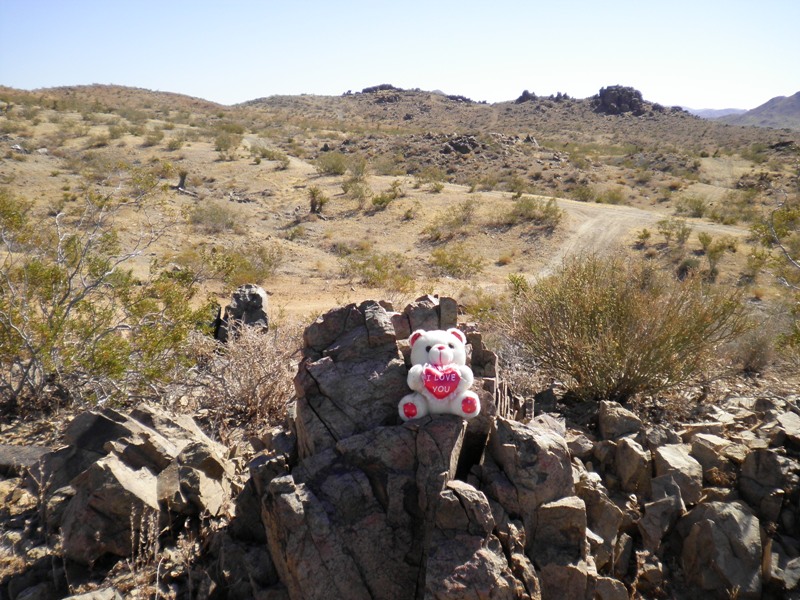
I often walk in the desert, finding solace (and exercise) among the rocky knolls and creosote bushes. Sometimes I even find a bit of enlightenment. And so it was today.

From the beginning (odd how I always refer to my onset of grief as the “beginning,” when that time seemed to be all about “endings”), I tried to break grief down into its various components to demystify it and make it more manageable . When grief is new, one is bombarded with so many emotions, physical responses, and mental gymnastics that it is almost impossible to see/know/feel what is happening. As time passes and the bombardment slows, it’s easier to separate the feelings into categories and deal with them. As time continues to pass, some of the components of grief dissipate (such as the panic, the need to scream, the confusion) and some disappear (such as the nausea, dizziness, difficulty breathing, inability to eat or inability to stop eating). But always is the knowledge that the world is forever altered because your loved one is dead.

Now twenty months have passed since my life mate/soul mate died, and that awareness of his being dead is the part of grief I have the hardest time with. I miss him and yearn desperately for one more word from him, one more smile, but I can deal with that now — I’ve mostly grown used to it. I can also remember him and our shared life without breaking down. I can deal with what life throws at me even though he is no longer by my side. And I’m learning to deal with the loneliness and the aloneness. But what I can’t deal with is his being dead. That is where my mind hits a wall and causes so much pain I start crying.

I few days ago I wrote in my Grief Doesn’t Take a Holiday blog: He is gone, and there is nothing I can do about it. I keep
re-realizing those two simple facts. I do not think our brains are wired to understand the sheer goneness of death. Someone emailed me not long ago, expressing her admiration that I can talk about grief without feeling sorry for myself, but honestly, except for isolated moments, which I refuse to feed, I don’t feel sorry for myself. A lot of grief has to do with the mind disconnect that happens when you realize your loved one is no longer here on earth. It’s as if for a second you open up to a cosmic reality or an eternal truth. The façade of life shatters, and through the cracks you can almost see, almost sense, almost know . . .

And this is where today’s enlightment comes in. Out in the desert, which historically is a place for mystical thoughts, I realized that my tears are caused by growing pains. My mind/spirit/psyche is trying to stretch so it can understand why he is not here, why I can’t see him or hear him, why he is so very gone. Maybe my grief will burn itself out before my mind stretches enough to encompass such an enormous thought, but maybe, just maybe, I’ll get to where I need to be.

Grief: Defragmenting and Making Room for Something Wonderful

A had an interesting exchange with a facebook friend yesterday. She responded to my Gathering Patience for the Lonely Years Ahead bloggerie that I posted a couple days ago, and then she responded to my response. When I worry that I’m showing weakness by all my talk of grief,  I think of the people I’ve met who would have remained unencountered if I hadn’t let my vulnerabililty show, and I know I’m doing the right thing. Here’s the exchange:

PB (quoted from blog): A major loss in one’s life, such as the death of a long-time mate, often changes a person. For almost twenty months now, I’ve been saying I’m no different than I was, but lately I can feel a small change. It started with his long illness, developed during his final agonizing weeks, and came to fruition in the months since his death. This change? Patience. An ability to wait.

FBF: That patience will serve you well, Pat!  When you are coming out on the other side of the grief process, you will know that you can get through anything — including a long, painful wait.  I lost my partner in 2007, and it took four years to come to terms with it all, but I am now not in a hurry for ANYTHING! Before losing him, I could barely wait for my luggage at the airport without getting impatient. And the long years ahead don’t have to be lonely; you can never fill the void he left, but you can shift things inside, “de-fragment” and make room for more love than you could ever anticipate!! I’ll say a prayer for you tonight and wish for you love overflowing!

PB. I keep coming across that four year mark. It seems to be how long most people take to come to terms with it all. Which means I have a very long way to go. I’m looking forward to being where you are now. I can tell that your outlook was hard-won.

FBF: Yes, it was a long and arduous process, but there is no way it can be avoided.  Those who bury the emotions that come with profound loss (or simply ignore them) never come out on the other side. Rolling around in that mud smells rancid, looks terrible, feels slimy and dries crusty — but when you eventually stand up, take a shower and throw away those clothes (or bleach them and fold them away in a drawer) . . . it is no longer possible to be bothered by a little scuff, splotch, scrape, rip or splatter — never, ever again.  🙂

PB: The main shock for me was how long it takes. I thought two or three months would be enough. How naive of me! But in my defense, he’d been sick so long that I thought I’d already gone through all the stages of grief. I hadn’t a clue what an amputation it would be. Thank you for your comments tonight. I hadn’t realized how much I needed a bit of encouragement today.

FBF: Happy to give encouragement; I know what an emotional quagmire this can be. As time goes on, most of our friends and family who have not been through this amputation don’t understand why we are still wallowing.  They think we need to “snap out of it.”  Right now, I imagine the majority of the patience you have acquired is spent dealing with well-intentioned loved ones trying to rush you along in your grief process. Bless their hearts. 😉

Actually, the only person trying to rush my grief process is me. I get tired of relentlessly looking forward and trying not to dwell on the past. I get tired of the ups and downs, the sideways shimmies, the grief bursts, the rolling around in the emotional muck. I’ve always tried to keep myself on an even emotional keel, but unless I want that keel to be one of sadness, I have to keep going through the process. A couple of weeks ago, I wrote about hurrying through grief to see what was on the other side and my disappointment at discovering that nothing wonderful waited for me. The truth is, I am not through with grief. I am not yet on the other side. During my good days, I think that I am, but then comes a hard day. Yesterday was such a day.

Not only was it Saturday, my sadderday, but I posted an excerpt from A Spark of Heavenly Fire here on my blog in preparation for #samplesunday on Twitter. Posting an excerpt should have been an innocuous, pain-free task, but this particular excerpt is one my life mate/soul mate and I worked on together. I’d write the scene, read it to him, and he’d tell me if it worked or not, then I’d rewrite it and read it to him again. I must have rewritten it at least ten times. It was my first real bit of violence, and I wanted it to zing. I felt very close to him when I posted the excerpt, remembering its creation. I felt as if we’d been together just a few days ago, and the thought that he is dead got to me.

Although today marks the twentieth month since he died, I’m back to my new normal, even felt a touch of “possibilty.” But days such as yesterday show me that I need patience for the long haul, patience while my psyche defragments to make room for something wonderful.

Gathering Patience for the Lonely Years Ahead

A major loss in one’s life, such as the death of a long-time mate, often changes a person. For almost twenty months now, I’ve been saying I’m no different than I was, but lately I can feel a small change. It started with his long illness, developed during his final agonizing weeks, and came to fruition in the months since his death. This change? Patience. An ability to wait.

I’ve never been a particularly patient person. I always open mail as soon as I receive it. (It used to mystify me how my late mate could let his mail sit for days without any inclination to see what the sender wanted.) I immediately begin to read books when I get them, open packages of snacks when I return from the grocery story, check my email first thing in the morning.

Well, I still do those things, but I am more patient with life’s vagaries and people’s foibles. There is no person I prefer to be with above all others, no place I want to be. If I have to stand in line at the grocery store, I simply wait without tapping my foot or wishing the line would move faster. If someone tells a long boring story, I simply listen without trying to edge away.

I’m not sure this is patience so much as resignation. When my mate died, he detached one of my connections to the world, and this connection has never been replaced. There’s something missing in me, some synapses that doesn’t spark, as if I am at one remove from the world. It’s possible this feeling of reserve comes from a new awareness of death or an awareness that life is not as it seems. Life isn’t all about shopping and what’s on television. It’s not about cars and clothes and things. I always knew that, of course, and because of it was already one step away from the everyday world.

My mate and I were not materialistic people. We lived in a world of ideas, of books, of films. Learning, research, discovery, growth were important to us. He used to say we were bad for each other — since we had someone to share these unthings, we had no reason to make a concession to the materialistic world. Though he’s dead, I’m still unable to connect to such a world. In fact, with my disconnect from him, I am now two removes from the so-called real world.

I’ve built new connections, made new friends, experienced new places and activities. I’ve become more aware of basic connections, such as the way my feet connect to the ground, or the way air flows through us, around us, connecting us one to the other. I’ve grown more empathetic and sympathetic. But still, there is no great attachment to any specific thing or any specific person. There is only me, and wherever I am, there I am, so there is no reason to be anywhere else.

This could change in the next few months, of course. I am almost two-thirds through my second year of grief, and the second half of the second year seems to be a limbo, a time for settling into this new phase of life, a time of gathering patience for the lonely years ahead. (The first half of the second year is often a time of re-grief, of having to deal with the horrible realization that even though you managed to get through your first year without him, even though you passed this test, your loved one is still dead. It can be a time of catastrophic pain.)

I’ve managed to come this far, and I will continue to manage. I’m from a family of long-lived people, so it’s a good thing I am learning patience (or resignation). I will need it.

Grief Doesn’t Take a Holiday

I wasn’t going to write about grief this Thanksgiving (except for yesterday’s brief mention of the guests who won’t be coming to dinner) because I didn’t want to break anyone’s holiday mood. Then I realized this is exactly the attitude I’ve been fighting. We shouldn’t ignore grief just because it is inconvenient for others or because it might make them pause to reflect on the ephemeral nature of life. Grief is part of life, and for some of us, it is our life.

The truth is, a huge number of people in the United States will be crying themselves to sleep tonight. For some of those people, this is the first Thanksgiving since the death of a significant person in their lives — a spouse, perhaps, or a child. For others it is the second Thanksgiving or even the tenth. But the number of years that the person has been gone doesn’t matter when it comes to holidays. What matters is that our loved ones are dead. A happy occasion with family, friends, food, turns out not to be so much fun when an absence (or a remembered presence) looms darkly over our hearts. Or if the occasion is fun, and the bereft forgets the truth for a moment, the grief rebound can be painful.

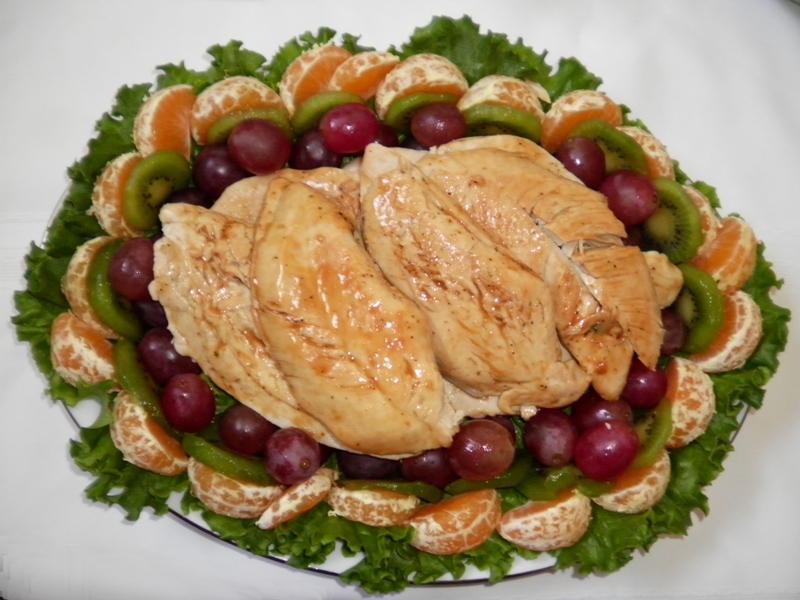
I had a lovely time today. Three of my brothers and their mates came to have dinner with my father and me. They brought everything except the table decorations and the turkey. Those I did. (I didn’t actually cook a turkey. I cooked turkey tenderloins several days ago and froze them, then today I steamed the pieces and arranged them on a platter. I didn’t feel up to cooking a turkey, and anyway, the oven is on the blink.)

The talk was congenial, the company delightful, the meal delicious, the toasts divinely inspired (I toasted my mother, who would have been proud of her men. During her final weeks, she worried that the family would drift apart.)

Afterward, two by two, the guests headed home. My father lay down for his nap. And there I was, alone, with no way to go home. My dead mate was my home, and even after nineteen months, I haven’t been able to find “home” within myself or anywhere else for that matter. I stood for a moment feeling adrift and sorry for myself, then set my father’s house to rights — taking the extra leaf out of the table, putting away the dishes that had been washed, doing all the other after tasks.

And then . . . in the quiet moment before I focused my mind on another activity, grief — that great yearning — burst over me. (For those of you who worry about me, there is no need. I am okay. Truly. These grief bursts, which relieve the stress of my sorrow, are how I keep on being okay.)

He is gone, and there is nothing I can do about it. I keep re-realizing those two simple facts. I do not think our brains are wired to understand the sheer goneness of death. Someone emailed me not long ago, expressing her admiration that I can talk about grief without feeling sorry for myself, but honestly, except for isolated moments, which I refuse to feed, I don’t feel sorry for myself. A lot of grief has to do with the mind disconnect that happens when you realize your loved one is no longer here on earth. It’s as if for a second you open up to a cosmic reality or an eternal truth. The façade of life shatters, and through the cracks you can almost see, almost sense, almost know . . .

Then you are back to yourself, and you don’t see, you don’t sense, you don’t know anything but that — holiday or not — you are alone.

To all of my bereft friends, who are struggling with the challenges of this holiday, I wish for you a peaceful night.

Waiting For the Guests to Arrive

I’ve been staying with my almost 95-year-old father, not to take care of him so much as to look out for him. Last year, the two of us spent a quiet Thanksgiving. He wasn’t up to company and neither was I since it was the first Thanksgiving after my life mate’s death. This year, a couple of my brothers (who perhaps had no more exciting plans) decided they wanted to get together for dinner, and one fast-talking brother conned . . . er, sweet-talked . . . my father into letting them come here. This brother also negotiated a deal where up to six people could stay for two hours. (Which worked out to be three brothers and their mates.) If you knew how quickly that many people would wear out a 95-year-old recluse, you’d understand what a great concession my brother wangled. (BTW, I really admire this brother’s negotiating skills. I once saw him talk a clerk at Office Max into giving him an extra l0% discount, and the guy agreed to it for no reason that I could see.)

The last time I spent Thanksgiving with any of my siblings was four years ago, a couple of weeks before my mother died. We’d come to spend a final Thanksgiving with her, but she was too sick and too weak to join us. Still she was glad we came. She always wanted her children to be close, and she worried that after her death, we would drift apart. Now here I am, in her house, and she is not here.

She’s just one of the guests who can’t come because of cosmic impossibilities. My next youngest sibling died the year before she did, and her grief at his dying helped bring on her own death. And then there’s my life mate. I doubt he would have come (he couldn’t the last time because of his own illness), but it saddens me that he doesn’t have the choice. Makes me even sadder that after the holiday, I won’t be going home to him.

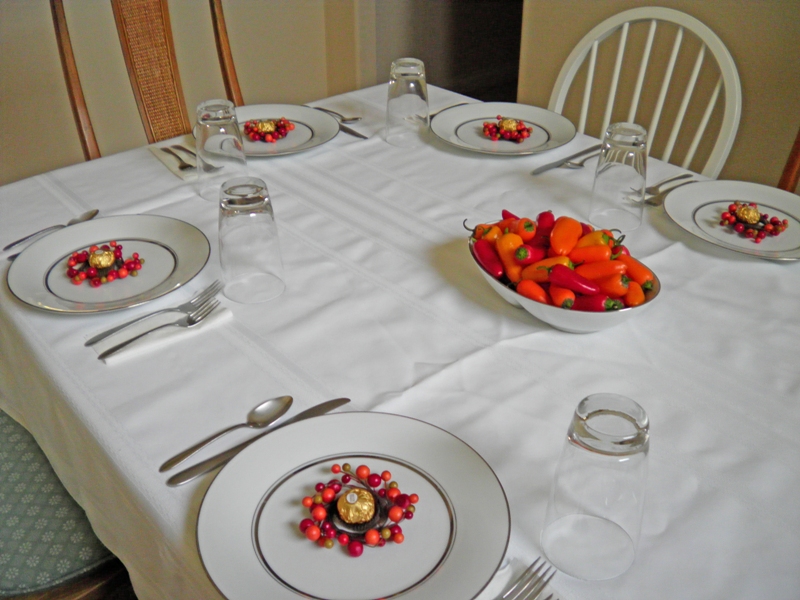
I set the table today to lessen tomorrow’s commotion, and I used my mother’s china. (Sorry, BBB. Paper plates just won’t cut it!! And yes, I will do the dishes.) I want the day to be special because how many more Thanksgivings can my father have? And if he’s blessed with a dozen more, who knows whether even my brother’s vast negotiating skills will gain such concessions again.

And it pleased me to be able to do this small thing.

Afterward, I was overcome with a burst of grief (to be honest, it wasn’t so much grief as plain old feeling sorry for myself.) My brothers will be at dinner with their mates, and I won’t be with mine. Still, I had him for all those years, and for that, I am truly grateful.

(And never mind trying to figure out how many siblings I had. For most of my years there were too many, and now there aren’t enough.)

Grief Bursts

From the beginning (the beginning of my grief, that is) I’ve talked about various aspects of grief, even the parts I thought made me look weak. Today’s topic — grief bursts — is one I was going to keep to myself, but it’s an important one so I’m going to risk seeming weak once more.

I’ve often said that the trouble with grief is that it doesn’t stay gone. You think you’re doing well, settling into your new life, accepting your situation, and then zap! It hits you, generally when you’re least expecting it. One of the worst of these zaps occurred after my life mate had been dead for five months. I dreamed that he died, and in the dream I woke to discover that he was alive and getting better. I could feel the tension of grief draining out of me, and it felt good to just be . . . me. I awoke for real with a smile on my face, glad he was still alive, and then I was sucker punched by the truth. I felt the way I did the first time I realized he was dead, and it set off an upsurge of grief that lasted several months.

Then last spring, at about the fourteen month mark, I was walking, collected and serene, down a suburban street carved out of the desert,  and I was blindsided by lilacs. He loved lilacs, and we’d planted lilacs all around our property. The year before he died, the plants were tall enough to create an oasis of privacy, and when they bloomed, we’d go outside and bask in the heavenly scent. When I came to the desert, I  never expected to encounter lilacs, but there they were, growing wildly in a vacant lot. That familiar scent, coming toward me when I was unsteeled against a grief upsurge, did me in for a couple of weeks.

The last big upsurge of grief that stayed with me for more than a day or two came at the eighteen month mark. I still don’t know why — there was nothing in particular that set it off, and a year and a half doesn’t seem like a special anniversary, not like the first year anniversary or the second. Eighteen months just sort of hangs innocuously in the middle. Or it should have, but it didn’t. Well, I got through that grief upsurge like I did all the others. (How? Glad you asked that. The only way to get through a grief upsurge is to feel it, process it, and when it begins to abate, let go.)

Mostly now, I’ve settled into uncoupled life. I miss him, of course, and yearn desperately at times to talk with him, but I’ve accepted as well as is possible that I have to continue on with my life. I feel like myself again (meaning I don’t feel weighted down with grief all the time, nor do I hold myself tensed against possible upsurges of pain).

What I do experience are grief bursts — brief bursts of grief, with all the angst I felt at the beginning, that last but a minute or two. These bursts come a couple of times a day, generally after I’ve been concentrating on a project (such as writing a blog or reading a book), and in the moment when my mind is not otherwise engaged, I remember that he’s dead, and grief bursts over me. I cry for a minute or two as if my heart will break (though I know it won’t. It’s already been shattered and glued back together, stronger than before). And then I’m fine again with no lingering aftereffects.

Of all the strange stages of grief I’ve experienced, these grief bursts are the strangest. Like being skewered with a burning poker and then healed a second later. This particular stage, or so I’ve been told, can last a long time. Even decades after a significant death, you can experience bursts of grief. I’m sure, like all the other phases of grief I’ve gone through, these bursts will diminish in frequency, perhaps even diminish in intensity, but oddly, this is one stage of grief I don’t mind. It reminds me that he was worth grieving for, that his absence from this world matters, that he once was part of my life.

***

Pat Bertram is the author of the suspense novels Light Bringer, More Deaths Than One, A Spark of Heavenly Fire, and Daughter Am I. Bertram is also the author of Grief: The Great Yearning, “an exquisite book, wrenching to read, and at the same time full of profound truths.” Connect with Pat on Google+. Like Pat on Facebook.

Hurrying Through Grief To See What is On the Other Side

During the first months of wild grief after the death of my life mate, I occasionally had the feeling that something wonderful was going to happen to me. I don’t know why I had that feeling — perhaps my sense of fairness dictated that a great good was needed to balance a great grief. Or perhaps such a cataclysmic closing of one segment of my life demanded an earthshaking opening of another segment. Or perhaps after years of waiting for his suffering to be over, I felt deep down that it was time for me to live.

I wasn’t the only one who thought his death might bring good changes to my life. Shortly before he died, he himself told me that everything would come together for me after he was gone. (He never explained what he meant, though, and foolishly, I never asked.) And afterward, my sister, who witnessed my grief and saw it as life affirming, told me that I could be entering the happiest time of my life.

Whatever the truth of it, I held on to the feeling because . . . well, because it was all I had to hold on to. In fact, the feeling was so strong at times that I wanted to hurry through my grief to see what was waiting for me on the other side. But here it is, nineteen months of grief later, and whatever that wonderful thing I expected to happen, didn’t.

Part of me is still waiting (just as an ever-diminishing part of me still waits for his phone call to tell me I can come home), but mostly, the feeling that something wonderful was going to happen to me is gone. Oddly, this is not an uncommon feeling for us bereft, and those who had the feeling of expectation also felt let down when nothing wonderful happened, which leads me to believe that the feeling is a survival mechanism, or perhaps another one of the many stages of grief nobody ever talks about. (Those who did have something wonderful happen in their lives weren’t able to feel the wonder of it, which left them feeling empty, and that is almost as bad as having nothing wonderful happen.)

Yesterday at the grocery store, I saw one of the hospice social workers who occasionally moderated the grief group I used to attend, and I thanked her for helping me through such a terrible time. During our conversation, I mentioned the odd feeling of anticipation I’d had during my months of grief. She replied, “Something wonderful did happen to you. You got through it.”

Is that wonderful enough to account for all those months of expectation? Maybe is has to be.