Justifying Our Sex Scenes

Lazarus Barnhill, a fellow author at Second Wind Publishing, is planning to rerelease his novels to include the sex scenes he removed for the sake of keeping the familial peace. I understand why he wants to include the scenes — he wishes to reclaim his literary perogative and publish the books the way he wrote them, which is as it should be. Besides, with the scenes included, the books will probably go viral.

Though I wouldn’t admit it to him, I like the books the way they are now, with the focus more on the mystery in The Medicine People and the romance in the Lacey Took a Holiday. The truth is, I’ve never been fond of sex scenes. I read for mental titillation — expanding my mind, letting my thoughts wander into the realms of what if — and sex scenes leave little scope for such meanderings.

Despite tMore Deaths Than Onehat, I did write one very graphic sex scene for my first book More Deaths Than One. The scene appalled my father (by then my mother was gone, so I never got to hear her words on the subject. Whew!), but that was an important scene in the book.
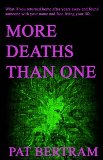
The story is about a man who is so ordinary he almost seems invisible. Everyone assumes they know him, seeing him as a reflection of themselves. And yet, he has hidden depths that only one woman, Kerry, managed to see. As Kerry told Bob, trying to explain why he interested her, “I’d like to say it’s because you have hidden depths, but your depths aren’t hidden, they’re obvious.” She chuckled. “Maybe you have hidden shallows.”

The graphic sex scene wasn’t with Kerry, though eventually they did make love. The scene was with Bob and another woman, a woman who taught him about prolonging the pleasure and satisfying a woman. If you didn’t know why Bob had such a talent, it would have been unbelievable when you discovered that such a seemingly weak man would have such discipline. The scene also set up the love scene with Kerry. The scent of frangipani had always reminded him of that first woman, and yet when he and Kerry finally got together, he realized that from now on, whenever he caught a whiff of that scent, it would remind him of Kerry, of the teasing look in her eyes, of the moment he fell in love with her. (But then, don’t we all justify our sex scenes as important to the book?)

Oddly, each of my novels had less sex in that the previous one, and the last one had none. It’s hard to write sex scenes that are consistently new and fresh, and I’d said it all in that first book.

Someone dared me once to write an erotic novel, and I even accepted the dare, at least verbally, but I doubt I will ever write the book. The only reason I can see for writing is to write what only I can write, and it’s hard to bring individuality to sex scenes. (Which is probably why bondage and masochism are so prevalent right now — they are different from what people are used to.) Still, I’m young in author terms. I’ve only written five books. Anything could linger in all those as unwritten books of mine!

As for Lazarus Barnhill’s books, I’m keeping the versions I have for now. When he gets rich and famous, those expurgated copies will be worth a fortune, and I will be set for life!

***

Pat Bertram is the author of the suspense novels Light Bringer, More Deaths Than One, A Spark of Heavenly Fire, and Daughter Am I. Bertram is also the author of Grief: The Great Yearning, “an exquisite book, wrenching to read, and at the same time full of profound truths.” Connect with Pat on Google+. Like Pat on Facebook.
A Gift for a Grief-Stricken Friend

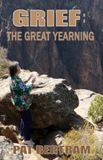
Grief: The Great Yearning by Pat BertramI haven’t really promoted my book Grief: the Great Yearning. It seemed crass and insensitive to capitalize on people’s grief, but the book has been a big help to many who have suffered a significant loss such as a husband or a parent. If you need a gift (or a stocking stuffer) for someone who is grieving, please consider giving them a copy of Grief: the Great Yearning. It might help to bring them comfort knowing that someone else has felt what they are feeling.

The print version of Grief: The Great Yearning is available from Second Wind Publishing, Amazon, Barnes and Noble. You can even give the ebook in any format as a gift. Just go to Smashwords and click on “Give as Gift”.

If there are people on your Christmas list who like to read, please check out my other books. I’m sure they’d like at least one of them!

***

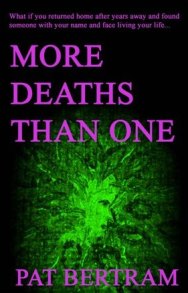
More Deaths Than OneBob Stark returns to Denver after 18 years in SE Asia to discover that the mother he buried before he left is dead again. At her new funeral, he sees . . . himself. Is his other self a hoaxer, or is something more sinister going on?

Click here to read the first chapter: More Deaths Than One

***

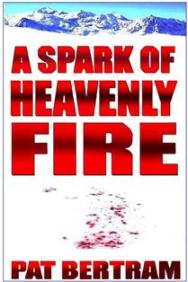
A Spark of Heavenly FireIn quarantined Colorado, where hundreds of thousands of people are dying from an unstoppable, bio-engineered disease, investigative reporter Greg Pullman risks everything to discover the truth: Who unleashed the deadly organism? And why?

Click here to read the first chapter of: A Spark of Heavenly Fire

***

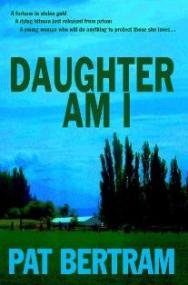
DAIWhen twenty-five-year-old Mary Stuart learns she inherited a farm from her recently murdered grandparents — grandparents her father claimed had died before she was born — she becomes obsessed with finding out who they were and why someone wanted them dead.

Click here to read the first chapter of: Daughter Am I

***

Thirty-seven years after being abandoned on the doorstep of a remote cabin in Colorado, Becka Johnson  returns to try to discover her identity, but she only finds more questions. Who has been looking for her all those years? And why are those same people interested in fellow newcomer Philip Hansen? And what do they have to do with a secret underground laboratory?

Click here to read the first chapter of: Light Bringer

***

Pat Bertram is the author of Light Bringer, More Deaths Than One, A Spark of Heavenly Fire, and Daughter Am I.All Bertram’s books are available both in print and in ebook format. You can get them online at Second Wind Publishing, Amazon, B&N and Smashwords.  At Smashwords, the books are available in all ebook formats including palm reading devices, and you can download the first 20-30% free!

Making Stories Come Alive

Our characters are more than just the creatures of our story world, they are the lens through which readers see into that world. It is possible to tell a story without using this lens, but the resulting story world can be gray and lifeless. Characters interacting with that world and each other give it color, make it seem more real.

I learned this the hard way.

I wanted the hero of More Deaths Than One to appear to be an insignificant little man though he was rich, had a couple of influential friends, and once had been a secret agent. Despite several rewritings, I could not make him come alive. He seemed dull and boring rather than the mysterious character I wanted him to be, and when the information about him unfolded during the course of the novel, it too was uninteresting. No matter what I did, I could not make him or his past three-dimensional.

In desperationfireworks, I created a love interest for him. (It seems like an obvious solution, but originally I wanted him to be a loner. Oddly, the love interest made him seem even more of a loner by comparison.) When I began to see him through her eyes and her amazement, all of a sudden he burst into full color.

Using one character’s viewpoint to show another character also allows us to be enigmatic when it comes to characterization. If we as the author/narrator were to describe a character as being kind, he must be so; if another character describes him as being kind, he might be kind, but he also might be kind only to her and mean to everyone else, or he might be abusive to her and she interprets it as being kind because she is not used to having anyone pay attention to her. While learning about him through her eyes, we also learn about her.

In this same way, when we see the story world as the character sees it rather than how we as the creator of the world envisioned it, the scenery comes alive. For example, here is a brief excerpt from A Spark of Heavenly Fire:

Kate jumped out of bed like a child on Christmas morning, ran to the window, and opened the drapes.

It looked as dim as dusk. The sunless sky embraced heavy dark clouds that hung so low she was sure she could reach out and touch them. The howling wind blew a few snowflakes around and rattled her leaky window. The icy draft made her shiver.

She laughed aloud.

What a lovely day!

In this way, we learn about the weather, we learn about the character, and we make the story world come alive for readers. We make readers a part of the story because they identify with the characters. They see the world through our characters’ eyes.

***

Pat Bertram is the author of the suspense novels Light Bringer, More Deaths Than One, A Spark of Heavenly Fire, and Daughter Am I. Bertram is also the author of Grief: The Great Yearning, “an exquisite book, wrenching to read, and at the same time full of profound truths.” Connect with Pat on Google+. Like Pat on Facebook.
Creating Incredible but Credible Characters: Sex Scenes (Part 2)

[This is a continuation of a previous post: Creating Incredible but Credible Characters: Sex Scenes (Part 1)]

The most explicit sex scenes I’ve written are in my first novel, More Deaths Than One. My character, Bob Stark, is stark in everything he does, but the more one learns about the character, the more extraordinary he seems. His first sex scene is with a stranger. Her manner seemed to be that of a person who had decided on a course of action and now wanted to get it over with as quickly as possible, but Bob turned out to be something of a pro at satisfying women. Since the skill seemed so out of character, I explained it with a flashback, though I do not advocate flashbacks during a sex scene. Of all scenes in a book, sex scenes are the most immediate, and should be done in the present, but in this case I followed an even more important rule: everything in service to the story.lovescene

He moved in her, slowly, steadily. He caught the scent of frangipani in her perfume. All at once sixteen years disappeared, and he was back in Thailand, the first time he’d gone to Madame Butterfly’s.

The sex scene that followed is graphic, too graphic to add here, but the point is the perfume. Smelling the frangipani catapulted him into a reverie, where the woman beneath him became unimportant, but later in the book when he makes love with a significant woman in his life, the scent has a completely different effect on Bob.

Twining her arms around his neck, she brought his mouth to hers. The kiss was hard and short, but immediately her lips sought his again.

He gathered her closer. Their kiss deepened.

All at once she pulled away and hopped out of bed. “Omigosh!”

“What?”

“I forgot. I have a present for you.” She flashed an impish smile and darted into the bathroom. She emerged a few minutes later wearing a dark rose cheongsam that accented the swell of her breasts and the taper of her waist. “I bought it in Chinatown. What do you think?”

He couldn’t speak, couldn’t breathe. She looked flushed, radiant, beautiful.

She jutted out a hip. The side slit parted, giving him a glimpse of shapely leg.

He felt a shock that started in his groin and radiated upward. From the glint in her eyes, he knew she was aware of the effect she had on him.

He slid off the bed and moved toward her, stepping slowly and carefully as if he were in danger of falling off a precipice. As he neared her, he smelled her new perfume—frangipani. From now on, he knew, whenever he caught a whiff of that scent, it would remind him of this moment, of her, of the teasing look in her eyes.

***

This article is anthologized in the Second Wind Publishing book: NOVEL WRITING TIPS AND TECHNIQUES FROM AUTHORS OF SECOND WIND PUBLISHING, which was the 100th book released by Second Wind.

“As someone who constantly evaluates novels for publication, I was astonished at the breadth and clarity of the wonderful advice contained in this handbook. It addresses concerns as grand as plot development and as simple but essential as formatting your submission. It offers crucial advice on literary topics ranging from character development to the description of action. Virtually every subject that is of great concern to publishers — and therefore to authors — is covered in this clear, humorous and enormously useful guide.” –Mike Simpson, Chief Editor of Second Wind Publishing

***

Pat Bertram is the author of the suspense novels Light Bringer, More Deaths Than One, A Spark of Heavenly Fire, and Daughter Am I. Bertram is also the author of Grief: The Great Yearning, “an exquisite book, wrenching to read, and at the same time full of profound truths.” Connect with Pat on Google+. Like Pat on Facebook.
How to Hook a Reader

The age of writing long descriptive passages (or even short ones) at the beginning of a novel has passed. Today people want to be drawn immediately into the story without wading through such excess. An editor might look at the first five pages before tossing aside your manuscript, but potential customers will give you a mere twenty seconds to draw them in. Once you have caught their attention, they might read a little further, and perhaps they will even buy the book. They certainly will not wade through five, ten, fifty pages until they get to “the good part.”

That “good part” must be right up front, especially if you’re a first-time writer. That’s all you have going for you — the ability to get off to a fast start and capture the reader’s attention. Your name certainly won’t do it; no one knows who you are yet. Your credentials might help, but only to establish your credibility after a potential reader has been hooked. And they will never be hooked by your ability to turn a clever phrase.

So what will hook the reader?  A character. Always a character. No one reads a book for a description of the weather, a place, or an issue. They don’t even want a description of the character. They want to meet him, to see life through his eyes, to bond with him. They want to know what he wants, what his driving force is. And they want to know who or what he’s in conflict with.

Without conflict, there is no story, but without a character for the reader to care about, there is no story either. Character and conflict are inextricably combined, and together they create the tension necessary to sustain a story. I know you think it’s okay to let the tension rise slowly, which it is, but the tension level at the beginning must be high enough to let the reader know something is going on.

I rewrote More Deaths Than One four times, and each time, the story fell flat. It wasn’t until I realized I’d spent too much time describing things or had Bob alone meandering through much of the story that the book took on life. I gave Bob a love interest, a server he met at a coffee shop.

More Deaths Than One begins:

“What do you think of a guy who embezzles from his own business?”

Bob Stark recognized the voice of the graveyard shift waitress, the attractive one with the black hair. He glanced up from his contemplation of the scars on the laminated plastic table and saw her standing by his booth, gazing at him, her eyebrows quirked. She seemed to expect a response, but he had no idea what to say. 

This isn’t the real hook, it’s just enough to capture your attention so I can reel you in for the punchline.

Reviewer Sheila Deeth said, The first three pages of “More Deaths than One” have to constitute a serious contender for the best opening scene of a novel. Two main characters are introduced, a garrulous waitress and a taciturn hot-chocolate customer. They meet. She talks, a lot. He reads the paper. “And Lydia Loretta Stark was dead. Again.” With two such immediately real and appealing characters, and a line like that, I’d challenge anyone not to want to keep turning the pages.

***

Pat Bertram is the author of the suspense novels Light Bringer, More Deaths Than One, A Spark of Heavenly Fire, and Daughter Am I. Bertram is also the author of Grief: The Great Yearning, “an exquisite book, wrenching to read, and at the same time full of profound truths.” Follow Pat on Google+. Like Pat on Facebook.

Sample Sunday

If you’ve been wanting to check out my books, now is your chance to read the first chapter of each novel online. Who knows, you might get so intrigued you will want to buy one of the  book to take with you to the beach this summer or read on an airplane. (Or, for my friends in the southern hemisphere, you might decide one is the perfect companion to read by the fire on a chilly winter’s eve.) I hope you will enjoy sampling a “Pat Bertram” book.

More Deaths Than OneBob Stark returns to Denver after 18 years in SE Asia to discover that the mother he buried before he left is dead again. At her new funeral, he sees . . . himself. Is his other self a hoaxer, or is something more sinister going on?

Click here to read the first chapter: More Deaths Than One

***

A Spark of Heavenly FireIn quarantined Colorado, where hundreds of thousands of people are dying from an unstoppable, bio-engineered disease, investigative reporter Greg Pullman risks everything to discover the truth: Who unleashed the deadly organism? And why?

Click here to read the first chapter of: A Spark of Heavenly Fire

***

DAIWhen twenty-five-year-old Mary Stuart learns she inherited a farm from her recently murdered grandparents — grandparents her father claimed had died before she was born — she becomes obsessed with finding out who they were and why someone wanted them dead.

Click here to read the first chapter of: Daughter Am I

***

Thirty-seven years after being abandoned on the doorstep of a remote cabin in Colorado, Becka Johnson  returns to try to discover her identity, but she only finds more questions. Who has been looking for her all those years? And why are those same people interested in fellow newcomer Philip Hansen? And what do they have to do with a secret underground laboratory?

Click here to read the first chapter of: Light Bringer

***

Pat Bertram is the author of Light Bringer, More Deaths Than One, A Spark of Heavenly Fire, and Daughter Am I.All Bertram’s books are available both in print and in ebook format. You can get them online at Second Wind Publishing, Amazon, B&N and Smashwords.  At Smashwords, the books are available in all ebook formats including palm reading devices, and you can download the first 20-30% free!

How Long Does it Take to Edit a Novel?

If you have an editor, the editor pretty much decides how long it takes to edit a novel, but if you’re self-editing, it takes as long as it takes for you to get it right, But more than that, it depends on what you’re editing for. Are you editing it for content, to make sure that every scene, every character, every bit of dialogue is the ablsolute best you can do? Are you editing for story flow? Or are you simply copyediting to remove typos? Each of my books took a year to write, then I set it aside for several months. When I went back to the book, I could read it as if I hadn’t written it and so could find many areas where the story bogged down. Then I re-edited it again in another few months, and then another few months later, and ended up spending as much time editing as writing. This was especially true of my first novel, More Deaths Than One because I had to learn to write as I went along. Each deskediting session was more of a rewrite session — the published novel is completely different from the first draft, and yet it’s exactly what I was aiming for. In the end, it took about four years from first draft to finished manuscript. (In the interim periods, I wrote other books, so More Deaths Than One was the first novel I wrote, also the third, fifth, and seventh.)

I start out editing my books for content and flow, making sure that every scene, every character, every bit of dialog is the best I can do, and that every word, paragraph, chapter flows seamlessy one into the other without taking the reader out of the story, then I edit for individual words. Each of us has pet words and phrases, and the overuse of these constructions echo in readers ears, so I search for such duplication, and rewrite the appropriate passages. I also look for wishy-washy words and qualifiers that take the authority from my writing such as “I guess,” “a little,” “quite.” (In case you’re interested, here is the list of words I seek and destroy: Self-Editing — The List From Hell.) I do one final copy-editing session, then send the book to my editor, and finally my publisher.

The problem with most books on the market is that people rush to publish without giving themselves time to let the book rest before editing it with fresh eyes. Of course, this is a different market from the one I was writing for. Even as early as ten or twelve years ago, there were only a certain number of books on the market, and each had to be as good as possible to compete with the demands of the profession. Things have changed radically since then. With millions of people self-publishing, the key is quantity, not quality. Many authors publish three to four books a year just to keep their names fresh, and in such a disposable book world, editing is the first casualty.

I was appalled the first time I heard that someone had spent a week or so polishing the book they wrote during November’s National Novel Writing Month — how can anything written so fast have any depth? Such writers do find massive followings, though, so perhaps my way of “thinking” my books into reality (I spend way more time thinking about what to write than I do writing) is more out of step with today’s book world than those who simply dash off a book, do a slapdash job of editing, and then foist it on the reading public.

So, in the end, how long it takes to edit a novel depends on what you are looking for — quantity or quality. And before you start arguing that you can have both — the truth is you can’t have both unless you have a good editor on call who will do the editing for you. Writing is like driving. Everyone thinks they are a good driver, but all the bad drivers on the road show that a lot of those “good drivers” are mistaken.

***

Pat Bertram is the author of the suspense novels Light Bringer, More Deaths Than One, A Spark of Heavenly Fire, and Daughter Am I. Bertram is also the author of Grief: The Great Yearning, “an exquisite book, wrenching to read, and at the same time full of profound truths.” Connect with Pat on Google+

My Favorite of the Books I Have Written

A friend asked me if I had a favorite of the books I have written. The truth is, each is a favorite in it’s own way.

More Deaths Than OneMore Deaths Than One is my favorite because of all the rewrites. I rewrote it four different times, each time making it better, and so I learned to rewrite and to edit. I also liked the ironies that showed up in the book.

Click here to read the first chapter: More Deaths Than One

***

A Spark of Heavenly FireA Spark of Heavenly Fire is my favorite, because halfway through I realized I’d learned how to write, and because it is a solid, classic story of life and love in impossible times.

Click here to read the first chapter of: A Spark of Heavenly Fire

***

DAIDaughter Am I is my favorite because of the fun we (my mate and I) had coming up with the great characters, and because it was the fulfillment of a desire to write a “hero’s journey” story.

Click here to read the first chapter of: Daughter Am I

***

Light Bringer is my favorite because it’s the culmination of a lifetime of research, combining modern and ancient myths into a plausible whole, and because some of the descriptions were stunningly beautiful.

Click here to read the first chapter of: Light Bringer

***

Grief: The Great Yearning is my favorite because writing it helped me get through the worst year of my life, and because unwittingly, it turned out to be the story I always wanted to write, the story of a love that transcended time and physical bonds, told with wisdom and sensitivity.

***

Pat Bertram is the author of the suspense novels Light Bringer, More Deaths Than One, A Spark of Heavenly Fire, and Daughter Am I. Bertram is also the author of Grief: The Great Yearning, “an exquisite book, wrenching to read, and at the same time full of profound truths.” Connect with Pat on Google+

Today I Am Officially a Writer

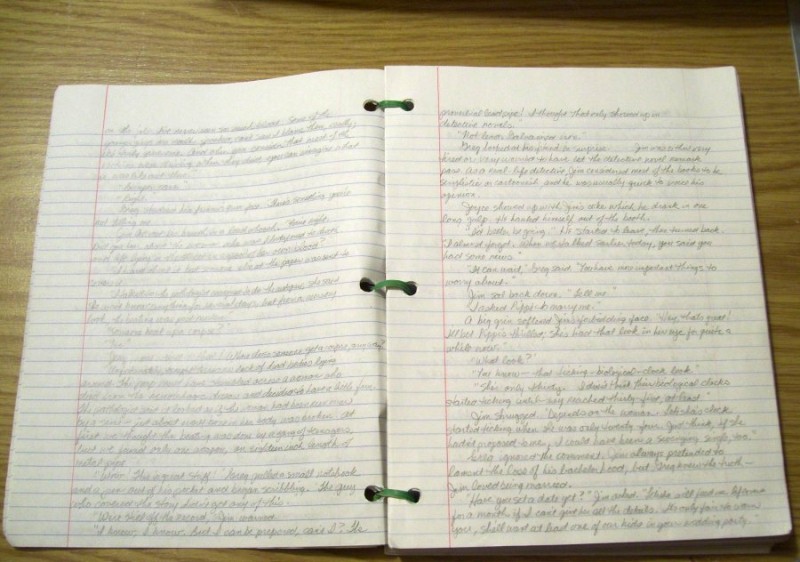
First draft of A Spark of Heavenly Fire

First draft of A Spark of Heavenly Fire

I got serious about writing a little over a decade ago. That’s when I started writing novels as well as researching the craft of writing and the publishing industry. I finished writing my novels about seven or seven years ago, then concentrated on rewriting and polishing the manuscripts to make sure they were as good as I could possibly make them. Meantime, I sent out hundreds of query letters in an effort to find an agent or publisher.

You’d think all those years focused on the craft of writing, rewriting, editing, proofing, querying would qualify me to call myself a writer, but it was just something I did, not something I was, so I never gave myself the title.

Even after my first two books were published by Second Wind Publishing in 2009, I still didn’t identify myself as a writer, except in relation to the books. For example, Pat Bertram, author of More Deaths Than One. I now have five books published — four suspense novels and one book about grief — but I still didn’t call myself a writer. It seems sort of silly and, considering all the millions of writers who have a book listed on Amazon, makes me not the least bit special. And anyway, I don’t make a living off writing, which would, I think, be a major qualification to list “writer” as one’s occupation.

Today, I had to go to the bank to fill out some paperwork, and they asked my occupation. Oddly, the only thing that came to mind was “writer.” I laughed to myself and said sotto voce, “What the heck.” Then, louder, I told the clerk, “I am a writer.” (It’s a good thing they didn’t need to ask what my income was. They’d probably have laughed in my face.) Still, “writer” sounded so much more interesting than shrugging off the question about occupation with a brief comment about taking care of my father.

So now it’s official. I am a writer.

***

Pat Bertram is the author of the suspense novels Light Bringer, More Deaths Than One, A Spark of Heavenly Fire, and Daughter Am I. Bertram is also the author of Grief: The Great Yearning, “an exquisite book, wrenching to read, and at the same time full of profound truths.” Connect with Pat on Google+

Desensitizing People to Violence

Clint Eastwood posted a status update on his FB profile today. No, I’m not a “friend” or a fan, don’t “like” him or “subscribe” to him, but his comment is making the rounds of FB, and it ended up on in my news feed. Several times. I found the comment interesting because of my research for More Deaths Than One, a book about mind control, and what I learned about how the military desensitized recruits to killing.

Eastwood wrote: With a lot of thought on this in light of all the shootings in the past few weeks I am very concerned that the left is now going to hit hard on pushing the 2nd Amendment over the cliff.

This is the only amendment that the ‘O’ can attack with any chance of repealing. If this, and God help us if he does, will lead to a barrage of attacks on all the amendments and socialism will be a forgone conclusion.

If anything should be shut down it should be the violent video games. Really, and I know everyone likes their electronics but these are the things that are taking kids and young people out of interacting with society and their peers.

I know I will probably take a lot of flack for that last observation but I’ve taken the flack before.

Have a great Sunday and hug your family.

I’ve written about this before, most recently in If Everyone Wants Peace, Why are there Wars? As I said, many of today’s — and yesterday’s — video games were developed by the military because studies had shown that repeated images of violence and death inured people to killing. During World War Two, as many as 85% of soldiers fired over enemies’ heads or did not fire at all. After World War Two, there was a concerted effort by the military to overcome this natural reluctance to kill, and apparently they succeeded because during close combat in Vietnam, only about 5% of soldiers failed to aim to kill. These same desensitizing “games” were later released as toys for children. Is it any wonder that many people — teens and adults — now seem desensitized to violence? They are playing games that were purposely created to foster killing.

I am not a fan of guns, though I have attended a couple of shooting clinics sponsored by a local gun club. As an author, I thought it important to know how it felt to shoot a weapon at a target. The targets we used were the round kind rather than a silhouette of a human. (Not so incidentally, those human-like targets were also created by the military to get soldiers used to firing at people.) I enjoyed learning how to shoot, but handling the pistols, revolvers, shotguns and rifles did not create in me any desire to shoot at another human being. Guns by themselves do not encourage violence or a desire to kill. Certain video games do. Sociopathic tendencies do. Psychotic characteristics do. Military think tanks do.

Author Lee Child says that we don’t write what we know, we write what we fear, and that certainly is true in my case. I fear the machinations of the powerful, deadly, and calculating men and women who control our lives behind the scenes. And I fear politicians and celebrities who use tragedies to further their own ends.

***

Pat Bertram is the author of the suspense novels Light Bringer, More Deaths Than One, A Spark of Heavenly Fire, and Daughter Am I. Bertram is also the author of Grief: The Great Yearning, “an exquisite book, wrenching to read, and at the same time full of profound truths.” Connect with Pat on Google+