Moving the World

A friend and I recently discussed the Walk for Peace and what we thought would happen now that it’s finished and the monks back home. She thinks it will have a lasting effect and will make a big difference to the world.

Me? Not so much. People tend to get caught up in the spirit of the moment, especially big moments, and they hold on to that feeling of peace or commitment or awe or whatever for a while, but then life happens. And keeps happening. And the feeling that they thought would last forever dissipates and eventually gets put away, only to be remembered long afterward as a curiosity. For sure, some people’s lives were changed. Some people will follow through with the daily affirmation that was handed out during the walk: “Today will be my peaceful day.” Some will practice mindfulness as the monks urged, doing only one thing at a time. Some will even set their phones down for a while and just live in the offline moment.

Those things are important. After all, that was the monks’ message and their hope — that people would find inner peace. But will it change the world in the long run? Interestingly, the monks didn’t set out to change the world. They merely set out mindfully on a walking meditation with no announcement, no big production, no online presence. Just twenty monks walking. (Nineteen human and one canine.) That was it. They thought a few people would pause for a moment to watch and perhaps be moved to find their own inner peace, but they had no expectations beyond placing one foot in front of the other.

And yet people found them. Because of the interest, monks who stayed behind set up a map, websites, social sites, made and uploaded videos. The news of the walk spread, and hundreds of thousands of people stopped their lives to stand by the road and watch the monks walk by. Millions all around the world participated vicariously through videos and live streaming. During those months, there was a vast outpouring of kindness, compassion, harmony, love, and hope. All that energy would have to go somewhere since energy can’t be destroyed, so maybe there was enough power generated to move the world.

I keep thinking about a certain episode in The Wheel of Time books. The weather in their world has gone out of whack due to the Dark One’s effort to destroy the world and even humanity. But a couple of the girl heroes (“witches” some call them) have managed to find the ancient, long-lost bowl the sea faring people once used to control the weather, and these heroes as well as the sea people — Windfinders — get together to change the weather back to the way it’s supposed to be, pouring into the bowl huge amounts of the power only they can wield.

Afterward, they collapsed from exhaustion, but there was no immediate discernible difference in the weather. One of the heroes asks belligerently, “All of that, for what? Did we do anything or not?”

‘The Windfinder struggled to her feet. “Do you think Weaving the Winds is like throwing the helm over on a darter?” she demanded contemptuously. “I just moved the rudder on a skimmer with a beam as broad as the world! He will take time to turn, time to know he is supposed to turn. That he must turn. But when he does, not the Father of Storms himself will be able to stand in his way.”’

Is it possible my friend is right and the walk for peace will have this sort of effect? Is it possible peace will ripple through the world, changing things in ways we can’t even imagine? Maybe in ways we can’t discern but are still subtly effective? Despite my rather cynical view of people, I would like to think the walk for peace will make a difference.

***

Pat Bertram is the author of Grief: The Inside Story – A Guide to Surviving the Loss of a Loved One.
 

Seeing and Being Seen

When I watched the videos of people watching the monks walk for peace, I noticed how many had tears in their eyes. I imagine the in-person experience was overwhelming because just watching videos of those terracotta-robed men walking barefoot or wrapped up against the snow and wind was powerful in itself. But I think it was more than that. I think the watchers felt seen.

I bet many bystanders were surprised by that “seeing,” because after all, they stood, sometimes for hours, simply waiting to see the monks go by, but as the monks passed, the walkers looked at their watchers and the watchers were seen. It worked both ways. The monks themselves admitted they felt witnessed, not simply watched as if they were a parade, and it touched them. Hence, the tears from both the walkers and the watchers.

In the movie Shall We Dance, Beverly Clark (Susan Sarandon) says: “We need a witness to our lives. There’s a billion people on the planet . . . I mean, what does any one life really mean? But in a marriage, you’re promising to care about everything. The good things, the bad things, the terrible things, the mundane things . . . all of it, all of the time, every day. You’re saying ‘Your life will not go unnoticed because I will notice it. Your life will not go un-witnessed because I will be your witness.’”

Admittedly, this walk wasn’t a marriage (and a lot of marriages don’t work like Beverly Clark’s anyway). I didn’t mention the quote for the marriage part but for the witnessing part. (Though, in a way, that brief connection between walker and watcher could be construed as a marriage in the sense of a combination of two or more elements, but still, not important to this discussion.)

I think so many of us are hungry to be seen, not simply as a body standing by the side of the road, but as a person, an individual, perhaps as someone who wants to participate in something greater than ourselves. And those wise Buddhist eyes saw. And those bright Buddhist smiles drew everyone into the heart of their mission.

By the time the walkers reached Washington, so much of that “witnessing” aspect of the walk had disappeared. (At least on video. I have no idea what those thousands upon thousands of bystanders experienced.) The crowds were too huge, for one thing, and for another, members of congress showed up, with cops helping them bulldoze their way through the crowd, wanting merely to be seen seeing the monks. (To me, that was the most bizarre part of the whole walk, even more bizarre than the people who followed the monks through several states, heckling them and exhorting them to convert.)

I have a hunch this need to be seen is why the social aspect of the internet is so immense. Or maybe not — too many people hide behind user names and seem more interested in creating havoc than in merely being witnessed, but who knows. It could be why I write this blog, but again, who knows.

What I do know is that for one hundred and twenty days, people saw and were seen, and lives were changed.

***

Pat Bertram is the author of Grief: The Inside Story – A Guide to Surviving the Loss of a Loved One.
Strange Thoughts

I just had a strange thought. There is a great assumption of hate here in this country, but is there really that much hate? If people didn’t keep telling us folks here in the USA to get rid of our hate, would there be any hate amongst us? Would we even think about hate or hating if they didn’t keep pushing that narrative? They tell us that love is stronger than hate, but isn’t even that trite comment making an assumption of hate? (Otherwise, why would anyone think the comparison needs to be made? Saying “Love is strong” would be fine by itself.) Even I, who have no hate in my heart at all (that I know of, anyway), find myself nodding along when people talk about the prevalence of hate. And yet, it seems as if the only people talking about hate are those who have a platform and are determined to have their say, as if they are the arbiter of morality. As if those who are sitting in their gated mansions know the pulse of the rest of us.

But then, today, it’s not just celebrities — athletes, singers, actors, newscasters — with a platform, but anyone who has a phone and some sort of social media account. And the videos that get shown everywhere are people screaming out their anger and hatred. Paradoxically, the screamers don’t think it’s hatred they are spewing; they think it’s . . . I don’t know; some sort of relevancy, perhaps.

The rest of us are going about our lives . . . not hating. Not even thinking about hate. Just living. Being. Enjoying what the day brings — for me, a couple of days ago, it was lunch and grocery shopping with one friend, an easy walk with another, and lots of sunshine. Yesterday it was watering my lawn, enjoying the last warm day before the cold strikes again. And today, well, today has just started. But it will be a peaceful day for me whatever I decide to do.

I’m aware this isn’t any great insight, just a stray thought.

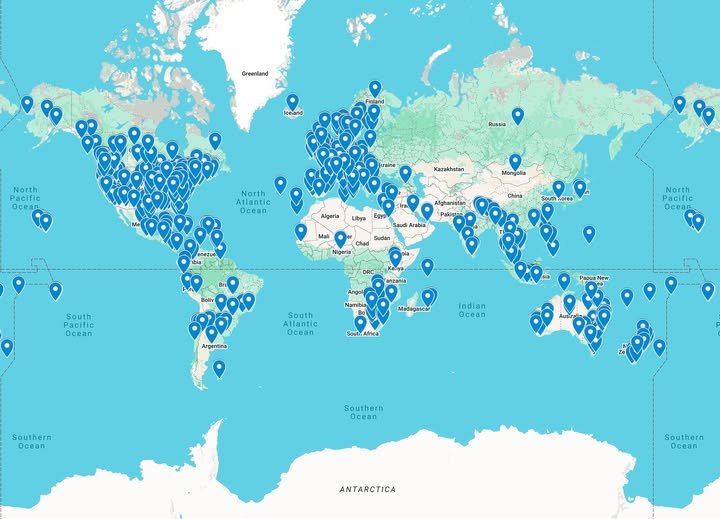
Another stray thought (though this isn’t as “stray” as the first since it obviously came from somewhere, which is the monks walking for peace). There are millions of people all over the world (93 countries, including the USA) watching videos of the walk. The videos show the monks walking, but they also show the people who are witnessing the walk. People of all ages and colors and abilities coming together to participate in a once-in-a-lifetime transformative experience. The vast majority of the hundreds of thousands of people who pause their lives to watch the monks pass or gather to hear them talk, are quiet, respectful, loving and kind. Will people from all those countries see Americans any differently after this? Will they see we are not the hateful folk we are portrayed to be? Or will we all still be affected by the “hate/not hate” rhetoric that so often passes as truth?

Strange thoughts, indeed.

(I hope I’m not breaking any copyright laws by posting the following photo of all the places where people who are following the walk for peace live, but I find it fascinating and wanted to share it.)

***

Pat Bertram is the author of Grief: The Inside Story – A Guide to Surviving the Loss of a Loved One.

Choosing Peace

Dean Koontz often used a dog as a major character in his books, whether as a naturally superior intelligence, an enhanced intelligence, an alien from another planet, or even as an angel. Those books were not among my favorites because I couldn’t really relate to those dog characters. Although I seldom admit it, because in today’s world not being a dog afficionado is almost a sacrilege, I don’t connect to animals the way other people do. Of course, I don’t connect to many humans, either, but that’s beside the point.

As I’ve been watching dozens and dozens of video clips of the monks on their walk for peace, accompanied by their dog Aloka, I can’t help but think of Koontz. Although his dog characters are always golden retrievers and Aloka is an Indian Pariah dog, a street dog from India, I see a strong correlation between Koontz’s almost-an-angel dogs and Aloka.

In his own way, it seems, Aloka is bringing peace to the multitudes that pause in the strife of their daily lives to watch the monks and their dog pass by. The dog seems as happy and as calm and as peaceful as his companions, just going about his day walking, being mindful of his surroundings. What’s interesting to me, and what is so Koontz-y is that Aloka chose the monks. He started following them in 2022 during a 100+ day peace walk in India. Many other dogs also followed, but Aloka stayed, a quiet companion to the walkers, as if he knew what they were about and wanted to be a part of it.

When the monks decided to make their next walk here in the United States, they brought Aloka with them. And together, they fulfill their mission. No big pronouncements. No noise. Just walk. Be present. Be at peace. Aloka seems to have an additional job or two, showing absolute loyalty, and even though he is recovering from a January surgery, he seems to still take his job as protectant seriously, staying focused and watching over the monks from a support vehicle.

Apparently, some people follow Aloka more than the monks, but that, too, seems part of this incredible journey.

I came late to the walk for peace because I don’t really like videos, and besides, the first videos I saw were of various preachers trying to convert the monks, which seemed . . . inappropriate. But now I’m as mesmerized as everyone else.

Until I gave up consistent blogging, I used to participate in a blog-for-peace project every November 4th. Although I didn’t believe world peace was possible (because whatever the world leaders say, they really don’t want it), I thought it was important to stress that peace starts with us. The monks’ walk (and Aloka’s) reminds me so much of what the peace bloggers wanted — just to show that peace is possible.

And apparently, peace is possible. It is all in our minds, especially when we live in the present moment. Like Aloka, we just have to choose it. My wish for us is the same one the monks have left for us: “May we all find our way back to the present moment.”

***

Pat Bertram is the author of Grief: The Inside Story – A Guide to Surviving the Loss of a Loved One.

Balance

I got caught in a time warp where I watched videos of the Buddhists walking for peace. I call it a time warp because I thought I was online for just a few minutes, but when I finally looked away, hours had passed, and I had tears in my eyes. The scenes were that mesmerizing and that touching — not just the serene marchers in their distinctive clothing treading on matching flower petals, but the hundreds of thousands of people silently watching them pass by or joining their walk for a while. Oh, there were those who didn’t appreciate what they were seeing and wanted to divert the walkers from their “satanic” path, but from the vast majority, there emanated a feeling of awe, perhaps reverence. A sense of history being made. Even from those who went to see the walkers simply out of curiosity, there was still a great deal of respect for the monks.

It was such a huge disconnect for me because what I’d been seeing online was something completely different. Chaos, screaming, hatred. Crowds that were anything but respectful. In that hostile environment, peace seemed a thousand miles away. Um no. Not seemed. It was literally a thousand miles away since the Buddhists were walking a thousand miles to the south of the chaos.

As I was thinking about these two events, all of a sudden, I didn’t see them as disconnected but as two parts of a balanced whole. This amused me — not the events, of course, but my idea of a balanced whole. Apparently, I’ve spent too much time in the dual cosmology of the Wheel of Time world, where opposing forces work against each other and with each other to create a balance in the world. Light and dark, male and female, good and evil, yin and yang. (It’s no wonder that when these books were made into a television series, the creators of the show changed Jordan’s world to erase the duality, which, considering today’s flexible morality, they ostensibly thought a weakness of the story rather than its very foundation.)

It also showed me something else. In the books, it seems as if “walking in the light” is the default setting; one must expressly go against the light to choose the darkness. Going by the numbers of people I’ve been seeing in the southern videos, it seems as if the default setting in this country is peace, or at least a desire for peace. Lawfulness. A need to get along without major confrontation. Maybe even a need to share something spectacular with one another. (Come to think of it, I’ve always thought peacefulness was our default setting. For example, while some people fudge on traffic laws, most people do follow close enough to the law that traffic flows smoothly without chaos, and the vast majority of drivers arrive at their destination safely. And though it’s long forgotten, the citizens of this country had to be dragged kicking and screaming into the world confrontations the leaders of the first half of the twentieth century got us into.)

Lately, I’ve had to fight a sense of sadness that borders on doom, as if we’re balancing on the brink of . . . something. It’s possible this is a result of my Seasonal Affective Disorder or even my sinus issues (allergies always make me depressed, but not as depressed as allergy medications), but seeing those beautiful monks? Well, to be honest, that made me sad, too, but in a different way, as if the peace they engendered is what life should always be but isn’t.

Still, for today, it was nice to participate in their walk — and its meaning — if only vicariously.

I’m going to Blog for Peace. Will You?

Tomorrow, November 4th, people all over the world will blog for peace. Blog4Peace was created and founded by Mimi Lenox, who believes that because words are powerful, blogging for peace is important.

Mimi began blogging for peace in November 2006. Fourteen years and thousands of peace bloggers later she — and all those she inspired — are still blogging for peace. On every continent. In 214 countries and territories. In war-torn countries and peaceful villages. Whole families. Babies in utero (yes, really!) Teenagers. Senior citizens. Veterans of war. Poets and singers. Teachers. Classrooms. Authors and artists. Doctors. Lawyers. Cats (many, many cat bloggers). Dogs. Gerbils. Birds. Goats and Bunnies. Scientists. Designers. Researchers. Stay-at-home-parents. Kids. Baby Boomers. From the Netherlands to Kansas. And everywhere in between.

I joined the peace bloggers in 2012. And I still blog for peace. 

This year’s theme is No Freedom, No Peace. As Mimi says, “Can we bring about a liberated world inside of ourselves and let it spill out onto the planet? Yes, we can.” This is a theme I can adopt; in fact, my novel Bob, The Right Hand of God was written with the themes of freedom and peace in mind. Although I do not believe in the possibility of world peace (because war and stressful times are never our personal choice but are fostered by others or foisted on us by circumstances) and freedom is not always a choice, (anyone who flies can attest to that) I do believe in finding peace and what freedom we can within ourselves no matter what happens to provoke us into chaos.

And yes, words are powerful. And yes, this matters.

How To Blog For Peace:

  1. Choose a graphic from the peace globe gallery http://peaceglobegallery.blogspot.com/p/get-your-own-peace-globe.htmlor from the photos on Facebook https://www.facebook.com/BlogBlastForPeace#!/BlogBlastForPeace/app_153284594738391 Right click and Save. Decorate it and sign it, or leave as is.
  2. Send the finished globe to blog4peace@yahoo.com
  3. Post it anywhere online November 4 and title your post Dona Nobis Pacem (Latin for Grant us Peace)

Sounds cool, doesn’t it? See you on November 4!

***

Pat Bertram is the author of Grief: The Inside Story – A Guide to Surviving the Loss of a Loved One. “Grief: The Inside Story is perfect and that is not hyperbole! It is exactly what folk who are grieving need to read.” –Leesa Healy, RN, GDAS GDAT, Emotional/Mental Health Therapist & Educator.

Dona Nobis Pacem

I joined the peace bloggers in 2012. And every November 4th since then, I have blogged for — and about — peace.

This year’s theme is “Courageous Peace in a Time of Great Change.” I believe in personal peace, in finding peace within ourselves no matter what happens to provoke us into chaos. In fact, I think personal peace is the only peace attainable because it’s the only sort of peace we have any control of. Wanting world peace is a cliché, a coward’s way of putting evading responsibility and putting the onus on others, and those others generally use “peace” as a club to beat the unpeaceful into submission. But taking responsibility for oneself and finding personal peace? That takes courage. Eschewing the outrage so prevalent today? That, too, takes courage. And finding peace in a time of great change? That takes the most courage of all.

I have been folding a senbazuru, which is 1,000 origami cranes, in my effort to find my own peace, a sort of mindfoldness. (As of today, I have folded 992 cranes.) Traditionally, the crane has been a symbol of success and good fortune, and supposedly, if you had the patience and commitment to fold l000 paper cranes, your wish would come true. (It’s no wonder that one of the first books about origami, published in Japan in the late 1700s, was entitled, How to Fold 1000 Cranes.)

In the last century, however, the crane became a symbol of peace because of one girl, Sadako Sasaski, a victim of Hiroshima. Dying of leukemia, she started folding a senbazuru in the hopes of getting well. When she realized she wouldn’t finish the task before she died, she switched her focus to peace. Legend has it that on her deathbed, she held one of her cranes and murmured, “I will write peace on your wings and you will fly all over the world.”

Today is the annual Blog Blast for Peace, a time for finding the courage to write peace on our own wings as we go about our busy lives.

Dona nobis pacem.

***

Pat Bertram is the author of Grief: The Inside Story – A Guide to Surviving the Loss of a Loved One. “Grief: The Inside Story is perfect and that is not hyperbole! It is exactly what folk who are grieving need to read.” –Leesa Healy, RN, GDAS GDAT, Emotional/Mental Health Therapist & Educator.

One Week Until the Blog Blast for Peace

A week from today is the annual Blog4Peace event, where bloggers from all over the world post photos and essays about peace. I do not think such an outpouring of peaceful musings will do anything to bring about world peace for the simple reason that such unrest is not an organic matter, rising independently of human action, but is purposely created by powerful people who want more power. The rest of us are quite willing to live peacefully in our own small worlds, without ever causing a riot or a war, though minor contretemps do arise now and again.

Despite my cynicism when it comes to world peace, I participate in this Blog Blast for Peace because it’s worthwhile. (And because it gives me a topic to blog about, and topics are sometimes hard to come by.) One day a year, people are focused on peace, on bringing about peace (if only in their own lives), on something other than sowing discord on the internet.

And who knows. As Mimi Lenox, the founder of Blog4Peace, believes, words are powerful. If enough of us concentrate on a single thought for a single day, there’s no telling what can be accomplished. So, on November 4, I will be blogging for peace. What about you? You don’t need to have a blog to participate; you can post your offering on any of the social sites.

How To Blog For Peace:

  1. Choose a graphic from the peace globe gallery http://peaceglobegallery.blogspot.com/p/get-your-own-peace-globe.htmlor from the photos on Facebook https://www.facebook.com/BlogBlastForPeace#!/BlogBlastForPeace/app_153284594738391 Right click and Save. Decorate it and sign it, or leave as is.
  2. Send the finished globe to blog4peace@yahoo.com
  3. Post it anywhere online November 4 and title your post Dona Nobis Pacem (Latin for Grant us Peace)

Sounds cool, doesn’t it? See you on November 4!

***

What if God decided S/He didn’t like how the world turned out, and turned it over to a development company from the planet Xerxes for re-creation? Would you survive? Could you survive?

A fun book for not-so-fun times.

Click here to buy Bob, The Right Hand of God.

I’m going to Blog for Peace. Will You?

On November 4th, people all over the world will blog for peace. Blog4Peace was created and founded by Mimi Lenox, who believes that because words are powerful, blogging for peace is important.

Mimi began blogging for peace in November, 2006. Thirteen years and thousands of peace bloggers later she — and all those she inspired — are still blogging for peace. On every continent. In 214 countries and territories. In war-torn countries and peaceful villages. Whole families. Babies in utero (yes, really!) Teenagers. Senior citizens. Veterans of war. Poets and singers. Teachers. Classrooms. Authors and artists. Doctors. Lawyers. Cats (many, many cat bloggers). Dogs. Gerbils. Birds. Goats and Bunnies. Scientists. Designers. Researchers. Stay-at-home-parents. Kids. Baby Boomers. From the Netherlands to Kansas. And everywhere in between.

I joined the peace bloggers in 2012. And I still blog for peace. 

This year’s theme is “Courageous Peace in a Time of Great Change,” and that is a theme I can adopt. Although I do not believe in the possibility of world peace (because war and stressful times are never our personal choice but are fostered by others or foisted on us by circumstances) I do believe in personal peace, in finding peace within ourselves no matter what happens to provoke us into chaos.

And yes, words are powerful. And yes, this matters.

How To Blog For Peace:

  1. Choose a graphic from the peace globe gallery http://peaceglobegallery.blogspot.com/p/get-your-own-peace-globe.htmlor from the photos on Facebook https://www.facebook.com/BlogBlastForPeace#!/BlogBlastForPeace/app_153284594738391 Right click and Save. Decorate it and sign it, or leave as is.
  2. Send the finished globe to blog4peace@yahoo.com
  3. Post it anywhere online November 4 and title your post Dona Nobis Pacem (Latin for Grant us Peace)

Sounds cool, doesn’t it? See you on November 4!

***

Pat Bertram is the author of Grief: The Inside Story – A Guide to Surviving the Loss of a Loved One. “Grief: The Inside Story is perfect and that is not hyperbole! It is exactly what folk who are grieving need to read.” –Leesa Healy, RN, GDAS GDAT, Emotional/Mental Health Therapist & Educator.

Dona Nobis Pacem

I joined the peace bloggers in 2012. And every November 4th since then, I have blogged for — and about — peace.

This year’s theme is “Peace in the time of quarantine.” Although I do not believe in the possibility of world peace (because war and other international conflicts are never our personal choice but are fostered by others or foisted on us by circumstances), I do believe in personal peace, in finding peace within ourselves no matter what happens to provoke us into chaos.

We tend to think of peace as a passive thing. An absence of strife. Effortless calm. Yet, when we talk of unrest and chaos (or whatever is the opposite of peace), it’s always about action, doing something, committing something — committing acts of terrorism, declaring war, fighting, rioting, tormenting, bullying.

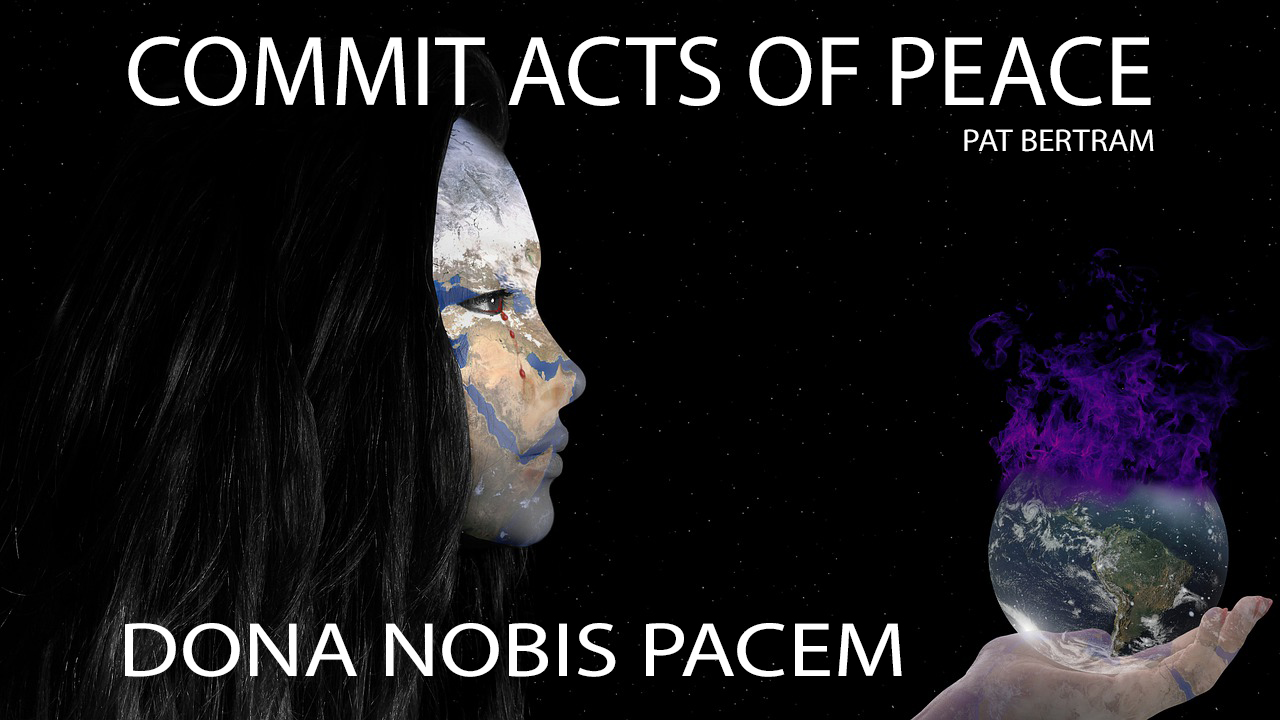
Maybe peace is also about action, about committing acts of peace. We as individuals can’t arrange truces between warring factions, whether global or familial. We can’t bring peace to chaotic countries — ours or anyone else’s. Often the best we can do is bring peace to our own lives, arrange a truce between our inner and outer selves, find a way to ease our anger, create art (because people who are involved in creating a piece of art are also creating a space for peace), meditate or take a walk. Commit acts of peace.

It’s odd to think that this time of quarantine, which because of enforced isolation and orders to stay at home should have been a time of peace, has been one of the most violent times in recent years. But the country at large, especially the bigger cities have been ablaze with chaos.

Of course, being forced into isolation — any sort of force, actually — can’t bring about peace. It’s no wonder people were so ready to erupt into violence — isn’t that some sort of law of physics? Equal and opposite reaction and all that? On a smaller scale, victims of abuse were forced into situations where they had no escape, so for these people, instead of bringing about peace, the quarantine brought about more horror.

Apparently, I have nothing positive to say about peace in the time of quarantine, even though my own life during this time has been quiet and contemplative. I’ve managed to stay away from strife — except for occasionally getting riled up by all the lies and idiocies going on. I’ve even managed to commit acts of peace — if only by taking solitary walks, blogging, reading, enjoying a rare visit with friends.

If you don’t have a blog or think this a hopeless cause, you can still participate in this event by committing an act of peace. I hope you will.

***

Please check out my new book!

“I am Bob, the Right Hand of God. As part of the galactic renewal program, God has accepted an offer from a development company on the planet Xerxes to turn Earth into a theme park. Not even God can stop progress, but to tell the truth, He’s glad of the change. He’s never been satisfied with Earth. For one thing, there are too many humans on it. He’s decided to eliminate anyone who isn’t nice, and because He’s God, He knows who you are; you can’t talk your way out of it as you humans normally do.”

Click here to order the print version of Bob, The Right Hand of God
Click here to purchase the Kindle version of Bob, The Right Hand of God.