Sand by Any Other Name is . . . Beach

I’ve been walking in the desert almost every day and as much as I enjoy my sandy treks, I decided I needed a change, so I took a trip to Santa Monica in California and found . . . yep. Sand.

Santa Monica Beach

It must be sand that brings out the mystic in me, because I sitting on the beach, looking at the ocean, and what should have been a startlingly wonderful experience was lovely, but not startling. It occurred to me that all this practice of being me, of being in my body, of being present, makes every experience unique in it’s own way. Of course, being in the moment at the beach is more fun that being in the moment in a traffic jam, but both add up to the moments of our lives.

Here are a few moments from Santa Monica.

Santa Monica Pier

Santa Monica Pier

One-Man Band — part of the never ending human carnival on Santa Monica Pier

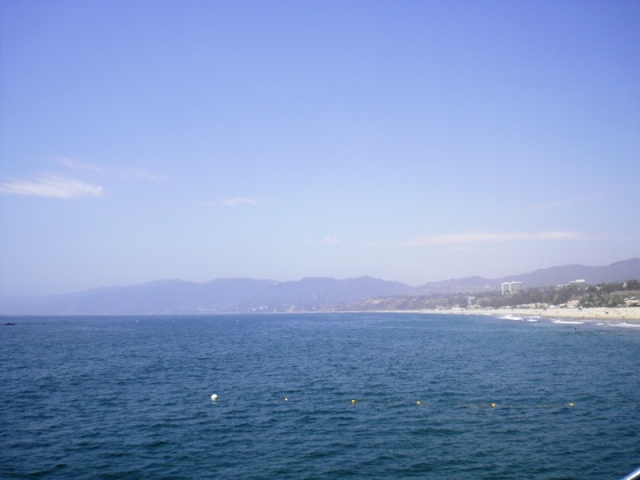
Santa Monica Mountains as seen from the pier

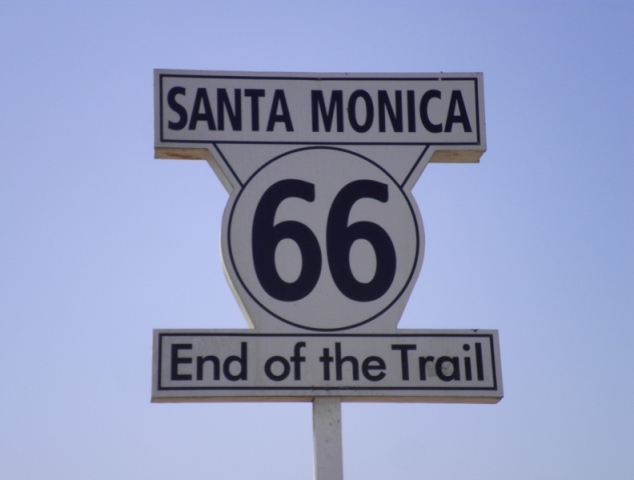
End of the Trail

Blogging is Writing, Too

I always hated the saying “A writer writes . . . always.” No one does anything “always” except maybe breathe. And anyway, the very fact of having written five books and getting them published makes me a writer, even if I write . . . whenever.

But it turns out the joke is on me. I do write always, or as nearly always as possible. I’m either writing an article for this blog, or trying to think of a topic, either planning what I am going to say when I do think of a topic, or experiencing things which I will later write about. I don’t know why I tend to think that “writing” means fiction writing, perhaps because fiction comes hard for me and blogging easy, but the truth is, blogging is writing, too.

On September 25, 2011, I accepted a challenge to blog for 100 days. (I found out about it two days late — the challenge was actually to blog the last 100 days of the year, and it started on the 23, but I figured I’d add the missing two days on the back end.) I hadn’t been writing much, just an occasional blog post, and I was drifting, not doing much of anything except struggling with an upsurge of grief (still don’t know why 18 months after a grievous death is so hard, but it’s part of the grief pattern). So much I had counted on had disappeared — my life mate/soul mate, our way of life, some of the friends I made after his death— that I felt as if I were disappearing too.

I thought writing every day would give me something to hang on to, and it must have worked, because after the challenge ended, I didn’t quit. I never actually made the decision to stick with daily blogging — I just did it — and to my surprise, I find myself less than a month away from completing an entire year of daily posts.

I’ve come a long way in the past 341 days, turned several corners, came to many realizations, but most of all, I found peace. Or rather, I made peace. I made peace with the death of my mate, with my place in the universe, and with my place in the world of books. Even without the daily blogging, I might have come to the same realizations at the same time, but writing gave focus to my thoughts, and daily writing gave focus to my life. I’d planned to stop the daily posts after my one-year anniversary, but now . . . who knows. I might keep going. (Though one person suggested — facetiously, I hope — that I should give my poor blog readers a break.)

The Future of Publishing

Some people have predicted a dire end to the publishing industry as we know it, and perhaps it needs to die. The old system of advances, where publishers subsidized the careers of a few specially chosen writers (literary authors or potentially lucrative authors who had not yet garnered a lot of attention) with the proceeds of bestselling commercial writers is a ridiculous anachronism in this world of corporate monoliths, and it is already being phased out.

The new publishing model of anyone publishing anything, no matter how trivial or poorly written, is no better. It still comes down to the same thing — that only a few writers will ever be able to make a living at the profession. As the anachronistic industry conforms more to the digital age of “content creators,” there will be fewer writers making millions and millions more writers making almost nothing.

In the old system, the publishers made the profits, not the writers. In the new system, the content distributors, such as Amazon, will make the profits. To Amazon, it makes no difference if they sell a million books by one author or one book by a million authors. It still comes down to the same thing — one million books sold (with absolutely no capital outlay). In fact, it doesn’t even matter if those books were sold or given away — Amazon still makes money from advertisers.

The price of books is constantly sliding downward. The $.99 ebook is becoming expensive in a world where readers expect books to be free. Unless there is a book they want to read (generally because everyone else is reading it) and so will plunk down cash, readers will most often choose the free item. In other words, writers will become drones feeding the machine with an ever-devalued product. There will always be a few writers making big bucks, of course, simply because hopes of financial success oil the machine. (In the same way, ordinary people occasionally become millionaires, perhaps by winning the lottery, which keeps taxes for the rich at a relatively low level, since people won’t vote to tax the rich if they expect one day to become rich themselves.)

In the end, what does all this say about the publishing industry? Perhaps nothing. Writers will still write. Most of us write not to make money, but to write and ultimately to be heard, if only by a few discerning readers. (Though a living wage would be nice.) People will still want stories. That is, after all, what we humans are — storytellers.

Print books will become scarce, but will probably always be available for those who want them, since books can be printed one at a time. (At least until the machinery breaks down.) Ebooks themselves will eventually be replaced by something else — interactive stories, perhaps, where the readers get to choose the ending. Or maybe stories that are fed directly to our heads via implanted computer chips. Who knows — certainly not me. All I know is that technology changes so rapidly that in twenty-five years, a book might bear as little resemble to today’s ebook as an ebook does to a print book.

There’s also a vague chance that the entire industry will burn itself out. When everyone can do something now, without working for it — such as publishing a book — there is no dream for the future. And what are we if we have no dreams?

(Perhaps that last paragraph needs an explanation. Many businesses were fueled by unfulfilled dreams of the young.  For example, the miniature business. So many girls didn’t get the dollhouses they wanted when they were young, that when they hit middle age and had the money to fulfill their love of the miniature world, they fueled an entire business. However, their daughters and granddaughters, who got the houses those women made, did not have unfulfilled dreams of a miniature world,  and now that those women are aging beyond the need for hobbies, the miniature business is fading.  I look at the publishing world and see how many writers middle-aged and older have come to writing because of unfulfilled dreams of being published. The new generations don’t have those dreams because they can write what they want and publish it. They don’t have to strive for the dream of publishing — they can get it immediately. So how is that going to affect the future of publishing? That’s all I meant.)

Is the Internet a Good Place for Aspiring Writers?

I had several topics I wanted to talk about today, but then I checked in with my discussion group on Facebook where they were talking about aspiring writers attacking other aspiring writers, and now that topic is the one foremost on my mind.

I never encountered attacks when I was learning to write because I didn’t get on the internet or meet other authors until I was already an accomplished writer. In the beginning, it was just me, pencils and paper, and an idea. (I didn’t even have a typewriter, let alone a computer.) Later, it was just me, pencils and paper, an idea, and a steady stream of books about writing — hundreds of them. Writing coaches often remark that you learn about writing by writing, but it takes a lot of writing (some say 10,000 hours, some say 1,000,000 words) to become adept at the craft. I thought that by studying how to write I could hurry things along so I could start making money from my books. (Hard to believe I was ever that naïve — the money part, that is. Learning to write was the right thing to do.)

I’ve hidden my first novel so I don’t come upon it by accident — it’s that bad. Of course, while writing it, I thought it sounded wonderful. Words added up to sentences, sentences added up to paragraphs, paragraphs added up to . . . well, you get the picture. Later, when I learned to write, I saw the horror of it. To this day, no one has read any of that draft, and no one ever will until I rewrite it. And re-rewrite. And edit. And re-edit. And copyedit. (I still like the premise, so it’s on my exceedingly short list of ideas for books.) I can’t imagine what sort of horrendous attack posting any part of that book online would have garnered, but as much as the attacks would have hurt, they would have been deserved, though I would not have known that.

One of the first things I did after getting the internet and learning my way around was to start this blog. (On September 24, this blog will celebrate its fifth anniversary. That day will also mark 365 days of daily blogging and my 1000th post +2. Any suggestions for a gala celebration?)

A couple of weeks after beginning to blog, I entered a writing contest where people left comments on the first chapter of a novel. By asking some people to vote, I enraged them since they considered such messages spam, and they retaliated with some of the most scathing commentary I’ve ever encountered. After those comments — and the 200 rejections I received before I found a publisher who loved my work — I became inured to attack.

The disparaging remarks never cease. Once my books were published, I got a few low ratings from other writers who thought (foolishly) that by giving me single stars it will make their ratings look better. I also got bad reviews (or at least mediocre ones) from people who simply didn’t understand the books, mistook the genre, or realized too late the books were outside their comfort zone.

I spent years on my books — perfecting the craft, rewriting and editing, following the suggestions of my editors to make them even better. They are the exact stories I wanted to write with the exact words I wanted to use. If people don’t like my books, that is their prerogative, and they are welcome to say so, but I’m not changing a single word to reflect the tastes of the few who dislike or who misunderstand my books. The way I see it, reviews are for other readers, not me — I already know what the books are about.

Most readers say nice things about my books, and most of the reviews are wonderful. Many of the reviews seem to have been written by my friends, but generally it worked the other way around. I became friends with my reviewers. How could I not? They have such great taste!

The internet is a great tool for writers, but I wonder if it hinders just as much as it helps. If I had put myself out there too soon, I’d have taken attacks personally, and maybe followed a different path with my writing. By waiting to put myself out there after I’d become an accomplished writer, it didn’t matter so much what anyone said. I knew the truth.