My Short Story “The Willow” Has Been Anthologized!

My short story, “The Willow,” has been published in the Second Wind anthology Change is in the Wind. Reviewer Sheila Deeth says:  “Pat Bertram’s ‘The Willow’ haunts with its beautiful portrayal of love and loss.”

I hope you will read this story. It did what I wanted, capturing the essence of timeless love and the new life that comes from loss. You don’t even have to buy the book. I’ll let you download the anthology this week for free! To download the ebook, go to https://www.smashwords.com/books/view/146269, pick the format of your choice, and then use coupon code HG57Y when you purchase the book. Your cost should be $0.00 (Offer expires April 17, 2012)

Excerpt from “The Willow”:

One summer day, shortly after their twenty-fifth wedding anniversary, Gracie was curled on the couch, proofing the catalog for an exhibit of the new modernists, when Scott trudged into the room. Gladness at the sight of him sparked a smile as always, but something in his manner . . .  a hesitation . . . made her smile fade.

“Do we have any plant food?” he asked, his words slurred.

“There should be some in the garage.” She peered at him. “Are you okay?”

“I think I’m dying.”

Gracie bolted upright, heart pounding so hard it shook her body. “What?”

“A little plant food should help.” Scott started to walk away.

“Wait! Just wait a minute, Scott.”

He glanced over his shoulder, a questioning furrow between his brows.

“You can’t just drop a bomb like that and then leave as if nothing happened,” she said.

“What bomb?”

She stared at him for a second, unable to speak, but finally managed to croak out the words. “You said, ‘I think I’m dying.’”

“I didn’t say you were dying.”

“Not me. You. You said you were dying.”

“I said the tree was dying. You never listen, do you?”

The chill in his voice froze her. All she could do was sit immobile on the suddenly uncomfortable couch and watch him. He stumbled as he left the room, and his shoulder hit the doorjamb.

Fear, like fury, flashed through her body. Something was wrong with Scott. Terribly wrong. In all their years together, he’d never spoken to her in such a tone. She hadn’t even known he had such a tone. And that stumble? He was the most graceful man she’d ever met, walking on the high beams of his buildings as if they were earth-bound sidewalks.

She chased after Scott and found him staring up at the canopy of the globe willow. Golden leaves sprinkled down on him as if it were fall instead of just beyond spring.

“Do we have any plant food?” he asked, warmth and worry in his voice.

Gracie put a hand to her mouth to hold back a dry sob. Didn’t he remember that he’d already asked her about the plant food? “Maybe it’s time for you to get a check-up,” she said.

“Me? I feel good.” He grinned at her and held out his arms. “How about a little stress release, love? That’s all I need to make me feel great.”

Blurb from Change is in the Wind:

The assignment was simple: submit a short story dealing with change. The results were astonishing, engaging, and incredibly varied. The stories compiled in this volume range from taut action drama, to stealthy intrigue, to enthralling spirituality, to tangled relationships, to timeless love renewed—or lost, to angelic second chances.  No two of the tales are remotely similar, and yet they are linked in remarkable ways. Each story is tied it to all the others in the anthology with two exquisite threads. The first constant theme is redemption; in each case there is a transformation, often painful, that brings new beginnings, new possibilities and revitalized life. The second theme is love—timeless and true—expressed in a multitude of ways, but unfailing in bringing hope and newness. Change in the Wind is an extraordinary collection of marvelous stories from gifted, eclectic writers who draw us into their worlds and leave us wanting more.

Second Wind Publishing is starting a new short story contest. Perhaps you will be included in the next anthology! For information about this new contest, click here: Holiday short story contest

How has your background influenced your writing?

I always thought I’d be a writer, so when I was twenty-five, I quit a job to write a book about a love that transcended time and physical bonds, told with sensitivity and great wisdom. Unfortunately, I discovered I had no talent for writing and no wisdom, so I gave up writing.

After I discovered I didn’t know how to write, I did temporary work for several years to gain experience of life. Or at least life as it pertains to work. I worked at hundreds of different companies doing everything from filing to billing to bookkeeping to operating a switchboard to selling cars to being a legal secretary. When I wasn’t working, which was frequently, I read. All those thousands of books seeped into my subconscious, and gave me a feel for storytelling, and so when I took up writing again, I had more of an idea of how to tell a story. I just had to learn the specifics, such as show don’t tell, which I did.

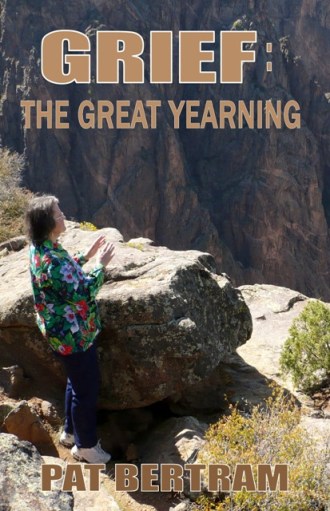
Two years ago, my life mate/soul mate died, and the only way I could handle my overwhelming grief was to pour it out onto pages of a journal, letters to him, and blog posts. When I discovered how much those blog posts meant to people who had also suffered grievous losses, I compiled my writings into a book about my first year of grief called Grief: The Great Yearning, which has recently been published by Second Wind Publishing. And so, quite by accident, I ended up writing the story of a love that transcended time and physical bonds, told with sensitivity and great wisdom. I just never knew that the story I’d always wanted to write would be mine.

Here are some ways their backgrounds influence other authors. The comments are taken from interviews posted at Pat Bertram Introduces . . .

From an interview with Sandra Shwayder Sanchez, Author of “The Nun”

I was a child people called “an old soul” . . . an aunt said I seemed to look right through people and I do remember having insights about what was going on inside the heads of adults and often felt very sorry for them. My mother used to discuss Freudian dream interpretation with me and that fascinated me as well as the mythologies and fairy tales I enjoyed reading. So it was I think inevitable that I would write books in which the world of our dreams and the world of consensual reality interface and merge with almost imperceptible boundaries.

From an interview with Dale Cozort, Author of “Exchange

I grew up in a fair-sized city, but I spent a lot of time with relatives in the country, so I probably write rural life a little more authentically than someone without that experience. I also have a computer background, so there is always a little bit of the techie in my stories. I have to dial that back so it doesn’t get in the way of the story.

From an interview with Sheila Deeth, Author of “Flower Child”

I call myself a mongrel Christian mathematician. I think my mixed-up background helps me (or forces me to) see things from a slightly different perspective. Being an English American does the same thing — it makes me more aware of how many of my assumptions are cultural, so it lets me explore characters who might make different assumptions.

So, how has your background infuenced your writing?

(If you’d like me to interview you, please check out my author questionnaire http://patbertram.wordpress.com/author-questionnaire/ and follow the instruction.)

Rubicon Ranch: A Collaboration

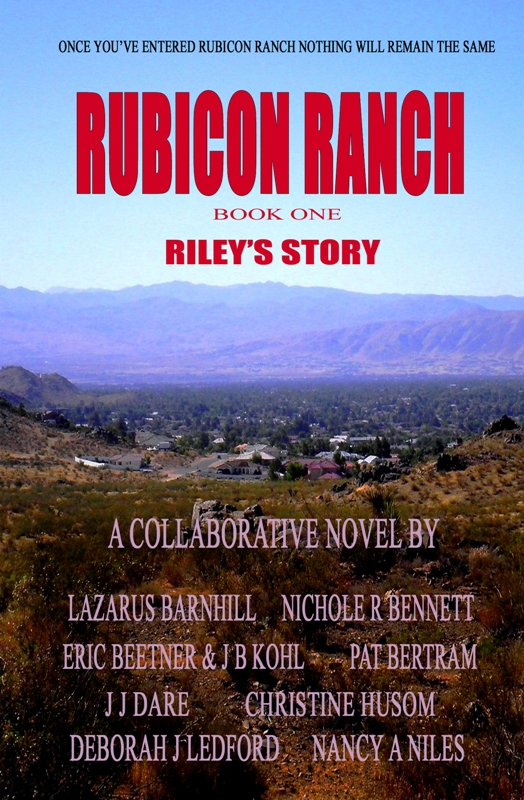
Rubicon Ranch is a collaborative novel I am writing online with eight other Second Wind authors. 

A little girl’s body has been found in the wilderness near the desert community of Rubicon Ranch. Was it an accident? Or . . . murder! But who would want to kill a child? Everyone in this upscale housing development is hiding something. Everyone has an agenda. Everyone’s life will be different after they have encountered the Rubicon. Rubicon Ranch, that is.

If you haven’t yet checked the story out, you can find what we’ve written so far at: Rubicon Ranch.  Here is the current chapter, told from the point of view of my character, Melanie Gray, a recent widow who found the child’s body.

Melanie had taken the long way home from the restaurant, winding for hours through Rubicon Ranch, stopping to shoot exotic blooms in landscaped gardens and dainty wildflowers in unkempt yards. By the time she reached Tehachapi Road, she was exhausted. She half expected the sheriff to come after her, but apparently he’d accepted her brush-off as final — if you can call a full-fledged tantrum a brush-off.

Why did he keep getting under her skin? He wasn’t her type. Not that she had a type. Alexander was the only man she’d ever loved, and she’d fallen for him so hard she could still feel the bruises twenty-three years later.

Tears welled up in her eyes as she remembered her husband when they first met. His hazel eyes had blazed with golden lights as he smiled at her, and young fool that she’d been, she’d been dazzled. They had a great life, or so it had seemed. She’d felt safe with him as they traveled the world over. And free. What need had she of a house, a car, kids when she had him?

Well, now she had nothing but debts. And doubts. Had Alexander ever loved her as she loved him?

“Are you okay?”

The voice startled Melanie. She scrubbed away her tears and looked around. An old woman with tan, leathery-looking skin and dark eyes shaded by a wide-brimmed straw hat was standing by an open mailbox, envelopes clutched in her hand.

“Are you okay?” the woman repeated as she closed the mailbox.

Melanie curved her lips in what she hoped was a friendly smile. “I’m fine. Just hot.”

The woman brushed a forearm across her brow. “Too hot for this time of day, that’s for sure. Tomorrow is supposed to be even hotter if you can imagine that. Well, at least all this sweat is good for the complexion. Keeps one looking young.”

Laughing, the woman minced up the sidewalk to her front door.

Melanie let the smile drop from her face, glad she didn’t have to pretend to be amused at the woman’s feeble joke. Nothing amused her any more. Not the irony of Alexander dying while texting. He hated texting. Said it was creating a new language and a cult of idiocy. Not the sheriff and his unsubtle attempts at flirtation. Not finding a little girl stuffed in a television set. Had that been someone’s idea of a joke? A fitting resting place for a child who watched too much television?

She hastened up Tehachapi, but her footsteps slowed as she reached Delano Road. This neighborhood had never been welcoming, but now it felt threatening, as if unseen storm clouds were gathering above the custom-made houses.

Maybe, finally, the sheriff was going to investigate the murderer instead of investigating her. Maybe, finally, he was going to turn his predatory gaze in the right direction.

She almost felt sorry for the villain.

Grief: The Great Yearning Has Been Published!

At long last, the book about my first year of grief, Grief: The Great Yearning is available!

Click here to buy: the Kindle edition on Amazon

Click here to buy: the print/paperback edition on Amazon

Click here to buy: the paperback version from Second Wind Publishing ($2.00 discount.)

Click here to download 20% free on Smashwords, or to buy in any ebook format, including palm reading devices: Grief: The Great Yearning. 

How long had the idea of your book been developing before you began to write the story?

Light Bringer, my most recent release from Second Wind Publishing, stewed in my brain pan for several years before I actually started to write it. It was the first book I conceived, but I couldn’t figure out who my alien characters were, where they were from, how they traveled here, and why they came, so when other stories captured my imagination, I followed my enthusiasm. In between finishing my various novels, I worked on Light Bringer, trying to develop the idea and research the specifics. If you include my research, which I’d been doing for decades before the story ever entered my mind, you could say the idea for the book had been developing for about thirty years.

Here are some other authors’ responses to the question of how long the idea had been developing before beginning to write their stories. The comments are taken from interviews posted at Pat Bertram Introduces . . .

From an interview with Jerold Last, Author of “The Ambivalent Corpse”

It took a while for me to find the time to sit down and start writing the book. In this case “a while” spanned 12 years. The major challenges for me are finding the time to write and the discipline to edit the dialogue and descriptive passages over and over until things feel right and pass my wife’s critical evaluation. I haven’t needed to spend much time on research as yet, since I’ve lived in the locations that the books have been set in.

From an interview with Guy Harrison, author of “Agents of Change”

For over a year, if you can believe it. I originally wrote Agents of Change as a television pilot script around this time last year. As an aspiring screenwriter for many years, I finally got tired of banging my head against the wall as I attempted to sell the script.

This past October, I finally asked myself “what if I wrote a novel?” I really believed in the television pilot’s concept but knew I needed to rework it for the purposes of a book. It’s darker than the television series would have been. Truth be told, I actually like it a lot better as a novel.

From an interview with Dale Cozort, Author of “Exchange”

For this particular book, almost twenty years. I know that because I came across a notebook with dated entries from when I was in my late teens outlining some of the ideas. That’s unusual for me. Most of my stories go from concept to writing within a year or two. I had the idea for Exchange long before I had the maturity or self-discipline to write it.

From an interview with Stephen Prosapio, Author of “Ghosts of Rosewood Asylum”

Funny in that this story had to “brew” quite a while, Pat. I thought up the rough idea for GHOSTS OF ROSEWOOD ASYLUM after my first novel DREAM WAR didn’t sell to the Big Six publishers. I didn’t quite pitch it right to my agent though, and she suggested I go with another idea I had at the time (a vampire novel). Unfortunately, I got blocked with that idea and came back to the TV Paranormal Investigator angle. Pitching it a second time to my agent went much better. She gave me some great advice. Thus, GHOSTS OF ROSEWOOD ASYLUM (GoRA) was the easiest novel to write thus far. I wrote the first draft within 3 months.

From an interview with Ellis Vidler, Author of “Cold Comfort”

Cold Comfort took about a year to write and five more to revise till I felt it was right. The first one, Haunting Refrain, took eight years to complete. I’m getting better.

From an interview with Joylene Nowell Butler, Author of “Broken but not Dead”

Too long. Someone asked me the other day about my mother and it occurred to me then that the day she died I’d written the first four pages of “Broken but not Dead”. I gave them to her to read, then retired for the night. When I got up the next morning the pages were on the dining room table with spelling corrections and a note that said she liked it very much. I didn’t realize then that she’d passed. That was October 16, 1999. It takes me a long time to write, and I don’t think it’s because I’m slow. I work on so many different projects at the same time and I like to take breaks and distance myself often.

So, How long had the idea of your book been developing before you began to write the story?

(If you’d like me to interview you, please check out my author questionnaire http://patbertram.wordpress.com/author-questionnaire/ and follow the instruction.)

Putting the “Who” in Whodunit

I’m collaborating with several other Second Wind Publishing authors to write a series of novels online on a blog. The first novel is about the death of a little girl. Her body was found in the desert outside a bedroom community that once had been a working ranch, hence the name of the series, Rubicon Ranch.

Collaboration is a bit of an over-statement. Rubicon Ranch is more of a cross between a round robin or campfire tale, with each author taking turns adding to the story, and a role-playing game. We each create and control a POV character, show who s/he is, what relationship s/he has with the deceased, and why s/he might want him dead.

I have it easy — my character, Melanie Gray, is a photographer/writer who wanders the desert taking photos for the coffee table books she used to write with her dead husband. (He wasn’t dead when they were working together, of course.) He died in a one-car accident while texting his mistress, though there are suspicious circumstances leading investigators to think that perhaps he was killed. Melanie has a talent for finding strange things in the desert, such as the child’s body stuffed in an abandoned television console in the first book, and the scattered body parts that will be found in the second book. This is all that leads the sheriff to suspect her.

The other characters, however, have to simultaneously prove that they are the murderer, yet also have a plausible explanation for why they acted guilty if they weren’t the murderer. (That’s because we don’t know whodunit until all the end of the book. So not only do readers of the ongoing story not know who the villain is, neither do we.)

In the first book, the authors solved the problem of simultaneously setting their characters up to be murderers while allowing for the possibility that they were innocent by giving their characters strange characteristics, such as sleepwalking, to keep the characters themselves from knowing if they were the killer.

In the second book that we are in the process of organizing, there is no way the killer can be unaware of having killed the victim. Even if by chance the character killed in some sort of fugue state, the character will still be faced with a dead body, which he or she will cut in small pieces and distribute it around the desert.

So how do you write a character from a strict third person limited point of view, from inside the character’s head, proving that your character is the killer, while at the same time giving yourself an out if the character turns out to be innocent?

Well . . . If your character has killed before, you can have him/her worrying about if the sheriff will find out what s/he did, without being specific as to which crime s/he is wondering about. You can have your character act guilty — perhaps desperately trying to cover something up. You can have him/her try to pin the murder on someone else, offering assistance to the sheriff, which would make your character seem guilty, but in the end (if your character is not the killer) have an alternate explanation. You can be hiding something in your house that can be construed as your having Morris’s body that you’re cutting up bit by bit. I’m sure you can come up with better ideas than these, but you get the idea.

I’m looking forward to seeing what the other authors come up with.

Meantime, if you haven’t checked out Rubicon Ranch, and wish do so, click here: Rubicon Ranch.

Celebrating Twenty Weeks of Daily Blogging

On September 25, 2011, I made a vow to blog for 100 days straight without fail. I wanted to get back into the discipline of daily writing, but didn’t want to make a major commitment such as writing a novel. I figured daily blog posts would satisfy the discipline and also satisfy the part in me that needs the reinforcement of completing a project. I passed the 100 day mark without even noticing, and now I’ve been posting a blog every day for twenty weeks — 140 posts.  Surprisingly, very few are frivolous, posted just for the sake of posting something. So today, let’s forget the seriousness of my usual posts. Let’s forget that this is Saturday, my sadder day. Let’s forget that my publisher, Second Wind Publishing, has moved to a new website and I have thousands of now-dead links to update. Let’s forget all of that, and just play.

And if that isn’t any fun, here’s a jigsaw puzzle (I get such a kick out of these!)

Want more fun?

Click here to read the first chapter of: Light Bringer

Click here to read the back cover copy and an excerpt: Light Bringer

Click here to check out (and buy at $2.00 off!) Light Bringer at Second Wind Publishing’s new site: Light Bringer

How To Keep From Having Too Much Exposition in Your Novel

In an online discussion today, a writer asked what was the best way to keep from having too much exposition in your fiction, and how to insert it if necessary. Apparently, her character spends a lot of time alone, and she needed to know how to insert exposition during the long scenes when he is by himself.

That is a tough situation. Characters alone are hard to write. They need someone to butt heads with, they need to show readers who they are through comparison or contrast with other characters, and they need allies and enemies. When a character is around others, tension is inevitable, so conflict comes naturally. When a character is by himself, he has perhaps less interesting conflicts — the environment, his own nature, personal disasters. A lot of books are based on such non-human antagonists or inner demons, but readers like to see characters acting and reacting with other characters.

In scenes with only one character, it’s best to keep exposition to a bare minimum and focus on the action. One character alone for long periods of time without another character to butt heads with gets boring for readers, and exposition only exacerbates the problem. Feed the exposition into the story bit by bit as you need it, and refrain from long exposition dumps.

My novel Light Bringer, available from Second Wind Pubishing, is based on myth, both Sumerian myths and modern conspiracy theories, and all of that background information had to be presented to show the sweep of history. I created a discussion group among several colorful characters, each with his or her own take on the situation, then used the various conspiracy theories to help create the the characters and show their differences, which became a lively and painless way of dealing with the exposition. In addition, I ended up with a cast of ready-made characters I could pull from whenever I needed a minor character to fulfill a role.

The best way to insert exposition, though, is to make one character desperate to get the information, that way readers will want it, too. I used that technique in A Spark of Heavenly Fire, also available from Second Wind Publishing. The thriller required a lot of background information about biological warfare. I made one character desperate to hear the information, but I parceled it out bit by bit to make his desperation for the truth grow stronger while he became increasingly sickened by what he learned.

But you can’t use that particular technique with a single character, unless perhaps he is ransacking someone’s files, all the while fearful of being discovered. With a single character, it’s best to keep with action. Exposition slows the pace of the book, so does a single character unless he is dealing with a lot of external conflict.

Exposition can also be used to give readers a breather between fast-paced scenes, but even so, information dumps seldom add to the excitement of a story, so they have to be used sparingly. Exposition is best spread throughout a book, feeding readers only that which they need to know in order to understand the current scene.

A common mistake beginning writers make is to think that readers need to know the entire backstory before they can get involved with the characters, and so first chapters are generally exposition-heavy. I have a great fix for that — leave everything as is until the book is completely finished, then cut out the first chapter. (Which is what I did for A Spark of Heavenly Fire.) You will be amazed at how much of that first information dump is spread delicately throughout the book when needed, making the first chapter redundant. Of course, if there is a bit of necessary information in the deleted chapter that does not appear in the remaining chapters, it’s easy enough to find the proper place to insert it. The first chapter of a book should begin in the middle of the action, not before the action even begins. And speaking of first chapters, please, don’t ever use flashbacks in the opening scenes. Establish your  story, and then, if necessary, use flashbacks judiciously.  By definition, flashbacks lack the immediacy of present action.

As a Reader, What Would You Like to Ask a Publisher?

My interview blog Pat Bertram Introduces . . . is really taking off. I post author interviews and character interviews, and someone suggested I post publisher interviews, too. Sounds like an interesting idea, especially since I’d like to do more to support small independent royalty-paying presses that publish books by a variety of authors. (Like Second Wind Publishing, the company that publishes my books.)

Before I can do the interviews, I have to compile a list of questions such as my author questionnaire or my character questionnaire. Some of the author questions might be applicable, but I’m more interested in getting behind the scenes of the publishing companies to help readers learn more about small presses. And I don’t want to ask writer-oriented questions such as submission policies and what royalties they pay because I’m trying to steer readers their way.

So, as a reader, what would you like to ask a publisher? What genres they publish, of course, and the criteria they use to choose the books they decide to publish. How they decided to become a publisher might be a good question. What else?

[If you are a publisher who would like to be interviewed, please leave your name as a comment/reply. If you are an author who would like to do an interview for me or have your character do an interview with me, please go to either the  author questionnaire or character questionnaire (or both!) and follow the directions.]

Rubicon Ranch: A Collaborative Novel

I am involved in a wonderful project with eight other Second Wind authors. Rubicon Ranch is an ongoing collaborative novel that we are writing online. It is the story of people whose lives have been changed when a little girl’s body was found in the wilderness near the desert community of Rubicon Ranch. Was her death an accident? Or . . . murder! But who would want to kill a child? Everyone in this upscale housing development is hiding something. Everyone has an agenda. Everyone’s life will be different after they have encountered the Rubicon. Rubicon Ranch, that is.

Each of us writers is responsible for the development of our own characters. My character is Melanie Gray. She has traveled the world with her husband, a world-renowned photographer. Together they authored many coffee-table books (she did the writing, he the photographs). One of the books told about mountains of the world, one about rivers, one about oceans, one about forests, and now they have a contract to do deserts. After they rented a house in Rubicon Ranch to begin their in-depth study of the southwestern deserts, he died in a car accident.

Now, not only does Melanie have to deal with the pain of losing her husband and figuring out what she’s going to do for the rest of her life, she needs to fulfill the publishing contract or she’ll have to reimburse the publishers, which she cannot do because the advance is all but spent. Since she is not a photographer, she roams the desert bordering on Rubicon Ranch, taking hundreds of photos, hoping that a few of them will accidentally end up being as brilliant as her husband’s photos always were. She finds the child’s body and takes photos of the scene after calling 911. At first she is a suspect but once the Sheriff has ruled her out, he requests her help in reading the desert and desert-related clues. Still, the sheriff does not trust her completely, thinking she is hiding something.

Chapter 26: Melanie Gray — by Pat Bertram

Fury, like wildfire flashed through Melanie. Fury at the sheriff for paying his silly games when people were dead, fury at herself for playing his fool.

She’d been flattered that he thought she could help with his investigation, but apparently the only thing he’d been investigating was her and how to get in her panties. And she’d fallen for it. Cripes, what an idiot! All her resolve not to let him get to her had been for nothing.

And that whole seduction scene—”So maybe, when I need you to help me, I won’t have to bully you. You’ll cooperate with me because you understand that getting my job done honestly is the most important thing to me.” Did he believe his own drivel? And anyway, how could she help when he wasn’t doing anything? It had been two days since Riley died. Didn’t they say that if they didn’t catch a killer within the first forty-eight hours that chances are he or she would never be caught? And the sheriff had wasted those precious hours trying to seduce her.

She’d fallen for Alexander’s crap and apparently she hadn’t learned anything, because here she was again, playing straight-woman for another unprincipled clown. Alexander, at least, had offered her adventure and marriage, and for a while he had even been faithful. But Seth? What did he have to offer? Nothing. He was married, and he was a taker. He’d take everything she had, which wasn’t much, just her integrity, and she’d be damned before she let him tarnish that with a tawdry affair. She’d seen the look in his eyes when he’d said “And I know you’d rather claw out my eyes and slash my throat than let me touch you.” And that look had belied his words. He seemed to think all he had to do was pretend to know her and she’d fall into his oh, so understanding arms.

“What?” he said, sounding as if he didn’t know exactly what was going through her mind. How could he not? He, Sheriff Seth Bryan, the great detective.

“As if you don’t know.” Melanie spit the words from between clenched teeth.

Seth’s brows drew together in an almost believable though comic look of confusion. “That’s such a typical womanish remark. I thought you were different.”

“You thought I was gullible and naïve. You thought since I put up with Alexander’s philandering, I’d put up with yours, too, but that is not going to happen. Only a fool gets involved with a married man, and whatever you think, I am no fool.”

Seth held up his hands, palms toward her. “Whoa.”

“Being a widow does not make me ripe for the plucking. I don’t need to be serviced like a bitch in heat. Believe me, the last thing I need in my life is a man, especially a married man. Calling it separate maintenance does not make you any less married.”

He flashed his teeth. “So you do like me. You’re protesting too much.”

“Not protesting enough, apparently, or else you wouldn’t have that silly grin on your face.”

He lost the grin. “What’s going on here? I thought we were having a nice meal while we went over the case.”

“You should be going over the case with your deputies. They, at least, seem to understand how inappropriate it is for you to include me in your investigation. Unless I’m still a suspect and you’re trying to get me to let down my guard and confess?”

“I told you, you were never a suspect.”

“As if playing with me, gigging me as you called it, is any better. So let’s discuss the case. What were the results of the autopsy? Was Riley murdered or was it an accident? If she was murdered, how was it done and who did it? Were there drugs in her system? Have you interrogated her parents yet to find out what they’re hiding? Have you found out who the dead man is and what, if anything, he has to do with Riley’s murder? You pretty much ignored me when I said he looked liked Riley, but then, that’s understandable. I never got a good look at the girl. All I saw was her jaw line, her nose, and her eyebrows, so whatever I blurted out after seeing the man’s corpse has to be discounted. Did the same person kill both of them? Or were there two different killers? Or . . .” Melanie paused to grab the thought that flitted through her mind. “Did he kill Riley and someone else kill him?”

Seth picked up his sandwich, dipped an end in the au jus, bit off a piece, and chewed slowly.

Melanie nodded. “That’s what I thought. You’re all talk.” She deepened her voice and mimicked him. “‘We have to solve these murders.’ Yeah, like there really is a we. Well, there was a we, but that was Alexander and me. You and I will never be a we.” A cough shuddered through her torso. She took a long drink of water, hoping she wasn’t coming down with a cold but was merely dehydrated from the strong air-conditioning and her rare monologue.

Seth gave her a searching look, opened his mouth and then closed it again with what sounded like a resigned sigh. She wondered what he’d been going to say and why he thought better of it, then she let out a sigh of her own. It didn’t matter. She had enough to do with grieving and fulfilling her book contract. She had nothing left for the sheriff and his investigation. Whatever he might think, she really didn’t know anything. Well, that wasn’t strictly true. She did know one thing.

She threw her napkin on the table and stood, ready to flee.

Seth gaped at her. “What’s going on?”

“I’m going home, Sheriff Seth Bryan. I’m through with your games. You lied about investigating Alexander’s accident. I saw the photos in the newspaper and I visited the scene of the accident. There was nothing there to indicate that the crash had been anything other than an accident. Perhaps someone had tampered with the car, but the only way to find that out was to investigate the vehicle itself. And you didn’t care enough to check it out.”

***

An additional chapter of the book will be posted every Monday. Please join in the adventure — it should be fun! We don’t even know whodunit and won’t know until the end. You can find the earlier chapters here: Rubicon Ranch