Creating a Whole New Reality

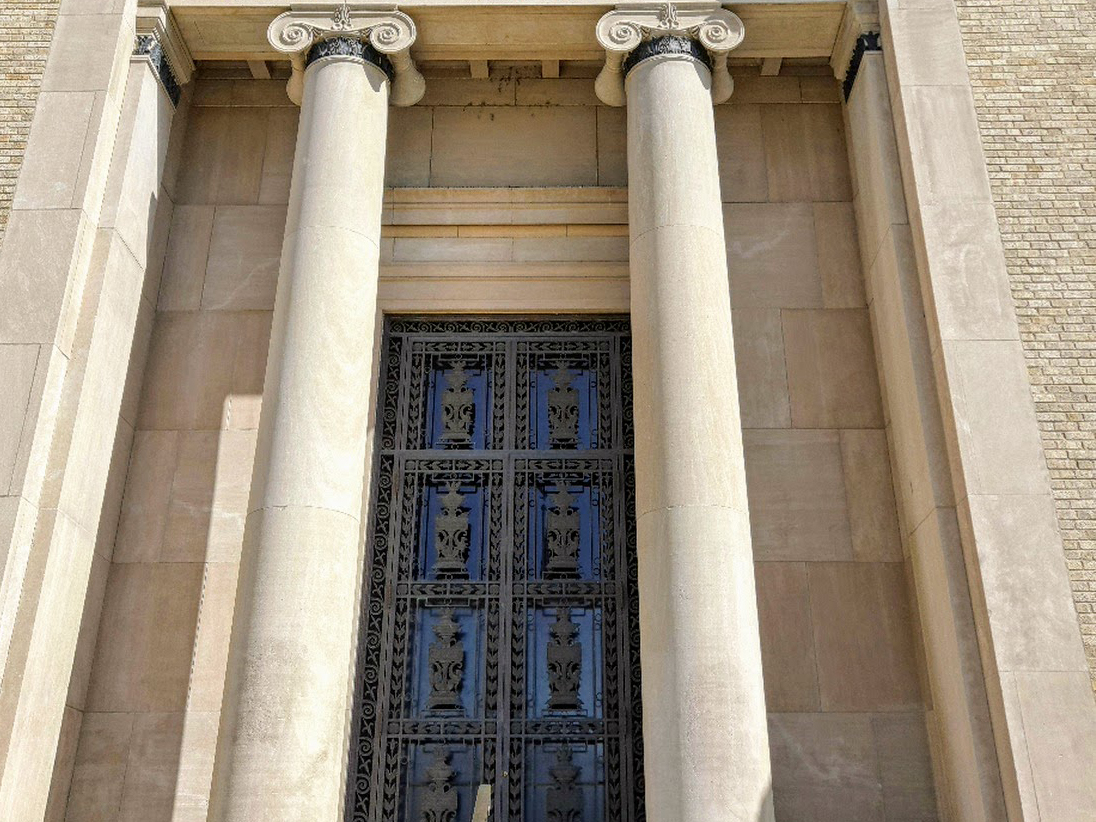
Despite my extensive research in previous years into ancient civilizations and the mysteries they left behind, I’d never heard of Tartaria until recently. Some days, my online feed is filled with tantalizing tidbits about a super-advanced civilization that lasted until around the turn of the twentieth century when it was buried by a mud flood in a great global reset. To prove their theory, they point to such things as the massive fortress-like buildings that were erected to house the insane, or rather, according to the story, to house those who still remembered the Tartarian world before it was destroyed. Also “proofs” are the incredible cathedrals and government edifices that were seemingly impossible to create in horse-and-buggy times. Those buildings were supposed to be conductors of earth energy, a free energy source that was known once upon a time. Also, so many of these buildings all over the world were created in similar styles, which leads people again down the trail to Tartaria.

As much as I enjoy fun theories, I couldn’t get behind this one. Oh, I do believe in earth energy (something Tesla supposedly proved, though that “proof” disappeared after his death), and many researchers have found connections between cathedrals (if you’re familiar with The DaVinci Code, you know as much as most people about those connections). The half-buried buildings could have come from settling over the centuries (much in the same way that Venice is sinking), rather than a single mud flood.

But despite the cohesion of the theory, I couldn’t buy into it. How could they make a billion people stop believing in what they knew happened?

Well, I have my answer. All I had to do was pay attention to what’s going on today, how the liberals in particular are rewriting history and teaching kids things that simply are not true, or at least not the whole truth. (I’ve written and deleted several examples because all of them would get me called a liar and a racist and a bigot and a whateveraphobic and a bunch of other unsavory things, which would prove my point, but proving a point isn’t worth getting curses called down on my head.)

So, let’s try this one: kids are being taught that this is the worst country in the world, that we are an oppressor civilization, which leads kids to believe we created the whole slave trade when in fact, it had been going on for thousands of years before anyone in this country held a slave, and it continues to this very day. What this country did was make slavery illegal. You can’t teach kids one thing without following through with the rest of the story. Nor can you ignore the hundreds of thousands of white Americans who died to free those slaves. Nor can you shame a country for things that happened before anyone alive today was born, without balancing it out with all the good things that the country subsequently did. We are a country in progress, with each generation trying to improve their lives, their family’s lives, and the lives of their fellow citizens. You leave those important parts out, and what you end up with are a couple of generations who want to tear the whole thing down and make the billionaires pay for everything. And though there are some rich folks using their money to sow discord in this and other countries (and somehow, the money those billionaires have is sacrosanct) others are simply working, providing jobs for people, creating wealth. Wealth is not a pie. When someone creates a successful business, it adds to the prosperity of everyone. But that, too, is something that is left out of the discussion.

So, there begins the erasure of the truth. In future generations, assuming this current crop of neo-socialist/communists don’t rip the country to shreds, that’s what people will believe. They’ll sit on top of the destruction of a country that was built to serve the individual and protect individual rights because they believe the government needs to be in control of everything. (Which is utterly insane. The more money the government has, the more it squanders, the more fraud there is, and the worse off things are.)

Anyway, those future folks will be digging through the ruins, and they will find the Smithsonian Institute and the exhibits (paid for with our hard-earned money) that instead of celebrating this country, tell the story of how terrible we were. And those folks will nod in self-congratulation, and tell themselves that, even though they ended up in rags, they did the right thing by tearing it all down.

This is an exaggeration, of course, and with any luck, we’ll never see that destruction, but my point holds — it is possible to create a whole new reality within a short time. So who’s to say that there wasn’t some kind of great reset that lies forgotten in the not-so-distant past, just as people today are rewriting our own history.

There is one lingering question I have that mention of Tartaria brought to mind: in 1900, our population was only 76 million people, so why were there so many immense buildings erected all over the country to house the insane?
 

***

Pat Bertram is the author of Grief: The Inside Story – A Guide to Surviving the Loss of a Loved One

Okay, I Admit It. I’m Jealous.

Jealous of whom? Need you ask? I bet if they were honest, most authors would also admit they were jealous of Dan Brown. Whatever one thinks of the man himself, the man as a story steller, the man as a wordsmith, the fact is, he wrote a book that is dazzling the world.

I only read The DaVinci Code because I was curious as to what captured people’s attention when it came to books. Though his prose is supposedly the worst thing since moldy bread, what I noticed were the internal inconsistencies — if the villain was so smart as to stay one step ahead of Robert and Sophie, if he was so smart as to figure out where they were going next and kill the person they wanted to contact, why wasn’t he smart enough just to kill the two of them and put us out of our misery? I don’t like books where the body count rises just to show how smart the hero is to stay alive. Cheap thrills, but apparently they work. 

The internal inconsistencies were bad enough, but what drove me nuts were the external inconsistencies — though the cathedrals in France do hide a code, the code predates the cathedrals, predates Christianity even. The cathedrals were all built on ancient mystical sites, as was the Vatican itself.  If the cathedrals themselves do contain a code, it is a manifestation of the prehistoric meaning. And then there was Sophie as the direct descendent of Jesus. Puh-leeze. A family tree is exactly that — an everspreading, ever thinning genetic branching. Even if Sophie was a direct descendent, her Jesus genes would be so minuscule as to be indistinguishable from yours or mine. (Go back twenty generations, and we’re all related.) I won’t even mention the possibility that Mary Magdalene never existed as a flesh and blood woman but, together with the other two Marys, was a manifestation of the mother goddess. And then, of course, I kept hearing echoes of a previous book I’d read — Holy Blood, Holy Grail — the book that he didn’t credit for his research.

Still, with all that, he captured the world’s attention, and now with his new book, for whatever reason, he is dazzling the world again. I wonder what that would be like? Must be nice.

add to del.icio.us : Add to Blinkslist : add to furl : Digg it : Stumble It! : add to simpy : seed the vine : : : TailRank : post to facebook

On Writing: Finding Your Style

Most books on writing I’ve read talk about developing a syle, but recently I came across the remark that “style happens.” If style is simply the way you write, how does it come about? In my case, I don’t try for a specific style, such as gritty or sentimental, flamboyant or minimal, sassy or grim or lyrical. Whatever style I have does not even come when I write, but when I edit. In paring away all the excess, I end up with a matter-of-fact style (or so I’ve been told).

I recently entered a contest to rewrite the first 263 words of The DaVinci Code. Dan Brown has a melodramatic style, one that sublimates good writing for effect. (For example, it is a physical impossibility to freeze and turn one’s head at the same time.) In editing his words, I changed the style, but not the basic meaning of the piece.

Here are Brown’s words:

Renowned curator Jacques Saunière staggered through the vaulted archway of the museum’s Grand Gallery. He lunged for the nearest painting he could see, a Carravagio. Grabbing the gilded frame, the seventy-three-year-old man heaved the masterpiece toward himself until it tore from the wall and Saunière collapsed backward in a heap beneath the canvas.

As he anticipated, a thundering iron gate fell nearby, barricading the entrance to the suite. The parquet floor shook. Far off, an alarm began to ring.

The curator lay a moment, gasping for breath, taking stock. I am still alive. He crawled out from under the canvas and scanned the cavernous space for someplace to hide.

A voice spoke, chillingly close. “Do not move.”

On his hands and knees, the curator froze, turning his head slowly.

Only fifteen feet away, outside the sealed gate, the mountainous silhouette of his attacker stared through the iron bars. He was broad and tall, with ghost-pale skin and thinning white hair. His irises were pink with dark red pupils. The albino drew a pistol from his coat and aimed the long silencer through the bars, directly at the curator. “You should not have run.” His accent was not easy to place. “Now tell me where it is.”

“I told you already,” the curator stammered, kneeling defenseless on the floor of the gallery. “I have no idea what you are talking about!”

“You are lying.” The man stared at him, perfectly immobile except for the glint in his ghostly eyes. “You and your brethren possess something that is not yours.”

Here is my edit:

Jaques Sauniere staggered through the vaulted archway of the Louvre’s Grand Gallery, lunged for the Carravagio, and tore it from the wall. He collapsed under the weight.

Fifteen feet away, an iron gate dropped with a thud, barricading the entrance of the suite.

Sauniere lay still, struggling to breathe. The sacrifice of the Carravagio gave him a moment’s safety. But he needed to hide.

He inched from beneath the canvas.

“Do not move.”

He froze. That accented voice was unmistakable. How did the albino find him so quickly?

“Where is it?” the albino demanded.

Sauniere turned toward the hulk on the other side of the gate. His gaze shifted from the silenced pistol in the man’s huge hand to the pink eyes with the dark red pupils. “I don’t know what you’re talking about.”

“You and your brethren are in possession of something that does not belong to you. I want it.”




