Thank You For a Heartwarming and Heartbreaking Day

On Monday when I logged into my wordpress account, I discovered that my I Am a Three-Month Grief Survivor post had received thousands of views and dozens of comments. A quick check of my stats showed that most of the views came from WordPress. Imagine my surprise when I saw that my post had made the home page. Whew. Took my breath away.

Then I read the comments, and that was the end of breathing for a while. I was awed by the willingness of people to support me in my grief and overwhelmed by the generosity of those who shared their own stories of grief. So much pain. So much sadness. So much love.

One woman posted a link to a list of online communities that could potentially help, so if you are grieving, be sure to check it out. http://www.anachronisticmom.com/Medical-KK/Grieving.html

Another woman posted a quote:

Here at the frontier there are falling leaves…although my neighbors are all barbarians, and you, you are a thousand miles away…there are always two cups at my table. – Tang Dynasty

And a third woman told me about “Death is Nothing at All,” a poem by Henry Scott Holland that might offer comfort:

Death is nothing at all.
I have only slipped away to the next room.
I am I and you are you.
Whatever we were to each other,
That, we still are.

Call me by my old familiar name.
Speak to me in the easy way
which you always used.
Put no difference into your tone.
Wear no forced air of solemnity or sorrow.

Laugh as we always laughed
at the little jokes we enjoyed together.
Play, smile, think of me. Pray for me.
Let my name be ever the household word
that it always was.
Let it be spoken without effect.
Without the trace of a shadow on it.

Life means all that it ever meant.
It is the same that it ever was.
There is absolute unbroken continuity.
Why should I be out of mind
because I am out of sight?

I am but waiting for you.
For an interval.
Somewhere. Very near.
Just around the corner.

All is well.

It was an incredible day for me,  heartwarming and heartbreaking all at once. Thank you, everyone, who stopped by to read or to comment.

I Am a Three-Month Grief Survivor

Grief plays tricks with time. The past three months have passed in the blink of an eye, and they have lasted forever. I never thought I’d last three weeks let alone three months — at times the pain was so unbearable I wanted to scream. So I did.

Yet here I am, a thousand miles from where I started, and generally I’m doing okay. Grief grabs me a couple of times a day, but doesn’t hang around long, mostly because I take long walks and look at life through the lens of a camera. I find solace there, and peace.

This morning, however, I woke in tears because of this new milestone — three months since his death. I needed to scream, to be alone with my pain, so I headed out for a walk. Wandered in the desert. Cried in the wilderness. And screamed. Haven’t had to do that for a while — I’ve been keeping myself too busy to feel much, so it was good, in a strange and agonizing sort of way, to reconnect with my grief.

I’m still going to a grief support group. It does help to be around people who understand this journey, to hear how others are handling their loss. (Loss. What a odd way to describe death, as if the person is simply misplaced, like a ring, and will soon be found.) Each week there is a special focus of attention, a lesson. The lesson for the grief support group last week was about finding a sense of purpose:

 “Each phase in my grief journey allows me to explore where I am right now. By accepting that I am where I must need to be, I am free to live today. The place I am today can become friend instead of foe. The journey into my loss has already created change, and the present and future will create more. Now may be the time to examine my expectations of myself, and accept that I am where I need to be for now.”

I’m not sure that I am where I need to be, either mentally or geographically, but that sentiment hit a chord with me. I am trying to trust in the rightness of my path, and that I will know what to do when the next step comes. What bothers me is that by trusting in the rightness of the path, both mine and my soulmate’s,  it means that it was right for him to be sick and die, and that I cannot accept. But maybe it’s not up to me to accept the rightness of his path, only the rightness of mine. 

As for change? If I were writing a novel about a character who has gone through what I have these past months — first the diagnosis of his illness, then his too quick death, then sorting through the accumulation of decades, and moving from the house where we spent the past twenty years — she would have grown stronger perhaps, or wiser, and changed in some fundamental way, but I don’t feel any different. I’m still the same person, though my situation is completely different than it was six months ago.

But perhaps it’s still too soon for any change to appear. In the world of grief, I am still a toddler.

Wisdom of the Wombats

I belong to an online group called The Writin’ Wombats — a convivial group of writers, readers and critics supporting each others’ work and sharing news, gossip, rants and triumphs. (You can join, too. Everyone is welcome.) The Wombats have been supportive of me in my grief, encouraging me with wise words and virtual hugs. I would like to share with you a comment one of the Wombats left for me on the last thread. It helped me, and perhaps it will help others who are also grieving the loss of a loved one.

“Pat B–Love is so awesome, so overwhelming and filling and all-encompassing. So, too, is grief. It touches all those same places touched by love. When that love was every place in you, you can’t help but be attacked by grief in those same places. And so the grief is overwhelming and filling and all-encompassing as well. But it can’t overpower the love. It can overshadow it. But it doesn’t have the same strength, the same staying power, that love holds. After the grief eases, the love will again shine. No, you won’t have J. And that’s the cruelest, cruelest loss. But you will have his touch all over you, through you, from where his love lived with yours. And it once again will be good.” — E. A. Hill

I’ve come to realize that hate is not the opposite of love, grief is for the very reasons that Ms. Hill stated. Love and grief are the bookends of a relationship. The two clearest memories I have of my mate are the day I met him and the day he left me. After almost thirty-four years, I barely remember who I was before we met, and I don’t yet know who I am now that he’s gone. So much of my life was intertwined with his that it could take the rest of my days to pick the pieces of myself out of  the “us” that we created. And maybe it can’t be done. But as time passes, and I experience things we can no longer share, I will become more of me and less of us. Yet the love will remain. And I hope, as Ms. Hill says, that once again it will be good.

Until then, and long afterward, I’ll be soaking up the wisdom of the wombats.

Staying in the Moment

I’m mostly doing okay, though it’s going to take a long time to get used to living without my life mate. I keep thinking that I’ve been good about dealing with all I’ve had to deal with, so now it’s time to go home to him. I’m not sure what will be worse, still feeling that I can go home, or how I will feel when I get to the point where I know deep down that I can’t ever go home. Maybe by that time I’ll find my home within myself, but I am a long way from there yet. I am going through the grieving process way too fast, though. I see our life and my connection to it and him moving away from me at ever increasing speeds. It scares me, the thought of losing that connection. Scares me even more to think of growing old alone. I’m okay now, but what will I do when the physical limitations start? 

I came across an interesting comment in a book today (Colony by Anne Rivers Siddons):

“Only the very young and old know the tranquility of the moment. The contentment of living each day as it comes to them, wholly and with all senses. The young do it because they know nothing, yet, of pain and fear and the transience of their lives; the old because they know everything of those things and can bear them only by staying in the moment.”

I’m not exactly old yet, though I too need to deal with life only moment by moment. Otherwise the pain — still! — is overwhelming, as is the fear. I can live this day, accepting what comes, even the tears. In the end, that’s all any of us have while we are alive — this day. If we can’t carpe diem, the next best thing is just to survive it.

Twelve Lonely Weeks

It’s been twelve weeks since my life mate died — twelve lonely weeks that I’ve spent wishing he were here, wishing that we had our life back, wishing that he hadn’t been sick so much.

I’m beginning to understand, though, that to wish things were different is to negate the wisdom, courage, and determination with which he faced his life and death. Until the very end when he was imprisoned in bed by drugs (they did not know how else to handle his terminal restlessness — the restlessness that some people experience near the end — so they tranquilized him into a coma) he was determined to live his life to the fullest he could. He was so weak, so befuddled by the drugs and the metastases in his brain that he could not do much, yet his courage and determination were as strong as ever. Sick of being in bed, sick of being sick, he set up an office in the living room and set to work planning his schedule. That was the last night he was awake. He lived through five more nights and days, but he was not conscious. Or at least I hope he wasn’t. He would have hated being a helpless invalid, so it’s a good thing he only had to endure five such days.

I really was glad — or perhaps relieved is a better word — when he died. He’d suffered so much and that determination of his not to waste a single moment of his life, not to give in to the disease, kept him going long after he was ready to die. Later, as the reality of the situation hit me, as grief devasted me, I began to wish things had been different.

He’d been told he had three to six months to live, but he only had three weeks. I’ve been wishing we had those months — but even if I had a choice, there is no way I could justify putting him through that extra pain so I could have him in my life a little longer.

And yet . . . and yet. I still wish things had been different. I wish he’d had a long, healthy, happy life. I wish we still had “our” life.

I wish I could hug him one more time.

I wish . . .

Making Sure Our Novels Are Worth Reading

I’ve been reading a lot lately. It’s what I do when I am convalescing or when I feel like pampering myself, and right now I feel like I’m doing both. I haven’t read anything particularly good or particularly bad, but reading is like breathing to me, so it doesn’t really matter.

One of the books captured my interest, though, mostly because it reminded me of my novel, More Deaths Than One. It had many of the same elements as my story: both books dealt with people who’d been given false memories, both had a theme of human experimentation (in fact, this other book used some of the very same examples of past experimentation that I did), and both were, at least obliquely, about assassins. The set-up in this other book was even more elaborate than mine, and much more gruesome. I don’t understand why the experimenters had to “deglove” the victim/hero’s face to get to his brain and implant the controlling device (in other words, they pulled off his face — yuck.)

Like many such elaboriate thrillers, the end did not justify the long and convoluted way of getting there. For example, people with machinery lived in the next apartment, controlling him, which is what the implant should have done.

It turns out that the whole reason for the mind control was so that the victim/hero could — all unkowingly — turn another character into an assassin. The experimenters were killing off all the world leaders they didn’t like. Ho-hum. As I said, the end did not justify the set-up. If they wanted to kill those leaders, all they had to do was hire an assassin and then kill the assassin afterward, which is the way it’s been done for thousands of years. It’s simple, cheap, effective. (We’re not talking morality here, just story.)

I try to make sure the endings of my novels are satisfying — even if readers guess the story, there is still a pay-off that comes as a surprise. In More Deaths Than One, his reaction to what happened to him is vastly more important than the deed itself.

Oddly enough, the book I read right before this assassin one also had a similar plot to another of my novels — A Spark of Heavenly Fire. Both of these books were (loosely) about women finding happiness during an epidemic. Her disease was called the Phoenix Flu, mine was the Colorado Flu. Or at least that’s what people outside of Colorado called it. Those in Colorado called it the Red Death.

So what’s the point of this bloggery? Perhaps that we need to make sure we tell our stories with our own particular slant so that if by chance others have a similar idea, our novels are still worth reading. Perhaps that we need to make sure our endings fit the set-up. An elaborate set-up with a cliched ending could be just as ridiculous as a cliched story with an elaborate ending. (I’ve read a couple of books lately where the ending came out of nowhere without even a hint of foreshadowing.) Or perhaps the point of this bloggery is that I need to read less and write more.

The Long and Winding Road of Grief

The problem with grief (not counting the primary problem of having lost a loved one) is that so many emotions attack you all at once that you feel you can never get a grip. And then, for no fathomable reason, you hit an emotional trough where you feel nothing, and you begin to think that you can handle your grief, and then pow! Out of nowhere, it returns and slams you in the gut.

I was never a wildly emotional person, but now I am buffeted by more different emotions in a single day than I used to experience in a month. The emotions are not all negative, either. This morning, I woke up feeling a tingle of excitement — I’d planned to go on a long ramble, camera in hand, and for the first time in months, perhaps years, I felt alive. I’ve always taken long walks, but for the past couple of decades I’ve lived on a .3 mile lane between a dead end and a busy highway, so I used to walk up and down the lane, always looking for anything different to make the trek interesting. Now, I don’t have to look for those differences — I have a brand new world beneath my feet, before my eyes, and something in me is responding.

But still, side-by-side with my new awakening, is the sorrow that my mate is no longer with me. About fifteen minutes before I returned from my walk today, the thought that he was not waiting for me at the end doubled me over with pain. After such a bout, when the immediacy of the pain passes, when the tears finally dissipate, I’m left with the inexplicable feeling that he is away, perhaps getting well, and one of these days he will be calling, telling me I can come home. But he won’t be calling. And I won’t be going home.

And so I continue walking the long and winding road of grief.

Surprised By Life

I have relocated, and am now staying with my 93-year-old father. We’re muddling on okay together, we two virtual hermits who have lost our mates. He keeps to his schedule, and I keep to mine, though my schedule is less structured than his. I try to take a walk most days, and I bring my camera with me to see capture whatever beauty I might see. It’s a practice I started a couple of years ago to help me with my writing, a way to replenish my creative wells.

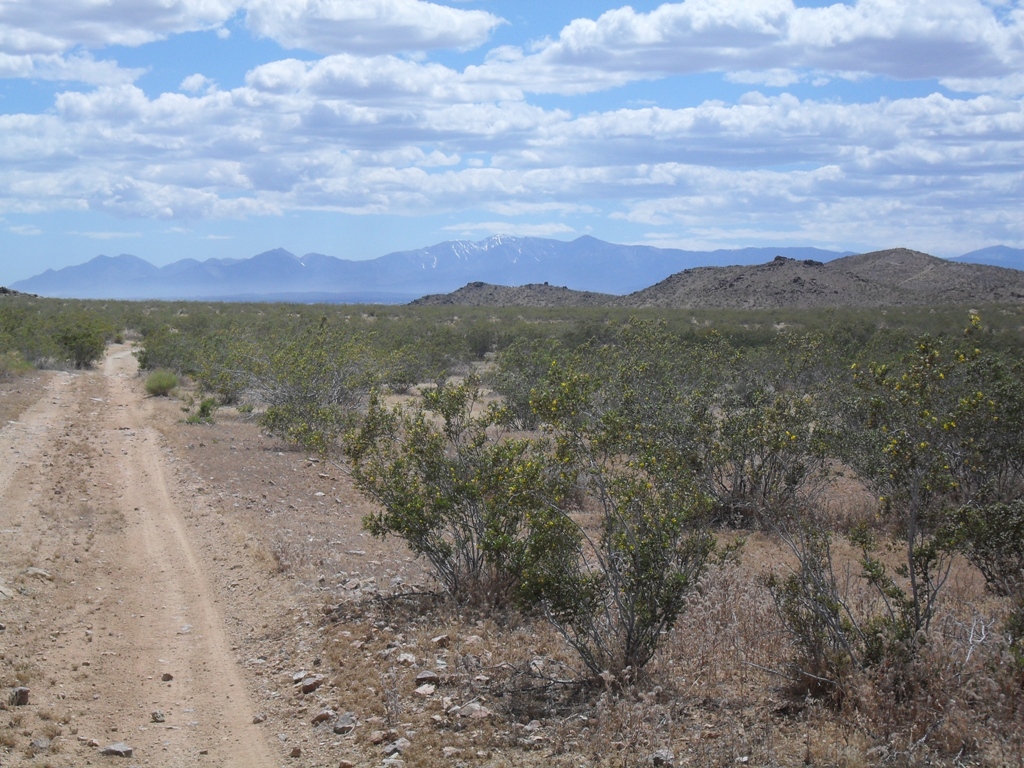
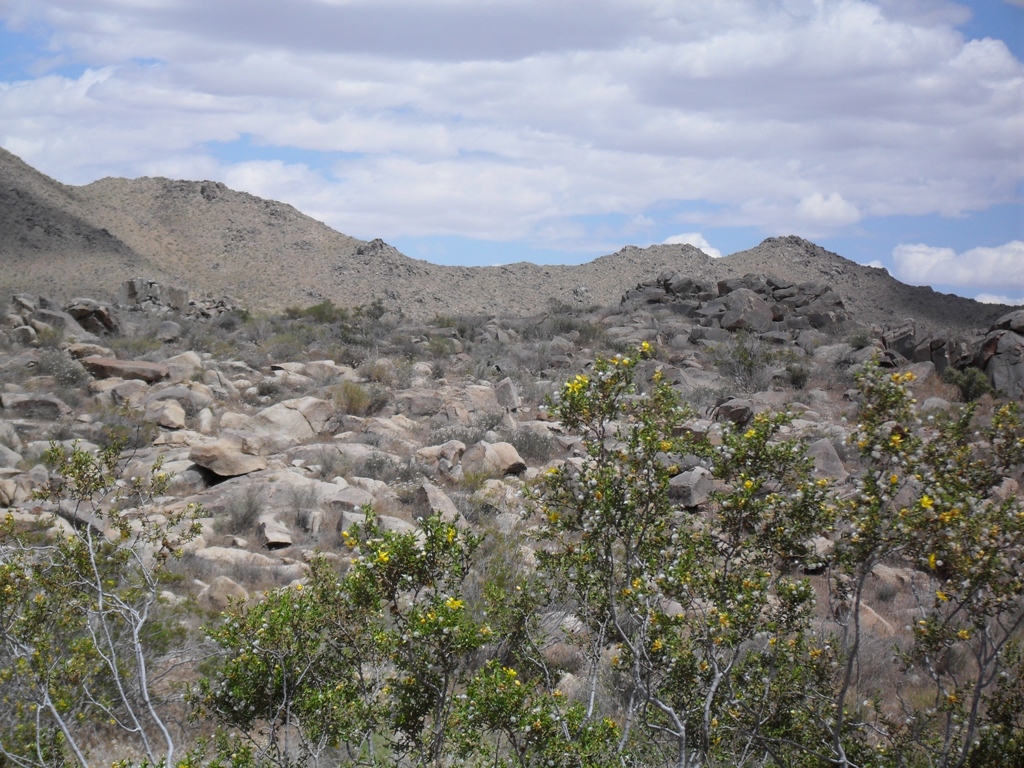
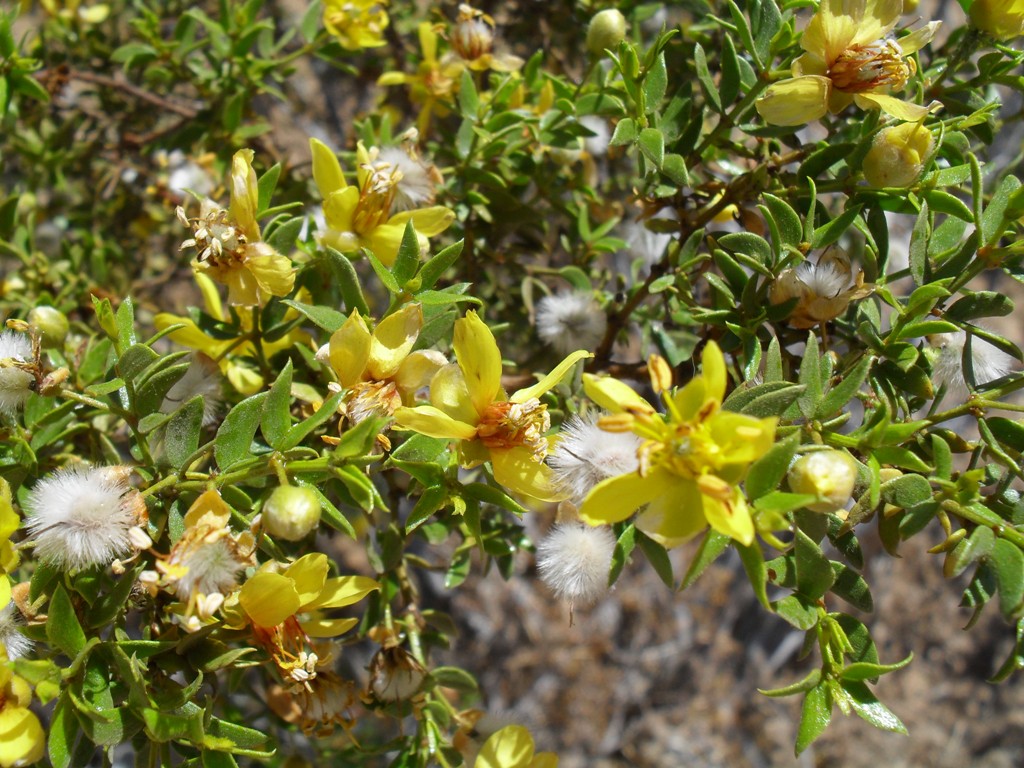
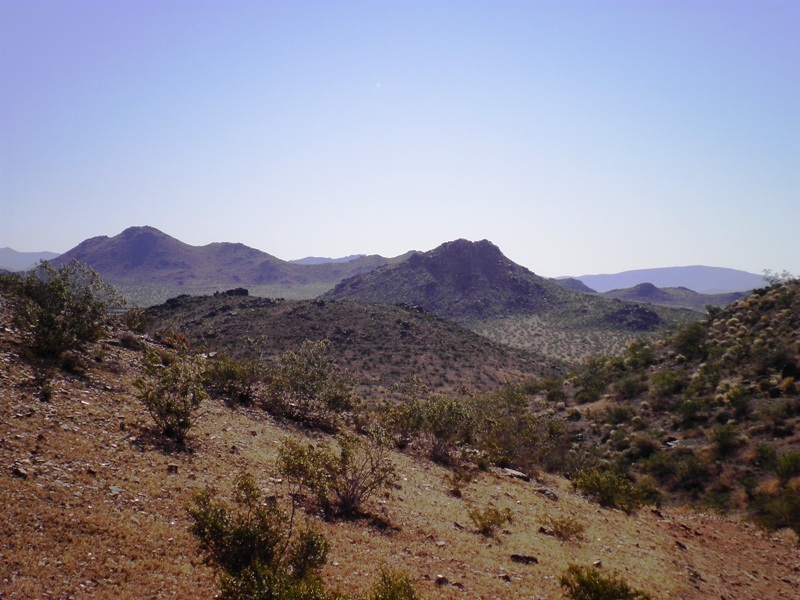
I had forgotten that this valley, like the mesa where I had been living for the past two decades, is surrounded by mountains, so mountains still form the backdrop of my life, making me feel a bit more at home than I expected from such an alien place. And it is alien — high desert rather than high plains, and city rather than country. I’d expected to have to walk along suburban streets, getting lost in the labyrinth of subdivisions, but on one of my first treks, an arroyo beckoned — sort of an alley way between houses — and I took that untraveled path. (Well, not exactly a path, more like a place for flash flood waters to run off. Good thing the day was clear and dry.) And then there I was — in the middle of the desert. Yup. Just me and mountains and knolls and sandy roads. And a few very tiny flowers struggling to live in the bleak sand and heat. (Seems like a good metaphor for my life right now.) Surprised the heck out of me.

Life has held many surprises for me lately, most of which were not good, and since I don’t know what I’m doing or where I’m headed, I’m sure life will continue to surprise me.

(These yellow flowers are those on the bushes in the other photos.)

Yes. I Can.

It seems as if it’s been a lifetime since I wrote an article for this blog, and perhaps it has been. I thought my move away from the house I lived for the past two decades with my life mate would be the start of a life change — a real journey. I expected to be different at the end of my trip to my new location than I was at the beginning, but in truth, the change had already begun.

During these past months, I’ve had so much thrown at me that I was overwhelmed. First my mate’s death, then arranging his cremation, packing and shipping the stuff I’m going to keep, doing a yard sale, cleaning out his things, disposing of all the detritus one accumulates during a shared life time, preparing for my journey. All this I did alone while dealing with overwhelming grief. During each agonizing step of the way, I’d cry and wail and scream, “I can’t do this!” So much pain. So much loss. So much change in such a short time. And I had no idea how to cope.

My last morning at the house, I got up early, cleaned out the few remaining items I’d been using, packed my car, and took one more look around the house. I walked through the rooms, remembering with what hope we had moved there, remembering the good times, remembering the more frequent bad times. Remembering his last hug, his last kiss. His death.

As I was shutting the door, I thought of all that lay ahead of me, and I cried, “I can’t do this.”

Then, it dawned on me: Yes. I can. Because I did.

I got out my camera, and went through the house one last time, taking photos of the empty rooms to prove to myself that all those things I thought I couldn’t do, I did. I know there will still be much for me to have to deal with — learning how to live without him, learning who I am now that I am not part of a couple, finding a way and a reason to live – and through it all, I might continue to wail, “I can’t do this,” but this truth is, I can. And that was the real journey, the real discovery. The trip turned out to be just a trip.