Opening a Vein

There’s nothing to writing.  All you do is sit down at a typewriter and open a vein.  ~Walter Wellesley “Red” Smith

I always thought the above was a silly, though poetic thought. If a story really does mean that much to a writer, why are so many books barely adequate? They tell a story, but have no depth, demand no blood in response, give no transfusion.

Even from a writer’s point of view, the idea seems rather overblown. Writing is more of an intellectual activity, at least it always has been for me. But not with this NaNoWriMo project, my grieving woman book. For the first time, I understand the sentiment. I feel as if I am opening a vein while writing the story. Or at least picking at scabs. I thought I was moving right along with my grief, handling it well, but yesterday while writing I hit too close to the truth.

I worried about doing this project, wondering if it was too soon to re-immerse myself into the world of grief, even if only through fictional characters, but I jumped in with both feet. And now here I am, crying again.

I have a hunch that the only way out of this writing dilemma is through, so I’ll continue to open my vein of grief. As Ray Bradbury said, “You must stay drunk on writing so reality cannot destroy you.”

These are the final words of the scene that destroyed my equilibrium:

“Do you need some liquid morphine?” Amanda asked.

David looked up at her. “Is it time?”

“You can have the liquid whenever you want it.”

“I don’t want to go to Hollywood and be an actor.

An actor? Amanda tried to decipher his words. His mind seemed to take convoluted paths when the simpler words wouldn’t come. Then all at once she understood. “You won’t become a drug addict. I promise.” She left the second part of her thought unspoken. You won’t live long enough to become addicted.
Healing the Split In Ourselves

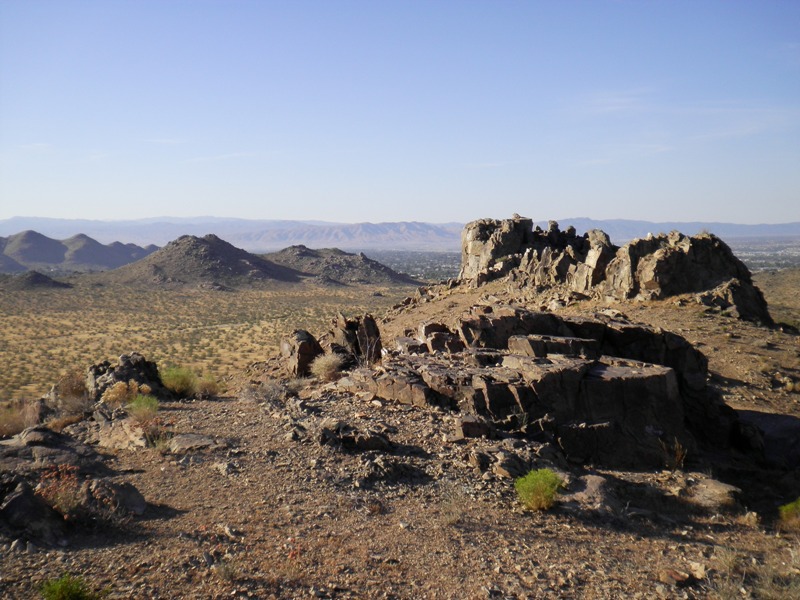
I’ve spent many hours walking in the desert during the past few months, which has given me plenty of time to contemplate grief, life, death and anything else that comes to mind. One thought that filtered through my mind was the idea that when my mate died, I split in two. The me that shared a life with him is grieving still, while the other me, the one who was born with his death, continues to live and grow. As long as I am in the person of this second me, I do fine — I’m strong, in control of my emotions, looking forward to what comes to me in life. The problem is that I keep slipping over to the other me, the grieving me, and when I do, the grief is as new as it was when it first hit me. The task is to reconnect the two parts — both the grieving me and the new me.

This might seem like dissociative personality disorder, though it’s not really a disorder. It’s how we all deal with life. I don’t remember the name of the person, but a psychologist once hypothesized that there are no true moods. What we think of as moods are different personalities. This natural order becomes a disorder when you lose track of yourself during mood swings or when they cease to be a way of dealing with life and become a way of hiding from life. I don’t know the truth of this, nor do I know the truth of my idea of splitting apart, but my idea feels true. I can almost feel the clunk of the gears as I switch from one mode to the other. I don’t switch as often now, which makes me think I’ll eventually be whole again.

Today, at my grief group meeting, I had a graphic example of how I am moving beyond my grief (at least for the moment. It does swing back and slam me in the gut from time to time).

During these meetings, there is a lesson — a topic — that we discuss before going on to personal updates. One of today’s lessons started out: Grief brings with it a terrible and lonely loss. Instead of acknowledging the sentiment, and contemplating my terrible and lonely loss as I was supposed to, I looked at the words, and said, “No, it doesn’t.”

This brought the meeting to a standstill while everyone stared at me.

“Grief doesn’t bring the loss. Loss brings the grief, ” I said.

More silence. Eventually, they agreed with me, probably to shut me up and get the discussion going again.

The point is, I focused on the words, not on the emotion. Of course, this could be more that I’m in writing mode than that I’m moving on with my life, but I took it as a good sign. Because this is the truth: death brings a terrible and lonely loss. Grief is our reaction to the loss, and ultimately it’s how we learn to heal the rift in ourselves brought about by that loss.

My Topsy-Turvy Writing Life

NaNoWriMo is good practice for me, this writing without stopping to think.

I’ve always been a slow writer, but I can also see that the way I wrote and the reason I wrote created the slowness. I used to write at night when all was quiet, then the next morning I would read the work to my mate. The piece had to be cohesive, well written, and most of all entertaining because that is why I wrote — to entertain us. That way of writing taught me to pull someone immediately into a scene, to make characters come alive in a few words, to add a hook or reward on almost every page.

I had my reward in his smile. Whenever I saw his lips curve in a secret little smile, I knew I’d hit the scene perfectly.

He and his smile are gone from my life. I’ve had to find a different way of writing and a different reason. For now, meeting the challenge of NaNoWriMo is reason enough. The very nature of the challenge is helping me find a new way to write. Instead of searching for the perfect word, I write any word that comes to mind, trusting that during the rewrites I will find the right one. If no word comes to mind, I leave a blank space and continue with my train of thought.

I also have no need to write a coherent story from beginning to end for there is no one to follow along as I write. I jot down whatever scene is foremost in my mind. I also write in the morning since it’s quietest here then. Also, by writing in the morning, I can come at the task in an oblique way before excuses begin to get in the way.

Some of what I’ve written will need little revision. Other bits read more like notes for a novel than a fleshed out scene and will need to be completely revised. Other parts are redundant and will need to be junked. But I am keeping up with my word count (probably because I am leaving out the hard bits, like descriptions and sensory details), and that is an important achievement.

I’m getting into the rhythm of this topsy-turvy life. From being one of a couple to being alone. From living near the mountains to living near the desert. From writing at night to writing in the morning. From writing beginning to end to writing whatever scene catches my attention.

I’m still writing the same type of book, though — a non-literary literary novel. The way I understand it, a literary novel is a story that addresses the major themes of life, and the way it is written — the choice of words, the sentence structure, the imagery — is more important than what is written. I fail in the second part — I strive for a simple, easy to read style that doesn’t detract from the story — but I do address major themes, especially in this work. Life. Death. Love. Grief. Relationships. The meaning of life. All while telling a good story. At least, that’s the plan.

I’m hoping someday you’ll be able to tell me if I succeeded.

Desert Revelation

While walking in the desert this morning, I had a vision. Well, not a vision so much as a revelation.

I’d been thinking about my grieving woman novel, which is shaping up to be the story of a woman in search of herself. She is directionless after her loss, has a lot of unfinished business to take care of, and is trying to figure out who she is now that she is no longer a wife. I wondered if people would accept that this woman is finding out all sorts of things about herself that she didn’t know — after all, a person in her early fifties should have some idea of who she is.

Then I realized that even if we have a strong identity and know almost everything there is to know about ourselves, it’s still possible and perhaps necessary to revise our self-concept, especially after going through a trauma such as a major loss.

I saw that our psyches are like nesting dolls or boxes within boxes or doors within doors (choose your cliché). You never see the doors, so you think you know who you are, but a great emotional upheaval can cause a door to open, letting you see more of yourself and what you are capable of, revealing a part of your identity that might have been hidden from you until that moment.

You get to know who you now are, adding to or changing your idea of yourself, rethinking the past in light of this new awareness. You get comfortable with this revised self-concept and then BAM! More trauma, and another door. You never have to go through the door, of course, but if you do, you might find riches of which you were unaware.

What can I say? It was the desert. Wandering in the desert is traditionally a place for both sun-induced absurdities and great insights.

Excerpt From My NaNo Novel

My grieving woman novel is taking shape. Amanda and her twenty-nine-year-old daughter Thalia are having problems that seem to antedate her husband’s death. I’m not sure why the daughter has such a problem with her mother, but perhaps we don’t need to know. It could just be more of the unfinished business the woman has to deal with.

In the scene I wrote today (keeping to my writing schedule, yay!), the daughter accuses her mother of hastily redoing her old bedroom:

“This doesn’t look at all like my room any more,” Thalia said. “There’s not a trace of me here. You could hardly wait to get rid of me.”

Amanda opened her mouth to reply, but for a few seconds, no words came out. She’d completely forgotten that when they first came to this parsonage, Thalia had been a sulky thirteen-year-old. Trying to put a smile on her daughter’s face, she’d promised Thalia she could decorate the room any way she wished. Amanda hadn’t expected pink paint and eyelet ruffles, but she’d been appalled by the black walls and red curtains that gave the impression of dripping blood. The posters of movie vampires and band members who looked as if they’d crawled out of a crypt seemed almost cheerful by comparison.

When Thalia went to college, David claimed the room for a den, but it had been Amanda who been cajoled into doing the work. “Shouldn’t we at least wait until Thalia’s out of college?” Amanda pleaded. For once, David had not been thinking of their daughter. “I need a place to work here in the house. We can put in a sofa bed. Thalia can use it during the summer.” But Thalia had never come back, and secretly Amanda had not blamed her.

“I wish this house were bigger,” Amanda said. “Then we could have kept your room for you.”

“Yeah, right.” Then, sounding like the little girl she had once been, she added, “couldn’t you have turned the parlor into Dad’s den? Nobody has a parlor and a living room anymore.”

“I wanted to, but Dad said he needed a place for receiving visitors. He always thought it was important to keep the living room for us, so we could have some privacy as a family.

“I’m glad he had a place to get away from you.”

Amanda flinched at her daughter’s words, but didn’t bother to correct them. When David had moved out of their shared bedroom into this room after his diagnosis, it had been to spare her his relentless pacing and allow her to sleep undisturbed, not to get away from her. Or so he said.

Could Thalia be right? Maybe he’d mentioned something to her that he wouldn’t say to Amanda. The two often excluded her from their conversations. She used to worry about feeling jealous of her daughter, but she hadn’t been jealous, not really. She’d liked that David and Thalia got along so well. She and her father had been virtual strangers.

Even Fearsome Creatures Have Enemies

While walking in the desert today, I saw a dead rattlesnake. I hesitated to take a photo, not wanting to memorialize death, but it was so beautiful lying there, that I went ahead and snapped an image of it. Although it looked vibrant, as if it were sleeping, I could see that it had been run over. This made me think how even such a fearsome creature as that Mojave green rattler had enemies, though its four-wheeled killer was one it could not even imagine.

And so it is with a story’s villain.

For a hero to overcome her nemesis, she has to come at the villain from a different direction, not go at the villain from his position of strength. If the villain is the strongest person in the world, he cannot be vanquished by the second strongest person, but he can be vanquished by intelligence, perhaps even middling intelligence. If the villain is strong and smart, he can be vanquished by a determination to win at all costs. If the villain is smart, strong, and equally determined, he can be vanquished by esoteric knowledge, something the villain cannot even imagine.

My NaNoWriMo project has no villain. My poor character has to deal with her husband’s death, the loss of her home, the loss of her daughter’s respect. Since he had been the focus of her life, his death left her unfocused. Moreover, she finds out he is not who she thought he was, so to find out who she’s been all those years, she has to find out who he was. I’m wondering if her way out of this conundrum is to do or be something she’s never thought of before, something that until now has been unimaginable to her. Like what? I don’t know, but it will give me a direction to follow.

What about your characters? Do you have a hero/villain situation? What special strengths does your villain have? What special strengths does your hero have?

Feeling Disconnected to My Characters

I’m sticking to my NaNoWriMo schedule, but I’ve developed an aversion to my character. She sounds whiney and self-pitying, though she’s only grieving, but I need to make her sympathetic, special, someone a reader would care about. She is not coming alive for me.

Often books start with a scene that shows the hero in action, perhaps doing something noble or self-sacrificing, or just being strong and vulnerable. Something that immediately makes the reader feel a connection. But how can I make the reader feel connected, when I don’t feel connected to the character? Which is odd, considering that she is me. Sort of. I only know my grief, so that part of me is part of her. The story, of course, is fiction.

One of my problems is that she carried on a cyber affair when her husband was dying (her daughter caught her at it, which is why the mother and daughter are at odds). I have to make the widow realistic enough so that people will believe that she can be in love with one man (who she hasn’t met yet) while grieving another. In today’s society, loving another negates grief, but from talking to people who have had more than one husband die, grief for one man and love for another can live side by side.

So, what problems are you encountering in your work in progress? How are you making your characters sympathetic, special, someone readers would care about? Do you feel a connection to them? Do you need to feel a connection to write the character?

How to Respond to “How Are You?”

A month or so ago, a Facebook friend, another woman who lost her mate, suggested I write a blog on what to say when people ask a griever, “How are you?” When I first realized that people were losing interest in my sad tale, I asked a bereavement counselor that very question. She said a good response is, “I’m coping,” which is the response I used for a few months. Now I just say, “I’m okay.” Even if I’m not okay, I tell people I’m okay. Or if I’m being polite, I say, “I’m fine, how are you?” There is nothing wrong with that — it’s a rote response to a rote question. Most people who ask how you are do not especially want to know. It’s an accepted conversation starter, a way for people to show token interest so they can move on to more exciting topics — themselves, for example.

Someone who comes back at you with, “No, really, how are you?” is someone who deserves no response at all, especially if they add, “this is me, remember?” If they need to remind you who they are, you don’t know them well enough to tell the truth. Besides, if you wanted to tell the person how you really were, you would have already done so.

People who truly care will ask a more specific question: “Did you sleep well,” for example, or  . . . I don’t know. Any question that shows genuine interest will suffice, and those you can respond to honestly if you wish. Or not. In the end, your grief is your business. People do not need to know you are still crying yourself to sleep every night, or that you miss him so much you can feel it like an ache in your bones, or that the world feels as if it’s aslant now that he is gone. Unless you want them to know, that is.

Even at the best of times, “How are you?” is a question without any response except “I’m fine,” or “I’m okay.” It always makes me wonder, “how am I in relation to what?” Are they asking about my health, my state of mind, my finances? With grief added into the equation, I wonder if they are asking how I am in relation to the way I was before he died, in relation to the way I felt immediately after his death, or in relation to nothing at all.

I have to admit, like everyone else, I usually ask the question, but as a part of the greeting, “Hi! How are you?” I don’t mind if someone comes back at me with, “I’m fine, how are you?” because that is the ritual. Once that is out of the way, we can settle down to a serious discussion. If the person is another griever, I don’t expect an in-depth response, I know how they are doing.

So, to recap a rather wordy and convoluted post, if someone asks how you are, “fine” is fine.

The Simple Truth

I’m beginning to understand the truth of grief — you never truly get over it. Whenever I think I’ve reached a stage of acceptance and peace, grief has a way of swinging around and coming at me from a different direction, and it always takes me by surprise.

Yesterday was a good day. I started in on my novel for NaNoWriMo (National Novel Writing Month) and managed to write the allotted number of words in just a few hours, which pleased me. I’m such a slow writer, I thought it would take me all day to do it, especially since I piddled around for a while, trying to decide which kind of paper to use, which pencil, which clipboard. (Yeah, I admit it — I still write by hand, mainly because it’s easier on my eyes.)

I also posted a blog for the first day of NaBloPoMo (National Blog Posting Month).

My self-imposed commitments finished for the day, I went walking in the desert. It was perfect weather — blue skies and warm, still air.

Then bam! Out of nowhere, grief socked me in the gut. I wanted so much to see my mate, to talk to him, that I would barely breathe. The pain lasted for hours. And tears? Too many to count.

The novel I started writing for NaNo was about a grieving woman, so perhaps that had something to do with my upsurge in grief. I’ve been worried that immersing myself in the story of a woman who lost her husband be a bit much for me at this stage, but I also know that I won’t want to revisit grief once I’m done with it. (Yes, I know —  one is never done with grief, but the pain does lessen an the bouts of tears come further apart.)

It’s possible any writing would have brought on this re-grief — he was my sounding board (literally a sounding board –I always read to him what I wrote). And it’s possible it was just time. Lately I’ve been distracting myself when the pain crept in, so it could have been building up.

The whys of this spate of grief, however, are not important. It still comes down to the simple truth: He is dead and there’s not a damn thing I can do about it except learn to live with it.

Greening the Desert

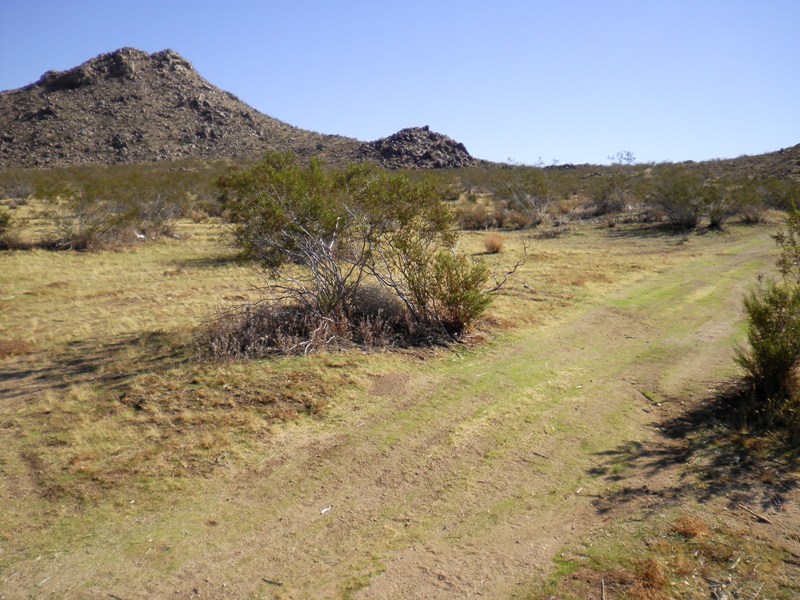
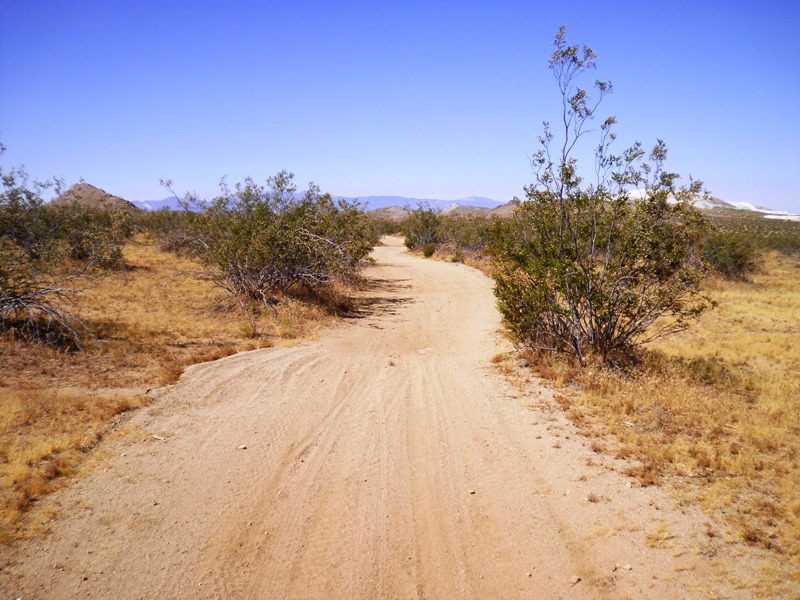
I’ve spent many hours during the past few months wandering in the desert, grieving for my lost mate. I don’t think I’ve ever cried so much in my entire life. Of course, nothing this sad has ever happened to me before, either. At times I felt like a baby, and so I was — a child newly born to grief. I’ve learned much about tears in this crying time. Tears do not designate a lack of courage. Tears do not mean one is steeped in self-pity. Tears do not mean one is weak. Tears are simply a way of relieving emotional tension, and there is evidence that they even remove chemicals that build up in the body during emotional stress.

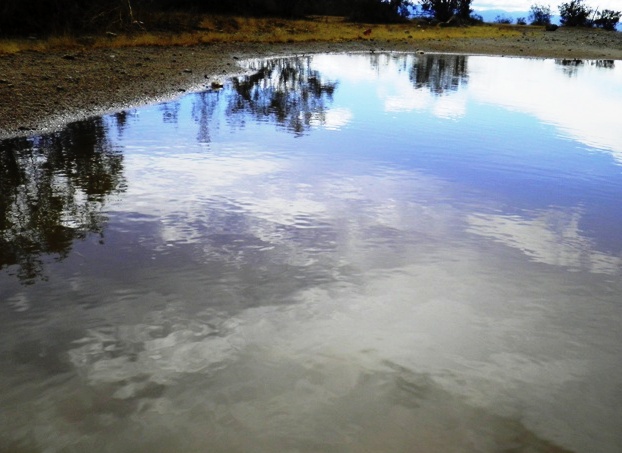
And apparently tears can do one other thing — they can green the desert. Here’s a photo of one of the trails I’ve been walking most days — visual proof of my river of tears. Or at least the result of them.