Minimalist Living

Daily writing prompt
What are the biggest benefits of minimalist living?

I had no idea “minimalist living” was a thing. A simple Google search showed me hundreds of articles about how to become a minimalist, including a lifestyle guide to minimalist living, a complete beginner’s guide to minimalism, ways to start living a minimalist lifestyle, how to ease into a minimalist lifestyle, how to convert your family to a minimalist lifestyle. And on. And on. And on.

Weird. Who knew you had to learn to live a minimalist lifestyle? It’s probably the simplest thing imaginable. You just live . . . minimally.

The truth is, I’ve been living a minimalist lifestyle my whole life, but I don’t call it that. I call it not buying things I didn’t need. I call it living debt-free, not buying anything I can’t afford right now. (My thought has always been that if I can’t afford it today, why would I suddenly be able to afford it when the bill came due? More than that, though, I’ve always had a fear of being in debt. Perhaps I read too many books about owing money to gangsters in my youth.)

I call my minimalist lifestyle “using, reusing, using up.” I call it not wasting anything, especially not food. (How do people live with themselves when they throw away perfectly good food because they don’t like leftovers? I don’t eat leftovers either. At least not by that word. I call any uneaten food a pre-cooked meal or tomorrow’s fuss-free lunch.)

I know one thing minimalism isn’t — following someone else’s guide to minimalism.

I have way more stuff than the minimalism gurus suggest, but a lot of that was hand-me-downs, such as my furniture. Instead of doing nothing in a relative’s storage unit, I get the use of those lovely items. (According to him, it’s my furniture now. I guess he was minimalizing his life by maximizing mine!) A lot of other stuff I own is left from the retail business Jeff and I used to run, though gradually, I’m finding people to dump the stuff on. (Oops. I mean finding people to donate it to.) All my extraneous stuff is neatly packed away on shelves in my garage, so it’s not in the way. Since I don’t like things on the walls in my house, my finished paint-by-number pictures and other “artwork” decorate my garage. And if I get something new, such as a gift, I get rid of something old. It doesn’t reduce what I own, but it keeps me from becoming a hoarder.

To me, minimalism isn’t so much about what I own but what I do. I try to do only one thing at a time. Not only that, I am truly a minimalist when it comes to letting — or rather not letting — the world intrude on my life.  I don’t listen to music while I do chores or whatever. Actually, though I am loath to admit it, I don’t listen to music at all because, to my tin ear, it’s all just noise. Besides, I hate having snatches of songs stuck in my head. I prefer silence. I don’t watch television, either, and when I’m on the computer, I have the volume turned off.

So what are the benefits of my minimalist style of living? Well, no debt, for one. (The typical U.S. household is carrying about $105,000 in debt. Yikes. How do people do that? Doesn’t it make them crazy to owe that much?) My income is also minimalist, but it’s not a problem because my minimalist lifestyle is one I can afford. At least for now. Since I’ve kept the same vehicle for the past fifty-four years, I don’t have to deal with a car payment, and since my driving is minimal, I don’t spend much on gas. (In fact, for me, gas is always the same price — I put in twenty-dollars’ worth each time I get gas, and that’s that.)

Other benefits — less stress since I don’t have to worry about paying off a debt. Peace of mind because I try to keep my mind as uncluttered as the rest of my life. A feeling of lightness since having too many possessions weighs me down. An ability to enjoy the small pleasures of life, such as flowers in my garden, since I haven’t straightjacketed myself into a hectic routine.

I can’t imagine living an opulent life (or whatever the opposite of a minimalist life would be). This minimalism is so ingrained in me that, to me, it’s just life.

***

Pat Bertram is the author of Grief: The Inside Story – A Guide to Surviving the Loss of a Loved One

Puzzled About Puzzles

Now that I’m not going to the library and am only reading or rereading the books in my house, I’ve mostly exchanged my reading time for pencil puzzle-solving time. I have a foot high stack of puzzles that I bought years ago when I moved here, but then I got caught up in visiting the library because it felt like such a treat.

Well, library visits aren’t a treat anymore, and the puzzles are.

When you are working a puzzle, such as a crossword puzzle, and you come to the end of what you can do on your own, do you consider it cheating to look at the solution for hints so you can finish the puzzle? Or do you see checking the answer as part of the fun of doing puzzles? Or do you abandon the puzzle unfinished to keep from cheating? If you do consider it cheating to check the solution for an answer you have no way of figuring out, do you also consider it cheating to ask someone, to use a crossword puzzle dictionary, or to look online for the answer to the clue? Do you find yourself shying away from difficult puzzles because you can’t do them without periodically checking the answer?

Years ago, I might have considered it cheating to look at the answers, but I don’t now and haven’t for a long time. It’s all part of the game for me, a way to keep the puzzle going if I hit a wall, a way to up the challenge. If I only do puzzles that are easy enough to “win” all the time, what’s the point? And anyway, if I complete the puzzle, I don’t consider it a win as much as a chance to start a different puzzle.

I’m just curious what people think. Doing the puzzles again reminded me of a discussion I had with someone years ago. I didn’t know her, she was just responding to a blog post where I pretty much asked the same questions as I am doing here, but it shocked me when she berated me on my behavior. She was appalled that I would cheat, because even if you “cheat” when it’s just a game you’re playing against yourself, then it’s still cheating

So, I know one person’s answer!

And I know mine. To me, cheating connotes an intention to deceive, and since I’m not deceiving anyone, not even myself, doing the puzzles, however they are solved, is all just a way of passing the time. Maybe it’s even a way of exercising my mind. And perhaps I’m even learning something along the way. Besides, tossing out a puzzle just because I couldn’t finish it without a quick look to see where to go next, is a waste of money. Admittedly, I bought past-date puzzle books in bulk, so each puzzle probably cost less than a penny, but even at a penny, an unfinished puzzle is a waste.

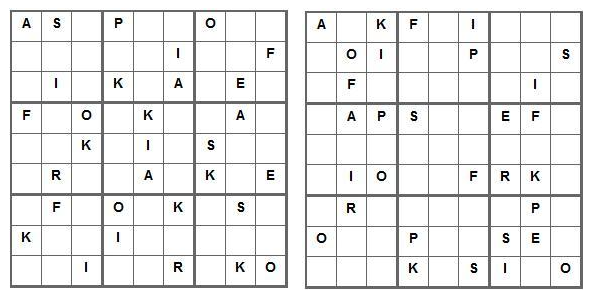
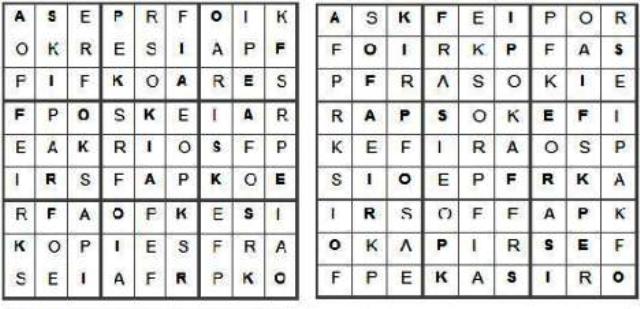
Speaking of puzzles, I created the following puzzles in 2009 for a promotion when A Spark of Heavenly Fire was published. Instead of numbers, these Sudoku puzzles use the letters from the title of the book: A, S, P, R, K, O, F, I, E.

Have fun solving! And if you get stuck, click here to find the solution: Spark of Heavenly Fire Sudoku solution.

***

Pat Bertram is the author of Grief: The Inside Story – A Guide to Surviving the Loss of a Loved One

Finding a Purpose

Daily writing prompt
What is the biggest challenge you will face in the next six months?

Ever since I watched monks Walk for Peace with such purpose and dedication, I’ve been thinking I need to find a purpose rather than just living simply from day to day. (This can be construed as simply living from day to day or living simply, and both would be correct.) And that’s what I came here to say, that the biggest challenge I will face in the next six months is finding a purpose.

But do I need a purpose? Does anyone? A sense of purpose might make someone feel good, feel as if their life was worth living, maybe even make them feel important, but the purpose itself might not be a good thing. For example, a pattern killer (the current appellation for a serial killer) generally has a strong sense of purpose, which is good for the killer, but not the victims.

(I was going to use more specific examples, such as the protestors who felt their purpose was to interfere in the arrest of a child rapist and murderer, and so the perpetrator got away. I am sure the protestors felt so proud of themselves for fulfilling their purpose that they would never see how their actions led directly to more heinous crimes committed by that perpetrator. But I decided not to use such examples because I can never be sure if people would read my words and their intent as I meant them, or if they would read their own emotions into the example. Hence, my example of the pattern killer because I’m sure most of us can understand that in such as case, a sense of purpose and where it leads is not a good thing.)

Oddly, while thinking about finding a purpose, I came across something called “purpose angst,” which is “the stress, frustration, and worry stemming from the intense pressure to find, define, and live a meaningful life.” That, too, made me wonder how important it is to find a purpose. If the search for a meaningful life is such a dire burden, maybe it’s the search that’s the problem. Maybe we’re not supposed to search for meaning in our lives. Maybe our lives themselves are the meaning.

In reading people’s reactions to the Walk for Peace, I saw an interesting comment. The commenter said that people who talked about the walk and how it affected them mentioned things like the monks’ dedication, their perseverance, their kindness. But he said the real reason the walk touched people was the simplicity. Everything about modern life is noise and chaos, but then came the monks. They simply walked in single file in silence. No noise, no chaos, no bunching up. Just that single orderly line. Simple. Touching.

Although their message was peace, that the way to peace is to find it is within ourselves, maybe the true message was simplicity.

In which case, there is no need for me to find a purpose. I am living that purpose: a simple life lived simply.

So, since finding a purpose is a challenge I won’t be facing in the next six months, what challenge will I face? I can’t think of any offhand, but life has a way of surprising us. I’ll let you know six months from now what, if any, challenge I faced.

***

Pat Bertram is the author of Grief: The Inside Story – A Guide to Surviving the Loss of a Loved One.

Getting Older is Strange

Getting older is strange, to put it mildly. Watching one’s body slowly change and not for the better, feeling one’s energy deplete, wondering if simple memory loss such as not remembering a word is indicative of a more severe decline.

So far, none of those issues is that great a deal for me. I’ve learned to accept my mild infirmities — the joints that don’t always work well, the cough that lingers too long, the words that elude me. One thing I have not yet learned to interpret is what to do when I have no energy — should I take it easy? Or should I . . . not?

When I was younger and had bouts of enervation, I could contribute them to allergies (my allergies were more of an energy thing than typical upper respiratory symptoms), an incipient cold, or laziness. Most times I gave in to the malaise because if I didn’t, I’d usually get sick. And anyway, I was young enough to get back into the swing of things once the feebleness passed, so if I ended up indulging my laziness, it didn’t really matter.

Now there is a fourth possibility to add to the rest: If I lack energy, is it allergies, a low-grade cold, laziness, or is it old age? If it’s one of the first three, I can treat the enervation as I always do — take it easy and indulge my laziness. If, however, the enervation is due to old age feebleness, I certainly don’t want to give in to it. Barring an accident or illness, or any other life-threatening problem, I could possibly live another decade, perhaps even two, and if I give in to sluggishness too soon, that lack of activity would cause additional problems.

I suppose one way to tell would be if the enervation came on quickly or if the energy loss came slowly over a long period of time, but even then, I get used to ignoring discomfort, so perhaps I wouldn’t notice slow moving debilitation. Besides, I’ve always been a low energy person. Throughout my years I’ve often exercised, but it’s been a push rather than a natural inclination. That’s why I read so much — it doesn’t take much energy to sit and hold and book. Even letting my thoughts wander doesn’t take as much energy as letting my body wander.

Speaking of which, the snow is gone, but I still haven’t resumed my intention of walking every day. I’ve been dealing with a low energy time, and don’t want to create additional problems by walking against the very cold wind. Brrr!

In the end, I’ll do what I always do — stop thinking about why I feel lazy and just grab a book.

***

Pat Bertram is the author of Grief: The Inside Story – A Guide to Surviving the Loss of a Loved One.

Reverse Memory

I’ve often heard people say that as they get older, it’s easier to remember their childhood than what they had for breakfast. I wonder how old you have to be before that sort of reverse memory kicks in. Or is it more of a dementia thing than an elderly thing?

Studies have shown that after 75, people tend to start becoming truly elderly, leaping ahead in the aging game. Before that age, people’s bodies can keep up with healing whatever goes wrong, but after that age, the ability to heal slows, and so the infirmities add up. Is it the same with mental issues?

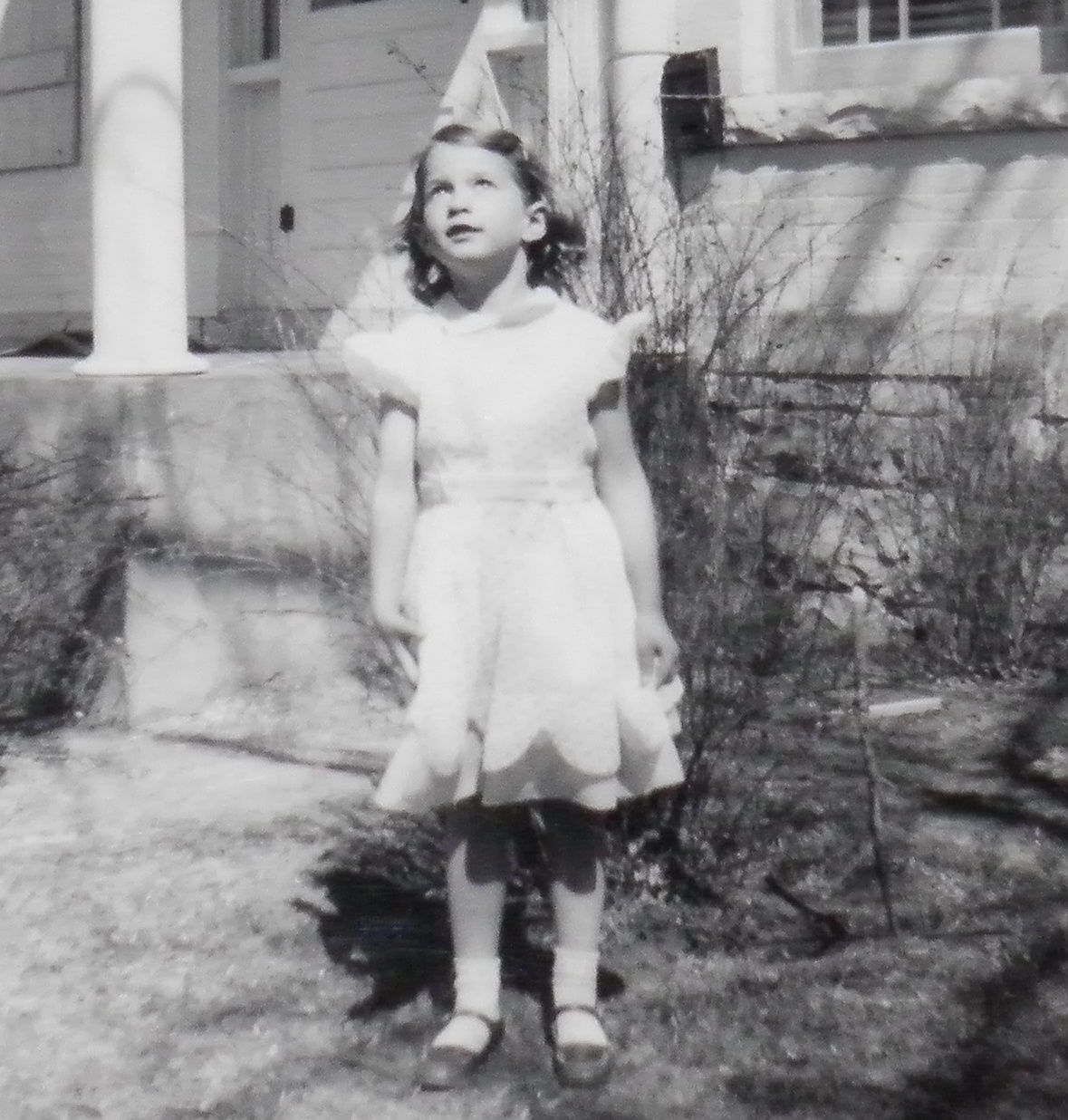
So far, my memory seems okay, with only the typical problems people of all ages have of not being able to dig a particular word out of their memory or getting sidetracked and forgetting food on the stove. I am not yet to the point where I forget what I had for breakfast while remembering my childhood. In fact, there’s little about my childhood I remember or even want to remember. I certainly don’t remember being this little girl, though she was (is?) me.

For the most part, I don’t think about the past. It seems irrelevant, and to an extent, non-existent since no one knows where the past is. Mostly, though, I don’t have any issues with the past. I’ve come to terms with any problems that might have lingered, worked through grief, and dealt with my regrets. I purposely did so because back when I was taking care of my father after Jeff died, I knew that someday I’d be needing to create a new life for myself, and I didn’t want to bring along any excess baggage.

So what happens if I get to the point where my short-term memory is shot and my long-term memory is all I have? Do I have to go back to thinking about things I stopped thinking about long ago?

It’s not just the past I don’t think about — I usually don’t think about the future, either. Just as that little girl I once was could never imagine my life today, I’m thinking that the woman I am today can’t imagine what my life will be as the years pass. Of course, I know where the highway of my life will end — where it ends for everyone. Still, I find it best not to look too far ahead, since such views can be worrisome.

A funny thought (or maybe not so funny) — I read so much, a book a day usually, that other people’s lives are more in my mind than my own. When I get to where I forget today and start reminiscing, will I remember those lives as my own? Probably not — considering how much I read — starting a new book as soon as the old one is finished — I don’t give any book enough time to slither from short term memory to long term storage.

As with most of what I think about, none of this matters. These are just idle thoughts to fill an idle mind.

Still, I do wonder.

***

Pat Bertram is the author of Grief: The Inside Story – A Guide to Surviving the Loss of a Loved One.

More Things In Heaven and Earth

Daily writing prompt
What are your thoughts on the concept of living a very long life?

What a person thinks about the concept of a long life is rather meaningless since one lives the years one is given, and thinking beyond that is rather pointless. But so are most hypothetical musings. I have no thoughts whatsoever on the long lives of other people (or other creatures — the prompt did not specify long life for humans). There have been accounts of alchemists who have cracked the code of life and managed to evade death, though I have never found the truth of that rumor. It’s possible, I suppose. As Hamlet said, “There are more things in heaven and earth, Horatio, than are dreamt of in your philosophy.”

As for a long life for myself, um . . . no. Most people nowadays who live many years beyond what the actuarial tables say they could live, end up frail, sometimes helpless, feeling useless, and occasionally beset by dementia and other bewildering complications. I so do not want that for myself. Until, of course, I get to that point, then I’m sure, like everyone else in that situation, I will do everything I can to keep on living another day.

What is a long life, anyway — outliving your usefulness? Living to one hundred or beyond? Living biblical years of nine hundred or a thousand? It seems that long life to one creature is but a blink to another. To Methuselah, the bristlecone pine in the Inyo National Forest that is almost 5,000 years old, our puny ages would be as nothing.

But speaking of me (which is what this blog always comes down to), if I could have remained young, strong, healthy, vibrant, active, full of youthful energy, and joints that would never give out, living to be as old as Methuselah (either the biblical person or the tree person) would be great. I’d walk the world — literally walk. Just start out on foot, and keep going, looking at everything I pass, musing on everything I see, talking to people I meet, learning what languages I can, watching the years go by as I tramp forever.

It seems that a major problem of a great age, even when one maintains one’s vigor, is boredom. Walking the world, would be a great way to stave off boredom and keep oneself young in spirit to match that ever young body.

Despite Hamlet’s words to Horatio, I tend to think such a dream truly is impossible since I am way past the youthful body stage of my life. I am grateful for the years I’ve had, look forward to more years, and hope that however long my life turns out to be, that I will find a way to enjoy each day.

Wishing the same for you, too.

***

Pat Bertram is the author of Grief: The Inside Story – A Guide to Surviving the Loss of a Loved One.

Grief: Looking at the World Through a Camera Lens

My publisher suggested adding photos to my soon-to-be-published book about grief, and I jumped at the chance. I’d recently read David Ebright’s YA novel Reckless Endeavor, and was impressed by how much veracity just a couple of photos gave his story, so I was glad of the opportunity to do the same for my book. The only problem is, I have almost no photos of me and my life mate. We simply did not take photos — not of the places we lived, and not of each other. It’s not that we weren’t visually inclined, it’s that we lived in the moment. If you take a photo of the moment, the shoot becomes the moment and you lose the moment itself.

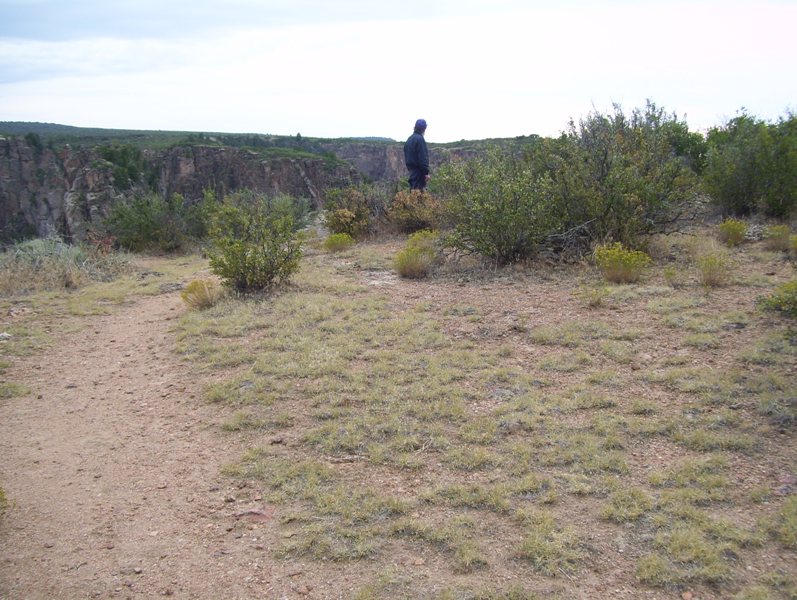
A couple of years before he died, I was gifted with a digital camera, and I took hundreds of photos of trees, animal tracksa cattle drive, some yaks in a nearby field, wildflowers (well, weeds) along the lane where I walked. It helped me get through what I thought were the worst years of my life, the years of his dying. Oddly, during all that time, I only took one photo of him, and that was by accident. We always wanted to see the north rim of the Black Canyon of the Gunnison, but since the road leading to the canyon was gravel, it was too hard on our old cars. We promised each other that if we ever had the use of a rental car, we would take the trip. That August, I rented a car so I could visit my brother, and when I returned, I suggested we finally go see the north rim of the canyon. He didn’t want to make the trip since he was so sick, but at the last moment, he agreed to come with me. It’s a good memory. Just him and me and the ground that fell away just beyond our feet. I had my camera, and since I knew I’d never be back, I snapped a few photos, and he ended up being in one of those pictures. It still makes me cry, that photo. He’s standing with his back to me, staring at  . . . eternity, perhaps. Did he know he had just a few more months to live? I sure didn’t, or perhaps I was simply refusing to face the truth.

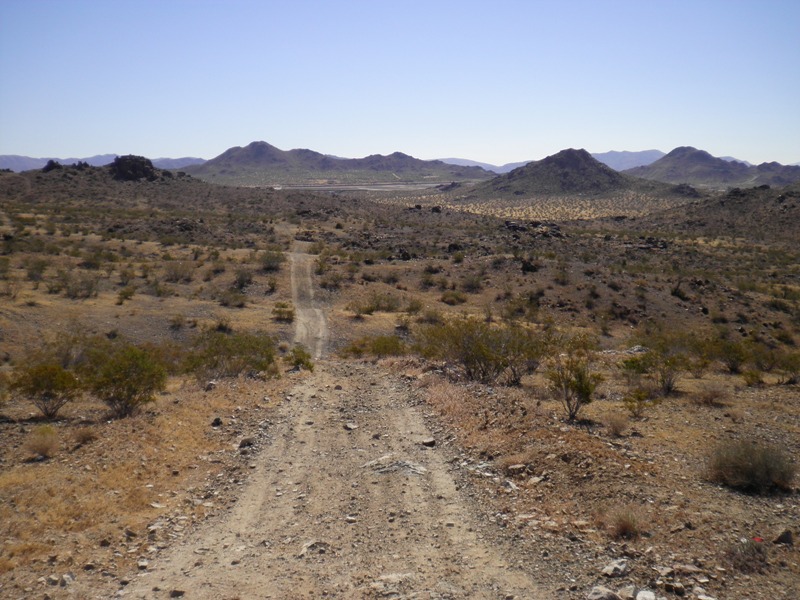
The year after he died (which actually was the worst year of my life), I took thousands of photos. The world had turned black and white, and it was only through the lens of a camera that I could see color and life. I roamed the neighborhood and the nearby desert, looking for visual treasures.

And then suddenly, a few months ago, I stopped carrying my camera around. Apparently, despite my continued sadness, I’m back in the moment, living life at full strength rather than diluted through the lens of the camera. I didn’t even realize how far I’d come until I started hunting photos for my book and realized I’d stopped taking pictures.

(I did manage to scrounge a few photos for the book, though not as many as my publisher wanted. And we’ll be using the only photo of the two of us for the back cover even if it is fifteen years old.)

The Symphony of a Life Gone By

It is impossible to freeze a single moment of music — what you get is a chord that means little by itself. It only gains meaning by what went before it and what comes after, by existing as part of a whole.

Ever since the death of my life mate, I’ve been haunted by images of him at various stages of his life — when I first met him, when we were in the fullness of our relationship, and then at the end, when there was nothing left but a body depleted of life. Which of these moments was him? Were any of them him? Or, like music, were each a single meaningless chord in the symphony of his life?

This might seem a foolish reflection, but it is one that echoes now that his life has been silenced. When a person is alive, the person you know is the culmination of a life, with everything — every note and chord of his existence — leading up to that very moment and foreshadowing the song of his future. When the person is gone from this earth, there is no more culmination. The man I knew at the end — the man who had spent his last breath — is gone, burned into a pile of ashes and crushed bone. The man I knew at the beginning, the radiant man with half of his life still ahead of him is also gone, burned by the fires of living and dying. So which is the real person? How do you remember a life — a man — when all you have are bits of the whole?

We were not picture takers, and I have but a single photo of him. Although it looked exactly like him when it was taken fifteen years ago, it doesn’t look at all like him at the end of his life. For months after his death, I refused to look at the photo, afraid that the image of him in my mind would be supplanted by the image of the photo. Recently I decided it doesn’t matter if the image in my head is not of him. No image is “him.” He is gone, his moments forever broken into meaningless chords. I know I cannot hold the whole of him in my mind — it took 63 years of living to play his entire repertoire, parts of which I never heard.

And so, I look at the photo, this single chord of his life, and remember the symphony of a life gone by.

Multi-Asking

Ever since my life mate died, my mind has churned with unaswerable questions.

Is he warm? Fed? Does he have plenty of cold liquids to drink? Is he sleeping well? Does he still exist somewhere as himself or has his energy been reabsorbed into the universe? Is he glad he’s dead? He brought so much to my life, but what did I bring to his? Why can’t I see him again? Why can’t I talk with him? Will we meet again, or is death truly the end? Was it fate that we met? Fate that he died? I’ve been finding comfort in the thought that he is at peace, but what if he isn’t? What if he’s feeling as split apart as I am?

Will he recognize me if we ever meet again? Will he be proud of what I become? He helped make me the woman I am today, but what’s it all for? Where am I going? And why? It does seem as if my life is a quest for truth, for understanding, but what’s the point? I suppose the journey is the point, but still, at the end of a quest story, the hero returns with the magic elixir. She has a purpose for what she’s gone through. Do I have a fate, a purpose? But what about him? What was his purpose? I try to make sense of his death, but how do you make sense of something senseless?

How do I find meaning, or at least a reason to continue living? Do I need a mate in order for my life to have meaning?

Can a person drown in tears? Yesterday someone told me that life on earth was an illusion and so my mate still exists. But if life is an illusion, why couldn’t it be a happy figment? A joyful one? What’s the point of pain? Of loss? Of suffering? Why did he have to suffer? Why do I? Do I have the courage to grow old alone? The courage to be old alone when the time comes?

Why do we cling so much to life? In the eternal scheme of things, does it matter how long or short a life is? Does it matter that he only had sixty-three years? Does it matter that he was alive? What is the truth of life and death? If he’s in a better place, why aren’t I there? If life is a gift, why was it taken from him?

Is there anything universally important? Love, perhaps, but not everyone loves or is loved. Creativity? But not everyone is creative. Truth? But what is truth? Is the human mind, with its finiteness, capable of understanding the truth? If nothing is universally important, does anything matter? Maybe it’s better to let life flow, to try to accept what comes, but isn’t the point of being human to try to make a difference? To try to change what is?

Supposedly, you can have a relationship with someone after they are dead, but it’s all in the mind, in memory. What’s the difference between that and fantasy? And how much of life is lived in the mind? All of it? All except the present? But even the present is lived in the mind since the mind (or rather the brain) takes the waves of nothingness and transform them into somethingness. So what is reality? The intersection of all minds?

I know there are no answers, I am simply . . . multi-asking.

Going Along for the Ride

Life takes odd twists and turns. It seemed to me, when my life-mate — my soul mate — was dying of inoperable kidney cancer, that our lives would never change. He’d been sick for so many years, dying cell by cell, that it felt as if we were locked in a horror show of endless, predictable misery. Last year at this time, his disintegration suddenly speeded up, and he started dying organ by organ. And then he was gone.

I’ve made no secret of my grief, of the pain his “goneness” has caused me, but through it all, I’ve been getting on with my life, trying to open myself to new experiences, trying to hope for . . . what? That is the kicker. How do you know what to hope for if you can’t even imagine where you are headed?

A couple days ago I sat in a restaurant, one thousand miles from our home, celebrating my birthday with new friends and acquaintances I’d met through a grief support group. Though all nine of us are trying to deal with the devastating loss of a loved one, we talked and laughed and had a good time. It showed me that there is life after death — we lived despite our loved ones’ deaths. And it showed me something else. That for all of life’s seeming predictability, it can still surprise. A year ago, when my life mate was a couple of weeks from death, there is no way I could ever have envisioned that restaurant scene.

Back then, I knew I’d have to leave our home, to find a temporary haven where I could deal with my grief, but I had no clear idea of where I wanted to go, and somehow I found myself in the desert. And, since I’d been a virtual hermit for years, I could never have guessed that I would make so many friends. Nor had I celebrated my birthday in . . . well, never mind how many years it’s been. And yet, there I was, with new friends in a time and place I couldn’t have even imagined a year ago.

So where am I going? How will I get there? Who will I be? Who will I be with?  There is no way of knowing. I’ll just have to go along for the ride and hope that everything works out when I get there. Wherever “there” is.