I Am Not an Authoress!!!!

Recently, someone called me an authoress, and I could feel the word grate up and down my spine. What an atrocious word to use today! It’s even worse than co-ed, a despicably sexist and patronizing term. (Coed is short for coeducational and refers to the women who were allowed into previously all male colleges and universities. Perhaps it had meaning back in the nineteen-thirties, but its use today is demeaning. It says men are educated, and women are co-educated. Like a pilot and co-pilot. So please, do not use co-ed. Student is sufficient, or woman student if you have to differentiate.)

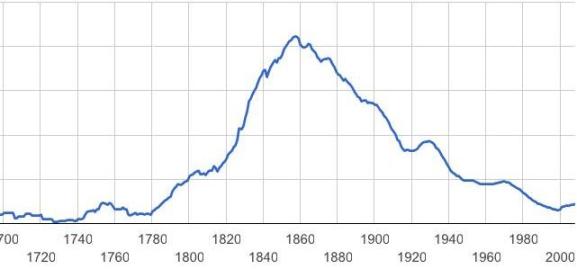
Authoress is an old term and was used as early as 1485. It grew in popularity until the mid 1800’s and found it’s nadir in 1998. Now “authoress” is on the rise again. Why? Not only is it old fashioned, of use only in historical dramas or other historical contexts, it is ugly and demeaning and redundant since “author” includes both males and females. According to the free dictionary, author means a) The writer of a book, article, or other text. B) One who practices writing as a profession.

If I had to describe myself as an “authoress,” I would never admit that I am a published writer. I even refuse to accept a friend request on Facebook from anyone who uses “authoress” as a title before or after her user name. Of course, I don’t friend anyone who uses “author” as a title either because I have doubts about their sincerity in wanting to be a friend.

If I need to describe my writing self, I tell people I’ve written books. I give them my card to show them what books I have written. Sometimes I even tell them I am a writer. Even though I tend to believe that an author is one who makes a living at writing and I have not yet achieved that status, I have even called myself an author once or twice.

But authoress? Never!
Use of "Authoress"

Use of “Authoress”

***

Pat Bertram is the author of the suspense novels Light Bringer, More Deaths Than One, A Spark of Heavenly Fire, and Daughter Am I. Bertram is also the author of Grief: The Great Yearning, “an exquisite book, wrenching to read, and at the same time full of profound truths.” Connect with Pat on Google+. Like Pat on Facebook.


Are You Your Brother’s Keeper?

I went to lunch with a few friends today. One is dealing with an aged mother who seems to either be bipolar or downright evil, jealous of her own daughter and unable to say a single nice thing to her. Another woman had such a mother, and the mother’s death set her free.

desert knollsWhen it comes to a parent, I can see that perhaps you have no choice but to deal with her (or him) as best as you can, but how much responsibility does one grown sibling have for another? If the sibling has some sort of mood disorder (undiagnosed and untreated), are you obligated to put up with their invectives and haranguing? And if so, how do you deal with it without being destroyed in the process?

If the mood-disordered sibling is also homeless, are you obligated to give that sibling a home? If you’re not in a position to give the sibling a home, what then are you supposed to do? Is it ever okay to walk away and leave the sibling to deal with life as best as possible on the streets? What if the sibling is suffering  with once broken bones that were never set and other painful issues because of a lack of insurance? And what if the sibling is also an alcoholic? How much responsibility do you have then, especially if the sibling doesn’t want to hear anything you have to say and misinterprets even the smallest gesture of kindness, such as the offer of a bit of food?

Is one ever free from the situation? If you walk away, how do you keep your heart from breaking? If you stay in contact, being subjected to so much anger and hatred, how do you keep your spirit from breaking?

***

Pat Bertram is the author of the suspense novels Light Bringer, More Deaths Than One, A Spark of Heavenly Fire, and Daughter Am I. Bertram is also the author of Grief: The Great Yearning, “an exquisite book, wrenching to read, and at the same time full of profound truths.” Connect with Pat on Google+. Like Pat on Facebook.
Excerpt From “Grief: The Great Yearning” — Day 197

I’ve come a long way in the three years since I wrote the following letter.  I still don’t understand the nature of life or death. Still don’t understand the point of it all, but I am embracing life, trying to create my own meaning out of small occurrences.  I’m learning to live without him, learning even to want to live without him. Sometimes I see his death as freeing us — me — from the horrors of his dying, and I don’t want to waste the sacrifice he made.

I still wish I could go home to him when my current responsibilities come to an end, but even that desire is waning. It took me a long time to feel the truth — that he is gone from this earth, and I am here. I still miss him, and I probably always will, but I’m learning to be comfortable in my own skin again. When one of “our” things disappears from my life through attrition, it no longer pains me — they are merely things, not “us”.

I’m  grateful we met and had so many years together. Grateful I once had someone to love. Grateful that when my time comes to die, he won’t be here to see me suffer. Grateful he won’t have to grieve for me.

Excerpt from Grief: The Great Yearning

Day 197, Dear Jeff,

It’s been a while since I’ve written, but I’ve been thinking about you. Are you glad you’re dead? You said you were ready to die, to be done with your suffering, yet at the very end you seemed reluctant to go.

I didn’t want to throw you away. Despite all the problems with your restlessness and the disorientation from the drugs, I wasn’t ready for you to leave me. I still am not. Nor do I want to go back to where we were that last year, waiting for you to die. We were both so miserable, but honestly, this is even worse. I can live without you. The problem is, I don’t want to, and I don’t see why I have to.

I want to come home. Please, can I come home? I have a good place to stay, but without you, I feel homeless. Sometimes I watch movies from your collection and imagine you’re watching with me, but that makes me cry because I know you’re not here. Your ashes are, but you’re not.

I broke a cup today, one more thing gone out of the life we shared. Our stuff is going to break, wear out, get used up. I’ll replace some of it, add new things, write new books, and it will dilute what we shared. Is there going to be anything left of “us”? I feel uncomfortable in this new skin, this new life, as if it’s not mine. As if I’m wearing clothes too big and too small all at the same time.

There’s so much I hate about your being gone—hate it for me and hate it for you. It might be easier if I knew you were glad to be dead, but so far you’ve been mum about your situation. Just one more thing to hate—the silence of the grave. (Well, the silence of the funerary urn.)

Adios, compadre. If you get a chance, let me know you’re okay.

***
Click here to find Grief: The Great Yearning in print or on Kindle from Amazon.


***

Pat Bertram is the author of the suspense novels Light Bringer, More Deaths Than One, A Spark of Heavenly Fire, and Daughter Am I. Bertram is also the author of Grief: The Great Yearning, “an exquisite book, wrenching to read, and at the same time full of profound truths.” Connect with Pat on Google+. Like Pat on Facebook.

Describing a Scene Through the Eyes of a Character

Description by its nature stops the forward movement of story. No matter how beautifully executed the passage, no matter how well a writer engages the senses, description alone goes nowhere. To be dynamic, it has to be part of the physical movement of the plot or part of the development of the character. This is done by not just describing something, but by showing the effect on the character and how the character reacts.


In the 1980s, bookracks in grocery stores were full of gothic romances. Perhaps you remember seeing those covers: a brooding mansion in the background, a woman in a diaphanous gown running away from the house, looking back at it in fear. Despite their triteness, those were dynamic covers: the pictorial description of the house, the effect on the character (fear), and how the character reacted (running away.) Written description can be as vibrant as those covers; it just means taking the description a step further and filtering it through the senses of a character.

In this example from my novel More Deaths Than One, we get an impression of the hotel in Bangkok from Kerry’s reaction.

Bob opened his eyes, then squeezed them shut against the light. From the heaviness of the air and the brightness of the day, he presumed it was mid-morning. He opened his eyes again and this time managed to keep them open.

He turned his head toward Kerry. She lay on her back, hands behind her head, eyes focused on the ceiling. Following her gaze, he realized she was staring at one of the ubiquitous green lizards. Her body vibrated with excitement.

He smiled to himself. Leave it to Kerry to be thrilled with this small reminder they were no longer in Colorado.

“Isn’t this great?” she said in a hushed voice. “We have our own private watch lizard.”

Bob brushed away a fly buzzing around his head. “We could use a few more.”

Later, the description of the hotel becomes an integral part of the Bob’s worry.

The hotel was built around a courtyard accessible from all the rooms. Bob took his breakfast out to the courtyard, but couldn’t enjoy the fountain, the bushes, the flowers. He kept stealing glances at the windows, wondering if anyone was watching him.

When dark clouds rolled across the sky, pushing a stifling humidity before them, he took refuge in his room. It did not have air-conditioning, but the slowly revolving ceiling fan offered a modicum of relief.

He paced the floor, feeling as if he were a stranger in this land. It didn’t matter that he had lived here for sixteen years, he realized; any place would seem alien when he wasn’t with Kerry. She was his home.

He tried not to worry about her all alone on the streets, but as time passed, the worry grew too strong to ignore.

Then the rains fell. There was no light spattering gradually increasing in intensity as in Colorado, but an abrupt opening of the skies as if someone had turned on a spigot.

Because of the emotions evoked, the brief descriptions in no way stop the forward movement of the story.

Other posts you might be interested in:

Describing a Scene in an Interesting Way
Describing a Winter Scene
Describing a Winter Scene — Again
Describing a Winter Scene — Again. And Yet Again.
Describing the Nondescript

***

Pat Bertram is the author of the suspense novels Light Bringer, More Deaths Than One, A Spark of Heavenly Fire, and Daughter Am I. Bertram is also the author of Grief: The Great Yearning, “an exquisite book, wrenching to read, and at the same time full of profound truths.” Follow Pat on Google+. Like Pat on Facebook.

The Art of Miscommunication

It’s amazing to me that we ever manage to communicate with one another at all.

A couple of days ago, I talked to my artist sister about the purpose of art and writing and what it means in this winner-take-all world. I mentioned that if you’re not one of the people who by chance happen to be discovered and so have a large audience and hence enough money or validation to continue working on your art, it seems that you have to do it for yourself. My sister said, “You think I do art for myself?” The conversation continued without my following through on her remark, but it stuck with me, so the next day I texted her:

If you don’t d531da618f5363c22_mo art for yourself, who/what do you do it for?

She responded: Absolutely. It’s just that we get confused and try to fit art into rigid and societal structures. Art needs to be free. Otherwise it’s not art, not alive.

Me: So you do it for the art?

She: Because it needs to be done and some are called to do it. It’s not my art or yours. Just art. Creative energy manifest. We need art and artists. It’s actually what makes us divine.

Me: Your first response was beautiful, but it didn’t answer my question. What question were you answering?

By then we were both confused, so we talked on the phone. She said she answered my question. I looked at my first text again and again until it finally hit me. What I thought was a direct and simple question had struck her as a statement or a rhetorical question meaning that if we don’t do art for ourselves, there’s no one else to do it for.

Even more than the strange miscommunication, what interested me about the exchange is that I have recently come to the same conclusion. Writing is art, divine, eternal, a way of participation in creation. Selling books is commerce, mundane, a thing of the world.

We need artists, whether painters, sculptors, dancers, or writers even if no one but the artist sees the work. It adds to the total creative energy and happiness of the world, makes us better persons and, as my sister pointed out when we talked on the phone, if you are doing art, you are not out committing crimes or being inhuman to other humans.

***

Pat Bertram is the author of the suspense novels Light Bringer, More Deaths Than One, A Spark of Heavenly Fire, and Daughter Am I. Bertram is also the author of Grief: The Great Yearning, “an exquisite book, wrenching to read, and at the same time full of profound truths.” Connect with Pat on Google+. Like Pat on Facebook.

Looking For Inspiration in My Blog Archives

I looked at some of my earliest posts hoping for inspiration for a guest article — I figured with an archive of 1,380 posts there should be something of interest for me to resurrect and expand on. I was surprised to discover how few of those early posts still had significance. Many were about my efforts to attract the attention of an agent, editor, or publisher, and I have since found a publisher. If ever I found myself unpublished, I’m not sure I’d embark on a quest for re-publication — I had my fill of querying years ago. (Not sure I’d self-publish, either, which would leave me exactly nowhere.)

It’s not only personal posts that time has rendered obsolete, but also posts about the publishing world. Things sure have changed in the six years since I began this blog!

booksSome of my early posts focused on what I had learned about Capturing the Attention of an Editor. We have an image in our heads of editors and editorial assistants eagerly pawing through the slush pile in search of our literary gems. In truth, all they are looking for is a reason to dismiss our manuscripts. If our first words don’t grab them, too bad. That’s all the time they are going to give us. And if by chance our first words do entice them to read further? They are going to be looking for any excuse to stop.

The trouble with this advice is that many writers now go directly to self-publishing without doing any research on how to capture the attention of an editor. As it turns out, what agents, editors, and publishers seem to be looking for are self-published books with a strong following, making my post redundant.

Other of my early posts focused on Basic Tenets for Good Writing, such as using dynamic verbs and concrete nouns; putting the action before the reaction; eschewing passive voice; not being clever for the sake of being clever; and paying attention to spelling, punctuation on grammar. I thought these tenets were undebatable, but all over the internet, writers are debating the necessity of such basics.

Still other posts mentioned what readers look for when they pick up a book, such as Paragraph Size, Italics, and Dialogue. If the paragraphs are too long, they feel that the work will be ponderous; if the paragraphs are too short, they think it will be lightweight. And if all paragraphs are more or less the same size, they get an immediate impression of stagnation. If there are too many italics, readers lose interest because long passages in Italics tell readers those passages can be skipped. As for dialogue, dense paragraphs of dialogue look like preaching, and few readers are interested in sermons, and large sections of one or two-word dialogue looks inane.

This advice, too, is now redundant. With ebooks, readers no longer flip through a book to scan it. They might use the “look inside” feature to read a page or two, they might scan reviews, or they might simply download the book sight unseen.

As it turns out, in a round about way, I found what I was looking for. Although I didn’t find inspiration for a guest post by searching my early blogs, I did find inspiration for this post.

***

Pat Bertram is the author of the suspense novels Light Bringer, More Deaths Than One, A Spark of Heavenly Fire, and Daughter Am I. Bertram is also the author of Grief: The Great Yearning, “an exquisite book, wrenching to read, and at the same time full of profound truths.” Connect with Pat on Google+. Like Pat on Facebook.

Celebrating Five Years of the Second Wind Publishing Blog

Today is the fifth anniversary of the Second Wind Publishing Blog, and in those five years, 1,614 bloggeries were posted. Congratulations to the Second Wind bloggers!

balloons1

Here are some classic posts from the Second Wind blog celebrating the seasons of our lives:

Changing seasons by Nichole R. Bennett There are places where the seasons don’t change much. The Black Hills of South Dakota is not one of those places.

A Time to be Thankful by John E. Stack As a foster parent, most of John Stack’s blessings come to him pint-size (new-born).

Christmas With My Sister For The Second Time by Coco Ihle Two sisters reunited after 50 years!

The Newness of a New Day by Pat Bertram New Years and the wonder of a new day

Spring by S.M. Senden Spring is an exciting time, for nothing seems to hold still.

A Donkey And A King by Paul J. Stamm “Hosanna” is the shout . . .

The Day of the Trickster by J J Dare The origin of April Fool’s Day

Mother’s Day: Coming to Terms with the Cruelty of Parkinson’s by J. Conrad Guest Mother’s Day is now every day,

In Honor of a Great Woman by Calvin Davis Commemorative for a very special woman

Class Reunions… a warm, fuzzy feeling of deja vu or the stuff nightmares are made of? (By Sherrie Hansen) Do you relish an occasional flash from the past?

Our Independence Day by Ginger King A goose bump moment as we hear the beloved Star Spangled Banner and reflect

Summer vacation…Finally! by Donna Small Vacation is for mothers, too!

The Laundromat, Not the Louvre by Carole Howard Living in Paris . . .

The Beauty of Black Sheep by Sheila Englehart Who broke from convention in your family tree?

Clever Twist or Unfair Trick? by Norm Brown In the spirit of Halloween . . .

***

Pat Bertram is the author of the suspense novels Light Bringer, More Deaths Than One, A Spark of Heavenly Fire, and Daughter Am I. Bertram is also the author of Grief: The Great Yearning, “an exquisite book, wrenching to read, and at the same time full of profound truths.” Connect with Pat on Google+. Like Pat on Facebook. (All Bertram’s books are published by Second Wind Publishing.)

Making Stories Come Alive

Our characters are more than just the creatures of our story world, they are the lens through which readers see into that world. It is possible to tell a story without using this lens, but the resulting story world can be gray and lifeless. Characters interacting with that world and each other give it color, make it seem more real.

I learned this the hard way.

I wanted the hero of More Deaths Than One to appear to be an insignificant little man though he was rich, had a couple of influential friends, and once had been a secret agent. Despite several rewritings, I could not make him come alive. He seemed dull and boring rather than the mysterious character I wanted him to be, and when the information about him unfolded during the course of the novel, it too was uninteresting. No matter what I did, I could not make him or his past three-dimensional.

In desperationfireworks, I created a love interest for him. (It seems like an obvious solution, but originally I wanted him to be a loner. Oddly, the love interest made him seem even more of a loner by comparison.) When I began to see him through her eyes and her amazement, all of a sudden he burst into full color.

Using one character’s viewpoint to show another character also allows us to be enigmatic when it comes to characterization. If we as the author/narrator were to describe a character as being kind, he must be so; if another character describes him as being kind, he might be kind, but he also might be kind only to her and mean to everyone else, or he might be abusive to her and she interprets it as being kind because she is not used to having anyone pay attention to her. While learning about him through her eyes, we also learn about her.

In this same way, when we see the story world as the character sees it rather than how we as the creator of the world envisioned it, the scenery comes alive. For example, here is a brief excerpt from A Spark of Heavenly Fire:

Kate jumped out of bed like a child on Christmas morning, ran to the window, and opened the drapes.

It looked as dim as dusk. The sunless sky embraced heavy dark clouds that hung so low she was sure she could reach out and touch them. The howling wind blew a few snowflakes around and rattled her leaky window. The icy draft made her shiver.

She laughed aloud.

What a lovely day!

In this way, we learn about the weather, we learn about the character, and we make the story world come alive for readers. We make readers a part of the story because they identify with the characters. They see the world through our characters’ eyes.

***

Pat Bertram is the author of the suspense novels Light Bringer, More Deaths Than One, A Spark of Heavenly Fire, and Daughter Am I. Bertram is also the author of Grief: The Great Yearning, “an exquisite book, wrenching to read, and at the same time full of profound truths.” Connect with Pat on Google+. Like Pat on Facebook.

If You Are Sick Of Hearing About My Loss . . .

Someone left a comment a couple of days ago saying she is tired of hearing about my loss and so is cancelling her subscription to this blog. To be honest, I don’t really blame her. I never expected the death of one man (my life mate/soul mate) to have such an impact on my life that I could feel the ripples of his absence three and a half years later. I certainly never expected to still be mentioning my loss after all this time (it seems a bit pathetic), but I can’t ignore the single most significant event of the past few years of my life. Everything I am, everything I will be stems from that loss.

Death is such an inhuman and inexplicable event that our brains scurry around trying to solve the enigma of a presence that has become an absence. Some people are lucky enough to believe in a benevolent God and a beatific afterlife. Others of us strive to find meaning, and if we don’t succeed in finding it, we have to create meaning.

For now, this bSierra Club conditioning walklog is my meaning. Or rather, the means to my meaning. I was so stunned at all I felt after his death, so shocked at how little I understood such profound grief despite having lost a brother and my mother that I used this blog as a way of helping other bereft find their way through the labyrinth of pain. I wanted to let them know they are not crazy if they continue to feel grief long after their family and friends (and blog readers) have become tired of their sorrow. The truth is, we too get tired of our loss, but we have no choice but to continue our struggle to live.

And it is a struggle. I realized long ago that the only way I could make sense of his death is to do things that we wouldn’t have done together, or to do things that I wouldn’t/couldn’t have done while he lived. Even though I am no longer actively grieving and in fact am quite happy at times (I seldom cry any more, and if I do, it’s only for a moment or two), I still honor my loss with all that I am doing. I continue to blog about grief, take night walks with the local Sierra Club, travel a bit, write, amble in the snake-infested desert, and do things I am not necessarily comfortable doing.

Although it might seem as if I am still bemoaning my loss by continuing to mention his death, the truth is, I am not embracing loss. I am embracing life — my life. I’m still not convinced life is a gift — there is way too much pain in the world — but my loss is the means of my future gain. I will not waste the freedom his death brought to me. I will not waste the courage he bequeathed me. I will not waste what is left of my life, even though I have to continue alone.

It seems to me that my struggle to create a meaningful life is worth writing about. So, if you are sick of hearing about my loss, feel free to unfollow me, but I am going to continue to blog about my life, and my life includes his death.

***

Pat Bertram is the author of the suspense novels Light Bringer, More Deaths Than One, A Spark of Heavenly Fire, and Daughter Am I. Bertram is also the author of Grief: The Great Yearning, “an exquisite book, wrenching to read, and at the same time full of profound truths.” Connect with Pat on Google+. Like Pat on Facebook.

In the Company of Married Women

I had lunch with some friends today, which would have been nice though not particularly significant if it weren’t that all the women were married. Since the death of my life mate/soul mate, most of my friends have been my fellow bereft — my sisters in sorrow — but gradually I’ve been meeting women who are still coupled. Today was the first time I found myself in the company of only married women.

I was actually okay — no tears — but it did make me sad to listen to these women talk about their husbands’ irritating qualities. Although I sympathized, I wanted to cry out to them to treasure every momenluncht, even the most exasperating incidences, because in the end, every moment spent with the person you love (or once loved) is a golden moment.

But I kept my mouth shut. Anything I said — even a gentle request to give their husbands an extra hug that night — would have seemed as if I were chastising them, and if my words didn’t strike such a note, I would still have turned the focus of the conversation from them and their comfortable confidences to me and my uncomfortable realities. Besides, until you have lost your mate, you simply cannot understand how precious every moment is. You’re caught up in the daily struggle to maintain your autonomy in the face of someone else’s wishes, the struggle to get all of the day’s chores finished, the struggle to find a harmonious balance between aging bodies and youthful spirits. You don’t have the energy to focus on distant tragedy.

So, I’m telling you what I would have liked to say to them. Smile at your mate instead of ignoring or arguing with him. Give him an extra hug and maybe a kiss. Thank whatever powers you believe in that no matter how irritating he might be, you have him for one more day. This is an incredible gift I am giving you — a memory to treasure if ever you should become one of us bereft.

***

Pat Bertram is the author of the suspense novels Light Bringer, More Deaths Than One, A Spark of Heavenly Fire, and Daughter Am I. Bertram is also the author of Grief: The Great Yearning, “an exquisite book, wrenching to read, and at the same time full of profound truths.” Connect with Pat on Google+. Like Pat on Facebook.