Life’s Little Mysteries

I’ve often pondered mysteries, such as the truth of conspiracy theories, if there are aliens, are there secret government agencies we know nothing about and if there are, what are they doing to us. Those mysteries formed the backbone of my first books.

My teenage angst centered around the meaning of life, and especially the meaning of my life, and though I never really found an answer, I came to an accommodation with the questions until after Jeff died. Then questions — oh, so many questions — haunted me. Who are we? Why are here? Is this all there is? Why are there still ties of love even though are loved ones are gone? Where did our loved ones go? Will we see them again? What is the meaning of life, and probably most haunting of all, what is the meaning of death? What happens to love when it is no longer needed?

The mysteries confounding me now are of a more prosaic nature. For example, in recent months, I bought white cotton pillow cases that collect dark lint. Nothing else in the house collects lint of that nature, so I have no idea where it comes from. It can’t come from the air. Because of sinus issues, I have to sleep propped on a stack of pillows, so it seems almost impossible for lint to collect between the pillows. And during the day, the pillows are propped against the headboard, so again, it seems impossible for them to collect lint.

I finally got frustrated, so I washed the pillow cases in a load by themselves, and threw a dryer sheet in the dryer when I dried them (though that is something I do not like doing). There was a smidgeon on lint in the lint trap, but most remained on the pillows.

Finally, I got out a roll of tape, and used the tape to remove the lint. This morning when I woke up, there wasn’t much lint on the pillow cases, but there was some. Are the pillow cases generating their own lint? But if so, why is it dark gray and not black?

Another thing that perplexes me is Tuesday. Why do so many things happen on Tuesday? Today, I had three different meetings to go to, plus I was supposed to play train dominoes with some friends. I went to one and a half meetings, passed on the game, and am preparing for the third meeting later on this evening.

See? Prosaic mysteries. Not exactly in the same category as the questions of life, death, and love.

Luckily, tomorrow is Wednesday, I have nothing scheduled, and I have plenty of tape to clean the pillowcases if necessary.

That will leave me open for more questions— vital or not — to pop into my head and baffle me.

***

Pat Bertram is the author of Grief: The Inside Story – A Guide to Surviving the Loss of a Loved One. “Grief: The Inside Story is perfect and that is not hyperbole! It is exactly what folk who are grieving need to read.” –Leesa Healy, RN, GDAS GDAT, Emotional/Mental Health Therapist & Educator.

Suits Me To a Tea

My next-door neighbor came over for afternoon tea yesterday. It was lovely and seemed such a small-town thing to do — heartwarming and congenial and a bit old fashioned. It was especially nice because I was able to show off my tea bag collection and use my author mugs. I still had a few mugs left from years ago, but when I recently broke a mug and needed to get new mugs of some sort, I unexpectedly discovered that my original mug order was still posted on the website, so all I had to do was reorder.

The mugs added to the general feeling of a small-town visit, probably because they don’t seem like blatant self-promoting, but a rather pleasant and personal touch.

I’m now sitting here at the computer with a cup tea, having just returned from a visit to the library a few blocks away. Another seemingly old-fashioned touch, this walk to the library, and a large part of my small-town experience.

Although some people around here make me leery (drug dealers, people who hang out in the alley behind my house, and a smattering of small time thieves), life in a small town suits me to a tea.

Admittedly, that’s not the way to write “to a T,” buy my spelling seems more in tune with the cozy “teatime” way I felt yesterday.

“To a T” does not, in fact, have anything to do with tea or golf tees or T-shirts or T-squares, but is a very old term, first used in 1693. To the best anyone can figure, the phrase came from a much older phrase, “to a tittle.” A tittle now means a speck, a tiny amount, or a small part of something but originally a tittle was a small part of a letter, like a dot or a stroke or a diacritical mark. So if something suits you to a T, it suits you to the smallest detail.

So technically, small town living does not suit me to a T since there’s the leery factor I mentioned above.

But it comes close — it’s only off by a tittle.

***

Pat Bertram is the author of Grief: The Inside Story – A Guide to Surviving the Loss of a Loved One. “Grief: The Inside Story is perfect and that is not hyperbole! It is exactly what folk who are grieving need to read.” –Leesa Healy, RN, GDAS GDAT, Emotional/Mental Health Therapist & Educator.
Getting Back Into Dancing

Now that much of the chaos of the past year is gone — buying a house, moving, settling in to a new town, meeting people, fixing things that need to be fixed — I’m gradually getting back into exercise. There is still much to do around the house, such as having a garage build and a bit of landscaping done, but on the days when no one is here working, there is certainly no reason for me not to exercise. Except laziness, of course, but that’s not a reason, just an excuse.

Nor is having all the stuff that was once in my garage piled into the back room (aka enclosed porch, aka exercise room) a reason. It finally dawned on me if I removed the folding table and chairs from my dining area, I have a perfectly acceptable workout space. Even better, it’s warmer than the back room.

So, having run out of excuses, I’ve had no other option than to exercise.

It’s appalling how quickly one loses flexibility when one has not been exercising or even stretching. (“One” meaning me, of course.) Yikes. I can still get down on the floor, so it won’t be long before I get some flexibility back. Meantime, I’ve been having fun practicing belly dance steps.

From the first time I took a belly dance class, I thought it would be a perfect way for me to get in shape because it seems more intuitive — more natural — than other dances. (Ballet, for example, is known for going against nature, and it certainly went against my nature, though I did work to the best of my ability.) Although I loved the belly dance class, I became disenchanted because so much of the class time was taken up with performance talk and costume planning. What was left of the hour went to learning and practicing a routine, so there was not much time dedicated to basics.

Since I can now schedule my own “class,” I am focusing on basics. I’m curious to see if a concerted effort at this sort of exercise will have the benefits I hope for, but if not, well . . . dancing. Dancing in itself is a benefit. Every step I take, every move I make is a blessing, and I am grateful to still be ambulatory, still breathing on my own, still fairly active. (I was going to say “spry,” but I’m not old enough yet to be spry.)

I do miss the energy of choreographed dancing with a group — it always seemed I could do more than when I was by myself, but I don’t miss performing.

I did my first belly dance performance with the group only a few months after I starting taking classes, and though I was no slimmer then than I am now, I was okay with it — I had a fabulous costume, a flattering wig, and a great attitude: “This is who I am. Deal with it.” As time went on, I lost that attitude, and so performing became more of a chore and less of a joy, though I did retain the love of dancing for dancing’s sake.

Of all dance forms, belly dance seems to lend itself to solo dancing, to pulling energy from the soul rather than the spirit of a group, to being one with one’s body. It helps that I’m not dancing in front of a mirror — I can feel young and beautiful and graceful without the unpalatable truth glaring at me.

Once the garage is built and my back room available to me once more, I will be able to do some barre work, maybe some tap or jazz, and perhaps even Hawaiian. Until then, there’s me, a veil, an open floor, and belly dance.

***

Pat Bertram is the author of Grief: The Inside Story – A Guide to Surviving the Loss of a Loved One. “Grief: The Inside Story is perfect and that is not hyperbole! It is exactly what folk who are grieving need to read.” –Leesa Healy, RN, GDAS GDAT, Emotional/Mental Health Therapist & Educator.
Happy Lunar New Year

In honor of the Lunar New Year (Chinese New Year), I looked up my Chinese horoscope, and oh, my! People who cast star horoscopes generally try to put a good light on their predictions, but apparently, the same is not true of Chinese horoscopes. Mine for this Lunar New Year is: “Your horoscope is not very good at all. Your career development will be hindered. Your financial fortunes are not optimistic. You need to consider carefully to weigh gains and losses before making decisions. Your health luck is not ideal. Do not drink alcohols too much. But don’t be too worried, otherwise your situation will only get worse and worse.”

Really? Sheesh. I might as well go to bed and stay there until the next Lunar New Year.

There is the gentler star sign horoscope, however, to balance this rather dismal prediction, though looking closer, both horoscopes say the same thing.

Instead of: “Your horoscope is not very good at all,” the stars say: “All your daydreams could come crashing down. You won’t want to face the realities that slowly creep in. You’re tougher than you seem, though, so having to face the music can be a blessing in disguise.” Sure sounds as if I’m in for a rocky time.

Instead of: “Your career development will be hindered,” the stars say: “This can be a time for working on a project in advance of a launch date. You may be in a processing or hatching stage with a venture.” In other words, my career is going nowhere. To be honest, that’s to be expected. Although a publisher accepted my latest manuscript, I don’t have a publication date and I don’t expect one until the latter part of the year. And, although I have a book stewing in my brain pan, I have yet to write a single word.

Instead of: “Your financial fortunes are not optimistic,” the stars say: “You need to set aside enough money to meet unexpected expenses.” Well, so much for my financial fortunes this year!

Instead of: “You need to consider carefully to weigh gains and losses before making decisions,” the stars say: “You need to refrain from making major decisions in money matters, and you are not to incur any major expenses.” Oops. Too late. A garage isn’t exactly a minor expense.

Instead of: ‘Your health luck is not ideal,” the stars say: “Health issues may come to the fore. There can be some strains on mental and physical health.” That doesn’t sound appealing, but hopefully, being careful and taking care of myself will offset some of this not-so-good health luck.

Instead of: “Do not drink alcohols too much.,” the stars say: “You might often be tempted to escape your everyday responsibilities and challenges, and should avoid reliance on drugs or drinking.” Does that mean I have to forgo my single yearly Bailey’s Irish Cream toast to my mother? But, by any calculation, a single drink can’t be considered either “too much” or a “reliance on drugs or drinking,” so I think I’m safe.

Instead of: “Don’t be too worried, otherwise your situation will only get worse and worse,” the stars say: “The cosmos asks you now to surrender some of your attachments and to surrender to the unknown. Releasing control is necessary. You could feel that you are dealing with endings more than new beginnings in some areas of life during this transit, as you let go of outdated attachments. With self-discipline, you could find more joy and confidence.” So, basically, this is a year of not so good luck for me, but I shouldn’t worry, or it will get worse. Okay, got it.

The stars, at least, offer hope. “This is a time when you are filled with ideas about the future. You are planting seeds, so to speak, aiming to get started on projects that will reap rewards in the future. For the most part, you are likely to take advantage of this period in your life in order to expand your social life and friends base as well as to dream up exciting new paths for the future.” Apparently, if I can’t have good luck this year, there is always next year.

Fortunately, horoscopes have never reflected anything that has ever happened in my life, and despite this rather interesting research project today, I don’t expect these horoscopes to be any different.

So, let’s all have a happy Lunar New Year!

***

Pat Bertram is the author of Grief: The Inside Story – A Guide to Surviving the Loss of a Loved One. “Grief: The Inside Story is perfect and that is not hyperbole! It is exactly what folk who are grieving need to read.” –Leesa Healy, RN, GDAS GDAT, Emotional/Mental Health Therapist & Educator.
Shocker!

Of all the things I have said during my years, I think the thing that shocked people most was during a recent conversation about how everyone decorated their refrigerators. I said my refrigerator door was bare, and that statement sure brought me the stares!

When Jeff and I were together, our refrigerator door was used as most people seem to use the door, as a bulletin board for shopping lists, notes, reminders, assorted magnets, and such. The only thing we lacked was children’s refrigerator art.

Before I moved here, I rented a room in a house where I had to share a refrigerator, and the guy I rented from kept his refrigerator door full of his niece’s artwork. I admit, she had talent, but for some reason, it irked me having to look at those same things day after day after day. (I think it wasn’t the art so much as the act — it clearly told us renters that we might live there, but it wasn’t really our home.) Though it wasn’t cause and effect (and least I don’t think it is), I’ve kept the door of my refrigerator door bare. The uncluttered look pleases me. I still jot down things I need to get at the store, but I keep the list in a drawer, which is just as accessible, if not more so, than the refrigerator door.

I don’t even like to keep things on my counter, though I have made a recent (and perhaps temporary) exception.

A couple months ago, I posted a blog about how, when I was young, I wanted a toy oven, but more than that, I wanted the accessories — small baking pans, child-size utensils, and especially the miniature boxes of cake and muffin mixes. After reading that, my wonderful sister sent me a child’s set of pots and pans. Although they are stainless steel, they say “not for use on stove” so they sit on the counter, charming me with both their presence and the thoughtfulness that brought them to me.

Unlike most people, I don’t even keep appliances on the counter. Since I almost never eat bread, there’s no reason for a toaster, though if I ever find a toaster with narrow slots (rather than slots wide enough for bagels), I might change my mind. I have a blender, but it’s in a cupboard since I don’t use it. (Jeff was the one who used it — he made a protein drink every morning.) And I haven’t yet got caught up in the instant pot or air fryer fad. Which is great — I don’t have to sacrifice utility for clean counters.

It’s this desire for a clean look that helps overcome my natural laziness. Instead of shrugging off a mess with an “I’ll do it tomorrow” attitude, I take the extra few minutes to put everything to rights before I retire for the evening. That way I get to wake up to an inviting kitchen.

So, are you shocked?

***

Pat Bertram is the author of Grief: The Inside Story – A Guide to Surviving the Loss of a Loved One. “Grief: The Inside Story is perfect and that is not hyperbole! It is exactly what folk who are grieving need to read.” –Leesa Healy, RN, GDAS GDAT, Emotional/Mental Health Therapist & Educator.
Third Time’s an Alarm?

I seem to have backed into period of being accident prone. That there are separate — and understandable — causes for each of these three “accidents” does not mitigate the alarm factor.

I wrote about falling a month ago, a full-frontal splat that jarred my whole body, leaving me with a couple of achy days, but no other damage. My foot had become caught in a strap attached to my carport, and since I hadn’t removed the strap when I should have, that fall could be considered my fault, but still, the fall was a result of an accident rather than a physical problem — no dizziness or weakness or imbalance. It was just one of those things that could happen to anyone (to anyone who let their attention lapse, that is).

What I didn’t write about was a fall that happened a couple of weeks ago. I generally don’t go out at night because it’s harder to see, obviously, but I got a ride from a friend who was attending the same meeting. I’d stepped out of the car, on my way into the town hall, and I tripped on the two-part curb in front of the building. (A brick pathway had been placed on top of the original sidewalk, but since the bricks didn’t go all the way out to the curb, there was a tiny step where the original curb still remained.) The irony was that I had been headed to a meeting to discuss ways to make the town safer, and there it was, a classic example of what needed to be fixed.

A couple of days later, someone asked me how I was and if I’d recovered from my fall. It took me a minute to realize what she was talking about because the fall wasn’t much of anything — the shin pain had dissipated in a couple of minutes, and I’d immediately forgotten the incident. Besides, the woman hadn’t even been there the night it happened. I asked how she knew. She laughed and said, “This is a small town,” Apparently, it’s even smaller and more insular that I thought, because how could such an insignificant fall by a rather insignificant person (insignificant in the grand scheme of town doings, that is) be a topic of conversation?

Then yesterday I went for a walk with a friend. When I’m by myself, I usually walk in the middle of the road where there are no hazards (except an occasional car, of course), but since there were two of us, I was walking off to the side, and suddenly, without warning, my foot slipped out from under me and I slowly but inexorably hit the ground. A neighbor was passing, and he got out of his truck to help, but except for a bruise on my thigh, I was fine and able to get to my feet by myself. I must admit, though, I was (still am) quite perturbed — and alarmed — at falling again.

After asking me how I was, the neighbor said, “I saw you go down.” He explained that I’d slipped on a patch of loose gravel, and then he added, “It wasn’t your fault. There was nothing you could have done.”  My friend agreed and asked me if I were accident prone. I said no. Because I hadn’t been. At least not until a month ago.

Now I need to get her question out of my head because thinking of it might make me accident prone for real, and frankly, three falls are quite enough, thank you very much.

***

Pat Bertram is the author of Grief: The Inside Story – A Guide to Surviving the Loss of a Loved One. “Grief: The Inside Story is perfect and that is not hyperbole! It is exactly what folk who are grieving need to read.” –Leesa Healy, RN, GDAS GDAT, Emotional/Mental Health Therapist & Educator.
Talking about Walking

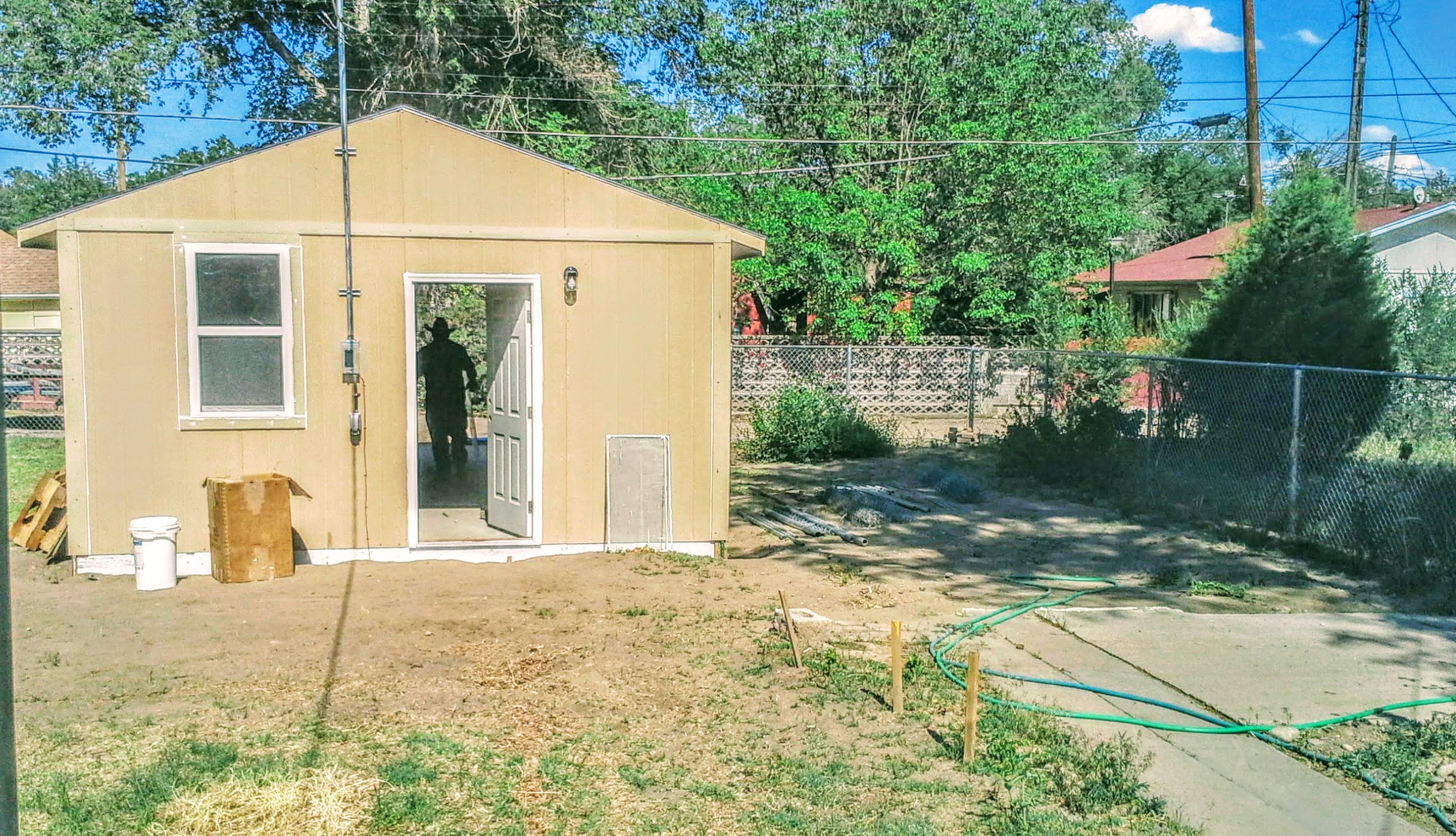
I attended a city council strategy session last night. Part of the discussion was walkability, making the town a safer and easier place to walk. The main thing that I can see is that so many of the sidewalks need to be repaired, but apparently, there is nothing the mayor and council can do about that since it’s up to the property owner to maintain their sidewalks. The council can do something about the crosswalks, specifically the ends of the sidewalk that lead down into the street. So many of those curbs are broken, or too high, or missing. They need to make them accessible.

During the discussion, someone suggested putting bike paths on the wide streets, but oh, my, what a terrible idea! (And unnecessary in many cases because of existing sidewalks and because many of the streets are so lightly traveled they’re already serving as walking/biking paths.) First, dedicated paths would take away street parking, and second, they are dangerous to pedestrians. Since I’ve walked mile upon mile no matter where I’ve been, I have a lot of experience with bike/pedestrian paths, so I know how dangerous they are. Many bike riders do not give the right of way to pedestrians, whizzing past walkers, and often forcing them into car lanes. So . . . no. I sure hope they paid attention to my expert opinion.

People who don’t walk except to and from their cars, don’t know the challenges of walking or finding safe places to walk. After the meeting yesterday, we got to talking about possible places for me to walk in the area, and one suggestion was to walk in the community center. Apparently, the basketball court is open in the morning to give seniors a safe place to walk, but oh, how utterly boring! And how many laps to make three miles? Sixty? Eek.

Another suggestion was to walk around the golf course. Whether he meant walk around the course on the course itself, or walk around the outside of the course, is immaterial because neither is possible. The golf course is surrounded by barbed wire, so even when no one is golfing, the pathways are inaccessible. And to walk around the outside perimeter? Well, there is a little matter of locked gates and no way around them.

They also told me there was a pond out that way, with perhaps a trail around it, but if so, it had to be inside the golf course because there was no road to a pond. Still, it was a bit of an adventure, walking to an area I hadn’t yet explored.

I was told it is also possible to walk along the dikes next to the river, but no one could tell me how to get there without trespassing on private property, and oh, by the way, there are more gates along the dikes.

I’ll keep looking. There has to be a scenic (and relatively safe) place to walk around here.

***

Pat Bertram is the author of Grief: The Inside Story – A Guide to Surviving the Loss of a Loved One. “Grief: The Inside Story is perfect and that is not hyperbole! It is exactly what folk who are grieving need to read.” –Leesa Healy, RN, GDAS GDAT, Emotional/Mental Health Therapist & Educator.

 

Every Moment is a Once in a Lifetime Event

When I was at the library a little while ago, stocking up on my reading for the next couple of days, the librarian asked me how I was doing. I told her I was doing great, and it was the truth.

At that moment, I did feel great. And why not? I was at a library, warm and comfortable, rosy from my walk, talking to a very nice woman, filling my carryall with books I want to read. Nothing else existed. Not any pain bleeding over from the past, no thinking or worrying about the future (except for thoughts of cozying up to read later in the day).

I had that same feeling last evening. I was reading a book about a sixty-something cop who was in his final year of work, and no matter what happened, he felt that each moment was golden knowing that the work he loved was coming to an end. I stopped to think about the golden moment I was living through and realized again, as I have done so many times before, that no matter what, each moment of our lives are golden.

Some of those moments are breathtaking, such as watching the setting sun paint the skies gold with a never-again to be seen piece of art.

Some of those moments seem dimmed by the pain of loss or the ache of age, but still, they are special in their own way — once in a lifetime events that will never be repeated in exactly the same way.

Admittedly, when things are difficult or we are in the middle of the seemingly unending angst of grief, it’s almost impossible to see the gold in the moment, but those traumas teach us to live in the moment and not look too far ahead. No matter how agonizing, you can live through the moment.

So later, much later, when joy or peace or wonder unexpected steals over you, you can take the discipline you learned from grief and live in the moment. Experience it as if it were a once in a lifetime event.

Because it is.

Wishing you the joy of your moments.

***

Pat Bertram is the author of Grief: The Inside Story – A Guide to Surviving the Loss of a Loved One. “Grief: The Inside Story is perfect and that is not hyperbole! It is exactly what folk who are grieving need to read.” –Leesa Healy, RN, GDAS GDAT, Emotional/Mental Health Therapist & Educator.

Whose Story Is It?

I woke this morning with the perfect plot for my next book, though I’m not sure I can write it because it’s not my story. In the writing, it will become my story, of course, taking the characters in directions they wouldn’t go in real life, but the people involved in this would-be plot are the starting point, and one person already told me he didn’t want me to put him in book. Or maybe he said he didn’t want to be the villain. Or the victim. One of those. Then he sort of backtracked and said it didn’t matter, so I don’t know where I stand.

Even without his permission, I could still write the book and see what happens. If none of the characters are recognizable in the end, then it wouldn’t matter whose story I started out with in the beginning.

Figuring out who the story is about is one of the first steps to putting a book together. And in this new book, as in Madame ZeeZee’s Nightmare, the story would be mine and the main character me. Or not. Let’s just say a character named “Pat” with a penchant for hats, who might or might not be me, would be the narrator.

This fictional Pat would buy a house in a town where many people had lived their entire lives (some returning as older adults to the very house where they’d grown up). During renovations of the house and property, many small mysteries would arise. The house itself would be a character, the way it wraps itself around Pat and makes her feel at home, and conversely, the way a visitor was made to feel unwelcome by a ghost only the visitor could see. And the fellow who didn’t want to be in the book would be there in spirit if not in a fully-developed character because he’s the one who, in fixing the place, finds many of the puzzles.

It’s possible there would be enough with just the house and possible ghost to write a cozy mystery, leaving the harder-hitting story I thought of this morning for a later book, but I don’t have all the pieces to the ghost story yet.

And then there’s the additional matter of not having the push to write — getting the house and garage fixed, daily blogging, and attempting to get back into an exercise routine — takes up most of my available “push.” For now, I’ll let both stories stew in my brain pan and see if they coalesce into one cohesive whole or if they remain two different stories with many of the same characters.

The only books I’ve written since Jeff died were all grief infused, even the fiction. Some people thought the grief in Madame ZeeZee’s Nightmare misplaced because it overshadowed some of the lightheartedness, but that’s what the narrator “Pat” was feeling at the time. Besides, I do find it ludicrous that so many mysteries and thrillers are steeped in countless deaths, and no one gives even a passing thought to the emotional toll.

It would be worth writing another book just to see where that “Pat” is now, and if her new-found peace shows up in the story.

***

Pat Bertram is the author of Grief: The Inside Story – A Guide to Surviving the Loss of a Loved One. “Grief: The Inside Story is perfect and that is not hyperbole! It is exactly what folk who are grieving need to read.” –Leesa Healy, RN, GDAS GDAT, Emotional/Mental Health Therapist & Educator.
 

Garage Installation

I wasn’t going to write more about my garage until it was actually being built, but I couldn’t pass on using the title of this piece, which is a perfect title because work on the garage is temporarily stalled. (In – stall – ation. Cute, huh?)

The contractor has a few obligations — contract deadlines he needs to take care of now, so that when he starts building the garage, he can do the whole thing without delays. (Oh, wait!! Contracts. Contractor. Now I get it! Sheesh. I sure am firing on all cylinders today.)

Meantime, he and his workers took time from their weekends to finish the part of the side fence that was hidden behind the old garage. (Though they made sure they were done by noon. Something about the Kansas City Chiefs.)

Breaks in a fence seem to attract the very people I don’t want to attract, so it’s good to have the fence finished. I do feel bad, though — the back fence will have to be redone after the garage is built, and it seems a shame that their hard work is going to waste.

But they don’t seem to mind. At least that’s what they tell me. Who knows what they say amongst themselves.

Meantime, I am completely fenced in. I always liked that song “Don’t Fence Me In,” but now that I’m alone in an ever-scarier world, I like fences. I still don’t like other people fencing me in, except, of course, for the workers who actually did fence me in.

The thing about fences is that they have gates, so I’m not truly fenced in, either psychologically or physically. I can always open the gate and leave. Doors are the same way. After Jeff died, people told me, “God never closes a door without opening a window,” which completely ignores the nature of a door — it closes and it opens.

But I’m getting off track.

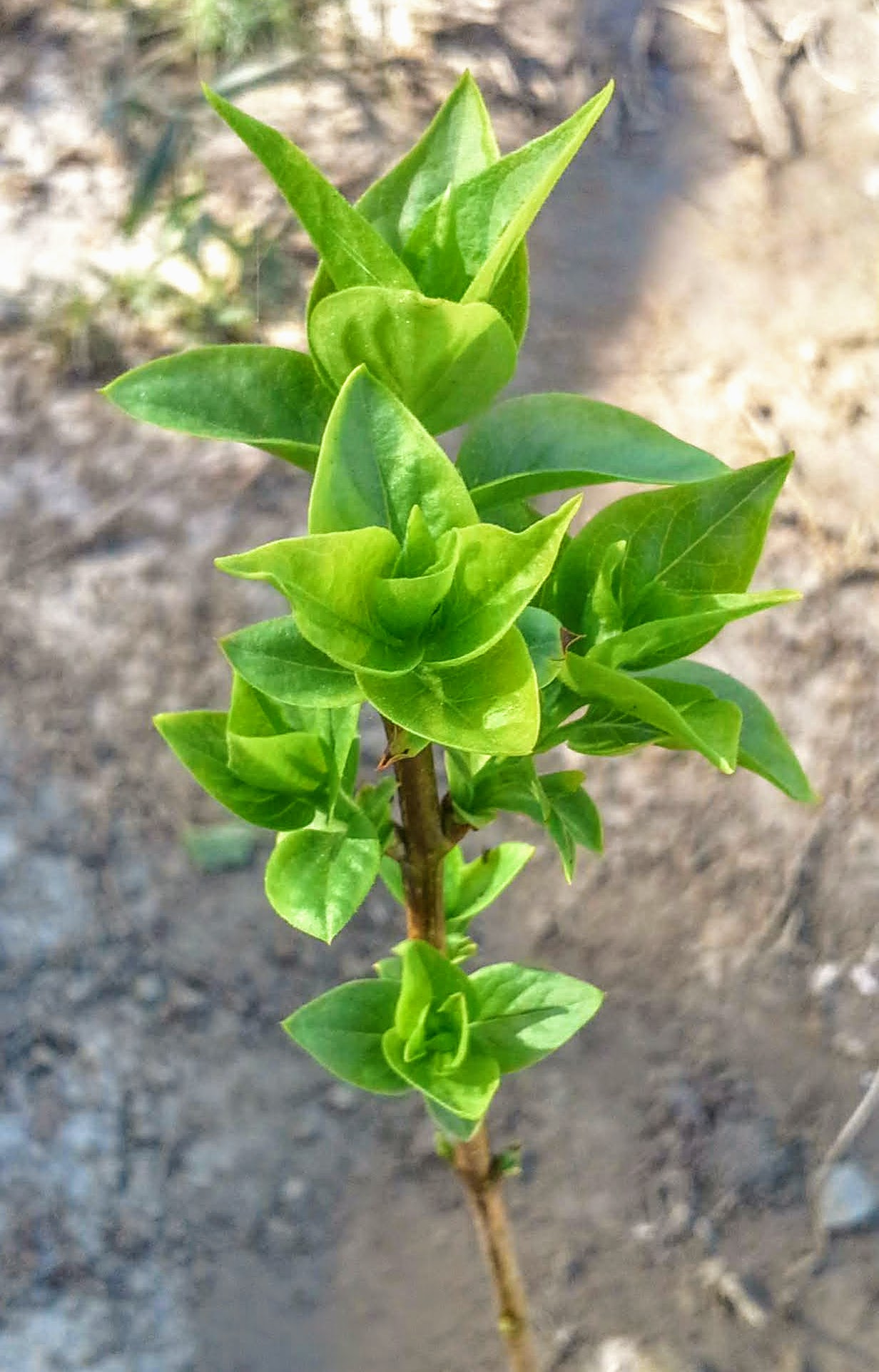
In the photo above, you can see the recently installed fence on the right, the fence in the back that will have to be redone, and the place where the new garage will go — left of the trench where the sidewalk used to be, but close to the back fence. (You can see where the garage used to be to the right of the trench. The concrete slab used to be in front of the garage.) The lilac bushes along the back fence will have to be moved, but it should be easy for the men to do so using the excavator they will get to dig the foundation for the garage. (Any extra dirt will go to fill in area where the garage used to be.)

Well, now you know more than you ever wanted to know about both the installation and the in-stall-ation of my garage.

***

Pat Bertram is the author of Grief: The Inside Story – A Guide to Surviving the Loss of a Loved One. “Grief: The Inside Story is perfect and that is not hyperbole! It is exactly what folk who are grieving need to read.” –Leesa Healy, RN, GDAS GDAT, Emotional/Mental Health Therapist & Educator.