Dancing My Way Out of Grief

Today was a particularly intense day for me at the dance studio. I took three classes. Ballet, which wants to twist my body in ways it wasn’t meant to go. Advanced tap, where I am totally out of my depth. And advanced jazz, which wasn’t hard, just exhausting.

The difficulty of the day, particularly tap, which is hard enough for me at a beginner’s level but confusingly difficult in a more advanced class, reminded me of my first days at the studio. I started out with jazz, not knowing what to expect, not knowing I would fall in love with dance and end up taking all possible classes. Since I had no background in dance, and since the group had been together for quite a while before I joined, I was more or less just dumped in the middle of a dance and told to follow along as best as I could until the teacher could find time to work with me. I tried to emulate the others, but even the simplest steps were beyond me. But I practiced. And I learned. Even more importanjazz shoest, I learned how to learn to dance, which is vastly different from learning how to learn academic subjects. (Knowing how to learn is the key to learning, as I’m sure you know.) With more cerebral pursuits, you only have to put your mind in gear. With physical lessons, you have to put your body, mind, and soul into the experience, and once I’d learned to walk, I never had to put that much effort into learning physical things for the simple reason that I had no interest in such matters.

Last summer, before I started taking dance classes, I’d gone on excursions, traveled, visited museums, and did whatever I could to get myself to look more to the present and future rather than back at the past, but I was still subject to upsurges in grief. I was happy enough while doing such things, but as soon as they were over, the sadness descended once again. Dance was the first thing I did that rippled into subsequent days, probably because it was so difficult, all-consuming, and exciting, and it brought me to life.

Learning is my talent, my joy, the thing that makes life worth living, and dance plays into that aptitude for learning since as soon as I learn one step or one dance, there is another one to learn. Even more than that, dance helped push aside the physical memories of my shared life with my soul mate.

When someone close to you dies, especially someone whose life is connected to yours on a profound level, you remember him not just with your mind but with your body. So often, when anniversaries came around, such as the anniversary of his cancer diagnosis or the anniversary of our last kiss, I didn’t remember the day, but my body did. Visiting art museums, reading, writing, walking, helped push the mental memories of him into the far reaches of my mind, but until I began to learn how to dance, there was nothing to distance the body memories.

To a great extent, dance is about body memory. If you have to pay attention to every move you’ve learned instead of letting your body remember, you lose the rhythm of the dance as well as any nuance, and chances are, you’d lose the sense of the movement itself. (For example, in ballet class a couple of days ago, we were trying to figure out why my body wouldn’t do what the steps required it to do, and at one point, the teacher stood behind me, put her hands on my shoulders to feel my movements, and told me to walk. I couldn’t move — for that moment, I forgot how to walk. I was trying to remember in my mind how to walk rather than remembering with my body.)

It’s no surprise that some of my classmates have also suffered a severe loss, whether the death of a husband or a horrendous divorce. For us, dance is not just something fun to do, but a pilgrimage to the far reaches of our new lives.

I’ve come a long way in the year since I showed up for my first dance class. I know more than a dozen dances, know all sorts of different steps and combinations, know that no matter how hard a dance is, I will learn it.

And most of all, I know I am alive.

***

Pat Bertram is the author of the suspense novels Light Bringer, More Deaths Than One, A Spark of Heavenly Fire, and Daughter Am I. Bertram is also the author of Grief: The Great Yearning, “an exquisite book, wrenching to read, and at the same time full of profound truths.” Connect with Pat on Google+. Like Pat on Facebook.
Floral Carnage

I’m not much of a gardener, never have been. My last attempt to plant anything was a couple of years ago when someone gifted me with a Bonsai kit (planter, soil, seeds), and that result was typical — seedlings that poked their head above the soil, looked around, saw who they would be dependent on for their very lives, and promptly gave up their ghosts. I planted lights after that, and we’re all happy. Nothing to kill, just a bit of beauty when I’m feeling down.

I love flowers, and sometimes when I see bouquets in the grocery store, I’m tempted to buy the blooms to add a bit of life to my life, but I’ve never been able to bring myself to make the purchase. Even though the flowers were grown for such a use, I can’t help feeling I’d be buying death. I’ve only received flowers as a gift a couple of times, and I treasured them, but I’ve never been able to return the favor. Death, death, my soul cries out, and so the flowers remain unpurchased.

Now that I know the truth about flowers as a commodity (or part of the truth), I’m doubly glad I never participated in floral carnage.

In The World Without Us, Alan Wiesman explores the problems Kenya’s Lake Naivasha is experiencing after Kenya bypassed Israel to become Europe’s biggest provider of cut flowers. Weisman writes:

A flower, like a human, is two thirds water. The amount of a typical exporter therefore ships to Europe each year annual needs of the town of 20,000 people. During droughts flower factory production quotas stick siphons into Lake Naivasha, a papyrus-lined freshwater bird and hippo sanctuary just downstream from the Aberdares. Along with water they suck up entire generations of fish eggs. What trickles back whiff of the chemical trade-off the keeps the bloom on a rose flawless all the way to Paris.

Lake Naivasha, however doesn’t look quite so alluring. Phosphates and nitrites leached from flower greenhouses have spread mats of oxygen-choking water hyacinth across its surface. Water hyacinth — a South American perennial invaded Africa as a potted plant — crawls ashore beating back the papyrus. The rotting tissues of hippo carcasses reveal the secret to perfect bouquets: DDT and, 40 times more toxic, Dieldrin — pesticides banned in countries whose markets have made Kenya the world’s number-one rose exporter.

I doubt the flowers I see in grocery stores and in the hands street corner sellers come from Kenya, but wherever they come from, many of the problems would be the same. As any gardener knows, perfect roses and carnations, orchids and lilies, don’t grow all by themselves. They have become addicted to the chemicals that make them marketable.

For now, I’ll find my flower enjoyment in the blooms I see in gardens or in my potted lights. At least I know I’m not contributing to mass murder.

***

Pat Bertram is the author of the suspense novels Light Bringer, More Deaths Than One, A Spark of Heavenly Fire, and Daughter Am I. Bertram is also the author of Grief: The Great Yearning, “an exquisite book, wrenching to read, and at the same time full of profound truths.” Connect with Pat on Google+. Like Pat on Facebook.
For All of You Who Are Experiencing Grief

I always know when someone who is grieving has discovered my blog — the number of views increases dramatically while the number of visitors stays the same. Only an intense loss (or upcoming loss) keeps someone here long enough to read a sampling of my grief posts.

Although I am on the downward slide of grief, every day someone else encounters the shock of grief that bewilders, steals their breath, shatters their lives, and makes them question their very being.

A long time ago, long before the internet and blogs, I used to write soul-searching letters, similar to my blog posts. I never expected my friends to save the letters. I was young, changing rapidly, and the letters reflected my thoughts about life at any given moment. Once, years after such a spate of letters, my then best friend called me, told me she’d found a stack of letters. She read portions of them aloud to me, and laughed. She couldn’t understand my hurt — she’d seen how far I’d come, and she thought I’d be as amused as she was by my younger self. I tried to be a good sport, but her laughter seemed such a betrayal, I never felt the same about her again. Nor did I ever feel the same about writing letters. In fact, I never wrote another personal letter again lest my feelings linger far beyond their meaning.

Then came blogging and the loss of my life mate/soul mate. I wondered if I would ever regret pouring out my soul on this blog as I did in those letters, but I understood how important it was for both me and my fellow bereft to try to find words for what we were feeling, so writing such personal posts never bothered me. I also knew that if anyone laughed, they were more to be pitied than castigated — only profound and complicated love leads to such all-encompassing grief, and if they’d never felt such grief, well, there was nothing I could do about it. Writing about my grief was simply a risk I took.

But no one laughed.

At the beginning, my grief posts reflected the feelings of me and others in my grief age group (those who lost their mates a few months before or a few months after I did). But grief is eternal. We may not still be lost in the anguish of new grief, lost in the confusion of grief that lingers beyond what family and friends think acceptable, or lost in the maze of trying to create a new life for ourselves, but someone is.

For all of you who are experiencing grief, know that I’ve been there. I understand at least a little of what you are going through, and my heart cries out to you. People who dealt with profound grief before I did told me that someday I will find renewed interest in life, generally (though not always) within four to five years. It was true for them. It was true for me. And it will be true for you.

Until then, wishing you peace.

***

Pat Bertram is the author of the suspense novels Light Bringer, More Deaths Than One, A Spark of Heavenly Fire, and Daughter Am I. Bertram is also the author of Grief: The Great Yearning, “an exquisite book, wrenching to read, and at the same time full of profound truths.” Connect with Pat on Google+. Like Pat on Facebook.
Standing on an Unbuilt Bridge to the Future

It’s not often a picture speaks to me. I’m not particularly visual, which is why I write and dance rather than paint. Still, I keep thinking of the Three of Wands tarot image painted by Stephanie Pui-Mun Law. The picture is of a woman accompanied only by a cat, standing on the end of an uncompleted bridge arcing out over a river far below. The meaning of the card is about seeking what is uncharted, expanding one’s horizons, taking a long view, moving fearlessly into new areas, trusting that the bridge will form beneath our feet as we tread beyond what we know. (The symbolism of the cat wasn’t explained, but traditionally, cats tend to give us messages of change, flexibility, adaptability, beckoning us to realize that when we turn within to our own hearts, minds and souls, and trust in ourselves, we will always be shown the truth of matters.)

I’ve been researching various other interpretations of the Three of Wands card, and though there is some difference of opinion, generally the card means, besides just expanding one’s horizons, looking away from the past to an unknown future, dreaming beyond current limitations, trusting in oneself (when there is no one else to help, we can always look to ourselves and never be let down), and new opportunities for financial success. This card often is about traveling to actual places, but it also refers to other travels such as fresh starts, new insights, and even dance. (Bruce Chatwin wrote: “To dance is to go on pilgrimage.”)

This was the first tarot card I ever drew for myself (actually, I didn’t draw it, it fell out of the deck when I was shuffling the cards), and it will probably be the last because I wouldn’t want to dilute its power. The card hints at a visionary and creative future for me, and gives me a image of myself that I’d like to believe — strong and fearless, embracing the unknown, willing to go beyond the ordinary even if I have to go alone.

Perhaps that image of me isn’t true now, but as I continue to change, continue to be open to whatever happens, continue to believe that something awesome (in the sense of causing both fear and wonder) lies ahead, then the world will lie open at my feet.

Now that I think about it, isn’t this true of all of us? We’re standing on an unbuilt bridge to the future, the past behind us, the bridge growing beneath our feet when we walk. There’s nothing really to be gained by looking back, especially since looking back could cause us to lose our balance. So, like the woman in Stephanie Pui-Mun Law’s lovely painting, we go forward, trusting, hoping, believing . . .

***

Pat Bertram is the author of the suspense novels Light Bringer, More Deaths Than One, A Spark of Heavenly Fire, and Daughter Am I. Bertram is also the author of Grief: The Great Yearning, “an exquisite book, wrenching to read, and at the same time full of profound truths.” Connect with Pat on Google+. Like Pat on Facebook.
Inviting Myself to Dream, Explore, Believe

Yesterday I moved energy around. Today I moved two carloads of stuff around. Took the things to a friend who has a use for them. At least I hope she does, otherwise I’ve just used her as a dump. Of course, she’s also free to move the stuff around. It’s hers now.

Someone used me as a means of moving energy/stuff around — she gave me her tarot cards and the book to help me interpret the meanings of my readings. I’m not really into tarot or any sort of divination for that matter. If we can change the future, then it doesn’t matter what the predicted future is, and if we can’t change it, it doesn’t matter either.

Still, out of curiosity, I did a one-card tarot reading where you ask a question and the cards give you some sort of answer.

Right before Jeff died, he told me things would come together for me. And recently, my publisher said he has a strong feeling things will work out for me. Of course, I’d like to know how they will work out. I mean, personal and financial successes are ways of things working out, but so is death. (That is how things work out for all of us in the end.) But I gave the cards a break and simply asked if things will come together for me.

I dealt myself a fantastic card, the Three of Wands, painted by Stephanie Pui-Mun Law. The picture is of a woman accompanied only by a cat, standing on the end of a bridge to the edge of the world. It arcs out across the sky, and ends abruptly, a shimmering river far below. She is obviously standing on the edge of the precipice, wondering where to go. (Sounds familiar, doesn’t it? That seems to be a recurring theme in my wonderings on this blog.)

Knowing that sparkling potential waits for her, she takes a step. And it is not emptiness that meets her unhesitating foot, but sturdy rock and shale. She continues to walk, the bridge growing beneath her feet with every step.

Wooo. Seems apropos, doesn’t it? And so much like an answer to my question. Just go, believe in the journey, and everything will come together when I need it.

The section about the Three of Wands in Shadowscapes Companion by Stephanie Pui-Mun Law and Barbara Moore ends with, “The Three of Wands invites you to explore, seek out the uncharted, expand your horizons. Take a long view of situations and express leadership.”

I’m not sure how much leadership one can express when one is alone at the end of bridge that is being dreamed into existence as one walks upon it, but otherwise, it’s exactly what I’ve been inviting myself to do — dream, explore, believe.

***

Pat Bertram is the author of the suspense novels Light Bringer, More Deaths Than One, A Spark of Heavenly Fire, and Daughter Am I. Bertram is also the author of Grief: The Great Yearning, “an exquisite book, wrenching to read, and at the same time full of profound truths.” Connect with Pat on Google+. Like Pat on Facebook.

Moving Energy Around

Certain theories of energy, particularly as pertains to the energy of the human body, state that moving energy around through mental visualization or other means can help or hinder a person. For example, upward moving energy puts us out of sorts — revving us up, screwing us up, making us uptight. Downward moving energy, on other the other hand, brings us down to earth, calms us down.

Ever since my sister came to help take care of our aging father, she has been insistent on moving energy around, not in us so much as in the house. To that end, she has lit candles, done a thorough cleaning (including windows!), rearranged things, even rearranged lives. (It’s her efforts that got my dysfunctional brother packed and in the car so I could drive him back to Colorado.) Lately I’ve been sweeping out my past, and she is encouraging me, saying that I’m moving energy around.

I don’t know what, if anything, this movement of energy means or if in fact it is making a difference in any significant way, but it is helping me break ties to some of my “things.” I don’t own much, and what I do own is of little value, but I have a special connection to things I have made, to things my deceased life mate/soul mate appreciated, to pretty boxes and bows. I’ve gotten rid of much of the unnecessary things of his and my shared life, but I’ve kept many things just because someday I might like to have them, but now with my sister’s insistence on moving energy around, I’m finding myself getting rid of things I’d always planned to keep. The things simply no longer seem important. (I wonder if I’m going too far and will later regret getting rid of so much, but the truth is, whatever I keep will have to be stored or moved multiple times since I won’t have a permanent place to live.)

One thing I haven’t gotten rid of yet is his ashes, though they too no longer seem important.

I never had any plans to keep his ashes, but a minister friend once cautioned against getting rid of them all. Apparently, people come to regret such a move. Since I didn’t like the idea of opening the box and separating out a bit of him, and since I couldn’t bring myself to throw him away, I’ve simply kept the box intact. But now I think I should be moving the energy around. It’s not his energy in that box/urn, of course — he’s been gone for almost four and a half years. It’s not my energy either, as far as I know. I don’t have much emotion invested his remains anymore, don’t even really think about them, but they are always present.

Right after his death, getting rid of those “cremains” would have broken what was left of my heart because they were all I had left of him. But they are not him. I know he wouldn’t have wanted me to keep them. Well, for that matter, I don’t particularly want to keep them, either, but whenever I’ve considered getting rid of them, the thought assumed such importance that I felt better off leaving them where they are.

I can see the time is coming to move that energy around, to throw out what is, in essence, inorganic matter without any particular meaning. Strangely, I’m even beginning to feel uneasy having his cremains around, as if I’m holding onto a desiccated corpse.

I wish he were here, wish I could talk to him, wish I could show him the things I made or wrote and see his slow sweet smile of appreciation, wish I could go home to him. But none of that will ever happen. So even though I know he would not like my tossing out so much of what I have made, I remind myself he no longer has a say in my life, and I keep moving energy around.

***

Pat Bertram is the author of the suspense novels Light Bringer, More Deaths Than One, A Spark of Heavenly Fire, and Daughter Am I. Bertram is also the author of Grief: The Great Yearning, “an exquisite book, wrenching to read, and at the same time full of profound truths.” Connect with Pat on Google+. Like Pat on Facebook.

Excerpt from LIGHT BRINGER

Description of Light Bringer by Pat Bertram :

LBBecka Johnson had been abandoned on the doorstep of a remote cabin in Chalcedony, Colorado when she was a baby. Now, thirty-seven years later, she has returned to Chalcedony to discover her identity, but she only finds more questions. Who has been looking for her all those years? Why are those same people interested in fellow newcomer Philip Hansen? Who is Philip, and why does her body sing in harmony with his? What do either of them have to do with a shadow corporation that once operated a secret underground installation in the area? And how does Jane fit into the puzzle?

Excerpt from Light Bringer:

Realizing Mac was waiting for her reaction, Jane said in a noncommittal voice, “You saw a UFO.”

Mac winced. “UFO? No. An FO. There was nothing unidentified about it. I knew exactly what I saw.”

“An extraterrestrial space ship,” she said flatly.

“Of course not, and aliens didn’t abduct me, either. It happened right after I closed on this property. Unable to sleep, I drove out here and was leaning against my rental car looking at the stars when the crescent flew directly overhead. I could see it as plainly as I’m seeing you right now.

“The craft was about fifteen feet in diameter, made of a composite ceramic. A remarkably conductive amalgam of the most refined copper and the purest silver coated its underside, turning it into an electrical circuit offering no resistance to the wave of electromagnetic energy it floated on. It was absolutely silent, sweeping in ions from its flight path, like a whale feeding on plankton. The ionized air around it glowed, giving it an unearthly look, but it was very much terrestrial in origin.”

Jane lifted her hands and let them drop. “How could you learn all that from one brief sighting?”

“I was part of a team working on a craft exactly like it, only we hadn’t been able to get ours off the ground, at least not then.”

She regarded him warily.

“I’m not insane,” he said, answering her unvoiced question. “I’m an aerospace engineer, retired from the Jet Propulsion Lab in Pasadena.”

It took a minute or two for the significance of his story to register. “I see. You think Stellar Optics was a cover for a space telescope project, which was a cover for the real project—the development of a flying saucer.”

He didn’t respond, but he didn’t contradict her, either.

***

Where to buy Light Bringer:

Amazon

Barnes & Noble Nook

iStore (on iTunes)

Palm Doc (PDB) (for Palm reading devices)

Epub (Apple iPad/iBooks, Nook, Sony Reader, Kobo)

Trauma and Conflict vs. Happiness And Harmony

Trauma and conflict are much more compelling than happiness and harmony, which is why fiction is filled with terrible events such as murder, wars, killer weather, and other horrors. It’s the same in every day life, or at least the life we write about. Grief, pain, illness, conflict make for great news stories and blog posts. But happiness and harmony? Not so much.

danceToday was a great day for me. I took two dance classes: ballet and jazz. The combination of steps we practiced in ballet was especially hard for me. I knew the steps, but there was a glitch somewhere between my brain and my feet that kept me from getting the proper sequence and rhythm. And we’ve been learning a new dance in jazz, which is always tough for me — it takes all my concentration to keep up with the rest of the class, most of whom have a background in dance. But still, despite those problems, there’s not much to write about. It’s the difficulties I encountered today that made them good classes — learning is what galvanizes me. (And oh! The joy when I finally get the steps right!)

When I got back from class, my sister (who is here helping take care of my father) and I went shopping. She wanted art supplies and I wanted paper raffia to make i’is (Tahitian hand tassels) for Tahitian class. We got neither, though I ended up with a multi-colored feather boa to decorate a hat. (A wild purchase for me!) Later we fixed a meal together. I’ve heard it said that two women can’t share a kitchen, but the few meals we’ve cooked together have been harmonious events. She does what she wants, I do what I want, and we end up with something special. In this case, tuna melts with sunflower bread and gouda cheese, and fabulous double-cocoa brownies studded with chunks of 70% Belgian chocolate for dessert.

In fact, after a rocky beginning (although we had talked frequently on the phone over the past year, we hadn’t seen each other for many years and didn’t know each other’s habits or the meaning of each other’s gestures, and we had the added problem that we disagreed on how to deal with my problematic brother), we’ve consistently been dealing harmoniously with each other. She’s leaving next week, unless, of course, I can talk her into staying. My father doesn’t really need care. He’s ambulatory, still fairly strong, stays up most of the day, but he refuses to get himself food — he doesn’t want to be bothered, though he has no objection to bothering us when he’s hungry — so it’s been nice having someone else help wait on him. (Such duties irritate me. I will gladly do anything he needs done, but I have no interest in simply indulging him, though he finds that surprising. He keeps saying he thought I liked doing for him. I wonder if he’s confusing me with my mother?)

So, no wild emotions today. No grief. No trauma. No conflict. Just happiness and harmony.

I hope you had a harmonious day too.

***

Pat Bertram is the author of the suspense novels Light Bringer, More Deaths Than One, A Spark of Heavenly Fire, and Daughter Am I. Bertram is also the author of Grief: The Great Yearning, “an exquisite book, wrenching to read, and at the same time full of profound truths.” Connect with Pat on Google+. Like Pat on Facebook.
As If Somehow It Were Meant to Be

Some people believe everything happens for a reason. Although I’m not one of those people, I had a strange experience today that made me wonder if for some unknown reason (unknown to me that is) I was exactly where I was supposed to be.

It all started three and a half years ago on my birthday. I was sitting in a Mexican restaurant with friends from my grief support group. They gave me cards and gifts, and even sang “happy birthday” to me over candlelit flan. I remember thinking how far I’d come from the life I’d lived with my life mate/soul mate, and how a year previously, when he was dying, I could never have ever imagined such a felicitous occasion.

On that very same day, a lovely and still youthful woman was murdered, and an older man died an agonizing death.

A week or two later, the woman’s mother and the man’s wife began attending the same grief support group I did, and we eventually became friends, though the friendship is often rocky — you could not find three people more disparate than we are.

The mother has been staunch in her fight to get her daughter’s murderer behind bars, and finally, just the other day, he was arrested. Today was the arraignment.

speedI wasn’t aware of the arraignment, but when our friend, the wife, called me on a different matter and mentioned she was on her way to the courthouse, I was but a block away. And so I joined the other two women at the arraignment.

Courthouse officials told us the wrong courtroom (and there was no docket anywhere that we could check), so we sat through the arraignment of dozens of people we had no interest in. (As it turns out, the mother didn’t miss anything. The accused put in an appearance, but we talked to a lawyer who had been in the right courtroom, and he told us the “alleged” murder’s family said they’d get a lawyer, and so the arraignment was postponed until tomorrow.)

But I did learn something. The courtroom we were in looked like courtrooms you see in movies — all lovely oak (or faux oak), with a bench extending across the entire front of the room, a long table in front of the bench with a placard on each side designating plaintiff or defendant, a railing, and then the seating gallery behind the railing. But that was where the similarity ended. Except for the bailiff and a few onlookers, there were no people visible. Since the arraignments took place via television, all we could see was the orange-garbed defendant on a screen angled our way. We could hear the judge’s bored voice as he droned the charges and what he was going to go about them, but the judge, the clerk, and the court reporter, though physically present, were all completely hidden behind computer screens.

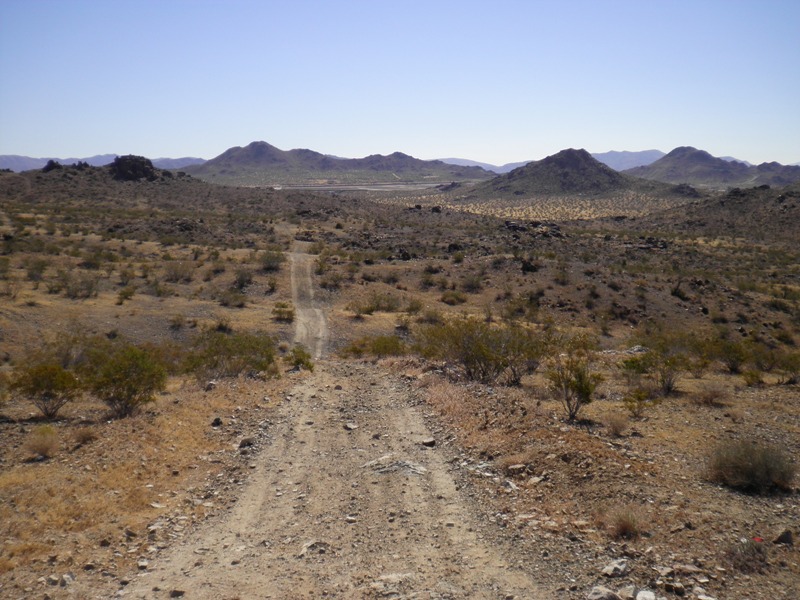
So why was I there at the courthouse today? I don’t know. It just seems odd that I was nudged in that direction, especially since the arraignment didn’t happen. Even odder, though we were all born far from this dusty desert town, our three lives converged on that very moment in the courthouse, as if somehow it were meant to be.

***

Pat Bertram is the author of the suspense novels Light Bringer, More Deaths Than One, A Spark of Heavenly Fire, and Daughter Am I. Bertram is also the author of Grief: The Great Yearning, “an exquisite book, wrenching to read, and at the same time full of profound truths.” Connect with Pat on Google+. Like Pat on Facebook.

Dear Diary

I always loved diaries when I was a kid. Blank diaries, that is. The lovely cover. The tiny key that could lock the book so no one could see the secrets confided within. Every time I got a present of a diary, I would think about all the wonderful thoughts that would eventually be written, but invariably, after an initial entry professing my intentions to write every day, the diary would lay fallow. Blank. Not surprising. Not much happened seemed to happen to me. School. Home. Library. Church. That was the extent of my life.

I’m not sure my life is more exciting than those long ago non-diary years, but I am more aware of my emotions and thoughts, so now this blog often resembles a diary, one I have been writing in daily for a few years now. Three years, I think. Maybe four.

I never intended this to be a diary. Years ago, I’d read that a blog was necessary to help build an online platform for authors and so, even though I hadn’t a clue what blogging was, I started this blog. At first it was impersonal — posts about writing, books I’d read, my efforts to get published, but after my life mate/soul mate died, I couldn’t stop bleeding my grief onto this blog. Now, anything goes. So . . .

Dear Diary,

I had another good day today. Took a couple of dance classes, started learning a new dance in jazz class and another new dance in Hawaiian class using an ipu (a Hawaiian gourd drum). When I got back to the house, my sister had prepared a feast for us, a bit of celebration. (Because we needed something exciting in this house where we are looking after my 97-year-old father, who actually is strong and well enough to do more for himself than he does. Because she is leaving next week since she isn’t really needed here. But mostly just because . . .)

I wasn’t going to walk tonight (I’m still recovering from allergy-induced chest congestion), but after such a feast, I’d better make the effort. I’ll write more tomorrow. I promise.

***

Pat Bertram is the author of the suspense novels Light Bringer, More Deaths Than One, A Spark of Heavenly Fire, and Daughter Am I. Bertram is also the author of Grief: The Great Yearning, “an exquisite book, wrenching to read, and at the same time full of profound truths.” Connect with Pat on Google+. Like Pat on Facebook.