The Half-Life of Grief

SRecently I’ve been coming across a lot of articles and books touting the idea that people don’t need to grieve — it’s detrimental to their happiness and it doesn’t really gain them anything. These writers believe that when sad thoughts enter your mind, you should simply observe them and let them go. They are only thoughts, nothing real, nothing that can hurt you. The same goes for feelings of sadness. Examine them and let them go. In themselves, the feelings have no power. The only power is what you give them.

Sounds good, right? And to a certain extent this method works. But . . .

First of all, thoughts are real. When you study particle/wave physics and even quantum physics, it’s hard not to believe that at rock bottom, we are all just thoughts. Together, we think our current world into existence. Maybe we even think ourselves into existence. Or perhaps we are thoughts of the eternal Thinker. Who knows, certainly not me. But the point is, thoughts may not be something that can be touched with your fingers, but they are still tangible.

Second of all, grief is important. It’s a way of honoring those who have died, a way of pulling our world around us to accommodate the void they left behind, a way of learning to live with their absence and without their presence, a way of developing into our own person and renewing our reasons for living. Of course, we can develop and renew without grief, but being so familiar with death brings an urgency to the process.

Third of all, not all grief is emotional and mental. Sometimes grief is visceral. Physical. If you have lost a child or a soul mate, you literally lose a part of your physical self. Your child is connected to you by shared genes, and in the case of mothers, a shared body. With soul mates, you are connected by your very being. A lifetime of living together also connects you physically by the air you breathe, the foods you eat, the cellular materials that are exchanged via viruses and microbes, the energy fields that overlap.

One of the reasons such grievous losses as that of a child or a mate are so devastating is that not only do we grieve, so does our body. There were many times I could keep from feeling the loss emotionally or mentally, but I could still feel it in the marrow of my bones, in my cells.

People tell me that it takes three to five years to get past the worst of such a loss. Most people I know woke on their fourth anniversary to find a sense of renewal, and it makes sense that four years would be the half-life of grief. Our cells are continuously dying and being renewed. If it takes seven years for all the cells in one’s body to be renewed, then at my current stage of grief — 2 and 2/3 years — most of my cells still bear his imprint. By four years, less than half my cells will bear his imprint. And so gradually, the physical grief fades.

From the beginning, I was determined to get through my grief as quickly as possible so that I wouldn’t dishonor him (and me) by mourning his death for the rest of my life. I thought I was so strong and emotionally stable that I’d whiz through the process, but that did not happen, partly because I never took physical grief into consideration. I never even knew such grief existed, and neither, apparently, do writers who say that all you have to do to be happy is to let the feelings of sadness pass without feeding them.

***

Pat Bertram is the author of the suspense novels Light Bringer, More Deaths Than One, A Spark of Heavenly Fire, and Daughter Am I. Bertram is also the author of Grief: The Great Yearning, “an exquisite book, wrenching to read, and at the same time full of profound truths.” Connect with Pat on Google+

Believing Impossible Things

In an effort to see life in a new light, I’m going try to believe impossible things. I’ve always wanted to know the truth, but grief has thrown so many of my perceptions out of whack that I don’t know the truth of anything any more, so I’ve decided to believe things that are untrue. For example, I’m going to believe I am at the perfect weight. And maybe that’s the truth. Who’s to say? Only me, and I’m not talking.

And hey. Why stop at weight? Maybe I’ll believe that I myself am perfect. Now that I think about it, that is the truth. Since I am the only me in the world, whatever I am is perfectly me.

I’ve always been very self-aware — knowing both my good points and my bad points, my successes and failures — but if the universe is unfolding as it should be and I am where I am supposed to be, then there can be no good points and bad points. There can be no successes and failures. There is just me, a creature born of stardust, the culmination of billions of years of creativity and change. Odd to think that I (well, all of us) are a part of this process.

Maybe we are the process.

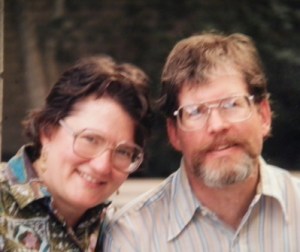
This thing called grief has given me an interesting perspective on life. A day or two after my life mate died, I couldn’t visualize him, so I looked at the only photo I have of us, and I wept because I did not recognize him. When that photo was taken, it was an exact likeness of him, but during the subsequent years of illness, he lost the fullness in his face, first becoming distinguished looking, then gaunt. When he died, I an idea/image of him in my mind, perhaps a composite of him through the years, perhaps what he actually looked like near the end, and that single photo I have of him does not resemble the person I knew. Now, however, the photo is how I remember him since it’s the only image of him I have. (Occasionally I can remember his smile or the way he looked when he died, but mostly he has faded from memory.) The way he looked in the photo and the way he looked at the end are both parts of his process, so I’m content remembering him when he was still relatively young and healthy.

It’s not just our internal images of a person that changes to accommodate the vagaries of age; our internal image of the relationship itself changes to accommodate the vagaries of life. Most of the transformation of a relationship from youthful and passionate to aged and (perhaps) wise and companionable goes unnoticed. We are always who we are. We are always in the present.

In other words, we are a process. Do we have an existence beyond the process? Someone told me recently that we can’t prove we exist. Maybe this is why we can’t prove it — whatever we try to pin down is already gone, lost in the past.

I never had much use for photographs of myself, but after my mother died, I inherited a bunch of photos taken of me when I was young. I put them in an album and I leaf through it occasionally, seeing the progression of myself from a baby to a young woman, trying to figure out what those girls have to do with the me of today. I’ve always felt like just me, and yet, (for example) I cannot remember this little girl in the photo, cannot remember being her. She has receded far into my past. Or perhaps she’s become subsumed into my current persona. Either way, she no longer exists even in memory.

But she is part of the process of me.

(Hmmm. Maybe there is something to this idea of believing impossible things. I’ve already found one new way of looking at life.)

***

Pat Bertram is the author of the suspense novels Light Bringer, More Deaths Than One, A Spark of Heavenly Fire, and Daughter Am I. Bertram is also the author of Grief: The Great Yearning, “an exquisite book, wrenching to read, and at the same time full of profound truths.” Connect with Pat on Google+

Grief: New Year’s Day and Beyond

eternityThis past New Year’s Day was the third one I have lived through since the death of my life mate/soul mate. That first New Year’s Day was one of relief. I’d managed to live through the worst year of my life, and I greeted the day with acceptance and looking toward the future, building hopes and creating dreams.

The second New Year’s Day was a day of dread. The last week of that year was one of waiting. No grief, no strong emotion. Just . . . waiting. But with the dawning of the new calendar year came the dread. I still don’t know why (to be honest, I’ve never totally understood the whys and ways of grief), though perhaps the dread came from an awareness of moving further away from our shared life. I could no longer say, “Last year, we . . .” “Last year, he . . .” There was just me, balanced precariously on the precipice of a life alone.

This third New Year’s Day inexplicably began with tears. Grief had been leaving me alone, and I hadn’t had a strong upsurge for a long time — I thought I was through with grief, to be honest — but when the calendar rolled over from 2012 to 2013, grief came calling once again. And once again, I do not know why.

A new calendar year has never meant much to me — it’s such an arbitrary date, beginning at staggered times around the world, and even celebrated on different dates in various countries and religions. Now that I am alone, however, I try to make a ritual of such things, to note the passing of the days. I need to know that I am still here and I am still alive. And despite the arbitrariness of the date, apparently something in me senses a change from one year to the next and reacts to it.

People tell me that it takes three to five years to find joy in life again, or at least to find a new beginning, and three months into this year will be my third anniversary of grief. It feels like a milestone, though I can’t even begin to guess what it will mean to me besides one more year further away from “us” and one more year closer to . . . I don’t know what.

But I can’t think of that now. If I’ve learned anything during these past two years and nine months, it’s the importance of taking life one step at a time. I’ve already taken three steps into this new calendar year. Tomorrow will be another step. Beyond that, the future will just have to take care of itself.

***

Pat Bertram is the author of the suspense novels Light Bringer, More Deaths Than One, A Spark of Heavenly Fire, and Daughter Am I. Bertram is also the author of Grief: The Great Yearning, “an exquisite book, wrenching to read, and at the same time full of profound truths.” Connect with Pat on Google+

All Right With Death?

Mystical desertA friend who lost her husband sent me an email today, relating something a woman told her. The woman said, “I’m not trying to put anything bad on my husband, but I think that if he died I would be all right with that.”

The statement shocked my friend, not just because of the tactlessness, but because of the lack of feeling.

People have said the same thing to me, and to be honest, it’s the way I felt when my life mate/soul mate was dying. I truly thought I would be okay. He’d been sick for so long and in such pain, I thought I’d be relieved when he died. And I was. For about an hour. Those last years of his life, I did many things to prepare myself for going on alone, and I thought I was prepared. That’s why my grief shocked me so much — it came from somewhere so deep inside, I had no idea such a place existed. My grief was beyond rationality, beyond emotion. It was visceral, as if part of my body and half my soul had died.

Some women truly don’t feel much after their husbands die. Sometimes the husband had been sick for so long they did their grieving before he died. Sometimes their relationship was so bad they were glad when it was over. And sometimes people are unable to feel anything. After all, about 5% of all humans are sociopaths — not killers, simply people without human emotions.

But the woman who made the remark could also be in denial, or not know the power of grief. If you know how you would feel if your spouse died, it would put an unbearable burden on you, especially if you think you are an independent woman. I mean, grief to such an extent as I felt seems anachronistic in this liberated day when we are all supposed to be strong and self-reliant. When people found out about my loss, they often gave me strange looks, as if I were an alien species they could not understand. Sometimes after such a look, people would said they could not imagine how they would feel if they lost their spouse. I always told them not to imagine it. They couldn’t. Until you have been there, you do not know the depths of such grief. You cannot know.

To be honest, I wish I didn’t know. Such grief changes your whole perception of yourself and your relationship to life. It makes you rethink who you are, where you came from, and where you are going, and there are no easy answers. The truth is, I was strong and self-reliant. Sure, my mate and I did everything together, but I was perfectly capable of doing things on my own. Still, 2 and 2/3 years after his death, I am struggling with feelings of pointlessness and meaninglessness, as if our shared life was the only thing that mattered. And maybe it was — then. For thirty-four years he was the focus of my life, and to a certain extent he still is. I feel his absence the way I once felt his presence.

For me, the strangest part of the woman’s sentence is her implication that not only would she be all right after he died, but she’d be okay with his death. In my case, I am mostly doing okay dealing with my mate’s absence. I can even accept the idea that he is dead — I have to so I can go on with my life. But as long as I am alive, I will never be all right with his death.

***

Pat Bertram is the author of the suspense novels Light Bringer, More Deaths Than One, A Spark of Heavenly Fire, and Daughter Am I. Bertram is also the author of Grief: The Great Yearning, “an exquisite book, wrenching to read, and at the same time full of profound truths.” Connect with Pat on Google+
Facing Off With Facebook

windYesterday’s accidental New Year’s resolution was to spend less time promoting books I don’t like and would never read by authors I don’t know. (For the past few years, I’ve been posting book excerpts from any author who sent me one, and then promoting it via Twitter and Facebook.) Today’s accidental resolution is to spend less time on Facebook. This resolution isn’t accidental — I’ve been giving a lot of thought to where I want to go with my online life. What’s accidental is the timing. What was supposed to be simply a resolution has accidentally become a New Year’s resolution.

Like many authors, I joined Facebook as a way of promoting my books, and I “friended” as many people as possible to get the word out. When I realized I wasn’t getting the results I’d hoped for, I started going for quality — trying to get to know the people I was connected with. That worked to a certain extent — I’ve met wonderful people and have had interesting discussions with them — but now the site has lost its luster. Or maybe I am growing beyond what the site has to offer. I never did like the games that keep so many people occupied, but I liked the feeling that something was always going on, that there was always a chance for an incredible encounter.

A growing problem is that for me there are two Facebooks running concurrently. There is the professional side, where I meet and connect with other authors, and there is the personal side. I’ve tried separating out the two — I have both a personal profile and an author page — but I’m still connected to more than a thousand people on my personal profile that I don’t know, and the constant flow of their personal tragedies and triumphs is beginning to weigh me down.

I don’t know which is worse — the brags about how many books people have sold, how many pages they have written, what awards they have won, their ratings on Amazon, or the announcements of anniversaries, illnesses, hospitalizations, accidents, and deaths of relatives and pets. (Actually, I do know what is worst — the happy announcements of wedding anniversaries. They remind me of what I have lost.)

I sound curmudgeonly, don’t I? In a cosmic sense, what happens to each person affects us all, but in a microcosmic way, knowledge of these events can add an immeasurable burden. Yes, I’m glad of people’s triumphs. (Or at least I want to be.) Yes, I’m sorry about their tragedies. But how do my feelings make a difference to their lives? I’m a stranger to them as they are to me. And if I turn off my computer, they no longer exist. (Ah, such power!)

I can’t completely get rid of Facebook, nor do I want — it’s a good way of connecting with people and getting to know them — but I can curtail my time on the site, and that I will do.

***

Pat Bertram is the author of the suspense novels Light Bringer, More Deaths Than One, A Spark of Heavenly Fire, and Daughter Am I. Bertram is also the author of Grief: The Great Yearning, “an exquisite book, wrenching to read, and at the same time full of profound truths.” Connect with Pat on Google+
An Accidental New Year’s Resolution

UntitledtWhen I first got the internet in 2007, I embraced it as if it were a wonderful new friend. At the time, my mother was dying and my life mate/soul mate was sick. There was nothing I could do about either of those circumstances, and the internet gave me a place to escape from my real life.

The terrible times continued. My mother died, then three years later, my soul mate died, and one of the few ways I could escape from the grief was to spend time online. (Screaming also helped alleviate the grief, but being online was so much easier on my throat.) I moderated writing groups, connected to thousands of people, dived headfirst into blogging. I used a couple of my blogs to promote other authors because  . . . well, because the blogs were there and it seemed like the right thing to do.

Several unsettling incidents happened recently that made me rethink what I’m doing online. These incidents didn’t amount to much. A contretemps over an excerpt someone wanted me to post. The discovery that a terrible writer I know who writes awful books is making a fortune. A discussion about talent vs. persistence (most writers seem to believe that talent is more important, which disheartens me — are writers really so arrogant in their belief of their talent?). Just trivial things, but they got to me more than they should have, and it suddenly dawned on me that if I turned off my computer, these things don’t exist.

The truth is, except for this blog, I’m not having any fun online. I seem to have fallen into an alternate universe of self-published writers. I’m even getting known as a promoter of self-published writers, but I find this new world of publishing very discouraging. Many of the excerpts I post on my blog are not well written or are excerpts from books I’d never read if they were the last books left on this earth. And that’s saying a lot since once I read everything that fell into my hands. So why am I promoting such books? I no longer know.

It used to be that self-published writers were iconoclasts, following a dream at any cost. Now so many self-published writers are conformists, following a dream at no cost. Even worse, they are a militant lot, demanding regard for no apparent reason. I have become friends with numerous self-published writers in an online sort of way, and I know that many are good at the craft and strive to get better, but just as many self-publishers dash out a book in a month (sometimes even in a week) and expect to be taken seriously.

To be honest, I have no regard for most of the authors published by the big six, either, so this isn’t a self-published vs. traditional-published discussion. It’s about me. I am not self-published, though many people assume I am (guilt by association). Nor am I published by a major publishing company. Authors who were published by small independent presses used to called “indie authors” but self-publishers have adopted that name for themselves, so now there is no name for us.

In my case, it no longer matters what kind of author I am since I am not writing much fiction. Being around so much bad writing and so many self-aggrandizing writers has stifled any urge I might have to contribute words of my own.

So, to save my sanity, I’ve decided to escape from my online life. I’m going to keep up this blog, of course, but I’ll be cutting back on other online activities, especially those that involve promoting authors I don’t know and don’t like.

This resolution isn’t accidental — I’ve been giving a lot of thought to where I want to go with my online life. What’s accidental is the timing. What was supposed to be simply a resolution has accidentally become a New Years resolution.

***

Pat Bertram is the author of the suspense novels Light Bringer, More Deaths Than One, A Spark of Heavenly Fire, and Daughter Am I. Bertram is also the author of Grief: The Great Yearning, “an exquisite book, wrenching to read, and at the same time full of profound truths.” Connect with Pat on Google+

2102 Year in Blogging Annual Review

I received my 2102 Year in Blogging Annual Review from WordPress today. According to WordPress:

19,000 people fit into the new Barclays Center to see Jay-Z perform. This blog was viewed about 77,000 times in 2012. If it were a concert at the Barclays Center, it would take about 4 sold-out performances for that many people to see it.

In 2012, there were 365 new posts, growing the total archive of this blog to 1,099 posts. There were 358 pictures uploaded, taking up a total of 53 MB. That’s about 7 pictures per week.

The busiest day of the year was December 3rd with 1,683 views. The most popular post that day was Thirty-Two Months of Grief.

These are the posts that got the most views in 2012 (Some of your most popular posts were written before 2012. Your writing has staying power! Consider writing about those topics again):

  1. Sex With Sister Tips. Um…Yeah (July 2009)
  2. Describing a Winter Scene (February 2008)
  3. How Many Books Are Going to be Published in 2012? (Prepare for a Shock) (April 2012)
  4. Describing a Scene in an Interesting Way (November 2007)
  5. Meaningful Names (December 2008)

The top referring sites in 2012 were:

  1. wordpress.com
  2. facebook.com
  3. dsync.blogspot.com
  4. twitter.com
  5. 36ohk6dgmcd1n-c.c.yom

The top commenters were:

  1. Rami Ungar The Writer
  2. Joylene
  3. Rod Marsden

Visitors:

stats

***

Pat Bertram is the author of the suspense novels Light Bringer, More Deaths Than One, A Spark of Heavenly Fire, and Daughter Am I. Bertram is also the author of Grief: The Great Yearning, “an exquisite book, wrenching to read, and at the same time full of profound truths.” Connect with Pat on Google+

Close Encounters of the Coyote Kind

SANYO DIGITAL CAMERAIn A Spark of Heavenly Fire, I had a character meeting up with a coyote as a way of showing that the character was becoming “untamed,” that she was finding her inner savage.  She went from searching for self-affirmation from the men in her life to finding affirmation in herself. But more than that, she overcame her squeamish nature to do whatever she needed to do to survive.

Although her communion with the coyote seemed a bit trite or maybe just too pointedly mystical, I couldn’t think of a better way to show the change in her. And perhaps it only seemed trite because such things do happen. Yesterday, while walking in the desert, I came across not one but three coyotes. They were far enough away that I was never in danger, but they all stopped and stared at me. I stared back. We stood there for a minute or two, then I got distracted by a noise, and when I looked for them a second later, they were gone.

Perhaps this encounter was symoblic, a way of showing me that like my character, I am becoming untamed, embracing my inner savage, willing to do whatever I need to do to survive. More probably, the coyotes had come close to civilization in an attempt to find food. Either way, it was an interesting synchronicity of life imitating art.

***

Here is the coyote excerpt from A Spark of Heavenly Fire:

She had traveled only a mile or two when she felt a presence. Someone. Something. The awareness vibrated in her body, jangled her nerve endings. She stopped. Looked around. Although she didn’t see anyone, she knew she was no longer alone.

On full alert, she walked farther, and suddenly, there he stood, silhouetted on a hill.

A coyote.

Pippi froze, afraid that if she made a single move, he would spring on her. She thought of the knife, but it didn’t give her any comfort; the knife was so small and the coyote so large.

She tried to remember what you were supposed to do in a situation like this. Look the animal in the eyes? Look past it? Look at the ground?

Too late. Her eyes locked onto the coyote’s.

As she looked into him and he looked into her, she could feel her fear draining away.

They stood motionless, staring at each other for a long time — eons. Then the coyote’s ears pricked up. He cocked his head as if listening to something in the distance.

Pippi cocked her head, too, but all she heard was a quickening breeze.

Casually, as if he had more important things to do than to stare at this insignificant human, the coyote trotted off.

He turned to give her one last look, then he was gone.

***

Pat Bertram is the author of the suspense novels Light Bringer, More Deaths Than One, A Spark of Heavenly Fire, and Daughter Am I. Bertram is also the author of Grief: The Great Yearning, “an exquisite book, wrenching to read, and at the same time full of profound truths.” Connect with Pat on Google+

Indigo Sea Press's avatarIndigo Sea Press Blog

Spin the wheel of fortune and win a free ebook! Each number represents a Second Wind novel — even numbers for romance and chick lit; odd numbers for mystery, mainstream, and adventure. So, do you feel lucky? Choose a number!

colorwheel

Since this is only a virtual spinning wheel, you decide what number you landed on. Just pick a number from the wheel and post it as a comment below this article or email it to us at secondwindpublishing @ gmail.com (no spaces before and after the @, of course). We will send you a coupon for a free download of the ebook. The book might not change your life, but it will help while away the time until good fortune finds you. (You can pick a number someone else already chose, they don’t all have to be different numbers.)

If you prefer instant good fortune, click on a fortune cookie…

View original post 68 more words

A Child of Grief

My life mate/soul mate died thirty-three months ago today, and I found myself hesitating before writing this post. I worried it might seem as if I am trying to keep myself in the center of a drama, a drama that has long since lost its power and poignancy. But the truth is, even though I am not actively mourning — at least not often, and not much — grief still shades every moment of my life.

untitledvWhen people fall in love, when they are giddy with hormones, when they get caught up in the emotion of their love and the dream of a wonderful new life together, their friends and family never tell them,  “Okay. Enough. It’s time to get over your love and move on.” The whole world celebrates their love (or so it seems to the new couple), and everything they say and do for the rest of their lives is shaded by this focus on each other.

Grief reflects this process, though through a dark mirror. The newly bereft are buffeted by hormones, caught up in the emotion and pain of their loss, tormented by a future that no longer has any meaning, focused on someone who is no longer there. The loved one might be dead, but the love doesn’t die. (What do you do with love when it is no longer needed? I never have figured that one out.) And the bereft are told, “Okay. Enough. It’s time to get over your grief and move on.”

Other people get tired of our drama, but for us, it is always there — a blankness in our lives. An absence.

I am doing well, trying new things, preparing myself for a future alone. I have hermit tendencies, so to make sure that I don’t stagnate, I am planning adventures — simple excursions and experiences for today and complicated journeys for another time. From the beginning, I embraced my grief, wanting to process the guilts and regrets, the anger and fears as quickly as possible so I could charge into whatever the future held for me. I am now more determined than ever to celebrate life, and yet . . .and yet . . .

I am aware that if it weren’t for his death, I wouldn’t need to worry about my hermit tendencies. We were hermits together, friends in our solitude. Until those last years when he could barely drag himself out of bed, we did everything together, so there was no reason to plan solitary experiences or excursions. Every day with him brought the possibility of something exciting, even if only a long rambling conversation through history, science, philosophy and back to history, so there was no need to find a way to keep from stagnating. But now there is.

Grief has shaped my life in other ways. I am here in the desert because he is dead. I am taking care of my father because I am not needed elsewhere now that my life mate/soul mate is gone. I made new friends through my attendance at a grief support group, and those friendships have long outlasted the group. I am taking yoga classes, learning to find a new way to open to the universe because he is no longer here keeping me connected to the world.

His absence is still a very real presence in my life. I don’t feel his total goneness as much as I did at the beginning, but I am aware of his absence. My yearning to see him once more doesn’t claw at me the way it once did, but I am aware that I will never again hear his voice or be warmed by his smile. I am far beyond the days where I curled up, cradling my new pain and sorrow as if it were some sort of new born creature, but what those days did to me — stealing away the last of my naiveté, lightheartedness, and innocence — will remain with me forever.

I am a child of grief. No matter how adventurous or fulfilling my life might end up being, no matter who or what I grow to be, something deep inside of me will always be aware of the death that made these changes necessary, the absence that made them possible.

***

Pat Bertram is the author of the suspense novels Light Bringer, More Deaths Than One, A Spark of Heavenly Fire, and Daughter Am I. Bertram is also the author of Grief: The Great Yearning, “an exquisite book, wrenching to read, and at the same time full of profound truths.” Connect with Pat on Google+