 Rubicon Ranch is a collaborative and innovative crime series set in the fictional desert community of Rubicon Ranch and is being written online by the authors of Second Wind Publishing. The very first chapter of the very first book (Rubicon Ranch: Riley’s Story) was posted on October 24, 2010, and we are still going strong! In fact, we are getting better and better. Seven authors, including me, are involved in the current story — Rubicon Ranch: Secrets, which is shaping up to be a psychological thriller.
The body of a local realtor is found beneath the wheels of a blow-up figure of a Santa on a motorcycle. The realtor took great delight in ferreting out secrets, and everyone in this upscale housing development is hiding something. Could she have discovered a secret someone would kill to protect? There will be suspects galore, including a psychic, a con man, a woman trying to set up an online call-girl service, and the philandering sheriff himself. Not only is the victim someone he had an affair with, but he will also have to contend with an ex-wife who has moved back in with him and a jilted lover, both with their own reasons for wanting the realtor dead.
Although some of the characters were introduced in Rubicon Ranch: Riley’s Story, the first collaboration in the series, and further developed in Rubicon Ranch: Necropieces, Rubicon Ranch: Secrets is a stand-alone novel, so don’t worry if you are new to Rubicon Ranch. A new chapter will be posted every Monday on the Rubicon Ranch blog. I’m posting the first chapter here, but if you don’t want to miss further chapters, please go to the blog and click on “sign me up” on the right sidebar to get notifications of new chapters.
We hope you will enjoy seeing the story develop as we write it. Let the mystery begin! Whodunit? No one knows, not even the writers, and we won’t know until the very end!
(If the Christmas theme seems unseasonal, well . . . considering how long it takes to write a book at the rate of a chapter a week, in a few months, the season will catch up to us!)
Chapter 1: Melanie Gray
by Pat Bertram
Sunday, December 22; 7:05pm
Melanie Gray typed THE END, then sat back and studied the words on the computer screen. She’d found no satisfaction in telling the story of famed horror writer Morris Sinclair’s macabre life and death, and she felt no elation now that she’d finished the task. The evil man should have been buried in unhallowed ground and left to rot rather than be immortalized in a book, but she’d needed the money her publisher had offered. With the generous advance, she would be able to devote herself to finding out who killed her husband five months previously and, more importantly, why the murderer wanted Alexander dead. Morris had wooed death his whole life, so it was no surprise that death had come for him, but Alexander’s murder could not be so easily dismissed.
Tears stung Melanie’s eyes. She scrubbed the tears away, furious at herself for still grieving. She’d always considered herself a strong woman, up to any task, and yet she couldn’t write “the end” to her grief.
Damn you, Alexander! How could you do this to me?
She rose stiffly, stretched to get the worst of the kinks from her body, and tottered to the front closet for her coat. Except for a few hours of fitful sleep each night during the past nine weeks, she’d spent all her time at the computer, and she was sick of it. Sick of Morris Sinclair. Sick of death. Sick of Rubicon Ranch.
She opened the front door and blinked at the shadowy figures gliding through the darkness. Morris’s fans had descended on the neighborhood when news of his demise had hit the airwaves, and they had stayed when they learned that not all of Morris’s body pieces had been recovered. Dressed as vampires and zombies and ghouls of every imaginable—and unimaginable—ilk, they roamed the neighborhood and the nearby desert looking for necropieces in some sort of grisly treasure hunt.
Melanie hesitated, wondering at the wisdom of going out so late in the evening, but the twinkle of Christmas lights adorning a nearby desert willow made her set aside her caution.
Alexander had always loved Christmas, and no matter where in the world they happened to be living, he managed to find a tree and decorate it. If Alexander still lived in her memory, he’d want her to wander through the neighborhood so he could see the lights.
Smiling at the whimsical thought, she locked the door behind her and strolled down the driveway to Delano Road. Even with half the houses lit up with holiday decorations, the neighborhood seemed dark. Too many people had left the area, temporarily abandoning their homes, though the flickering of candlelight through closed curtains hinted that squatters had taken up residence in some of the empty houses.
Melanie stood at the curb, trying to decide whether to go right or left. “It’s your fault, Alexander,” she murmured. “Until you died, I never had a problem making decisions.” But now, it didn’t make any difference whether she went north or south, whether she left Rubicon Ranch or stayed. Without Alexander, everything seemed uniformly bleak.
A house across the street all at once came ablaze with thousands of small white lights. Melanie cut across the road and headed for the brightness, wishing Alexander could see the decorations for real. Lights outlined the driveway, every bush, every rock, and dripped from the eaves like dazzling falls of lace.
She walked leisurely, savoring the radiant display on Alexander’s behalf, then hurried past the next dwelling, which was dark, and slowed again at the following house to look at the whimsical blow-up figure of Santa on a motorcycle.
After the brilliance of the lights at the first domicile, she had to wait a moment to let her eyes adjust to the relative dimness of this scene. And then she wished she hadn’t hung around to get a better look. Santa, with a wide grin and an upraised hand, seemed to be gleefully running over the prone body of a woman. A mannequin, it looked like.
Melanie drew in a sharp breath. Who would create such a morbid tableau for Christmas? But then, seeing a vampire with glowing teeth run past her, she sighed. Anyone in this insane neighborhood could have done it. After Morris Sinclair’s demise, Rubicon Ranch had become a bacchanalia of death, a celebration of the worst in humanity.
A car moved along the street behind her. The headlights illuminated the scene as clearly as if it were day, and suddenly something seemed wrong. So very wrong.
The woman being run over by the cheery Santa looked stiff in the way of death, not stiff like a mannequin.
Melanie told herself to continue on, to forget the gruesome sight and enjoy the rest of the decorations, but her leaden feet refused to do her bidding. Finally, wishing she were anywhere but here, she crept closer to the scene.
She caught a faint whiff of death—like meat just beginning to go bad—and her heart beat faster.
No. No. She’d had enough of death. Alexander. Poor kidnapped little Riley Peterson. Morris Sinclair. How could so much death be associated with a community as small as Rubicon Ranch?
Melanie bent over the body and touched a finger to the side of the woman’s neck to check for a pulse, though she already knew the truth.
She fumbled in her coat pocket for her cell phone and wondered if the sheriff would continue to believe in her innocence. Hell, she didn’t believe it herself. Maybe she was some sort of Typhoid Mary when it came to death. She’d been the one who found Riley Peterson’s body out in the desert, stuffed in a television console. She’d been the one to lead the sheriff to the desert where they’d found the body of Riley’s birth father. She’d been the first one to come across a necropiece—a dismembered foot—after Morris was killed. And now once again she had found death.
She punched in 999, but when the call didn’t connect, she realized she’d used the emergency number for Britain. She cleared the number, then punched 119. Crap. Wrong again. That was the emergency number for Mozambique. Where was she? She took a deep breath, and let it out slowly.
Rubicon Ranch. Rojo Duro County. Mojave Desert. California. USA. Ah, yes. 911.
Melanie made the call, gave the information to the dispatcher, then pulled her coat more firmly around her to protect her from the chill of the high desert winter night.
She’d expected to wait a half an hour or more until the sheriff or his deputies could make the thirty-mile trip from Rojo Duro, but only ten minutes had gone by when a dark SUV pulled up to the curb, and Deputy Kelvin Midget slid out from behind the wheel more nimbly than seemed possible for such a massive man.
The SUV didn’t have official county plates, so Melanie supposed the vehicle was the deputy’s private ride. She felt a spasm of guilt at cutting into the man’s personal time, but then she remembered what Deputy Midget had once told her—that he’d lost his wife to pancreatic cancer about three year and a half years ago, and had come out west to start over so he could heal. Maybe, like Melanie, he had no real life but was just going through the motions of living.
“What seems to be the trouble, Ms. Gray?”
Shivering, Melanie pointed to the body.
Midget picked his way through the xeriscaping, got down on his haunches to check the woman’s neck as Melanie had, then rose to his feet without using his hands to shove himself upright.
“Did you see what happened?”
“No. Just found her lying here is all. Checked her pulse. Called it in.”
Midget walked around to the other side of the body, scanning the ground, his dark brow furrowed. “Did you find her purse?”
“No, but I didn’t look for it.” Melanie wondered about the deputy’s concern for the woman. It seemed more than simply a law enforcement officer’s professional interest in a crime scene. “Did you know her?” she asked.
“Didn’t you?”
“I don’t think so. I don’t know many people in the neighborhood.”
“Seth—Sheriff Bryan—thinks you notice everything.”
“Well, the sheriff thinks a lot of things that aren’t true.”
Midget made a small sound that might have been a chuckle. “Hit a nerve, did I?”
More to get away from the uncomfortable topic of the Sheriff than because she wanted to identify the woman, Melanie circled the body so she could get a better look. The woman did appear familiar at that. Aquiline nose, close set eyes, coiffed hair, manicured fingernails with a shimmering design painted atop the polish, high heels, tailored business suit.
Melanie backed away from the body. “I think she might be a real estate agent. I’ve seen her around the neighborhood.”
“Nancy Garcetti,” Deputy Midget said. “She sold me my house. Poor woman. She was such a terrible judge of character. Looked at the superficial and assumed she knew what the person was about. Kept notes of everything. You sure you didn’t find her purse?”
“Maybe the person who murdered her took it.”
“What makes you think she was murdered?”
“What else could it be? Nancy got tired, so she decided to take a nap by the wheels of Santa’s motorcycle and froze to death?” Regretting her caustic tone, Melanie huddled deeper into her coat. Had she become so used to murder that all death seemed so unnatural? But death was unnatural. A deletion of life. A void.
“People die from many causes,” Deputy Midget said. “It’s possible she had a heart attack. A stroke. Some sort of accident. A mugging gone wrong. Could be anything. We won’t know until the ME gets here.”
A tan Navigator parked behind Midget’s SUV, and Lieutenant Rosaria Frio stepped out of the vehicle.
The lieutenant looked even more like an Hispanic Barbie doll than when Melanie first met her. No emotion showed on the law enforcement officer’s beautiful face, and the dim light made her skin look plastically perfect. Only the glitter of the lieutenant’s dark eyes and her easy stride confirmed her humanity.
She greeted Deputy Midget with a nod. “You got here fast.”
“I just bought a house here in Rubicon Ranch over on Adobe Pobre Court. I told you about it. Got an awesome deal from a couple who could hardly wait to get away from the area. They said there was too much crime.”
“Imagine that.” Lieutenant Frio turned to stare at Melanie. “And here is our one-woman crime spree herself. Or maybe cadaver dog would be a better description.”
Melanie returned the Lieutenant’s gaze, but refrained from answering in kind. Lieutenant Frio seemed to have taken her in dislike when they met after Riley’s murder and her manner had only grown colder with the passage of the months. Melanie didn’t entirely blame her. If their places were reversed, she’d probably be just as skeptical as the lieutenant about her penchant for finding corpses.
Lieutenant Frio walked to body and stood over it for a moment, then slanted a glance toward Melanie. “Sheriff Bryan will be here shortly. He and his wife were dining out, and he needs to take her home first.”
Melanie remained impassive. She already knew the sheriff and his wife were back together. Melanie had talked to him a couple of times to get details for her book, and he had told her his wife had decided the celebrity-ridden area might not be such a backwater after all. He’d sounded apologetic, but other than behavior that bordered on unprofessionalism, he had nothing to apologize for. They hadn’t had an affair, not even a fling. Just a little bit of flirtation and a lot of anger.
“Can I go?” she asked.
“I’ve questioned Ms. Gray,” Deputy Midget said. “If we need her again, we know where to find her.”
Lieutenant Frio turned her implacable gaze toward Melanie. “Don’t leave the county.”
If anyone else had deadpanned such a remark, Melanie would have assumed it was either a friendly suggestion or possibly a joke, but coming from the lieutenant, the command sounded like a jail cell slamming shut.
Melanie wanted to run back to her place, but she forced herself to walk since she was sure the lieutenant would see haste as a sign of guilt. She tried not to look at the houses she passed. The joyful decorations suddenly seemed obscene.
She didn’t believe Deputy Midget’s suggestion that Nancy had died of natural causes. The missing purse hinted that something grimmer was going on. What secrets Nancy had kept in her purse? Everyone in Rubicon Ranch seemed to have something to hide. And someone—perhaps someone in one of these very houses—might have a secret they would kill to protect.
***
Pat Bertram is the author of the suspense novels Light Bringer, More Deaths Than One, A Spark of Heavenly Fire, and Daughter Am I. Bertram is also the author of Grief: The Great Yearning, “an exquisite book, wrenching to read, and at the same time full of profound truths.” All Bertram’s books are published by Second Wind Publishing. Connect with Pat on Google+
 I’ve never known where to put his death in my head. I can’t be glad about it, yet at the same time, he couldn’t have continued to suffer. But more than that, if he is in a better place, why I am still here? And if life is a gift, why was it denied him? I’ve held on to the idea that dying relatively young was unfair to him, that he is missing something, and a lot of my grief was on his behalf, but the other night I realized it truly doesn’t matter whether we are alive or dead. Well, his death matters to me, but it doesn’t matter to the universe, and it probably doesn’t matter to him. Nor does my continued life matter in the vastness of life/death. A few years extra of life is but a dandelion seed in the winds of time. Almost totally matterless. Maybe even meaningless. In which case it truly doesn’t make any difference that I am alive and he is dead. (Well, except for the part where I miss him, but this insight wasn’t about that.)
 And those choices lead to other choices. What does the character need? (As opposed to what she wants.) Is she going to get what she wants or is she going to get what she needs? For example, maybe she wants to be a homebody, to marry the boy next door, but what she and the story need are for her to become a senator and possibly leave the boy behind.
 s side, I got the impression of a woman, perhaps a bit lost, perhaps hard used by the sheriff who obviously wanted only one thing from her, and it wasn’t the love she so desperately craved. It must have hurt her deeply to try one last time to connect to the man she loved, and to have him threaten to kill her. Might this (and whatever in her background that made her so desperate for love in the first place) have turned her into a stonehearted woman willing to kill to serve her ends?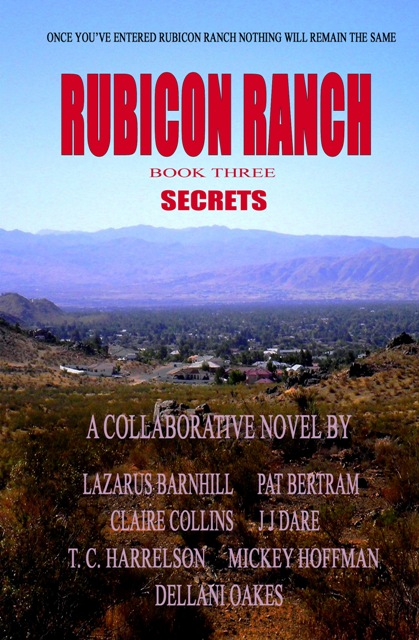
 Have you ever been there when someone yells, “Fight! Fight! Fight!” People gather around cheering it on. They are stupid. No I am not holding back punches. Here is the true story that happened in one such case and why I called them stupid. One of the fighters in such a case—it was at a bar—took a glass bottle and broke it. He swung wildly at his opponent. His wild swings cut the throat of a guy I knew in the crowd who had stupidly thought he was going to see a fight. His funeral was a few days later.
 My life is almost all online. Sure, I could take walks, but who would I tell about my insights? I could write my thoughts, but who would read them? Who would talk to me about

 the great agonies of losing one’s soul mate is not knowing where he is, how he is, if he is. I found comfort in believing that my life mate/soul mate wasn’t suffering any more, that he, at least, wasn’t having to deal with the pain of our disconnect, but then one day it struck me that I didn’t know that for sure. Since I had no sense of his continued presence in my life, I had no conception of what he might be experiencing. What if he were feeling just as lost and lonely and bereft as I was?
 A friend sent me an email in response: I was about to make a comment on introspection but hesitated when I remembered a “strange” entry about the topic in the “Oxford Companion to the Mind.” They had a short paragraph that began by judging the entire psychological technique of introspection as being in danger of misinterpretation. They then stated “It has, however, become clear that very little that goes on in the brain associated with the mind is accessible to conscious introspection, and “we” regard the mind as a much broader concept than awareness, consciousness, or what is known by introspection” (Pg. 389). Was the “we” the editors? Isn’t that odd that they would sidestep something that I think of as quite positive and I’m certain you do as well.