Allowing Myself to Dream

warriorYesterday I wrote about Living Each Day We Are Given and how there will come a time when I am free from my current concerns. People think I should be preparing for that future, planning what I am going to do, where I am going to go, and how I am going to live. Each person has his or her own suggestion as to what form that preparation should take, such as my going back to school either to situate myself anew in the job market or to take advantage of student loans. Others think I should be researching places to live, but the truth is, I am tired of planning. I’d like to be bold without being foolish, adventuresome without being reckless, but most of all, I’d like to be spontaneous without being flighty. In other words, I’d like to stretch myself to see what I’m made of without putting myself in danger, and I can’t do that if I immediately go from one planned life to another.

Still, I am preparing for my future, though it might not seem like it. I am exercising and trying to eat right, taking yoga classes and going for long rambles in the desert. And I’m pitching ideas, trying them on for size.

I’ve always had a sense of my strengths and weaknesses, but I don’t want to take those strengths and weaknesses into consideration. I want to throw myself wide open and envision a life of endless possibilities, at least to begin with. It won’t be long before the realities slowly creep back in. I’m not elderly, but I’m not young, either. I’m not indolent, but I’m not athletic. (I’m smiling to myself as I write this. I had to rewrite the word indolent a half a dozen times because each time I inadvertently wrote insolent. I’ve never been insolent, never liked hurting people, so I have no idea where the subconscious desire for insolence came from.)

I’m not much of a daydreamer, living fantastic adventures in my head. I’ve always been too practical and pragmatic to want what is unattainable. Never been one to want much of anything, to tell the truth. Many women in my situation gave up their own dreams when they got married, and now that their husbands are dead, they are picking up those original dreams and running with them. I have no such abandoned dreams, but many things will be open to me in my new life that would have been inconceivable in the old one, and I need to allow myself to dream so I can become receptive to those possibilites.

Do I want to hop a plane and fly to Britain, with no real plans of what to do when I get there, just see what happens? Do I want to hole myself up in a garret and write incredibly wise and witty books? Do I want to enroll in classes — Tai Chi or calligraphy perhaps? Do I want to get rid of my stuff or put it into storage, and take to the roads? Do I want to . . . ?

There is a chance that I will move back to Colorado and settle down, but now that I am on my own, settling down seems too much like stagnating, and stagnation terrifies me. I don’t want to end up like one of those old woman who sits in her dark apartment, alone, with the whole bright world outside her door. And yet, and yet . . . there is the small matter of a lack of funds and the large matter of a laid-back nature more suited to a life of contemplation than a life of action.

So now I’m throwing my heart out into the world of possibilities in the hopes that someday the rest of me will follow.

***

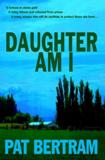
Pat Bertram is the author of the suspense novels Light Bringer, More Deaths Than One, A Spark of Heavenly Fire, and Daughter Am I. Bertram is also the author of Grief: The Great Yearning, “an exquisite book, wrenching to read, and at the same time full of profound truths.” Connect with Pat on Google+

Living Each Day We Are Given

SI’m noticing a change in my attitude lately — more cynical perhaps, and at the same time more optimistic about the future. This change showed itself to me in my reaction to a news story that is going around about a couple who holds the record for the longest marriage — 86 years. The story purported to tell the secrets of how they stayed together for so long, and my first thought was, “Because one of them didn’t die.” No matter how much they love each other, no matter how well they get along, if one of them had died, that would have been the end of their being together.

Immediately following my cynical thought was a moment of horror at the idea of being stuck in the same sort of life for all those years. She married very young, so what did she know of life (or herself) before making her vows? And she’ll never have a chance of exploring what she could have been on her own. The universal reaction to the story seemed to be “Oh, how sweet,” so the horror I felt must not reflect their situation but my own changing attitude.

My soul mate and I always thought we would die together since our bond was so strong, and yet, here I am and he is not. The pain of our separation was almost more than I could bear at times, and in fact, sometimes the only way I could get through another minute of continued life was to scream my pain into the wind.

Now, as I pass through to the other side of grief, continuing to process all the various emotions, fears, regrets, guilts, I sense that a new life awaits me, a life of possibilities, maybe even adventure. I don’t know what form this life will take, whether it will entail geographical travels or spiritual travels, new activities or new perspectives, broadening my horizons or only broadening my mind. But a new life is surely coming, and sometimes my heart leaps ahead of me at the thought of such freedom.

I’m not yet at that place of freedom. I still have many concerns to deal with first. Since I am looking after my 96-year-old father, that is my prime concern, but there are also personal concerns such as my continued awareness of my mate’s death. I know he would be the first to applaud my coming adventures — he felt bad that the constraints of his illness and the life we were forced to live destroyed my spontaneity, but the truth is, he gave me the courage to be spontaneous in the first place. And now I’ll have to find the courage to be spontaneous on my own.

It’s a difficult line to walk — being glad of a chance at a different sort of life while at the same time not being glad of the death that will allow such a life, being glad of one more day of life while being aware that such a day was denied him. But I will find a way to handle it as I have handled every step of this grief journey.

Maybe the secret isn’t how to stay together, but how we live each day we are given, whether with someone or alone.

***

Pat Bertram is the author of the conspiracy novels Light Bringer, More Deaths Than One, A Spark of Heavenly Fire, and Daughter Am I. Bertram is also the author of Grief: The Great Yearning, “an exquisite book, wrenching to read, and at the same time full of profound truths.” Connect with Pat on Google+

Death and Dying: Good-bye Experiences

70During the past thirty-two months since the death of my life mate/soul mate, I have shared my grief, and in turn others have shared their grief with me, telling me stories they never told anyone else. I have heard incredible tales of signs and dreams and feelings of connection to the one who has left earthly life behind, which makes me realize that something is going on beneath the surface of earthly life, though I don’t know what.

Although I concede that near death experiences exist, I do not believe that NDEs are necessarily an encounter with those who are dead. We humans are so incredibly complex, that these experiences could be an as yet unknown state of consciousness, such as a dream state, or maybe even a dip into the collective consciousness. I’ve heard of too many people who saw the white light, saw their loved ones begin to draw near and then immediately recede as the nearly dead person returned to consciousness. It seems peculiar to me that the dead have nothing better to do than wait for someone to begin to die, to hurry and don their earthly bodies to rally round on the off chance that the person will die, and then shrug off their earthly personas and go back to doing whatever their disembodied selves were doing before being called to reception duty.

On the other hand, there have been an incredible number of instances of people saying good-bye before they left the earth for good.

Sometimes the good-byes were said while the people were still alive. I’ve heard many stories of perfectly healthy people who visited and called family and friends they hadn’t seen in a while, and then a few days later they had an accident or a heart attack and died. It was as if part of them knew they were going to leave this earth, and they were saying good-bye even though they didn’t consciously realize that is what they were doing.

Sometimes the good-byes were said after the people were dead. A boy’s grandmother stopped by to tell him that she would be okay and not to spend his life in sadness. A woman whose husband died in an accident never got a chance to say good-bye before the hospital removed his body, but that night, she felt a kiss on her cheek and his whispered words that it didn’t matter, that he’d already been dead when he reached the hospital. A woman who swam too far out into the ocean and was floundering in panic heard her mother tell her to relax, that she would be okay, and later found that her mother had died at that very moment. A woman who lost her husband had incredibly rich and coincidental experiences every Monday during the first six months after he died. She could even feel his anger, but now, eighteen months later, he is finally leaving her alone to find her own way.

And sometimes the messages come in dreams. One daughter planned to move in with her mother, and that night her father visited her in a dream and said he was glad, that her mother needed her. (The daughter told her mother to tell her father to stay out of her dreams.)

Even I had a good-bye experience. Two of them, actually.

For the last year of his life, my love and I argued about what I would do afterward. He thought I should go stay with my father where I would be safe and warm and fed, but I could not bear the thought of doing so. I’d just finished caring for one dying man, and I didn’t want to look after another. While he was in a coma during his last days, however, I finally decided to follow his wishes and come stay with my dad, and I told him so. Just a few hours later, he died.

At the moment of his death (or rather, when his breathing and his heart stopped), I did not feel anything except a moment of relief that his suffering was over. I watched the nurses clean his body and shroud it in a blanket, then I waited numbly for the funeral director. After she took away his body (in a black SUV, not a hearse), I left. The highway was dry, but about halfway home, my car suddenly went careening, around and around, back and forth, totally out of control. (I assumed I hit a patch of black ice, but that was such a peculiar night, I can’t say for sure.) I thought I was going to die, but oddly, I never left the road. The car finally came to a halt facing the wrong way on the highway. I was fine. So was the car. As I sat there gripping the wheel, I wondered if he had stopped by on his way out of this world to save me, to leave me a final reminder to be careful, or maybe give a shake of his ghostly head at this evidence of my carelessness. (He always worried that I wasn’t careful enough.) I remember feeling him leaving this earth — like a breath passing over head — but to be honest, I don’t know if I really felt his leaving at the time or if the impression was something my mind created later to explain the bewildering event. It was after this particular near death experience (as out of control as the car was, it truly is amazing that I survived intact), that the feeling of his goneness slammed into me, and I never again have had any sense of his presence in my life.

What was he doing for those hours before he left this earth? Finishing his dying, possibly. Closing down systems of the body and brain that have yet to be discovered. From grief, I have learned the power of our lizard brain, learned that there is way more to the brain — and human biology, psychology, and consciousness — than is in our textbooks.

So what does all this mean? I don’t know, and that’s the truth of it.

***

Pat Bertram is the author of the conspiracy novels Light Bringer, More Deaths Than One, A Spark of Heavenly Fire, and Daughter Am I. Bertram is also the author of Grief: The Great Yearning, “an exquisite book, wrenching to read, and at the same time full of profound truths.” Connect with Pat on Google+

Getting Freshly Pressed. “What? Like It’s Hard?”

A couple of nights ago I got an email from WordPress. The message said:

Hi there Pat Bertram,

Congrats! We’ve picked your post ( https://ptbertram.wordpress.com/2012/11/27/thirty-two-months-of-grief/ ) to appear on Freshly Pressed on the WordPress.com home page.

Thanks for sharing this — it’s simple, succinct, and quite touching. It will appear on Freshly Pressed in the next day or two, so get ready to welcome your new readers.

This line caught me in particFPular: “My emotions are on a slow Ferris wheel ride, usually sliding down into sadness on Saturdays, the day he died — a day that apparently is etched in my very psyche — and then a gradual climb to hope and possibility on Monday and Tuesday.”

FYI, I noticed a typo: “I find it impossible to pretend that this new experience of life alone is positive thing.” >> Add “a” before “positive”?

Thanks for making the internet a more interesting place!

–WordPress.com

***

I’ve been Freshly Pressed three other times: I Am a Three-Month Grief Survivor, I Am a Six-Month Grief Survivor, and A Perfect Grasp of Storytelling, so when I read the email, I chuckled to myself and thought, “What? Like it’s hard?” (Remember Reese Witherspoon’s line in Legally Blonde. Her ex-boyfriend says in amazement, “You got into Harvard Law?” and she responds, “What? Like it’s hard?”)

I don’t mean to be facetious, because getting Freshly Pressed is hard. There are a more than a million new posts every day from a half a million bloggers. Most people won’t get pressed once, let alone three or four times.

All four times, the honor came as a surprise, but the truth is, I had prepared for such an eventuality by following the guidelines in “So You Want To Be Freshly Pressed.” Until I read that article, I’d never used photos in my posts, but now taking the perfect photo to accompany my words has become an art in itself. I’ve always aimed for eye-catching headlines and typo-free text (oops, I missed one this time, but luckily they caught it), but I don’t always have a strong point of view. (I don’t much like contention.) Apparently, though, I’ve managed to strike the right chord with the WordPress editors four times, and you can, too. Just keep blogging, telling your truth, letting yourself be vulnerable, and your day will come.

***

Pat Bertram is the author of the conspiracy novels Light Bringer, More Deaths Than One, A Spark of Heavenly Fire, and Daughter Am I. Bertram is also the author of Grief: The Great Yearning, “an exquisite book, wrenching to read, and at the same time full of profound truths.” Connect with Pat on Google+

How many subplots in a novel are acceptable?

In my Suspense/Thriller Writers’ group on Facebook, one author asked, “How many subplots in a book are acceptable?”

Most of the writers thought that one or two subplots was enough, but horror writer Rob M. Miller gave a wonderful response that I’m reposting here. Considering the ephemeral nature of Facebook, in a couple of days his comment would have disappeared into the great maw of FB, and I didn’t want it to be lost forever. Rob said:

A broad question begging for a broad answer, of which there is only one that’s truly honest, even if horribly vague:

As many as the author can competently handle.

In the hands of a master, there can be many subplots, even into the double and triple digits, as can be read in the incredible work Shogun by James Clavell, or The Hobbit by Tolkien.

But to have a masterful work, there doesn’t have to be many in order to keep the reader hooked and hungry for — One…More…Chapter!

Wiki Answers says that “subplot is like the secondary plot of your story. It means additional plot(s) to a movie, show, book, or play that help contribute to the main plot. Subplots are less important than main plots.”

swIn Star Wars you have the following plot or through line: Ragtag rebels work to stop a space station from cementing the evil emperor’s hold on the galaxy.

That’s the plot. The spine. It’s the elevator speech, as well. Short, simple, and concatenates the story. But it’s also a bit simple — isn’t it? — even for Star Wars, which is not the most complex of stories.

How many subplots are in Star Wars?

I concede the number could be argued, but c’mon, fellow writers, there is more than one, and there is more than two. The mentoring of Luke, Chewie and Han as wanted criminals (smugglers), the romantic tripod of Leia, Han, and Luke, and in my view, even more.

Subplots, mini plots, lines of suspense, how many characters there should be and the proper ratio of bad to good. These things can all be made as complicated as desired, or as complicated as hell even when not desired.

The key is to simplify the approach, at least in one’s head, like with the through line given for “Star Wars.” The final product might be beautifully written and wonderfully controlled as an epic master work, such as Martin’s Song of Fire and Ice series, or Tolkien’s set of Hobbit adventures, or a chunky Tom Clancy novel . . . or it can be an equally wonderful, but streamlined story. There are no rules, save for don’t write boring. There are conventions, tropes, schemes and paradigms, some of more value than others.

What to do?

Author, know thyself, and then stretch 10%, putting down a tale as best you can, whether outlined or not, large-staged or mini, small cast or jam-packed.

If you want “one” of something, go for it. Shorts, for example, are a form that generally works better when they are a drag race from point A to B, and which end in a singular climax — but I’ve read exceptions. Perhaps your idea is an exception, too. But don’t be afraid of two, or forty-two. Keep track of stuff . . . be forgiving when it turns out that Hemingway was write about first drafts being shite, and then, like a conductor or architect, you can make sure that all the balls are being juggled properly.

***
With a love for reading and writing that started in his youth, Rob has traveled far to get to the place where he can now concentrate on breaking into the horror market.

Born and raised in the “micro-hood” of Portland, Oregon, he grew up as the oldest of three children, the son of a book-lover and a book-hater.

It was after two years of free-lance stringer work, and a number of publishing credits, that he tired of non-fiction and decided to use his love of the dark, personal terrors, and talent with words to do something more beneficial for his fellow man -– SCARE THE HELL OUT OF HIM.

Talking About How Clothes Make the Character

I am a guest at Joan P. Lane’s Fashion Flashback blog, which is a great resource for readers and writers of historical fiction, and anyone else who has an interest in the history of apparel.

floozyConsidering how little attention I pay to clothes in real life as well as in my fiction — I wouldn’t know a Manolo Blahnik, if it stomped on my foot, and in fact I had to Google the names of shoe designers to get a name to make this point — it doesn’t seem as if Joan’s blog would be a good fit for a guest post for me, but it turned out to be a wonderful experience. I talked about how clothes make the character, and many people left comments, which resulted in a rousing discussion.

In the post, I explained (among other things) how I used clothes in A Spark of Heavenly Fire. One of the dramatic clothes moments in this story of a state quarantined because of a dreadful disease, is when my clothes-conscious character has to wear blood-soaked clothes for added warmth. (Actually, I don’t think I portrayed her as clothes conscious so much as self-absorbed.)

Clothing can be used as part of the stage action to show the nature of character rather than just to dress him or her. In another scene in A Spark of Heavenly Fire, a girl polishes a fingernail with the edge of her crop top, and in doing so exposes her breasts. It wasn’t a deliberate or flirtatious act on her part. She was a receptionist, and was simply polishing her nails to show her oblivion of the client standing at her desk.

A third significant clothes moment in A Spark of Heavenly Fire goes to show the depth of a woman’s character. She is big, hearty, aggressive, with a braying laugh, yet she wears feminine clothes such as challis dresses and blouses with ruffles.

So you can see that even though clothes are not a big part of my fiction, with very few words spent describing the characters’ apparel, the clothes they wear do have an impact on the story.

You can find the guest post and the ensuing discussion here: Clothes make the character.

What about you? How do you use clothes to show character or to further the plot in your story? If you don’t currently use clothes except to keep your characters from running around naked, how could you better use apparel to further your story?

***

Pat Bertram is the author of the suspense novels Light Bringer, More Deaths Than One, A Spark of Heavenly Fire, and Daughter Am I. Bertram is also the author of Grief: The Great Yearning, “an exquisite book, wrenching to read, and at the same time full of profound truths.” Connect with Pat on Google+


T
his was an interesting article and an extensive discussion about cursive writing that I thought you might like to see. (This was one of my few attempts at reblogging, but if I ever do such a thing again, I’ll do it by hand so I have more control of what is posted. There is no way for me to resize the photo, or to break the article off at a better breaking point. Sorry it’s such a mess. I’ll know better next time.)

Me? I write my novels long hand because that is the easiest way for me to delve into into myself for the story. I’m not one of those writers who can sit down and let the words flow. I have to sit and think about everything I want to say, and to figure out the best words to show what I decide to say. Sort of anachronistic, I know, but it helps me get deeper into the story. And I’m not the only one. Studies have shown that there is a direct mind/hand connection, that you think better when writing by hand, so it makes sense to teach both keyboarding and cursive, since both types of writing use different parts of the brain.

I write my blogs on the computer, for instance, because blogging for me is more stream of consciousness, and those words flow. I generally don’t have to sit and think about what I want to say. At least, not often. Sometimes writing a blog takes me hours.

What about you? Do you still write anything long hand, or do you strictly use the keyboards of your various devices? Or perhaps you use voice recognition technology? Such technology makes both cursive and keyboarding obsolete.

robincoyle's avatarRobin Coyle

An article in today’s paper gave me pause. Cursive handwriting has one foot in the grave.

A debate wages as 45 states adopt school curriculum guidelines for 2014 that exclude cursive handwriting, but do require keyboard proficiency by the time students exit elementary school.

You can read the full article here, but some highlights are:

“ . . . it has teachers and students divided over the value of learning flowing script and looping signatures in the age of touchpads and mobile devices. Some see it as a waste of time, an anachronism in a digitized society where even signatures are electronic, but others see it as necessary so kids can hone fine motor skills, reinforce literacy, and develop their own unique stamp of identity.”

“When a kid can text 60 words a minute, that means we’re headed in a different direction. Cursive is becoming less important.”

“School assignments…

View original post 402 more words

UnSocial Networking

I’m starting to play rough with Facebook, unfriending people with the same abandon I once friended them — sort of reverse social networking. (Would this be called Unsocial Networking or Social UnNetworking?) Start with 5000 people at random, and then one by one, remove the annoying ones. You know the people I mean:

1. The authors who send you one message after another asking you to like their FB page, download their book, check out their website, read their blog. I’m not talking about notifications or the posts that show up in your feed, but repeated private messages. I now have a new policy: if you spam me once, I might let it go if I know you or if I’m in a good mood, but if you send the same spam message a second time, I will unfriend you. Friends don’t spam friends.

2. The rabid political lobbyists, those who are always lobbying for their party, their agendas, their preferred candidates, their right or left wing propaganda. These people aren’t interested in being friends. They want power, even if at one remove.

3. The uncompromising religious folk, those who never acknowledge that another person’s religious beliefs might be as sacred as their own. These people remind me of the folk in Emo Phillips joke. This joke was voted the best God joke ever, but was not credited to Emo Phillips, and truly, it’s such a classic, he needs to be acknowledged as the author. I don’t remember many comedians, but I do remember the delightfully waifish Emo telling this story:

Once I saw this guy on a bridge about to jump. I said, “Don’t do it!” He said, “Nobody loves me.” I said, “God loves you. Do you believe in God?”

He said, “Yes.” I said, “Are you a Christian or a Jew?” He said, “A Christian.” I said, “Me, too! Protestant or Catholic?” He said, “Protestant.” I said, “Me, too! What franchise?” He said, “Baptist.” I said, “Me, too! Northern Baptist or Southern Baptist?” He said, “Northern Baptist.” I said, “Me, too! Northern Conservative Baptist or Northern Liberal Baptist?”

He said, “Northern Conservative Baptist.” I said, “Me, too! Northern Conservative Baptist Great Lakes Region, or Northern Conservative Baptist Eastern Region?” He said, “Northern Conservative Baptist Great Lakes Region.” I said, “Me, too!”

Northern Conservative†Baptist Great Lakes Region Council of 1879, or Northern Conservative Baptist Great Lakes Region Council of 1912?” He said, “Northern Conservative Baptist Great Lakes Region Council of 1912.” I said, “Die, heretic!” And I pushed him over.

I’m now down to about 1650 friends on Facebook, and who knows, at the rate I’m pushing people off the bridge, I might end up with only one or two hundred connections, but those will be real friends — people I enjoy following, whose blogs I read, and whose opinions I respect. And never, ever, do they spam me or lobby me or disrespect my beliefs or unbeliefs.

***

Pat Bertram is the author of the conspiracy novels Light Bringer, More Deaths Than One, A Spark of Heavenly Fire, and Daughter Am I. Bertram is also the author of Grief: The Great Yearning, “an exquisite book, wrenching to read, and at the same time full of profound truths.” Connect with Pat on Google+

What Do You Do If Someone Posts an Insulting Comment on Your Blog?

I don’t often get negative comments on this blog.

For one thing, my posts tend not to be controversial — they’re more of a way of chronicling my journey through life and the writing life. It’s hard for someone to argue that I’m getting it wrong when I can’t get it wrong. I’m being me, and who can argue with that?

For another thing, my readers tend to be intelligent and kind, and they give thoughtful responses that add to the conversation instead of posting negative comments that bring the discussion to an abrupt end.

The other day, however, someone left an insulting comment on my article How Many Books Are Going to be Published in 2012? (Prepare for a Shock) that I didn’t know how to handle. That is not my favorite post by any means, in fact, it’s one of the few I wish I had never written. I’d only written the article as a way of trying to make sense of the current book climate and to show the meteoric increase in the number of books available, not to establish myself as any authority on the subject. And yet it’s become my most quoted article, and the one most frequently linked to.

It’s no wonder that an insulting remark landed on the post. Someone commented: “why would anyone bother to pay attention to a blog which starts off with uninteresting stuff about the author, and then gives data without a source? takes all types, I guess.”

I guess it does take all types. When I see an article that doesn’t lead up to the hype, I merely pass on by without stopping to leave a comment. But, for whatever reason, that person left a comment. I didn’t know whether to delete it or approve it. And if I posted it, I didn’t know whether to respond to it or ignore it. Admittedly, it’s not much of an insult, but it still put me in a quandary.

I asked my blogger friends on Facebook what they do in such a circumstance, and got a whole range of answers from “delete it” to “find where the person lives and go beat them up.” Some people thought that if it had merit or if it said more about the commenter than me, that I should post it but not respond. Some said that if it was a business blog, to delete the comment, that it wasn’t good to have snipers in your store.

The comment now seems innocuous, and the commenter has a point, why would anyone bother to pay attention to that particular blog post? (Though I did give a source, just not a link to the source.) Still, I left his remark in comment limbo until just a few minutes ago. I found the deciding factor in You and Your Blog Suck: 7 Steps to Responding to Negative Comments, a blog post by Marc Ensign. He said, “By deleting it you are telling your readers that they are welcome to say whatever they want as long as they agree with you. The only time I would consider deleting a post is if it was obscene or offensive to your readers.”

Since the comment under consideration is not obscene, not offensive to my readers, not even much of an insult, I took a deep breath and approved the comment.

So, what do you do if someone posts an insulting remark on your blog? Do you delete it or do you approve it so posts where everyone can see it? If you post it, do you answer it or ignore it?

***

Pat Bertram is the author of the conspiracy novels Light Bringer, More Deaths Than One, A Spark of Heavenly Fire, and Daughter Am I. Bertram is also the author of Grief: The Great Yearning, “an exquisite book, wrenching to read, and at the same time full of profound truths.” Connect with Pat on Google+

Thirty-Two Months of Grief

I haven’t been writing much about grief lately. It’s been thirty-two months — 977 days — since my life mate/soul mate died. In that time, many others have suffered grievous losses, and to continue mentioning my grief seems like all I’m doing is whining. Still, this is my loss, and what other people experience, no matter how horrific, doesn’t lessen my sorrow. I don’t have the same sort of raw pain that I did at the beginning, of course, nor do I have the gut-wrenching angst that so often bedeviled me during those first months, but I do experience bouts of sadness and yearning.

My emotions are on a slow Ferris wheel ride, usually sliding down into sadness on Saturdays, the day he died — a day that apparently is etched in my very psyche — and then a gradual climb to hope and possibility on Monday and Tuesday.

Even when Saturday’s sorrow is fleeting, as it often is now, I find that I am at my most vulnerable then, and any hurtful word, thoughtlessness, or setback can send me spiraling down into grief. Without him to talk to, without my being able to casually mention the slights and so slough them off, the unkindnesses take hold and remind me that I am alone. Which reminds me that he is dead. Which makes me grieve.

I can handle being alone. I can even handle his being out of my life. What I can’t handle is his being dead. It’s possible he still exists somewhere, perhaps lolling on the shores of some cosmic sea, a cat purring in his arms, but I have no way of knowing for sure. All I know is that he is out of this earthly life. Gone. Deleted. I still cannot wrap my mind around that. And I still can’t help feeling that he was cheated out of a couple of decades of life.

Sometimes I pretend to believe that he left so that I could experience life in a way we couldn’t experience together, but other times, especially on the day of the month that he died — such as today — I find it impossible to pretend that this new experience of life alone is a positive thing. And even if it is for the best, it comes at the cost of his life, and that is too big of a price to pay.

If I sound discouraged today, the truth is, I am dis-courage-d. Have lost my courage. Sometimes I am strong and forward looking, but on this 977th day of his goneness, I am unable to gather the courage to believe that any good will come from his being dead and my being alone. I’d give anything to see him one more time, to have him smile at me or say an encouraging word, but no matter how much I yearn for such an encounter, it’s not going to happen in this lifetime.

I am used to the ups and downs now, so I know all I have to do is hang on, and in a day or two, when I am less tired perhaps, I’ll find my courage again. And some day I might even come to believe that this new experience of life alone truly is a positive thing.

***

Pat Bertram is the author of the conspiracy novels Light Bringer, More Deaths Than One, A Spark of Heavenly Fire, and Daughter Am I. Bertram is also the author of Grief: The Great Yearning, “an exquisite book, wrenching to read, and at the same time full of profound truths.” Connect with Pat on Google+