
Lies I Tell Myself

I’ve been lolling around all day, reading and playing a game on the computer. I pretend my being lazy has to do with resting my knees, but the truth is . . . well, the truth is I really do need to rest them. I overdid on the digging, and I irritated my iliotibial band, a tendon that runs on the outside of the leg from the hip to below the knee.

Although I blame the digging for the problem, it actually stemmed from bending the knees over and over to pick up the clumps of grass roots and shake out the dirt. You’d think all that bending of the knees would make the muscles and hence the tendon stronger, but apparently not. Sitting at the computer doesn’t help, either, but instead exacerbates the problem with the iliotibial band.

I have been feeling elderly the past couple of weeks, as if I were ninety years old and barely able to walk or rise to my feet from a sitting position. I had worn a knee brace the last few times I was out working in the yard, as well as when I wasn’t, and that helped to a certain extent. But what really helps is being lazy and resting the leg.

When I look out the window, I see all that I still have to do, but I am so lazy even the itch to pull more weeds doesn’t get me out the door. To be honest, it’s better to wait until we get some rain to make it easier to dig, so that’s what I am waiting for — rain.

Or so I tell myself.

As you can see, I tell myself a lot of lies that are not really lies.

I do need to rest my knees, though. I am too young to be so old. (But also too old to even use the word “young” in any description of myself.)

I also need to add iliotibial band strengthening exercises to my knee exercise regime since both the joint and the tendon work together. Luckily, I won’t have to add too many new exercises. Some of the knee exercises I am doing are also good for the iliotibial band.

Now I just have to do the exercises. Some days I am lackadaisical (lazy) about doing the knee therapy even though I know it helps. Because of those exercises, the bad knee (the left knee) is now the good knee, while the good knee is the one that keeps buckling when the iliotibial band lets go. To make matters even more confusing, the right knee started out as the bad knee, but when the left knee went bad (not because of overdoing, you understand, but because I slept wrong), the right knee became the good knee.

I do think I’m young enough (there’s that “y” word again) that if I continue with my physical therapy, my knees — joints and tendons — should be able to recover.

I sure hope that’s the truth and not another lie I’m telling myself.

***

Pat Bertram is the author of Grief: The Inside Story – A Guide to Surviving the Loss of a Loved One. “Grief: The Inside Story is perfect and that is not hyperbole! It is exactly what folk who are grieving need to read.” –Leesa Healy, RN, GDAS GDAT, Emotional/Mental Health Therapist & Educator.
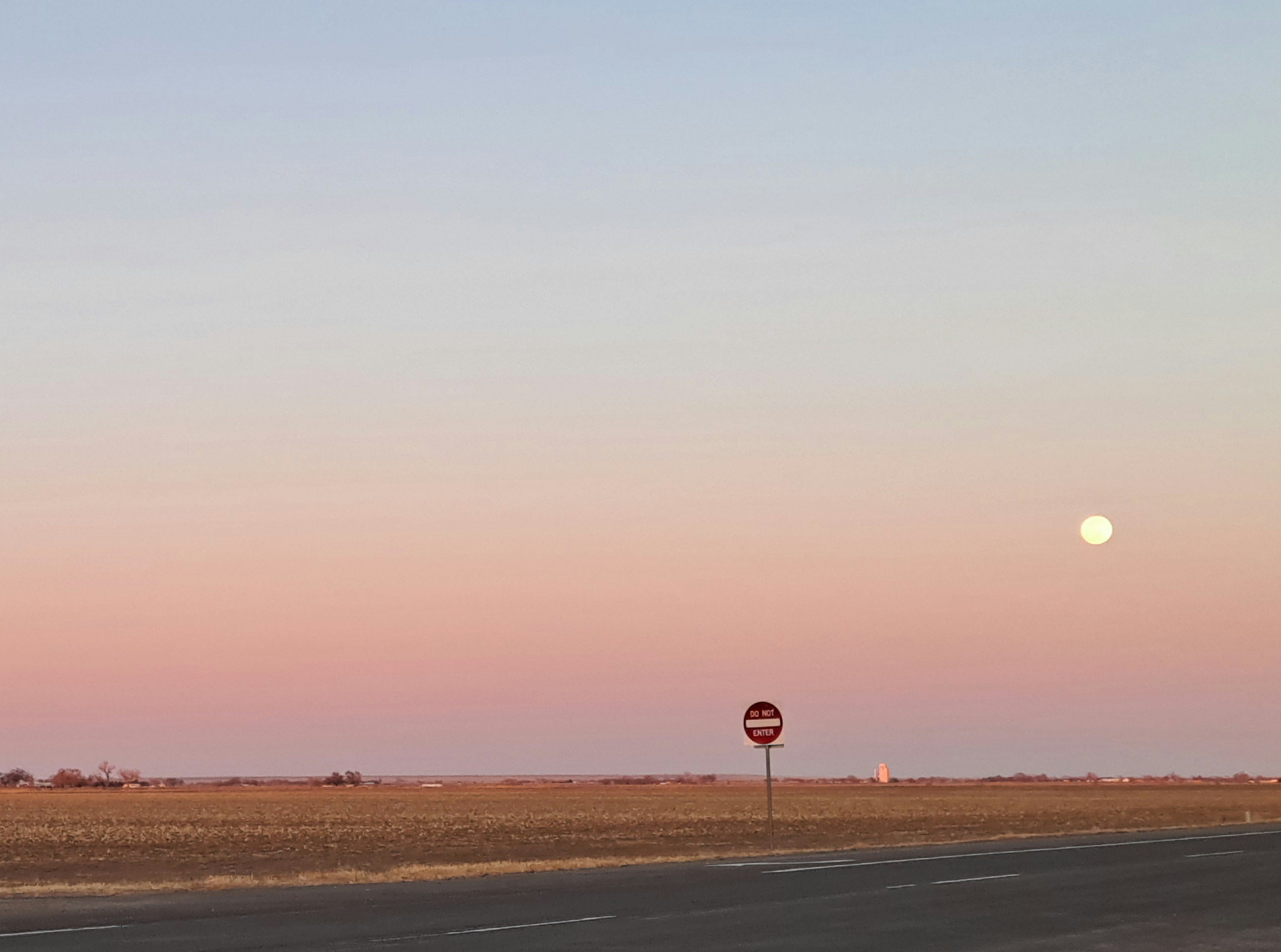
Walla Walla Walla

Decades ago, I heard an interview with the actor who supposedly came up with “Walla, walla.” Whether he did or not, I don’t really know because the term was used in radio days and I don’t remember if he said anything about radio in the interview. I do remember he specifically mentioned being an extra in a courtroom scene on a television show, where after a Perry-Mason-like pronouncement by the lawyer, the folks in the courtroom were supposed to murmur in approbation and surprise. He said that he said, “Walla, walla, walla, walla,” syllables that are supposed to mimic human speech without actually meaining anything. One reason for the non-word is that actors were paid by the word, and since the syllables weren’t actually words, or at least not assigned words, they didn’t have to be paid as an actor with a speaking part. (As a matter of curiosity, in England, they use the word “rhubarb” for the same purpose.)

What made me remember this interview is that yesterday I watched the news with the friend I get paid to sit with (a great gig if I do say so myself), and all the newscasters talked about for a solid hour (and since it was “breaking news” they didn’t even break for commercials) was a fire. It wasn’t a particularly bad fire — at the time it was only about thirteen acres in a flat rural area, and only one dwelling had burned (the dwelling where the fire started, actually). I realize that it is a terrible and terrifying thing for the people involved, especially those who were under mandatory eviction status as well as those on the ground fighting the fire, but otherwise, it’s not a particularly noteworthy event. And yet, the news people talked and talked and talked, saying the same thing over and over again in various ways, and when the newscasters interviewed the “authorities” (the fire chief and others whose occupations I didn’t catch), those people said the same thing. Then the newscasters took over the microphone again and repeated what the interviewees had said.

At least I think they did. Around about that time, all I heard was, “Walla, walla, walla, walla.”

Because of the walla-walla-ing, I was able to tune out the newscast despite the high volume, and finished reading one of the woman’s Reader’s Digest condensed books published many years ago. (Normally I wouldn’t read such fare, but I can’t get immersed in a “real” book while I am working because I need to keep an eye and ear out for her, even if she is napping in a nearby chair, so the digest versions work well.)

Luckily, I have a day or three off from work to give myself a rest from the walla wallas.

Despite the cavalier tone of this article, I truly do hope the people affected by the fire are lucky too and that they and their property come through the crisis unscathed.

***

What if God decided S/He didn’t like how the world turned out, and turned it over to a development company from the planet Xerxes for re-creation? Would you survive? Could you survive?

A fun book for not-so-fun times

Smoke Alarm Emergency

It might be true that there’s no smoke without a fire, but it’s also true that a smoke alarm can say there’s smoke even if there isn’t a fire.

One of my smoke alarms went off a little while ago, and I about jumped out of my skin. There’s no fire, no smoke, I’d recently changed the batteries, it’s only a couple of years old, and still it went off, scaring me half to death. A few minutes later, it went off again. I changed the battery because that’s all I could think of to do since there was no fire to put out.

I’m sitting here waiting to see if it will go off again, my heart still pumping, my ears still ringing, my hands still shaking from the adrenaline rush.

I wish there was a way to adjust the sound level of a smoke alarm. The sound emanating from that smoke alarm is ridiculous, made worse for being in a small hallway in a small house. If there really was a fire, and all the smoke alarms went off at once, I’d either have a heart attack or go deaf. There are three alarms all within six feet of each other — one in the hallway, one in the bedroom, and one outside the kitchen. As I said, this is a small house, so to put one in each necessary locale, they are clumped together. If the noise level can’t be adjusted, then there should be quieter ones for small houses. But of course, if there were, people with large houses would use them, they wouldn’t hear them if they were in the far reaches of the house, and I’d get sued for having such a stupid idea.

But oh, man — that noise is enough to wake the dead. And if not that, it’s enough to get people to join the dead.

I wonder if anyone has died because of the alarm? (Pause to go check Google.) All I could find was a study showing that the emergency alarm has been implicated in the high number of adverse cardiovascular events and coronary heart disease related deaths observed in United States firefighters. A fire station alarm is not the same as a house alarm sounding from a smoke detector, but it’s close, especially since the firefighters are relatively young and healthy, and not everyone who lives with a smoke alarm falls in that category.

The screech seems to be silenced for now, but yikes. What an awakening! If the thing wanted a new battery, all it had to do was chirp, and I’d still go running to do its bidding.

***

Pat Bertram is the author of Grief: The Inside Story – A Guide to Surviving the Loss of a Loved One. “Grief: The Inside Story is perfect and that is not hyperbole! It is exactly what folk who are grieving need to read.” –Leesa Healy, RN, GDAS GDAT, Emotional/Mental Health Therapist & Educator.

I Spy With My Little Eye

I spy with my little eye something beginning with the letter “B.” Not just one thing, actually. Lately I’ve been spying a lot of things beginning with “B.”

Blossoms of course. Although I don’t have many flowers, there are enough to add splotches of color to my yard. These African daisies certainly are cheerful!

Butterflies. Not “of course,” because I seldom see any butterflies, but yesterday, a bunch of yellowish white butterflies (cabbage butterflies, probably) descended on my yard. The adults are not harmful, and the larvae are only harmful if you are growing things like cabbages and Brussel sprouts. These butterflies are migratory, which could be why there are so many so suddenly.

Surprisingly, while I was watching these small butterflies, a monarch — looking ever inch the king among its smaller subjects — stopped by to dine, too.

Bees. Bumblebees. I used to see these big black and yellow furry bees only sporadically, but I see them quite frequently now. They seem to really like my zinnias.

Beetles. I don’t pay attention to beetles so I don’t know how ubiquitous they are around here, though I imagine there are many species mucking around in my dirt, but I’ve never seen a beetle as big as the one I saw late yesterday — it was pure black and must have been an inch and a half to two inches in length. Before I could get my camera, it disappeared beneath the ornamental rock, which is fine — I’m not really that interested in coming across such a monstrosity in my image folder.

Oddly, I haven’t been seeing many birds lately, just a few migrating vultures, though there must be plenty of birds in the area because those who keep their feeders full are always having to top them off.

Your turn. What did you spy today?

***

What if God decided S/He didn’t like how the world turned out, and turned it over to a development company from the planet Xerxes for re-creation? Would you survive? Could you survive?

A fun book for not-so-fun times

I’m going to Blog for Peace. Will You?

On November 4th, people all over the world will blog for peace. Blog4Peace was created and founded by Mimi Lenox, who believes that because words are powerful, blogging for peace is important.

Mimi began blogging for peace in November, 2006. Thirteen years and thousands of peace bloggers later she — and all those she inspired — are still blogging for peace. On every continent. In 214 countries and territories. In war-torn countries and peaceful villages. Whole families. Babies in utero (yes, really!) Teenagers. Senior citizens. Veterans of war. Poets and singers. Teachers. Classrooms. Authors and artists. Doctors. Lawyers. Cats (many, many cat bloggers). Dogs. Gerbils. Birds. Goats and Bunnies. Scientists. Designers. Researchers. Stay-at-home-parents. Kids. Baby Boomers. From the Netherlands to Kansas. And everywhere in between.

I joined the peace bloggers in 2012. And I still blog for peace. 

This year’s theme is “Courageous Peace in a Time of Great Change,” and that is a theme I can adopt. Although I do not believe in the possibility of world peace (because war and stressful times are never our personal choice but are fostered by others or foisted on us by circumstances) I do believe in personal peace, in finding peace within ourselves no matter what happens to provoke us into chaos.

And yes, words are powerful. And yes, this matters.

How To Blog For Peace:

  1. Choose a graphic from the peace globe gallery http://peaceglobegallery.blogspot.com/p/get-your-own-peace-globe.htmlor from the photos on Facebook https://www.facebook.com/BlogBlastForPeace#!/BlogBlastForPeace/app_153284594738391 Right click and Save. Decorate it and sign it, or leave as is.
  2. Send the finished globe to blog4peace@yahoo.com
  3. Post it anywhere online November 4 and title your post Dona Nobis Pacem (Latin for Grant us Peace)

Sounds cool, doesn’t it? See you on November 4!

***

Pat Bertram is the author of Grief: The Inside Story – A Guide to Surviving the Loss of a Loved One. “Grief: The Inside Story is perfect and that is not hyperbole! It is exactly what folk who are grieving need to read.” –Leesa Healy, RN, GDAS GDAT, Emotional/Mental Health Therapist & Educator.

Garden Dreams

The tenant in the house next door told me that when he looks back on this time in his life, he will always remember me with a shovel. That’s a fair assessment. When I look back on this time, I’ll also remember me with a shovel. I must have dug a ton or two of dirt, removing weeds and grass from what I hope will one day be a mini wildflower meadow.

You’d think after all those weeks and all that effort, I’d be glad to hang up my shovel (literally, hang it up — my long-handled tools are hung on a rack on the wall of my garage), but apparently not.

I got a notice that one of the bulb collections I ordered will be here in a couple of weeks. The place where I want to put them was once part of a graveled driveway. I figured it would take me a while to dig through all that gravel to get deep enough for tulips and daffodils, so I decided to get a head start on the project. It did take a while, but now I’m ready for those bulbs whenever they get here.

Still not completely fed up with shoveling, I’ve spent the last couple of days digging up more weeds. Although this property isn’t particularly wide, it’s long, and hasn’t been taken care of, so there are a lot of weeds to dig up. I cheated in the spring and early summer and simply mowed them down, so I made use of this gorgeous weather to dig up the roots of some of those weeds. Luckily, a lot of the worst areas for weeds are now covered by weed barrier fabric and rock, though I’m not sure how long that will last. Although the fabric was the strongest available, grass is poking through the fabric. Come to think of it, it’s called a weed barrier, not a grass barrier, so I can’t blame false advertising for the holes in the fabric.

I’m planning on taking the day off from shoveling tomorrow, but since I have nothing else planned to take the place of the “fun,” I wouldn’t be surprised to find myself outside with a shovel again.

I’ve managed to keep enough plants alive to give me hope that one day all this work will be worth it, though it’s worth it anyway — it gets me outside, gives me something to do, and fills my head with garden dreams.

***

Pat Bertram is the author of Grief: The Inside Story – A Guide to Surviving the Loss of a Loved One. “Grief: The Inside Story is perfect and that is not hyperbole! It is exactly what folk who are grieving need to read.” –Leesa Healy, RN, GDAS GDAT, Emotional/Mental Health Therapist & Educator.

A Murder of Crows

The basic story for the museum mystery event “A Murder of Crows” was laid out here: Wow! What a Story! So there’s no reason for me to tell the tale again except to say a stolen peace pipe was supposed to be cleansed to prevent an eventual World War; instead, the Crows ended up dead, the pipe disappeared, and fourteen years later, World War I began.

Major Players:

Mrs. Lottie Gardner: When Circuit Judge Ewell suggested that Lottie build a hotel, she hesitated, not wanting to pay high interest rates. But Judge Ewell promised to find her low interest rates, she built the hotel, and lived happily ever after. Until the Murder of the Crows, that is.

Abigail Crow: When Abigail woke up dead, she found that her husband had disappeared and now she’s wandering the Gardner House looking for him so they can be together once again.

Circuit Judge Ewell: He has traveled extensively through the region and stayed at the Gardner House many times, but because he was instrumental in getting the hotel built, he wouldn’t have done anything to jeopardize his favorite hotel. Or would he?

Sheriff The sheriff is used to cowboy hijinks, crimes of passion (both anger and love), and drunken brawls, so when the Crows are so senselessly murdered, he is at a loss, though he is determined to get his man. Or woman.

Bright Raven: Bright Raven could be a suspect, but since she was planning on cleansing the sacred pipe in the interests of world peace, how likely is it that she would murder innocent people?

Major Suspects:

Jennie Wren: Jennie is a chambermaid who wasn’t assigned to clean Room Number 5, so the sheriff is mystified to find her fingerprint in the room. Jennie claims the woman who was supposed to clean the room said it was haunted even before Abigail was killed, so Jennie changed places with her. Is this the truth or did Jennie do the dastardly deed? But as far as anyone knows, Jennie has never been out of town.

Nell Starling: A reporter from Pueblo, Nell is in town to write about the races and any other events of interest, but could that simply be an excuse to come to town and commit the murders? But there is no indication she has ever been in town before, and no record of her staying at the Gardner House.

Selina Heron: A gypsy fortuneteller and self-proclaimed seer, Selina promises to find out who killed the Crows. She says the cards will tell her or perhaps Abigail herself will come to her in a vision. But is this just a lie to keep people from looking at her more closely? After all, as a gypsy, she does travel all over. Yet she denies ever staying at the hotel because she can always camp down by the river with the rest of her people.

Professor Crane: A well-known medicine man and purveyor of snake oil, the professor has been in town and stayed at the Gardner House many times. He had plenty of opportunity to meet with the mysterious traveler who had passed on the sacred pipe, and plenty of opportunities to hide the pipe in the hotel. He didn’t show up in town until after the Crows checked in, so perhaps he tried to reclaim the pipe anyway. He denies being the killer, but can he be trusted to tell the truth? After all, he is, at heart, a snake oil salesman.

Thomas Finch: A Sherlock Holmes wannabe, Thomas is in town detecting whatever he can in an effort to make a name for himself as a master detective. He thought there would be plenty of nefarious behavior at the races, though he didn’t manage to detect any, so the murders seemed a lucky break for him. Unless, of course, he did the deed to give himself a high-profile case.

Clarence Hawk: Clarence appears to be a simple beet digger, though he has traveled some—at least 25 miles to the nearest town—and he has enough book learning and native intelligence to be able to know what he had (if in fact, he did have the sacred pipe before it was hidden). But would he kill? He’s not telling.

Karen Kingfisher: This candy shop lady is more than she seems. She’s an avid student of tribal lore, so if a sacred pipe had come her way, she would have done anything to keep it in her possession, maybe even kill. But as far as anyone knows, she’s never been out of town since she stays close in case of a candy emergency.

Minor Suspects:

Although the sheriff has pinpointed a few major suspects, he’s the first one to admit anyone could have committed the crime, even the most unlikely folks, such as the preacher, the school marm, and even his own deputy, so he intends to interview as many people as he can. Including you.

***

What if God decided S/He didn’t like how the world turned out, and turned it over to a development company from the planet Xerxes for re-creation? Would you survive? Could you survive?

A fun book for not-so-fun times

The Long and Short of Grief

A therapist friend wanted to know the difference in grieving between someone who lost their life mate/soul mate at the beginning of their relationship and someone who had many years with their mate.

I hesitate to compare grief because we all grieve in many ways for many things, but after a grievous loss, such as that of a spouse, there is a general pattern to grief that one’s mind and body seem to follow. If there weren’t similarities, then no one’s story would have any relevance to any one else, and I do know that what I have written about my experiences with grief resonates with many people. So my answer doesn’t have to do with the depth of grief. There is no way to measure that. I’m mostly discussing the two cases on the base of the patterns of grief.

A long life with a loved one and a short life that was cut off before the relationship could deepen aren’t the same — can’t be the same — and yet, in some respects they are similar. We grieve the loss of an entire lifespan of a person and a relationship. I grieved for both the time I had with Jeff and the time I didn’t have. The fiancé of an acquaintance died right before their wedding. She didn’t have the same amount of time with her fiancé that I did with Jeff, but she will still grieve for the time she had and the time she didn’t have. I had more loss looking back, perhaps, but she has more loss looking forward. For both of us, too many plans and hopes didn’t come to fruition, but especially in the case of the woman who went to a funeral instead of to her wedding.

Losing a loved one to death is always hard. It’s possible in the long run, the fiancé will have it a bit easier in that she won’t have as many habits that are abruptly cut off. When you spend a lifetime with someone, you develop habits to enable to you to cohabit, and then when the habits come to an end because of the loss, your brain goes into overdrive. We do so much by habit, and then suddenly, after the death of a spouse, you have to think how to do everything. (It’s like trying to remember how to walk instead of simply walking.)

Also, when you spend a lifetime with someone, you have the whole problem of your lizard brain going haywire because the other half of your survival unit is gone and when it doesn’t return, your lizard brain suddenly realizes that it too will someday die, and what a horror show of chemical and hormonal imbalances that part of your brain can foment! She won’t have that, but she might have other issues I don’t know about, such as a feeling of unfairness. We all feel the unfairness, of course. My parents had 60 years together. Jeff and I had half that. And oh, did that seem so unfair to me! I imagine the sense of unfairness the fiancé felt was off the charts, because it was incredibly unfair. She didn’t have even one year with her mate, and I got 34. For those of us who have spent many years with our loved one, eventually we are left with a feeling of gratitude for the years we did have to balance the unfairness, and I’m not sure there is much to balance the unfairness of what the fiancé experienced. She’s happy now, married to a widower, and has children, but still, there is always that grief for a love cut short, regret for a life that might been.

There is the terrible shock of death we all feel. There is also a sense of waiting. In my case, I kept waiting for Jeff to call and tell me I could come home, and the fiancé had that, too. Waiting. Always waiting to hear from someone who is so utterly gone from this earth.

And confusion, of course. As confused as I was after Jeff died over where he was and how he was doing, it must have been even greater for the fiancé. Even thinking about it, I feel confused. How is it possible that such things happen? So unfair.

A major factor in the loss of a mate, long-standing or not, is the nearness of death. When you are deeply connected to someone who has died, you feel as if you are standing on the edge of the abyss, as if any loss of balance will pull you into eternity.

That feeling of being able to reach out and touch the love one depends on your level of connection. Some people who have been together many years never had (or have lost) such a deep connection, while some new couples feel it immediately. Still, the presence of death is never easy to handle.

I’m not sure I helped my therapist friend with this analysis, but it was the best I could come up with. All I know for sure is that the death of a person intrinsic to our live dims the light of the world and it takes many years before we adapt to that dimming.

***

Pat Bertram is the author of Grief: The Inside Story – A Guide to Surviving the Loss of a Loved One. “Grief: The Inside Story is perfect and that is not hyperbole! It is exactly what folk who are grieving need to read.” –Leesa Healy, RN, GDAS GDAT, Emotional/Mental Health Therapist & Educator.

Gifts, Gains, and Geographical Art

I had a gift waiting for me by the door when I got up this morning. Well, two gifts, actually. It had rained during the night, and it was still a bit drizzly, which was nice. I’d planned to wet down the garden area I’d just finished digging up and leveling to make sure the soil didn’t get blown away in the strong winds that are common in this area. The rain not only brought a touch of coolness, but did my watering for me.

The other gift was an actual thing — a putter to be exact, gifted from the man who did most of the rock work around here. With all the moving around of hoses and all the work that’s being done on this place, the ornamental rock gets dislodged, and I’m always having to side kick rocks back into place, but I end up kicking the red crushed rock, too. And besides, my knees don’t like moving sideways like that. So I thought a putter would be perfect.

And it is perfect. I spent an enjoyable few minutes this morning using the golf club to putt the rocks back into place.

As if I haven’t been doing enough digging the past few weeks, this morning I spent a while preparing an area to plant hollyhock seeds. Though the rain was quite extensive, that particular area of the yard was dry and rock hard. Because of that anomaly, I don’t suppose it will surprise anyone to hear that the hollyhock “forest” will be smaller than I originally intended.

After that, I moved to my “island” garden, pulled some dead flowers and dug up some weeds. Now that was easy! The dirt had been worked a year ago rather than decades like the rest of the yard, and because of the rain, it was like digging in pudding (if that pudding was heavy and overcooked).

Considering that I also did chores around the house, ran errands, and checked up on my absent friend’s house, I’ve had a rather gainful day. Oddly, the only thing I didn’t do was the one thing I’d planned to do — work on the character list (motivations and movements) for the murder at the museum event. I’m not going to plan on working on the character list tomorrow — that way I might actually get the job done. Apparently, I don’t like to do things I’m supposed to do, even if the “supposed to” is something I myself planned to do.

But meantime, my “geographical art” project is shaping up, shovelful by shovelful. I’d read that Central Park in New York is considered by some to be geographical art, and that is exactly what I am doing with the gardens and pathways in my yard — creating geographical art. I’ve done art projects before, but never on such a grand scale. I’m looking forward to seeing what the finished art project looks like, but that won’t be for several years yet, so I’m concentrating on coloring my yard however I can.

What if God decided S/He didn’t like how the world turned out, and turned it over to a development company from the planet Xerxes for re-creation? Would you survive? Could you survive?

A fun book for not-so-fun times

Gardening Is the Answer

I finished digging the grass out of a soon-to-be wildflower meadow. For a few minutes this morning, I thought I’d get rained out and would have to save the last six-foot square until tomorrow, but the clouds spat a few drops at me, got bored, and moved one.

After I finished digging and shaking the dirt out of the clumps of grass roots, I raked the area flat, which oddly was the hardest part of the whole task. But I got that job done, too.

An experienced gardener left a comment on my blog yesterday that a wildflower field doesn’t have to be tilled, and I wondered if I had done all that work for nothing. And yet, that Bermuda grass is so strong and overpowering, I was afraid my poor wildflower seeds wouldn’t stand a chance if I didn’t do something about the grass. In fact, that grass is so strong it’s starting to go through the weed-barrier fabric on the north side of the garage. Supposedly, the contractor got the strongest fabric available, but as I said, that grass is strong. It looks like they are going to have to add another strip of the fabric, as well as finish putting up the gutters on the garage, but that is not something I can to do, so I won’t worry about it.

I’m glad to know about not having to till the soil for a wildflower meadow, so in some other spots where I want wildflowers, I can just toss the seeds and stamp them into the ground. Well, after I dig up the weeds, that is. And the grass.

A friend sent me a quote: “The answer is gardening. It doesn’t matter what the question is.”

I thought that was lovely. And it does sort of reinforce a surmise I made. A fellow griever once told me about an old woman she knew who had lost everyone she had ever loved and yet was the happiest person the griever knew. We both marveled at the possibility of finding joy despite all the sorrow, but now I know the woman’s secret. The woman was a gardener, so as I surmised, that’s the answer to the conundrum.

I wonder if I will be that person? More likely, unless gardening keeps me mellow and allows me a life of sorts without having to deal with too many irritations, I will become a curmudgeon.

Either way, gardening does seem to be the answer.

***

Pat Bertram is the author of Grief: The Inside Story – A Guide to Surviving the Loss of a Loved One. “Grief: The Inside Story is perfect and that is not hyperbole! It is exactly what folk who are grieving need to read.” –Leesa Healy, RN, GDAS GDAT, Emotional/Mental Health Therapist & Educator.