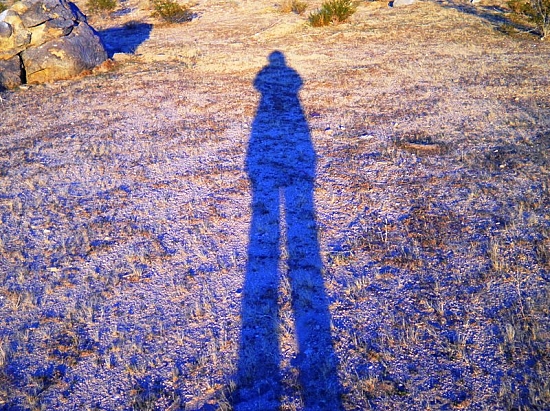
I Am a Three-and-a-Half-Year Grief Survivor

Three and a half years ago today, my life mate/soul mate died of inoperable kidney cancer. It seems an impossibly long time ago, as if I knew him in another life. It also seems as if it’s only been a few months since I last saw him.

Yesripplesterday I watched his version of Fly Away Home (he edited out parts of movies he/we didn’t like, such as heavy drama and prolonged arguments, which makes what he did leave in very personal). When Jeff Daniels told Anna Paquin that she had to continue the flight by herself, that she had to leave him behind and follow her dream, it seemed as if were a message to me from my mate to just go on with my life, follow whatever dreams I can muster, and leave him behind. (In fact, he often told me I’d have to that very thing — just leave him behind. He was losing his sight, his hearing, his strength, and he didn’t want me to hang around if he became a lingering invalid.)

Well, now I do have to leave him behind. Or maybe he left me behind. (I still don’t have any firm belief about what actually happens when one dies.) Either way, I am becoming comfortable with being single in a coupled world. I don’t panic about growing old alone as I did at the beginning — it seems oddly inevitable, as if it had been written long ago.

During all these painful months and years, those who have lost their mates often told me that around the four-year mark, they found a renewed interest in life, and so it is with me. I find myself coming alive again. Feeling eager to do new things, meet new people. I’m becoming more active physically — taking exercise classes and walking with a group two or three nights a week in addition to my solitary desert walks.

It seems fitting, in a way, all this physical activity. During the first months after we met, I was often restless, going for long ambles around the city (Denver had an interconnecting system of parks and parkways, and I could walk for hours along greenbelts). And now I am again restless, needing more than a single walk to get me through the day.

I still don’t know where I am going with my life, don’t know what I want other than to be more than I am (though at the same time, I am more accepting of who I am and how I look than ever before). Lately I find myself wishing on the first star I see at night, but the only thing I can think of to wish for is to be spectacular. I’m leaving it up to the universe or fate or a future me to decide what “spectacular” means.

It seems strange that of all the grief updates I’ve posted during the past three and a half years, this one is more about me and less about him, and that too is how it should be since my life is now more about me and less about him. I still miss him, still feel his absence in my life the way I once felt his presence, but I no longer feel as if I am a remnant of a shattered couple. I am just me — a woman alone who one day might be spectacular.

***

Pat Bertram is the author of the suspense novels Light Bringer, More Deaths Than One, A Spark of Heavenly Fire, and Daughter Am I. Bertram is also the author of Grief: The Great Yearning, “an exquisite book, wrenching to read, and at the same time full of profound truths.” Connect with Pat on Google+. Like Pat on Facebook.

Being Comfortable With Who I Was And Who I Am

During all these years of pouring my heart out online, I’ve never known anyone offline who checked out my online writings except for an occasional glance by a sibling. Lately, I’ve been meeting people offline, and when the conversation gets around to my telling them about my published books, they come online to check me out.

It’s one thing to meet people because of my grief blogs and grief book, but these people knew me before reading my emotional outpourings. When a couple of these new friends bought Grief: the Great Yearning, I thought I’d find it awkward for them to know so much about me — until the death of my life mate/soul mate, I was reticent about putting myself on shadowdisplay — but oddly, it hasn’t been a problem. Perhaps I’m so used to living wholeheartedly online that being so upfront has become a habit. Perhaps psychologically, I know longer see a difference between online and offline — the two are melding together so that often after an exchange of emails with an online friend, I feel as if we have visited for real. Or perhaps it’s that the woman in the book is no longer me.

When I post excerpts from the book on this blog, sometimes I find myself crying for the woman who had to deal with such trauma, as if the person who wrote the passages were a stranger. And she is a stranger. I’ve come a long way since I wrote those entries — from coupled to uncoupled, from a deep connection to another human being to a solitary connection with the world around me, from a woman who’d lost her identity to someone who is coming to a new realization of who she is.

At the beginning of my grief, I used to bemoan that despite all the trauma, I was always just me, and it’s true — I am always just me. But that “me” has progressed (or at least sidestepped) into a different way of seeing, a different way of being. I used to feel as if everything were over, but now I sometimes feel as if everything is still to come. (Since in many ways I am starting over from scratch, by definition, everything is still to come, though at times it’s hard to maintain such a belief considering that I’m not young anymore.) I can feel the ebb and flow of life a bit better, accept the losses and even the joys that come my way. I still hope for more, of course (though I don’t know what that “more” might be — an even greater wisdom or openness perhaps), but at the moment I am comfortable being me.

And in the end, that’s probably the real reason I’m not uncomfortable with people knowing the truth of me — because I am comfortable with who I was and who I am.

***

Pat Bertram is the author of the suspense novels Light Bringer, More Deaths Than One, A Spark of Heavenly Fire, and Daughter Am I. Bertram is also the author of Grief: The Great Yearning, “an exquisite book, wrenching to read, and at the same time full of profound truths.” Follow Pat on Google+. Like Pat on Facebook.

Writing: Art vs. Commerce

Ever since the death of my life mate/soul mate, I’ve been struggling to find reasons to write. It didn’t seem important to write another book that would languish in the dark alleys of non-bestsellerdom, and it especially didn’t seem important to write if he, my most avid fan, were no longer here to read what I wrote.

Today, though, I had an epiphany. Writing is separate from selling books. Writing is art, a thing of the spirit, eternal. Selling books is merely commerce, and so is everything that goes along with the business — writing to be read, finding readers, trying to make a niche in the publishing world.

Often, we writers are told that we need to write what people want to read. It’s good advice, especially if we want to make a living as an author, but in my case, I can only write the books I can write. Even if I knew what readers wanted, I couldn’t 531da618f5363c22_mwrite those books. Someone else is already writing them.

Although it would be nice to make a living off writing, money is not the only reason to write. In fact, contrary to popular belief, money is not the reason behind most of what is worth living for.

Take a smile for example. That curvature of the lips and sparkle in the eye is fleeting and ephemeral, not to be stored or purchased anywhere here on this earth, and yet, a smile from a loved one is precious. I would give anything to see my life mate/soul mate smile at me once more, but now his smiles exist only in my memory.

Smiles aren’t the only valuable thing that has no meaning beyond the moment. We go walking on a cool sunshiny day without ever stopping to think what we will get out of it other than a pleasant interlude. We watch a movie or read a book simply to pass the time, without ever worrying about its importance. We talk with friends, and those words become lost in the eternal spectrum of sound waves. Sometimes we talk to a person who is no longer here, such as I do with my lost mate, and as seemingly meaningless as those conversations might be, they are important.

Is writing any different?

Some writers, of course, are so full of their importance they believe their words are immortal, no matter how trite or uninspiring their writing is, but many of us need the possibility of readers to give our writing importance, or at least purpose.

And yet, there is the side of writing that is often ignored in the business of writing — writing is art, or it can be. Art is the expression or application of human creative skill and imagination. Nowhere in that definition does it say art needs readers or viewers or buyers to be art. Art is merely expression. And that is what writing should be.

In a perfect world, writers would never consider their readers, would never put commerce above inspiration, would never count words or the hours spent creating. They would simply write.

For myself, I can create that perfect world

The past few weeks, I have been working a bit on a novel I started three years ago about a grieving woman. Maybe when the book is finished, I will turn the manuscript over to my publisher, but for now, I’m not even considering the commerce of writing. The book is for me — an expression of my grief, inspired by all I’ve gone through the past few years.

My writing.

My art.

***

Pat Bertram is the author of the suspense novels Light Bringer, More Deaths Than One, A Spark of Heavenly Fire, and Daughter Am I. Bertram is also the author of Grief: The Great Yearning, “an exquisite book, wrenching to read, and at the same time full of profound truths.” Connect with Pat on Google+. Like Pat on Facebook.

Today I Will Be . . .

I’ve gotten in the habit of posting a daily resolution on Facebook, which has been a good discipline for me. I spend a minute or so thinking about what challenges I will be facing that day, and then I post the appropriate resolution. For example, today I will need to have more generosity of spirit to get through a trying situation, so the resolution I just posted says: Today I will be . . . munificent. Yesterday I had to write a chapter for Rubicon Ranch, the online collaborative serial I’m writing with other Second Wind authors, so I posted the resolution: Today I will be . . . creative. Other days I have resolved to be bold or diligent or grateful or (just for fun) enigmatic.

In fact, I even use an all-purpose resolution, a bit of word art I created, for my Facebook profile:

Today I will be . . .

I don’t know if these public daily resolutions make a difference because obviously I don’t know what my day would have been like without them, but I like posting the resolutions. It makes me appreciative of the day despite any challenges or hardships that I am facing, Makes it seem as if with a bit of a boost, I can surmount all problems or at least accept them. So although I already posted a resolution for today on Facebook, I am posting a special one here:

Today I will be . . . appreciative.

***

Pat Bertram is the author of the suspense novels Light Bringer, More Deaths Than One, A Spark of Heavenly Fire, and Daughter Am I. Bertram is also the author of Grief: The Great Yearning, “an exquisite book, wrenching to read, and at the same time full of profound truths.” Connect with Pat on Google+. Like Pat on Facebook.

No More Saturday my Sadder Day

During the past three and a third years, ever since the death of my life mate/soul mate, the date and the day he died have brought an upsurge of grief. Every 27th of the month and every Saturday I felt an increased sadness even when I wasn’t aware of the date and day. And when the 27th fell on a Saturday, I got a double dose of grief.

Last Saturday was the 27th, but there was no sadness. I simply noted the date and day, and went on with my life. Not that there was much to go on with — a walk in the desert, a movie (one of the movies he taped for us), some online activity.

Part of me wanted to feel sadness just out of habit — habits are comfortable even when they aren’t particularly productive. Part of me wanted to feel sadness because it was a link to him and to a life that is rapidly receding from me. Mostly it didn’t matter. I’d come to see that being sad or unsad didn’t make much of a difference — it was just a part of my life in the same way the sun rises and sets or the moon grows full and wanes.

It’s been several days since Saturday the 27th, and I still don’t know what to think about the lack of sadness. Three and a third years ago, I was in such pain, I couldn’t have believed this time would ever come. Some people who have lost their spouses still feel connected, but I don’t. I talk to him, of course, but never feel as if he’s listening, let alone responding. Whatever we once meant to each other, whatever we shared, I now know he’s on his own journey, just as I am.

The main problem continues to be emptiness. I don’t feel anything as dramatic as the bleakness I once felt, don’t feel much at all, to tell the truth. I do feel lonely, of course, but I’m getting used to that. I even think it might be my destiny—to be alone so I can . . . and that’s where the thought always ends. So I can do or become . . . what?

I don’t much believe in destiny, and yet it’s hard to completely disbelieve when two such inexplicable and awe-full events helped define my world: the day he came into my life and the day he left.

From somewhere deep inside, “want” is starting to seep up into my consciousness. It’s an indefinable want, perhaps a desire for life, whatever that might be. I’ve been steeped in death and aging for too long (still am — I’m currently looking out for my mostly independent 96-year-old father), and something in me is crying out for more.

Despite a growing restlessness, I need to be patient since my life is not yet entirely my own. But someday, when I am free, I hope I have the courage to run to meet my destiny, whatever that might be. I hope I have the courage for “more.”

***

Pat Bertram is the author of the suspense novels Light Bringer, More Deaths Than One, A Spark of Heavenly Fire, and Daughter Am I. Bertram is also the author of Grief: The Great Yearning, “an exquisite book, wrenching to read, and at the same time full of profound truths.” Follow Pat on Google+. Like Pat on Facebook.

Greedy For Life

If the universe is full of infinite possibilities, does that mean we are infinitely possible too? I’d like to think so, but it doesn’t seem feasible. We seem to be bounded by our genetics, the way our brains are wired, our very thoughts. Can we go beyond such constraints to something else?

Working within natural laws, we can change ourselves to a certain extent. We can get a new job. We can move to a different location. We can divorce or remarry. We can become thinner, fitter, stronger, more serene. We can even look and feel younger, but we cannot actually be younger. Nor can we be anything but what we are — whatever that is. I suppose it’s a good thing our basic nature doesn’t change. It would make life intolerable if every wizardmorning when we woke up we discovered we were something different — a butterfly or a dragon, a flower or a star.

Still, in a universe full of possibilities, there has to be more possibilities than we see or even fathom. But how does one find (or create) these possibilities? I realize that wanting to be something other than ourselves is wasting who we are, but still, there has to be a way of becoming more of what we are, of reaching a greater potential.

I have such a desire to be “other,” though I don’t have any clear concept of what that means. Wiser, of course, and more in tune with the universe. Transcendent, maybe. Able to sense that which I cannot now see.

At the very least, I’d like to be able to just go along for the ride, see where life takes me without worry or fear. But even such a small transcendence seems improbable — I’m a worrier (thinker!) by nature and genetics, and fear is not just a mental state but physical reaction, a body response to danger, and we are such physical creatures. And anyway, aren’t worry and fear part of the experience of life, just as grief is?

Maybe there is more life on the horizon for me than I can now see, and all this cogitation is but a way of occupying myself until that life arrives. Or maybe the cogitation will help get me there by opening up my mind and soul to more, like a flower opening to the sun.

I’ve never been a greedy person — never really wanted much, especially not things — but now I see there is growing.

***

Pat Bertram is the author of the suspense novels Light Bringer, More Deaths Than One, A Spark of Heavenly Fire, and Daughter Am I. Bertram is also the author of Grief: The Great Yearning, “an exquisite book, wrenching to read, and at the same time full of profound truths.” Follow Pat on Google+. Like Pat on Facebook.

The Zipper Philosophy of Life and Harmony

Ever since the death of my life mate/soul mate, I’ve been trying to rebuild my life, but in a better way, perhaps to find a deeper connection to the universe or simply to be more open to what is. I haven’t known how to do this — no matter what I do, I always seem to be just me, a sad and lonely woman struggling to fit all the pieces together.

Today out walking in the desert, I had a bit of a revelation. I understood that we are all a mass of conflicts and contradictions, with mental, physical, spiritual, and emotional needs and wants all striving for ascendancy. Nothing is in harmony. But . . . if we could find a way to strike a balance with all these elements they would fit together like a zipper, and then the whole universe would fall open to us.

For example, I have a friend who is struggling with health issues. The diet she can eat for her gall bladder troubles is the worst diet for her irritable bowel syndrome, and the diet she can eat for her irritable bowel syndrome is the worst she can eat for her gall bladder issues. The few foods she can eat, she doesn’t like, and the foods she likes she can’t eat.

If she could find a balance in her diet, the perfect way of eating to take each of her issues into consideration, maybe everything in her life would also fall into place. (In addition to her health problems, she’s struggling with grief and family issues.) I doubt things will work out easily in her situation — her doctors tell her she needs gall bladder surgery, which is one solution to one of her problems.

I don’t have her problems. My conflicts are nebulous, having more to do with who I am and who I want to be, what I want and don’t want rather than health issues, but they still bring disharmony to my life.

Getting rid of all conflicts is one way to find harmony (just as surgery is a way to solve part of my friend’s health problems) but the trouble with removing conflicts from your life rather than resolving the conflicts is that it subjects you to disharmony if a conflict finds its way back in.

I don’t know if this zipper idea is true or not. I don’t know if it’s possible. I wouldn’t even know how to go about striking a balance with all life’s disharmonious elements, but it seems to me as if it’s a goal worth striving for, if only to find out what will happen when the zipper is finally opened.

***

Pat Bertram is the author of the suspense novels Light Bringer, More Deaths Than One, A Spark of Heavenly Fire, and Daughter Am I. Bertram is also the author of Grief: The Great Yearning, “an exquisite book, wrenching to read, and at the same time full of profound truths.” Follow Pat on Google+. Like Pat on Facebook.

Saying Happy Birthday to the Dead

Today is the birthday of my life mate/soul mate. I suppose I should say “was” the birthday — he’s been dead for more than three years. We never celebrated our birthdays, and for some reason, that seems sad to me now. I never told him “Happy birthday,” never made him a birthday cake, never gave him a birthday present.

He didn’t believe in continued life after death, and yet, when I went through his “effects” a couple months after he died, I found a quote he had saved: “Life is rather a state of embryo — a preparation for life. A man is not completely born until he has passed through death.”

cakeDid he believe those words? Did he want to believe them? Or was the quote something that caught his attention once upon a time, and he kept it whether he believed it or not? Still, I wonder — if he continues to exist somewhere, does he celebrate his death day as his birthday? Or does he still not believe in celebrating such rites of passage?

We were alike in our disinterest in such celebrations, but ever since he died, I’ve been making a point of celebrating life’s moments. So today I got the birthday cake I never got for him while he was alive. (And hey, if he doesn’t want any, then there’s more for me!) I will watch one of the movies he taped and remember when he used to sit by my side and watch with me. I will think of him, not as he would be today, 67 years old, or even as he was at the end, but as he was when we met — young, radiant, and be-coming.

I will give thanks that he shared his life with me.

And I will say those words I never spoke before, “Happy birthday, Jeff.”

***

Pat Bertram is the author of the suspense novels Light Bringer, More Deaths Than One, A Spark of Heavenly Fire, and Daughter Am I. Bertram is also the author of Grief: The Great Yearning, “an exquisite book, wrenching to read, and at the same time full of profound truths.” Follow Pat on Google+. Like Pat on Facebook.

A Life Full of Possibilities

Connections make life worth living, but more than that, connections make life itself.

At the most quantum level, possibilities connect and become waves. Waves connect and become particles. Particles connect and become atoms. Atoms connect and become molecules. Molecules connect and become cells. Cells connect and become gametes. Gametes connect and become us. We connect and become communities. Communities connect and become countries.

A matrix of connections in our brains makes thinking possible. An entire matrix of connections holds us to the earth and makes living possible.

Despite these long strings of connections, I’m beginning to see that disconnections are almost as important as connections. When my life mate/soul mate died a little more than three years ago, the connective tissue of my life disintegrated, and my world lay in a heap of rubble at my feet.

Since then, more connections have disintegrated, adding to that heap of rubble. Some of those disconnections were interpersonal ones — friends and family. Other disconnections were intrapersonal ones — thoughts, hopes, even my very identity.

Often during these past years, I have despaired at the thought that only bleakness lay ahead of me. But bleakness is but one possibility. Within that pile of rubbish lie many new possibilities. Perhaps I am one of the lucky ones, getting to start all over with a new set of possibilities. As people have been telling me for the past three years, life is such a big place with endless possibilities I have never dreamed of. They have told me the universe is unfolding as it should, and that it is not yet finished working in my life. They have told me that wonderful things lie ahead of me.

What of that is true, I don’t know, but what I do know is that no matter what fate has in store for me, I am not yet finished working in my life. Just as I am gradually sorting through the detritus of my shared life, getting rid of things for which I no longer have any practical or emotional need, I am sorting through the rubble of my shattered world. Maybe I will find enough shards to rebuild my life into something workable, or maybe I will have to go out and look for pieces I can use to rebuild my life into something special.

Since my current responsibilities keep me from actually going out in the world and physically searching for new connections, I am starting with me, rethinking old beliefs, trying on new thoughts, discarding old hopes, and dreaming new possibilities into reality.

Because, at its most basic level, life is nothing but possibilities.

***

Pat Bertram is the author of the suspense novels Light Bringer, More Deaths Than One, A Spark of Heavenly Fire, and Daughter Am I. Bertram is also the author of Grief: The Great Yearning, “an exquisite book, wrenching to read, and at the same time full of profound truths.” Follow Pat on Google+. Like Pat on Facebook.

Living on the Edge

Some of my happiest times during the past few years have been when I have been standing on the edge of places.

On the edge of a canyon:

Black Canyon of the Gunnison -- north rim

On the edge of a lighthouse:

Lighthouse

On the edge of a pier:

Ventura Pier

On the edge of the continent:

Atlantic Ocean

On the edge of a day:

Ocean Sunrise

I’m not sure why edges have such appeal for me. Perhaps it’s because when I am on an edge, I can see a long way, catching glimpses of possibilities far in advance of their appearance. Or perhaps it’s because edges create a boundary between two very different areas — land and sea; balcony and air, cliffs and gorges, night and day — and such differences mirror my own internal boundaries. Or perhaps it’s more symbolic, a precursor to the time when I will be standing on the edge of life, looking out onto . . . who knows what.

Some people “collect” lighthouses, going from one to another, taking pictures, maybe even getting stamps in a lighthouse passport. I considered making such a trek someday, but what I’d really like to do is visit edges of places.

Maybe that’s where I’ll finally find happiness: living on the edge.

***

Pat Bertram is the author of the suspense novels Light Bringer, More Deaths Than One, A Spark of Heavenly Fire, and Daughter Am I. Bertram is also the author of Grief: The Great Yearning, “an exquisite book, wrenching to read, and at the same time full of profound truths.” Follow Pat on Google+. Like Pat on Facebook.