Searching for a Cause

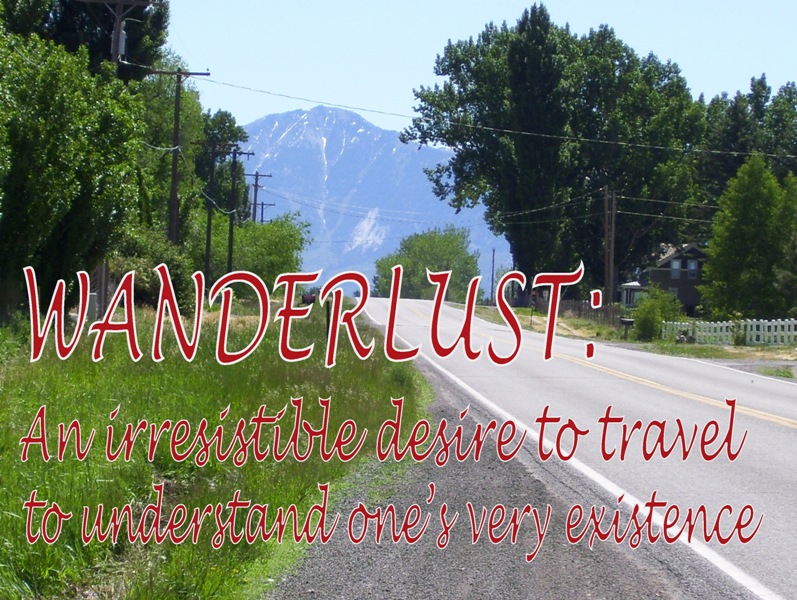
When I mentioned to a hiker friend that I am thinking of walking up the coast from San Diego to Seattle, she suggested that I walk for a cause because if you have a cause, people are more willing to help supply food, water, a shower or even transportation if you need it, and they might even get others to help.

It’s a great suggestion. The Peace Pilgrim walked for peace. She was walking in response to a spiritual awakening, and she’d taken a vow to “remain a wanderer until mankind has learned the way of peace, walking until given shelter and fasting until given food.” Her pilgrimage began in 1953 when she was 44 and ended with her death in 1981. She carried only a pen, a comb, a toothbrush, and a map, trusting to those she met to supply what she needed, though she never asked for anything. (She was also the first woman reported the have thru-walked the Appalachian Trail, which she did in preparation for her pilgrimage.)

Following her example or following their own spiritual wakening, others have walked for peace. Some women have walked for women’s freedom since so many women (perhaps rightfully) are afraid to travel, hike, or camp on their own. These women causewant to show that it is possible to claim one’s freedom and follow one’s adventurous heart. And then there are short walks/runs to raise money and awareness for all sorts of causes and organizations.

My friend suggested I walk for widows or the grief-stricken. Widow Walker. Grief Walker. Or . . . whatever. Her other suggestion, which actually is a fun idea, is to hang a small portable chalkboard on my pack, and change my “cause” as I felt like it.

Having a cause would give people a personal stake in my quest, but I wonder if it’s a bit of a cheat. If the idea of the cause came first, then the walk would be because of the cause. If the idea of the walk came first, as it did, then the cause would be because of the walk.

Still, I would need some sort of support group because I want to walk, not hike, which means no heavy backpacks, no bulky gear, no great stores of food and water. I do understand the need for taking more than The Peace Pilgrim’s sparse kit because I do not want to walk to certain death, but I simply do not want to take everything on a hiker’s “must” list. Of course, if I hike along the coast, there would be plenty of towns or beaches to get provisions and find a motel (and a computer!) for the night if necessary, but there will also be long stretches of wilderness, and in one case, a fifty-mile stretch of highway-shoulder walking.

Grandma Gatewood, like The Peace Pilgrim, was a minimalist hiker, the first woman to solo thru-hike the Appalachian Trail. Although she hiked the Trail three times, beginning when she was 67, she had no special gear. She wore Keds sneakers and took only an army blanket, a raincoat, and a plastic shower curtain which she carried in a homemade bag slung over one shoulder. My kind of hiker! Nor did she have a cause — at least not one that I can find. She simply thought it would be a nice lark. Sounds like my kind of hiker.

My true cause is a soul quest, a mystical journey, a response to a barely heard question deep inside — “Is this all there is to my life here on Earth?” I would like to find a deeper connection to both myself and the world, maybe even to go through some sort of spiritual transformation. I originally planned my journey as a car trip, which is still on my list of possibilities, but walking might give me more of the mysticism I am looking for. (Feet on the ground trumps feet on the accelerator pedal any time.)

So, here’s my question. Do I need a cause? And if so, what should that cause be?

***

Pat Bertram is the author of the suspense novels Light Bringer, More Deaths Than One, A Spark of Heavenly Fire, and Daughter Am I. Bertram is also the author of Grief: The Great Yearning, “an exquisite book, wrenching to read, and at the same time full of profound truths.” Connect with Pat on Google+. Like Pat on Facebook.

Grief’s Strange Blessing

We think we know who/what we are, but that image of ourselves is often at odds with what other people think. For example, if I disagree with some people, they call me negative. If I say no when someone asks me to do something, I risk being called contrary. If I want to do things my own way, I’m accused of being manipulative. If I try to set boundaries, I am called a vindictive, vengeful bitch.

Actually, only one person in my life ever dared called me a bitch. If anyone else did, he would not be in my life. It’s not that I want such a person in my life, of course, but my father allows my homeless brother to camp out in the garage, and it is my father’s house. (I don’t want to get into the morality of the situation, or how I am “enabling” my brother by not calling the cops, or how I should leave and let my 97-year-old father fend for himself. I’ve heard it all before, and anyway, that’s not what this post is about.)

When you live with someone with mental problems who insists that it is you who are out of touch with reality, it’s even harder at times to know the truth. Perhaps I am vindictive and vengeful as he says. Perhaps I’m negative, manipulative, and contrary as others say. I don’t think I am, but if I were, would I know?

A friend’s mother is going blind. One day this friend wore a pair of mismatched socks (they were part of a fun set of puposely mismatched socks, not mismatched by accident). The mother looked at the one purple sock and the one pink sock and said, “I love your red sSayingocks.” No amount of talking could convince the woman the socks were anything but a matched pair of red socks. It’s what she saw, and since she believed her eyes, what she saw must be the truth. And in a way, it was the truth — her truth. She did see red socks even though everyone else saw pink and purple.

Besides all the other nastiness my brother spews, he claims I have a dissociative personality disorder. If I did, would I know? I think I would — there should be gaps in memory, strange looks from friends, questions about things I have said — but my brother is the only one who insists I said things I don’t remember saying, who says I did things I don’t remember doing.

There was a time in my younger years where I would have worried about the truth of his allegations because I did feel unbalanced, as if one mental step to either side would send me over a cliff to insanity, but now I know the truth. I am sane. (It’s possible, of course, we are all insane, that life is a form of insanity, but that’s a path I don’t want to explore.)

So, what gives me the confidence to believe I am sane when others allege the opposite? The profound grief I experienced after the death of my life mate/soul mate.

Grief is a totally insane situation, with hormones of all kinds on overdrive, brain chemistry out of whack, emotions out of control, pain so deep it makes it impossible to breathe, tears that flow like open faucets without your volition, dizziness and nausea and a loss of equilibrium that make the world seem totally alien. And yet, somehow, through it all, I could feel the truth of grief, that whatever I experienced was normal. It’s this belief in the normality of grief’s insanity that gave me the courage to write about grief and connect with others going through the same thing. It’s what gave me the ability to explain grief to my fellow bereft, and to assure them that despite what they were feeling, they were not crazy.

And neither was I.

Grief brings strange blessings, and this was my blessing, the thing that is now helping me through a bizarre situation — the utter belief in my sanity.

***

Pat Bertram is the author of the suspense novels Light Bringer, More Deaths Than One, A Spark of Heavenly Fire, and Daughter Am I. Bertram is also the author of Grief: The Great Yearning, “an exquisite book, wrenching to read, and at the same time full of profound truths.” Connect with Pat on Google+. Like Pat on Facebook.

Merry, Merry, Quite Contrary

A friend recently accused me of being contrary, said that I had an incontrovertible tendency to go in the opposite direction of whatever anyone requests of me. The friend seemed to think I didn’t know I had such a fault, which is true. I didn’t. (Except for when I feel taken for granted or discounted. Then, yes, I do dig in my heels.)

I took an informal poll of other friends, and it seems as if most people thought I was too accommodating, that I tended to be too conciliatory. I accept my brother’s nastiness, I do what people ask whenever possible, and if in my power, I will do what I can to make people happy. (Yeah, I know — you can never make anyone happy, but still, you can go out of your way too keep from adding to their misery.)

Contrary mechainans “perversely inclined to disagree or to do the opposite of what is expected or desired.” By that definition, contrariness seems to go hand-in-hand with obligation, as if I have an obligation to do what people request of me or expect of me. If there is no obligation, there can be no contrariness, perverse or otherwise, because if I do what I want to do rather than what other people want me to do, I am going in the direction I want to go.

I admit I am contrary when it comes to ideas. I don’t accept ideas just because most other people do. I tend to be a bit of a skeptic, taking the known with a strong dose of curiosity and questioning. I’m not particularly an out-of-the-box thinker since out-of-the-boxness implies more of an imagination than I have, but so often I am not even aware of the box.

I write books that are contrary to genre expectations (for example, my good guy and bad guy never duke it out at the end).

I’ve also lived a contrary life, not embracing the consumerism of our society, not following fashion, not watching television programming (though I do watch taped movies via a television). My plans/hopes/ideas for the future all go contrary to what is normally expected of a no-longer-young woman on her own.

I even go contrary to myself at times — trying things that are out of character, or doing things I am afraid of doing. I try to say yes to any invitation even if I am not so inclined in an effort to continue going contrary to my nature.

Although I started out this post trying to prove how uncontrary I am, I have to agree with the friend who thinks I am contrary. I do, however, disagree with the judgment that my contrariness is a fault. Seems like a necessary attribute to embrace if one wants to merrily go along, living a life of beauty and folly no matter what anyone else expects or desires.

***

Pat Bertram is the author of the suspense novels Light Bringer, More Deaths Than One, A Spark of Heavenly Fire, and Daughter Am I. Bertram is also the author of Grief: The Great Yearning, “an exquisite book, wrenching to read, and at the same time full of profound truths.” Connect with Pat on Google+. Like Pat on Facebook.

Stepping Outside My Comfort Zone

A couple of months ago when my exercise class was asked to do a demonstration for a seniors’ expo, I agreed to do it. It seemed like a life-altering experience since I’d never performed in front of a group before. I had once given a speech at a writers’ conference, and after the first few minutes of nervousness and a shaky voice, I did great. But speaking about a subject I know well is one thing, and doing a new, physical activity is another thing completely, and way out of my comfort zone.

Despite all my walking and exercising, I am not really fit. (When a friend found out about all my physical activities, she asked if I had an ounce of fat left on my body. I could only laugh.) I’m not being self-denigrating when I say I’ve never been particularly graceful or rhythmic. (Except for walking of course. One foot in front of the othstageer — I can do that!) Despite this, I thought it would be good for me to go in front of a crowd with my classmates, do the best I can, and let the mistakes fall where they may — a celebration of who I am at this moment.

The past two months have been a flurry of practice, costume discussions and creations, and more than a few disagreements, followed by a disastrous dress rehearsal and even more upsetting final practice. At one point, I thought of dropping out, but I reminded myself of how important the experience would be. I mean — me? Going in front of a crowd? Performing?

The exhibition was on Saturday. All the participants were asked to get there at noon, though my group wasn’t on until three. So there was plenty of time for nervousness, and I was, just a bit. But then we got on stage, did our number, and . . . that was it. Oddly, although I’d been looking forward to the applause, it never registered. I can’t even remember it.

Afterward, I waited for the triumphant feeling I expected, waited for a shift in myself. Waited for . . . I don’t know what. But nothing was different. Then this morning it dawned on me — as so often happens with life-altering experiences, the changes came in the doing. All those weeks of preparation turned me into the sort of person who could go on stage and give it her all without much ado.

Bad things seem to have an effect all at once, but good things have a slower, less obvious demarcation. (A therapy friend says that this is survival. It’s important to remember the bad things and the bad effects so we can try to keep them from happening again, but good things don’t matter much when it comes to survival.) Still, in my case, I did get the effect I wanted, just not the great emotional payoff. And that’s okay. Emotions fade. Confidence and competence remain forever.

***

Pat Bertram is the author of the suspense novels Light Bringer, More Deaths Than One, A Spark of Heavenly Fire, and Daughter Am I. Bertram is also the author of Grief: The Great Yearning, “an exquisite book, wrenching to read, and at the same time full of profound truths.” Connect with Pat on Google+. Like Pat on Facebook.

Embracing My Wild Divinity

When I tell people I want to lead a wild life, to find the wild woman within, some women instinctively understand what I mean, while other folks just give me a blank stare. During my school days, the wild kids were those who smoked and drank, played loud music, partied, gave little consideration to rules or consequences. As young adults, the wild ones were … well, they were pretty much like the wild kids. Smoking and drinking, playing loud music, partying, giving little consideration to rules or consequences, sometimes riding motorcycles, hanging around bars, picking up mates for a night.

I have a hunch that when I tell the blank-stared folks of my desire for wildness, such images come to their minds, but the truth is, I have no interest in that particular kind of tameness. I call it tameness because although it seemed wild to us at the time, the activities were all part of the rebelliousness of youth, a reaction to the strictures of our lives, and, while not perfectly acceptable, perhaps, they were an adjunct to the urbanization and corporatizing of our tame world.

020bTo tell the truth, I’m not exactly sure what I mean by “wild woman.” I tried to do a bit of research into the mythology of wild women and kept bumping into the book Women Who Run With Wolves. My first reaction, of course, was to get the book, but then I changed my mind. I don’t want to know what other people mean by wildness. I want to find out what I mean. I do know that being a wild woman isn’t about getting into trouble or dangerous situations, it’s about embracing my connection to life, being the person I was meant to be without the structure of societal conventions or the bonds of other people’s expectations. It’s about finding the things that call to me from the soul rather than what beckons me from without. It’s about extending my reach, to want what up to now has escaped me. It’s about finding what feeds the hungry beast inside me. It’s about striking out on my own, trusting my instincts yet relying on experience. It’s about the having the courage and boldness to go where I must. It’s about living a natural life, following my own rhythms, being true to myself.

I’ve always been fascinated by the wild places of the world. The places deep within the Amazon that have never been touched by the modern world. The depths of the oceans that lie beyond our instruments. Deep caverns that have never been explored. I don’t suppose there are any of those places left except in my imagination, but still, I am caught by the lure of what might lie beyond our modern society and culture, what might exist beyond man-made (and woman-made) laws and conventions. Of course, any such cultures would have their own conventions that bind their members, so perhaps even the figments of my imaginings are tame in their own way.

And yet, and yet . . .

I wonder what wild places lie in my heart, my mind, my soul. What passions might I feel that I have not yet discovered? What ideas could I have that would spring forth as if from the earth itself? What unheard songs does the universe sing to me?

That is where I will find my wildness, not in bars, in a bottle, or dangling from a bungee cord.

Blessings from John O’Donohue:

“May the angel of wildness disturb the places where your life is domesticated and safe, take you to the territories of true otherness where all that is awkward in you can fall into its own rhythm.”

and

“May the beauty of your life become more visible to you, that you may glimpse your wild divinity.”

***

Pat Bertram is the author of the suspense novels Light Bringer, More Deaths Than One, A Spark of Heavenly Fire, and Daughter Am I. Bertram is also the author of Grief: The Great Yearning, “an exquisite book, wrenching to read, and at the same time full of profound truths.” Follow Pat on Google+. Like Pat on Facebook.

Escaping the Cage

I have always been a highly civilized person. For the most part, I am considerate of others. I am never intentionally rude or bad mannered or insulting. I am not uncouth. I don’t make scenes in public (or private, for that matter). I seldom raise my voice. I listen more than I talk. I dress modestly. I use correct English and am not given to crudeties or foul language. If it’s in my power and nature, I almost always do what others ask. I try to be helpful. In other words, I am tame.

Wheprisonn I was young, a lot of this tameness came from being fearful of doing the wrong thing. I grew up in a shifting emotional atmosphere where from one minute to the next, I didn’t know how I would be treated, so I did the only thing I could — be a good girl. I obeyed. I never talked back. I keep my rebellious thoughts to myself. I did what was expected of me, often before such expectations were even expressed.

As an adult, I continued to be tame. I seemed to know instinctively that any fierce disagreement would only lead to fiercer disagreements, escalating until one of the parties killed the other. Of course, such hostilities generally don’t end in death because somewhere along the line, one of the combatants gives in. Since I knew that in any conflict I would be the one to give in, I never took up the battle in the first place. If I were going to give in, I figured I might as well do so before any damage was done.

I’m still tame, of course. By now it’s not just a habit, it’s who I am. Kind. Conciliatory. Even-tempered. I do experience anger once in a very great while, but those infrequent outbursts flare up quickly and die just as quickly.

Still . . .

There is a untamed side to me — an inner savage, a wild woman, a primitive and elemental being — that I get glimpses of once in a while. I first noticed this untameness when grief descended on me with the all the power of Thor’s hammer. I had no idea I was capable of such feral emotions. Even if I had wanted to, I could not have controlled my grief as I had always controlled my emotions. Grief came in an instant then grew and grew until there was so much pain I wanted to scream. And so I did. Mild-mannered me, tame me, good girl me screamed my agony to the winds.

For the past four years, ever since the death of my life mate/soul mate, I’ve been feeling an itch for “more.” I have never known what this undefined “more” is, but I’m getting an inkling that it is my wild side. I’m not sure how to unleash the wildness, though. Perhaps just by being aware of my connection to the earth. Perhaps by letting the winds take me where they wish. Perhaps by being spontaneous.

As John O’Donohue wrote in Aman Cara, “To be spontaneous is to escape the cage of the ego by trusting that which is beyond the self.”

To escape the cage. To be wild.

Oh, yes.

***

Pat Bertram is the author of the suspense novels Light Bringer, More Deaths Than One, A Spark of Heavenly Fire, and Daughter Am I. Bertram is also the author of Grief: The Great Yearning, “an exquisite book, wrenching to read, and at the same time full of profound truths.” Follow Pat on Google+. Like Pat on Facebook.

Being Nice

For many years, I was subject to depression and debilitating allergies that so enervated me, getting out of bed in the morning was about all I could handle. Then there were the years my life mate/soul mate was dying, where I hunkered down in my emotional foxhole, trying to protect myself from the pain with which life was bombarding us. During these times, whenever I’d go out among people, all I ever seemed to see were happy, healthy, and energetic folks, which made me feel as if I were alone in my misery.

It wasn’t until I signed up for Facebook and started making contact with all sorts of people that I discovered the truth rainbowin their status updates. Everyone is struggling with something — illness, disability, debility, depression, grief. Even if people aren’t struggling with such a difficulty themselves, they are taking care of someone with a problem. The strong, healthy people I saw were probably normally traumatized people on their good days.

I’m learning to be nice to everyone, even people with a bad attitude. Anger, rudeness, pettiness, are all signs of unhappiness and discontent, and chances are, the misery stems from actual problems, not just a desire to be mean. In a strange sort of way, how people treat me is not my problem. Their inconsideration is a reflection of them, not me. My only responsibility is in my own reaction, and — in an ideal world — I would always choose to be nice. Life of course, is not always ideal, and I sometimes I let my own problems dictate my behavior, especially when those problems entail a lack of sleep, such as the episodes with my afflicted brother.

One of my favorite scenes in a film is in the 1989 movie Roadhouse where Patrick Swayze is discussing his policy with the bouncers. “Be nice,” he says. He goes on to tell them that no matter what anyone does, be nice. And he ends, “I want you to be nice until it’s time to not be nice.” It’s a good policy for anyone, being nice.

Sure, we have problems, but everyone else does too. So let’s pretend this is an ideal world, and let us all be nice.

***

Pat Bertram is the author of the suspense novels Light Bringer, More Deaths Than One, A Spark of Heavenly Fire, and Daughter Am I. Bertram is also the author of Grief: The Great Yearning, “an exquisite book, wrenching to read, and at the same time full of profound truths.” Follow Pat on Google+. Like Pat on Facebook.

Visualizing a Life of Joy

When a fellow grief survivor once told me about a woman she knew — an old woman who had lost everyone she had ever loved — and how the woman was the most joyful person she had ever met, I could only marvel. At the time, I was in the midst of unfathomable grief for my life mate/soul mate, but even before my terrible loss, I’d never been a candyparticularly joyful person. I couldn’t understand how, in the midst of the traumas and dramas life doles out like Halloween candy, anyone could find joy. And yet, and yet . . .

If you’ve read any of my posts about my current situation, looking after my 97-year-old father and dealing with my dysfunctional brother, you might think I’m in the throes of despair, but oddly, there is a feeling of . . . could it be joy? . . . deep within me. It’s as if something — my psyche, my inner child, my soul — is smiling.

When my brother is relentlessly demanding my attention, particularly late at night when I’m exhausted, or when I’ve had to explain something for the tenth time to my bewildered and hearing impaired father, I wonder how I’ll ever make it through another moment, but in the quiet times, I’m finding peace and an illusive joy. I feel as if I am letting go of ties that kept me bound to an unhappy past and a burdensome present.

What helps is that I’ve found refuge in new friends and new activities that make me feel alive, especially exercise classes that stretch my body and my mind. Like yoga, these classes make me aware of possibilities I had never considered, and teach me to reach further, imagine more, dream deeper. They make me feel beautiful and graceful, even though the mirror quite clearly shows I am many years past such an ideal. Or not. My teacher skews the whole age curve, making seventy-seven look like fifty. For so long, I’ve been afraid of growing old alone, worrying about dragging a decrepit body through long and solitary decades, and while such a scenario is possible, it’s not necessarily true. The exercise teacher’s radiant smile and still sensual movements show what is possible if someone keeps active, has a great attitude, and is blessed with a bit of luck.

I don’t know what life has in store for me, of course, but for the first time in I don’t know how long — maybe forever — I can visualize a life of joy.

The very thought makes me smile.

***

Pat Bertram is the author of the suspense novels Light Bringer, More Deaths Than One, A Spark of Heavenly Fire, and Daughter Am I. Bertram is also the author of Grief: The Great Yearning, “an exquisite book, wrenching to read, and at the same time full of profound truths.” Follow Pat on Google+. Like Pat on Facebook.

All Is Calm, All Is Bright

All is calm in my world today, and the sun is shining brightly. There have been no storms in my life in the past few days, neither internal nor environmental. There have been no midnight trips to jail to pick up an errant sibling, no recent trips to the hospital to admit my aged father. Nothing has pushed me past my limits to where I wanted to kick someone. I haven’t had any major grief upsurges for a while, not even any minor ones. I’ve been getting enough exercise to keep my stress levels low, and I’ve been catching up on my sleep.

I don’t know how long peace will last in this King of Hearts world of mine, but for now I am enjoying the calm.

It seems strange, though, not to have much to say, especially since the word I chose for my daily resolution is “largiloquent,” meaning “full of words.” (Not a bad thing for a writer to be!) There always seems to be something — or someone — bedeviling me, giving me plenty of fodder for this blog, but at the moment, there are no jumbled thoughts I need to sort out. I have no words of wisdom, either, other than a reminder to myself that the universe is unfolding as it should, and I am where I am supposed to be — dreaming myself into the person I wish to become.

Untitled-2

“If you can imagine it, you can achieve it. If you can dream it, you can become it.” William Arthur Ward.

***

Pat Bertram is the author of the suspense novels Light Bringer, More Deaths Than One, A Spark of Heavenly Fire, and Daughter Am I. Bertram is also the author of Grief: The Great Yearning, “an exquisite book, wrenching to read, and at the same time full of profound truths.” Follow Pat on Google+. Like Pat on Facebook.

Thank You

thankyouA big thank you to everyone who responded to my post Enabling or Decency and Caring?, offering support and advise. I still am not sure what to do about the situation, but I am taking all your comments into consideration before deciding how to handle the problem.

During all these years of grief over the loss of my life mate/soul mate, I found comfort telling myself, “I am where I am supposed to be.” I don’t believe in fate, don’t believe that our lives are decided for us (at least, not always), and yet, there is serenity to be found in accepting that perhaps the universe is unfolding as is should. It’s possible this drama of mine is also unfolding as it should. It is bringing me closer to being emotionally free of a conflict that has burdened me almost my whole life. At the very least, talking about it has brought me peace.

I do not think I am in a dangerous situation (though of course, any situation has its dangers). I do not think I will be hurt and, despite my brief outbursts of unadmirable behavior, I do not think I will hurt anyone else.

I have finally come to an understanding that I did not create the problem, and that there is nothing I can do to change it. I can change myself, though, to the extent that any of us can change ourselves. I can make sure that I take care of myself, relieve stress with physical activities, lead my own life as much as possible under the circumstances, and most of all, find solace in the realization that all things come to an end.

***

Pat Bertram is the author of the suspense novels Light Bringer, More Deaths Than One, A Spark of Heavenly Fire, and Daughter Am I. Bertram is also the author of Grief: The Great Yearning, “an exquisite book, wrenching to read, and at the same time full of profound truths.” Follow Pat on Google+. Like Pat on Facebook.