Come See My Etchings!

I couldn’t resist using the old come-on line for the title of this article, but etchings I’m referring to aren’t my etchings. They are the work of Mickey Hoffman, a talented artist and author. (She wrote the mysteries School of Lies and Deadly Traffic, published by Second Wind Publishing.) The first etching is one Mickey did of Beijing, and the second is Myanmar.

If you’d like to see how involved the etching process is, check out Mickey’s blog, What the heck is an etching? She shows step-by-step what exactly goes into the making of her etchings.

If you are more interested in travel than in how to make an etching, here are a few of Mickey’s wonderful travel blogs:

Up and Down, More from Tibet

Myanmar: Bagan, a City for Dreamers

The Islands and the Death Railway

And while you’re at it, don’t forget to check out Mickey’s books:

SCHOOL OF LIES: by Mickey Hoffman is a funny mystery novel about a dysfunctional public school. http://tinyurl.com/783sq7r

DEADLY TRAFFIC: The local sex trade flourishes and girls are disappearing from Standard High http://tinyurl.com/83crtzh

An Accidental New Year’s Resolution

UntitledtWhen I first got the internet in 2007, I embraced it as if it were a wonderful new friend. At the time, my mother was dying and my life mate/soul mate was sick. There was nothing I could do about either of those circumstances, and the internet gave me a place to escape from my real life.

The terrible times continued. My mother died, then three years later, my soul mate died, and one of the few ways I could escape from the grief was to spend time online. (Screaming also helped alleviate the grief, but being online was so much easier on my throat.) I moderated writing groups, connected to thousands of people, dived headfirst into blogging. I used a couple of my blogs to promote other authors because  . . . well, because the blogs were there and it seemed like the right thing to do.

Several unsettling incidents happened recently that made me rethink what I’m doing online. These incidents didn’t amount to much. A contretemps over an excerpt someone wanted me to post. The discovery that a terrible writer I know who writes awful books is making a fortune. A discussion about talent vs. persistence (most writers seem to believe that talent is more important, which disheartens me — are writers really so arrogant in their belief of their talent?). Just trivial things, but they got to me more than they should have, and it suddenly dawned on me that if I turned off my computer, these things don’t exist.

The truth is, except for this blog, I’m not having any fun online. I seem to have fallen into an alternate universe of self-published writers. I’m even getting known as a promoter of self-published writers, but I find this new world of publishing very discouraging. Many of the excerpts I post on my blog are not well written or are excerpts from books I’d never read if they were the last books left on this earth. And that’s saying a lot since once I read everything that fell into my hands. So why am I promoting such books? I no longer know.

It used to be that self-published writers were iconoclasts, following a dream at any cost. Now so many self-published writers are conformists, following a dream at no cost. Even worse, they are a militant lot, demanding regard for no apparent reason. I have become friends with numerous self-published writers in an online sort of way, and I know that many are good at the craft and strive to get better, but just as many self-publishers dash out a book in a month (sometimes even in a week) and expect to be taken seriously.

To be honest, I have no regard for most of the authors published by the big six, either, so this isn’t a self-published vs. traditional-published discussion. It’s about me. I am not self-published, though many people assume I am (guilt by association). Nor am I published by a major publishing company. Authors who were published by small independent presses used to called “indie authors” but self-publishers have adopted that name for themselves, so now there is no name for us.

In my case, it no longer matters what kind of author I am since I am not writing much fiction. Being around so much bad writing and so many self-aggrandizing writers has stifled any urge I might have to contribute words of my own.

So, to save my sanity, I’ve decided to escape from my online life. I’m going to keep up this blog, of course, but I’ll be cutting back on other online activities, especially those that involve promoting authors I don’t know and don’t like.

This resolution isn’t accidental — I’ve been giving a lot of thought to where I want to go with my online life. What’s accidental is the timing. What was supposed to be simply a resolution has accidentally become a New Years resolution.

***

Pat Bertram is the author of the suspense novels Light Bringer, More Deaths Than One, A Spark of Heavenly Fire, and Daughter Am I. Bertram is also the author of Grief: The Great Yearning, “an exquisite book, wrenching to read, and at the same time full of profound truths.” Connect with Pat on Google+

2102 Year in Blogging Annual Review

I received my 2102 Year in Blogging Annual Review from WordPress today. According to WordPress:

19,000 people fit into the new Barclays Center to see Jay-Z perform. This blog was viewed about 77,000 times in 2012. If it were a concert at the Barclays Center, it would take about 4 sold-out performances for that many people to see it.

In 2012, there were 365 new posts, growing the total archive of this blog to 1,099 posts. There were 358 pictures uploaded, taking up a total of 53 MB. That’s about 7 pictures per week.

The busiest day of the year was December 3rd with 1,683 views. The most popular post that day was Thirty-Two Months of Grief.

These are the posts that got the most views in 2012 (Some of your most popular posts were written before 2012. Your writing has staying power! Consider writing about those topics again):

  1. Sex With Sister Tips. Um…Yeah (July 2009)
  2. Describing a Winter Scene (February 2008)
  3. How Many Books Are Going to be Published in 2012? (Prepare for a Shock) (April 2012)
  4. Describing a Scene in an Interesting Way (November 2007)
  5. Meaningful Names (December 2008)

The top referring sites in 2012 were:

  1. wordpress.com
  2. facebook.com
  3. dsync.blogspot.com
  4. twitter.com
  5. 36ohk6dgmcd1n-c.c.yom

The top commenters were:

  1. Rami Ungar The Writer
  2. Joylene
  3. Rod Marsden

Visitors:

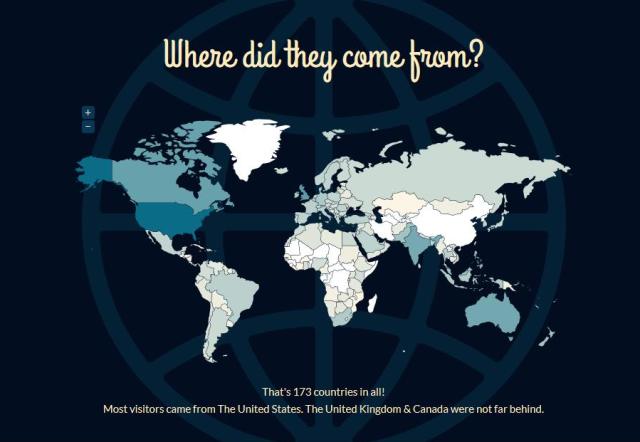
stats

***

Pat Bertram is the author of the suspense novels Light Bringer, More Deaths Than One, A Spark of Heavenly Fire, and Daughter Am I. Bertram is also the author of Grief: The Great Yearning, “an exquisite book, wrenching to read, and at the same time full of profound truths.” Connect with Pat on Google+

On-Page SEO and Keyword Usage

On-Page SEO and Keyword UsageI give my blog spam folder a quick look now and again to make sure that non-spam comments don’t get relegated to spam limbo. Sometimes the spam comments are totally absurd, such as this one: Nice tips. It is actually incomprehensible opinion now, but also from general, that usefulness in addition to significance is usually overwhelming. Thanks once again and all the best.

And then there was this one:

Hello Web Admin, I noticed that your On-Page SEO is is missing a few factors, for one you do not use all three H tags in your post, also I notice that you are not using bold or italics properly in your SEO optimization. On-Page SEO means more now than ever since the new Google update: Panda. No longer are backlinks and simply pinging or sending out a RSS feed the key to getting Google PageRank or Alexa Rankings. You now NEED On-Page SEO.

So what is good On-Page SEO? First your keyword must appear in the title. Then it must appear in the URL. You have to optimize your keyword and make sure that it has a nice keyword density of 3-5% in your article with relevant LSI (Latent Semantic Indexing). Then you should spread all H1, H2, H3 tags in your article. Your Keyword should appear in your first paragraph and in the last sentence of the page. You should have relevant usage of Bold and italics of your keyword. There should be one internal link to a page on your blog and you should have one image with an alt tag that has your keyword….

Considering that this was posted by someone trying to get me to subscribe to their Search Engine Optimization company, and considering that the comment actually made sense (or would, once I translated the jargon) and considering that my website domain provider has been trying to get me to buy SEO Visibility to the tune of $36.00 a month, I decided to research the topic a bit.

I started with “keyword.” Obviously, it’s the key word in the post or web page, but more than that, it’s a word or phrase people use when searching the internet. There’s no doubt that using the exact search terms adds to one’s search engine visibility. I often check the terms people use to find this blog, and then use those search terms as topics for articles. I made sure to use the search term in the article and in the title, since it stood to reason that if people were looking for such topics, I should make it as easy for them to find as possible. (A few of those articles are among my all-time most viewed posts: Describing a Scene in an Interesting Way, Describing a Winter Scene, and What Do You Say to Someone Who is Grieving at Christmas?) Apparently, although I didn’t know it, this was good On-Page SEO.

Luckily, I never had to worry about the keyword being in the URL — if the keyword is in the title of the article, WordPress automatically adds it to the URL of article. I used to try to write cute titles, such as Writing to the Extremes for a post about hands and feet (the extremeties), but not surprisingly, that post didn’t get many hits. So I try to keep the cuteness to minimum. (The key word here is “try.” Sometimes I let my attempts at cleverness get the better of me.)

Also, the title of the post uses H1 — Heading 1, so that fulfills one of the requirements for H1, H2, H3 tags. Since I try to follow good essay styling when writing, I generally include the keyword (the topic) in the first paragraph and then bring things full circle by referencing it in the last paragraph. I’m not going to worry about H2, H3, bold or italics in the body of my posts — I don’t want to lose the stream-of-consciousness flow that so many of my posts have by kowtowing to SEO.

I have recently begun to use an internal link in all my blog posts as a hedge against content scraping and plagiarism. And now it turns out to be good on-page SEO usage. I also use an image for each post, as suggested by WordPress in their articles about how to get Freshly Pressed, so now all I have to do is add the keyword to the alt tag. (When you upload an image, there is a place for Alt Text. I never knew what it meant, but apparently, if for any reason the image can’t be displayed, the alt text will be shown.)

Which brings us to the final point — Latent Semantic Indexing. Search engines have the capability to scan articles to see what they are about. A page with both the keyword and semantically related terms has a higher search enging ranking than one using only the keywords. (In this article SEO, search enging ranking, search engine visibility, and Search Engine Optimization are semantically related terms.)

Whew! All that research because of a spam comment! I learned something tonight, and I hope you did too. (Hmm. I might have learned something, but I didn’t follow through — there was nothing about SEO in the first paragraph, and until this sentence, nothing about SEO in the last paragraph. So perhaps this article is really about spam!)

***

Pat Bertram is the author of the suspense novels Light Bringer, More Deaths Than One, A Spark of Heavenly Fire, and Daughter Am I. Bertram is also the author of Grief: The Great Yearning, “an exquisite book, wrenching to read, and at the same time full of profound truths.” Connect with Pat on Google+

Is a Blog or a Website Better for Reaching Out to Readers?

http___patbertramA new author with little internet experience and no money recently asked me which he should set up, a website or a blog, and which was better for reaching out to readers.

As for which is better to reach out to readers, a blog is. A website is generally static. A blog is a fluid site that is updated frequently, and sites that are updated frequently get better exposure in search engines. Also, a blog is a place where author and reader can communicate instantaneously. It doesn’t always work that way, of course, because first you need readers to communicate with, but that also holds true for a website — generally, you need readers first. Just because you have a website doesn’t mean that anyone will see it.

I have a website (http://patbertram.com) but I seldom update it unless I have a new book available or other such news. It’s mostly there just to be there, a landing place for people who Google me or my books. I paid for the domain, but not much else — I even used a template to make it easier to set up. Still, it does exactly what I want it to do — let people know that I am an author, what books I’ve written, and where they can buy them.

This blog doesn’t have a domain name — I’m sticking with ptbertram.wordpress.com for now. Some people say it’s unprofessional, but it gives me what I need — a place to write about what comes to mind each day, a place to talk about what matters with those who follow this blog, and a place to promote my books. (In case you didn’t realize it, all the books on the right side bar are mine.) In fact, if I’m asked for a website when I comment on a post, I use this blog for a web address rather than my official author site. Not only does this blog show my books and bio, my posts reveal way more about me than my website does.

I recently found out I’ve been doing this website/blog stuff all wrong. (So feel free to disregard everything I’m saying.) Each of my blogs should be a subdomain of my website, so that combined they get a higher ranking than each separately, but then I would need to pay a yearly fee for a domain name for each blog, and I’d have to hire someone to set it up for me. If I ever become a world famous writer with sales in the millions, then perhaps it would be necessary to do things right, but for now, I’d rather just have fun playing with my blogs and letting the website take care of itself. Besides, this way I can do it all myself.

As for deciding which to set up, a blog or a website, that’s an easy choice to make. A blog is a website. If you set up a wordpress blog, pay for a personal domain name, and set up a static landing page, then you have both a website and a blog. http://lazarusbarnhill.wordpress.com and http://rubiconranch.wordpress.com are blogs set up as websites, though as you can see neither paid for their own domain name.

(To set up a static front page on your wordpress blog, write your post as always. Then go to “Visibility: Public” on the right hand side of the page, click on edit, and check “stick this post to the front page.” Then publish the post as always. If you want to set up an already published post as a sticky post, you can edit the post, edit the visibility, and then click “update”.)

As with everything else on the internet, setting up a blog or a website or both can be as easy or as involved as you want it. Me? I choose easy every time.

***

Pat Bertram is the author of the suspense novels Light Bringer, More Deaths Than One, A Spark of Heavenly Fire, and Daughter Am I. Bertram is also the author of Grief: The Great Yearning, “an exquisite book, wrenching to read, and at the same time full of profound truths.” Connect with Pat on Google+

Getting Freshly Pressed. “What? Like It’s Hard?”

A couple of nights ago I got an email from WordPress. The message said:

Hi there Pat Bertram,

Congrats! We’ve picked your post ( https://ptbertram.wordpress.com/2012/11/27/thirty-two-months-of-grief/ ) to appear on Freshly Pressed on the WordPress.com home page.

Thanks for sharing this — it’s simple, succinct, and quite touching. It will appear on Freshly Pressed in the next day or two, so get ready to welcome your new readers.

This line caught me in particFPular: “My emotions are on a slow Ferris wheel ride, usually sliding down into sadness on Saturdays, the day he died — a day that apparently is etched in my very psyche — and then a gradual climb to hope and possibility on Monday and Tuesday.”

FYI, I noticed a typo: “I find it impossible to pretend that this new experience of life alone is positive thing.” >> Add “a” before “positive”?

Thanks for making the internet a more interesting place!

–WordPress.com

***

I’ve been Freshly Pressed three other times: I Am a Three-Month Grief Survivor, I Am a Six-Month Grief Survivor, and A Perfect Grasp of Storytelling, so when I read the email, I chuckled to myself and thought, “What? Like it’s hard?” (Remember Reese Witherspoon’s line in Legally Blonde. Her ex-boyfriend says in amazement, “You got into Harvard Law?” and she responds, “What? Like it’s hard?”)

I don’t mean to be facetious, because getting Freshly Pressed is hard. There are a more than a million new posts every day from a half a million bloggers. Most people won’t get pressed once, let alone three or four times.

All four times, the honor came as a surprise, but the truth is, I had prepared for such an eventuality by following the guidelines in “So You Want To Be Freshly Pressed.” Until I read that article, I’d never used photos in my posts, but now taking the perfect photo to accompany my words has become an art in itself. I’ve always aimed for eye-catching headlines and typo-free text (oops, I missed one this time, but luckily they caught it), but I don’t always have a strong point of view. (I don’t much like contention.) Apparently, though, I’ve managed to strike the right chord with the WordPress editors four times, and you can, too. Just keep blogging, telling your truth, letting yourself be vulnerable, and your day will come.

***

Pat Bertram is the author of the conspiracy novels Light Bringer, More Deaths Than One, A Spark of Heavenly Fire, and Daughter Am I. Bertram is also the author of Grief: The Great Yearning, “an exquisite book, wrenching to read, and at the same time full of profound truths.” Connect with Pat on Google+

What Do You Do If Someone Posts an Insulting Comment on Your Blog?

I don’t often get negative comments on this blog.

For one thing, my posts tend not to be controversial — they’re more of a way of chronicling my journey through life and the writing life. It’s hard for someone to argue that I’m getting it wrong when I can’t get it wrong. I’m being me, and who can argue with that?

For another thing, my readers tend to be intelligent and kind, and they give thoughtful responses that add to the conversation instead of posting negative comments that bring the discussion to an abrupt end.

The other day, however, someone left an insulting comment on my article How Many Books Are Going to be Published in 2012? (Prepare for a Shock) that I didn’t know how to handle. That is not my favorite post by any means, in fact, it’s one of the few I wish I had never written. I’d only written the article as a way of trying to make sense of the current book climate and to show the meteoric increase in the number of books available, not to establish myself as any authority on the subject. And yet it’s become my most quoted article, and the one most frequently linked to.

It’s no wonder that an insulting remark landed on the post. Someone commented: “why would anyone bother to pay attention to a blog which starts off with uninteresting stuff about the author, and then gives data without a source? takes all types, I guess.”

I guess it does take all types. When I see an article that doesn’t lead up to the hype, I merely pass on by without stopping to leave a comment. But, for whatever reason, that person left a comment. I didn’t know whether to delete it or approve it. And if I posted it, I didn’t know whether to respond to it or ignore it. Admittedly, it’s not much of an insult, but it still put me in a quandary.

I asked my blogger friends on Facebook what they do in such a circumstance, and got a whole range of answers from “delete it” to “find where the person lives and go beat them up.” Some people thought that if it had merit or if it said more about the commenter than me, that I should post it but not respond. Some said that if it was a business blog, to delete the comment, that it wasn’t good to have snipers in your store.

The comment now seems innocuous, and the commenter has a point, why would anyone bother to pay attention to that particular blog post? (Though I did give a source, just not a link to the source.) Still, I left his remark in comment limbo until just a few minutes ago. I found the deciding factor in You and Your Blog Suck: 7 Steps to Responding to Negative Comments, a blog post by Marc Ensign. He said, “By deleting it you are telling your readers that they are welcome to say whatever they want as long as they agree with you. The only time I would consider deleting a post is if it was obscene or offensive to your readers.”

Since the comment under consideration is not obscene, not offensive to my readers, not even much of an insult, I took a deep breath and approved the comment.

So, what do you do if someone posts an insulting remark on your blog? Do you delete it or do you approve it so posts where everyone can see it? If you post it, do you answer it or ignore it?

***

Pat Bertram is the author of the conspiracy novels Light Bringer, More Deaths Than One, A Spark of Heavenly Fire, and Daughter Am I. Bertram is also the author of Grief: The Great Yearning, “an exquisite book, wrenching to read, and at the same time full of profound truths.” Connect with Pat on Google+

The Next Big Thing

A couple of months ago, Malcolm R. Campbell, author of “The Sun Singer” and “Sarabande”, invited me to participate in a blog chain, where everyone who is tagged answers a few questions about their work in progess, their next big thing. Since then, I have been asked to participate by Sheila Deeth and Dellani Oakes, and I was tagged by Emma McCoy  and Rami Ungar.
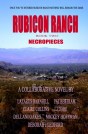
I’m not really working on anything of my own right now. I have a half-finished novel in hiatus, disjointed chapters of another novel (my attempt at doing NaNoWriMo a couple of years ago), and a short story I intended to finish this month but keep forgetting about. So, I’ve chosen to talk about Rubicon Ranch, a serial I’m writing with several other Second Wind authors. The first book in the series, Rubicon Ranch: Riley’s Story is available online or as a free download in the format of your choice. Currently, we are working on the second book in the series, and when this book is finished, we will continue with the serial in the hopes that one day it really will be the next big thing.

What is your working title of your book?

Rubicon Ranch: Necropieces

Where did the idea come from for the book?

This is a continuation of the Rubicon Ranch serial. It was conceived as a blog promotion, and it captured the imagination of several Second Wind authors. We each created a character and have sole creative control of that character, which makes the serial seem like a cross between a novel and a role playing game.

What genre does your book fall under?

Mystery, suspense, thriller. Take your pick.

Which actors would you choose to play your characters in a movie rendition?

My character is a forty-something widow, five feet five inches tall, grey eyes, brown hair, fit, oval face, flawless skin. Does that sound like anyone you know? If not, I’d choose any famous actress to play the part to make sure the movie was a success.

What is a brief synopsis of your book?

Residents of Rubicon Ranch are finding body parts scattered all over the desert. Who was the victim and why did someone want him so very dead? Everyone in this upscale housing development is hiding something. Everyone has an agenda. Everyone’s life will be different after they have encountered the Rubicon. Rubicon Ranch, that is.

Will your book be self-published or represented by an agency?

It will be published by Second Wind Publishing since they are the ones sponsoring the project.

How long did it take you to write the first draft of your manuscript?

We’ve been working on the current Rubicon Ranch story about eight months, and it’s not yet finished. You can find the work in progress here: Rubicon Ranch: Necropieces

What other books would you compare this story to within your genre?

I don’t know of any other book like this. It’s written by eight different authors, each taking a turn to write their chapter. We are writing blind — no outline, no idea of who is the killer, and we won’t know until the end. The authors are all presenting their character as a villain, and at the end, we will decide which one did it.

Who or what inspired you to write this book?

I did a round robin with a writers group, where someone started a story, and each writer took a turn at continuing the story. So many of the authors seemed to sabotage the story and other characters by introducing ridiculous elements, that I wondered what would happen if there was a bit more control, where one author could not sabotage another’s efforts. And so Rubicon Ranch was born.

What else about your book might pique the reader’s interest?

You can sign up on the Rubicon Ranch blog to receive notification of new chapters of Rubicon Ranch: Necropieces as they are posted, or you can check back every week. Things are heating up, and each character’s secrets are being revealed. I hope you will stop by Rubicon Ranch and join the fun! Several wonderful Second Wind authors are involved in the project: Dellani Oakes, Deborah J Ledford, Lazarus Barnhill, Mickey Hoffman, JJ Dare, Claire Collins. And me, of course.

Several gallant bloggers have agreed to continue with this blog chain. During the week of December 3rd, look for The Next Big Thing blog posts by Joylene Nowell Butler, A.F. Stewart, Sherri Hansen, Jerold Last, and A. J. Race.  It should be interesting to find out what everyone is working on!

***

Pat Bertram is the author of the conspiracy novels Light Bringer, More Deaths Than One, A Spark of Heavenly Fire, and Daughter Am I. Bertram is also the author of Grief: The Great Yearning, “an exquisite book, wrenching to read, and at the same time full of profound truths.” Connect with Pat on Google+

Promoting Other Authors

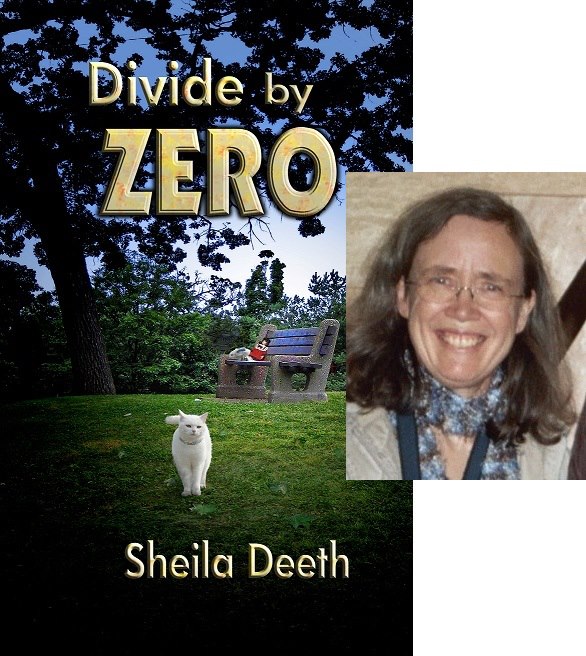
Author, blogger, reviewer Sheila Deeth, interviewed me for her blog, and here is one of the questions she asked, followed by my response:

You are always such an encouragement to other writers, posting excerpts, interviews, character interviews, offering advice, sharing experiences. . . . What do you think drives your generosity?

I don’t consider such online activities as generosity, just part of the internet experience. I never quite knew what to do on Facebook, for example — I don’t like games or sharing cute animal photos or any of the other things that clog the news feed — so I built up a couple of discussion groups. It gave me a way of interacting with people and besides, I love talking about the whole writing process. As for the interviews and such. Well, that was a fluke. My personal blog is blue, but I figured out how to change the color, so just for fun, I did an orange blog, a green one, a red one, a purple one, and then I had to figure out what to do with all of them. A book blog and an interview blog seemed the obvious use for two of them since I came in contact with so many authors. The interview blog especially has a fairly good rating, and it seems a waste if I don’t have an interview to post, so I keep promoting it.

In the back of my mind, I hoped that all the author karma I’m building up would somehow help catapult my books to stardom, but so far, it hasn’t happened. But that was never the point of promoting authors on my blogs. As I said, that was mostly a fluke.

(You can find the rest of the interview here: My thanks to author Pat Bertram)

That is only part of why I promote other authors on my blogs. The truth is even less altruistic than I made it sound. I’ve had those two author blogs for several years and just posted sporadically until a couple of years ago. After the death of my life mate/soul mate, I got addicted to a few of the games on my computer — Spider Solitaire, Mahjong Titans, and FreeCell. I so desperately needed for something to work out, I kept playing the games over and over until I won. I couldn’t redo my life, so there was some sort of comfort in redoing something — anything — until it came out right. And the games were a way of taking a vacation from the pain that all but consumed me at times.

When I realized how obsessed I had become, I decided to go cold turkey and give up the games, but I still needed something to do to break the hold of grief when it got too much for me to handle, so I substituted blogging — posting excerpts and author interviews to promote other authors in addition to daily blogging here on Bertram’s Blog. I figured that at least I would be doing some good with my online activities, which is something that cannot be said about computer games.

As for why I keep up with promoting other authors now that my grief is dissipating . . . well, it’s the right thing to do. If you want me to interview you, you can find the questions and instructions here: Author Questionnaire

***

Pat Bertram is the author of the conspiracy novels Light Bringer, More Deaths Than One, A Spark of Heavenly Fire, and Daughter Am I. Bertram is also the author of Grief: The Great Yearning, “an exquisite book, wrenching to read, and at the same time full of profound truths.” Connect with Pat on Google+
Love, Truth, Purpose, Freedom

Linda Bonney Olin interviewed me for her blog the other day, and the interview turned out to be special, at least for me, because it made me realize what my values are and how those values find a place in my books.

Linda asked me: Why did you choose to write A Spark of Heavenly Fire?

I responded: “A Spark of Heavenly Fire came about because of a Washington Irving quote: ‘There is in every true woman’s heart a spark of heavenly fire, which lies dormant in the broad daylight of prosperity; but which kindles up, and beams and blazes in the dark hour of adversity.’ When I read those words, I could see her, a drab woman, defeated by life, dragging herself through her days in the normal world, but in an abnormal world of strife and danger, she would come alive and inspire others. And so Kate Cummings, the hero of my novel A Spark of Heavenly Fire was born. But born into what world?

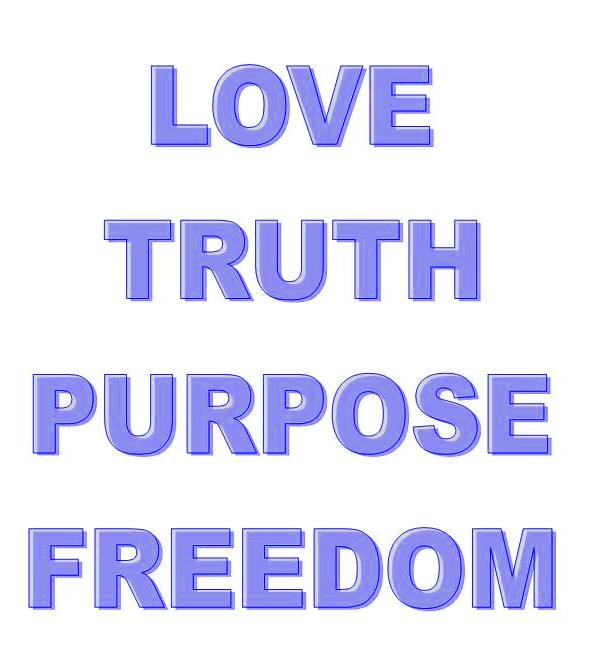
“I didn’t want to write a book about war, which is a common setting for such a character-driven story, so I created the red death, an unstoppable, bio-engineered disease that ravages Colorado. Martial law is declared, rationing is put into effect, and the entire state is quarantined. The world of the red death brings out the best in Kate and some of the characters she comes in contact with while bringing out the worst in others. Most of all, the prism of death and survival reflects what each of the major characters values most. Kate values love. Dee values purpose. Greg values truth. Jeremy values freedom. Pippi, who values nothing, learns to value herself.”

Next Linda asked if my fiction reflected my personal values, and I realized that of course my fiction (and non-fiction) reflects my values. Like Kate, I value love. Like Dee, I value purpose. Like Greg, I value truth. Like Jeremy, I value freedom. Like Pippi, I am learning to value myself. (You can read the entire interview here: Love, Truth, Purpose, Freedom: Pat Bertram.)

More than those qualities, though, I value kindness, and an innate kindness permeates all of my books despite the horrors the characters have to contend with. Though my heroes all have a love interest that helps form the story, none of my books can be classified as romances. The romance angle is not the main focus, and the romance is never conflicted. My couples in love treat each other kindly, showing a united front against the horrors of their world. For the most part, that’s the way I lived, so my characters can do no less.

***

If you would like to interview me, please let me know. I don’t usually open up this way, preferring to interview others, but turnabout is fair play. You can supply the questions, or I can, whichever you wish.

If you would like me to interview you instead, you can find the questions and instructions here: Author Questionnaire.

***

Pat Bertram is the author of the conspiracy novels Light Bringer, More Deaths Than One, A Spark of Heavenly Fire, and Daughter Am I. Bertram is also the author of Grief: The Great Yearning, “an exquisite book, wrenching to read, and at the same time full of profound truths.” Connect with Pat on Google+