A Great Blog to Check Out

Recently there have been some fascinating articles posted on the Second Wind Publishing blog that are worth checking out. All the articles on the blog are great, of course. These are just the most current ones.

grayblognewreleases copy

The Importance of Locations by Deborah J Ledford. Deborah describes the wonder of her childhood summers spent in North Carolina, and how they have colored her writing.

Spring by S.M. Senden. Sue talks about the importance of spring cleaning, cleaning out the old, clearing out closets as well as old notions that no longer work, in order to make room for the new.

Air Travel in the 1950′s, a kid’s memory by Juliet Waldron. A fascinating look back at the way air travel used to be. This was of particular interest to me, considering my recent flight via “Sardine Airlines.”

The Day of the Trickster by J J Dare. J J muses on the origins of the April Fool, postulating that perhaps it originated in the old days of Rome. As she said, “these guys and their mythological gods loved to party.”

Headed for adventure by Nichole R Bennett. Nichole tells us about the life of an active-duty military couple. But now she and her husband are headed for adventure by themselves.

Peaches Peppers & Pork Chops by Ginger King. Who would have thought that peaches, peppers, and pork chops would have made a good combination? Ginger King, that’s who! Sounds like a great recipe. I’ll have to try it some day.

Writing a Collaborative Mystery Serial — by Pat Bertram. I wasn’t going to include this since it’s a reprint of an article I did for this blog, but I am proud of our collaborative efforts and the authors who are participating, and couldn’t bypass the opportunity to shout about it.

rangel

Deborah J Ledford, S.M. Senden, Juliet Waldron, J J Dare, Nichole R Bennett, Ginger King, and Pat Bertram all have books published by Second Wind.

***

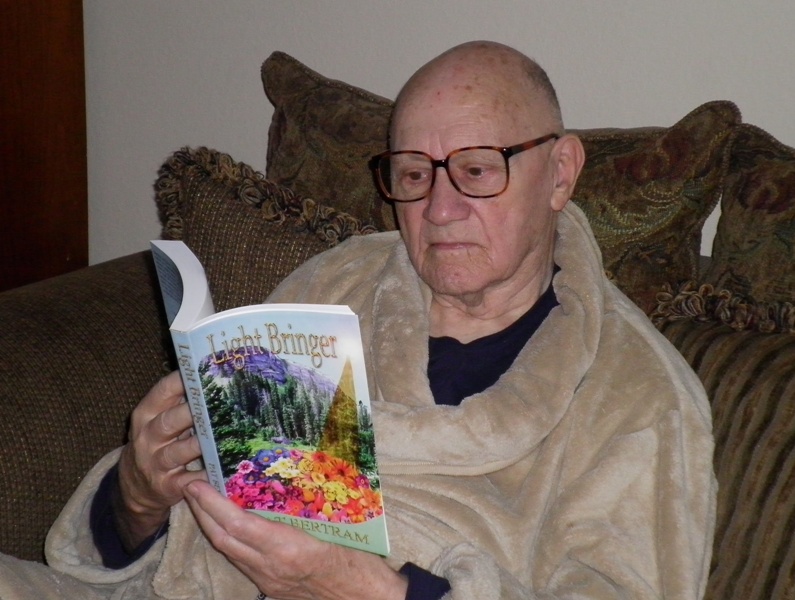
Pat Bertram is the author of the suspense novels Light Bringer, More Deaths Than One, A Spark of Heavenly Fire, and Daughter Am I. Bertram is also the author of Grief: The Great Yearning, “an exquisite book, wrenching to read, and at the same time full of profound truths.” All Bertram’s books are published by Second Wind Publishing. Connect with Pat on Google+

Writing a Collaborative Mystery Serial

I’m collaborating with several other Second Wind Publishing authors to write a series of mystery novels online. We are posting the chapters on a blog so everyone who wants to can follow the serial as we write it. Actually, collaboration is a bit of an over-statement. Rubicon Ranch is more of a cross between a role-playing game and round robin or campfire tale, with each of us authors taking turns adding to the story without knowing where we are going except toward the solution of the murder. We each create and control a POV character, show who s/he is, what relationship s/he has with the deceased, and why s/he might want the victim dead.

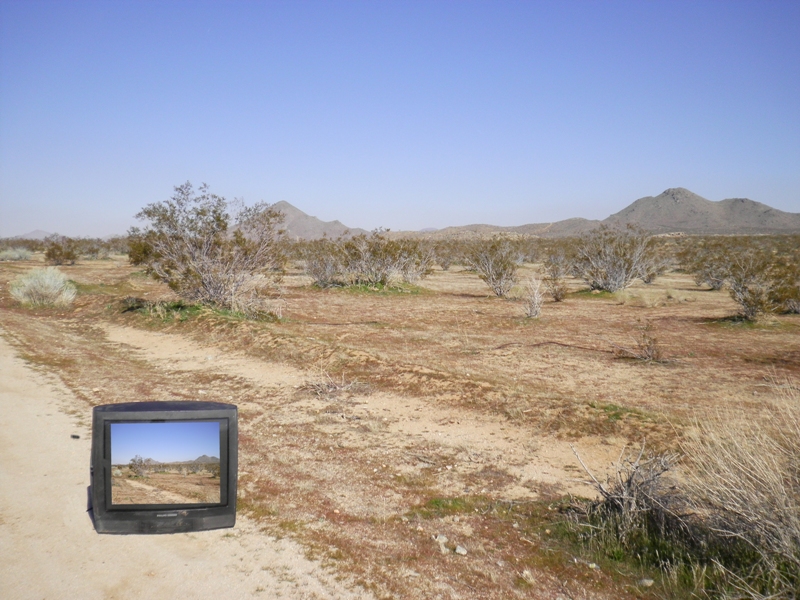
I have it easy — my character, Melanie Gray, is a photographer/writer who wanders the desert taking photos for the coffee table books she used to write with her dead husband. (He wasn’t dead when they were working together, of course.) He died in a one-car accident while texting his mistress, though there are suspicious circumstances leading investigators to think that perhaps he was killed. Melanie has a talent for finding strange things in the desert, such as the child’s body stuffed in an abandoned television console in the first book, Rubicon Ranch: Riley’s Story, and the scattered body parts that were found in the second book, Rubicon Ranch: Necropieces. Her presence at these crime scenes is all that leads the sheriff to suspect her, though I do try to add a bit of intrigue to make it seem as if she could be guilty.

The other authors, however, have to simultaneously prove that their characters are the murderer, yet also have a plausible explanation for why the characters acted guilty if they weren’t the murderer. (That’s because we don’t know whodunit until all the end of the book. So not only do readers of the ongoing story not know who the villain is, neither do we.)

In the first book, the authors solved the problem of simultaneously setting their characters up to be murderers while allowing for the possibility that they were innocent by giving their characters strange characteristics, such as sleepwalking, to keep the characters themselves from knowing if they were the killer.

In the second book, there was no way the killer could be unaware of having killed the victim. Even if by chance the character killed in some sort of fugue state, the character was still faced with a dead body, which he or she cut in small pieces and distributed around the area. The authors created some wonderfully devious characters with strong motives for killing the evil man who damaged them for no reason other than because he could. Any of them could be the murderer. And any of them could simply be innocent (or not so innocent) red herrings.

We are through with the second book and are in the process of organizing the third installment of the series. In this one, Melanie won’t find a body in the desert since understandably she’s a bit leery of walking in such a deadly place, so she will have to find it elsewhere, perhaps beneath the wheels of a blow up figure of a Santa Claus on a motorcycle.

We have a victim — a real estate agent, the same one who found the disembodied head of the victim of the second book inside the house where the victim of the first book once lived. Apparently she likes to snoop, and since so many residents of Rubicon Ranch have a secret they are willing to kill to protect, it sounds like the potential for a lot of mayhem!

I’m looking forward to seeing what the other authors come up with. I hope you will follow along with us as we continue this innovative crime serial.

Meantime, if you haven’t checked out Rubicon Ranch, and wish do so, click here: Rubicon Ranch.

***

Pat Bertram is the author of the suspense novels Light Bringer, More Deaths Than One, A Spark of Heavenly Fire, and Daughter Am I. Bertram is also the author of Grief: The Great Yearning, “an exquisite book, wrenching to read, and at the same time full of profound truths.” Connect with Pat on Google+

Finding My Place in the Publishing World

UntitledpI’ve been reading promotional materials (again!) looking for ways to increase book sales, and one of the articles, in a rehash of the idea of positive thinking, said that if you’re not satisfied with the way your writing career is going, don’t ever let it be known but speak and act as if you were a bestselling author.

In other words, don’t ever let people know the truth, and that goes against the spirit of this blog. I suppose it isn’t smart of me to talk about my struggles to find my place in the publishing world because it probably does show me in a negative light. In fact, one friend emailed me and said, “If you want to stop writing and pity yourself because you think you are a failed author, go ahead. That’s your choice.”

Regardless of how I come across, I am not negative or pessimistic. I have every intention of making my living as a writer, and if I thought claiming I were a bestselling author would get me there, I’d do it. Or maybe not. There are so many authors out there claiming to be more than they are that the world doesn’t need another one.

Despite the contention of my friend, I do not consider myself a failed author. In fact, I am a successful author. I’ve written five books that I’m proud of and that many people love. I just haven’t been able to turn them into financial successes yet.

I see myself on a writer’s journey, though I admit I’m going through a crisis of faith, struggling to find reasons to write. (I’m also struggling to find reasons to live, but that doesn’t make me a failed human being.) For some writers, writing is their reason for living, but although that isn’t my reason for living (I am not compelled to write; it’s something I choose to do), I have a hunch that my reason for living is tied up somehow with my reason for writing. (Writing fiction, that is. I do write every day for this blog, partly for the discipline of it and partly to help me figure out my place in the world, the world of grief, and the publishing world.)

I began writing fiction more than a decade ago as a means of bringing my dying life mate/soul mate in close. Someone who is dying drifts away until finally he begins to disconnect himself totally from life, and I couldn’t bear to let the disconnect from me happen sooner than it needed to. For several years, until he drifted too far away, I wrote at night, then read the passages to him in the morning, and he’d let me know if I nailed the scene, usually with a small, impish smile. If I didn’t get a passage quite right, I didn’t get a smile, but I got help figuring out where I went wrong.

That’s why I used to write — to see his smile. And that’s why writing has become such an angst-ridden subject for me. My reason for writing died when he did.

A friend (the same friend mentioned above now that I think of it) once sent me a snippet of a poem:

A voice calls, “Write, write!”
I say, “For whom shall I write.”
And the voice replies,
“For the dead whom thou didst love.”

—John Berryman

Maybe someday writing for the dead whom I didst love will be reason enough to write, but for now, I’m still searching for my place in the world and the publishing world. And if the search — or my angst — comes across as negative, so be it. Besides, when I start acting as if I am a bestselling writer, I want it to be for real.

***

Pat Bertram is the author of the suspense novels Light Bringer, More Deaths Than One, A Spark of Heavenly Fire, and Daughter Am I. Bertram is also the author of Grief: The Great Yearning, “an exquisite book, wrenching to read, and at the same time full of profound truths.” Connect with Pat on Google+

Grief and Lingering Feelings of Resentment

Desert CactusDuring the past three years, I have chronicled my journey through grief, trying to make sense of the myriad emotional and physical stresses one has to deal with after a major loss, such as the death of one’s child or life mate/soul mate. I’ve explained that grief is not the simple and almost clinical state that Kübler-Ross’s five (or seven) stages of grief seems to indicate. Instead, there seems to be an infinite shading of emotion in the process we call grief.

Some of us do feel shock, denial, anger, guilt, sadness, depression, and acceptance, but most of us also feel anxiety, frustration, loneliness, confusion, despair, helplessness, panic, questioning (both as a need to know why and as a cry of pain), loss or gain of faith, loss of identity, loss of self-esteem, resentment, bitterness, isolation, inability to focus, suspended animation, waiting for we know not what, envy of those who are still coupled or who have yet to suffer a loss. And we suffer myriad physical symptoms such as queasiness, dizziness, sleep problems (too much or too little), eating problems (too much or too little), bone-deep pain, inability at times to breath or swallow, exhaustion, lack of energy, restlessness, and seemingly endless bouts of tears.

Except for sadness, I thought I’d pretty much dealt with most of grief’s effects, but recently I’ve become aware of lingering feelings of resentment. I’m mostly over the resentment of those who are still coupled, with only an occasional twinge of self-pity when I see couples out walking together, and I thought I’d come to terms with my resentment of his long illness and his leaving me here to deal with grief alone, but apparently a pool of resentment still lies deep within.

I am thin-skinned, taking offense at things that were not meant to be offensive, feeling hard done by when things do not turn out my way, railing against real or imagined unfairness. Of course, we all feel this way at times, but grief seems to take minor faults and magnifies them into major stumbling blocks. The death of the one person who connected us to life also makes us (well, me anyway) feel as if life should be granting us special privileges to make up for that great loss, but life doesn’t work that way.

I’m not proud of this resentment, but there it is. The good thing is that grief’s effects are now mostly making themselves known one at a time rather than all at once in a horrifying and cloudy kaleidoscope of feelings so that I can pay attention to the resentment, and perhaps get beyond this stage to a more even-tempered state.

***

Pat Bertram is the author of the suspense novels Light Bringer, More Deaths Than One, A Spark of Heavenly Fire, and Daughter Am I. Bertram is also the author of Grief: The Great Yearning, “an exquisite book, wrenching to read, and at the same time full of profound truths.” Connect with Pat on Google+

Is Blogging Dead? Do You Care?

RIPLately I’ve been seeing a lot of articles that talk about blogging being dead. These are blog articles, mind you, which seems to prove the point that blogging is not dead. I don’t even know what that means: “blogging is dead.” I have a hunch it refers to long form blogging, since Twittering and Facebook status updating are short form blogging, and posting photos or videos is visual blogging. Maintaining a web log is all about making a presence on the internet, keeping a record of one’s progress or ideas or everyday life. The form the log takes is constantly changing, but the need people have to tell the world “I am here and I matter” will always find a voice.

People do seem to be losing interest in reading long form blogs. Supposedly they don’t have the attention span it takes to read five hundred or so words. Supposedly they prefer snippets of information they can scan, photos they can glance at, videos they can watch, especially if those posts are funny. The sort of thing that goes viral is not a lengthy dissertation on why blogging is dead but a short video of cats trying to figure out the meaning of a treadmill, or a humorous caption on a photo of a singing dog.

Me? I have no interest in such things. I don’t like videos — it’s much easier for me to scan an article to pick out the salient points than to watch one or two people discussing something for five minutes only to find the relevant issue buried in bantering, small talk, or hype. I don’t particularly like photos, either, partly because I am verbally rather than visually oriented, and partly because . . . (dare I admit it?) . . . I have no interest in sappy pet photos or photos of people I don’t know doing things I don’t care about.

Perhaps the sky-is-falling attitude about blogging stems from the way mobile devices are changing how people connect with others and the internet. It’s easier on a phone to send in a tweet or a comment on a Facebook status than to write a blog or even to leave a comment on a blog. (Or so people say. The only web-related activity I do on my phone is checking my email, and I want to get out of the habit of doing that.)

I started blogging as a way of promoting my books, and even after I found out how little effect blogging has on my sales, I continued. For me, blogging is a discipline, a way of writing when I don’t have the focus to write a novel, a means of helping me think. It’s possible I’d get more views if I posted silly photos, but views are not all I want. I tend to be a thinker (or maybe “brooder” would be a better description) with a need to talk about the important issues of life and death and finding a place in the world, a need to connect with people on a deeper, truer, and more fundamental way than the simple exchanges that usually take place online. And often, I do find that here in my own corner of the blogosphere.

So, is blogging dead? I don’t know, and I don’t particularly care (as long as WordPress is around, that is. If WordPress becomes defunct, then blogging really would be dead). What’s important to me is that this blog is very much alive, that it continues to satisfy my need for expression, and that sometimes people respond to what I have to say.

***

Pat Bertram is the author of the suspense novels Light Bringer, More Deaths Than One, A Spark of Heavenly Fire, and Daughter Am I. Bertram is also the author of Grief: The Great Yearning, “an exquisite book, wrenching to read, and at the same time full of profound truths.” Connect with Pat on Google+

Are Book Trailers a Good Idea?

rainbowSomeone asked me for advice on how to get people to see his book trailer and then called me negative when I explained how difficult it would be. I admit I’m burned out when it comes to promotion. I’ve spent the past five years researching book promotion in all its many facets, tried hundreds of different things, and I still don’t know how to turn a sleepy seller into a best seller, though I know a lot about what doesn’t work, or at least what doesn’t work for me. Other people do the same sorts of things I’ve been doing and find a pot of gold at the end of the promotion rainbow, but I’m still searching for the rainbow.

Book promotion is a lot like the house that Jack built. You have a book you want to sell, so you create a video trailer to promote it. Then you have to promote the video that promotes the book you want to sell. Then, you join Facebook to get more viewers for your video, so now you have to promote your FB page that promotes the video that promotes the book you want to sell. And on and on and on.

Some people can just throw a book out there and make a fortune on Amazon, but the rest of us have to promote. Have to find a way to get people interested in us and then in our books. As I said in What Works When It Comes to Book Promotion?, the first authors to blog or use the various social networking sites to promote their books found a strong readership, but now all of those means of promotion are so common that they are simply an expected part of being an author.

It’s the same with book trailers. The first people who created book trailers to promote their books did well, but now video promos are just an expected part of being an author. Even if the video is great, the problem is getting people to see the video.

Sometimes people will stumble across a book trailer when they are surfing Utube, but it’s not as if people by the thousands will be searching for his book trailer. I wanted to hear Madonna’s “Playground” the other day, so I used the search function to find it since I knew what I wanted to listen to, but what if I didn’t know there was a song out there I’d like to hear? How do I find it?

The problem is, you have to promote the book trailer as assiduously as you promote the book. If I knew how to get people to see his trailers, I’d be good enough at promotion that I’d be selling millions of books.

Still, book trailers are a good idea, and the better they are made, the better they will do. I don’t want to discourage him from making his video because . . . who knows? His might catch people’s attention and go viral. At the very least, it will give him something other than the book itself to promote.

***

Pat Bertram is the author of the suspense novels Light Bringer, More Deaths Than One, A Spark of Heavenly Fire, and Daughter Am I. Bertram is also the author of Grief: The Great Yearning, “an exquisite book, wrenching to read, and at the same time full of profound truths.” Connect with Pat on Google+

Great Blog Resources for Writers

There are some phenomenal blogs and resources for writers that can help you take your writing to a more polished, compelling, or profound level. These are just a few of the links I have collected over the years:

Ageless Wisdom & The Hero’s Journey lists the mythic and archetypal principles embedded in the structure of stories, along with the twelve stages of the hero’s journey. You don’t have to write fantasy to use such mythic elements. My contemporary novel, Daughter Am I, was written with these principles in mind.

The Editor’s Blog is the best resource for new writers who wish to learn the basics of writing and the best resource for experienced writers who wish to polish their work into a perfect gem. Whatever you want to know — hooking a reader, dialogue, action, conflict, editing — you will find great advice from freelance fiction editor Beth Hill.

The Bookshelf Muse has various fascinating thesauruses, such as the Emotional Thesaurus to help you show your characters emotions, Physical Attribute Thesaurus, Character Traits Thesaurus, Weather & Earthly Phenomena Thesaurus, Color, Textures and Shapes Thesaurus, Setting Thesaurus, and the Symbolism Thesaurus. (These are listed on the right sidebar.)

Guide to Grammar and Writing takes the mystery out of grammatical issues and English usage

Cliched, Overdone, or Boring Plotlines helps you find out if your brilliant idea really is as really as fantastic as you think it is, or if it is merely a rehash of a story that has been done a hundred times before.

100 Best First Lines from Novels might help you figure out how to write a first line that is every bit as compelling as those listed.

The Food Timeline helps you keep track of what foods your characters might be eating, especially if you write historical fiction.

Book Marketing Floozy is an indexed blog of sixty-five different articles by various writers about book promotion.

***

Pat Bertram is the author of the suspense novels Light Bringer, More Deaths Than One, A Spark of Heavenly Fire, and Daughter Am I. Bertram is also the author of Grief: The Great Yearning, “an exquisite book, wrenching to read, and at the same time full of profound truths.” Connect with Pat on Google+

Bloody Valentine Blog Hop

A. F. Stewart is hosting this blog hop to celebratate heartbreak, love gone wrong, romantic mayhem and tragedy, hopefully with that little splash of humour and blood. There is no blood in the following short story of mine, but there is plenty of hearbreak in only 100 words.

The Kiss (100-Word Story) by Pat Bertram

When Jack entered her flower shop, all Jen could do was stare. It had been years since she’d seen him, years she’d spent regretting their final quarrel, yet she still felt the same attraction. His heavy-lidded gaze told her he felt it, too.

He held out a hand, and she let him draw her close for a kiss that spanned the years. She snuggled into his embrace. Everything would be perfect now that they were together again.

“How did you know I was here?” she asked.

“I didn’t. I just came in to buy flowers.”

“For me?”

“For my wife.”

***

“The Kiss” and five more of my 100-word stories were published in the Second Wind Publishing anthology Love is on the Wind, which you can download free from Kindle or Smashwords today.

I hope you will check out these other blogs participating in today’s Bloody Valentine Blog Hop. There should be plenty of mayhem to satisfy your both your romantic and unromantic desires.

Valentine Logo

A Diamond In The Dark

GetYourBookNoticed

A Bloody Kind of Lust

Keith Pyeatts Horror with Heart Blog

Musings of Papa Zen

The Cult of Me

Bestiary Parlor: The Musings of a Zoologist

Sheila Deeth’s Blog

Ash Kraftons Demimonde

GMTA UK

Yours in Storytelling

Author JCooper

Laughing for a Living

Lift You Up

Spoiler Princess

The Curse Books

Worldbinding

Pagan Spirits book blog

Random Babble

Exile on Peachtree Street

A. F. Stewarts Blog

Celebrating the Sweet and Sour Sides of Valentine’s Day

This Valentine’s Day, Second Wind Publishing is celebrating romance with an ebook giveaway. If you have not yet shot cupid’s arrow to get your romance ebook in the ebook format of your choice, click on the target and it will take you to the game where they will give you what you want this Valentine’s day — romance, tender sentiments, and true love. The rules are simple, and everyone wins!

valentine

If you’re expecting to win one of my books, though, I’m sorry to disappoint you. Although each of my novels has romantic elements, none of them are romances. More people tend to die in my books than fall in love, which is why tomorrow I will be participating in A. F. Stewart‘s Bloody Valentine Blog Hop to celebratate heartbreak, love gone wrong, romantic mayhem and tragedy, hopefully with that little splash of humour and blood.

Valentine Logo

I hope to see you at one of these events!

***

Pat Bertram is the author of the suspense novels Light Bringer, More Deaths Than One, A Spark of Heavenly Fire, and Daughter Am I. Bertram is also the author of Grief: The Great Yearning, “an exquisite book, wrenching to read, and at the same time full of profound truths.” Connect with Pat on Google+

What Works When It Comes to Book Promotion?

lbmugA new author asked me if I ever found a series of steps to take that have at least a small chance of working when it comes to book promotion.

That is a very good question, one I have been pondering for a long time. I have been doing various promos online for more than five years (I started with my blog in September 2007), and I don’t sell very many books, though my publisher assures me that ultimately I will sell many thousands of copies of each of my titles. I have come to the conclusion that promotion is what we do until luck finds us. If you don’t write erotic romances, horrifyingly violent thrillers, or vampire stories (or whatever the current fad is) that can catapult you into bestsellerdom, you will need luck to get your book discovered.  Many authors who have found success will tell you they did it on their own through hard work, but almost every time, a bit of luck played into the equation. And it’s always possible to get discovered — the media (which includes online and offline means of communication) has a fickle and roving eye, and it’s anyone’s guess where that glittering gaze will fall.

It used to be that you could do giveaways and contests to get attention, but there are tens of thousands of books being given away every day, so it’s almost as hard to give a book away now as it once was to sell it. And unless a contest somehow captures the imagination of people, they will pass on taking a chance (even if it’s a sure thing that they will win something) because they are inundated with hundreds of such promos every day.

It used to be that blogging would bring you a readership, but now blogging is so common that it is simply an expected part of being an author. Blogging can be a satisfactory and fulfilling means of writing and communicating, and it does help to create an online presence, but by itself blogging doesn’t sell books.

It used to be that MySpace was a good way to find a readership — the first authors who promoted on MySpace became instant successes, but when other authors signed up for the site by the thousands, hoping for similar results, no one paid attention to them.

It used to be that Facebook was the best place to find and connect with readers. The first authors who used Facebook to promote made a fortune. One guy became a best selling author by maxing out Facebook accounts (5000 friends is all you are allowed, so he had several accounts), and he will sell you a book telling you how he did it, but recently it came out that he also paid for reviews, so who knows what the truth of his success is. One thing I do know is that most authors are not selling tons of books via Facebook because Facebook continually changes their algorithms to keep that from happening. Where once I’d get hundreds of people seeing what I posted, I get maybe thirty now if I’m lucky. And of that thirty, maybe one or two respond. (Respond to the post, I mean.)

The first authors on Twitter, Pinterest, and all the other sites also made a name for themselves, but the rest of us? Not so much.

As for offline: authors who do book signings and festivals and such do well to a certain extent, but you have to be careful — I know several authors who sold thousands of books that way, but when it came time to figure out profits and losses, it turns out they didn’t make enough to pay for all their expenses. They’d have been better off just standing on a busy corner and giving the books away.

So, what do you do until luck comes calling? The best advice I can give you is to do three things to promote every day. It can be something as simple as signing up for Facebook if you haven’t already done so, adding a few friends if you have signed up, posting a photo on the site, or commenting on someone else’s photo. You could do a blog post on your blog or ask someone if they will let you be a guest on their blog. You can comment on the posts of other bloggers so that everyone who reads those posts will also read your words. You could sign up for Twitter, Pinterest, LinkedIn or any of the other currently popular social networking sites.

You can get bookmarks printed up with your book cover, a brief blurb, and an online address or website where people can contact you or buy your books, then pass the bookmarks out to everyone you see. You can get business cards printed up with your book cover on the front side and information on the back where they can find you and your book. You can get addicted to Vistaprint — once you are on their emailing list, you will receive sales notices, and over time you can get all sorts of great stuff such as t-shirts and mugs, stickers and posters, for free or for a nominal fee. Then give those out or offer them as incentives for people to buy your books.

You can do book signings and other events such as fairs, festivals, and craft shows. You can offer your services as a speaker.

The best promotion is one that captures people’s imaginations, so maybe one of your promos for the day could be nothing more than brainstorming with someone to come up with a totally unique idea. Or you can check out my Book Marketing Floozy blog for tips from other authors. Book Marketing Floozy is an indexed blog of sixty-five different articles by various authors about book marketing.

I don’t think it really matters what you do. Just do three things to promote your book every day.

My final suggestion — keep writing. The more books you have, the greater the chance of having sales snowball, but you also have to keep improving your craft. Just throwing out any old thing in the hopes of making it big won’t help you stand out from the crowd.

And that’s all promotion is — trying to find a way to stand out from the crowd.

***

Pat Bertram is the author of the suspense novels Light Bringer, More Deaths Than One, A Spark of Heavenly Fire, and Daughter Am I. Bertram is also the author of Grief: The Great Yearning, “an exquisite book, wrenching to read, and at the same time full of profound truths.” Connect with Pat on Google+