The Internet is My Tranquilizer

I read an amusing, beautiful, and wise article on Malcolm’s Round Table yesterday: The Internet is Drugs.

Malcolm R. Campbell wrote: As I sit here in the sunny kitchen of my father-in-law’s farmhouse, I’m going through withdrawal because the Internet does not exist here. On a typical morning, I would have checked e-mail (pot), looked at several news screens (cocaine) and read everything in my Facebook (meth) news feed.

My Facebook status would be a no-brainer: blitzed, spaced out, and higher than the summit of Mount Everest. I recall those old, fried-egg-in-a-skillet public service announcements: This is your brain. This is your brain on drugs. Any questions? [Click here to read the rest of the article.]

Malcolm makes the very good point that on the internet, everything is instant gratification, whereas on the farm, everything moves slower, can’t move at the speed of light from one location to another, can’t give you the drug-like gratification one gets from the internet.

For me, the internet is a tranquilizer. It’s a quiet place (since the sound on my computer is turned off), and it quiets my mind. Grief brought me much confusion, not only because of the pain of losing my life mate/soul mate and the loneliness of struggling on by myself, but because of the eternal questions that haunt me.

A couple of days ago I wrote about the physiological changes that grief brings (Grief and Our Lizard Brain). Besides these physiological disturbances and the more commonly known psychological anguish, people who lose a life mate are subject to spiritual and philosophical traumas that upset our normal way of thinking. Death gives life a whole new perspective, and so we are compelled to rethink everything we thought we knew, everything we held dear. Some people find a deeper comfort in religion while others are assailed by new doubts. I found myself with a multitude of questions.

Who am I now that I am no longer part of our survival unit? If he is in a better place, why am still here? If life is a gift, why was it taken from him? In the presence of life, what is the meaning of death? In the presence of death, what is the meaning of life? So many questions!

Yet on the internet, there is no question of who am I. I know who I am. I can see me on Facebook. I can Google me. I can check me out on my website, on my publisher’s website, on Amazon. And I know why I’m here. I’m here to make an impression so maybe people will read my blogs and perhaps buy my books. I don’t need to question the meaning of life and death, because the internet is eternal. (Or at least the electrons are.) As long as there is an internet, there I am.

Walking out in the desert in the real world brings a semblance of peace, but along with that peace come the questions: Who am I? Why am I here? What is the meaning of life and death? Where do I go from here?

As my grief fades a bit, some of the bigger questions are fading, too, and I’m mostly left with the last question. Where do I go from here? On the internet, I am always “here.” In real life, I will need to relocate, to find a place to start over. But that question, for now, is as unanswerable as all the others that haunt me, so here I am, on the internet, where there is an answer for everything. And if there isn’t, I’m too tranquilized to care.
Virtual Book Tours

Virtual book tours became prevalent very quickly. I’ve heard how great they are — mostly from the major publishers who don’t want to spend the money to send their authors on an unvirtual tour — that I wonder how worthwhile blog tours really are. I know the most popular book blogs do help get the word out, but it’s hard to get a guest spot on those blogs unless you have a publicity department behind you. Some people who have done tours think the tour helped with sales, other says not. Me? I’m still not sure. I did two tours, and neither seemed to make any difference in sales.

I’ve read that for most authors, the real benefit of doing a book signing in an offline store is the connection one makes with the bookseller, and perhaps the same holds true with a virtual book tour. I’ve made connections with other bloggers, introduced my books to people who would not otherwise have discovered them, and talked about my books with those who have read them.

Setting up a blog tour is easy, though time-consuming. You need to research blogs to find the best fit, and then you need to query the blogger. If you are invited to be a guest on the blog, you need to find out what is expected of you — an article, an interview, a giveaway — and you need make sure that every article you write, every response in an interview is different and appealing.

People will not follow your blog tour if you keep recycling the same article. Make sure you send your guest post, a bio, a photo of you, a photo of your cover days in advance. Then on the day the article is posted, you need to visit the blog several times and respond to comments.

A disconcerting aspects of my tours was how few bloggers did anything beyond posting the article. No mention on Facebook, no Twitter, no promotion of any kind. So, the main thing is, make sure you do what you can yourself to promote. Which meant, for me, two blog articles a day, one for the host, and one for my blog to promote the host. Plus Facebook status updates, posting the link on my profile, and Twittering.

The tours were fun and challenging, and I’ve certainly did what I could to launch my last two novels, but will I do it again? Possibly. I have a hunch the benefits of a tour are long term, and the more one does to get their name out there, the better the chance of getting known, but I’m still not convinced they were worth all the effort.

Way Cool Global View of My Blog!

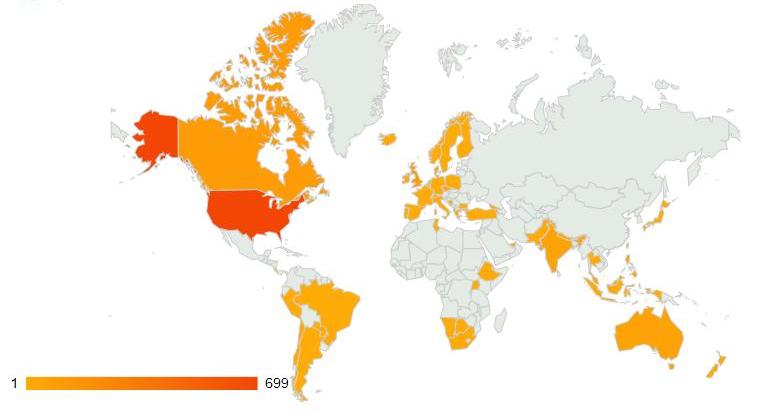
Here is a global view of the views of my blog for the last week:

As you can see, the vast majority of my blog views come from the United States, but here are the number of views I’ve had from other countries during the past week:

United Kingdom FlagUnited Kingdom 111
Canada FlagCanada 106
India FlagIndia 59
Australia FlagAustralia 55
Philippines FlagPhilippines 19
Singapore FlagSingapore 18
New Zealand FlagNew Zealand 11
Malaysia FlagMalaysia 10
Viet Nam FlagViet Nam 8
Germany FlagGermany 6
Pakistan FlagPakistan 6
Botswana FlagBotswana 6
Denmark FlagDenmark 5
Nepal FlagNepal 5
South Africa FlagSouth Africa 5
Switzerland FlagSwitzerland 5
Turkey FlagTurkey 4
Taiwan, Province of China FlagTaiwan 4
Japan FlagJapan 4
Greece FlagGreece 3
United Arab Emirates FlagUnited Arab Emirates 3
France FlagFrance 3
Lebanon FlagLebanon 3
Thailand FlagThailand 3
Finland FlagFinland 3
Norway FlagNorway 3
Georgia FlagGeorgia 2
Czech Republic FlagCzech Republic 2
Belgium FlagBelgium 2
Qatar FlagQatar 2
Iceland FlagIceland 2
Bulgaria FlagBulgaria 2
Bosnia and Herzegovina FlagBosnia and Herzegovina 2
Sweden FlagSweden 2
Hong Kong FlagHong Kong 2
Ethiopia FlagEthiopia 2
Portugal FlagPortugal 2
Russian Federation FlagRussian Federation 2
Netherlands FlagNetherlands 2
Korea, Republic of FlagRepublic of Korea 2
Jamaica FlagJamaica 2
Trinidad and Tobago FlagTrinidad and Tobago 2
Poland FlagPoland 2
Brunei Darussalam FlagBrunei Darussalam 1
Uganda FlagUganda 1
Ireland FlagIreland 1
Spain FlagSpain 1
Bahamas FlagBahamas 1
Indonesia FlagIndonesia 1
Albania FlagAlbania 1
Brazil FlagBrazil 1
Armenia FlagArmenia 1
Tunisia FlagTunisia 1
Cyprus FlagCyprus 1
Paraguay FlagParaguay 1
Argentina FlagArgentina 1
Namibia FlagNamibia 1
Peru FlagPeru 1
Chile FlagChile 1
Costa Rica FlagCosta Rica 1

There was also one view from Italy, which didn’t show up on the table for some reason.

If you have a WordPress blog, you too can see these amazing statistics for your blog. Just go to http://wordpress.com, log in, then click on the My Stats tab on the WordPress home page, then scroll down a bit to find the global stats. If you’d like to see your views by country for a week, click on summaries. Isn’t that cool?

So, where do your viewers come from?

Shamrock-N-Sirens Readers’ Event Introduces . . . Me!

*
12 Day Reader’s Event SHAMROCKS-N-SIRENS
Click here for all the contests and a chance to win a set of special mugs:
SHAMROCKS-N-SIRENS … AN IRISH EVENT!!!

I am participating in a twelve-day readers’ event in celebration of St. Patrick’s Day. My day to be interviewed is today, so please stop by 12 Day Reader’s Event SHAMROCKS-N-SIRENS Welcomes Featured Author Pat Bertram  (or if you’re leary about entering a non-G rated site, you can see the interview at Pat Bertram, Author of “Daughter Am I”.

I answer questions with world-shaking impact, such as where and when I do my writing, how I write, my favorite quote, and what thing I would never leave behind were I to attend a St. Patrick’s Day party.

And best of all,

From now until March 18, Daughter Am I is on sale for $2.99 on Kindle at: Amazon

*

Putting the “Who” in Whodunit

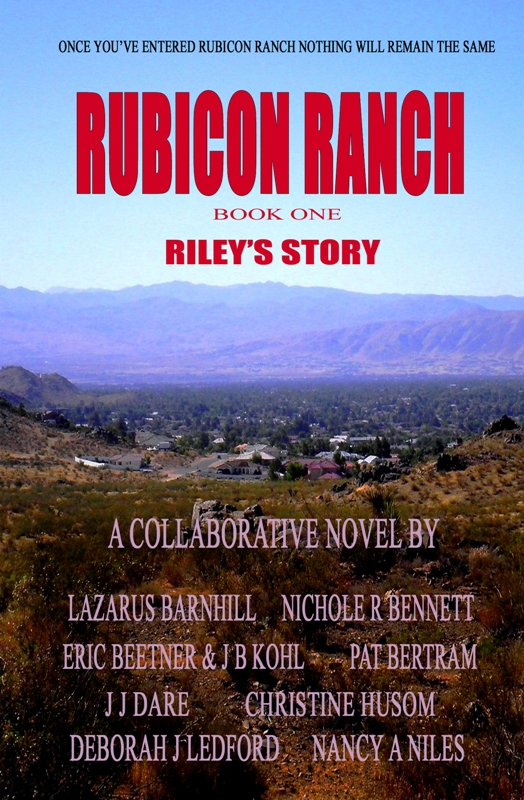
I’m collaborating with several other Second Wind Publishing authors to write a series of novels online on a blog. The first novel is about the death of a little girl. Her body was found in the desert outside a bedroom community that once had been a working ranch, hence the name of the series, Rubicon Ranch.

Collaboration is a bit of an over-statement. Rubicon Ranch is more of a cross between a round robin or campfire tale, with each author taking turns adding to the story, and a role-playing game. We each create and control a POV character, show who s/he is, what relationship s/he has with the deceased, and why s/he might want him dead.

I have it easy — my character, Melanie Gray, is a photographer/writer who wanders the desert taking photos for the coffee table books she used to write with her dead husband. (He wasn’t dead when they were working together, of course.) He died in a one-car accident while texting his mistress, though there are suspicious circumstances leading investigators to think that perhaps he was killed. Melanie has a talent for finding strange things in the desert, such as the child’s body stuffed in an abandoned television console in the first book, and the scattered body parts that will be found in the second book. This is all that leads the sheriff to suspect her.

The other characters, however, have to simultaneously prove that they are the murderer, yet also have a plausible explanation for why they acted guilty if they weren’t the murderer. (That’s because we don’t know whodunit until all the end of the book. So not only do readers of the ongoing story not know who the villain is, neither do we.)

In the first book, the authors solved the problem of simultaneously setting their characters up to be murderers while allowing for the possibility that they were innocent by giving their characters strange characteristics, such as sleepwalking, to keep the characters themselves from knowing if they were the killer.

In the second book that we are in the process of organizing, there is no way the killer can be unaware of having killed the victim. Even if by chance the character killed in some sort of fugue state, the character will still be faced with a dead body, which he or she will cut in small pieces and distribute it around the desert.

So how do you write a character from a strict third person limited point of view, from inside the character’s head, proving that your character is the killer, while at the same time giving yourself an out if the character turns out to be innocent?

Well . . . If your character has killed before, you can have him/her worrying about if the sheriff will find out what s/he did, without being specific as to which crime s/he is wondering about. You can have your character act guilty — perhaps desperately trying to cover something up. You can have him/her try to pin the murder on someone else, offering assistance to the sheriff, which would make your character seem guilty, but in the end (if your character is not the killer) have an alternate explanation. You can be hiding something in your house that can be construed as your having Morris’s body that you’re cutting up bit by bit. I’m sure you can come up with better ideas than these, but you get the idea.

I’m looking forward to seeing what the other authors come up with.

Meantime, if you haven’t checked out Rubicon Ranch, and wish do so, click here: Rubicon Ranch.

Big Brother, Thy Name is Facebook

I feel as if I’ve fallen down a rabbit hole, and that rabbit hole has a name — Facebook. A couple of months ago, I met a reviewer on Facebook who had been prohibited from posting her reviews of mysteries on the Mystery Writer’s of America Page by MWA. (Isn’t that bizarre? Wouldn’t you think they would have wanted her reviews.) I invited her to post her reviews in my Suspense/Thriller Writers Group. I’ve mentioned before that we’ve banned most promotions except for reviews of other authors’ works, interviews with other authors, and excerpts from other authors’ novels. I’ve been trying to foster a sense of camaraderie, of authors helping authors rather than letting the authors inundate us with book links everyone is sick of seeing, and this reviewer’s posts seemed to fit with my concept.

But now she has been banned from posting links to her reviews in my group, not by me but by Facebook. Apparently, FB now have new rules banning any sort of promotion on one’s profile and from one’s profile. You have to use a business page for that. And so for now, people are still being allowed to blatantly promote their books, but unpaid reviewers are banned. Not just prohibited, but blocked — the links from her WordPress account and Networked blogs no longer post to her profile. And if she posts the links manually, her account will be suspended.

Technically, Facebook has always prohibited promotion. The profiles are supposed to be about socializing and connecting with real life friends, but people posted books links, giveaways, and all sorts of promos anyway, and Facebook never enforced it. A major change is coming now that FB is traded publicly. If FB allows promo anywhere on the site, the pages lose their competitive edge. FB also loses potential advertising bucks. (A related issue is that FB is not being welcomed by investors as enthusiastically as they had expected — huge numbers of users are accessing the site via phone and tablet and are bypassing the advertising, which makes FB not quite so lucrative as it was just a few months ago.)

But still . . . not to allow book reviews? Why is that a business? For some people it might be, but for this particular reviewer, it is a hobby, nothing more.

I asked the reviewer how FB found her and why they singled her out. She responded, “They tripped over me on another site and they FOLLOWED ME THERE! Yes, THEY FOLLOWED ME and about 4,000 OTHER people! That’s how they knew about my reviews, reviews that are free mind you. In time, though, I believe this will get to everyone. I’m betting I’m just in the first batch, but I’m sure they will be more.”

Yikes. Shades of big brother. I generally presume articles about Facebook fall under the category of urban legend until corroborated, but this reviewer’s experience seems to corroborate the following article: Wow. Facebook Rules Prohibit Users From Promoting Their Work, Company, And Much, Much More . . .

How Do You Discover the Books You Want to Read?

Two-and-a-half-years ago, I took an informal poll to find out how people discover new authors. I posted the following on discussion boards on both Goodreads and Facebook:

It seems as if there are as many ways of discovering books as there are readers, but I’m curious as to how you choose the books you want to read. Do you go by reviews? By recommendations from friends? Because you’re familiar with other works by the author? Do you ever read a book because of an ad you saw? Because of a blog article? Because of a mention on a website such as Goodreads? Do you cruise book stores, libraries, or online sites like Amazon? Do you find them some way I haven’t mentioned, such as gifts, perhaps?

Admittedly, the questions were loaded, but I still got an interesting and probably quite accurate overview:

Favorite authors or previously read authors: 36
Word of mouth: 26
Blog reviews/Book websites: 26
Goodreads/Shelfari: 24
Local bookstores: 21
Amazon/B&N/other online stores: 15
Library: 13
Publisher sites/newsletters: 5
Social networking sites like Facebook: 5
Book Clubs: 5
Author appearances/writing conferences: 5
NY Times bestseller list: 5
Offline reviews: 5
Yard sales/second hand bookstores: 4
Advertising: 3
Saw the movie: 3
Oprah: 1
Free downloads: 1
Gifts: 1

Recently, I posed the questions and got similar responses (though from a much smaller group):

books by favorite authors: 8
recommendations from friends: 5
browsing in bookstores: 4
libraries: 2
imprints (the trade name under which the book is published): 1
newspaper reviews: 1
blog reviews:1
recommendations from Amazon: 1
book clubs: 1

So, even with small independent publishing houses springing up like new forest growth, and self-published books proliferating like elm tree seeds, the means of finding books are still the same. That means, if you are an author looking for a readership, you need to be everyone’s favorite author and have your readers recommend you. An almost impossible task when most people already have their favorite authors.

What about you? How do you discover the books you want to read? Or rather where. (A lot of people said they found books to read by the front cover or the blurb on the back, but I’m more curious as to where they saw the cover.)

Celebrating Twenty Weeks of Daily Blogging

On September 25, 2011, I made a vow to blog for 100 days straight without fail. I wanted to get back into the discipline of daily writing, but didn’t want to make a major commitment such as writing a novel. I figured daily blog posts would satisfy the discipline and also satisfy the part in me that needs the reinforcement of completing a project. I passed the 100 day mark without even noticing, and now I’ve been posting a blog every day for twenty weeks — 140 posts.  Surprisingly, very few are frivolous, posted just for the sake of posting something. So today, let’s forget the seriousness of my usual posts. Let’s forget that this is Saturday, my sadder day. Let’s forget that my publisher, Second Wind Publishing, has moved to a new website and I have thousands of now-dead links to update. Let’s forget all of that, and just play.

And if that isn’t any fun, here’s a jigsaw puzzle (I get such a kick out of these!)

Want more fun?

Click here to read the first chapter of: Light Bringer

Click here to read the back cover copy and an excerpt: Light Bringer

Click here to check out (and buy at $2.00 off!) Light Bringer at Second Wind Publishing’s new site: Light Bringer

Top Five Things I’ve Learned About Twitter

Twitter is a microblogging site where you post 140 characters at a time. I’ve written 100-word stories, 100,000-word novels, blog posts of various word counts, but anything that can be said in 140 characters or less almost doesn’t seem to be worth saying, so I’m having a hard time finding a home in the Twitosphere (or do I mean the Twitterverse?). Still, I am learning a few things about this twitterish world. Here are the top five things I’ve learned:

1. Tagging your tweets. You add tags to your tweets by using hash marks. For example, when I tweet this post, if I add #twitter to my tweet, people who are interested in finding out who is tweeting Twitter can search for #twitter, and discover all recent posts with that hash mark. (Okay, so you already knew that. But this is a post about things I’ve learned, and for some reason, that basic bit of twitia passed me by.)

2. Twit chats. #writechat is a group of writers who meet every Sunday on Twitter from 12:00 pm to 3:00 pm PT. You don’t need an invitation to join the discussion. (Well, maybe you do, but I crashed the party and no one complained.) All you have to do is go to your Twitter account and search for #writechat. Or you can start your own discussion group. Pick a name, add a hash mark, tell a few friends, and there you are, master of your own twit chat.

3. Trending topics. On the right sidebar of your Twitter home page, there is a list of trends. These trends are topics that are currently popular (as in right-this-very-minute popular) and are compiled from the most retweeted tweets, mostly news items. Twitterers think that they are tweeting non-mainstream news, that they are in the vanguard of a rebellion against traditional news sources, but as it turns out, the most retweeted twits and tweets come from the major media via their followers.

4. Friend or follow. Some twits like to follow everyone to get a huge following, and after you have followed them because you really don’t know what you’re doing and so you follow everyone who follows you, these twits unfollow you. Don’t you feel used? Well, no. Because you didn’t know they unfollowed you. Twitter sends you a message when someone follows you, but they don’t care if anyone unfollows you. So, here’s where you even the score: go to Friend or Follow, fill in your Twitter user name, and wait for the results. They might surprise you. You can easily unfollow your unfollowers from the site.

5. Clean your twits. Sometimes you end up with spammers or people you thought were your friends but who tweet a hundred times a day. Or you end up with a whole stream of multi-level marketers. Here’s an easy way of telling who is who. Go to: Twit Cleaner, fill in the information requested, and you get a whole list of unsweet tweeters with dodgy behavior such as those who tweet only links, those who only retweet other’s tweets, those who tweet the same links over and over again.

The main problem with cleaning your twits is that you end up with a huge discrepancy between the number of those who follow you and those you follow, and Twitter frowns on that. But whose Twitter is this? The way I figure, it’s better to follow fewer followers and get to know them, than to follow all who follow you and be inundated with the same twiddly stuff over and over again.

I’d planned to end this blog with a refutation of my bad report — Twit Cleaner told me I was guilty of dodgy behavior, that my tweets were mostly links. I was going to say that if people wanted to unfollow me because I tweeted too many links, then that is fine with me since if they’re not interested in what I tweet, they are of no use to me. Unfortunately, I just got a new report from The Twit Cleaner. They said “You’re awesome! Not very much to improve here. You’re basically already pretty great. Keep being your wonderful self.”

Thank you. I will.

Book Bits #114 – Kudos to Beauty & the Book, Roald Dahl stamps, William Gibson, Queen Elizabeth

Three reasons to read Malcolm R. Campbell‘s Book Bits #114

1. It’s the best compendium of book information orbiting the blogosphere

2. It has a link to my Pat Bertram Introduces blog where I interview Benjamin Cheah, an author from Singapore

3. It has a link to the incomparable Beth Hill’s latest article for her The Editor’s Blog.

Book Bits #114 – Kudos to Beauty & the Book, Roald Dahl stamps, William Gibson, Queen Elizabeth.

(If you would like to do an interview for my Pat Bertram Introduces blog, you can find the questions and instructions by clicking here: Pat Bertram Introduces . . . )