Writing For Fun

Several years ago, I participated in a round-robin writing project where everyone took turns adding to the story. It frustrated me because it seemed as if many, if not most, of the writers made a point of changing characters or adding ridiculous elements, making it impossible to create a cohesive story. So I got the idea of doing a project like that, but each person got to create their own character and no one could change it without their permission.

Getting people to agree to participate was fairly easy. Back then, there was a site similar to Facebook, but for writers, so everyone I knew online was interested in writing. Getting them to follow through, however, was a completely different story. Even before we started, people wanted to change things.

My idea was that a horrendous crime was committed in the neighborhood, and I wanted to show how everyone was affected, but oh, no. That would be a boring story. Huh? We hadn’t even started so how would anyone know it would be boring? Besides, they were writers. They could make it not boring. Still, they decided it had to be murder mystery, which was in no way at odds with my original plan. Because if there is a crime in a novel, there has to be a resolution, right? I thought that went without saying.

My publisher at the time was one of the participants, and he said to me, “The hard part for you will be to relinquish control.” Again, huh? The point was for us each to be in charge of our character, each to post our segment to the blog on our assigned day, each to keep with story so that each segment followed the timeline in order to keep from making blunders that couldn’t be fixed. (In a novel written offline, obviously, one can edit at the end, but in a blog novel, as this one was, there is no editing afterward. It is what it is.) But almost no one did what they were supposed to. I ended up having to remind people when it was their turn, had to edit their hastily written segments to get rid of the worst of the typos, had to post the segments to the blog myself because no one wanted to do it.

So, the hard part for me was not in relinquishing control but being forced to take control. That was so not fun! Still, we did a did a trilogy, and by the third one, the authors that remained were very good, so that one was a bit more fun for me.

Afterwards, I tried to do a different collaborative novel with other writers, and again, before a single word was written, people wanted to change things. Instead of a mystery, we ended up with a sort of steampunk anthology with loosely connected stories. As it turned out, the person who insisted on steampunk dropped out, but by then we were committed to the story.

What has made me revisit all this is that I’m considering doing a blog novel, but with myself as the sole author, which should make things a lot less stressful than trying to do it with other people. I also like my original idea — how a certain crime affected people in a neighborhood. Did it make them revisit their life choices? Did it make them grateful for what they had? Did they decide to move away? Were they the one who committed the crime, and were they glad or sorry they’d done it?

One of the problems with the first such project was that each person had to write as if their character could have done the crime, but at the same time, make it possible to prove they didn’t. That could be the same problem here, but it’s possible the crime wasn’t committed by one of the neighbors — I won’t know until towards the end anyway. I want to try writing a story where I don’t know the end, to just follow along with the characters and see what happens.

I still have other commitments — my job, for one — which makes it harder for me to want to commit to a time intensive project like a blog novel, but at least this gives me an idea of what to start thinking about.

And maybe, this time such a project would be fun for me.

***

Pat Bertram is the author of Grief: The Inside Story – A Guide to Surviving the Loss of a Loved One. “Grief: The Inside Story is perfect and that is not hyperbole! It is exactly what folk who are grieving need to read.” –Leesa Healy, RN, GDAS GDAT, Emotional/Mental Health Therapist & Educator.
Stay Warm!

No wonder autumn seems like such a short season — it is. Summer borrows from fall to extend the torrid weather a couple of more weeks, and winter butts in on the back end, shoving the temperate season out of the way so it can get in a few early weeks of cold and snow.

According to the calendar, winter doesn’t arrive for another 32 days, but according to the weather, winter is already here. The high yesterday was about 25 degrees Fahrenheit, and although we only got an inch of snow yesterday, there was enough ground cover to warrant sweeping. And then, to clinch the winter encroachment, the temperatures last night got down close to zero, with a minus 7 windchill factor.

I was going to mention how cold it felt, but to tell the truth (as I try to do), I barely noticed the chill since I was outside only long enough to sweep off my front ramp and to check my mailbox. The rest of the time I was snuggled inside where it was warm.

Luckily, it warmed up to a sizzling 41 degrees today, so I was able to go to the library and replenish my stock of books. One of the books was on hold for me and I was about thirtieth in line (though admittedly, most of those people were from other libraries, and like most libraries, this one is jealous of its new books and holds on to them for about three months before sending them elsewhere), but sometimes being a good patron has its perks. Since this was Saturday afternoon, and the library doesn’t open again until Monday afternoon, the librarian let me check out the book ahead of the next person in line. Although she didn’t stipulate that she wanted it back early, she knows she’ll get it back quickly. Now that gardening season is over, what else do I have to do with my time but read?

Well, if it warms up into the fifties next week as the weather forecasters are anticipating, I will have to mow my lawn one last time, and probably even water since a scant inch of fluffy snow doesn’t amount to much moisture. (The average snow-to-liquid ratio in the USA is about 13 to 1, yet in the dry west, it’s closer to 50 to 1, so that 1” of snow we got yesterday is about .02 inches of moisture, a far cry from the .50 inches per week my grass needs in the winter. To get that .50 inches of moisture, we’d need 25 inches of the light powdery kind snow we often get. No thank you!)

Luckily (I think) when the frost comes and stays around without warming up during the day, I won’t have to worry about the grass. And who knows, I might eventually have to give up on the lawn altogether. Now that the Bermuda grass has gone dormant, leaving a wide perimeter of brown grass around the green, I can see how much that weedy grass has encroached in only a year.

But this wasn’t supposed to be a discussion of my lawn. It was supposed to be more about my visit to the library and how I knew just about everyone who was there today. Apparently, I wasn’t the only reader who had finished all their books in record time and needed to restock. It made for a nice social occasion, though actually, I’ve been plenty “socialized” lately. After last week where I agonized about attending a luncheon meeting only to have it postponed, this week I simply went without a second thought. Then yesterday, a couple of friends came to tea, and today, before the library visit, I talked to another friend. Whew! As a hermit, I am somewhat of a failure, though I still do spend the bulk of my time alone.

And, since I’m updating you on various matters — weather, library, grass, socialization — there’s one more thing. I mentioned that I updated my operating system to Windows 11. It also seems to have updated MS Word at least to a certain extent. Although this version is much the same as my previous one, there are small differences that keep me on my toes.

I just noticed that the heat keeps cycling on, so whatever warmth the sun brought seems to have dissipated, and we will soon be down to tonight’s low of 11 degrees. Yikes.

Stay warm!

***

Pat Bertram is the author of Grief: The Inside Story – A Guide to Surviving the Loss of a Loved One. “Grief: The Inside Story is perfect and that is not hyperbole! It is exactly what folk who are grieving need to read.” –Leesa Healy, RN, GDAS GDAT, Emotional/Mental Health Therapist & Educator.
I Love to Write Day

Today is national “I Love to Write Day,” so here I am, writing. To be honest, I’m not sure if I do love to write anymore; if I did, I’d be spending more time actually writing than simply thinking about writing. And I do spend a lot of time thinking about writing — wondering if I will write another book, and if so, what sort of story I would write, and mostly what I would do with the book when it’s finished.

How much I wonder about what to do with a book I have not yet written, don’t even have a clue as to plot or character, for sure makes me wonder how much I actually love to write. If love of writing was the key, I’d be writing, regardless of the disposition of the finished product.

What I need more than anything is a story I can get involved with and to be interested in for the year it takes to write, and so far, I haven’t found it. What I would like — to the extent that I would like anything to do with writing — is to get immersed in a world that is completely different from the one I live in, to become a character completely different from who I am, to tell a story that only I could tell.

I’d also like to write in a different way from I’ve always written, perhaps as diary or blog, where I discover the story, the characters, and their fictional world as I write. With all of my novels, I needed to know the antagonist, the protagonist, the basic conflict, the beginning, and the end, and then the creativity came in how I got from the starting place to the finish line. The closest I’ve ever gotten to writing without even a sketchy idea of where I was going is Break Time, the collaborative novel I did with friends from the Five Eyes countries (United States, Canada, New Zealand, Australia, Britain). Break Time didn’t work out the way it was supposed to. As with the first collaboration I created, the Rubicon Ranch mystery series, the project was derailed halfway through because although it was supposed to be an online novel, those involved were more interested in getting it published than in keeping with the original intent.

So what if I did that sort of project by myself? Write a novel online as a blog — as a daily diary — creating the world and the characters as I wrote. If I did it online, I certainly wouldn’t have to worry about the disposition of the novel — it would be published online in blog segments as each was completed.

I’ve also been contemplating using the tarot cards as my story finder — to do readings for my characters to see who they are as well as daily or weekly readings (depending on how often I want to update the story on the blog) to see what they are doing. For an additional interest point, I could post the cards I used to write each segment of the story, which would give an added depth to those who can do their own reading of the cards, relating it to the blog segment.

Is this something that would keep me interested for the duration? I don’t know. Obviously, considering how seldom I am updating this blog, I am quite content not to write at all.

But things change.

And who knows what the future will hold? Not I, that’s for sure.

***

Pat Bertram is the author of Grief: The Inside Story – A Guide to Surviving the Loss of a Loved One. “Grief: The Inside Story is perfect and that is not hyperbole! It is exactly what folk who are grieving need to read.” –Leesa Healy, RN, GDAS GDAT, Emotional/Mental Health Therapist & Educator.

Real Life Beach Read

The term “beach read” started out as an advertising gimmick for books published in the summer for the beach-going crowd. They were non-challenging books, a bit frothy and fun, and could be almost any genre as long as the story was good enough to keep one’s attention but not so serious it would spoil one’s vacation. Nowadays “beach read” seems to be an actual genre, generally a romance or woman’s story that takes place at the beach. In a typical beach story, three sisters who are all at a crossroad in their lives end up at the family’s beach house, often to figure out what to do with house they jointly inherited in the hope that a sale will help solve their various issues. The book ends up with all their problems being resolved as well as the three disparate and far-flung sisters reconnecting and reestablishing their sisterhood.

My sisters recently came to visit, and I couldn’t help thinking I was living in a real life “beach read.” They weren’t here to help resolve the issue of our parents’ house because that had been taken care of eight years before. (Oddly, they just happened to be here on the eighth anniversary of our father’s death, but it was our mother we toasted with her favorite Bailey’s Irish Cream.) And anyway, this house is a done deal — it’s mine and mine alone.

We had no serious issues to resolve, and no true crossroads, though both sisters are dealing with a change in their circumstances, and the visit allowed them a respite from their respective issues. We had reconnected as sisters during our first “three sisters” weekend, but we haven’t all been together in the intervening four-and-a-half years. And rather surprisingly, this was the first time ever the three of us spent the night alone under the same roof.

To be honest, I was a bit nervous about hosting this gathering (three women and one bathroom seemed an untenable equation), and I didn’t know how generous I’d be about sharing my house. But it all worked out well, perhaps because they didn’t stay long, just a couple of nights. It was fun being with people who had known me most of my life (I say “most” because one sister is eight years younger and one is twelve years younger). And it was especially nice solidifying our sisterhood.

Even though I live in a town way out on the prairie, we even managed to spend some time at a beach!

The body of water — a reservoir — is huge, 30 square miles, and is adjacent to a 13,100-acre state park. Obviously, there wasn’t a whole lot of the place we could explore in one afternoon, but we managed to see several beautiful areas and take some stunning photos.

Unlike the characters in a beach read, I don’t suppose any of our lives were changed by the visit, but it definitely was a special time for all of us.

***

Pat Bertram is the author of Grief: The Inside Story – A Guide to Surviving the Loss of a Loved One. “Grief: The Inside Story is perfect and that is not hyperbole! It is exactly what folk who are grieving need to read.” –Leesa Healy, RN, GDAS GDAT, Emotional/Mental Health Therapist & Educator.

That Notorious Villain Mr. Death

I received an email with sad news today: a dear friend is coming to the end of her days. A year and a half ago, the doctors said she had only two months to live, but she managed to survive happily and with grace all this time. But now, the cancer is too advanced, and chances of her surviving much longer are slim.

One of the saddest things about living to a certain age is that death seems to have become a constant presence. So many people I’ve been close to for years are gone, and those I’ve met more recently, are also going. I’ve only known this woman about three years, but despite a bit of a language problem (she spoke English with an accent I had a hard time understanding), we became instant sisters. And now I’m about to lose one more person to that notorious villain, Mr. Death.

I seem to be beset by death today. I spoke to another friend, a woman who lost her husband to The Bob, and she mentioned she’d checked a couple of my books out of the library. She had tears in her eyes when she said that my books on grief were the best books she’d ever read on the subject. It’s good to hear that, of course, and I am glad I was able to help in any way, but I would have been even gladder if none of us were in the position of knowing so much about grief in the first place.

Interestingly, she’d recommended my books to another recent widow, and that woman went to the library, but instead of checking out my grief books, she got one of my fiction books. That would have been my choice! It’s hard enough being steeped in one’s own grief without adding another person’s grief on top of yours.

I was glad to know they got the books from the library. I’d donated the books, and I worried that if the books sat on the shelf too long the librarians would get rid of them. (In other places, I’ve seen new books donated by their authors that ended up on a sale rack for 10 or 25 cents, and I didn’t want my donation to go to waste. Luckily, so far, the library has kept them.)

I’ve been gradually shifting away from the original topic — the sad news about my friend — but truly, what else is there to say except that I was honored she considered me a sister and how sad I am that she’s nearing the end. My heart (and a few tears) goes out to her husband who has so devotedly taken care of her the past couple of years.

***

Pat Bertram is the author of Grief: The Inside Story – A Guide to Surviving the Loss of a Loved One. “Grief: The Inside Story is perfect and that is not hyperbole! It is exactly what folk who are grieving need to read.” –Leesa Healy, RN, GDAS GDAT, Emotional/Mental Health Therapist & Educator.

Variety

At the library today, I found a notice that our county library district is bringing the Little Free Library program to town. I’ve visited these wonderful mini libraries when I was traveling and was delighted to see it coming here because it’s a great program for a reader. Then I realized I don’t need a little free library — I have a big free library that’s closer to me than any of the little libraries will be.

Still, those little libraries will give me an incentive to walk. I’ve noticed that as I become more settled into home ownership and garden caregivership (no one really owns a garden, one only takes care of it), I have a harder time walking simply to walk. I need a reason and a destination, and visiting a variety of little libraries will give me both of those nudges to get out and walk. That’s my hope, anyway.

After I picked up my books at the library, I bought a variety of items at the variety store. That’s what we called places like dollar stores back in my day, and sheesh. I can’t believe I used such an old-person cliché as “in my day.” Considering that I am still alive, all days are my days.

As I was wandering around the store, I had a brief episode of disorientation. It wasn’t a physical problem but a temporal one — I saw a few Christmas things and for a moment, I had no idea what time of year this is. Christmas? Already? What happened to Autumn? Halloween? Thanksgiving?

I suppose I shouldn’t make disparaging comments about seasons. After all, my Christmas stocking is up, though in my case, it’s not a matter of rushing the season but of forgetting to put the stocking away with the rest of my Christmas things last year, and then being too lazy to drag out the Christmas decoration box again to stow the stocking. This particular stocking was a special gift and is not the sort of thing I can just stuff in anywhere, so I left it hanging. I’ve enjoyed having it up, and anyway, who says a stocking is just for Christmas? This one is beautiful any time of year.

Keeping with the Christmas theme, when I got home and checked my mail, I discovered a wonderful present — wildflower seeds! A variety of seeds are included in each packet: globemallow, desert marigold, brittlebush, chocolate flower, firecracker penstemon, Arizona milkweed and rush milkweed — all perennials. Considering that these are desert plants needing little water and lots of sun (and might take a year to germinate), it will be a whole new gardening experience for me. Luckily, I was gifted with several packets of this wildflower mixture, so I’m set in case of mishaps. Even better, I have the perfect area to plant these seeds — one of the still uncultivated places in my yard. I hesitated to put anything there because I don’t much feel like adding any more time to my watering schedule, so these plants will be great once I get them started.

Whew! Lots of variety, today. And it’s early enough for even more variety to come.

***

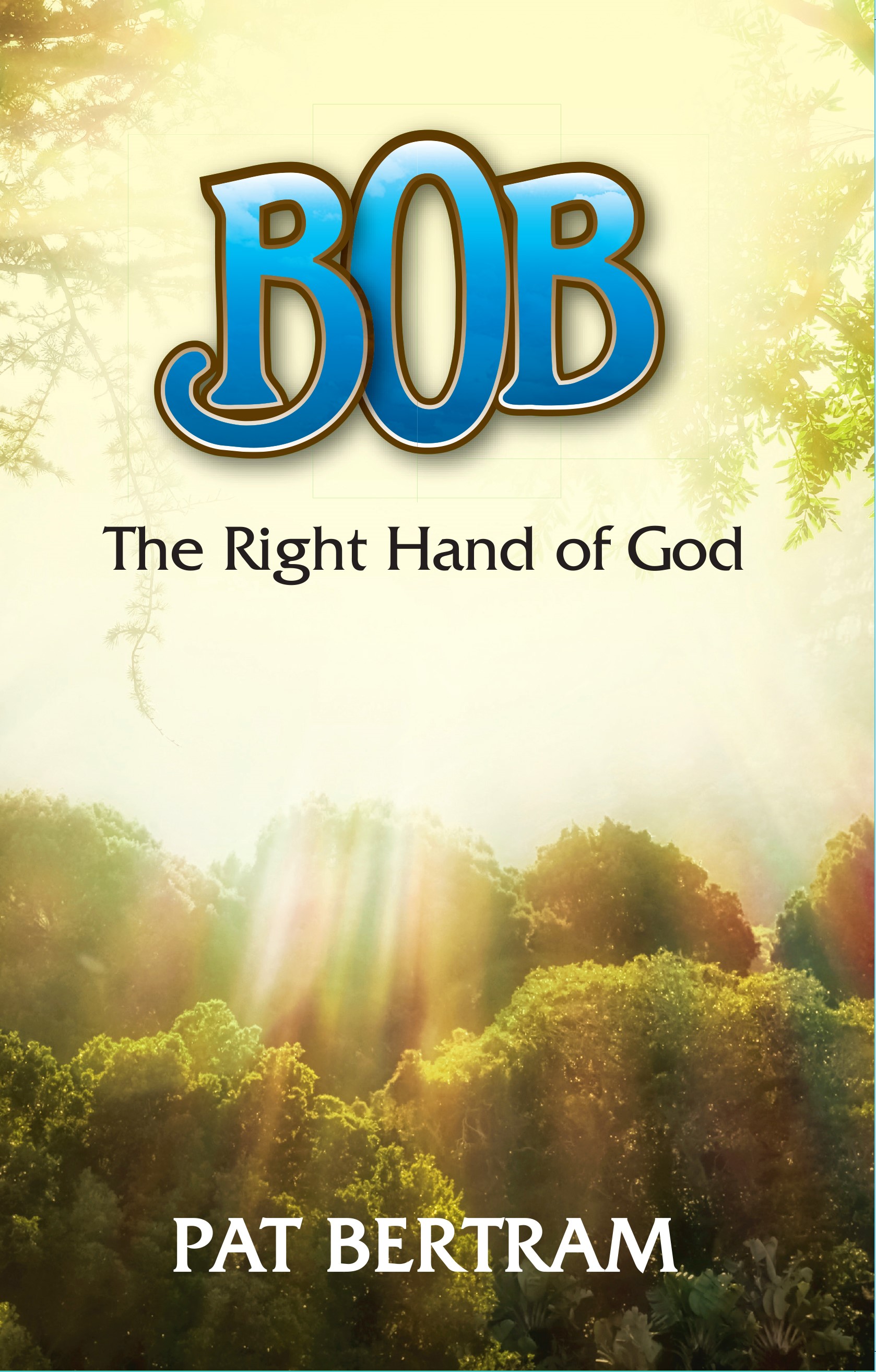
What if God decided S/He didn’t like how the world turned out, and turned it over to a development company from the planet Xerxes for re-creation? Would you survive? Could you survive?

A fun book for not-so-fun times.

Click here to buy Bob, The Right Hand of God.

All I Know

The title of this piece is rather a misnomer because all I know are the things I think I know, and I have learned not to trust everything I think.

Still, as a thinking, working, writing entity, I have often written about things I have learned from grief and from life. Most recently, I’ve been mentioning lessons I learned from gardening, such as:

  1. You get what you get and what you get is not always what you deserve.
  2. If you’ve done everything you know how to do to change things, then you have no other recourse except to accept what is.
  3. Take care of that which you can, and if things grow out of your control, do the best you can with that, too
  4. Be patient.
  5. Don’t be intimidated.
  6. Some things live, and some things die.
  7. Focus on the details, but also look at the big picture.
  8. Be adaptable. (This is one I have not spoken of specifically, but all of my gardening posts intimate the importance of adaptability.)

Those “learning” posts reminded me of a book I once read called All I Really Need to Know I Learned in Kindergarten. The author listed such things as: learn some and think some, draw and paint and sing and dance, and be aware of wonder. Those are good things to know, too, but I don’t remember learning them in kindergarten. To be honest, that was so long ago, I have only the vaguest notion of even going to kindergarten.

I do remember my first day of first grade, however. I hung my blue nubby jacket with a multicolor tiny-checked lining in the cloak closet — as it was called back then, even though no one even knew what a cloak was — then I sat down. To my horror, I discovered I was in the wrong classroom, and I bolted out of there. I have no idea how I got my coat back; all I know is that I was too embarrassed to retrieve it. So I suppose I could add this pithy bit from the first grade to these lists of “all I know”: Mistakes happen; deal with them . . . or don’t.

When I came online today to jot down my thoughts about all I know, the first thing that greeted me was the saying: “When it comes down to it, the only knowledge that really matters is how to purify water, how to grow your own food, how to cook, how to build, and how to love.”

So that’s something else to add to what I know — not how to purify water, which incidentally, I do know how to do; not how to grow food, which I know hypothetically; not how to build because it’s too late in the game for me to learn, though again, I know the basics hypothetically because I’ve watched a lot of building going on around here; and not how to love, though I do know that, or at least, I once did — but that the internet can read minds.

A final note on things I know — although it’s not something I know or even believe, I do take comfort in times from a line in the Desiderata: “And whether or not it is clear to you, no doubt the universe is unfolding as it should.”

Looking over this post, it seems as if what I’ve written today can be summed it up with a simple credo: “It’s life. Live it the best way you can.”

O even more simply, “Live.”

***

Pat Bertram is the author of Grief: The Inside Story – A Guide to Surviving the Loss of a Loved One. “Grief: The Inside Story is perfect and that is not hyperbole! It is exactly what folk who are grieving need to read.” –Leesa Healy, RN, GDAS GDAT, Emotional/Mental Health Therapist & Educator.
Love Lies Bleeding

There is an interesting plant in my yard that everyone who sees comments on. I had a couple of those plants last year, too, but I didn’t know if the plants were friends or foes (flowers or weeds, in other words), so when they grew too tall for where they were planted, I pulled them up.

This year, instead of pulling them up, I left them in place for a conversation piece. A couple of times I tried to track down the name of the plant, but apparently, I put in the wrong search terms because I tried again today, and the answer popped right up. The weird looking ropy red flowers are called foxtail amaranth. It’s an annual that seems to have been included in a wildflower seed mix that I threw out there last winter, so unless I buy more seeds, this is the only time I will have the flowers.

Here they are, along the fence behind the zinnias:

And here is a close-up:

The flowers are also called Love Lies Bleeding, a holdover from the Victorian era, when flowers were used to send messages. The message of this flower is hopelessness or hopeless love, which seems a mean thing to want to say to someone in words, let alone in flowers.

I was going to plagiarize another of my posts to fill out this tale of “talking” flowers, but instead, I’ll just direct you to this link if you want to find more “Meanings of Flowers”.

Love Lies Bleeding would be a great title for a book since the phrase could be used to set scenes and develop themes throughout the story: my loved one is lying there bleeding; you broke my heart, and now it lies bleeding; my lover lied and now is bleeding.

Unfortunately, many other authors had the same idea — that Love Lies Bleeding would be a great name for a book — because a quick check on book sites showed a whole library’s worth of books using that title or a variation thereof.

Of course, if I really wanted to use the title, there’s no reason I couldn’t since titles aren’t copyrighted (I could also legally name a book Gone with the Wind if I wanted to, but that would be nothing short of author suicide). I prefer using less trite titles, however, and anyway, there is no book in me at the moment, so a title is the last thing I need.

Not so the plant itself. There are a lot of “last things I need” in my garden — weeds and weedy grasses top that list — but even though the foxtail amaranth isn’t on that list, it doesn’t add much to my yard except as a conversation piece, which, come to think of it, is actually a good thing to have. And now that I know the name of this plant, it not only will serve as a conversation starter, but can become the whole conversation, because truly, Love Lies Bleeding is an evocative name with an interesting history.

***

Pat Bertram is the author of intriguing fiction and insightful works of grief.

The Year of Soylent Green

This is the year of Soylent Green, or rather the year that Soylent Green was supposed to portray. The novel upon which the movie was based, Make Room, Make Room by Harry Harrison, took place in 1999, but the movie makers moved things forward a couple of decades to 2022.

I’ve come across a few articles (one of which was sent to me by a friend) whose authors tried to figure out where the movie got 2022 so wrong, because, of course, we have not devolved to the point where the population is so staggeringly immense, corporate greed so all-consuming, and human life so worthless that the masses are being fed a mystery product called soylent green.

I don’t know why these authors are concerned that the movie got it wrong — after all, most dystopian movies don’t come true. Although some books are burned and banned, the world is awash in books, unlike the society portrayed in Fahrenheit 451. Although Big Sib (have to be politically correct, you know) does seem to be watching us, we have not moved into the extreme totalitarianism of 1984. And although we seem to be living in a society controlled more and more by corporations and technology, we have not yet moved to the robotic social order of Brave New World.

Dystopian literature is about extending what is or what might be into the furthest reaches of imagination. It’s not supposed to predict or preach or even give us a glimpse into a world we are fated to endure. Instead, it’s supposed to expose — perhaps — the truth of humans and what we can or can’t endure, what we can or can’t control, what we can or can’t accept if we wish to retain our humanity. It’s no wonder that in all of these books the authorities, whoever or whatever they might be, show the worst face of us. That lone dissenter, either hero or anti-hero, hopefully shows the best of us. As for the masses — all the rest of us — if the literature tells us anything about ourselves, it’s that we will be corralled somewhere in the middle, just trying to get by.

What so many of the dystopian books and movies of the 1950s through the l970s seemed to be trying to show were possible results of an unchecked birthrate, and no wonder. The population increased 5.5 billion from 2.5 billion in 1950 to 8 billion in 2022. Technology and agricultural advances made it possible to feed all those people or a great percentage, anyway. Despite a supposedly adequate food supply, 9 million people starve to death every year, a totally unacceptable number, and untold other millions deal with malnutrition because so much of the food that is available lacks essential nutrients.

Even though the world did not become as insanely crowded as the dystopian authors seemed to prophesy, our population still increased exponentially, though suddenly, any talk of overpopulation, whether in the dystopian literature, the daily media, or think tanks (formal and informal) has become taboo, making stories like Soylent Green seem even more stridently fanatical. Also, despite periodic whispers of a population cleanse or worldwide genocide, it will never happen. Why? There’s no money in it. Big business makes money with growth. No population growth, no profits. (Is it any wonder that any time the USA birth rate dips the immigration rate rises?)

If instead of disregarding the dystopian stories, if instead of creating more dubious agricultural practices and food products, we had been able to curtail the world’s population back in the nineteen fifties and sixties, we wouldn’t be dealing with a so-called climate crisis now. But then, cynical me says that there are fortunes to be made with selling more and more green vehicles and other green technologies to an ever-greater number of people.

So did the dystopian stories of the early and mid-twentieth century get it wrong? Not really — they got it right for the times. They just weren’t cynical enough, relying more on shock tactics of population bombs than critical thought about what effects a slowly decreasing population would have on the world economy.

***

What if God decided S/He didn’t like how the world turned out, and turned it over to a development company from the planet Xerxes for re-creation? Would you survive? Could you survive?

A fun book for not-so-fun times.

Click here to buy Bob, The Right Hand of God.

A Good One

When I was young, I had a five-book boxed set of Pollyanna books. Every time I got sick and so couldn’t go to the library for a fresh stack of books, I reread the ones on my shelf. Despite having read the Pollyanna books perhaps a hundred times, the whole “glad game” thing never took hold in my life. I simply could not see the benefit of being glad you didn’t need the crutches you received instead of the doll you wanted. I thought gladness should be effortless rather than a struggle to find something good about bad times.

Ever since Jeff died, though, I tried to play my own version of the game (though I didn’t know that’s what I was doing) by finding something to appreciate every day. I needed a way to ground myself because so often during those first years I felt as if I were teetering on the edge of the abyss, and without a firm footing, I feared I would topple into that bottomless black pit.

The lessons learned back then have served me well. I make sure to appreciate every flower that comes up, every blade of grass that shimmers in the sun. In a glass half full/half empty sort of way, I try to see what’s there rather than what isn’t. For example, to see the plants and sections of grass that are doing well instead of worrying about the areas of the yard that are desiccating no matter what I do.

Some days, however — like today — I find it hard to appreciate much. It’s been too hot for too long; it’s too much work trying to keep the weeds from taking over; and it’s too hard to focus on what is still growing rather than what once was doing well but is no longer thriving.

I took this same curmudgeonly attitude on my walk today to check out how my friend’s roof was coming along. The job site was deserted, but I could easily see why — the roof has been re-sheeted, ready for to be shingled whenever the rest of the roofing materials are delivered. On my way back home, I stopped to pick up an item at the dollar store, and when I checked out, the clerk said, “Have a good one.” Sometimes I can let that idiocy go, but on a day when I cannot even appreciate that I have glass, let alone whether it’s half full, I find it impossible to hold my tongue.

“Have a good one what?” I asked. The clerk had to think about that one for a minute, then said hesitantly, “Day?” The thing is, all the elderly people I have taken care of become fixated on their bowels (mostly because moving them has become a difficult non-daily task for them), so they are always pleased when they “have a good one.” Anyway, the clerk finally said, “Have a good day,” but then as I turned to leave, she said again, “Have a good one.” I just looked at her and shook my head.

Some things are just not worth dealing with.

Although I have temporarily given up on trying to keep the weeds in check, temporarily given up on caring about the less-than-appealing areas of my yard, I still do manage to find something to appreciate if only in passing, such as the lance-leaf coreopsis, pictured below. Now that was something effortless to be glad about — the original seeds were strewn three summers ago, and these perennial plants raise themselves without any help from me.

So maybe the “good one” the clerk told me to have was this flower. In that case, I should have thanked her for the pretty bloom instead of giving her a semi-rough time.

Anyway, have a good one, whatever “one” it is that you want to be good.

***

Pat Bertram is the author of Grief: The Inside Story – A Guide to Surviving the Loss of a Loved One. “Grief: The Inside Story is perfect and that is not hyperbole! It is exactly what folk who are grieving need to read.” –Leesa Healy, RN, GDAS GDAT, Emotional/Mental Health Therapist & Educator.