Feeling Like a Poseur

For a long time, I’ve felt like a poseur, embarrassed to admit I had written books. I’ve hesitated to even look at any of my published works lest I find out how mediocre they are, and proving that yes, I am a poseur. I don’t know when the embarrassment at calling myself a writer took hold. In a blog post in June of 2018, I wrote that “when it comes to writing, I don’t feel like a fraud” so it started sometime after that.

A lot of people, especially successful women, are beset by “imposter syndrome,” where they feel as if they don’t belong in the position they are in, but that isn’t my case. First, I’m not successful, and second, I’m not in any position — I stopped writing books years ago. For many months, I even stopped blogging. Can one be a writer if one isn’t writing anything, isn’t even selling the books that are already written?

Whatever the answer to that, the non-sales of books all these years whispered to me that perhaps I really was simply posing as an author rather than being one in truth. And somewhere deep down, I figured if I admitted I was a non-successful author, then I’d have to admit that maybe I wasn’t a good enough writer after all.

I don’t know where I got the courage (desperation at not having anything to read?), but I’ve been reading my books lately, something I’ve never done once they were published. I’ve been amazed by how good they are. Well written. Interesting stories. Characters that have to deal with life-changing events. Even though I’ve mostly forgotten the stories except for a brief synopsis, it’s possible that something in me recognizes the books as ones I’ve written and so see something that is not there, but I don’t think so. I tend to think they really are as good as they seem.

Unfortunately, they don’t seem like the types of books that will appeal to many people, which makes sense since I started writing them when I could no longer find the books I liked to read. (You’d think that would be a clue to their salability, wouldn’t you?)

The first two I read, Bob: The Right Hand of God and Light Bringer, are books that take place in familiar earthly circumstances but develop an otherworldly strangeness about them. The last one I read, Unfinished, is very earthly, nothing strange about it except the portrayal of the insanity of new grief. Whenever, as a reader, I’d get annoyed by her tears or frustrated by the disconnect between reality and her perception of it (knowing her husband was dead but still expecting to encounter him alive), the scene and the energy would change to some other facet of her struggle to cope and so keep me interested.

One thing that was well done, I think, was showing how she’d been affected by the horror of her husband’s last year — she’d been left in limbo because he didn’t want anything to do with her and in fact often couldn’t remember who she was and yet, like a child, needed her care. Toward the end of that year, she’d engaged in a cyber affair with a guy who was going through the same thing she was. She thought she was done with grief and was starting over, yet when her husband died, all the feeling she’d been denying descended on her, and there she was, torn between two impossible loves. And finding out her husband had secrets of his own was just topping on that whole unpalatable cake.

I hesitated to read the book, thinking it would be too depressing, but she started to find her way through that emotional mess, and the book ended on a hopeful note.

I really liked the book. Although not a lighthearted story, it was very well written and definitely did what I wanted it to do — show the insanity of new grief.

Luckily, the next book I read will be lighter since one thing I do know is that this was the heaviest of the lot.

It really is an interesting experience reading these books. I know I wrote them, but since I forgot them, I can come at them as if they were written by a stranger. And truly, the author is a stranger; someone I was long ago but no longer am. No wonder I feel like a poseur.

***

Pat Bertram is the author of Grief: The Inside Story – A Guide to Surviving the Loss of a Loved One.

New Favorite Author

I have found a new favorite author. I don’t know if you’ve ever heard of her. It’s someone by the name of Pat Bertram.

I was going to continue on that vein, talking about that new author in the third person, but it seemed a bit too . . . cutesy . . . for lack of a better word.

I’ve been reading the books I wrote, and to be honest, I am stunned by what a good writer I was. Admittedly, the books had been written by me (and by extension, for me) so that could account for why I like them so much. They’re also (obviously) the type of books I like, the type that aren’t written any more, such as books that take place in familiar circumstances but that have an otherworldly strangeness about them. Bob: The Right Hand of God is a good example of this kind of book, and Light Bringer is another. They’re a sort of fantasy. A sort of a what-if type of story. A sort of speculative fiction. But not really any of those. They are just (as someone once called them) “Pat Bertram novels.” As if I were my own genre.

Light Bringer blew me away. Truly. It’s been fifteen years since I looked at it and, except for a general idea of what the book was about, the story came as a complete — and delightful — surprise. So did the more-than-competent writing. I truly had no idea I had used color and sound as a backdrop to the story. I had no idea the depth and beauty. I had no idea the research that had gone into the making of the story — all that talk about harmonics and graviton drives and mind/matter interfaces and laghima was new to me as I read the book. Amazing.

It’s funny, but I used to think that perhaps I deserved the resounding silence my books generated from the reading public, that perhaps my writing was amateurish, but Light Bringer showed otherwise. One problem is that I never found an effective way to promote. Another problem, one that touches on the first, is that I didn’t know how to categorize the books. As I mentioned, there is no genre to most of my books, and if there were, each would be listed as a separate genre, which is frowned on in today’s (and yesterday’s) publishing world. People want to know what they are reading before they even start reading, whether a mystery, a thriller, a romance. None of my books are any of those things. Or maybe they are all those things.

In that, I was an oddity, both as a reader and as a writer. Some of my favorite books were those written by authors with various types of stories to tell. An adventure story, then a science fiction novel, and then maybe a mystery. But those writers are gone. Well, except for me, and I’m all but gone since I don’t write anything but blogs anymore. (Though reading my books does give me an itch to maybe . . .  someday . . .)

One thing I do remember about my books is how much I had to fight my first publisher to keep him from changing my books. Or rather, I had to fight him to change them back to the way I wrote them. I never knew of a copy editor who added typos to a book, but mine did. Each of my first several books degenerated into a such a miserable experience that it made me lose interest in writing. But seeing how good my books are, I now know they were worth fighting for.

Even though I would have liked to become more of a selling author (my first publisher went bankrupt, so no royalties would be forthcoming even if I did become a bestselling author), it’s enough, for today, that I read and loved Light Bringer.

***

Pat Bertram is the author of Grief: The Inside Story – A Guide to Surviving the Loss of a Loved One.


When Books Were Just Books

Once upon a time, books were just books. At least, once upon my time they were. I always knew books were written by people, of course, but the authors were separate from their works. Like literary midwives or hedge doctors, they brought stories out of the everywhere into the here. It didn’t matter who they were. Only the books mattered.

I miss those years of innocence, the years when the back covers had tantalizing blurbs, not a close-up of an author’s face, when the snippets of reviews were from reviewers, not other authors peddling their own books. I miss the mysteriousness of authors, when all that was known was the brief biography hidden in the end matter.

Now, of course, with the onset of the internet, there is no such thing as simply a book. Too much about authors is known. Too much is discussed. Too much is . . . too much.

I’ve stopped reading works by a couple of authors because of their politics. In some cases, I simply cannot abide those they choose to align themselves with, and it completely changed the tone of their books for me. I’ve stopped reading other authors because of remarks they’ve made online. I’ve stopped reading still others when I found out that opinions in the books are their own, not just their characters’ thoughts. In yesterday’s blog, I mentioned that we read ourselves into books, but it’s hard to read yourself into a book when you find the person who wrote it is too much in the book. And even harder when you find them less than admirable.

Perhaps it’s naïve of me to think it was ever possible to separate an author from the books they’ve written, but for most of my life I did. An author was simply a brand. (And often a dead one at that.) If I liked a Frank Slaughter book or a Graham Greene, I’d look for more. Back then, there were no dust jackets on library books, just some sort of generic fabric-covered binder’s board, with only a name and title on the spine, so that’s all I had to go by.

It no longer matters, really, that authors have destroyed their mystique for me because most books published nowadays are not worth my time, but I do wish I still thought that books — and authors — were something special. Something . . . magical, even mystical.

I’m sure it sounds hypocritical of me to think this way since my books came to be published because of the internet, at least in a roundabout way, and those I’ve sold I’ve sold because of the internet. But in a way, it proves my point. I’m too visible (and yet, oddly invisible because so few people find me). There’s nothing magical about how I wrote my books, no sitting in an ivory tower birthing stories, just one word dredged out of my mind at a time. There’s certainly no mystique to my being an author. There’s just . . . me.

I suppose I should be glad there are still human writers, even unadmirable ones, because all too soon, there will be mostly non-human writers wringing stories out of the nowhere.

Makes me wonder: will there still be human readers? Or will there be hundreds of little artificial readers sitting around reading those artificial books?

It’s funny though. Here I am being nostalgic about a time in my life when authors didn’t matter, only their work did, and yet the future when perhaps there will be no authors doesn’t seem all that much more palatable.

***

Pat Bertram is the author of Grief: The Inside Story – A Guide to Surviving the Loss of a Loved One.

Reading Ourselves Into Books

I read a couple of novels by an author a friend mentioned loving. I didn’t quite know how to tell that friend that I found the books depressing and pointless, so I never revealed that I’d read them. Books we love are such a personal thing. It’s as if any book we read and like is a book about us because we read ourselves into books. Repudiating a book a friend likes is like repudiating that friend. Or maybe like repudiating that friend’s sense of themselves.

In my case, I don’t particularly like or dislike most books I read and very few that I like manage to touch me, so they don’t say anything to me about me. In fact, I barely remember reading most of what I’ve read. But I am sensitive to other people’s love of certain books, and hesitate to hurt their feelings with my cynical comments, so I keep my thoughts to myself.

I’m not sure other people feel this way. Since it doesn’t bother me if people don’t like the same books I like (unless, of course, they’re the books I’ve written, and then all bets are off), maybe the friend wouldn’t care what I thought about the books.

Actually, that’s not true about it not bothering me. I once lent a whole series of books I liked to a long-ago friend who mentioned having a lot of empty time. It did hurt my feelings that they were returned to me unread, but I felt even worse because my poor red-faced friend seemed to be as uneasy about the situation as I was. I’m not sure why I felt hurt. Nor am I sure why I remembered that incident all these years later except that I’m writing about people not liking books that others loved.

As far as I know, I’ve only recommended a couple of books since then — Tanamera by Noel Barber, a novel that took place in Singapore and the Cameron Highlands where one of my current friends is from, and I only mentioned it because of her connection to the place. I think another book I once recommended was Empire by Orson Scott Card because I thought it did a good job of explaining what is going on today and why. (Or maybe not. I don’t remember the book. It’s possible I recommended something else entirely.)

But there were no hurt feelings whether or not the books were read or liked because, since that first lending fiasco, I’ve come to learn how personal books are. As we grow, sometimes books grow with us; just as often we outgrow them. Which also goes to show my premise that we read ourselves into books. What we once were, we many not still be. What once spoke to us about us, sometimes only whispers now, or even remains silent. For example, I stopped liking the series of books I lent that long-ago friend and got rid of them during one of my moves.

All this just to say I read a few novels I didn’t like and didn’t see the point to the stories, but I won’t write about them lest I hurt that friend’s feelings. And I don’t like hurting people’s feelings even if the hurt is simply something I might have erroneously read into the situation.

***

Pat Bertram is the author of Grief: The Inside Story – A Guide to Surviving the Loss of a Loved One.
Story Endings

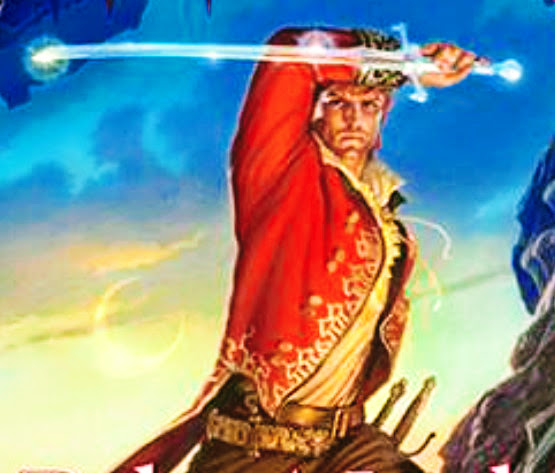
I’m sitting here chuckling to myself. I’ve just gone through several novels in a row where I read the first couple of chapters, got bored, then read the ending with no desire to go back and read the bulk of the book I missed. What amuses me is that this is the way I read most books now, reading just the ending, and yet with The Wheel of Time, I skip the ending completely.

Well, maybe it isn’t that funny, but for a minute there, I saw the humor.

I just had the terrible thought that for the rest of my life, I’m going to be rereading those same eleven books because I simply can’t find anything else to keep my attention. In too many novels, the minutia of the character’s lives and their inane conversations seem to serve no purpose except to fill up the page. Oh, things do happen, but those doings aren’t worth suffering through those banal pages. Even the endings seem ho-hum, as if the authors themselves had lost interest.

I used to be able to read anything. Cereal boxes, ingredient lists, one-dimensional books, just . . . anything. I don’t know if the change was a result of all the time I spent reading and studying the multi-layered Wheel of Time, or if the change would have come anyway. Because of age maybe? Loss of patience for inanity?

Maybe I’m looking at the situation wrong. Maybe I should be grateful something keeps my attention, even if it’s a series I’ve read a half-dozen times before.

Or maybe I should settle down and try reading the Kingkiller Chronicle again. I’ve had the first two books in the Kingkiller Chronicle trilogy for some time now, but have never been able to get into it. From what I can tell, it’s another one of those series that people love because of the beautiful writing or hate because it’s poorly executed. Either way, they spend hours discussing the books online. Apparently, one of the major problems with the “trilogy” is that the author never wrote the final book, though some people think the writing is so great that it’s worth reading anyway. It’s a “framework” series, where the “frame” is the present day third-person story of an innkeeper, who tells stories of his past in the first person. I never did like that kind of book, and I really don’t like fantasy, but I have the books, so I might as well try again.

Unfortunately, since there is no ending, I can’t do my usual thing of reading the first part and skipping to the ending.

And if I can’t get into it, well, there’s always The Wheel of Time.

Or hey! I could write my own series about a tired old woman chosen to save the world from evil. Assuming that tired old woman cared — to write the books or to save the world, either one.

***

Pat Bertram is the author of Grief: The Inside Story – A Guide to Surviving the Loss of a Loved One.

Quandary

Many of my posts this year have been prompted by outside sources: a few in answer to official blog prompts, a few in reaction to articles I read, and more than a few in response to my reread of the first eleven Wheel of Time books.

I’ve mostly given up reading online articles. I don’t want to know what is going on in the world, but more than that, I’m trying to live in the offscreen world. I was going to say I’m trying to live in the real world, but the Wheel of Time isn’t the real world, though it often feels like it since it’s a reimagining of our world, myths, legends, cultures. But even so, I’ve been trying to read other books for now.

Which leaves me in something of a quandary since there’s not a whole lot left to blog about. Most of the official blog prompts aren’t that interesting to me, and with the up and down weather as well as the hazy days from out-of-state smoke, I haven’t been doing much outside, which gives me even less to write about. (Though I did find one lone hyacinth in my yard to celebrate the first day of spring!)

Since I never actually decided to blog every day, it won’t be going against any principle if I simply stopped, but I’m on a streak — 79 days and counting — so it seems a shame to give up now.

I should be glad there’s nothing much to say, especially with the anniversary of Jeff’s death coming up. Normally that in itself would have brought an onslaught of words, but our shared life ended sixteen years and a whole-lot-of-living ago. As a memorial, I had considered reading Grief: The Great Yearning, more or less my journal of that first year of grief, but I leafed through it the other day trying to see if there was any significance to a moment of sadness I experienced, and nope. Nope to finding any significance to sadness on that particular day. And nope to rereading the book. Sheesh. Just what I saw was enough misery to sink a tanker. It’s better for me to leave all that emotion between the covers of the book.

So . . . quandary. What to write when there’s nothing to write?

With any luck, I’ll find an answer in time to write tomorrow’s post.

***

Pat Bertram is the author of Grief: The Inside Story – A Guide to Surviving the Loss of a Loved One.

An Alternative to The Alternative Ending to The Wheel of Time

In yesterday’s blog, I postulated an alternative ending to The Wheel of Time that I thought more fitting than the published one, but in my own “wheel” universe, I only reread the first eleven books, so there is no ending, which leaves two possibilities for an alternative to that alternative ending.

The first possibility is foreshadowed in The Great Hunt where the main hero gets trapped in a time loop by one of the bad guys. He keeps living the same few minutes over and over again. He’d been determined never to use the power of the universe since the male half is tainted and ends up making men go mad. He doesn’t know how to use the power, anyway, since the power users who could teach him are three thousand years dead. Still, frantic, needing a way out of the time loop, he finally manages to reach the power and save himself.

So, one ending is that evil doers, who are told by some of their evil masters that they can’t kill the hero and told by others that they must kill him, end up trapping him in a time loop because they don’t know what else to do. Hence, the hero keeps repeating the same eleven books without ever finding a way out. He doesn’t even know he’s caught in a trap since it’s a loop of a couple of years duration rather than a couple of minutes, so he has no memory of what has gone before. But it’s a wheel, right? So what goes around comes around. Maybe forever. Or at least until I finish playing my own private Wheel of Time game.

The second possibility is foreshadowed in Lord of Chaos, where the Dark One asks one of his minions if he’d use balefire in his service. He also tells him to let the lords of chaos rule. In The Wheel of Time, balefire is an immensely powerful magic weapon that destroys targets by burning them backward in time, so the target, anything they’d done, and anything resulting from their actions is erased. In a previous age, both sides used so much balefire that it practically unraveled existence, so the use has been banned except, apparently, in service to the Dark One.

So, the second ending is that the minion, who was mostly offscreen where we never really saw what he did, follows the Dark One’s dictates and creates chaos using balefire, but he uses so much and for so long, that he erases everything that happened back to the moment where the first book began. Hence, as in the scenario above, the wheel keeps turning, replaying those eleven books over and over again. Sort of a takeoff on Dorothy’s dream where she ends up back in the same place she started but without the hero knowing it was a dream and without having learned anything.

It’s funny that I forget so much of what I read as soon as a book is closed, but I can’t forget those last three cringeworthy books by the substitute author. Perhaps someday, as the wheel turns, I will, but for now I purposely try to put any memory out of mind as it arises. And anyway, this current preoccupation with the books will eventually pass so none of it will matter. Except that I do own those last three books. I keep wanting to get rid of them, but I don’t. I don’t know why.

***

Pat Bertram is the author of Grief: The Inside Story – A Guide to Surviving the Loss of a Loved One.

Reimagining the Ending of the Wheel of Time

I did it! I figured out the ending of the Wheel of Time, or at least an ending, one that’s more to my satisfaction than the published version. Most readers love the last three books written by a substitute author, but not me. I found them too inconsistent, too many bizarre changes to the characters, too much contradiction to what Jordan had written, too much discontinuity, and too much emphasis on insignificant characters and not enough on important characters. Besides, the whole thing was just so ho hum. The last battle is imminent, but everyone acts as if it will be tomorrow or next month or even next year. They also think it’s their choice when to begin fighting the Dark One, as if the Dark One is just sitting around waiting for them to decide to act.

What truly irritated me was how the substitute author further developed the main hero. This hero went on top of a mountain, ready to kill himself because he thought life and his mission were futile, just as the person he used to be did 3,000 years previously, but instead he had a bit of a revelation — that people were reborn and kept being reborn because it gave them a second chance at love. And because of this rather simplistic realization, the hero (Rand) was suddenly cured of the darkness that the Dark One had been coloring him with, was suddenly cured of his growing madness and became melded with that 3,000 year-old-version of himself that had presented as a voice in his head, and suddenly became what fans of the books call “Jesus Rand.”

Although some Christ-like features can be read into the hero’s character, he was never supposed to be based on the Christian savior, but rather more of a hero like King Arthur (as well as the Fisher King from the King Arthur legends and savior characters from dozens of other myths and legends). But the substitute author seemed to have missed that point completely and overrode the cosmology inherent in the books with his own religious beliefs. Appallingly, when the two personalities of the hero melded, he became a caricature of what a messiah might be. He was so over-the-top perfect that it was creepy, not inspiring. His ancient persona had never been that perfect — in fact, it was reported that he’d been sanctimonious and proud. And the hero in his present persona had become angry, determined, hard, ruthless. So how did those two personalities become so utterly pious when integrated?

Even worse, instead of doing what he was supposed to be doing, preparing himself for the last battle with the dark forces, he wandered the world feeding the hungry, helping the poor, healing the sick (though he himself didn’t heal the sick, he had someone else do it), and rescuing soldiers who had fought themselves into a corner. Under other circumstances it would have been admirable but none of what he did would matter if the world was soon annihilated by dark powers that only he could fight but wasn’t. Still it fit — sort of. Several of the characters feared the hard person he’d become, thinking he should be strong instead of hard, able to laugh and cry as he prepared for the last battle, and so they approved the change.

Worst of all, despite acting so pious, he was still consumed with hubris — not at all a messianic trait — believing he was better than the Creator since the Creator had merely sealed the Dark One away, not destroyed it as the hero intended to do. And oh, yeah. Shortly before going into the battle to save the entire universe, he demolished one of the most powerful magic tools ever made because it was “too powerful to use.” Whatever that means. (Actually, what it means is, as the substitute himself admitted, that he couldn’t figure out how to use it and so got rid of it.)

One part that was supposedly written by Jordan that makes no sense at all, especially coming from someone who’d been a soldier himself, was that even though the hero accepted his death and willingly made the sacrifice, he supposedly left instructions for one of his followers to leave gold and supplies in a tent for him to find when it was all over (though he could have done it himself). But no. Just no. If you’re fighting the last battle, a battle for the entirety of existence, you can’t leave that bit of distraction, that sense that you’re not giving it your all, that perhaps you’re not committed to fighting to the death. If he survives, fine — then get someone to help.

All that is to set the stage for what I suddenly realized today would make a great ending and what actually should have happened besides adding needed conflict.

Forget that whole scene of transformation. Have him go to the last battle as he was, darkness, anger, hardness, madness, and all. In which case, he’d have all sorts of people trying to stop him. His allies who thought that if he fought the Dark One when he was so dark himself, would definitely try to stop him because if he won in that state of mind, it would leave the world worse off than it was. The women power wielders would definitely be against him even more than they already were because they could not control him, and because they believed he’d unloose the Dark One on the world before he could seal him up again and so lose the world to darkness. The misplaced army, the one the dark minions sent after him, would be mobilized against him by the forces of the dark.

Despite that, the hero manages to assemble the forces of light to tell them his terms for fighting the last battle. (To everyone’s horror. So many of them lavished hate on him through eleven books, yet they expected him to willingly sacrifice himself for them!!) After they all sign the peace accords he wanted, the world suddenly grows darker, as if the eternal night is coming, and the forces of the dark descend on them. Although the hero wants to stay and help fight, he knows his confrontation with the dark lies elsewhere. And so he reluctantly heads to the Dark One’s lair. Although he knows it’s his duty, he isn’t sure that he wants to save humanity since they had been set on destroying him.

There is a power vs. power struggle between the hero and the Dark One’s avatar that seems pretty even, but mostly the battle is a philosophical one between Rand and the Dark One rather than actual combat. (As Jordan intended.) So, there he is, almost as dark as the Dark One himself, determined to do his duty, though he’s not sure why. And then comes the battle — dueling scenarios of what the world would be like if the Dark One won and what it would be like if the Dark One was not just sealed away again as the Creator had originally done but instead was utterly destroyed.

After a few of these scenarios (perhaps one that made the hero cry and another that made him laugh) the hero comes to an understanding and acceptance of himself and his fate as the savior of the world. He also realizes the truth — that the Dark One is not a person but a cosmic force. A force of dark to balance the force of light to create the pattern of life that is woven by the wheel of time. Darkness without light is annihilation. But light without darkness is also annihilation. (Think of a blank piece of white paper. It doesn’t signify much of anything, but print black on white, and look what we have!)

So instead of on the mountain, here is where he has his miraculous revelation, the one that brings light to the world the Dark One had all but destroyed. In the vast light that ensues, those physically fighting the dark minions and losing, find the courage and hope and resolve for a final push. So while the hero is winning his own battle, sealing off the Dark One rather than killing it, the humans and the forces of light are also winning their bloody world-wide battle.

I love the irony that the dark force that tried to destroy him would be the very thing that facilitates his transformation, gives him back to himself, and makes him strong enough to do what he needs to do to overcome the Dark One. Gives me shivers! Something the published ending never did, that’s for sure. And it makes sense to me, which is even more important.

Of course, other things happen before, during, and even directly after the last battle as loose ends get tied up and other major characters have their own climactic endings. I’d definitely get rid of the repeated character arc for one of the other two heroes, have them act as the responsible people they’d already become, and make sure all three of the heroes meet up again, something the substitute didn’t do but seems to be a necessary part of bringing things full circle. I’d especially not ignore those characters that were most supportive of the heroes during their travails as the substitute did. But bits such as this are easy enough for me to fit into my interpretation of the ending.

I’ve spent weeks — months! — thinking about this, putting the puzzle together, but now what do I do with all that mental time? I’ve been searching for another all-encompassing project, but so far, haven’t found a series that is even vaguely interesting. I suppose I’ll go back to reading whatever comes to hand, but that idea seems a bit flat.

Oh, I know! I’ll start rereading the Wheel of Time! I must admit, it is a fascinating literary experience to go back and read the first book again after experiencing the huge character arc of the eleven Robert Jordan novels and seeing how far those simple country boys had ended up from their humble beginnings. And then, I’d have to read the second book, and perhaps the third . . .

***

Pat Bertram is the author of Grief: The Inside Story – A Guide to Surviving the Loss of a Loved One.

Fool’s Game

I spent a lot of time researching the final books of the Wheel of Time saga, trying to figure out what parts Robert Jordan wrote and what parts the substitute wrote. Since there was no one place for the information, I had to comb through hundreds of sites and interviews until I came as close as possible to knowing who wrote what.

It was all suspect, of course, because even the parts that Jordan himself wrote were added to by the substitute. Occasionally, the substitute added just a few words, but those few words sometimes changed the thrust of the scene or at least diluted it. And even when the substitute hadn’t changed parts that were written by Jordan, they would have been subject to change if Jordan been able to write the entire ending himself.

Jordan was both a pantster (one who writes by the seat of his pants, who creates and discovers the story as he is writing) and a plotter (one who outlines, who knows the story before he writes). He knew the major points he wanted to hit as well as the end to aim for, but the journey to get there wasn’t plotted out. Which means that even if he had written a significant scene ahead of time to give himself something to aim for, by the time he got to that scene in the writing, things might have changed. In the books he finished, that was often the case, so it would probably have been the same with the finale.

He had supposedly written the final scene while writing the first book, which is why the end seems somewhat sketchy (both in the meaning of not being fully drawn and of not being totally true). The woman who helped the hero at the end was never named, had never appeared previously in the story, and was someone the hero didn’t know because I think at the time he wrote that, Jordan himself didn’t know. And yet, through several of the last books Jordan did write, he was developing a character who was foretold as someone who would help, so I have a hunch by the time he reached the end, this woman would have replaced the unnamed one. And if not, it would have been a grievously misplaced use of Chekhov’s gun. (Chekhov’s gun is a principle where every element in a story should be necessary. As Chekhov pointed out, “One must not put a loaded rifle on the stage if no one is thinking of firing it.”)

Jordan did seem to delight in turning assumptions on end, and even though he said that not every prophecy needed to have a major resolution, still, to have a character who was fated to help the hero and who was central to other characters’ actions (they thought she would kill him), to end up simply having her place a pile of clothes and money aside for him to use if he happened to survive the last battle is not a big enough payoff for all the drama instigated by that prophecy, especially since the hero could have done that himself.

The point I’m trying to make, at least to myself, is that even the parts Jordan wrote are not canonical.

So, basically, for me, the entirety of the final three books are not worth the paper they’re written on.

I am beginning to see, however, why people revere the substitute so much. Not only do they prefer his style of writing (though why people would slog through millions of words of a saga if they didn’t like Jordan’s style, I don’t know), but otherwise they’d be left with the utter sadness of Jordan never being able to finish his epic. Sad for him, of course, and sad for us. I have a hunch his ending would have been visionary if not spectacular — all the issues readers had with his getting sidetracked had pretty much been resolved, and he was again focused on getting the characters to the last battle. Most readers, I’m sure, are just as glad not to have to contemplate what could have been and are willing to settle for what they were given.

Most. Not all. Not me. I keep thinking I should be able to figure out what the ending would have been because of all the clues Jordan had laced into the saga with foreshadowing and prophecies. The “hero’s journey” concept could be a clue, too, since that was a big part of the origin of the books, but in the end, it’s a fool’s game since there’s no way of knowing what would have come out of Jordan’s subconscious and what he would have discovered as he wrote.

Still, as a person who gets caught up in literary mysteries, I’m sure I’ll continue to do what I can to puzzle out the end, fool’s game or not.


***

Pat Bertram is the author of Grief: The Inside Story – A Guide to Surviving the Loss of a Loved One.
Using My Time

The more I reread The Wheel of Time books, and the more I can retain those millions of words, the more the irony and the subtle humor become apparent.

In one scene, one of the heroes, who is being kept as something of a sex slave for a queen, entered a room where a bunch of women newly come to the palace were milling around. He had a bad feeling about the situation, and he stood there waiting for “one of the Forsaken [what the disciples of the Dark One were called] to leap out of the flames in the marble fireplace, or the earth to swallow the Palace beneath him.” That isn’t amusing, of course, but what is amusing is that although he didn’t know it (nor could anyone who hadn’t previously read the books in their entirety), one of the women in the room really was one of the Forsaken.

In another case, a woman who was sort of a slave caretaker (Robert Jordan created some appalling civilizations), thought that one slave’s new-found acceptance of her situation meant she was going to try to escape, and so doubled up on her conditioning. What I found amusing is that the slave keeper herself ended up being blackmailed into helping the slave escape.

Because of small things like this, which cannot be seen until a reread or two, I’m finding this read through to be more amusing and more touching than I expected. It helps, I think, that I skip the torture scenes. (Those Forsaken do love their torture. Oddly, most of them undergo just as much pain as they give. I suppose that’s what happens when you dedicate yourself to the Dark One. Since he’s also called “The Father of Lies,” you’d think that would be a clue to his nature, right?)

It also helps that I know so much mythology and history, long ago customs and costumes, and all the other bits that make up Jordan’s world, because the knowledge makes the books richer, though I miss a lot. In a passage I just finished reading, someone mentioned the seals on the Dark One’s prison, saying three were hidden away, three were broken, and no one knew where to find the seventh seal. Seeing “the seventh seal” written out like that was a hitting-palm-on-forehead moment for me. I don’t know why I never associated these seals with Revelations and Armageddon, though I should have. I knew the last battle was Armageddon, though in the books it’s called Tarmon Gai’don. I just never got the connection with the seals. Now I’ll have to go through the books and see if I can identify what seals were broken and how they affected the Wheel of Time world. Like the fisher in The Fisher King legend, the Wheel of Time hero is “one with the land,” which is becoming obvious as the hero’s tempestuous moments are reflected by stormy weather. So too must the broken seals have some sort of correlation with what’s happening in that world. As if there’s not already a headful of correlations to find!

I know there’s a lot of correlations between historical battles and those of Jordan’s, such as the off-screen skirmish called “Altaran Noon,” which was based on the “Sicilian Vespers.” Since I don’t know much about battles, I’m sure I miss a lot of what he intended. Or maybe I’m not missing what he intended — it’s possible he didn’t really intend for anyone to see what he was doing; it’s possible he recreated those battles for his own amusement since he was a self-avowed military historian. (Before becoming a full-time writer, he was a nuclear engineer, and before that, he’d served two tours in Vietnam as a helicopter gunner, which contributed to his interest in military history. It’s also what inspired him to give his male characters their unique perspective about not killing women.)

I seem to be writing a lot about these books lately, but there’s a great deal to process, though sometimes I wonder why I want to. Still, I need to be doing something, and studying these books and this world is a good a use of my time as any. And who knows — if I can come to understand his world, maybe I can understand ours.

***

Pat Bertram is the author of Grief: The Inside Story – A Guide to Surviving the Loss of a Loved One.