Writing the Tough Stuff (Or Killing the One You Love)

Please welcome my friend, fan, and fellow author, Aaron Paul Lazar, who will be discussing killing the one you love — metaphorically and literarily speaking, that is. Aaron writes to soothe his soul. An award-winning, bestselling Kindle author of three mystery series, Aaron enjoys the Genesee Valley countryside in upstate New York, where his characters embrace life, play with their dogs and grandkids, grow sumptuous gardens, and chase bad guys.  Aaron says:

It’s not easy writing a scene where you kill the one you love.

Of course I don’t mean your actual spouse or lover. I mean the wife, husband, or sweetheart of your main character.

I’ve done it in FOR KEEPS. Thinking about it tears my heart out every single time.

That’s what I mean by “writing the tough stuff.” Sam Moore—a retired family doctor who is our resident hero in Moore Mysteries — is very much like me, except he’s twelve years older and retired with enough money to putter around in his gardens all day. Let me repeat that. All day!
I hate him for that.

Okay, so maybe that’s a little extreme, considering he’s fictional. Shall we say, I am exceedingly jealous of his lifestyle? Although Sam was a family doctor and I am an engineer, we’re still a lot alike. We both love to plunge our hands into the soft earth and grow things. We both love our grandkids so much it hurts. And we both have spouses with multiple sclerosis. There are plenty of differences, too. I cook, I write, and I take photos. Sam doesn’t. But of course, it’s not a competition. At least I don’t think so…

In spite of the fact that he’s not real (at least not in the traditional sense, LOL), I relate to this man and feel his pain when he’s hurting. Sure, you say, writers should feel ALL their characters’ pain. We have to, to get into their heads and nail the characterization. Don’t we?

But I’ll bet some characters are closer to your heart than others.

Sam’s wife, Rachel, shares many qualities with my dear wife, Dale. They both endure MS, they both love to read, they are both chair-caning artists. Some of their symptoms are the same, but that’s where they split apart. Rachel loves to cook (that’s my job in our marriage), she’s in a wheelchair, and she stays pretty upbeat, considering her challenges. They both adore their grandchildren and both love to read. Rachel’s a tribute to Dale, in all honesty. But she also has morphed into her “own woman,” too, and I love her deeply. Er . . . through Sam, of course. (Honey, don’t be jealous!)

In the first two books of theMoore Mysteries series, Rachel sticks by Sam’s side, supports him when he’s overcome with grief and is plagued by strange paranormal events, and loves him deeply enough to keep him sane.

That’s why it really hurt when I had to kill her.

In For Keeps, the third book in the series, life takes an awful turn. When Rachel is murdered by a serial killer, it puts Sam back in the psych ward, the same place he was thrown when his little brother disappeared without a trace fifty years earlier. Desperate to fix things, he calls on the power of the green marble, the talisman his little brother Billy controls from afar that whisks him back and forth through his past.

Unlike those of us in real life, Sam gets a “do over.” He flies back in time to desperately try to fix the problems that lead to this gruesome act, and over and over again, he attempts to tweak the past to bring his dear Rachel back to life.

How do you write such a scene without losing it? How do you make it feel authentic to your readers? How much is too much? And how can you be certain that your character’s reaction will ring true?

It’s not easy. Matter of fact, since I loosely base Rachel on my own wife, and since Sam and I are really quite alike, it was close to torture.

I called upon my darkest, most powerful emotions experienced when my father died and also when my own dear wife almost died several times in the past few years. I’ll never forget the time the nurse in the ER called the nun on duty to bring me to a little room where no one would see my reaction to her impending news that Dale might not make it. She carried a box of Kleenex under one arm and a bible in the other. She was so sweet. Yet it was one of the scariest moments of my life. Thankfully, my wife pulled through and is doing okay today.

That hollow-gut, black-sludge-in-your-heart feeling is horrible when you lose someone dear to you, isn’t it? It’s all encompassing. Sometimes you just want to deny that awful truth, and pull away — far away — like Sam does in the following excerpt. (Click here to read the Excerpt From “For Keeps” by Aaron Paul Lazar.) I tried to channel those feelings when getting inside Sam’s head.  Let me know if you think it worked.

For Keeps is book #3 in Moore Mysteries, and is now available through Twilight Times Books and Amazon.com. The series can be read in any order.  Free dates of “For Keeps”: Sept 14, 15, 16th and October 12, 13th.

copyright 2012, Aaron Paul Lazar

A Dream Come True For Bibliophiles

My publisher, Second Wind Publishing, is going to be at the Bookmarks Festival of Books in Winston-Salem on Saturday, Sept. 8, 2012 and I’ve been trying to get information about the festival to write a promo for the Second Wind blog. It’s hard. I don’t want to mention all the big names that will be there because . . . well, because it’s a Second Wind company blog, and it just doesn’t seem right to promote non-Second Wind authors, especially when they don’t need the promo. A lot of new Second Wind authors will be there signing books, but since they are so new I don’t know yet who they are, and since I’ve never attended the festival, it’s difficult to write an exciting article.

I must have been more focused on the article than I realized, because last night I dreamt I was at the festival. (Well, a festival anyway. Mine was a nightmare, and I’m sure the real Bookmarks Festival is a dream come true for bibliophiles.) I set up my computer at a side table, and left it there while I busied myself with other tasks, and whenever I turned around, someone was using my computer. The last time I turned around, the computer was gone. Someone had taken mine and left a piece of junk in its place. Of course, since this was a frustration dream, I dashed around, looking for the computer, getting more and more lost nd frustrated by the minute. Every time I found someone to tell of the theft, they’d make scathing comments about leaving something so valuable unattended. My response, “But it’s never happened before,” sure didn’t win me any friends.

I woke up thinking that the sleeping me sure was stupid. I would never in a million years leave my computer unattended in a crowd. I would never even set it up in a crowd. It’s too valuable to me, being an eye into the electronic world where I have friends and even a smattering of respect.

But all’s well that ends well. Despite the frustration of the dream, I awoke rested, I did not get my computer stolen, and the Bookmarks Festival will carry on without me.

Even though I will not be at the festival, my books will be. So, if you are going to be in Winston Salem this Saturday, be sure to check out the Bookmarks Festival of Books. It’s from 10 a.m.-5 p.m. in the Downtown Arts District in Winston-Salem, centering on Trade and Sixth Streets. And don’t forget to stop at the Second Wind Publishing booth and check out my books. Even better, buy one!

(In case you don’t know what books I’ve written, check out the right sidebar of this blog. They are all listed.)

Who Decides What Books are Worthwhile?

I watched Incognito the other day, a story about an art forger. One of the most interesting bits of dialogue was when a gallery owner says (screams it, actually) that whatever he says is art, that is art. The comment caught my attention because lately I’ve been blogging about the publishing industry, the writing community, and where (or how) I fit into this modern world of books. And a big part of that equation is the meaning of art as it applies to writing.

I have no fondness for the corporate publishers. For the most part, the books they’ve been publishing for a long time now seem boring and trivial, and hold no real truth for me. I am not one who can read the zillionth book in a series and still maintain my interest in the characters. The writers I have always liked are non-literary authors, such as David Westheimer and Nevil Shute, who wrote stand-alone books that did not fit into any particular genre. (To me a literary author is one who is more focused on how something is said than on what is said, and who is more focused on what is said than on the story itself.) In fact, the very reason I decided to write my own books was that I could no longer find the sort of novels I liked to read.

On the other hand, I have no special fondness for self-publishers. Many write the same sort of drivel that the major publishers put out — trivial books that lack individuality and truth. Even worse, many are badly written, and the plethora of errors shows a complete disregard for readers. Originally, I assumed these writers who go it alone were better than those published by the corporations, since the major publishers seem to specialize in a high degree of mediocrity, but unfortunately, the reverse is too often the case. Worst of all, in an effort to get noticed and make a living, many authors write a book every three or four months. Without time to think, without the grueling months of rewriting, editing and copyediting, authors will be foisting increasing numbers of less than stellar books on the market.

In this avalanche of books, what distinguishes one from another? Who decides what is worth reading? Who decides what books will succeed? The critics? Just because they say a book is worthwhile doesn’t mean that it is. Some of the books that have won major awards stun me with their ghastliness. The corporate publishers? The books they choose aren’t picked for worth; they are chosen for salability. The masses who self-publish? The masses who read? (I hate using the word “masses,” because really, who among us ever considers themselves one of the masses? But I can’t think of a better one to describe huge numbers of people who do the same thing as everyone else.) Look at the self-published books that have achieved icon-hood — few have little value as literature or art, few have a modicum of “truth.”

So who is to decide what is art or literature? My books are published by a small press, and so are the books by many writers I have met online. Someday, maybe, these small presses will provide a literary haven between the two extremes of self-publishing and corporate publishing, but the truth is, no one has to decide what books are art, which books have merit. It doesn’t matter.

In the beginning, stories were told wherever humans gathered. It is one of the very few things that separate us from any other species — our ability to tell stories. It is what makes us human. Perhaps even what makes us divine. We are a species of mythmakers, telling ourselves the story of our lives, telling each other the stories of other lives, both real and imagined.

The pen was the first great technological advance in story telling, followed by the printing press. The printing press allowed certain businesses to control what stories were told, and that control held true for centuries. Now, in this electronic age, the control is gone, and anyone can publish anything, no matter how terrible. This puts a burden on readers since often they get stuck buying something that is poorly written and badly edited, if edited at all, but this is the way things are going to be for a long time to come.

And perhaps the situation is not such a bad thing. We could be moving away from literature as art (as defined by self-styled critics) and returning to our very beginnings . . .

Storytellers.

Do Writers Need To Be Supportive Of Each Other?

Do writers need to be supportive of each other, as if we are all part of one big dysfunctional family, as if all writers are the same, or at least connected in some way? I can see that it’s important not to be envious of those who make it big, since envy destroys the envier, but I see no reason to be glad of the success some writers attain, especially those who write books I would not read if they were the last books left on the face of the earth. Nor do I see any reason to celebrate the success of someone I have never met or have never exchanged so much as a single eword. Nor do I see any reason to encourage writers to write. Those who want to write, write. It’s as simple as that.

To some extent, almost all people are writers, even if they just jot shopping lists, post status updates, and respond to email messages, but this doesn’t make me connected to them except in the cosmic sense that we are all connected. (To be crankily honest, some who call themselves writers should have stayed with writing shopping lists.)

I’ve never felt any great bond to other writers, perhaps because I never really considered myself a writer. I don’t always write — sometimes I do, more often I don’t. I have no great passion or deep need for writing, no burning desire to create, no characters that scream to be born, no story that demands to be written or that writes itself. I don’t define myself by what I’ve written or what I might plan to write. My books are not my children, my characters are not my friends. When I write, I do have moments of being in the “zone,” but mostly I have to dig for each word, which is okay since that’s the part of writing that’s fun for me — finding the perfect word to say exactly what I mean. (The other day someone posted a question in a writing group asking for help figuring out a word since he didn’t have time to find it for himself. To me, that’s not a writer. Words make a writer. If you have no time for words, what’s the point of writing?)

Speaking of words, I don’t understand why so many writers brag about their word counts. What does a word count mean? It doesn’t impart anything about the quality of writing. For all I know, the authors could have been stringing nonsense syllables together or writing shopping lists, so why should I care how many words they wrote? Word counts mean nothing, what counts is the meaning of the words.

I really do sound cranky, don’t I? Well, perhaps I am, but it does irk me that just because I’ve written a few books and gotten them published, I am supposed to accept other writers as my “family.” Someone who slaps together a draft and posts it on Amazon as a published book doesn’t have anything in common with me. Someone who sits down and spews out thousands of words — good or bad — doesn’t have anything in common with me. Someone who scribbles an erotic book that catches the fancy of the masses doesn’t have anything in common with me. (Nothing I write will ever go viral. I have taste.)

Still, I do what I can to be supportive of other writers. I have two blogs that cater to writers — one is for book excerpts, and one is for interviews. (Feel free to send me an interview or book excerpt according to the instructions on the blogs.) I also have a writing discussion group on Facebook to help writers develop their craft, and I host a self-promotion extravaganza every Saturday to give writers a forum to promote. So maybe this is a case of my actions speaking louder than my words.

Don’t Buy My Books

With millions of people out there urging you to buy their books, I’m going to do the opposite and tell you not to by mine. Considering the books that make it big in this anything-goes book world, chances are you won’t like my novels, anyway. Here’s the truth of it — don’t buy my books if:

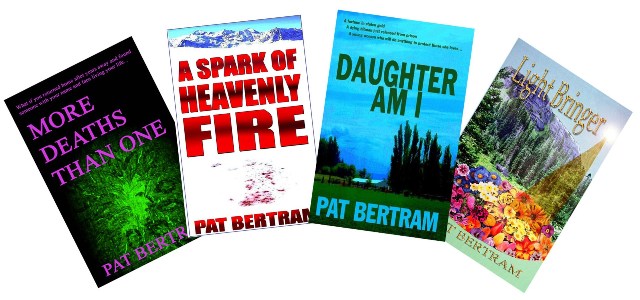
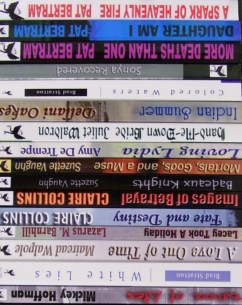
You are looking for vampire, ghouls, zombies. There are no such beings in my novels, though there is a brief mention of zombies in A Spark of Heavenly Fire, and there are plenty of sub-humans, such as unscrupulous scientists and bureaucrats, but they bleed and eat the same as any human.

You are a romance junkie. Love is a theme in each of my books, but the conflicts are never romantic ones. The characters gradually fall in love as they band together against a greater villain than their own feelings could ever be.

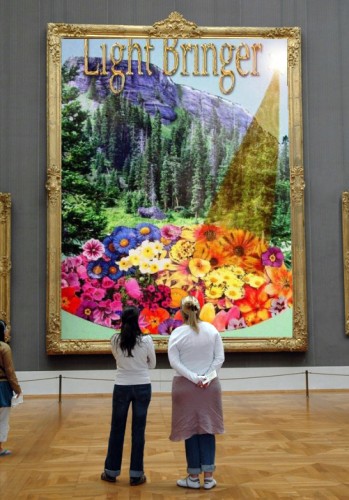
You are a fan of Fifty Shades of Grey. There is no eroticism in my books, no women who want to be subjugated by men, no kinky sex. In fact, the only graphic sex scene is in More Deaths Than One. Each of my books had less sex in it than the previous one, so my last novel, Light Bringer, had no sex. The story did not call for it, and it never occurred to me to add a few gratuitous sex scenes to help the books sell. (Also, unlike FSofG, my books are well-written.)

You only read thrillers. Although my books all have thrilling moments, and although people often stay up late to finish reading one of my books, they are not thrillers as such. In thrillers, the reader knows who did it from the beginning and learns why from the villain since part of the book is told from the villain’s point of view. In my books, the villain’s identity is not revealed until the end, except in Light Bringer, where the villain turned out to be maybe not so villainous after all.

You want books that are the same as all the rest, only different. My books aren’t the same as all the rest. I’ve read over 15,000 works of fiction, and I made sure my books weren’t like any of them. The endings are not predictable. If by chance you do guess the ending, there will still be a bonus surprise for you.

You like stories with flawed heroes. Not one of my characters was purposely flawed to make them more interesting. They are real in their own right, struggling to survive as best as they can, learning the truth of themselves and their world, growing into who they need to become.

You like raunchy humor. There is much humor in my books, particularly Daughter Am I, but the humor comes from character interaction without a single tinge of raunch, or it comes from a sly sense of irony.

You like a particular genre. My books have no particular genre. When I was growing up, the libraries had small sections for genres such as mystery, science fiction, romance, westerns, but the rest of the books were all shelves alphabetically. That’s where my books belong — with the rest. When I have to pick a genre, I usually say the books are conspiracy fiction since they are all based on various so-called conspiracies. Some readers call Light Bringer science fiction , but to be honest, it was written as myth fiction — based on modern conspiracy myths and ancient cosmological myths.

You only “buy” free books. My books are not free, and except for rare promotions, they never will be free. You can, however, download 20-30% free at Smashwords to give you a sense of what my books are like. (You can find my Smashword’s profile here: Pat Bertram. Scroll down below the book trailers to find my books. Click on the one you’d like to download.)

Do Readers Have an Obligation to Writers?

In a current writing discussion on Facebook, authors are trying to figure out why so few readers leave reviews of books, even books the readers loved. This expectation of reviews seems just another example of the upside-down book world that exists today. Writers have come to feel that because they publish a book and make it available for people to read that readers have an obligation to them, but readers have no obligations to writers.

Writers have obligations to readers, and they often fail to honor those obligations. Writers have an obligation to make sure what they write is readable and free of error. They have an obligation to present a finished product, one that has been edited and presented in the best possible manner. And they have an obligation to fulfill the promise of the book. If a story starts out strong, tantalizing readers with a wonderful premise, the author has an obligation to fulfill the implied promise of an equally dazzling ending, but so often books simply fizzle at the end, as if the writer ran out of ideas. (Many big name writers do this, yet people still continue to buy their books. Maybe they keep hoping that one day the ending will be spectacular? I’ve given up hope, and no longer read books by these authors, but considering their continued success, I can see I am a very small minority.)

Writers ask readers for their money, for their time, for their suspension of belief. Even if the book is a free download or a library checkout, authors are still asking for time, and time is worth more than money these days. So why should readers be obligated to pay for the book — again — with a review?

Not only do many writers expect reviews, they expect readers to critique their books, to tell them what works and what doesn’t. This is one of the many ridiculous results of the current anyone-can-publish-anything world — people do publish anything. They publish first drafts as if the drafts were finished books and expect readers to tell them what works and what doesn’t. It is not the readers’ obligation to help writers hone their craft — it is the writer’s responsibility to present an already honed product. (Writers have actually told me they publish their book to get feedback. And they charge readers for the privilege. There is something dreadfully wrong about knowingly publishing a first draft and selling it as a finished book.)

It’s amazing to me not that so few readers follow through with reviews, but that so many do. I am grateful for every review I have received, and I am thrilled every time someone tells me they love my books either via email or through a review left on Amazon or Goodreads, but I don’t expect it. I know readers have no obligations to me as a writer, just as I have no obligation to the writers of the books I read.

Murder in the Wind

Murder in the Wind is an anthology of crime/mystery short stories contributed by the authors of Second Wind Publishing. Murder, mayhem and the unexpected are rife in each riveting story.

I’m a bit biased, but my favorite story is “The Stygian Night” by . . . drum roll . . . me! As a reviewer said, “In this delicious little story by the master of misdirection, Pat Bertram so draws us into the fantasy life of would-be author Silas Slovatksy that we scarcely recognize a “real” story unfolding in the background.” Poor Silas, he wants so much to be an author, but he just doesn’t get it.


***

Excerpt from “The Stygian Night”:

It was a dark and stormy night.

Silas Slovotsky leaned back in his chair and studied the words he’d typed into his computer.

He grinned. Perfect. The very words he needed to set the scene. And they had the added benefit of being true. It was a dark and stormy night. Except for his porch light, of course. And the thunder and lightning—

He leaned forward and peered at the computer screen. Did the sentence seem a bit trite? Maybe he needed to spiffy it up. He opened his thesaurus to the word “dark” and ran a finger down the page. “Stygian”. That might work.

He cleared his computer screen and typed: It was a stygian night.

Nope. Didn’t have the euphoniousness of the original sentence. Perhaps if he reread what he’d already written he could figure out how to proceed.

He printed out the manuscript he’d been working on for the past four months and read the single page. Dark as Night by Jack Kemp.

A thrill ran up his spine. He could see it on the shelf in the bookstore. Kemp, King, Koontz. He’d chosen his pseudonym specifically so the reviewers could call them the unhallowed trinity. And he deserved the accolade.

A knock on the door startled him out of his dream.

Who could that be? His friends—all two of them—knew he didn’t like to be disturbed when he was writing.

***

A few of the other stories included in the anthology are:

 “A Whiff of Murder” by Lazarus Barnhill: Barnhill reintroduces a pivotal character from The Medicine People. Old, wiser, sober and cynical, Bob Vessey hasn’t lost his touch in examining crime scene evidence.

“Hanging Around” by J J Dare: This marvelous tale begins playfully with squirrels sporting around a human body, hung seventy feet off the ground and quickly suspends the reader.

“This Time” by Claire Collins: A swiftly moving, smoothly written love story that turns into serial murder and mayhem. Well, all’s fair in love and revenge.

“The Strange Disappearance of Comrade Wang” by Mickey Hoffman: Becka, an innocent and vulnerable girl, finds herself at the mercy of the authorities in a strange and hostile place.

“Murder at the Manor” by Juliet Waldron: To read Waldron’s work is to be not transported but immersed in different, distant times and places. We genuinely regret it when her story ends.

“The Spot” by Deborah J Ledford: The Spot is just what Ledford hits in this awesome little tale of revenge, remorse and restoration.

Getting My Kicks on Route 66

Each year,  the California Historic Route 66 Association selects one of the eight states through which Route 66 runs to host the Route 66 International Festival. This year, the festival will be held from August 9-12, 2012 at the San Bernardino County Fairgrounds in Victorville, CA. Making it an even more historic event, the fairgrounds are on old Route 66!  With the theme “California Dreamin’ on Route 66”, the Route 66 International Festival 2012 will attract thousands of Route 66 enthusiasts, historians, fans and custodians of the “Mother Road” from across the country; including international visitors from 17 different countries, as well as local residents. And me.

I’ve been accepted as a participant in the festival, and I’ll be there signing my books on August 10th and 11th. Except for Daughter Am I, the story of a road trip from Colorado to Chicago, my books don’t have anything to do with Route 66, but I’ve had little luck with writer’s conferences and library presentations, so I’m going to try something completely different. It should be interesting. I’ll have to stay for the two days rather than do what I normally do at festivals — walk around for a few minutes then leave. (I never did know how to have fun. At least not what other people consider fun.)

So, if you’re going to be in Victorville on August 10 and 11th, be sure to stop by the fairgrounds and look me up. I’m at the Alaska Pavilion, table 10. I’ll be waiting for you.

How does your environment/upbringing color your writing?

Because I’ve always lived in the shadow of mountains, mountains always shadow my writing. This is especially true in Light Bringer. The story begins when a baby is found on the doorstep of a remote cabin in the shadows of the Rocky Mountains, and continues years later when the foundling, now an adult, returns to the high country to find out who she is. The mountains in my novel are both protective and secretive — the hills protect those who live in their shadow, yet the mountains also harbor terrible and awesome secrets that threaten those same people.

Whenever I needed a hiding place for the secrets of the ages in Light Bringer, I searched maps for isolated mountain ranges, and ended up with a library beneath the Ahaggar Mountains in Algeria, ancient artifacts beneath the Beishanmai Mountains in the Gobi Desert, and experimental spacecraft beneath the McDonnell Ranges in Australia. I’d heard about  the mountains in Australia where the experiments were being done, and in my research I’d come across hints of what lay beneath the Ahaggar Mountains, but the Gobi location was strictly a guess, though later I discovered that in fact, caves deep inside the Beishanmai Mountains were repositories for ancient treasures.

Maybe the mountains themselves were helping with the book.

Here are some responses from other authors about how their environment colors their writing. The comments are taken from interviews posted at Pat Bertram Introduces . . .

From an interview with: J. P. Lane, Author of “The Tangled Web”

I’ve traveled from an early age and I’ve lived in several countries, so maybe that’s the reason The Tangled Web trots around the world a bit. I chose Prague as one of the locations, because I’d been to Prague the year before I started writing it and the memories were still fresh. The familiarity with the Hispanic characters comes from having lived in Miami for twenty years and having had a lot of Hispanic friends and work associates. I also lived in Puerto Rico at one point. And there’s the Jamaican dialect in the book. Only someone who’s lived in Jamaica for some length of time could write that.

From an interview with: Dale Cozort, Author of “Exchange”

I grew up in a fair-sized city, but I spent a lot of time with relatives in the country, so I probably write rural life a little more authentically than someone without that experience. I also have a computer background, so there is always a little bit of the techie in my stories. I have to dial that back so it doesn’t get in the way of the story.

From an interview with: Sherrie Hansen Decker, Author of “Love Notes”

Love Notes is my first Christian inspirational novel and certainly reflects some of my deepest beliefs about my Christian heritage. In other of my books, the main characters have been rebelling against the very faith Hope clings to in Love Notes. So yes, my Christian beliefs definitely color my writing, whether in shades of guilt or hope. In Love Notes, I love it that Hope’s strong faith is intact even though she’s lost everything dear to her, including her husband, who died in a tragic car accident. Tommy has everything a man could want, yet he is cynical and discontented and very short on faith. In the end, Tommy finds hope, joy, peace and love where he least expects it — as have I on several occasions!

What about you? How does your environment/upbringing color your writing?

(If you’d like me to interview you, please check out my author questionnaire http://patbertram.wordpress.com/author-questionnaire/ and follow the instruction.)

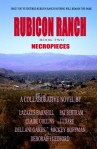
Rubicon Ranch: Necropieces — The Story Continues

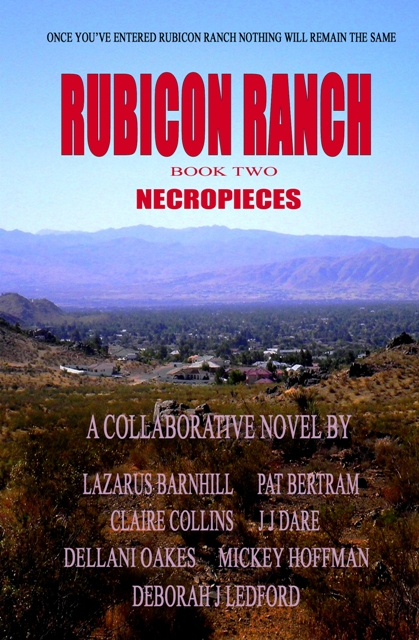
Rubicon Ranch is a collaborative and innovative crime series set in the desert community of Rubicon Ranch and is being written online by the authors of Second Wind Publishing. Seven authors, including me, are involved in the current story — Rubicon Ranch: Necropieces.

Residents of Rubicon Ranch are finding body parts scattered all over the desert. Who was the victim and why did someone want him so very dead? Everyone in this upscale housing development is hiding something. Everyone has an agenda. Everyone’s life will be different after they have encountered the Rubicon. Rubicon Ranch, that is.

Although some of the characters were introduced in Rubicon Ranch: Riley’s Story, a previous collaboration, Rubicon Ranch: Necropieces is a stand-alone novel.

We hope you will enjoy seeing the story develop as we write it. Let the mystery begin! Whodunit? No one knows, not even the writers, and we won’t know until the very end!

Chapter 9: Melanie Gray
by Pat Bertram

Melanie locked the front door of the house and turned around to face the day. It was clear and warm with a platinum sun shining in an azure sky. She felt her spirits rise. With such lovely weather, things couldn’t be as bad as they seemed. She marched down the driveway, and her spirits plummeted as fast as they had risen. The sheriff’s tan Navigator, like a brooding predator, loomed in the driveway of the Sinclair house next door.

Melanie had tried to forget Sheriff Seth Bryan and the conflicted feelings he had aroused in her, but apparently she hadn’t succeeded. She could feel the emotions rushing back to fill the emptiness inside her. She still couldn’t tell if she’d felt more drawn to him or more repelled by him. With any luck, she’d never have to explore those feelings. As soon as he finished his business and left the area, she could forget him again.

She heard the sound of his voice, though not his words, and for a moment she considered dashing back into the house to avoid any encounter with him, but then she realized the truth. The sheriff had no interest in her. It had been almost three months since she’d last seen him, and in all that time, he had made no effort to contact her.

She lifted her chin. She didn’t need him or any man. They were all worthless creatures who had no regard for anyone but themselves.

Still, it wouldn’t hurt to see what he was up to.

She took a few steps forward so she could see the front door of the Sinclair house. The sheriff looked the same as he always had. Jeans and a white shirt with a badge on the shoulder clothed his lean, flat-bellied body, and a navy blue ball cap with a yellow “Sheriff” embroidered on it covered most of his dark brown hair. And he still wore those ridiculous mirrored sunglasses.

The sheriff and Moody seemed to be standing closer together than politeness dictated. Could something be going on between the two of them? Movement in the passenger seat of the Navigator caught her attention. Deputy Midget. If the sheriff intended anything shady, surely he wouldn’t bring a deputy along to witness his behavior? Then this must be an official visit.

Moody looked okay — happy, even. It had been very quiet the last week or so without “The Sounds of Silence” blaring at all hours, and she’d probably been enjoying herself in Morris’s absence.

The sheriff starting walking toward his vehicle. Melanie squatted to retie a shoelace, hoping he wouldn’t catch sight of her. She might have the courage not to seek refuge in the house, but she had nothing to say to him.

When she heard the sheriff’s Navigator slowly moving down the street, she squelched a pang of disappointment. As annoying as his attentions were, at least they had reminded her she was alive. She’d been living with the dead — or rather memories of the dead—for way too long.

She arose with only the slight aid of one hand to push her erect, and angled her steps to the right of her driveway, intending to head up Delano Road to the desert. She paused, took two steps to the left.

The Daily Indecision is how she’d come to think of this inability to act. “Sounds like a newspaper,” she said aloud. “They’d print both sides of every story since the editor would be unable to decide which view to stand behind. Or maybe the paper would be blank because they’d never be able to decide which stories were newsworthy. And since when do you talk to yourself?”

Since Alexander died. She often wandered in the desert, trying to understand her husband’s death and her grief, and she’d gotten in the habit of talking aloud to him, hoping he could help make sense of her chaotic thoughts. He never responded. But then, he’d seldom replied even before he died.

When had their relationship become all about him? And why hadn’t she noticed the change? She sighed. Probably because she’d spent so much time online doing research for the coffee table books she and Alexander wrote. Well, she wrote. He took the photos. After his death, she discovered he’d somehow squandered the advance for the book about the Mojave Desert they’d contracted for, so now she needed to take the photographs in addition to writing the text. She thought she’d become good at shooting photos, but just this morning she’d received an email from her publisher:

“Some of your photos are usable, but most are uninspired. You take photographs, but the great photographers, like Alexander, make photographs. And when they make photographs, they make love. We feel the empathy between the external and internal events.”

Whatever that meant.

“What it means,” she said aloud, “is that you have work to do.” She took five resolute steps up Delano Road, then stopped. She could see Eloy Franklin hunched on his porch like a land-locked amphibian, watching everything that went on in his vicinity.

After all the turmoil the neighborhood had gone through recently, after all the deaths, she thought that things would have changed, but there Eloy sat, as unapproachable and forbidding as always. She’d smiled at him a couple of times when she passed in front of his house, but he’d never acknowledged her efforts at friendliness by so much as a nod.

Unable to stand the thought of Eloy’s scrutiny, she turned left. The sheriff’s navigator hadn’t gotten far, only a few houses away. The vehicle still moved slowly, as if the sheriff were looking for something. Trying to see the neighborhood through his eyes, Melanie peered down Delano Road. A petit woman held a camera to her face, either taking photographs or hiding behind it. Did Sheriff Bryan think the woman was Melanie? Melanie smiled to herself. Whatever faults the man might have, mistaking one woman for another was not one of them. Melanie had seen the woman several times before; she was shorter, prettier, and younger than Melanie, and had the clear luminous complexion of someone with a mixed race heritage.

Beyond the woman, a skinny man lurched along the side of the road. Melanie had also seen him several times before, and he worried her. Anger seemed to crackle around him, like lightning right before it strikes.

The Navigator’s siren blared, and the vehicle shot down the street and tore around the corner onto Tehachapi Road, heading east.

A dark cloud seemed to lift from the neighborhood, and Melanie’s indecision disappeared. She turned right, past Moody’s house, past the strange no-man’s land that separated the Sinclair land from the Franklin land, past Eloy’s house.

The wilderness beckoned.

*     *     *

Melanie stood at the crest of knoll and surveyed the expanse of desert. Somewhere out there, midst the creosote bushes and cacti, a photograph she could make waited for her — an image so compelling, viewers would immediately sense her empathy with the subject.

But how did one get emotionally connected to something as vast and as alien as the Mojave Desert? Then she remembered Alexander saying he looked for a significant detail. By focusing on a single feature, by making it the heart of the photo, the rest of the scene came into focus.

Crap. I’ll never get the hang of photography. Damn you, Alexander, for putting me through this.

She heard a sound closing in on her from behind, a leisurely whup . . . whup . . . whup. She turned and froze, transfixed by the raven gliding by. It flew so close she could see the brown pupil of its bright black eye and the purple and blue sheen of its feathers. She’d never seen such a huge bird—the body looked bigger than a cat, and its wings spanned at least three feet, maybe four. For a moment, it seemed to hang motionless, then a graceful wing beat stirred the air and propelled it forward.

Melanie fumbled with her camera, almost in tears. She’d had a perfect opportunity to make a photograph, but she’d become so lost in the moment, she’d forgotten all about taking a picture. Alexander wouldn’t have forgotten. His camera had been an extension of his hands, his eyes. He never let anything get between him and an image he wanted to capture. Not even Melanie. Especially not Melanie.

Then she heard it behind her again, the whup . . . whup of wing beats. And this time she held her camera ready. As the second raven passed her, she caught the image. Joy burst inside her.

I did it!

Only then did it strike her as odd that the two ravens had been so focused on their goal that they hadn’t seemed to notice how close they’d been to her.

The first raven had already disappeared, but she watched the second one descend behind a rocky outcrop thirty feet away.

She followed a barely perceptible track through the scrub to where six or seven ravens pecked at what looked to be the carcass of a small animal. A rabbit, maybe. Thinking how wonderfully the image of this raw savagery would contrast with the majesty of the flying raven photo, she crept closer. And gagged.

The ravens weren’t feeding on a rabbit, but something oddly familiar and totally out of place.

*     *     *

Melanie waited for Sheriff Bryan and Deputy Midget to pick their way up the rock-strewn path to the top of the hill. The sun glinted off the sheriff’s mirrored sunglasses, making him appear soulless.

When he drew near, Sheriff Bryan grunted. “I wish you’d stop finding bodies in such out of the way locations.”

“I didn’t find a body. I found . . .” She swept out a hand, showing the track and which direction he should travel.

The sheriff furrowed his brow at her, then followed the track. Deputy Midget trailed after him. Melanie brought up the rear.

Sheriff Bryan stopped by the outcropping. “A boot? You called me here to see crows playing with an old bloody boot? You must really be desperate to talk to me.”

“Desperate?” Melanie stared at him, the heat of anger flushing through her body. “Are you really so self-absorbed that you think I called you here on a pretext? I didn’t call you. I called dispatch and told them exactly what I found. It’s not a pretext, and they’re not crows. They are ravens.”

The sheriff and his deputy exchanged shrugs, then proceeded forward. The ravens squawked, rose as one, and circled above them, as if protecting their treasure.

Sheriff Bryan squatted, then whipped his head around, lips drawn back in a rictus, and faced Melanie. “A foot? That’s what you found, a foot?”

Midget took a step back. “It looks like something out of Morris Sinclair’s books.”

“Necropieces,” Bryan said, turning back to the foot.

“So where’s the body?” Midget asked.

“Maybe there isn’t one. Someone could have been illegally dumping medical waste.” Bryan rose and loomed over Melanie. “What do you know about this?”

She studied him for a moment, wondering what was going on behind those sunglasses. “Are you accusing me of something?”

The sheriff cocked his head like a raven getting ready to peck at its prey. “The person who calls in a report is always suspect.”