Do you think writing this book changed your life?

Speaking of Daughter Am I, I wish I could say writing this book changed my life since would make a good story, but the fact is, it made little difference. It was the third novel I wrote. I’d already experienced the joy and sense of accomplishment completing a novel gives one, and I’d already experienced the disappointment that comes from having a novel rejected. I’d already experience the joys of being published and the disappointment that comes from not having the book take off immediately. Now, if Daughter Am I would go viral, that would change my life!

Here are some challenges other authors faced as they wrote their books. The comments are taken from interviews posted at Pat Bertram Introduces . . .

From an Interview with Harold Michael Harvey, Author of “Paper Puzzle”

Yes I do think writing this book has changed my life. After leaving the practice of law I had to redefine myself, reinvent me if you will. And writing has gotten me back to the original childhood dream of what I wanted to do in life. The joy of writing legal thrillers is a lot less stressful than fighting to keep the State of Georgia from killing my client with a lethal injection as deadly as those given to Michael Jackson by Dr. Conrad Murray.

From an Interview with J J Dare, Author of False Positive and False World

Writing my first book a few years ago gave me confidence. I believe it was an exercise to prepare me for the challenges I would shortly face in my personal life.

From an Interview with Noah Baird, Author of Donations to Clarity

I think people thought I was pretty weird before the book. They still think I’m weird, but I think I get a pass now because I’m a writer.

From an Interview with Calvin Davis, Author of The Phantom Lady of Paris

After penning the Phantom Lady, I was not the same person. The actual writing of the novel took about five and a half years. During that period, I wrote and rewrote again and again, etc. That said, the truth is, it took me all my life to write the Phantom Lady. The penning of my two other novels was preparing me to write TPLOP. The production of my countless short stories was also tutoring me on how to create the Phantom Lady. And during all this time of schooling, “the lady” was inside me clamoring to be liberated, as I was clamoring to liberate her. “Free me…free me,” she screamed. When I completed the last sentence of the novel, the lady was finally liberated. “Thank you, Calvin,” she said. “Thank you.” Finally, she was free…and so was I.

From an Interview with Sherrie Hansen, Author of Merry Go Round

I think each book that I’ve written has changed my life. I remember an episode of Star Trek, Next Generation, when Jean Luc Picard was swept away to live out his life on another planet. He eventually fell in love, married, had children, and learned to play a musical instrument. When his new world came to an end, he learned that he had never left the Enterprise, and that the whole alternate life experience had occurred only in his mind, in a few days time. I feel like that every time I finish a book. It’s like I’ve visited some alternate reality and lived the life of my character from start to finish, feeling what they feel and experiencing what they experience, when in reality, I’ve just been sitting at my desk, typing away. In a very real way, I think each book makes me a richer, more multi-faceted, more understanding person because when I’ve walked a mile (or a hundred) in my character’s shoes.
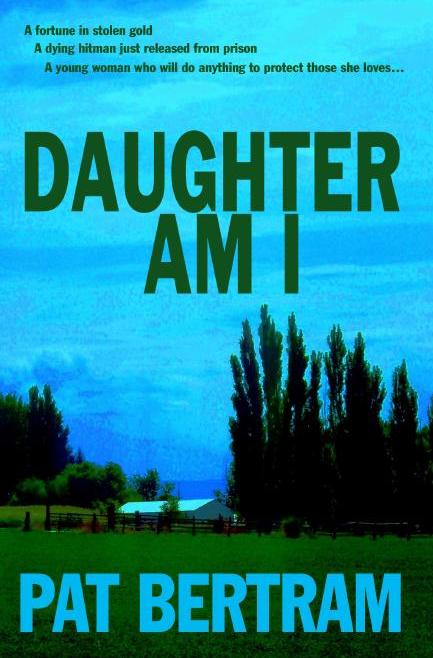
Excerpt From “Daughter Am I” by Pat Bertram

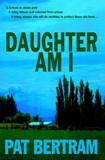
DAIDaughter Am I: When twenty-five-year-old Mary Stuart learns she inherited a farm from her recently murdered grandparents — grandparents her father claimed had died before she was born — she becomes obsessed with finding out who they were and why someone wanted them dead. Along the way she accumulates a crew of feisty octogenarians — former gangsters and friends of her grandfather. She meets and falls in love Tim Olson, whose grandfather shared a deadly secret with her great-grandfather. Now Mary and Tim need to stay one step ahead of the killer who is desperate to dig up that secret.

Excerpt:

Mary blinked in the sudden brightness, then blinked again when she saw Iron Sam. He seemed to be the personification of the inorganic being, as Happy called it. His skin looked ashen. Charcoal bags hung below slate eyes. His hair, still thick, still with the deep widow’s peak, had faded to pewter. The only hint of color in his face was the gold tooth visible between slightly parted gunmetal-gray lips.

He glanced up as they entered, but no other part of his body moved. Nor did he speak.

“Hi, Sam,” Lila Lorraine said.

The slate eyes shifted toward her.

“It’s me. Lila Lorraine.”

Iron Sam nodded, the merest inclination of his head.

Happy stepped forward. “Remember me? Happy?”

Again the tiny nod.

Mary wondered if he were paralyzed, but if so, wouldn’t he be in a wheelchair instead of an ordinary wooden chair?

Any compassion she might have felt withered when his eyes met hers. Feeling like a bug impaled on a pin, she gazed at him, unable to look away, unable to move a single muscle. After what seemed like a long time, but must have been only seconds, he turned his attention to Kid Rags, leaving her feeling limp and very thirsty, as if her vital fluids had been sucked right out of her.

With nonchalance Mary could only marvel at, Kid Rags pulled out his flask and offered it to Iron Sam. When Iron Sam nodded toward the plastic cup sitting on the bedside table, Kid Rags poured two fingers of bourbon and handed the cup to him. He sniffed it, inhaling deeply with closed eyes, then took a mouthful and held it a moment before swallowing it. His lips twitched — a smile perhaps? — then he took another sip.

The alcohol fumes mingling with the hospital odors and the stench of decay emanating from Iron Sam’s pores turned Mary’s stomach. She swallowed hard, then swallowed again, knowing she shouldn’t show weakness in front of Iron Sam, and somehow she managed to get her queasiness under control.

He flicked a look in her direction, as if sensing her struggle, then concentrated on his drink once more.

“My name is Mary Stuart,” she said when she could no longer stand the heavy silence. She introduced Kid Rags, Crunchy, and Teach, then explained about her grandparents’ deaths.

“What can you tell me about my grandparents? You might have known them as Jimmy Boots and Gina Dale.”

***

Pat Bertram is the author of the suspense novels Light Bringer, More Deaths Than One, A Spark of Heavenly Fire, and Daughter Am I. Bertram is also the author of Grief: The Great Yearning, “an exquisite book, wrenching to read, and at the same time full of profound truths.” Follow Pat on Google+. Like Pat on Facebook.

“Reading Pat Bertram Gets Better and Better”

I got a wonderful review from Glenda Bixler today. She’s a retired professional book reviewer who now writes about books for fun, and she loves my novels!!

Glenda wrote: “I laughed with Pat while reading Daughter Am I, was scared by what happened in A Spark of Heavenly Fire, sighed with Pat’s Light Bringer (Click to read my reviews of the other books!)

“But, Wow! I sat in amazed suspense as I read More Deaths Than One . . . 

“The first reason I was amazed was that each of Pat’s books are so uniquely different,  The second was that, for me, this, last book was a mystery/suspense — my preferred reading — and therefore the most enjoyable . . . so far! I do hope she continues writing! Her imagination and creativity is exciting and diverse — readers may not be able to rely on what each book will cover, but we can be sure that it will be top rate!” (Click here to read the rest of the review: “Reading Pat Bertram Gets Better and Better”)

Ahhh . . . balm to a writer’s soul.

Some people hated the way I ended the book, thinking I should have shown Bob discovering all that had been done to him, but to me, the story has always been about Bob and Kerry and how they dealt with each other during the terrible revelations. If they had interviewed the perpetrator themselves, the relationship would have been between them and the interviewee. Any interaction between the two of them would have been delayed, and hence would not have had the same impact. By using an admittedly passive third party device, I could concentrate on Bob and Kerry and how the truth affected their relationship in the moment.

And Glenda got it. She wrote:

“One decision by the author proved to end this story in a unique way, one that responded to the need to provide a satisfying conclusion without going into the gory details that took place. The surprise ending was not totally unexpected, since the writer had shown us over and over that there was something strange going on . . . But I had no clue what it was until the last major revelation was made . . . Leaving out the action of those final days or weeks, leaves the reader with the romantic suspense as the primary plot line One that is memorable and, at the same time, allows us to get past what actually happened . . . which was too horrendous to dwell on. Kudos to Pat Bertram for effectively presenting this strange but plausible tale! If you’ve already read Bertram, you should consider this a must-read! Highly recommended!”

Click here to read the first chapter of: More Deaths Than One

Shamrock-N-Sirens Readers’ Event Introduces . . . Me!

*
12 Day Reader’s Event SHAMROCKS-N-SIRENS
Click here for all the contests and a chance to win a set of special mugs:
SHAMROCKS-N-SIRENS … AN IRISH EVENT!!!

I am participating in a twelve-day readers’ event in celebration of St. Patrick’s Day. My day to be interviewed is today, so please stop by 12 Day Reader’s Event SHAMROCKS-N-SIRENS Welcomes Featured Author Pat Bertram  (or if you’re leary about entering a non-G rated site, you can see the interview at Pat Bertram, Author of “Daughter Am I”.

I answer questions with world-shaking impact, such as where and when I do my writing, how I write, my favorite quote, and what thing I would never leave behind were I to attend a St. Patrick’s Day party.

And best of all,

From now until March 18, Daughter Am I is on sale for $2.99 on Kindle at: Amazon

*

Introduction to “Grief: The Great Yearning”

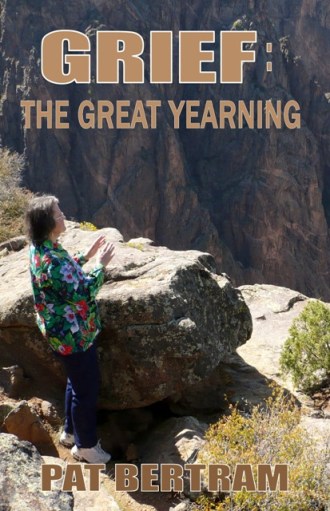
Grief: The Great Yearning, the book about my first year of grief has finally been published. I wrote this article during the summer following my life mate/soul mate’s death, long before I ever knew my writings about grief would be published, but with the addition of the last paragraph, it made the perfect introduction to the book. Grief: The Great Yearning is available from Amazon, Second Wind Publishing, and in various ebook formats from Smashwords.

Death came in the spring.

At the beginning of March, the doctors said that Jeff, my life mate—my soul mate—had inoperable kidney cancer and that he had six months to live. He had only three weeks. We’d spent thirty-four years together, and suddenly I was alone, unprepared, and totally devastated. I couldn’t even begin to comprehend the wreckage of my life. It wasn’t just he who died but “we.” There was no more “us,” no more shared plans and dreams and private jokes. There was only me.

Other losses compounded the misery. I had to sort through the accumulation of decades, dismantle what was left of our life, move from our home. We bereft are counseled not to make major changes during the first year after a significant loss—one’s thinking processes become muddled, leaving one prey to faulty logic and rash decisions—but I needed to go stay with my father for a while. Although he was doing well by himself, he was 93 years old, and it wasn’t wise for him to continue living alone.

I relocated from cool mountain climes to the heat of a southwestern community. Lost, heartbroken, awash in tears, I walked for hours every day beneath the cloudless sky, finding what comfort I could in the simple activity. During one such walk, I turned down an unfamiliar city street, and followed it . . . into the desert.

I was stunned to find myself in a vast wilderness of rocky knolls, creosote bushes, cacti, rabbits, lizards, and snakes. I’d been to the area several times during my mother’s last few months, but I’d spent little time outside. I hated the heat, the constant glare of the sun, the harsh winds. After Jeff died, however, that bleak weather, that bleak terrain seemed to mirror my inner landscape. Wandering in the desert, crying in the wilderness, I tried to find meaning in all that had happened. I didn’t find it, of course. How can there be meaning in the painful, horrific death of a 63-year-old man? I didn’t find myself, either. It was too soon for me to move on, to abandon my grief. I felt as if I’d be negating him and the life we led.

What I did find was the peace of the moment.

Children, most of whom know little of death and the horrors of life, live in the moment because they can—it’s all they have. The bereft, who know too much about death and the horrors of life, live in the moment because they must—it’s the only way they can survive.

During the first year after Jeff’s death, I lived as a child—moment to moment, embracing my grief, trying not to think about the future because such thoughts brought panic about growing old alone, trying not to think about the past because such thoughts reminded me of all I had lost.

And so went the seasons of my soul. The spring of death gave way to the summer of grief, and grief flowed into the fall and winter of renewal.

Grief: The Great Yearning is not a how-to but a how-done, a compilation of letters, blog posts, and journal entries I wrote while struggling to survive my first year of grief. As you journey through grief, I hope you will find comfort in knowing you are not alone. Whatever you feel, others have felt. Whatever seemingly crazy thing you do to bring yourself comfort, others have done. And, as impossible as it is to imagine now, you will survive.

Grief: The Great Yearning Has Been Published!

At long last, the book about my first year of grief, Grief: The Great Yearning is available!

Click here to buy: the Kindle edition on Amazon

Click here to buy: the print/paperback edition on Amazon

Click here to buy: the paperback version from Second Wind Publishing ($2.00 discount.)

Click here to download 20% free on Smashwords, or to buy in any ebook format, including palm reading devices: Grief: The Great Yearning. 

What is your goal for your book? What do you want readers to take with them?

I would like readers to take with them a slightly different way of looking at the world, perhaps seeing it in a better light or a maybe just a more truthful slant. And if not that, I’d like them to feel good about having spent time with my characters. The best compliment I ever received was from someone who said he didn’t want the book to end.

Here are some goals other authors have for their books. The comments are taken from interviews posted at Pat Bertram Introduces . . .

From an interview with Jerold Last, Author of “The Ambivalent Corpse”

I try to write books that are fast moving and entertain the reader, while introducing the readers to a region where I’ve lived and worked that is a long way from home for most English speakers. Montevideo, Salta, Machu Picchu, and Iguazu Falls are characters in these books, and the novels will have succeeded for me if some of you say that you’d like to visit these places because they seem so vivid and real.

From an interview with Polly Iyer, Author of “Hooked”

My goal is a good read. I always have issues in my books; otherwise, they wouldn’t interest me. I like to dig deep in my characters’ pasts in order to explain why they’re the way they are. Sometimes, in doing that, I get into some heavy subjects, but that’s okay.

From an interview with Qwantu Amaru, Author of “One Blood”

This is a great question. At its heart, One Blood is a book about the danger of belief. We believe things so blindly that sometimes we find ourselves in situations where that belief is challenged and we react badly. I would like readers to question more and follow less. Find their own paths and if they must believe in anything, believe in themselves.

From an interview with Benjamin Cheah, author of “Eventual Revolutions”

For this book, I want people to recognise that they have free will, that they can choose to make their lives better. It’s not easy, it requires a lot of work, but it’s possible.

From an interview with Alan Nayes, Author of “Smilodon”

My goal—and it’s the same with all my books—is to write the most entertaining story I know how. If the reader finishes one of my novels and can say he/she was entertained, then I did my job and I’m happy. In SMILODON, I did add a brief statement about the big cats of the world, but that was only to remind readers we are reaching a point when some of these magnificent animals may vanish forever, unless some action is taken to protect them and their environment.

So, what is your goal for your book, ie: what do you want people to take with them after they finish reading the story?

(If you’d like me to interview you, please check out my author questionnaire http://patbertram.wordpress.com/author-questionnaire/ and follow the instruction.)

How do you develop and differentiate your characters?

Usually I try to do scenes with only two characters since it’s easy to differentiate between two characters, but in Daughter Am I, I ended up with twenty-five-year-old Mary Stuart driving around the country with a busload of funny and heartbreaking octogenarians, including a con artist, a dying hit man, and a gangster’s moll. Because these characters were always together, I had to give each a specific characteristic — a foible — and I had to make sure those foibles became part of the story, otherwise the characters might have turned into caricatures. For example, Happy (an ex-wheelman for the mob) has Parkinson’s disease. He also carries a gun, which terrifies the others since he can’t hold the gun steady. Mary ends up confiscating the gun. The weapon, Happy, and Mary’s relationship to both gun and man become a part of the story. Another character, Crunchy, used to be a mob enforcer, and he becomes Mary’s protector, promising to crunch anyone who does her harm. This promise, too, becomes part of the story, as he learns his limits and she learns to take care of herself.

As for dialogue, each character has a specific way of talking. For example, Happy is prone to gloomy pronouncements, Teach loves to lecture, Crunch speaks in broken sentences, Kid Rags always talks food and drink. Especially drink.

Here are some ways other authors develop and differentiate their characters. The comments are taken from interviews posted at Pat Bertram Introduces . . .

From an interview with Sherrie Hansen, Author of Merry Go Round:

I think my characters have very distinctive personalities, and in Merry Go Round, the differences in the sisters is very apparent when they’re all in the same scene, interacting with one another. I try to get into their heads and consistently think and act like they would.

From an interview with R.M. Doyon, author of Upcountry:

Like most novelists, my characters are based on many real people.  I liked to take one quirk here, one detail there from many different individuals and create a new person.   Once you build a character, particularly a principal player, the most important questions I had to ask myself were: would he or she DO something like this?  Would he or she SAY something like this?  Are they true to themselves?  You must give them a personality, but at the same time a very human element.  Humans are not perfect.  They make mistakes in judgment, and so it was important to keep them true to themselves.

So, how do you develop and differentiate your characters?

(If you’d like me to interview you, please check out my author questionnaire http://patbertram.wordpress.com/author-questionnaire/ and follow the instruction.)

How (or when) do you decide that you are finished writing a story?

A story is finished when it is published. Otherwise, it is never finished. The more one writes, the more one learns, and the more one learns, the more one sees how earlier works can be improved. The only thing that stops this cycle of learning and rewriting is getting the book published.

Here are some ways other authors decide when they are finished writing a story. The comments are taken from interviews posted at Pat Bertram Introduces . . .

From an interview with Louis Bertrand Shalako, Author of ‘Redemption: an Inspector Gilles Maintenon mystery’

When I can find vast stretches with no errors, no grammar problems, no spelling mistakes, it’s finished. When I can think of nothing to add, or nothing to object to, no problems with the logical flow, and when I am convinced there is nothing more I can do to make it a better story, then it’s done. The funny thing is, there will always be doubts, and there will always be some insecurity. That’s just what it means to be a writer.

From an interview with Benjamin Cheah, author of Eventual Revolutions

When there are no more changes to make, no corrections to be done, and when the entire story flows seamlessly.

From an interview with Cynthia Vespia, author of “Demon Hunter: Saga”

The story decides for you. You let it run its course. The best endings are those that surprise you as the writer.

From an interview with Meg Mims, Author of “Double Crossing”

That’s a tough question, because I can’t just hammer it out. I prefer letting it “heat up” like in glassblowing, fine-tuning, rolling, even breaking it up and starting over. And the “KEY” element must be there or else it will remain unfinished for me. So while Double Crossing finaled in many RWA contests, it took over a year for me to find that “key” that let all the elements fall into place and then I knew it was submission-ready.

From an interview with Michael Haskins, Author of “Stairway to the Bottom”

I know the beginning, middle and end of a story before I begin. How I get to the middle and end is the fun part. As I write the things I knew or wanted in the story sometimes change, including the end. In Stairway to the Bottom, I didn’t like the ending and added one more chapter. I hadn’t totally thought of that way on ending the story, but as I re-read it, I knew it need a little more than I planned on. I think the ending found me.

From an interview with Tom Winton, Author of “Beyond Nostalgia”

You never finish a story, you abandon it. No matter how many drafts you do, eventually you have to let it go. I did nine drafts of Beyond Nostalgia and sometimes, during that ninth draft, I’d spend a full hour reworking a single paragraph that I’d overhauled eight times before. A writer can go over and over a manuscript forever and keep making changes. When you’re confident that you’ve given it ninety-nine percent, ya gotta let it go.

So, how (or when) do you decide that you are finished writing a story?

(If you’d like me to interview you, please check out my author questionnaire http://patbertram.wordpress.com/author-questionnaire/ and follow the instruction.)

What is the easiest part of the writing process?

The easiest aspect of writing is editing. The words are all there, it’s just a matter of making sure they are the right ones and that they say what I want them to say. The most rewarding is knowing I wrote a book worth reading.

Here are some other authors’ responses to the question about the easiest part of the writing process. The comments are taken from interviews posted at Pat Bertram Introduces . . .

From an interview with Rod Marsden, Author of “Disco Evil” and “Ghost Dance”

The first draft is the easiest part of the writing process. You can really let yourself go. Very few writers expect the first draft to be the last. Michener went through a number of drafts before he was happy with Hawaii. I go through a number of drafts before I even approach an editor.

From an interview with Joylene Nowell Butler, Author of “Broken but not Dead”

Editing. Once I’ve written that first draft, I step back and regroup for a week or so. I do the same thing when I’m finished the last draft. The second draft is my favourite part. It’s filling in the blanks, eliminating all the garbage, adverbs, excessive wordage, unnecessary characters and scenes, and baring the bones of the story. It never fails to excite me during this process. Like unveiling Cinderella’s beauty. Love it.

From an interview with J J Dare, Author of “False Positive” and “False World”

Inspiration. When it’s there, the words flow like a raging river. If the story is in my head and I’ve been tapped by my muse (and she stays with me), I can write a novel in a week.

From an interview with A. F. Stewart, Author of Once Upon a Dark and Eerie

For me, the easiest element of writing is the dialogue. I rarely have a problem with the flow of dialogue. Possibly because I can hear all those character voices whispering in my head.

From an interview with Michael Haskins, Author of “Car Wash Blues”

Oh that’s easy, turning on the computer!

From an interview with James Boyle, Author of “Ni’il: Waking Turtle”

There comes a point after you’ve struggled for days and weeks, seemingly trying to wring words out of stone, when you finally hit your groove and the story simple flows out of you. It feels less like writing than channeling the story from some outside source. It is an amazing feeling when it happens.

So, for you, what is the easiest part of the writing process?

(If you’d like me to interview you, please check out my author questionnaire http://patbertram.wordpress.com/author-questionnaire/ and follow the instruction.)