Short Story Contest!!!

Second Wind Publishing invites you to submit an entry to their short story contest.

Stories are to be about spring or renewal, at least, that’s what the contest rules say, though that does not mean the stories have to be upbeat or happy. You can work against the theme — contrasting a disaster that takes place in the spring with the beauty of the season, perhaps. Of course, up beat is good, too, it’s just that most of the writers I know (including me) don’t do upbeat.

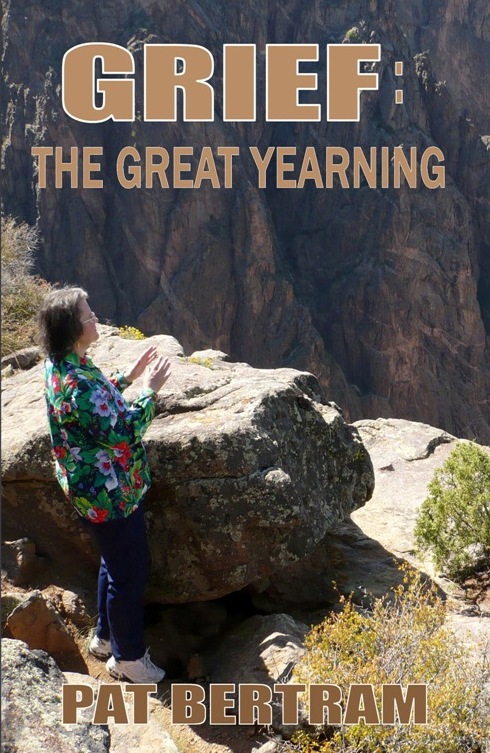
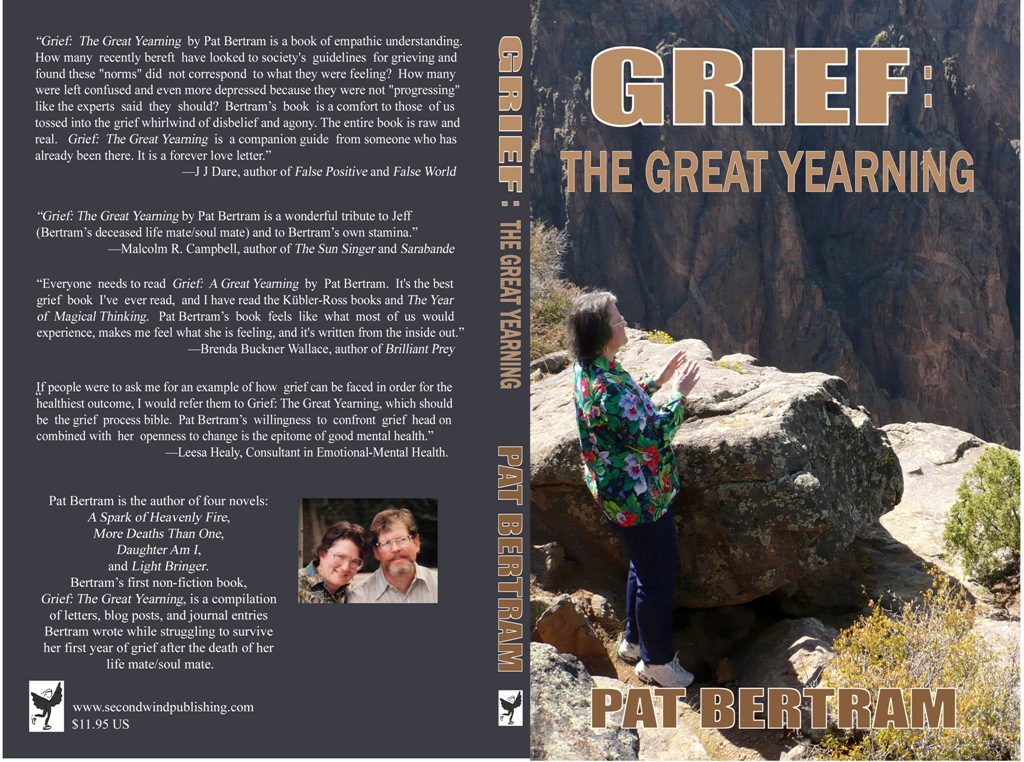
My grief book, which will be published early next year, begins: Death came in the spring. And the end of the introduction says: The spring of death gave way to the summer of grief, and grief flowed into the fall and winter of renewal. See? Who says spring has to be about happy upbeat things?

You have until December 31, 2011 to submit an entry.

Go to the Second Wind Contest Blog for rules and how to enter.

Best of luck!!

More Names Than One: Fiction Made Real

The other day I was getting gas when a truck pulled up next to me. It looked familiar in a dream-like way, but I didn’t think anything of it. It wasn’t until I started driving away that it dawned on me what I was seeing. A truck delivering Singha beer. I’d needed a Thai beer for my novel More Deaths Than One and just picked the name out of a guidebook, but somehow it didn’t seem real. At least not until I saw that truck. Here is the excerpt from the novel where I mentioned the beer:

In his short-sleeved shirt imprinted with red, green, and yellow parrots, Bob felt like a tourist. He even found himself gazing around as if he’d never visited the place before.

He saw a couple of the other regulars, a German and an American—both mercenaries—but most of the people were strangers to him, including the four men sitting at the next table. They seemed to be Americans of the right age to have fought in Vietnam. A man in a Yankees baseball cap waved his arms for emphasis.

“I did my job,” Bob heard him say. “Then I got out and continued on with my life. Everything’s great. My life is full. It happened so long ago. I don’t understand what the big deal is.”

The haunting strains of “Hey Jude” filtered through the room.

“What are you going to have?” Kerry asked.

“A Singha in honor of Harrison. It’s a local beer he liked. Also a hamburger with fries.”

When a giggling young waitress approached, Kerry ordered hamburgers, fries, and Singhas for both of them.

Hamburger Dan brought their drinks.

Setting them on the table, he gave Bob a penetrating glance. “It is you. I wasn’t sure at first. How’ve you been—”

Before Hamburger Dan could speak his name, Bob said quickly, “Gandy. I’m Rick Gandy and this is Julie Walsh.”

Hamburger Dan’s eyebrows rose. “I see. Does this have anything to do with the two men sitting in the booth across the room?”

Bob lifted his drink to his lips and gazed over the top of the mug. The men in question leaned back in their seats with studied nonchalance, but their eyes were hard and way too alert—cop’s eyes.

“My supposed friends?” Bob asked.

“Right. They’ve been in and out for the past six weeks or so, but after you called they started spending a lot of time here.”

“Something you should know. Your phone is tapped.”

Hamburger Dan stiffened. “What’s going on? What are you involved with?”

“I have no idea, but I’m looking into it.”

“You?” Hamburger Dan had the grace not to smile, but Bob could sense his incredulity.

Seeing the light of battle in Kerry’s eyes and her mouth opening to come to his defense, Bob laid a hand on her knee. She closed her mouth, but her jaw remained set.

The waitress brought their hamburgers. The delicious aroma of grilled meat made Bob’s stomach growl with hunger.

“I’ll leave you to your food,” Hamburger Dan said. “I shouldn’t stay here too long anyway, don’t want to draw the attention of your friends.”

Kerry’s gaze followed him as he moved off, then it shifted to Bob.

“How come he talked to you like that? Doesn’t he know you’re the Bob Noone character in Dark Side of Heroes?”

“I doubt it. Now that Harrison’s gone, you’re probably the only one who knows. And if by chance Hamburger Dan does know, he still wouldn’t be impressed. He’d think Noone was a wimp.”

“Oh.” She took a big bite of her hamburger and ate it slowly. “How did you come up with the names Rick Gandy and Julie Walsh?”

“They slipped out. I decided we shouldn’t advertise the names we’re traveling under.”

“Good thinking.” She chewed on a French fry. “I’m beginning to have as many identities as you. It’s confusing.”

Bob nodded. Munching on his own hamburger, he let his glance fall on the other bar patrons.

“Mike seemed like a brother to me,” the man in the Yankee baseball cap said, tears brimming over. “I tried to save him, but there was nothing I could do.”

The men with the cop’s eyes stood, took a final look around, then sauntered out of the bar, still main-taining their casual air.

Bob felt his shoulders sag with relief.

As he continued to eat, he could hear the gaunt man playing “Let It Be.”

More Deaths Than One is available at Amazon, Smashwords, and Second Wind Publishing.

Inviting You to Enter a Short Story Contest

Second Wind Publishing invites you to submit an entry to their short story contest.

Stories are to be about spring or renewal.

Contest entries must be your own original work. Plagiarism will not be tolerated. Self-published stories are acceptable, but the story must not exist in print form or in any other anthology. The story must be no longer than 5,000 words.

The contest is open to anyone in the world, 18 or older, though the entry must be written in English. All entries will be posted on the Second Wind Contest Blog for everyone to read and comment. The authors and management of Second Wind Publishing will choose the three finalists, but reader comments will be taken into consideration. Entries will be judged on originality, readability, writing skills, characterization, and plot. Spelling and grammar count. The decision of the judges is final.

Everyone is welcome to vote for the winner, which is to be chosen from the three finalists.

The winning entry will be published in the upcoming Second Wind anthology, Change is in the Wind. (Title subject to change.) The winner will also receive a coupon from Smashwords.com for an unlimited number of free downloads of the anthology for one month. The coupon can be sent to as many people as you wish during that month. The winner will also be able to purchase an unlimited number of print copies of the anthology at half price plus shipping costs.

All entries will be deleted once the contest is over.

The contest begins today, October 3, 2011 and ends December 31, 2011.

Schedule:
December 31, 2011 at 11:59 pm: Contest ends.
January 1 — January 15, 2012: Judging of entries by 2W (and 2W authors) to pick top three entries
January 15 — January 31, 2012: Judging of the three finalists by blog readers to pick the winner
February 1, 2012: Winner announced
April 1, 2012 Book on Amazon for sale (In an ideal world …)

Please send your entries as a Word .doc or .docx to secondwindpublishing@gmail.com

Best of luck to all of you!!

Introducing Sheila Deeth, Author of Flower Child

Sheila Deeth grew up in the UK and has a Bachelors and Masters in mathematics from Cambridge University, England. Now living in the States with her husband and son, she enjoys reading,writing, drawing, telling stories, running a local writers’ group, and meeting her neighbors’ dogs on the green.

I first encountered Sheila Deeth during a writing contest on gather.com four years ago. I was impressed by the wonderfully encouraging and insightful remarks she made on the various entries, and during these ensuing years, we’ve continued our connection via our blogs, facebook, twitter, gather, and now google+. She is a staunch supporter of small press writers — her reviews are as encouraging and insightful as the comments she leaves on our blogs. I treasure the reviews she did of my books (reviews I did not ask for but were so generously given), and she’s introduced me to many wonderful new novels and novelists.

Today, it’s my turn to introduce a wonderful new novelist: Sheila Deeth. Sheila has mastered various story forms (including the shortest of forms, the 100-word and 50-word drabble), and today she is celebrating the release of her short novel, Flower Child with a blog tour, of which I am pleased to have a small part.

Her stories, book reviews and articles can be found in VoiceCatcher 4, Murder in the Wind (a mystery anthology published by Second Wind Publishing, which includes Sheila’s prize-winning story “Jack”), Poetic Monthly, Nights and Weekends, the Shine Journal and Joyful Online. Besides her Gypsy Shadow ebooks, Sheila has several self-published works available from Amazon and Lulu, and a full-length novel under contract to come out next year.

Today I am interviewing Sheila on my “Pat Bertram Introduces . . .” blog. Please stop by to say hi. If you have not yet met Sheila, please introduce yourself. You’ll be glad you did.

Wishing Sheila all the best — she deserves it.

Click here to find the interview of: Sheila Deeth, Author of “Flower Child”

Click here to read an excerpt of: Flower Child

‘The Top 5 Mistakes I Find as an Editor’ by Smoky Trudeau Zeidel

Please welcome today’s guest. Smoky Trudeau Zeidel is the author of two novels, On the Choptank Shores and The Cabin. She is also author of Observations of an Earth Mage, a photo/essay collection; and two books about writing. You can find Smoky and her three blogs at www.SmokyZeidel.wordpress.com. Smoky writes:

As an editor and as an avid reader, I see a lot of mistakes make their way into print. Many, if not all, of them could be avoided by having a professional edit your manuscript before submitting it to your publisher, or putting it up on Smashwords or Kindle if you ePublish on your own.

You might think you don’t need an editor, because your next door neighbor/best friend/Aunt Thelma offered to do it for free, or because you’ve read and re-read your manuscript a hundred times and just know it’s perfect.

You’d be wrong. First, your neighbor/best friend/Aunt Thelma may spell great, but do they know all the rules of punctuation and style? I doubt it. The Chicago Manual of Style, the go-to book for American publishers for punctuation and style issues, is more than 900 pages long and two inches thick. I doubt your beta readers have that thing memorized. I refer to it frequently, and I am a professional editor.

Second, as the book’s creator, finding your own mistakes is hard. That’s because you see what you thought you wrote, rather than what you actually wrote. Even though I’m an editor, I don’t edit my own stuff. I have my best friend do it—but hold on, before you protest, let me say that my best friend is a professional editor, so she is exempt from the best friend rule.

That said, I know a lot of writers won’t hire an editor. And this really isn’t a pitch to get your business (although, of course, I am always open to that). So since you probably won’t hire me or any of my editor cohorts, I’m going to share with you a list of the five biggest mistakes I see in manuscripts, so you can watch for them, and fix them, yourself.

Mistake #1: Writers don’t place a comma between independent clauses separated with a conjunction. Independent clauses are clauses that can stand on their own as sentences, e.g., “He took the 405 freeway to work, and he exited at the Getty Museum.” Because both “He took the 405 freeway to work” and “he exited at the Getty Museum” are independent clauses—meaning they can stand alone as sentences, you must, must, place a comma before the conjunction, “and.” This is probably the biggest, most common mistake I find in manuscripts and books. Don’t make it. It’s a very easy punctuation rule to remember.

Mistake #2: Writers place commas between independent clauses and dependent clauses. This is probably the second most common mistake I see. A dependent clause is one that cannot stand on its own as a sentence. Let’s take the above example, and change it just a little: “He took the 405 freeway to work and exited at the Getty Museum.” I took the second “he” out. That makes the clause after “and” a dependent clause, because “exited at the Getty Museum” cannot stand alone as a sentence. It is dependent upon the first clause to be understood; thus, no comma should precede the “and.”

Of course, there are other places you need—and don’t need—commas, but this isn’t meant to be a comprehensive study of the comma. If in doubt, look up comma placement in The Chicago Manual of Style or other style manual.

Mistake #3: Writers don’t know their homonyms. In just the last few weeks alone, I’ve seen characters who were unphased, waiving to people, and peaking out windows. The writer’s spellchecker should have alerted her to the fact that “unphased” isn’t even a word. She meant “unfazed.” To waive means to relinquish, to set aside. The word this author wanted was “waving.” And a peak is the highest point of something; one peeks, not peaks, out a window.

Please, unless you are 100 percent sure you are using the right homonym, look it up. The wrong choice could have your characters doing some pretty strange things!

Mistake #4: Writers rely on their spellcheckers. This is a big no-no. If ewe think you’re spellchecker will fined awl yore miss steaks, your wrong. That sentence went through my spellchecker just fine, and there are no less than eight errors in it (“ewe” should be “you”; “you’re” should be “your”; “fined” should be “find”; “awl” should be “all”; “yore” should be “your”; “miss” and “steaks” should be “mistakes”: and finally, “your” should be “you’re”). Homonym spelling errors are the most common type of spelling error I find. Do not rely on your spellchecker. It will let you down every time.

Mistake #5: Writers who make errors in syntax. For example, look at this sentence: “I saw a deer driving to work today.” Uh, no—you didn’t, unless there are some very talented deer in your neighborhood! The correct sentence structure is, “I saw a deer while driving to work today,” or, “While driving to work today, I saw a deer.” Please, don’t put the deer in the driver’s seat!

Here’s another example: “If your toddler won’t drink milk, warm it in the microwave for a few moments.” Warm what in the microwave? You’ve got a choice of antecedents here. Heaven help the toddler if you make the wrong choice! The correct structure would read, “If your toddler won’t drink milk, warm the milk in the microwave for a few moments.”

Of course, if you and I were having a conversation, we’d probably understand each other if we made these syntax errors. But you can’t count on that when people are reading your words. Make sure you have them in the correct order so your meaning cannot be misconstrued.

I cannot list every error I run across while editing manuscripts. To do so would fill a book. But if you watch for these top five mistakes in your writing, your manuscript will be a lot more polished, and you can be more confident about submitting it to your publisher.

Good luck, and happy righting . . . er, happy writing!

***

Click here to read an excerpt from: On the Choptank Shores

Click here for an interview with: Smoky Trudeau Zeidel

Click here for an interview with: Grace Harmon Singer, Hero of On the Choptank Shores by Smoky Trudeau Zeidel

Seeking Stories that Live Within Us by Malcolm R. Campbell

I am delighted to welcome my guest, Malcolm R. Campbell and his newest novel “Sarabande.” Malcolm is so very generous to other authors, it’s great to be able to return the favor. Besides, he’s a fine writer who pens powerful tales, and he has better insights into storytelling than anyone I know. Malcolm says:

A living myth is told and retold as the centuries pass. Poets, painters, musicians are nourished by its imagery, and in each retelling something is added from the collective attitudes, conscious and unconscious, of the time and from the individual vision of the artist.” – Helen M. Luke in “The Laughter at the Heart of things.”

As I read Helen M. Luke’s analysis of the myth of the ring as viewed by Richard Wagner in The Ring of the Nibelungen (known as the four-part “Ring Series”) and J. R. R. Tolkien’s The Lord of the Rings, I was struck by the fact this story is now part of our world view. Whether we learned of the myth through the original source materials, Wagner’s musical dramas, Tolkien’s books, or the feature film trilogy directed by Peter Jackson, the story lives inside us as though it actually happened. Tolkien expressed contempt for Wagner’s version of the old Norse myth drawn from the 13th century Icelandic Volsung Saga. Yet most critics believe Wagner’s The Ring of the Nibelungen (consisting of “Das Rheingold,” “Die Walküre” Siegfried, and Götterdämmerung”), composed between 1848 and 1874, and Tolkien’s Lord of the Rings, written between 1937 and 1949, are different interpretations of the same myth, and that Tolkien was also influenced by Wagner. Myths often have as many interpretations as history as though they refer to actual events.

Listen to the discussions about J. K. Rowling’s Harry Potter books, and you will hear people talking about Harry, Snape, Dumbledore and Voldemort in the same way they speak of celebrities, world leaders and newsmakers who come into their lives television, concerts and the Internet. All of these people, fictional or actual, are larger than life. While novel readers and film audiences know there is a difference between Tolkien’s characters and Rowling’s characters on one hand and well-known people within our culture, all of them are part of our shared story.

Earlier generations were impacted by Star Trek and Star Wars events and characters just as strongly. We know the difference between fictional characters aren’t read and that real people aren’t fictional, but it doesn’t matter. They’re all the same. While even the most fanatical fans don’t expect to see Captain Kirk, Spock, Frodo or Hagrid searching for salad greens in the produce department at Kroger or addressing Congress about the state of the galaxy, the worlds of those characters is part of our lives as though it’s a living and breathing reality.

Most authors don’t write with the expectation that their stories will impact readers with such force that the characters will suddenly take on independent lives of their own. At best, authors hope their stories and characters will seem real while their books are being read. For a reader, there’s nothing better than plunging into a good story, becoming enchanted by it, and following it with the fervor they follow family dramas and the biggest news stories of the day.

Yet some stories catch our fancy and stay with us long after we put the book down or leave the theater. Those are the stories we seek because they take us on flights of fancy, display new worlds before our mind’s eye, and take us on physical and emotional journeys that expand our lives and enrich our imaginations. Ask any reader what his or her favorite books are, and s/he will tell you about good guys and bad guys and things that go bump in the night and awesome landscapes that are just as much a part of his or her life as co-workers, neighbors and family.

As readers, finding such novels is part of a never-ending quest for a real page turner of a story we will never forget because it lives inside us and evolves every time we read it, talk about it and think about it. As readers, we love our living fiction.

Malcolm R. Campbell is the author of three contemporary fantasies, Sarabande (2011), Garden of Heaven: an Odyssey (2010) and The Sun Singer (2004).

Click here to read an interview with: Malcolm R. Campbell

Click here to read an excerpt of: Sarabande

Joylene Nowell Butler Likes DAUGHTER AM I!

If you haven’t yet met Joylene Nowell Butler online, you should. She is a delightful person, wonderful author (Dead Witness, and Broken But Not Dead), and marvelous blogger. Her blog is a great site to browse. She posts gorgeous photos of Cluculz Lake in Canada. She offers valuable information such as how to beat writer’s block. She often has guests on her blog, other authors you either know or want to know, such as A.F. Stewart, who talked about the 5 best ways to promote your books on a budget during her latest visit.

And she writes insightful book reviews. She says, among other lovely remarks, that my novel Daughter Am I is a character-driven page-turner. Every person has a distinct and endearing voice. Their very persona jump off the page. Even the character of cold-blooded killer Iron Sam comes alive in a way most writers can only dream of creating. The dialogue is sharp and concise and very believable. The descriptions are familiar, yet crisp and original. The prose are smooth and straightforward, and not once did Miss Bertram use terms or language that pulled me out of the story. I was her captive audience for three days. I could have read it faster, but frankly, I didn’t want to say goodbye to these wonderful characters. ” (Read the entire post here: Review of Daughter Am I. Be sure to read the comments! I got such a kick out of seeing people talk about my book.)

How can you not like someone who loves your book? You can find Joylene at her blog, A MOMENT AT A TIME ON CLUCULZ LAKE. Tell her Pat sent you.

Tomorrow is Blog Jog Day!

Blog Jog is a trot around the blogosphere, each blog linked to the next so that you can explore new blogs with a simple click on the link to the next blog. Many participants will be offering giveaways and contests, and so will I. Anyone who leaves a comment on my Blog Jog post tomorrow, August 7, 2011 will be entered into a contest to win a free download of one of my novels, including my latest, Light Bringer.

Light Bringer tells the story of  Becka Johnson, who had been abandoned on the doorstep of a remote cabin in Chalcedony, Colorado when she was a baby. Now, thirty-seven years later, she has returned to Chalcedony to discover her identity, but she only finds more questions. Who has been looking for her all those years? Why are those same people interested in fellow newcomer Philip Hansen? Who is Philip, and why does her body sing in harmony with his? And what do either of them have to do with a shadow corporation that once operated a secret underground installation in the area?

Malcolm Campbell, author of  Garden of Heaven,  Jock Stewart and the Missing Sea of Fire,  The Sun Singer, and  Worst of Jock Stewart had this to say about the novel: Light Bringer is TYPICAL BERTRAM: plots within plots, multiple characters with multiple agendas, fast moving, more than enough mystery and intrigue for everyone, satisfying conclusion.

Author Aaron Lazar has this to say: I’m already a fan of Pat Bertram’s books. I’ve read them all and loved them deeply. But LIGHT BRINGER was something completely new and surprising… surprising in its freshness, originality, its genre bending brilliance. Part thriller, part fantasy, part sci fi, part mystery…its plots were large and complex, encompassing themes that plague us every day; offering social and world commentary blended with weather trend observations (where ARE all those tornadoes and tsunamis coming from??) I do believe Bertram has defined a new genre, and it is a pure delight. Fresh. Original. Riveting. The characters are real and engaging. I particularly enjoyed the bit of romance between Luke and Jane – yes, another subplot. I couldn’t put it down and extend my highest compliments to Ms. Bertram for her supremely smooth writing – there are no hiccups in this book. Very highly recommended.

So stop by tomorrow, leave a comment on my Blog Jog Day blog, and you might win an ecopy of one of my books, including Light Bringer.

***

Click here to download the first 20% of Light Bringer free at: Smashwords

Click here to read the first chapter of: Light Bringer

R.U.E — Resist the Urge to Explain

There is a maxim in writing called R.U.E — Resist the Urge to Explain. Supposedly, if you show your readers the story rather than explaining it to them, it will allow readers to draw their own conclusions, thereby making readers a part of the story.

In some ways, my novel More Deaths Than One is a simple story. A man returns home after eighteen years in Southeast Asia to find the mother he buried before he left is dead again. Or rather, he finds her obituary in the morning newspaper, and when he goes to the cemetery, he sees a funeral party. He also sees someone who appears to be . . . himself. With the help of an unfulfilled and quirky waitress he meets in a coffee shop, he sets out to discover the truth.

Beneath that simple story lies the question of what makes us who we are. Is it our memories? Our experiences? Our natures?

And beneath that is the real story — a mythic tale of a man who reflects the people he meets back to themselves. This is the story I did not explain. I wanted readers to discover it for themselves, yet I’ve learned (by way of less-than-stellar reviews) that not everyone sees this story. One reviewer, who thought that the relationships were developed with too little explanation, couldn’t understand why the waitress would run off with someone she barely knew. I thought as readers got deeper into the story and noticed more of the characters seeing themselves in the hero (good guys saw good, evil guys saw evil, victims saw a fellow victim, the artistic saw the artist, the soulless saw a drone) that it would be apparent the waitress’s adventure-starved soul saw in him the fulfillment of her dreams. I guess not.

It’s too late to rewrite the story, and even if I could, I wouldn’t. But . . . here’s the question: should I have explained more? Should I have resisted the urge to resist the urge to explain?

Stellar Review for Light Bringer

I got an email from Aaron Lazar this morning. If you don’t know Aaron, you should. He is a fine writer and a contributor to the Murder by Four Blog. He was one of the first to buy one of my books, one of the first people I kept awake at night finishing my book, one of the first (if not the first) who dreamed of my characters!! And now he has joined the club of those who have read (and loved) all of my books. I’m sure he won’t mind if I share his email with you:

Pat, Here’s the mini-review for Light Bringer. Dang, that was one FINE read!

***

I’m already a fan of Pat Bertram’s books. I’ve read them all and loved them deeply. But LIGHT BRINGER was something completely new and surprising… surprising in its freshness, originality, its genre bending brilliance. Part thriller, part fantasy, part sci fi, part mystery…its plots were large and complex, encompassing themes that plague us every day; offering social and world commentary blended with weather trend observations (where ARE all those tornadoes and tsunamis coming from??) I do believe Bertram has defined a new genre, and it is a pure delight. Fresh. Original. Riveting. The characters are real and engaging. I particularly enjoyed the bit of romance between Luke and Jane – yes, another subplot. I couldn’t put it down and extend my highest compliments to Ms. Bertram for her supremely smooth writing – there are no hiccups in this book.

Very highly recommended. — Aaron Paul Lazar, author of the LeGarde Mysteries, The Moore Mysteries, and the Tall Pines Mysteries

***