Lisping Dialogue

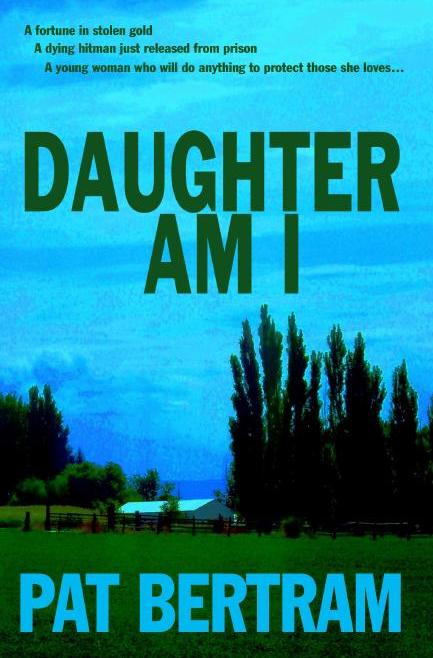
I used to read books about writing — dozens of them.  Several mentioned that mispelled words and apostrophes are no longer in style to show speech defects or accents — such dialogue is difficult to read.  To denote dialect, one needs to show speech patterns from the specific area, such as “It’s not far, just down the road a piece.” Tells you a bit about the character, and it’s easy to read. Another suggestion was to use the misspellings and apostrophe’s to set the character’s accent in the reader’s mind, then switch to normal spellings.  I heeded this particular bit of advice in my upcoming novel, Daughter Am I. To get the full meaning of the excerpt, you need to know that the Scourge and Butcher Boy once worked for the Outfit, aka the Mob. 

“Who ith it, my love?” A rotund little old man wearing plaid bermuda shorts and a pink polo shirt appeared at the door beside the woman.

“Hello, Wallace,” Happy said.

Mary bit back a giggle. This was the Scourge? This gnome of a man with twinkling eyes and a lisp?

Wallace peered through the screen at Happy. “Do I know you?”

“Don’t you remember? We used to work for the same outfit.”

The woman’s face lit up. “Oh, how nice. Won’t you come in?”

She made a move to open the door, but Wallace put out a hand to stop her.

“That won’t be necessary. These folks were just leaving.”

“Hey!” Happy protested. “What’s the big deal? All we want is some information about Butcher Boy.”

“The supermarket in town has a nice butcher,” the old woman said, “but you can’t really call him a boy. He has to be at least forty.”

Wallace patted the woman’s arm. “Let me handle this, sweetie.” He opened the door, slipped through, and closed it behind him. Motioning for Mary and her gang to follow, he headed for the road.

“This your bus?” he asked.

A couple of editors mentioned that I was inconsistent, that I should have carried the lisp throughout the scene.  It was only two pages, but still, that’s a lot of th’s.

“That won’t be nethethary. Thethe fokth were jutht leaving.”

“…Thweetie.”

 “Thith your buth?”

So, when you read Daughter Am I (you are going to read when it’s released, right?) and notice the inconsistency, just remember how kind I was being to your eyes.

add to del.icio.us : Add to Blinkslist : add to furl : Digg it : Stumble It! : add to simpy : seed the vine : : : TailRank : post to facebook

Free Ebooks!

Free ebooks! Just stop by the Labor Day GiveAway at the Second Wind blog before September 12, 2009, mention the name of a Scover-mdtosecond Wind book that you’d like to read, and you might win an ecopy. http://secondwindpub.wordpress.com/2009/09/06/labor-day-giveaway/
 
Now is your chance to read More Deaths Than One or A Spark of Heavenly Fire!
 
More Deaths Than One: Bob Stark returns to Denver after 18 years in Southeast Asia to discover that the mother he buried before he left is dead again. He attends her new funeral and sees . . . himself. Is his other self a hoaxer, osparks-coverr is something more sinister going on? And why are two men who appear to be government agents hunting for him? With the help of Kerry Casillas, a baffling young woman Bob meets in a coffee shop, he uncovers the unimaginable truth.

A Spark of Heavenly Fire: In quarantined Colorado, where hundreds of thousands of people are dying from an unstoppable disease called the red death, insomniac Kate Cummings struggles to find the courage to live and to love. Investigative reporter Greg Pullman is determined to discover who unleashed the deadly organism and why they did it, until the cost — Kate’s life — becomes more than he can pay.
 

add to del.icio.us : Add to Blinkslist : add to furl : Digg it : Stumble It! : add to simpy : seed the vine : : : TailRank : post to facebook

Blog Talk Two

I just finished being interviewed on blog talk radio, and all things considered, it went okay. Well,  there was that part where my mind went blank and I couldn’t think of a single disease mentioned in A Spark of Heavenly Fire, couldn’t think of a single biological warfare experiment that I researched. Sheesh. I spent years on the research. You’d think at least some of it would have come easily to mind. I did manage to mention a  connection between swine flu and the novel, but still . . . it would have been nice to sound as knowledgable as I am about the horrors of biological warfare and human experimentation. And I talked about the Hanta River in North Korea, when it’s in South Korea.  In the end, though, it doesn’t matter. The story isn’t about disease, though I kill off hundreds of thousands of Colorado residents with the flu-like epidemic I created. The disease, the deaths, the quarantine are all simply the setting for the story of how insomniac Kate Cummings came alive when all around her people were dying.

What does matter is that I didn’t give the right website address for my publisher, Second Wind Publishing. Aaaarrrggghhhh! You can find them at http://secondwindpublishing.com. Just goes to show that you can’t take anything for granted. Make sure you have website addresses and other pertinent information right in front of you. Don’t rely on your memory!

I had fun, though. I’d met one of the hosts, Steven Clark Bradley, author of Patriot Acts, through Facebook. We’ve had a few interesting email conversations, he’s participated in some of my discussions, and he did a wonderful review of More Deaths Than One. During the blog talk show he mentioned that he stayed up late one night to read my book –Oh, how I enjoy keeping men up late at night! What power!

We talked about how I got the ideas for my books, talked about the characters, and I got in a plug for my novel, Daughter Am I, which will be published next month. All good stuff. The best thing about Blog Talk Radio is that, like all blogs, it’s forever. So stop by whenever you can. I’ll be there.

Blog Talk Two (Today’s interview): Back Story — The Behind the Scenes Look at Writing a Novel

Blog Talk One (My first interview): Talk to Me: Conversations With Creative, Unconventional People

Steven Clark Bradley’s review: More Deaths Than One

More Deaths Than One and A Spark of Heavenly Fire are available from Second Wind Publishing, LLC.

You can also download the first 30% free at Smashwords

add to del.icio.us : Add to Blinkslist : add to furl : Digg it : Stumble It! : add to simpy : seed the vine : : : TailRank : post to facebook

I Need a…Gulp…Outline

I’ve been rereading my work-in-progress, trying to get back into the mindset of the story so I can work on it. Usually by the time I’ve written 37,000 words, my characters help develop the story. No, my characters never take over — they always do what I make them do. It’s more that I know who they are, what they want, and who’s going to stop them from getting what they want. Unfortunately, during the first part of my WIP, my hero mostly contended with the ever-changing world, and the people he met were simply passing through his life. So now I have to create a whole cast of characters.

I’m thinking of having a contest — let people suggest characters, and if I use it, they get an acknowledgement in the book along with a copy of the printed book when it’s published next year. Seems a bit of a cheat, but it could be fun.

But I digress. One of the characters I have to create is a group. Sounds odd, but groups have a culture, a dynamic of their own, a character that is different from the sum of the individual members. Groups also develop, just like characters do, and there are several distinct stages:

1. Coming together and finding the individual roles
2. Defining the task.
3. Feeling unrest — disenchantment with the group and each other
4. Cohesion — beginning to feel like a team
5. Interdependence — work as a team, believe in the subculture they have created.

In addition to creating a whole new cast of characters and developing them into a group, I need to figure out how to get my hero to give up the relative security he recently embraced and go back out into the dangerous world and dubious freedom.

When the novel is finished, much of this scaffolding will be invisible to the reader, but I need to be able to see at a glance how all the parts fit together so I can show what’s happening rather than telling it. It sounds to me like a need a . . . gulp . . . outline. I’ve never outlined a novel before. Should be interesting.

add to del.icio.us : Add to Blinkslist : add to furl : Digg it : Stumble It! : add to simpy : seed the vine : : : TailRank : post to facebook

On Writing: Looking Up

When your characters look up, what do they see? Sunsets and sunrises are so prevalent in books as to be clichés, yet every day there is a sunrise and every day there is a sunset, even if it’s too cloudy for us to see either. I suppose mentioning the rising or setting sun makes more sense if there is a reason. For example, tonight there was a gorgeous sunset here because of the fires in California. The smoke drifts to Colorado and is trapped by the mountains.

I try to find different things for my characters to look at, because to a certain extent, a character is what he sees. If a character sees a flock of what looks like hawks, and he or she knows that they are vultures, it tells you a bit about the character. Vultures fly in packs, hawks fly alone. Or so I’ve been told. Both hawks and vultures are equally lovely as they coast on the updrafts, but somehow knowing that the regal bird is a vulture and not a hawk takes away some of the beauty of the scene. 

In A Spark of Heavenly Fire, the characters see helicopters patrolling the skies above quarantined Colorado. In Light Bringer, which will be published next year, the characters see unnatural lights in the sky, they see strange airplanes, and they see an impossibly brilliant rainbow. In my WIP, the characters see a light in the west on Easter morning, and for just a moment, they think it’s the rising sun.

So what do your characters see when they look up? Does the sight have a bearing on the story? Does it tell you a bit about the character?

007a

add to del.icio.us : Add to Blinkslist : add to furl : Digg it : Stumble It! : add to simpy : seed the vine : : : TailRank : post to facebook

Distilling the Essence of a Story

I have an interview on BlogTalkRadio on Saturday, September 5 at 11:30am ET. We’re going to be talking about back story — where I got the ideas for A Spark of Heavenly Fire and More Deaths Than One. Although one of the hosts of the show has read at least one of my books, I’m sure at some point he will ask me, “What are your books about?” And I will give the same answer I give to everyone who asks. A blank stare. Though, being radio, it will come across as blank silence.

How does one encapsulate a three-hundred-page novel with subplots and subtexts, themes and scenes, complexities and ironies into a minute of description? This distillation is commonly called an elevator speech, and after five months of being published, I still haven’t figured mine out.

I can talk around the story — More Deaths Than One is a thriller/mystery/suspense novel that explores what it is that makes us who we are. Is it our memories? Our experiences? Our natures? A Spark of Heavenly Fire is a thriller/suspense novel with a strong romantic element. It tells the story of ordinary people who become extraordinary because of the trauma they must endure. — But neither of those descriptions gives an idea of what the stories are about.

I can relate a bit of the story — More Deaths Than One tells the story of Bob Stark who sees his mother’s obituary in the morning paper, which stuns him because he buried her two decades ago before he the country to live in Southeast Asia. So how can she be dead again? A Spark of Heavenly Fire tells the story of how Kate Cummings, an ordinary woman, gathered her courage and strength to survive the horror of a bioengineered disease let loose on the state of Colorado.

The problem I’m finding is that I don’t know the essence of either story, the emotional triggers. What do the books do for readers? Why should people read them? Perhaps the books will bring romance and adventure to readers’ lives. By showing ordinary people rising to horrific occasions, perhaps readers will feel better about themselves, knowing they too have the potential for heroism. And, in the case of A Spark of Heavenly Fire, people will know what to expect if ever the Swine Flu or any other virulent disease spreads so rapidly that an entire state needs to be quarantined in an effort to curtail the deaths.

So, how do you distill the essence of your book (or any book!) into a few words and make a reader desperate to read it?

More Deaths Than One and A Spark of Heavenly Fire are available from Second Wind Publishing, LLC.
You can also download the first 30% free at Smashwords.

add to del.icio.us : Add to Blinkslist : add to furl : Digg it : Stumble It! : add to simpy : seed the vine : : : TailRank : post to facebook

Why Mistakes Happen

I worked hard to make More Deaths Than One typo-free, but there are at least two errors in the published novel.

        “I’m Kerry. Kerry Casillas.” She eyed the obit-
ary. “How many of those children are yours?
Bob massaged the back of his neck. “None.”

And:

“I thought you were in the jungle of your nightmares.”
Bob laid a had on top of hers. “I was.”
“Then let’s get you out of there. Finish the story.”

Errors in copyediting are easy to make. One website, Regret the Error: Mistakes Happen, capitalizes on this, chronicling the editing mistakes and corrections in newspapers around the world. If professional proofreaders and editors have such a hard time, what hope is there for the rest of us? Perhaps not much. And it’s not due to carelessness so much as the way we are made.

According to Joseph T. Hallinan, author of Why We Make Mistakes, we have a very narrow angle of good vision, perhaps a thumb’s worth, which is why our eyes constantly flicker back and forth — they are trying to focus on a larger area. What this means for us is that we see the beginnings of words, pick up clues, and automatically fill in the rest —  such as the e at the end of the. Hallinan writes, “people were asked to read a text and cross out the letter e every time they saw it. It turned out that the later the e appeared in a word, the more likely it was to remain undetected. Not only that, the e in the word the was very likely to be missed — 32 percent of the time.”

I also know from doing puzzles such as Word Finds that we tend to see the middle of the page more than the top and bottom lines, and we tend not to see the far sides of the text. If ever I can’t find a word, I know to look at the periphery of the puzzle. More often than not, that’s where I find the missing word. (I seldom do such puzzles any more. They’ve lost their allure after all the copyediting I’ve done this past year.) And this is where the typos in More Deaths Than One are. The first error occurs on the periphery of the page, the other error occurs in the second line from the top. (It’s easy to see here, because it occurs in the very middle of the excerpt.)

We also see what we expect to see, and the better we are at something, the more likely we are to skim. Hallinan tells the story of a distinguished piano teacher and sight reader, Boris Goldovsky, who “discovered an misprint in a much-used edition of a Brahms capriccio — but only after a relatively poor pupil played the printed note at a lesson.” Since the kid didn’t know how the piece was supposed to be played, she played it the way it was printed, not the way the experts misread it.

So what does this mean for us amateur copy editors? Go slowly, word by word. Resist the urge to skim. Double-check the first couple of lines on a page and the last couple of lines. Check the far sides of the text. And if all else fails, have your kid proofread the book for you.

***

(Pat Bertram is the author of the suspense novels Light Bringer, More Deaths Than One, A Spark of Heavenly Fire, and Daughter Am I. Bertram is also the author of Grief: The Great Yearning, “an exquisite book, wrenching to read, and at the same time full of profound truths.”)

Catapulting Me Into BetterSellerdom

In the past week, I received a couple of emails from people asking my advice on how to promote various online activities, I received an invitation to host a seminar on promotion, and I received an invitation to participate in a BlogTalkRadio discussion about creating a successful Facebook group. Apparently, I’m making a name for myself, (albeit slowly) but not as an author. Am I doing something right? Am I going about my self-promotion in the wrong way? I don’t know.

The interesting thing — to me, anyway — is that contrary to appearances, I still don’t know much about promotion. Sure, I am creating a presence on Facebook, I’m playing around with GoodReads, I blog and tweet. I’m even going to do a presentation at the local library about the brave new world of publishing. But those are the same things everyone else is doing, and I know that to be effective, promotion has to be creative, unique, and personal.

The odds of selling a truckload of books are miniscule to none, but I have never played the odds. I’m not giving up on my first books — A Spark of Heavenly Fire and More Deaths Than One — but in the next couple of weeks my third book — Daughter Am I — will be released, and I will need to figure out how to promote it. And who to promote it to.

When Mary Stuart, my twenty-five-year-old hero, discovers she inherited a farm from her murdered grandparents — grandparents her father claimed had died before she was born — she sets out on a journey to find out who they were and why someone wanted them dead. So is this a book that will appeal to readers in their twenties and thirties? Maybe. Along the way, Mary accumulates a crew of feisty octogenarians — former gangsters and friends of her grandfather. So is this a book that will appeal older readers? Perhaps. Mary also meets and falls in love with Tim Olson, whose grandfather shared a deadly secret with her great-grandfather. So is this a book that will appeal to romance readers? Probably not. There is no real romantic conflict in the book. The conflict belongs more in the mystery category, because Mary, Tim, and the octogenarians need to stay one step ahead of the killer who is desperate to dig up that secret. So is this a book that will appeal to mystery lovers? Could be.

If I had to do it over again, I would probably be more careful to write books that fit a particular genre to make them easier to promote. Oh, hell, who am I trying to kid. If I had to do it over, I’d write the exact same books. I like telling stories the way they should be told, without adhering to the boundaries of genre or niche marketing.

So, until I come up with a creative, unique, and personal idea of how to catapult me into bestsellerdom (or even bettersellerdom) it’s a matter of continuing to make a name for myself. Even if it is as a promoter.

If you want to know what I know about promotion, check out Book Marketing Floozy. Everything I know about marketing I got from there.

add to del.icio.us : Add to Blinkslist : add to furl : Digg it : Stumble It! : add to simpy : seed the vine : : : TailRank : post to facebook

It’s a Birthday Party!

No, it’s not my birthday, it’s the birthday of Second Wind Publishing, LLC. The first book was published exactly one year ago today, and now there are almost thirty, including two of mine (with a third on the way.)


I have no doubts of the success of Second Wind. Mike Simpson has the uncanny ability of getting his authors involved in the business, challenging us to expand our abilities beyond the scope of writing. He’s gotten die-hard thriller writers to edit romances. He’s gotten shy authors to do book signings. And somehow (still don’t know how) he’s gotten me to become Second Wind’s promotion co-ordinator. Okay, I do know how. He genuinely likes the books he publishes, and says the most wonderful things about them. In an introduction to my 100-word stories that were included in the romance anthology, Love is on the Wind, Mike wrote: “Pat Bertram, author of the newly released duo of suspense novels, More Deaths Than One and A Spark of Heavenly Fire, is a writer who defies categories, a literary maverick whose stories transcend genre and transport readers to beguiling worlds filled with compelling characters.”

So, stop by and join the celebration!

Ten Lessons I Learned (The Hard Way): A Publisher’s Reflections on the First Year
What Second Wind Book Do You Wish to Read? You Might Get Your Wish!
Introducing the authors of Second Wind!

add to del.icio.us : Add to Blinkslist : add to furl : Digg it : Stumble It! : add to simpy : seed the vine : : : TailRank : post to facebook

The Magic Of Mysteries: The Art (And Joy) Of Misdirection

Ian O’Neill, the one-time advertising copywriter turned award winning freelance journalist, is the author of Endo, a mystery/suspense novel set in Ontario, Canada. Ian has written for newspaper, magazine, radio, television and once wrote a dirty limerick on a dusty car but didn’t sign it. Ian writes:

I worked for Parks and Rec when I was younger and on a rainy day managed to bring in a magician to entertain the kids in our program. It was fascinating to not only watch him perform but also to see the looks of amazement on the kids’ faces. Like watching a magician, reading mysteries is one of those instances where we want to be misdirected. Let’s face it, if the clues are easy and laid out for us with bold, capitalized letters, there’d be little joy in reading the book.

I was certainly old enough when watching that magician to know that he was intentionally misdirecting us. He’d open a hand and hold it high in the air like he was trying to get a teacher’s attention. To ensure we were all looking at his raised hand he’d tell us to keep our eyes on the magical hand, or something to that effect. I didn’t watch his raised hand, I tried to watch his other hand, but there was no way I could because it was either behind his back or under a cloth or behind the volunteer he’d pulled from the audience. Even knowing that I was being mislead, I couldn’t see how.

That is writing a mystery story in a nutshell. A reader knows they’re going to be mislead and as the writer, you can’t let a reader feel like they’re being mislead. Readers will be watching your magic hand, but they know you’re up to something and you can’t let them know what it is until the end of the final act. If that isn’t magic, I don’t know what is.

Planning The Grand Illusion

You set the mystery with a criminal act like a murder, kidnapping, theft or some other problem that needs to be solved. This is the grand illusion of the story since whatever logical reason for the crime at its discovery made by your detective will likely change. If he/she nails the circumstances of the crime immediately, it would be like a magician explaining his illusion while performing the trick. Though the detective could be right but change their reasoning throughout the story only to come right back to their first conclusion. There are always options and nothing is static.

At this point I’d suggest reading my article, Games Have Rules, Writing Has Guidelines, on the so-called ‘rules’ of writing a mystery.

MacGuffin Is Not A County In Scotland

A Maltese Falcon, a very large diamond, a chalice, a massive shark, destiny, a ring (that rules all others)…all of these have something in common. They are all MacGuffins; an object, event, or character that serves to set and keep the plot in motion. Remember, though your major plot device may be the murder, kidnapping or other crime, it won’t necessarily be the MacGuffin. Consider the Da Vinci Code. The murder of the curator was the main plot device that started the entire journey, but the Holy Grail was the MacGuffin. The major plot device and MacGuffin are not always the same thing.

Once you have sorted out your MacGuffin and your major plot device you can move on to building your story to a satisfying solution. You’ll lead your reader on an adventure, not directly to the solution, but on a meandering path you must ensure is an enjoyable one for them.

There are those capable of writing on the fly, using few notes or plans. Others go through the outlining process and use the finished product as a sort of road map to help them stay on that meandering path. I need the outline. I never consider my outlines to be carved in stone. They are malleable and easily changed. An outline for a chapter can be a single word, sentence or paragraph. I wonder why anyone would write pages for the outline to a single chapter – save that for when you write the actual chapter.

An outline allows the writer to carefully craft the slights of hand and misdirection of the story. Readers are like detectives, registering information and filing some of it under clues. The crime scene will have its clues, what the protagonist sees and hears yields a fair share of clues, interviews will have an impact, actions of characters will give up clues as well. You need to have this straightforward, legitimate clues mixed in with false ones. All of these can be worked out in an outline, then flushed out in the writing.

The Planting Of Evidence – Slight of Hand

I must admit that building a mystery story was at times both enjoyable and excruciating. There is a lot of misdirecting going on and none more powerful than the creation of suspects. My novel is filled with interesting characters, unfortunately a great deal of them are less than admirable, at least on the surface. The victim has family, friends, co-workers, bosses, current or ex lovers, who are all potential enemies. As entertaining and enjoyable as it was to create these characters, it always turned into a precarious balancing act. If I reveal too much then a part of the illusion is revealed. Keep information too close to the chest and you eliminate a suspect crucial to maintaining the illusion. That was where the outline truly was a blessing in managing the balance.

Red Herrings – The Ultimate Misdirection

Though your readers are not bloodhounds and their quarry is not an escaped convict, nevertheless they must be thrown off the trail in order to maintain the illusion and to continue the enjoyable chase. Every writer will put their own stamp on this device.

Many stories revolve around characters who inevitably throughout their daily lives come in contact with many different people and places. Was the victim involved in criminal activity like selling drugs or stealing? Did he abuse his wife? Did she cheat on her husband? Was she blackmailing someone? So many questions surround a victim, the answers to which reveal facts and inevitably, red herrings. The reader, upon discovering the answers right along side the detective, is understanding of the misdirection and likely feels closer to the detective for having gone through the process with them.

Writers of mysteries and crime novels have to be careful with how often they use  any device. Readers will tire of them quickly if there are so many that they become easy to spot, redundant or just plain boring. In other words, be selective. As with the example above, use secondary characters to chase down leads and return with an answer. Yes, the questions should be followed up but the protagonist need not follow every lead in front of the readers’ eyes. Get creative and have the detective, or someone else, do some of the sleuthing off the page.

What’s Up Your Sleeve

Magicians and their assistants take oaths never to reveal how their magic works (under punishment of hanging upside-down in a straightjacket over a frozen lake). Readers need to know how all that evidence and all those clues worked to find the solution. It all must fit together like fantastical magic tricks. Once revealed, everything that lead the detective and reader to the solution must make perfect sense for if it doesn’t, the result could be disastrous to the relationship. Maybe not hanging upside-down in a straightjacket over a frozen lake, but something far worse – the loss of a reader.

Magicians practice for hours to perfect their magic. Writers should consider the rewrite their practice – time to hone their skills, the story right along with it, to the best they can possibly be. Write, rewrite and rewrite some more. Only then will you see the flaws in the illusion and be able to smooth them out. In the end, the mystery is indeed magic.

One lucky commenter, chosen at random from Ian’s two guest posts will receive a copy of Endo, which will arrive in an evidence bag with a toe tag, five fingerprint card strips and a few ‘crime scene tape‘ bandages.

Also see:
Never Be Afraid to Ask by Ian O’Neill
Keeping it Real in a Fabricated World

add to del.icio.us : Add to Blinkslist : add to furl : Digg it : Stumble It! : add to simpy : seed the vine : : : TailRank : post to facebook