A Credo to Live By

Several years ago I created a credo defining how to live my life. I started with three points, gradually added the next four, and I thought the credo was finished. Recent exchanges on this blog reminded me of other prompts I need to add, such as being more playful and looking for my inner wild woman, and I ended up with eleven points. Eleven is an odd number, but I thought each item was an important one, and didn’t want to subtract one simply for the sake of satisfying my need for symmetry. Besides, my life is just beginning, or rather, beginning again, so chances are I’ll find more goals and reminders that I want to add.

Hey! What do you know! I just found number 12. Now I can have my credo and symmetry too.

My credo:

  1. Believe in yourself.
  2. Expect the best.
  3. Have a vision of victory and abundance.
  4. Don’t settle for a life of mediocrity.
  5. There is adventure waiting for you. Run to it. Explore.
  6. Be bold and brave.
  7. Live the life that only you can live.
  8. Be playful.
  9. Strive for spontaneity.
  10. Find your inner wild woman.
  11. Accept that you are where you are supposed to be.
  12. Embrace your destiny. It belongs to you alone.

Some of the points are easy, such as not being mediocre. Some are almost impossible for me, such as having a vision of victory and abundance since I don’t even know how to do envision those things. Some are wishful thinking, such as embracing my destiny. But . . . if I can learn to follow most of these exhortations, I could live a spectacular life.

Do you have a credo you live by?

I Am Crying, Forever Dying

I had a grief upsurge yesterday, probably because I haven’t been grieving much and it’s been building up, but the upsurge itself was instigated by a song.

It started with my session of dance therapy (I call it that, but all I do is prance around for two or three songs in an effort to add a bit of lightness to my step and my life). The first song was “Cry Cry Cry” by Highway 101.

I wonder if he knows what he’s done to me
I’m gonna love that boy till the day I die
Till the day I do I’m gonna cry cry cry.

What a mood brightener! But I managed to get through that song dry-eyed. I even managed to get through the second song without tearing up — “You’re in My Heart” by Rod Stewart

You’re in my heart, you’re in my soul
You’ll be my breath should I grow old
You are my lover, you’re my best friend
You’re in my soul

Yikes. Not the song to cheer up a woman who has lost her mate. But the third one did me in — “Sailing” by Rod Stewart.

Can you hear me, can you hear me
Through the dark night far away?
I am dying, forever crying
To be with you, who can say.

Even worse, I found myself haunted by those words all day yesterday and into today. Oddly, though, I transposed the words, and what went around and around in my head was “I am crying, forever dying.”

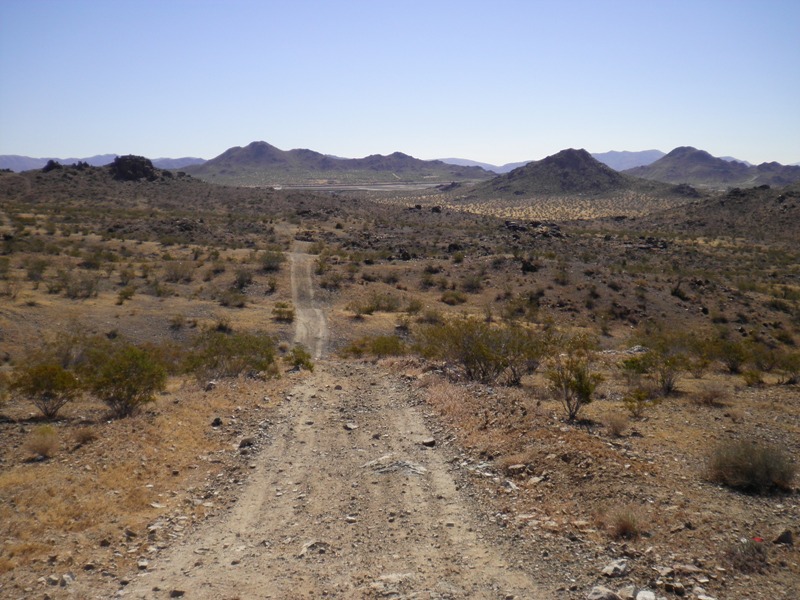
Out walking in the desert today, I had a bit of a mystical revelation. (Or sunstroke. It was hot out there.) What if that’s the truth of it? We are forever dying? Not just now in this lifetime, but forever? What if life is the aberration, and dying (not death) the norm?

Some scientists say the universe is dying, that there are more stars dying out than being born. Maybe someday, when it’s all over, there will be another big bang, and the whole cycle will start again. Perhaps each cycle is a single breath of “The EveryThing.”

I guess what I’m saying is maybe life as we know it is more of a static state than dying is. With dying comes transformation.

Did I mention that it was very HOT in the desert?

Dreaming of the Dead

I don’t often dream about my deceased life mate/soul mate, but last night was an exception. Perhaps my bloggerie yesterday, where I mentioned a revelation I had while walking in the desert, instigated the dream. The revelation — that having a sign from him wouldn’t change my life, that I’m already doing the best I can to be the best person I can be — was a pivotal point for me. Or perhaps it was because I’ve been going through the movies he taped and have thrown away some I know I will never watch. Whatever the reason, it was good being with him again for a few minutes.

I don’t think the dream was a sign from him, nor do I think he actually visited me. In fact, I knew it was a dream while dreaming.

In the dream, we were going somewhere on foot, and I realized that it would be cold before we got back, so I went inside to get a coat. In my closet were two of his coats — a jacket and a trench coat, which I have in fact kept. As I was pulling the jacket off the hangar, I remembered that I had gotten rid of most of his things after he died, and I panicked, wondering how to tell him that his stuff was gone. I left the room, and met one of the moderators of the grief group I had attended. He asked how I was, so I explained the situation, then I added, “It’s a good thing this is a dream, otherwise he would be really angry.”

In the dream, I was glad not to have to tell him his things were gone, and I’m glad I don’t have to tell him in real life. Even though he told me what to do with most things, he never told me what to do with his tape collection, and I don’t know what he would think of my throwing any of them away. But he is beyond caring about such things now.

Part of me wants to get rid of everything that reminds me of him — which would mean getting rid of everything I own. But part of me thinks there might come a day when having our things around me might help connect the disparate parts of my life — the years with him and the future years without him.

It still seems bizarre to me that a person’s things outlast him. In this age of obsolescence, you’d think it would be the other way around. Besides our household goods, his tape collection, and various things I have not been able to get rid of yet, I have a great many papers  in his handwriting — recipes, the list of video tapes, a foot-high stack of notes from his studies into health and nutrition, and various other notes I come across from time to time. Oddly, for something so personal, an unexpected glimpse of his handwriting doesn’t sadden me, which is a good thing. I’m sad enough as it is.

Desert Revelation: Dealing with Life on My Own

People often tell me how sorry they are that I’ve had no signs from my dead life mate/soul mate, but the truth is, even if he does still exist somewhere, there is no reason for him to try to contact me. A sign from him wouldn’t change anything, not his life, not his death, not my missing him. And it wouldn’t change my life.

I am not an Ebenezer Scrooge who needs to be shown the effects of my evil ways, nor am I a George Bailey who needs to be shown the effects of my benevolent ways. I do the best I can each day, trying to be kind to others, trying to be kind to myself.

All my life, I’ve studied religions, philosophies, mythologies. I’ve even had strong beliefs at various times, and have lived accordingly, though those beliefs have shifted through the entire spectrum of theological thought. I haven’t just been living haphazardly with nothing in my head but me me me. Whatever lies beyond this life, whether we retain our individuality or our energy becomes part of the “everything,” it isn’t germane to my life here on Earth since this is the only life I know. Understanding the truth of my existence won’t change anything I do.

I still question, of course, because that’s what my life is all about — quest(ion)ing. As with all quests, it’s the journey that counts, not the elixir of truth you find at the end. Even if you were shown the truth ahead of time, until you become the person who understands that truth, the truth remains obscure.

And so is this blog post — obscure. But I don’t mean it to be. I’m just trying to put today’s desert revelation into words. I am still prone to strange and mystical thoughts on my daily walks in the desert, though the thoughts could be the result of heat baking my brain instead of true insights. But this one feels true.

As much as I would like to talk to my mate, to find out how he’s doing, to know if he’s glad he’s dead, it wouldn’t change anything. I call him my soul mate because while he was alive, we had an incredibly strong connection, but I don’t think he’s actually sharing my soul. He’s his own person, on his own quest, and the further I get from our shared life, the more I feel the truth of that. Besides, I have my own quest to deal with, and it’s all I can handle right now.

Grappling with Death

A friend has been dealing with a spate of deaths in her life, and she’s trying to understand the purpose of them. I hope she succeeds. Death is so very hard to deal with, and the worst part is the seeming senselessness of it. I’ve been grappling with the subject for more than two years now, ever since the death of my life mate/soul mate, and I haven’t a clue what the purpose of death is. Well, of course, I understand the purpose on a global scale — the species needs to be constantly revitalized — but on a more personal scale, what is the purpose of these deaths? Of any death?

I know why my life mate had to die — his body was destroyed by an invading army of malignant cells, and he could no longer function — but is there any purpose to his death?

There certainly isn’t any purpose for me. I thought I’d feel free once I no longer had to live under the constraints of his illness, and maybe someday I will feel free, but for now, I’m lonely, sad, angry at times, and miss him always. Perhaps his death is a growth experience for me, but if he hadn’t died, I wouldn’t have needed to grow in this particular direction. And anyway, his death is way to big a price to pay for something so paltry.

Was there a purpose for him other than to be done with his suffering? This leads me to the equally unanswerable question of why he had to suffer in the first place. Who chose for him to suffer? He sure as heck didn’t — he did everything he could to live a healthy life, but pain dogged him all his years. (I’m sorry, but if your belief system suggests that we choose our pain, I don’t want to hear about it.)

Even if there is a purpose to death, one that we are ill equipped to understand, who chooses who gets to live and who has to die (or is it better phrased, “who gets to die and who has to live?”). Is there a moving finger writing our deaths, or is it blind chance? Blind chance doesn’t seem to be any way to run a universe, but what do I know? I don’t even know how to run something as commonplace as a car. I can drive, but making the car run when something goes wrong is beyond me.

Maybe someday my friend and I will be able to understand the purpose of death, but I doubt it, at least not while we are alive. (I just realized — every time I write about some facet of death, I post it under the category of life. I wonder if there is a clue in that.)

Consistency is No Hobgoblin When it Comes to Writing

A foolish consistency is the hobgoblin of little minds, adored by little statesmen and philosophers and divines. Most people leave off the word “foolish” when they quote this sentence by Ralph Waldo Emerson, leading us to believe that any consistency is the sign of a little mind, and interestingly, that is exactly what Emerson said.

Here is the entire passage: A foolish consistency is the hobgoblin of little minds, adored by little statesmen and philosophers and divines. With consistency a great soul has simply nothing to do. He may as well concern himself with his shadow on the wall. Speak what you think now in hard words, and to-morrow speak what to-morrow thinks in hard words again, though it contradict every thing you said to-day. — ‘Ah, so you shall be sure to be misunderstood.’ — Is it so bad, then, to be misunderstood? Pythagoras was misunderstood, and Socrates, and Jesus, and Luther, and Copernicus, and Galileo, and Newton, and every pure and wise spirit that ever took flesh. To be great is to be misunderstood.

Despite Emerson’s condemnation of consistency, the truth is, foolish or not, consistency is an attribute of a good writer. Readers will forgive a writer almost anything except inconsistencies that interrupt the flow of the story.

I once started to read a book where a man spirited away the Shah of Iran. According to the author, the Shah lived fifteen years beyond his supposed death in 1980. The operation was so secret and successful that no one knew about it. But . . . It took only this one very high profile achievement to assure a solid client base for the man. Supposedly, word travels quickly in the very elite circles of power, and so the demand for the man’s services was always in excess of his ability to produce.

What?????? If no one knew that the Shah survived his death, how could word travel? And if word did travel, how could high profile clients remain “dead,” especially since most of them were hiding from those in the elite circles of power? The inconsistency took me out of the story, and I never did finish reading the book.

It’s almost impossible to keep inconsistencies from slipping into a story, which is why self-editing, though vital, cannot be the final editing process. We writers see consistency because we see what we meant to say. Others only see the inconsistency. I am grateful to one of my editors for finding a blatant inconsistency in Daughter Am I. The editor wrote, “It’s not clear here whether or not Mary completely removed her shirt. If she did, when she stood up and ran to the bathroom, then turned around and had the conversation with Tim, she’d have been completely topless. Given their feelings for each other, and their state of undress, it seems unlikely they would have been able to have such a lengthy conversation without biology taking over sooner.”

Oops. I completely missed that. Mary took off her shirt so Tim could massage her sore back, and when the massage turned heated, Mary (engaged to someone else) runs from her feelings and hides in the bathroom. Inadvertently, I had her brazenly opening the bathroom door, standing half-naked, and starting a casual conversation—not at all what my poor innocent Mary would have done. After traveling halfway across the country in the company of seven old gangsters (well, six gangsters and one aged ex-night hall dancer) she’d lost most of her naiveté, but still, she would not have flaunted her naked breasts.

Naked breasts may pale in comparison with unsecret secret operations, but the inconsistency could have dammed the flow of the story for discerning readers. So, the moral of this tale is, if you remove your heroine’s shirt or other apparel, make sure you remember her state of undress and write accordingly.

Two Years, Two Months, Two Weeks, And Two Days of Grief

Two years, two months, two weeks, and two days. That’s how long my life mate/soul mate has been dead, and I still can’t make sense of it all — our meeting, the years we shared, his death, my continued life.

Neither of us had every expected (or wanted) to share a life with anyone, and yet we spent more than three decades together. Our meeting was almost miraculous. In a fit of loneliness, he wished he had someone, and the next week, I walked into his store. We started out with such hope, but our life together was no fairy tale. Much of it was wonderful, more vital than anything I could ever have imagined, yet we were trapped by various failures, not the least of which was his increasingly poor health. I was so tired of it all, so exhausted by trying to hold myself together, that a few times that last year I wished he’d die and get it over with. I never said it aloud, of course, but he knew. How could I have been so horrid? Shouldn’t I have been more patient? Wiser? Kinder? It’s a terrible thing, knowing I am not the woman I thought I was.

During the last few weeks of his life, we reconnected, and I remembered why I loved him.

And then he was gone.

I don’t understand how he can be dead. Well, obviously, I understand the biology of it — I watched him die a bit every day for a lot of years — but the man I knew in the form I knew is gone. Forever. I can’t wrap my mind around that. Even worse, I am forgetting him. My memories are drifting off-center, and I no longer feel the truth of him.

People used to tell me that he still exists in memory, but if so, he is dying a bit more every day. There could come a time when I don’t remember him, when I only remember his absence. I can feel it happening already. Some days now it seems as if he were a stranger I knew long ago rather than a person with whom I spent most of my waking hours for more than half my life. I don’t know whether I should cling to the memory of him, even if it is skewed, or if I should let the memory of him fade and simply deal with what life brings me every day.

I don’t understand my continued life, either. Was I really that woman? That woman who watched a man slowly die, who wanted the suffering to end, yet whose love was so ineffectual she couldn’t make him well or take away a single moment of his pain? That woman so connected to another human being she felt shattered into a thousand pieces after his death? That woman who screamed the pain of her loss to the winds? All these months later, I still don’t know how to deal with his death. Don’t know why I continue to be sad. Don’t know why I feel his absence acutely when I barely remember him.

Mostly I’m trying to look at the future as an adventure, but I’ve had so many immense changes in my life in the past few years, with more on the way, that I feel as if I have no foundation to build on. That feeling, at least, is not true. I have the foundation of all I have done, all I have learned, all I have become — what I don’t have is certainty and security (though no one really does).

And most of all, what I don’t have is him. But perhaps I never did? It could be we were simply passing by and stopped to visit awhile before we continued our journeys. Alone.

Gone With the Electronic Wind

I seem to be changing, whether I realize it on a daily basis or not. For the most part, I am more patient than I used to be. I have a greater ability to wait because there’s no reason to be one place rather than another. I am also aware the future will come whether I will it or not. But . . . I have a lot less patience for disrespect. And I am not as I nice as I once was.

Take today, for example. I got a friend request from someone on LinkedIn. I accepted the request, then she sent me an invitation to join her crime writers group. After I did so, she sent a message suggesting I post a bit about one of my books in the group’s discussion boards. Which I did. Then she said to post a link to the book (though I had already done so) and after I posted the second link, she left a comment on the very public post saying the book sounded interesting, but she wasn’t going to buy it. Huh? Why not just say it sounded interesting and leave it at that? Even worse, she went on a rant about ebook pricing. Apparently, J. Konrath has decided that $2.99 is the perfect ebook price (who made him king, anyway?) so the LinkedIn woman decided that any book priced more than that is overpriced. Her reasoning? Some of the major publishers were selling ebooks at almost the same price as a print book, and since there was nothing changing hands — no actual printed book — she figured that the publishers were cheating her.

My publisher prices my ebooks at less than a third of the print price, so why was she griping about my book? Aren’t publishers (and authors!!) allowed to make money anymore? Amazon skims 30% right off the top of all books (70% off $.99 books), and for this skim, they don’t do anything except offer the book as a download. There is no human involvement, so no payroll, no expenses except for a few cents worth of computer time. Apparently the woman has no objection to a huge near monopoly like Amazon raking in the dough. But a small publishing house? Oh, no. They aren’t allowed to make a profit! Sure the ebook is only a few electrons, and no physical product is exchanging hands, but what about the hundreds of hours that goes into publishing a book? (I’m not even counting the hours it takes to write the book.) It takes time and money to format, edit, create a cover, copyedit it, proof it. And yet she complains the publishers are selling nothing.

Perhaps her rant would have made sense if I had been the one to ask to be connected, if I had been the one to ask to join her group, if I had posted the book link without permission. But she instigated the whole situation, and then she was unbearably rude.

So I got even. I deleted her from my online world. Poof! Gone with the electronic wind.

Getting My Kicks on Route 66

Each year,  the California Historic Route 66 Association selects one of the eight states through which Route 66 runs to host the Route 66 International Festival. This year, the festival will be held from August 9-12, 2012 at the San Bernardino County Fairgrounds in Victorville, CA. Making it an even more historic event, the fairgrounds are on old Route 66!  With the theme “California Dreamin’ on Route 66”, the Route 66 International Festival 2012 will attract thousands of Route 66 enthusiasts, historians, fans and custodians of the “Mother Road” from across the country; including international visitors from 17 different countries, as well as local residents. And me.

I’ve been accepted as a participant in the festival, and I’ll be there signing my books on August 10th and 11th. Except for Daughter Am I, the story of a road trip from Colorado to Chicago, my books don’t have anything to do with Route 66, but I’ve had little luck with writer’s conferences and library presentations, so I’m going to try something completely different. It should be interesting. I’ll have to stay for the two days rather than do what I normally do at festivals — walk around for a few minutes then leave. (I never did know how to have fun. At least not what other people consider fun.)

So, if you’re going to be in Victorville on August 10 and 11th, be sure to stop by the fairgrounds and look me up. I’ll be waiting for you.

“I don’t worry about a thing because I know nothing is going to be all right.”

A friend told me about an old woman who was the most joyful person she knew, though the woman had suffered grievous losses in her life. I couldn’t fathom how the woman could be so joyful, and yet now I can. . . . almost. Perhaps the woman knows that everything comes to an end. Perhaps she knows that the little things are important. Perhaps she has found herself in all of the losses.

Or, like me, perhaps she has an awareness of death, of knowing, deep down, that her life will end, maybe even badly. Since I’ve become steeped in the grief culture, I’ve heard stories of terrible deaths, either doctors keeping people alive past any usefulness or alertness, or the person’s own will keeping them alive long after they wanted to be done with it. I’ve heard stories of so much pain and suffering that it’s amazing any of us ever manage to smile let alone be joyful in such a world.

We all know we are going to die, but after the death of someone we are profoundly connected with, we KNOW deep within our psyches. People tell me not to dwell on death, and I don’t. It’s more that the knowledge of death now is a part of the very fabric of my being and can never again be unknowable. This knowledge makes life on Earth seem both more and less significant, which adds a strange flavor to my days. I don’t know how this knowledge will affect me long term, but there is freedom in knowing that things will end.

I heard a song today by Mose Allison. “I don’t worry about a thing because I know nothing is going to be all right.” It sounds cynical, but it isn’t necessarily negative unless you give up and stop trying to do whatever you can. Does it matter what success you had here on earth when you are dead? Does it matter how many toys you had when you died? Of course not. It only matters that you lived.

It’s like writing — all stories are the stories of someone’s life, and as such, end in death. What we as writers do is end the book at an upbeat point for a happy ending and an ironic place for a more tragic ending, but still, life continues on past those significant moments.

I know how my life is going to end — the same way all of our lives are going to end. It will end in death. I’ve always been a bit of a worrier, but with death on the horizon (the far horizon, considering my longevity genetics) worry seems a bit foolish. All that counts is today — not future successes or failures, not future acquisitions or losses. Just today.

There is peace in that, maybe even joy.