Facebook Has Finally Defeated Me

I signed up for Facebook back when authors were joining in vast numbers. None of us knew what we were doing there, we just knew social networking was the next step in trying to promote our books. I was already familiar with Gather.com, another social networking site, and since I had a writing discussion group on Gather, I decided to start one on Facebook. There were already hundreds of such groups, but mostly they sat fallow, so I did one thing no one else was doing — I sent the link for the discussion to the members of the group. There was a great response because, finally, we all had something to do on Facebook while we figured out how to use the site most effectively.

I kept these discussions going through several Facebook upgrades until  they  revamped the group format and got rid of the discussion boards. I still don’t see the rationale behind that, but I adjusted. I added the discussion app to my fanpage and moved the discussions there. We were getting back into the swing of things when . . .  FB revamped the fan page format and got rid of the discussion app. It’s better for all discussions to take place on the wall, they say. It makes for a better experience, they say. A better experience for whom? (Glad I asked that. Since they are making the pages more interactive, and since all businesses — especially big businesses and major corporations — have a page, they are making room for more commercial encroachment on facebook.)

Well, I moved the discussions back to the group walls, and they quickly disappeared into the great maw of self-promotion. I have nothing against authors promoting their books, but please!! Give us something more interesting than yet another plea to buy your book. Still, that isn’t the issue here. Nor are the discussions the issue. If people aren’t interested in discussing the finer points (and the not so fine points) of writing or reading, there’s not much I can do about it except stick to my No Whine, Just Champagne discussions on Gather or post them on the Second Wind Publishing group on Goodreads.

The real issue, the reason Facebook has defeated me, is the updated home page. There is a ticker along the right sidebar that ticks continually with inane messages. John likes Bill’s link. Bill commented on Janet’s status. John and Janet are now friends. Even that isn’t a problem. One quickly gets used to ignoring sidebars on the Internet. The problem is that if you are making a comment on someone’s link or status update when the ticker ticks, your comment ends up in appropriate places, such as when I left a “yay!” on someone’s update about having had a good day and it ended up on another person’s update about needing an operation. Ouch. Still, I can get used to doublechecking to make sure my comments hit the right spot and deleting those that don’t. What I cannot get used to is the new newsfeed — the constant stream of cutesy-poo animal pictures, sickly sentimental and fatuous sayings masquerading as images, and supposedly funny sayings and cartoons that lack an iota of humor.

Even that I can get used to, but Facebook has made it so easy for everyone to share this crap that they do. Over and over and over again. Yikes.

On the other hand, since people seem to like this new newsfeed, it’s possible the problem isn’t Facebook. Maybe it’s me. Maybe I’m just getting crotchety.

Dancing With Eddie Cochran

I few days ago, I told you about my dance therapy. My hope is that by moving in rhythm to a few peppy songs most days, I can train myself to feel lighter in spirit, maybe even learn to have fun — whatever that is. And it’s working. I started out by getting teary-eyed during my sessions (“session” makes it seem as if it’s really therapy, but the truth is, I just dance in my room ). This morning, though,  while dancing to one of the songs from my rockabilly collection, I actually felt a lightness of spirit. Of course, it’s almost impossible to be sad while dancing to Eddie Cochran. (What can I say? I love rockabilly, though I never even heard any of the songs, not even the oldest ones, until the 1990’s. Such a deprived life I led!)

For those of you who haven’t heard of Eddie Cochran, he was a pioneer and an enormous influence in the world of rock and roll who out-Elvised Elvis. According to Wickipedia, Cochran had “experimented with multitracking and overdubbing even on his earliest singles, and was also able to play piano, bass and drums. His image as a sharply dressed, rugged but good looking young man with a rebellious attitude epitomized the stance of the Fifties rocker, and in death he achieved iconic status.” He was only 21 when he died.

Here he is, singing “C’mon Everybody,” as he sang it to me this morning and lightened my spirits and my step.

Maiden/Mother/Crone — The Mythic Stages of a Woman’s Life

floozyCrone Henge is a wonderful new blog from author Juliet Waldron. It’s a place where old women talk about old things: history, myth, magic and their checkered pasts, about what changes and what does not. Old women are the forgotten members of our society, but in times past, they were revered for their wisdom. In fact, both words, crone and hag, came from words meaning wisewoman. It’s good to see that older women are once again claiming their place in the world.

According to Moondance, crones cared for the dying and were spiritual midwives at the end of life, the link in the cycle of death and rebirth. They were healers, teachers, way-showers, bearers of sacred power, knowers of mysteries, mediators between the world of spirit and the world of form. In pre-patriarchical societies, women’s wisdom held healing power, and crone wisdom was the most potent of all. For nearly thirty thousand years, old women were strong, powerful sources of wisdom. Crones were respected and honored in their communities. Today, a crone is variously described as a woman who is either 50, 52, or 56, post-menopausal, consciously aging, willing to acknowledge her shadow side. Crone is a term used to describe an ancient archetype, an aspect of the triple goddess (maiden/mother/crone), and the third phase of a woman’s life. When a woman is near, in, or past menopause, she is potentially a crone. The designation refers to a perspective or point of view rather than a specific age or physical event.

This crone stage is a great new journey for women as they get older, but I intend to youth, not age. The way I figure, I did the mother stage first. By the time I was five, I could cook simple meals, clean house, do laundry, feed babies their bottles, and change diapers. By the time I was eighteen, I’d changed more diapers than most women do in a lifetime. (Sounds unbelievable, I know, but it’s true. I seldom admit it, but I was the oldest girl in a very large family.)

A few years after I met the man with whom I would spend the middle third of my life, his health took a turn for the worse. I wasn’t much of a healer, but I was a stayer — I stayed with him until he died. I also helped out when my mother died. I’m now staying with my 94-year-old father. When this stage of my life’s journey is done, this crone stage, the only stage left for me is maidenhood. And so I am youthing. (Youth-ing, not you-thing.) I am doing what I can to foster a spirit of adventure, to challenge myself; to attempt new things; to look at life as if I am a child again, lost in its wonders.

A crone is someone who is willing to acknowledge her age, wisdom and power, but me, as I continue my mythic journey, I am acknowledging my youth, wonder, and mystery.

Whether I become a maiden or not, I’m looking forward to this next stage of my life. It will be interesting to see what I become.

Grief is NOT Self-Indulgent

I was looking at search terms people used to find this blog, and someone googled “I feel self-indulgent when I think of my deceased partner and I cry a lot.” That got my ire going — not about her feeling that way, but at the way our society handles grief. Thinking about one’s partner and crying are not wrong, but there is something seriously wrong with a society that makes the bereft feel self-indulgent for grieving. What the heck is wrong with crying? With grieving? With talking about one’s grief?

Grief is not something to be shoved under the bed like a box of junk that you don’t quite know what to do with. Grief is how we learn to deal with a world suddenly gone crazy, and tears are how we relieve the tension of that grief. I don’t know how long this particular person had been dealing with her grief, but I’m at eighteen months, and though I’ve gone on with my life, I still have upsurges of grief and bouts of crying. Though these bouts have diminished significantly and I recuperate quite quickly, I’m prepared to go the distance, however long it takes. Some people say it takes a minimum of two years to get over the sadness and tears, some say four years, some say one year for every seven years of togetherness, some say never — that even after twenty years they still have times where the truth of their partner’s death hits them and the tears flow.

Since mourning is considered by the uninitiated to be unacceptable behavior after a month or two, most people quickly learn to hide their grief. Grown children especially get irritated at tears, perhaps because they can’t bear to see their once-strong parent brought low or perhaps because they think their parent is being self-indulgent. A friend of mine lost her partner six months ago, and her son berates her for being a drama queen. Such non-acceptance of a natural process adds more agony to an already agonizing time. As I said, there is something seriously wrong with a society that demonizes grief.

After my partner died, I asked the moderator of a grief support group how I should handle questions about my grief. I didn’t want to bore people with my ongoing emotional traumas, but at the same time I didn’t want to pretend everything was fine. I’d also been blogging about my grief but wasn’t sure I wanted to continue since I didn’t want to seem whiny and self-indulgent. She told me it was okay to tell people I was coping if I didn’t want to go into details, but she suggested I continue writing about grief because people needed to know the truth of it. And I’ve followed her advice even though it was hard at times. I mean, after eighteen months, shouldn’t I have gotten over it? The truth is, you never get over a significant loss — you learn to manage living without him or her.

It used to be that women hid their pregnancies, but now they flaunt their “baby bumps.” Maybe it’s time we brought grief out into the open so that the bereft do not feel as if they are self-indulgent for dealing with loss the only way possible — with remembrances and tears.

Putting a H.A.L.T. to Grief

It’s been eighteen months since my life mate — my soul mate — died of inoperable kidney cancer, and I’m still chugging along. I do okay most days, but still there are times when the thought that he is gone takes away my breath. His death was so final, his absence absolute. He never responds when I talk to him, never sits down to watch a movie with me, never seems to care when I get angry at him for rejecting me. (I know it’s not his fault, but still, death is the ultimate rejection.)

During this past year and a half, I’ve learned a lot about grief. I learned the importance of facing the pain head-on, accepting it as part of the process, and waiting for it to diminish, which mine has — significantly. I’ve learned how to find peace in the sorrow (or perhaps despite the sorrow). I’ve learned that grief cannot be hurried, that months or even years might pass before we bereft find ourselves again. And most of all, I’ve learned the secret of H.A.L.T.

People who make major life changes, such as alcoholics who give up drinking, smokers who give up cigarettes, diabetics who make diet and exercise changes are often urged to watch themselves so they don’t get Hungry, Angry, Lonely, or Tired. That’s what I mean by H.A.L.T. Did you think I actually meant putting an end to grief? You should know by now I’m letting grief wear itself out, whenever or however that might be.

Hunger, anger, loneliness, and exhaustion make us vulnerable, which makes it easy to backslide into old behavior patterns.  I recently noticed that grief often surges when I am tired, so I’ve been trying to steer clear of these vulnerabilites, but the trouble is that all of those states are effects of grief, so exhaustion and loneliness and anger causes grief and grief causes exhaustion, loneliness and anger. A sad cycle. But now that I’m aware of it, I can try to be more careful. Although I’m willing to let grief take its course, I have no intention of letting grief rule the rest of my life. I intend to be as bold and as adventurous as possible, a wildly inappropriate woman who just likes to have fun. But not quite yet. I still have some sadnesses to deal with.

***

Pat Bertram is the author of Grief: The Inside Story – A Guide to Surviving the Loss of a Loved One. “Grief: The Inside Story is perfect and that is not hyperbole! It is exactly what folk who are grieving need to read.” –Leesa Healy, RN, GDAS GDAT, Emotional/Mental Health Therapist & Educator.

Halt and I’ll Shoot! (Adventures With Firearms)

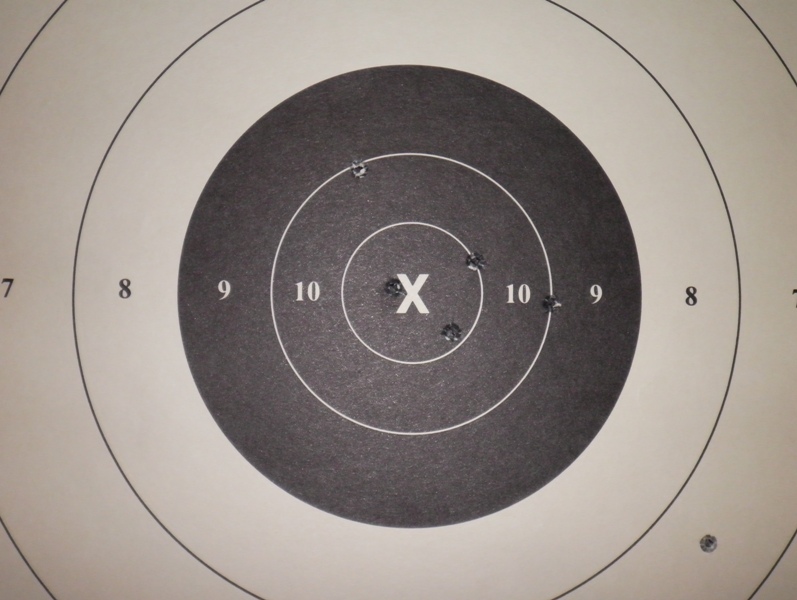
Pistol target.

In an effort to add adventure to my life and to challenge myself to experience new things, I went to an NRA Women on Target Gun Clinic last Saturday to become familiar with firearms. As an author who has killed way more than my share of characters — approximately 510,010 in my four published books combined and another 6,000,000 in my WIP — I figured I ought to know what my characters feel when they shoot a weapon. (Okay, only a couple shot a weapon so far. The others used strangulation and bioweapons, but I have no interest in learning how either of those feel.)

I expected the guns to kick. I expected to be knocked off my feet. I expected to be unable to aim the heavier caliber pistols and revolvers, rifles and shotguns. I expected to be humiliated by missing the target completely. None of that happened. At first, my arms shook a bit as I aimed the handguns, but that could have been due to being past my first youth (and perhaps even my second youth) or else it could have been due to the unaccustomed stance. Still, I managed to aim, managed to hit the target. Managed to get a bullseye even. Kept on my feet the entire time. Didn’t even rock. The shot came as a surprise, but not a shock.

Deadly with a rifle! Not bad for the first time

After the pistol range, we headed to the shotgun range. There we shot stationary clay discs, and I got three out of three. Then we tried the flying discs (they might have been called clay pigeons, but they sure looked like mini dayglo orange and green frisbees to me). I never quite the hang of it. Mostly shot too soon. The problem women have that big men don’t have is that to balance the shotgun properly, we have to lean into the stock to keep it balanced and to allow the force to travel up through our arm into our body mass. This is fine while shooting stationary discs, but leaning forward to shoot while following the disc with one’s eye and hopefully one’s arms, turned out to be difficult for me. Still, I did manage to kill one of the suckers, but one out of twelve tries isn’t anything to brag about.

Then we moved on to the rifle range, and there I was deadly!! Hit the 100 yard target three out of three times. Hit the 200 yard target three out of five times. Hit the metal animal targets ten out of ten times. Hit the 50 yard paper target every time and even got a bullseye.

Besides learning how it feels to shoot, I learned how easy it is to forget firearms are deadly weapons. Several times after hitting the distant paper target, I was so excited I wanted to run out to see how I did. Of course, I managed to contain my curiousity or I wouldn’t be here talking to you. I’d be in a hospital or a morgue — there were a lot of people shooting that day! I’m also ashamed to admit that after killing my clay disc, I lifted the shotgun in the air in impromptu exhiliration. So not the thing to do! Eek.

I also know why in books and movies the good guys always yell, “Halt!” before they shoot. Perhaps, like me, they can only shoot stationary targets and want to make sure they hit their man.

NRA Women on Target Instructional Shooting Clinic

I’ve killed off hundreds of thousands of people in my books — generally by impersonal means such as diseases — but at least one character shot off a gun. I just guessed at how it would feel, and apparently I got it right, but still, if I’m going to continue my lethal activities, I should know what to do, how to do it, and how it feels. To that end, I’ve signed up for a shooting clinic. The clinic is this Saturday, and I am looking forward to the adventure. This is what it entails:

Agenda: 8:30 to 9:00 am Sign in at the Clubhouse
9:00 to 9:30 am Introduction and safety brief at the Clubhouse
9:45 to 11:30am Range Instruction (2 stages)
11:30 to 12:45 pm Lunch catered by a local Mexican restauran
1:00 to 2:45 pm Range Instruction (2 stages)
3:00 to 3:30 pm Debriefing & Certificates

What to Bring: We will provide all firearms, ammunition, safety equipment. We provide foam ear protection you insert in your ears and clear safety glasses. Wear your prescription glasses or contacts and safety glasses can be worn over them if necessary. Sunglasses are recommended if you wear them. If you have earmuff style ear protection and wish to use it, please feel free to do so.

You should wear light colored, loose fitting clothing that will offer some protection from the sun as it is likely to be hot and we will be outdoors most of the time. Scoopneck or v-neck blouses are not recommended for the range. We suggest a men’s style t-shirt with a high neck line. We will receive a visor at the event but may wish to bring your own hat or visor to protect you from the sun. Bring sun block if you are sun burn prone. We are in the desert and are subject to winds, be prepared. You will be walking on gravel and concrete so wear shoes that offer some traction and protection: hiking boots or running shoes work great. Don’t wear open toed shoes, flip flops, or sandals.

Bottled water will be available at all stages of the event. Restrooms are located at or near each range.

What you will be doing: You are going to learn to safely handle and fire rifles, pistols, and shotguns. You will also learn to hit the target. You can expect one on one instruction and coaching, and we will maintain a pace of events that is comfortable for you. We encourage you to try everything but your comfort level will be respected. This event is designed to take a novice shooter to a level of comfort with firearms that will allow that shooter to pursue further instruction. We replace fear of shooting with knowledge about shooting and apprehension about guns with respect for guns. At all times, we will maintain safe conditions and will instruct you in the safe, responsible and ethical handling of firearms.

S.O.S. — Dance Therapy

A few days ago, I started doing what I call “dance therapy.” I thought it was my own idea, but today I discovered there really is such a thing. It’s been around since the 1940s and was created as a way for the mind and body to work together. Supposedly, by dancing, people can identify and express their innermost emotions, bring those feelings to the surface and create a sense of renewal, unity, and completeness.

But that’s not what my “dance therapy” is about. I know what my feelings are. (And so do you if you’ve been checking in with this blog occasionally.) I’m still grieving the death of my mate of thirty-four years. We were soul mates: partners in life, in business, in ideology, in exercise — in fact, years ago, before he started losing health, we used to do aerobics together, which for us meant free-style dancing around the living room. I continued by myself for a while, but as he got sicker, I had to stop that form of exercise because most song lyrics made me cry. Even happy songs — especially happy songs — brought tears to my eyes, and I couldn’t deal with that. Not being a natural optimist, (maybe as a Wednesday’s child, I really am full of woe) I needed to fight to stay positive, to focus on what I had rather than what I was losing. In my current situation, though, the loss is so great, it’s not a matter of seeing the glass as half empty rather than half full (if you’ll pardon my use of that odious phrase). It’s a matter of trying to glue a shattered glass back together and hope it holds together as I fill it drop by drop.

I’m not in nearly as much pain as I was seventeen and a half months ago when he died, but I’m still feeling sad and empty despite the friends I’ve made and the trips I’ve taken. (My most recent excursions included a Route 66 Rendezvous, a couple of major county fairs, and a trip to Seattle — so see, I really am going on with my life.) The world still feels different with him gone. I still feel different, knowing he’s not somewhere in the crowd. I will probably always miss him, always yearn to talk with him, always long for the sight of his smile and the sound of his voice, but I don’t want to — can’t — be enchained by my own sorrow forever.

Most songs still bring tears to my eyes, but it no longer matters since many things make me tearful now. Besides, without a song or a dance, what are we? And so, I’ve begun my version of dance therapy. Today I danced to ABBA. (Why is that more embarrassing to admit than that I still cry at times?) I’m not looking for a sense of happiness or even optimism. Nor am I looking for exercise. (For that, I walk, lift, stretch, air bicycle.) My hope is that by moving in rhythm to a few peppy songs most days, I can train myself to feel lighter in spirit. Maybe even learn to have fun — whatever that is.

It’s the best I can do.

What Your Doctor is Doing While You’re Sitting in the Waiting Room

Actors and actresses with accents that are part of their persona, such as those from England, Germany, or the American South, often have to work with voice coaches to keep from slipping into mainstream American English (whatever that might be). Even the accents of people who learned English as a second language eventually become homogenized if they live among the general population long enough. Apparently, it is very difficult to keep one’s accent with two exceptions: if the person lives in an enclave with others who have the same accent or . . .  the person is a doctor who has been in this country for more than two decades.

My 94-year-old father was recently hospitalized for cardiac problems and a touch of pneumonia. Before he was released, his doctor (who was not born in this country, did not go to medical school here, but has practiced here for more than twenty years) called me to explain the new medications he was prescribing. His accent was so thick, I had to make the guy repeat his instructions ad nauseum and spell the names of the drugs so I could get them right. I did fine until he started talking about hisspern. He kept saying that my dad already took hisspern, but that now he was supposed to cut that down to a quarter of a tablet. Hmm. Hisspern? That drug was not one my dad was taking. Then I remembered that he did take aspirin. So I asked, “Do you mean aspirin?” The doctor got testy, and said, “Hisspern! Hisspern!”

The nurse took the phone from him then, told me she’d give me a printout of the new drug regimen, and hung up. Later, when I checked the list, it was right there: aspririn — 81 mg.

This doctor often has his patients wait for several hours (even his almost-centenarians) before he sees them. Well, now I know why he makes them wait so long — he’s out taking voice lessons to make sure he remains un-understandable. (I won’t even mention his handwriting. Yikes.)

Seeking Stories that Live Within Us by Malcolm R. Campbell

I am delighted to welcome my guest, Malcolm R. Campbell and his newest novel “Sarabande.” Malcolm is so very generous to other authors, it’s great to be able to return the favor. Besides, he’s a fine writer who pens powerful tales, and he has better insights into storytelling than anyone I know. Malcolm says:

A living myth is told and retold as the centuries pass. Poets, painters, musicians are nourished by its imagery, and in each retelling something is added from the collective attitudes, conscious and unconscious, of the time and from the individual vision of the artist.” – Helen M. Luke in “The Laughter at the Heart of things.”

As I read Helen M. Luke’s analysis of the myth of the ring as viewed by Richard Wagner in The Ring of the Nibelungen (known as the four-part “Ring Series”) and J. R. R. Tolkien’s The Lord of the Rings, I was struck by the fact this story is now part of our world view. Whether we learned of the myth through the original source materials, Wagner’s musical dramas, Tolkien’s books, or the feature film trilogy directed by Peter Jackson, the story lives inside us as though it actually happened. Tolkien expressed contempt for Wagner’s version of the old Norse myth drawn from the 13th century Icelandic Volsung Saga. Yet most critics believe Wagner’s The Ring of the Nibelungen (consisting of “Das Rheingold,” “Die Walküre” Siegfried, and Götterdämmerung”), composed between 1848 and 1874, and Tolkien’s Lord of the Rings, written between 1937 and 1949, are different interpretations of the same myth, and that Tolkien was also influenced by Wagner. Myths often have as many interpretations as history as though they refer to actual events.

Listen to the discussions about J. K. Rowling’s Harry Potter books, and you will hear people talking about Harry, Snape, Dumbledore and Voldemort in the same way they speak of celebrities, world leaders and newsmakers who come into their lives television, concerts and the Internet. All of these people, fictional or actual, are larger than life. While novel readers and film audiences know there is a difference between Tolkien’s characters and Rowling’s characters on one hand and well-known people within our culture, all of them are part of our shared story.

Earlier generations were impacted by Star Trek and Star Wars events and characters just as strongly. We know the difference between fictional characters aren’t read and that real people aren’t fictional, but it doesn’t matter. They’re all the same. While even the most fanatical fans don’t expect to see Captain Kirk, Spock, Frodo or Hagrid searching for salad greens in the produce department at Kroger or addressing Congress about the state of the galaxy, the worlds of those characters is part of our lives as though it’s a living and breathing reality.

Most authors don’t write with the expectation that their stories will impact readers with such force that the characters will suddenly take on independent lives of their own. At best, authors hope their stories and characters will seem real while their books are being read. For a reader, there’s nothing better than plunging into a good story, becoming enchanted by it, and following it with the fervor they follow family dramas and the biggest news stories of the day.

Yet some stories catch our fancy and stay with us long after we put the book down or leave the theater. Those are the stories we seek because they take us on flights of fancy, display new worlds before our mind’s eye, and take us on physical and emotional journeys that expand our lives and enrich our imaginations. Ask any reader what his or her favorite books are, and s/he will tell you about good guys and bad guys and things that go bump in the night and awesome landscapes that are just as much a part of his or her life as co-workers, neighbors and family.

As readers, finding such novels is part of a never-ending quest for a real page turner of a story we will never forget because it lives inside us and evolves every time we read it, talk about it and think about it. As readers, we love our living fiction.

Malcolm R. Campbell is the author of three contemporary fantasies, Sarabande (2011), Garden of Heaven: an Odyssey (2010) and The Sun Singer (2004).

Click here to read an interview with: Malcolm R. Campbell

Click here to read an excerpt of: Sarabande