What to Say to Someone Who is Grieving

I mentioned to a friend that, after receiving notification of my mate’s death, few people from a certain online group sent an acknowledgement, and she said perhaps it was because they did not know what to say. This is probably true. Most comments posted to me on the various threads began with: “I don’t know what to say.”  Of course, being writers, these people followed that statement with very touching responses, but I also received touching remarks from non-writers. To be honest, all responses mean a lot to me video[7]— grief is such an isolating experience, that any indication of concern helps remind me that people do care, that perhaps I’m not totally alone after all.

If you cannot think of anything eloquent to say in the face of another’s grief, say something simple. Say, “I’m sorry.” Say, “I’m thinking about you.” Say, “My heart goes out to you.” Say, “I shed tears for you.” And there is always the standard, “My thoughts and prayers are with you.”

If you knew the deceased, talk about him. The bereaved (a terrible word, so namby-pamby and doesn’t really connote how truly bereft one is  after such a loss) will find comfort in your memories. If you didn’t know him, you can talk about your own experiences with the death of a loved one, though be aware that grief piled upon grief might be a bit overwhelming for the one left behind. Despite that, the stories people share with me make me realize that though the pain seems impossible to live through, it will eventually become tolerable. At least, I hope it will.

Many people told me to “hang in there,” but although well-meaning it is not, perhaps, the best thing to say to someone who is grieving. Depression is a part of the process, and “hanging in there” makes one wonder “hanging from what? And where?” (If you are one of those who used this expression, I hope I’m not hurting your feelings. Rest assured I took your words in the spirit offered, and was pleased that you thought of me.)

If you truly cannot find words of your own, share a poem that helped you get through your grief. Although grief is such a personal experience, the emotions portrayed in poetry are universal.

If you can’t think of something to say immediately, but eventually think of the perfect thing, say it then. It is never too late. Grief lasts a very long time. As the days, weeks, months pass, others forget, but the person who is grieving doesn’t. Any indication that you are thinking of her in her sorrow is comforting.

In the end, it doesn’t really matter what you say. Extending a bit of comfort, showing that you haven’t forgotten, showing that you care — those are the important things.

***

Pat Bertram is the author of Grief: The Inside Story – A Guide to Surviving the Loss of a Loved One. “Grief: The Inside Story is perfect and that is not hyperbole! It is exactly what folk who are grieving need to read.” –Leesa Healy, RN, GDAS GDAT, Emotional/Mental Health Therapist & Educator.

Like Pat on Facebook.

Death For Dummies

I’ve learned a lot about death recently. Well, not death exactly – only those who have died can know what death is – but I have learned way more than I want to know about the practicalities and obligations of those who are left behind. I considered writing a manual, sort of a Death for Dummies, then I realized when a person is caught in that horror, the last thing one wants to do is read a how-to-guide. Besides, one learns soon enough what needs to be done.

My life mate/soul mate of thirty-fours years died at the end of March, and in between unbelievable bouts of pain and agony, I have been dealing with the practical issues. One thing that came as a surprise to me, though it shouldn’t have, is how heavy a person’s ashes are. They are not ashes, actually, which I already knew. (And so would you if you had read Daughter Am I.) What remains are the inorganic compounds – the minerals, the part that was never alive in the first place – and most minerals are heavy. Those in the funeral business don’t call them ashes. They call them cremains. Sheesh. I could do without the cute name. “Ashes,” at least, connote an offering, or perhaps a resurrection of sorts.

A friend – a minister who has had extensive experience with the dying and the bereaved – suggested I keep the ashes, or some of them, anyway. I had never considered it, but since I couldn’t figure out where to scatter them, and didn’t want to go through the trouble of finding out the local laws on the matter, I followed the minister’s advice. And having the urn with me brings a bit of comfort. (Urn is a misnomer, as is so much in the funeral business. The urn is simply a sealed plastic or brass box.)

Another friend sent me this poem:

Support From Others
Author Unknown

Don’t tell me that you understand.
Don’t tell me that you know.
Don’t tell me that I will survive,
How I will surely grow.
Don’t come at me with answers
That can only come from me.
Don’t tell me how my grief will pass,
That I will soon be free.
Accept me in my ups and downs.
I need someone to share.
Just hold my hand and let me cry
And say, “My friend, I care.”

I’d like to make an addition to the poem:

Don’t tell me to “hang in there.”
Makes me wonder: Hang from what? And where?

What meant the most were those who cried with me. Not enough tears had been shed for him – no amount of tears will ever be enough – so those tears gave me comfort. I don’t mean to be maudlin, but this is a trauma – an amputation of sorts – and it shouldn’t pass lightly.

***

Pat Bertram is the author of the suspense novels UnfinishedMadame ZeeZee’s Nightmare, Light BringerMore Deaths Than OneA Spark of Heavenly Fireand Daughter Am IBertram is also the author of Grief: The Great Yearning, “an exquisite book, wrenching to read, and at the same time full of profound truths.” Connect with Pat on Google+. Like Pat on Facebook.

Searching For Happy Memories

I’ve been searching for happy memories to take the edge off the memory of watching my lifemate die so painfully, and one I’ve been thinking about a lot lately is a day I visited him at the store he owned. We spent hours talking — about life, books, history,  moving from one topic to another as easily as if we’d known each other a lifetime instead of just a few months — and then he walked me outside. This is the poem I wrote when I got home that night:

you turned around
and waved to me
after we said good-bye
a small gesture
that told me more
than all the words
we had spoken

I wish I could have just one more word, one more wave from him.

A Tribute to a Fallen Mate

Yesterday I mentioned that once upon a time I wrote snippets of poetry. That time coincided to when I met the man who would share my life, and some of the snippets I wrote are poignant to me now because they chronicle my first feelings for him. A private man, he would be appalled that I am writing about him, but I didn’t want his life to pass unnoticed by all but me. Though written long ago, this bit still fits him:

you give
(not lightly
the figments of this world
but)
your reality
and your radiance
(your soul)

Remembering

Still in the throes of a weepfest. Here is another poem about dealing with grief. Feel free to share poems that have helped you get through rough times.

Remember by Christina Rossetti

Remember me when I am gone away,
            Gone far away into the silent land;
            When you can no more hold me by the hand,
Nor I half turn to go yet turning stay.
Remember me when no more day by day
            You tell me of our future that you plann’d:
            Only remember me; you understand
It will be late to counsel then or pray.
Yet if you should forget me for a while
            And afterwards remember, do not grieve:
            For if the darkness and corruption leave
            A vestige of the thoughts that once I had,
Better by far you should forget and smile
            Than that you should remember and be sad.

add to del.icio.us : Add to Blinkslist : add to furl : Digg it : Stumble It! : add to simpy : seed the vine : : : TailRank : post to facebook

Funeral Blues

One of the best descriptions of grief I have ever read is Funeral Blues by W. H. Auden. If you’ve seen the movie Four Weddings and a Funeral, you are familiar with Auden’s words, but for those who have never seen the poem, I am posting it here (and hoping I am not infringing on Auden’s copyright). Feel free to join my weepfest by sharing your favorite poem of loss or grief.

Funeral Blues by W.H. Auden

Stop all the clocks, cut off the telephone,
Prevent the dog from barking with a juicy bone,
Silence the pianos and with muffled drum
Bring out the coffin, let the mourners come.

Let aeroplanes circle moaning overhead
Scribbling on the sky the message He is Dead.
Put crepe bows round the white necks of the public doves,
Let the traffic policemen wear black cotton gloves.

He was my North, my South, my East and West,
My working week and my Sunday rest,
My noon, my midnight, my talk, my song;
I thought that love would last forever: I was wrong.

The stars are not wanted now; put out every one,
Pack up the moon and dismantle the sun,
Pour away the ocean and sweep up the woods;
For nothing now can ever come to any good.

A Meme By Any Other Name Would Be As Confusing

There is a meme going around, and I was tagged for it by Eric Beetner, co-author of One Too Many Blows to the Head. Meme? Are you as confused by that term as I am? A meme is a postulated unit of cultural ideas, symbols or practices, which can be transmitted from one mind to another. Whatever that means. It certainly doesn’t seem to have anything to do with the meme I was tagged for, which directs one to tell six outrageous lies and one outrageous truth about oneself (or six truths and one lie if one prefers). An internet meme, however, is defined as a catchphrase or concept that spreads quickly from person to person via the Internet. Still don’t see what that has to do with lies, but in the end, that’s not the point. The point is, do I follow through since Eric asked so nicely, or do I ignore the whole situation as I normally do?

Two things work against my following through:

1) I’m not good at telling outrageous lies. If I were, I’d probably be a bestselling writer. As it is, my books are filled with truths, outrageous or not, thinly disguised as fiction. 

2) I’m not sure that posting outrageous lies on the eternal internet is such a good idea. Forever after, people will stumble across those lies and if they didn’t know the origin, they might consider them the truth.

So, I am going to compromise (cheat) and tell you two outrageous (okay, semi-outrageous) things. Both might be true, both might be lies, or one might be a lie and one might be a truth. You figure it out.

1) I don’t eat chocolate.

2) I was Cleopatra in a previous time.

I’ll let you know the answer in a couple of days. Until then . . .

Tag! You’re it!

Rules:

• Tell up to six outrageous lies about yourself, and at least one outrageous truth – or – switch it around and tell six outrageous truths and one outrageous lie.
• Nominate some more “Creative Writers” who might have fun coming up with outrageous lies of their own.
• Post links to the blogs you nominate.
• Leave a comment on each of the blogs letting them know that you have nominated them.

Language of the Fan Decoded

Once upon a time, women (were they called women back then, or were they ladies?) carried fans, and they used the fans to communicate silently with their lovers. Of course, since everyone knew the language of the fan, the maessage wasn’t exactly a secret. Still, the language has its uses, most particularly for writers of historical romance. So, for your edification, here it is:

With the handle to the lips:  Kiss me

Carrying in the right hand:  Desirous of making acquaintance

Carrying in the right hand in  front of the face:  Follow me

Placing on left ear:  You have changed

Twirling in left hand:  I wish to get rid of you

Drawing across forehead:  We are watched

Carrying in right hand:   You are too willing

Drawing across cheek:  I love you

Drawing through hand:  I hate you

Twirling in right hand:  I love another

Closing the fan:  I wish to speak to you

Drawing across eyes:  I am sorry

Letting it rest on right cheek:  Yes

Letting it rest on left cheek:  No

Open and shut:  You are cruel

Dropping:  We are friends

Fanning slowly:  I am married

Fanning fast:  I am engaged

Open wide:   Wait for me

Could make for an interesting story. A lady is desperately in love with a gent and he with her. However, the ballroom is hot, and she feels faint, so she starts fanning herself. Her swain sees what she is doing and disconsolately leaves, thinking that the lady belongs to another. Because she is hidden behind the fan, she doesn’t see him, and so she never knows what happened to him. Hmmm. Maybe I better stick to thrillers or mysteries or whatever it is that I write.

A Store Walking Down the Street

I recently came across this sentence in a novel: “It was the kind of store I loved to see walking down the street when I was a kid.” Whoooo. I’d like to see any kind of store walking down the street!

I was thinking about that particular gaffe while I was walking down the street today. I happened to see something that made me realize the sentence wasn’t totally ludicrous — a house rolling passed me. Okay, it was being towed, but still, it was moving along the street instead of being securely attached to a foundation.

Something else I saw: a henpecked rooster. Not a pretty sight! That poor thing was pecked raw by the hens. I will never again use the word henpecked, though to be honest, I’m not sure I ever did.

Many words outlive their usefulness and become meaningless clichés, such as pitch black. Does anyone today even know what pitch is? I had to look it up. It’s a black, sticky substance from the distillation of tar. What about hair the color of a raven’s wing. Have you ever seen a raven’s wing up close? Perhaps you saw a crow. I don’t know enough about birds to tell the difference, but I do know that comparing hair to a crow’s wing doesn’t portray the same poetic image. And why are writers still referring to the squeals of stuck pigs? Some clichés are of more recent standing, such as a stuffed briefcase. If you saw someone with a briefcase, how would you know how full it was?

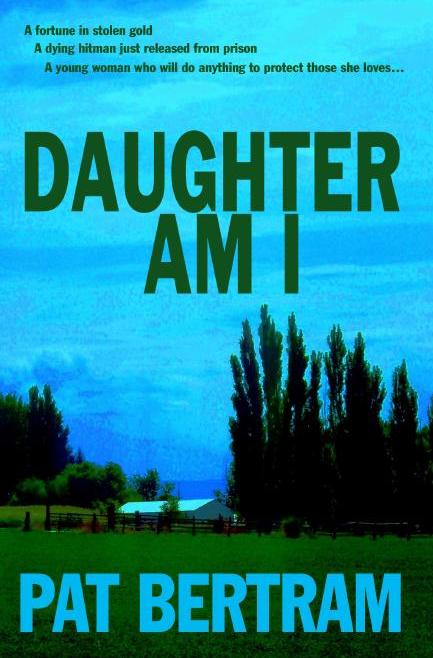
Clichés, poorly constructed sentences, and unnecessary bits of exposition should be eliminated during the editing process. Today’s Daughter Am I blog tour stop includes a segment of Daughter Am I that remained in the book up until a week before publication. It’s not a bad excerpt, but it added nothing except a bit more history to a novel that already had a lot of history.

You can see the segment here: Dead Darling from Daughter Am I.

DAIClick here to buy Daughter Am I from Second Wind Publishing, LLC. 

Click here to buy Daughter Am I from Amazon.

Click here to download 30% of Daughter Am I free from Smashwords.

Click here to read the first chapter of Daughter Am I.

add to del.icio.us : Add to Blinkslist : add to furl : Digg it : Stumble It! : add to simpy : seed the vine : : : TailRank : post to facebook

Big Bird and the Military

Sesame Street is forty years old today. When the program first launched, it was touted as a show to help kids learn and to show them that learning is fun. I never understood why they needed talking toys to instill a love of learning. I thought then, and I still think that learning itself is fun. You don’t need to play games while learning to find the fun and excitement of expanding your brain. But apparently, even when I myself was young, I didn’t get it. And now I’m wondering if all those Sesame Street children didn’t get it. Where are all those creative and brilliant adults that the show was supposed to produce? It seems as if both the Internet and shows like Sesame Street encourage passivity and an expectation that learning is always be easy and fun, colorful and noisy.

Oddly, as I was thinking these thoughts, I happened to notice an article suggesting that kids today are too fat, dumb, or dishonest to join the military. (75 Percent of Young Americans Are Unfit for Military Duty.) These would be second generation Sesame Streeters, first generation Internetters.

Perhaps the over-forties are every bit as passive as the under-forties, choosing the easy fun of video games, television shows, and films over books. Not that it matters, except that I have books to sell, and I wonder what my demographic is. (You did know I would come around to that, didn’t you?) I have never understood how one chooses a demographic, though I have finally realized that’s what a genre is for — finding your demographic, which is a population who will be more receptive to your book than any other population.

Today, I am a guest at Un:Bound for Ravenous Wednesday, which is so not my demographic. On the other hand, they have welcomed me and made me feel at home, and they are readers, so — despite my lack of flowing tresses and lethal wings — perhaps they are my demographic. Ah! Now I have you intrigued! You can find me, an interview, and a lively discussion at: Ravenous Wednesday with Special Guest. That special guest, of course,  is me.

DAIClick here to buy Daughter Am I from Second Wind Publishing, LLC. 

Click here to buy Daughter Am I from Amazon.

add to del.icio.us : Add to Blinkslist : add to furl : Digg it : Stumble It! : add to simpy : seed the vine : : : TailRank : post to facebook