One Woman’s Grief

The American Psychiatric Association has labeled grief that lasts more than a few weeks a mental disorder. I wrote about this in my last blog post, “Grief Is Not a Medical Disorder,” but I can’t stop thinking about it. The problem with grief is not the pain, though sometimes the agony is so unbearable it takes one’s breath away, but the reason for the pain: a very dear person, a part of your life, is gone and will never return. When one is depressed for no reason, then perhaps the misery can be classified as a mental disorder. But if there is a reason for the pain, if there is a direct cause for the depression, then it is not a disorder. It is life.

Grief varies, of course. Everyone grieves in a different way, and everyone feels each subsequent death in a different way. The loss of an aged aunt you barely knew is different from the loss of a beloved mate. In the first case, prolonged grief could be a sign of depression, but in the second case, prolonged grief is a way of coping.

When I lost my mate, I was in such pain I thought my heart would burst. I couldn’t breath, couldn’t focus, couldn’t see how I could ever get through the day let alone the rest of my life. I was also still in shock from witnessing his horrific death.

I did get through those first days, though how I don’t know — the pain escalated by the minute. Then I found out about a local bereavement support group. I am a private person, one who keeps her emotions to herself, but I went to the group meeting anyway hoping someone could tell me how to deal with the pain. No one could, of course, but I did meet people who had survived a similar loss, and that taught me survival was possible. One of the problems with grief is how it isolates you, and the group made me feel less isolated. And that was a comfort.

I had no intention of writing much about grief on this blog. I posted a few articles mentioning my pain, and found that not only did the articles help me, they gave comfort and support to others who were going through the same thing. So I continue to write about grief. Perhaps someday the private me will look around and be aghast at all I have made public, but for now it’s my way of coping.

The point of this bloggery is that the pain of grief made me reach out and let others into my world. If I had been treated for depression during this time, I wouldn’t have connected with others. I would have remained isolated, and the effects of intense grief would have last much longer than they did. Everyone has the right to grieve the way they want, of course, but feeling the pain was the only way I could do it, both for me and for my mate. He deserved to have someone grieve that he died, to have someone feel the imbalance of the world without him in it. And that is not a mental disorder.

Grief is Not a Medical Disorder

According to the new Diagnostic and Statistical Manual of Mental Disorders released by the American Psychiatric Association, grief is considered a medical disorder, and should be treated as major depression. There used to be a bereavement exclusion in the description of major depression, but they have taken that away, and now more than a few days of pain is considered a crisis. There can be “a few days of acute upset and then a much longer period of the longing, the tearfulness. But typically sleep, appetite, energy, concentration come back to normal more quickly than that.”

In whose world is grieving a medical condition that needs to be treated? Not my world. In my world, grief is one of the bookends of a relationship. Love. Grief. If grief is a medical condition, then watch out. One day love is going to be considered a treatable disease.

Perhaps emotional pain is not necessary. Perhaps people can survive quite nicely without going through the pain of grief — perhaps avoiding grief won’t cause the future problems people say it will — but the truth is, grief is a life experience, an incredibly deep and painful and raw experience that changes the way you think about yourself and the world. Grief helps you process the amputation of having a child or a mate torn from your life, let’s you experience the loss in a visceral way, makes it real. In past eras, grief was acceptable, in fact, was even encouraged. In today’s world, grief needs to be hidden so that it doesn’t offend people’s sensibilities, so that it doesn’t bring the spector of bad luck into people’s lives. Drugs can hide your grief, of course, but that’s all it can do.

I didn’t grieve excessively when my mother or my brother died, but when my mate died? I was devastated. (Still am, but at the moment I am going through a hiatus, a time of peace.) It wasn’t only the death of him. It was the death of our future, our dreams, our hopes, our lifestyle, our shared life, our private jokes. It was the death of my companion, my love, my friend, my confidante, my fellow traveler on life’s journey. No drug is going to make any of those deaths acceptable.

“He” died. “We” died. But “I” didn’t. Grief made me realize that. Surviving grief has taught me that I can survive anything. No drug could ever give me that.

I know a woman who mourned the loss of her mother for two years. Actually, she wasn’t mourning the loss of the mother so much as the loss of the emotional support and attachment the mother never gave her and now never would. She emerged from this period a strong, vital, wise woman. No drug could ever give her that.

In a strange way, grief is a gift. Easy? No. Painful? Yes. But . . . If you let yourself feel it, let it become a part of you, it will take you where you need to go. And no drug can ever give you that.

Comes the Dawn

Someone recently sent me a version of this poem. Turns out there are several versions and several author claimants. The two most likely authors are Veronica Shoffstall or Judith Evans, though the person who sent it to me has had it for many decades, so it could be older than any of the self-professed authors. Still, whoever wrote it, the poem has brought comfort to a lot of people.

Comes The Dawn

After a while, you learn the subtle difference
between holding a hand and chaining a soul.
And you learn that loving doesn’t mean leaning
and company isn’t security.
(Kisses aren’t contracts and presents aren’t promises.)

After a while you begin to accept your defeats
with your head up and your eyes open,
with the grace of a woman, not the grief of a child.
And you learn to build your roads on today
because tomorrow’s ground is too uncertain
and the inevitable has a way of crumbling in mid-flight.

After a while you learn that even sunshine burns
if you stand too long in one place.

So, you plant your own garden and decorate your own soul
instead of waiting for someone else to bring you flowers.
And you learn you really can endure,
that you really do have worth.
You learn that with every good-bye comes the dawn.

***

Pat Bertram is the author of Grief: The Inside Story – A Guide to Surviving the Loss of a Loved One. “Grief: The Inside Story is perfect and that is not hyperbole! It is exactly what folk who are grieving need to read.” –Leesa Healy, RN, GDAS GDAT, Emotional/Mental Health Therapist & Educator.

Grief’s Milestones

The first year of grieving is difficult, not just because the wounds to the heart and mind are so raw and the void where the loved one resided so dark, but because it is a year of firsts. And each of these firsts comes with a renewal of pain.

We — my life mate and I — did not celebrate our birthdays. We merely recognized them as a tally mark for another year gone by. Because of this, I had not expected to feel any deeper sadness today — his birthday — than I felt yesterday or the day before, but grief knows no logic. It doesn’t matter that we never celebrated his birthday — that was his choice. But that he is not here to make that choice does matter, and so I’m dealing with an upsurge of grief. We will no longer be marking his years. He will never grow older. Perhaps next year I will be able to let the day pass without making a big deal of it, but today is a first. One of grief’s milestones. His first birthday after death.

I know these days of refreshed pain are important. Too often I keep myself busy to minimize the pain, and there is no effective way to get around true grieving but to feel the pain and go through it. Or so I’ve been told. Reconnecting with the pain is also a way of reconnecting to him. The faster I go through the grief process, the further I get from him. The farther I get from him.

The earth hurtles around the sun at 67,000 mph. The sun hurtles around the galaxy at 140 miles per second. The entire universe is also moving and expanding, so today we are a very long way from where we were when he died. (Considering only the speed of the earth, he died 165,356,000 miles ago.)

And, considering only the surface distance, I am almost 1000 miles from where we lived. We planted trees and bushes around the house to keep it cool and to give us privacy, and that green world seems a million miles from the desert where I am staying now.

So, today I am celebrating his birthday, if only with my grief, because it helps me bridge the distance.

Nor All Your Tears . . .

The Moving Finger writes, and having writ,
Moves on: nor all your Piety nor Wit
     Shall lure it back to cancel half a line,
Nor all your tears wash out a Word of it.

When I started writing, I often thought of the above quatrain from the “Rubaiyat of Omar Kayyam.” It made me smile to reflect that this warning about the moving finger does not hold true when it comes to writing. We writers can — and should — rewrite and rewrite until the story turns out exactly the way we want it to turn out.

When it comes to real life and especially death, however, there is no rewriting. If the story does not turn out the way we want, too bad. And tears, as I now know from experience, will not wash away a single moment of what has already happened.

No matter how much I cry, my mate is still dead.

I worry sometimes about talking so much about my crying for him (and for me). Perhaps people will see me as weak since people often equate tears with spinelessness and immaturity. There is certainly something babyish about crying for that which one cannot have, for wailing against that which one cannot change. Sometimes I think I should be braver about this traumatic turn my life has taken, or more stoic. Still, tears are the only way I have of momentarily relieving the terrible ache of his absence. And this reason for tears is true not only for me.

I met a woman who cannot cry over the death of her husband, though she wants to. People have suggested that she cut onions to stimulate tears, but research shows that tears released by such irritations are different from those released because of emotion. Dr. William Frey, a biochemist and director of the Dry Eye and Tear Research Center in Minneapolis, says that people “may be removing, in their tears, chemicals that build up during emotional stress.” So crying is not a sign of weakness. Abstaining from crying is not a sign of bravery.

Tears are simply that — tears — though I wish with all my heart they were more, that they had the power to wash away the past and bring my mate back to me, healthy and happy.

Grief Has It’s Own Logic

Grief is not a gentle slope. It does not start at the top (or the bottom) and gradually diminish. It comes in peaks and valleys. And sometimes it comes when one least expects it. I was okay for a couple of days, successfully bypassing the minefields of memory — I’ve learned what of our things bring me comfort and what brings me pain — but then yesterday the grief spiked, and it’s as it was in the beginning.

It was such a silly thing that set off this new spate of grief. I washed our comforters, and as I was folding them and putting them in the zipper bags they came in, I thought how nice and fresh they will be when my lifemate and I get back together. Then it struck me — again — that he is gone. We’re not taking separate vacations, nor I am waiting for him to come home from the hospital, but apparently, somewhere in the back of my mind, that is what I believe.

One of my blog readers recommended Joan Didion’s book The Year of Magical Thinking, which was written the year after Joan’s husband died. My blog reader hoped the book would bring me the comfort that it brought her. And it did bring me the comfort of knowing that this illogical thinking, this magical thinking, is part of the grief process. Although Joan had no trouble getting rid of her husband’s clothes, she could not get rid of his shoes, because he might need them. Although I got rid of my mate’s car (I donated it to hospice, thinking that since I took him there, that is where his car should go) I could not get rid of his extra set of keys because he might need them. I got rid of brand new television but could not get rid of a pencil stub because the stub seemed so much like him — he used up everything, wasted nothing. I could not get rid of his eyeglasses, because how will he see without them?

I am not a bubbly, rose-colored glasses sort of person, but I always managed to find an “at least” in every situation, an “upside.” Until now. This is one time when there is no at least. (Yes, I know at least he is no longer suffering, but he shouldn’t have had to suffer in the first place.) There is no upside. I know I will eventually find my way to a new life, perhaps even happiness, but it does not change the fact that he is dead.

Every day I feel his absence. Every day, in some way, I try to rework the events of the past few months so that he really will return to me. But that is not going to happen in this lifetime. And so I trudge the hills of grief, and treasure the moments of comfort I find.

I Am a Three-Month Grief Survivor

Grief plays tricks with time. The past three months have passed in the blink of an eye, and they have lasted forever. I never thought I’d last three weeks let alone three months — at times the pain was so unbearable I wanted to scream. So I did.

Yet here I am, a thousand miles from where I started, and generally I’m doing okay. Grief grabs me a couple of times a day, but doesn’t hang around long, mostly because I take long walks and look at life through the lens of a camera. I find solace there, and peace.

This morning, however, I woke in tears because of this new milestone — three months since his death. I needed to scream, to be alone with my pain, so I headed out for a walk. Wandered in the desert. Cried in the wilderness. And screamed. Haven’t had to do that for a while — I’ve been keeping myself too busy to feel much, so it was good, in a strange and agonizing sort of way, to reconnect with my grief.

I’m still going to a grief support group. It does help to be around people who understand this journey, to hear how others are handling their loss. (Loss. What a odd way to describe death, as if the person is simply misplaced, like a ring, and will soon be found.) Each week there is a special focus of attention, a lesson. The lesson for the grief support group last week was about finding a sense of purpose:

 “Each phase in my grief journey allows me to explore where I am right now. By accepting that I am where I must need to be, I am free to live today. The place I am today can become friend instead of foe. The journey into my loss has already created change, and the present and future will create more. Now may be the time to examine my expectations of myself, and accept that I am where I need to be for now.”

I’m not sure that I am where I need to be, either mentally or geographically, but that sentiment hit a chord with me. I am trying to trust in the rightness of my path, and that I will know what to do when the next step comes. What bothers me is that by trusting in the rightness of the path, both mine and my soulmate’s,  it means that it was right for him to be sick and die, and that I cannot accept. But maybe it’s not up to me to accept the rightness of his path, only the rightness of mine. 

As for change? If I were writing a novel about a character who has gone through what I have these past months — first the diagnosis of his illness, then his too quick death, then sorting through the accumulation of decades, and moving from the house where we spent the past twenty years — she would have grown stronger perhaps, or wiser, and changed in some fundamental way, but I don’t feel any different. I’m still the same person, though my situation is completely different than it was six months ago.

But perhaps it’s still too soon for any change to appear. In the world of grief, I am still a toddler.

Twelve Lonely Weeks

It’s been twelve weeks since my life mate died — twelve lonely weeks that I’ve spent wishing he were here, wishing that we had our life back, wishing that he hadn’t been sick so much.

I’m beginning to understand, though, that to wish things were different is to negate the wisdom, courage, and determination with which he faced his life and death. Until the very end when he was imprisoned in bed by drugs (they did not know how else to handle his terminal restlessness — the restlessness that some people experience near the end — so they tranquilized him into a coma) he was determined to live his life to the fullest he could. He was so weak, so befuddled by the drugs and the metastases in his brain that he could not do much, yet his courage and determination were as strong as ever. Sick of being in bed, sick of being sick, he set up an office in the living room and set to work planning his schedule. That was the last night he was awake. He lived through five more nights and days, but he was not conscious. Or at least I hope he wasn’t. He would have hated being a helpless invalid, so it’s a good thing he only had to endure five such days.

I really was glad — or perhaps relieved is a better word — when he died. He’d suffered so much and that determination of his not to waste a single moment of his life, not to give in to the disease, kept him going long after he was ready to die. Later, as the reality of the situation hit me, as grief devasted me, I began to wish things had been different.

He’d been told he had three to six months to live, but he only had three weeks. I’ve been wishing we had those months — but even if I had a choice, there is no way I could justify putting him through that extra pain so I could have him in my life a little longer.

And yet . . . and yet. I still wish things had been different. I wish he’d had a long, healthy, happy life. I wish we still had “our” life.

I wish I could hug him one more time.

I wish . . .

Surprised By Life

I have relocated, and am now staying with my 93-year-old father. We’re muddling on okay together, we two virtual hermits who have lost our mates. He keeps to his schedule, and I keep to mine, though my schedule is less structured than his. I try to take a walk most days, and I bring my camera with me to see capture whatever beauty I might see. It’s a practice I started a couple of years ago to help me with my writing, a way to replenish my creative wells.

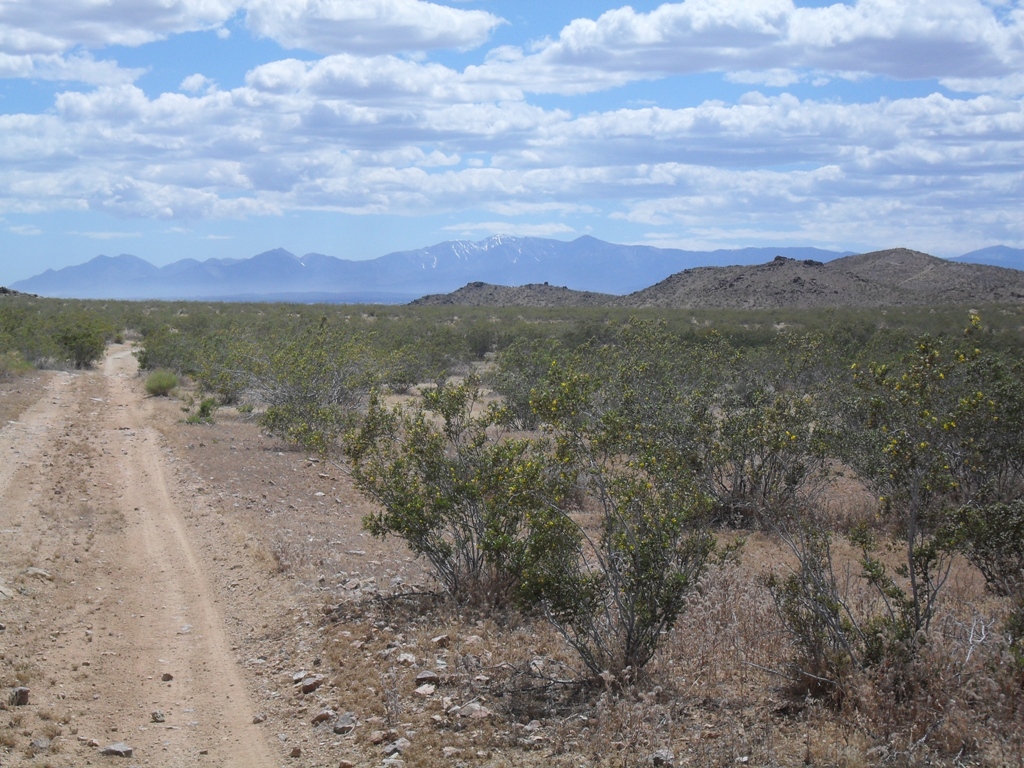
I had forgotten that this valley, like the mesa where I had been living for the past two decades, is surrounded by mountains, so mountains still form the backdrop of my life, making me feel a bit more at home than I expected from such an alien place. And it is alien — high desert rather than high plains, and city rather than country. I’d expected to have to walk along suburban streets, getting lost in the labyrinth of subdivisions, but on one of my first treks, an arroyo beckoned — sort of an alley way between houses — and I took that untraveled path. (Well, not exactly a path, more like a place for flash flood waters to run off. Good thing the day was clear and dry.) And then there I was — in the middle of the desert. Yup. Just me and mountains and knolls and sandy roads. And a few very tiny flowers struggling to live in the bleak sand and heat. (Seems like a good metaphor for my life right now.) Surprised the heck out of me.

Life has held many surprises for me lately, most of which were not good, and since I don’t know what I’m doing or where I’m headed, I’m sure life will continue to surprise me.

(These yellow flowers are those on the bushes in the other photos.)

Tempest Tossed

I’m going to be without the internet for a couple of weeks, so don’t worry if I don’t post for a while.

I’d always planned to follow the conventional wisdom and not move for at least a year after my life mate died, but here I am, two months into my grief, and I am moving — not by choice, but circumstance. Right now I’m rattling around in an empty house, filling it with tears. Though I’m mostly moved and packed and the house cleaned, I am not ready to go — it is way too soon. But even if I could stay, it wouldn’t change anything. My mate would still be dead. And I’d still be homeless — he was my home, not this house.

Despite my declaration (after having to throw away so much stuff these past weeks) that I would never buy anything again (except electronics) I did buy a new camera (a cheap little thing, but it works, and besides, a digital camera is electronic, right?). I took pictures of this place today: our cars parked next to each other, the bushes we planted that enclose the house and give it privacy, the hybrid bush/tree I borrowed for my soon to be published novel Light Bringer (which will always be tinged with sadness for me since he never got to read it). I don’t know if I will ever be able to look at the photos without weeping, but at least I have them if I want to take a peek.

From what I’ve heard about the loss of a mate, as hard as the first months are, the second year of grieving sometimes is even worse. I cannot imagine that. But then, I never could have imagined the pain I am feeling now. I don’t know why, but occasionally the loss hits me anew, as if it just happened. Which is what I am feeling today. And, apparently, that too is normal. It still happens to some people even a decade later.

Our life together — his and mine — is receding, even in memory, as if it’s a fantasy, a dream, a mirage. When he was alive, the past always seemed present. Now it seems so very past (passed?). That’s one more loss to add to so many.

I feel tempest-tossed. As if I am unmoored. Swept away on an emotional storm. Besides all the other emotions that beset me, I find I panic easily. I took up the mat on the floor of the driver’s side of my car where my feet rest (I was cleaning the car, getting it ready for the trip), and I discovered . . . rusted-out holes. Yikes. I’m about to go on a long trip with holes in my car? Panic! There is no such thing as ER for car bodies as I discovered after a spate of phone calls, so when I calmed down, I patched the floorboard using aluminum foil, metal tape (way cool stuff!), oven liners, and cardboard. Should last as long as my car.

I’m sure I will be okay, eventually. Just not yet.