Happiness and Contentment

In a book I’m reading, a character described herself as happy but not contented or satisfied. Can you be happy if you’re not content? I thought happiness and contentment were pretty much the same though, though some people equate happiness with a more robust feeling than contentment, sort of like an inner effervescence that bubbles outwardly to affect those around them.

But then, what do I know. I say I’m happy, but what I really am is at peace, contented, grateful, accepting of my life. Anything more than that, at least to me, seems to be overkill. People make a lot of effort to be happy, though happiness was never my goal in life. I was more interested in reading, learning, trying to lead a meaningful life. I do enjoy the moments of effervescence, though there’s always a letdown afterward, but I don’t live for them.

Unless I’m wrong about what happiness is?

(A pause here while I look up “happiness” in an online dictionary.)

Well, that sure was productive! According to the definition I found, happiness is the state of being happy. Sheesh. So I looked up “happy.” “Happy” is defined as an enjoyable or satisfied state of being.

Now, of course, I’m more confused. Or maybe the author of that book was. Unless by “happy” the author meant being problem-free, able to get or to do whatever one wants? The character certainly had that, at least up to the point where she was killed, ostensibly for being too happy.

I don’t suppose it really matters what happiness is, how it is defined, if we pursue it or wait until it finds us. It’s something each of us knows we have.

Actually, no. That’s not true. Studies have shown that happiness is found mainly in retrospect. When someone is involved in a challenging situation that takes all their time and energy, they don’t realize until later they were happy. In fact, often while going through this “happy” situation, people think they are decidedly unhappy.

So what does it all mean? Who knows. I don’t, and that author sure didn’t. Maybe you do?

***

What if God decided S/He didn’t like how the world turned out, and turned it over to a development company from the planet Xerxes for re-creation? Would you survive? Could you survive?

A fun book for not-so-fun times.

Click here to buy Bob, The Right Hand of God.

Tarot Update

It seems as if this month just started, as if only a couple of days ago I started using a new tarot deck, but in another couple of days, I need to pick a new deck to use during April. Well, I don’t have to use a new deck, but that’s one of the reasons for my picking a card every day and for learning the tarot — to use my deceased brother’s tarot collection.

Although I am getting familiar with the tarot, I still don’t quite see how it fits in my life. It’s supposed to be a way to get to know oneself, and unless I am extremely obtuse, I’m not learning anything I don’t already know. Most people think of the tarot as a way of learning the future, or at least how to decide to go forward into the future, but that also doesn’t seem to fit with my life. Partly, of course, I don’t want to know. And partly, I already know the future, if not in specifics, then in general. If the past is anything to go by, the future will bring good things to my life, and it will bring a lot of not so good things. Either way, the knowing isn’t important — it’s being able to deal with what comes that’s important, and the lessons I’ve learned from grief lessons tell me I’ll find a way to accept whatever happens.

Besides, even if the purpose of the tarot was to learn the future, it’s nothing special. We can all learn what the future holds just by living. I mean, tomorrow is today’s future, and when I wake up tomorrow, I will know what the future holds. To a certain extent, anyway. Sometimes things change drastically from morning until night, witness all the people who woke up fine and ended up with The Bob by the evening.

Still, although a deep psychic connection with the tarot eludes me (perhaps because any psychic powers I might have are rather weak), I am continuing with my studies.

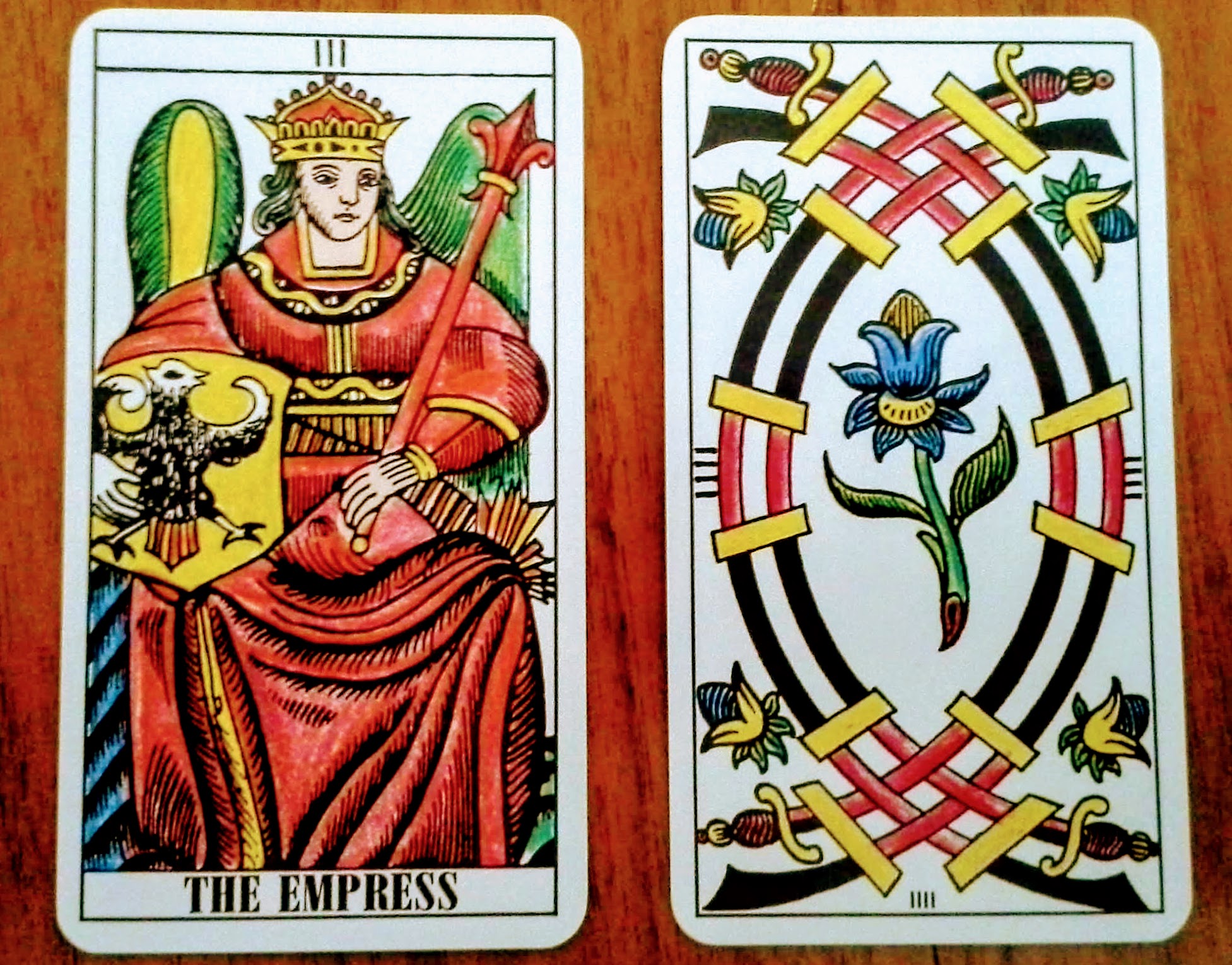
To date, the deck I like the most is this month’s deck, The Tarot of the Stars. It’s larger than most, which was a problem until I figured out how to shuffle them, and they aren’t slick enough to easily fan out, but other than that, they seem to be a quintessential tarot deck, with plenty of symbolism if I ever get into that aspect, as well as a key word to help figure out the meaning.

Today’s card was the magician, which is about knowledge, willpower, ability, eloquence, beginnings. It’s about harnessing the magician’s power to create the world you want. It’s about a lot of other things too, depending on whose interpretation you go by, but this brief interpretation seems to fit this particular card.

I still have a couple of dozen decks to try out to see if they speak to me, but so far, this is the closest. Oddly, it’s also the one I gravitated toward at the beginning when I first unpacked the decks, but since the instruction booklet that came with the deck is in an obscure dialect of Italian, I couldn’t use the cards until I developed my own guidebook. Once I’ve gone through all the decks, once I’ve gone through all the cards (some cards still haven’t shown up in my daily reading, though I’ve been doing this since July), and once I’ve started doing multi-card readings and need something to do on the off days (you’re not supposed to do a daily spread for oneself, though I know why) and need something to do the off days, I might try to translate the book via Word and Google.

Meantime, there are still two more days of enjoying this deck before I have the onerous task of picking a new one.

***

What if God decided S/He didn’t like how the world turned out, and turned it over to a development company from the planet Xerxes for re-creation? Would you survive? Could you survive?

A fun book for not-so-fun times.

Click here to buy Bob, The Right Hand of God.

Letting Life Do What It Wills

Perhaps, as some people have suggested, I think about getting old too much, but when one is alone, there won’t be anyone to help when the time comes, so it’s important that I think about these things and make plans when I can. It’s not that I am specifically preparing for old age, but anything I have to do the house, I make sure it will accommodate me if I develop problems.

I’m not the only one who, when changes have to be made, make those changes with age in mind. That these people are generally widows or widowers might have something to do with it, perhaps because we know how life can change in an instant. I haven’t broached this subject enough to know the truth of it, but those I know who are still mated don’t think about these things as much as we who are alone.

My preparations started back when I was healing from a devastating arm/elbow injury. The surgeon told me there was nothing I could do to hurt the arm but that others could, so he cautioned about letting people get hold of my hand or arm. And he told me, flat out, “Don’t fall.” To that end, I removed any loose throw rugs, which are some of the most common fall hazards, and I made sure that my shower has hand rails since bathing and showering are dangerous not only to older folks, but to anyone.

It’s not that I’m paranoid; I’m simply aware of fall hazards. Besides, it’s so much easier to remain healthy if one remains upright. Too many older people begin a downward spiral after a fall.

The workers who come (occasionally, anyway) to help fix up my house and yard understand my wariness because they have elderly mothers with mobility issues. In fact, the fellow who came today brought his mother’s wheeled walker to make sure the paths we (I say “we” as if I am doing part of the work, though I am merely the check writer) are putting in are wide enough for walker use. To be honest, I don’t intend ever to have to use a walker, but neither did anyone who now needs one. It’s just that if I am going through all the trouble and expense of making my yard not just attractive but safe, I might as well look to the future and do the job once rather than finding out in decrepit old age that the paths are too narrow to do me any good.

The walkers with a seat are really great; I wish my father had consented to use one. He did walk inside the house, but he refused to walk outside. He said he got too tired. But if he had used a walker, he could have gone for a pleasant walk and then rested before he returned home.

Again, it’s not that I am planning on being decrepit; in fact, I am doing whatever I can to ensure that I’m won’t be, but life has a way of turning out vastly different from what we planned. By doing this work now, I can forget about it and let life do what it wills.

Of course, I reserve the right to whine if my life turns out to be something other than what I might wish for.

***

What if God decided S/He didn’t like how the world turned out, and turned it over to a development company from the planet Xerxes for re-creation? Would you survive? Could you survive?

A fun book for not-so-fun times.

Click here to buy Bob, The Right Hand of God.

Does Anyone Ever Win a War?

In the book I am currently reading, two of the characters are talking about wars generally as well as World War II specifically. About the latter, one fellow says with great satisfaction, “We won that one.” The other responded, “So they say.”

Which makes me wonder: does anyone ever win a war? I know what we are supposed to believe, that yes, wars are won, but when you count up all the losses, can even a significant victory be considered a victory?

Which then led me to remember those times when soldiers killed innocent people. In a war, is anyone innocent? Is anyone guilty? Aren’t the soldiers innocent, too, at least those who were drafted? You force a kid to fight, you arm him or her, send her into battle when perhaps all the kid wants to do is sit and read or play football or watch movies, and then the leaders of the countries — the only ones who should bear the guilt of war — sit back and play a war game with real people. So, from that stand point, aren’t the draftees innocent, too?

It always irritates me when people say humans are a war-loving lot, because the truth is, most of us abhor violence and wars and being forced to do what we don’t want to do. When the draft was instigated in WWI, many of the draftees simply ignored the notices. The war had nothing to do with them or with protecting their families, their counties, their states, and they had more important things to do, such as raising crops or raising a family or perhaps even raising Cain in a localized manner. To force these kids to do their duty, the government took action and went after the slackers. Even those who registered as conscientious objectors were thrown into prison, where some died of the privations and harsh discipline

Sometimes, those who didn’t want to go to war were coerced to register by the women who, of course, didn’t have to go to war and who believed the romantic ideal of war that was being propagated.

I never considered those who enlisted as innocent, especially in recent years, because they should have known what they were getting into, but considering the ongoing propaganda, the lies that were told to get folks to enlist (that they can choose their assignments, they can learn the trade they want, that it’s simply a job opportunity, that that it’s primarily a way to earn their way into an educational system), and even the court involvement (being given a choice of jail or the military) I don’t even know any more about the innocence or guilt of the enlistees.

As for our natural human propensity for killing: In WWII, the kill rate was low, with many of the soldiers firing wildly on purpose, or not firing at all, so the war-mongering leaders set out to fix that. The simplest and least intrusive way was simply to switch the classic round target with the silhouette of a person, but some people were also subjected to various war games (the origin of video games) and by the time Vietnam came around, the kill rate was high, and the number of people refusing to shoot was low.

So who here is innocent? Who is guilty? Who won?

I don’t know the answer. I don’t imagine anyone does.

***

What if God decided S/He didn’t like how the world turned out, and turned it over to a development company from the planet Xerxes for re-creation? Would you survive? Could you survive?

A fun book for not-so-fun times.

Click here to buy Bob, The Right Hand of God.

Saying Goodbye

A dear friend left town today to go back overseas where she grew up so she can be with family and friends as she lives out her last months. I never got a chance to say goodbye, though I’m not sure that matters. This way I can always think of her the way she was the last time I saw her: happy, contented, glad to be done with pain for a while.

To be honest, I am glad she is going to be with her people. Although she fit in well with our small-town America environment, she’s from a major Asian city with food and shopping and friends on every block, and she missed all the bustle.

To be even more brutally honest, though it might make me seem small, I am glad I won’t have to watch her deteriorate. I’ve watched too many people die, and I simply cannot do it again, especially not when it comes to her.

From the first moment we met, we connected, as if we were long-lost sisters. She was so vital, so charming, so interested in everything, that the news about her being afflicted with cancer came as a shock to me. Even worse was when I found out the cancer had metastasized. And now she is gone from my life, though for a time, at least, we can still connect via email or FB messenger.

Her husband, who’s also become a friend, has already been through this before. I can’t imagine the courage it takes to find a new love and then once again, to lose that love to death. He’s got a hard time ahead, not just watching her fade away, but having to be jolly in the face of it because she doesn’t want anyone to be sad.

After the sorrow of this day, knowing she is journeying far beyond my reach without one last hug, I intend to honor her wishes and think of her at home. Happy. With her husband and family and old friends.

There will be time enough for mourning when her days are finished, but maybe even then I will simply think of her as being home where she belongs, and be happy she came into my life.

***

Pat Bertram is the author of Grief: The Inside Story – A Guide to Surviving the Loss of a Loved One. “Grief: The Inside Story is perfect and that is not hyperbole! It is exactly what folk who are grieving need to read.” –Leesa Healy, RN, GDAS GDAT, Emotional/Mental Health Therapist & Educator
Feels Like Home

Someone asked me today if it were a cultural shock for me living here in this rural corner of the state after growing up in Denver. I told her that it felt the same, that it felt like home. If I had moved here directly from Denver, it might be a different matter, but I left Denver when too many people from out of the state moved in and immediately tried to change the slow-moving town to a great city. When I was growing up, Denver was a cowtown without a skyline, and fabulous views of the mountains from wherever I stood. Each neighborhood was a town in itself, with churches, schools, stores, a library, all within walking distance. The political bent was . . . well, there was no bend; beliefs seemed to hover right about in the middle. People tended to vote their beliefs rather than follow the party, and overall, it seemed to be centrist. There was some crime and some poorer neighborhoods, but there were no gangs or gang-related activities.

Then came the California invasions. Now Denver is indistinguishable from other major cities, with gangs galore, horrendous social problems, outrageous real estate prices, an agenda the rest of the state has a hard time dealing with, and no autonomous neighborhoods.

I am grateful to be out of that mess, grateful to have found a place that feels like home, that feels like the neighborhood “town” I came from.

The conversation, however, made me wonder why people leave an area they are dissatisfied with and immediately try to change their new location to mimic the old one. Although this is the current problem with a lot of immigrants — people want to change the laws in this country to make it more like the place they came from — it’s also a problem when large numbers of people move from one state to another.

I blame Californians for the change, but New Yorkers cause just as many problems in some areas. In fact, someone from New York recently moved here and is trying to steer this town toward being more of an artist’s colony like Taos rather than accepting it for what it is — a quiet, rather impoverished though congenial town with a lot to offer as it stands today.

I know people prefer what they are familiar with, but migrators — either internal or international — generally leave to go to a new place in search of a better life, so why try to make the new way like the old?

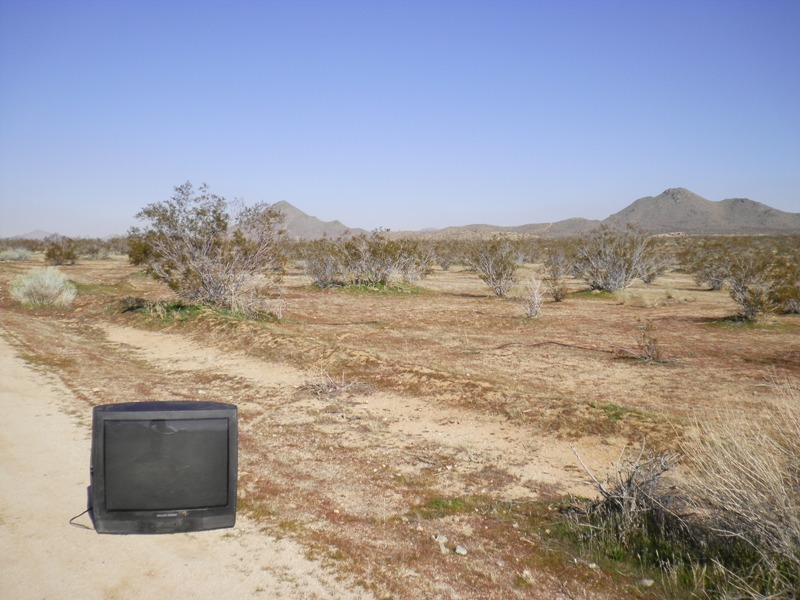
This isn’t simply a problem from state to state, but also from one area to another within a state. I spent some years in the high desert of California, across the mountains from the Los Angeles sprawl. At one time, it was a quiet place, but the state tried to break up the big-city gangs by getting families to relocate to the desert. Now, the place is rife with gang-related troubles, including drugs and crime.

It’s as if they (whoever “they” are) want to turn the whole world into a cesspool. Migrators seem to go along with this agenda because they believe in the rightness of their cause and the wrongness of people who want to live their lives by their own religious beliefs rather than the political beliefs of others. It’s not a surprise there are problems; there always are when the rights of the few are given precedence over the rights of the many.

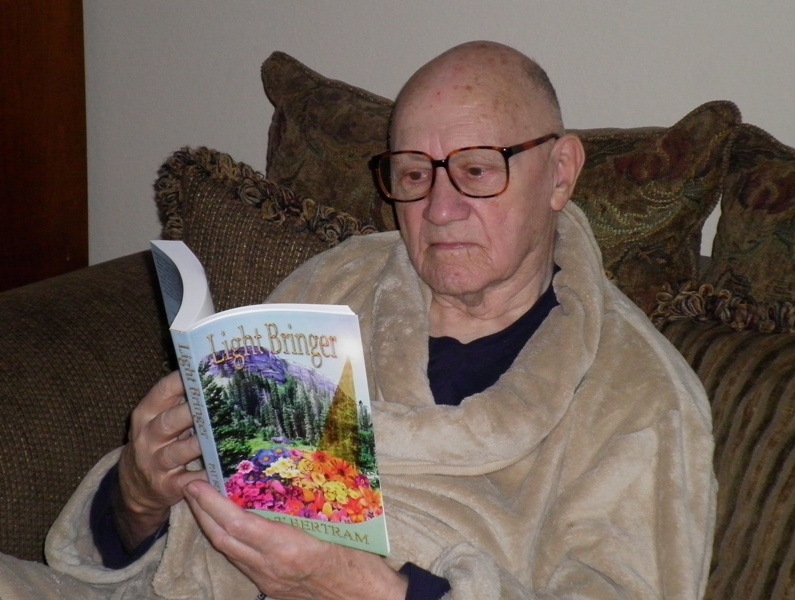
But I’m migrating away from the topic of this blog. Mostly I’m trying to understand the mentality of those who leave one horrible area and immediately try to change their new environment into an equal horror rather than trying to fit in with the local culture. Though I suppose the truth is they don’t think of the change as horror. Nor do they see anything wrong with what they are doing. Many such immigrants I’ve met have a touch of arrogance about them, as if they thought they were bringing light to a dark area, and never realize they could be a dark bringer instead.

Luckily, this place is small enough and rural enough and independently-minded enough that it will be years before it’s changed all out of recognition. Luckily too, if it’s changed faster than I think it will be, I have my own place — my own personal gated place — and within this enclosure, I can still be at home no matter what goes on outside the fence.

***

What if God decided S/He didn’t like how the world turned out, and turned it over to a development company from the planet Xerxes for re-creation? Would you survive? Could you survive?

A fun book for not-so-fun times.

Click here to buy Bob, The Right Hand of God

Abusive?

When Facebook first banned this blog from their site, the reason given was that this blog is spam. Yesterday when I tried sharing the post from the FB share button (which is now removed) at the bottom of the post I’d just written, I got a different explanation. They said: Your message couldn’t be sent because it includes content that other people on Facebook have reported as abusive.

Abusive? Me? Really? I have posted a handful articles (out of a total of 2,997) that might be considered controversial, though I do try to steer a middle ground. Even so, those articles were in no way abusive, weren’t even very controversial since I wasn’t taking a stand so much as trying to sort out what I felt about the political turmoil. Sometimes when I think I’m being the most helpful or logical or innocuous or agreeable, it surprises me that not everyone agrees with what I say. To be honest, I don’t always agree with what I say. As with those few controversial posts, so often by writing for this blog, I am trying to work through a problem, an idea, a spot of confusion, and sometimes, after I’ve posted the article, I realize that because of the writing, I came to a different conclusion.

But abusive? I cannot think of a single time I said anything that anyone could say was abusive. I always try to be nice, even when people aren’t nice to me. It’s what I do. It’s who I am.

Although I did not appreciate this blog being blocked because of spam, I thought maybe their bots had picked up on the repetitious bio at the end of the article, or perhaps all the links I used in the bio. Even though it did no good, I removed the links and am alternating bios to make sure other sites don’t have the same issue, but as it turns out, that wasn’t the case at all.

Abusive?

That upsets me because it is so unjust and pejorative. What’s even worse is the current system, where anyone can say anything about any person for any reason, and no matter what harm is done, there is no recourse, at least not with Facebook. I have messaged them via FB. I have emailed them. I have sent letters to their headquarters. But apparently a few grouches (that’s the only thing I can think of — that people were grouchy and ticked off that somehow a post of mine got added to their feed) can determine someone’s fate.

FB was my primary means of promotion. I spent a lot of money with them over the years. It’s probably people who saw those posts who labeled them abusive, rather than any of my FB “friends,” but that’s not my fault. I’m not the one that posted the links on those feeds; FB did.

Ironically — and cruelly — whenever I do happen to stop by FB to see if someone left a comment on my page (which I will be doing less in the future, so if you want me to see a comment, please comment here on the blog rather than on FB), I find copious messages from FB telling me I’m not posting enough and I find even more messages telling me how important it is for me to pay them to promote my posts.

If it was me personally they had a problem with, I could simply set up a new account like so many others have had to do, but they have no problem with me personally. Just my oh, so non-abusive and very personal blog.

I have found a way around their ban for now — I reblog my posts to another blog, and then post the link to the second blog on FB. I wouldn’t even be doing that much, but several people said they missed too many of my posts. They could, of course, just sign up for my blog, but these are people who spend time on FB, and so that’s where they like getting their notifications.

I know FB is a huge site, but Google is even bigger, and when I had a problem with Google for banning my blog, they responded to my query, and WordPress helped me fix it. (It was a bit of stray code — innocuous code — that somehow got attached to one photo in one post.) But FB? Nope. Once you’ve been branded as abusive, that’s it for you . . . forever.

No one has to prove their accusation. No one checks the truth of it. To me, acting on unfounded allegations is abusive. My posts are not. If you disagree and can point out any abuse, please let me know so I can change it. Just be gentle. My feelings are hurt enough right now.

***

Pat Bertram is the author of Grief: The Inside Story – A Guide to Surviving the Loss of a Loved One. “Grief: The Inside Story is perfect and that is not hyperbole! It is exactly what folk who are grieving need to read.” –Leesa Healy, RN, GDAS GDAT, Emotional/Mental Health Therapist & Educator

Tarot Update

I’m glad this is a short month, but not for any reason you’d expect. It’s not that I’m especially looking forward to spring; I certainly won’t mind warmer temperatures (though I do dread the wind). And I’m definitely not looking forward to March and the anniversary of Jeff’s death, though I must admit that after all these years, the day doesn’t carry the pain it once did.

The real problem this month is with the tarot deck I’ve been using. Each month for the past nine months, I’ve chosen a different tarot deck from the collection my deceased brother left me, trying to see if any of them resonate with me. I don’t do readings, just ask a question like “what do I need to know today” and then pick a card to study. So far, there hasn’t been any special connection to any deck, though I have liked some more than others.

The one I am using this February is the one I like least of the decks I’ve sampled. There are others I dislike so much I won’t use them, such as the witch’s tarot and a renaissance tarot that feature anatomically correct figures, something I don’t particularly need at the start my day. But this one — The Jungian Tarot — seemed interesting in that the cards were supposed to be tied to Jung’s archetypes, but only some of them were archetypal (the Major Arcana and the court cards). Most of the cards I dealt myself were the numbered cards, and they did nothing for me, especially since I kept getting the same card — the ten of wands.

The ten of wands certainly seems to illustrate its meaning — oppression — because it is a particularly oppressive card.

I could, of course, changed decks in the middle of the month, but then I wouldn’t get as good a feel for the cards.

In another three days, I’ll be picking a different deck. I hope that one will be more to my liking.

***

Pat Bertram is the author of Grief: The Inside Story – A Guide to Surviving the Loss of a Loved One. “Grief: The Inside Story is perfect and that is not hyperbole! It is exactly what folk who are grieving need to read.” –Leesa Healy, RN, GDAS GDAT, Emotional/Mental Health Therapist & Educator
Warm War

A blog reader mentioned that he is wondering to what extent life will be altered by our experiences over the last year or so, and now I’m wondering, too. I have thought about the future now and again, not the particulars so much as the fact of it: no matter what happens with The Bob, our lives will be changed, it’s just that I don’t know — can’t know — how far reaching these changes will be.

It seems to me that the world will settle down eventually into new patterns, but again, there’s no way of knowing right now what those patterns — economic, social, political — will be. There’s also no knowing if those in power will ever let us know.

All of this rearranging of the world, our mores, what we’re willing to give up to for a facsimile of safety reminds me of a world war, because that is what happens during a world war. Everything is different, chaotic, but eventually life settles back into a new pattern, and younger generations never realize things were ever different. For example, think of all the millions of people who are alive today who have never experienced a world without airport security and checkpoints. They’ve never gone to the waiting room with their departing loved ones, never stood at the window waving good-bye as the airplane took off.

I’m sure, in that same way, upcoming generations will accept as right and proper whatever the world becomes after The Bob, because they won’t know anything else.

This obviously isn’t a hot war, with military conflicts killing off the young and strong. Nor is it a cold war being fought mostly with propaganda and fear, where countries are in a perhaps fatal stalemate, waiting for one or another to tip the balance of power. So what is this that we’re going through? A warm war? People are dying in vast numbers, though for the most part, the casualties of this war aren’t the young and strong but the old and weak. (A friend believes this is all about depopulation, though again, there’s no way to know for sure. There are always a dozen or a dozen dozen reasons for any worldwide conflict, with everyone involved trying to gather more power for their own particular interest groups.)

As I said, there’s no way for me to even begin to guess what the end result will be. We’re simply not being given enough information about important matters such as who, actually, was tweaking this virus, who let it loose and why. Was it on purpose? An accident? All these are the same questions my characters in A Spark of Heavenly Fire asked when a deadly organism was unleashed on the world, but that was a novel, and novels need some sort of resolution. Not so “real life.”

It’s easier to speculate about alterations on a more personal level, since although I don’t know all the particulars of The Bob and the reasons behind it, I do know how it is affecting my life. So far, I’ve managed to stay healthy, but a lot of that is due to spending most of my time alone. It’s hard to catch something from yourself, though I have done that — allergy attacks that become so devastating they might as well be a infectious disease. Mostly, though, I have managed to maintain my health during this time — no colds or flu or anything catching — which tells me that staying away from people is good for my health.

I’ve always been a bit of stickler when it comes to opening doors, such as those to a public restroom, making sure I use a paper towel to turn the door handle, and that won’t change, though I won’t feel as abashed about it. Nor will I ever use a public restroom again except in a dire emergency.

I’ve always been a bit antsy about standing in lines, and I will no longer do so unless people keep their distance. I have never liked people breathing down my neck, and even more so now.

I have a hunch, as things get back to a state that at least feels normal compared to the siege mentality we are now experiencing, I won’t be as loose and free as I was during the previous few years. I won’t be as willing to attend events where more than a few people are present, won’t be as willing to embrace strangers as I did, won’t be as determined to be sociable. It was always hard for me to be outgoing, but I did make the attempt because not to do so would be limiting my life in an unhealthy way, but I’m not sure if I’ll ever get back to the point where I feel the necessity.

But then, what do I really know? This warm war will change us, all of us, even me. And the “me” to come might be more willing to be bold, to get out in public and let life — and death — fall where they may.

***

If you haven’t yet read A Spark of Heavenly Fire, my novel of a quarantine that predated this pandemic by more than ten years, you can read the first chapter online here: http://patbertram.com/A_Spark_of_Heavenly_Fire.html

Buy it on Amazon here: https://www.amazon.com/gp/product/B0024FB5H6/

Download the first 30% free on Smashwords: https://www.smashwords.com/books/view/1842

Altering the Truth Without Altering the Facts

In the cold war era spy thriller I’d spent the past couple of days reading, a Russian says to an American ally, “You have a unique gift of altering the truth without altering the facts.”

Quite frankly, it doesn’t seem like a unique gift to me; it seems to be the basis for most politics, legal maneuverings, and news reporting nowadays. Often manipulation is propaganda, pure and simple, a way of interpreting the facts to put the best possible spin on what could be a damaging fact. Other times it’s a way of getting people to vote for someone or to approve of something that they would not normally go for.

It’s also called fake news. Not that the news item is necessarily fake, but if someone calls it fake news, then it immediately casts doubt on the truth.

I am currently staying away from all news sources, fake or not. There have been too many times lately where the facts were spun so much that nothing but mush remained. And there were too many times where the very people involved were the ones who vetted the news to prove it fake, which means the facts could be false or the vetters could be playing false with us. I have never, in all my years, been so confused as to the truth of anything. There were so many undisputed facts, false “facts,” half-truths, truth told as lies, lies told as truth, videos and photos altered to show a different story than what actually happened, as well as dirty tricks I’m sure I missed, that it was impossible to sort out the truth.

For example, when it comes to the disease I call the “The Bob,” we the people know almost nothing. Oh, we know a few facts — there is a virus running around infecting people because we all either got sick or knew someone who did. We knew people who died, but beyond that, all we have to go by is what the “authorities” tell us, and those very authorities are the ones who know how to alter the truth without altering the facts.

The so-called authorities are not the only ones with this not-so-unique gift. A lot of people on all levels of society know how to alter the truth without altering the facts simply telling only the facts that leave them in a good light. For example, someone can say, “Yes, I went to the store. I bought a few snacks and a couple of sodas,” leaving out the salient fact that they also bought alcoholic drinks or illegal drugs or that they visited the person they are seeing on the side.

To be honest, I wish I had that sort of talent, to lie by telling only part of the truth, but generally, I’ve found it best to tell the truth as much as possible. It’s a lot easier to remember what I’ve said that way! Now that I think of it, though, almost no one tells “the truth, the whole truth, and nothing but the truth.” Unless you are a representative of the people, in which case you owe the people the truth (though the folks in power don’t believe that at all and certainly don’t act on it), you don’t really owe anyone the truth. Or the facts.

As I said, I generally tell the truth, though sometimes on this blog I alter things a bit to protect either the guilty or the innocent, or even myself. I also sometimes use false birth dates and such because I am — or at least was — so active on the social networking sites that I needed to protect myself.

As for “altering the truth without altering the facts,” it also works the other way around. Novelists do is all the time: alter the facts so we can tell the truth.

But however you look at it, in our current society, it doesn’t seem as if there is a whole lot of truth going on.

***

If you haven’t yet read A Spark of Heavenly Fire, my novel of a quarantine that predated this pandemic by more than ten years, you can read the first chapter online here: http://patbertram.com/A_Spark_of_Heavenly_Fire.html

Buy it on Amazon here: https://www.amazon.com/gp/product/B0024FB5H6/

Download the first 30% free on Smashwords: https://www.smashwords.com/books/view/1842