Holding Pattern

My garage is here. As you can see, it needs to be put together, but who knows when that will be. One of the construction workers is sick and they have to wait for the test results, though I have a hard time believing he has The Bob. What are the odds of one of the five people I have seen in the past two weeks being the only person in the county to have it?

Still, they can’t go by the odds, so we’re all waiting for test results.

When they were going to be here building the garage, they were also going to fix my toilet (the wax ring needs to be replaced) and while the water was turned off, they were going to fix the crumbling plaster wall behind the commode, but that probably won’t happen. They will try to get here fix the toilet, and we’ll try to figure out the safest way to do that (me, being “elderly,” staying away from them, and then disinfecting the bathroom afterward). They would wait if they could, but if the floor rots from all the moisture, they’d have to fix it, and their agenda is full enough.

On the other hand, if I don’t have a toilet, I won’t need toilet paper. (Joke.)

Like almost everyone else, I am in a holding pattern, though I have to admit, it has more to do with a wonky knee than any stay-at-home order. Luckily, the knee has healed enough so I can walk around the house without support from my hiking poles. (The poor things are still in shock from that ignoble use.)

I’m used to waiting, though, so it’s not as if living in a holding pattern is anything new.

***

Pat Bertram is the author of Grief: The Inside Story – A Guide to Surviving the Loss of a Loved One. “Grief: The Inside Story is perfect and that is not hyperbole! It is exactly what folk who are grieving need to read.” –Leesa Healy, RN, GDAS GDAT, Emotional/Mental Health Therapist & Educator.
“The Bob” Commentary

Social distancing might be holding in the over-60 population, at least to an extent, but it does not seem to concern the younger folk. Today I’ve seen more groups walking than I have in the year I’ve been here. I don’t know if that’s been the case all along since I’ve stayed inside babying my knee, but today I thought I should challenge myself, so I went outside for a short walk. (If 300 steps can be considered a walk.) I might have stayed out longer, but in that short time, one single walker and two closely-packed trios passed me. In all cases, I crossed the street to get away from them, but still, there they were.

Making matter worse, one of the guys horked up a wad of mucus in front of my house. Really? Really? I don’t understand people, and they sure as heck don’t understand health safeguards.

Needless to say, I took I wide berth around that mess, and came back inside where I am safe. (Just because I think there’s way too much hype over The Bob  doesn’t mean I don’t take precautions. In fact, I take these same precautions when it comes to any flu or other contagious disease. And I might as well admit it, I always cross the street to avoid people when I’m out walking unless I know them — it’s a leftover safety measure from when I lived in a big city.)

There are many loopholes in this stay-at-home order. Except for the closures — places where people obviously can’t go — they can go anywhere and do anything as long as they say they are taking a walk or getting essential items. Some people — couples and families — are going en masse to the stores that are open more as a recreational thing than because they really need the merchandise. And the early shopping hours for seniors are a joke — so many congregate outside the doors of places like Walmart, waiting to get in, that it seems to create more of a problem than it solves.

So why issue stay-at-home orders when it’s so easy to get around them? Well, I do know one reason — by establishing their locale as a scene of disaster, the local governments are positioning themselves for federal relief funds. But for the rest, who knows. There is much going on that we are not privy to.

Speaking of privy (chuckling at my wit here), I did some research on the toilet paper shortage.

I don’t know why no one is admitting that a percentage of our bathroom tissue is imported from China, but it is. (A Walmart employee told me that’s where their store brand comes from.) According to the Observatory of Economic Complexity: The top exporters of toilet paper are China ($2.84B), Germany ($2.78B), Japan ($1.67B), Poland ($1.4B) and Italy ($1.26B). The top importers are the United States ($2.29B), Germany ($1.79B), China ($1.43B), France ($1.33B) and the United Kingdom ($1.26B). So, as you can see — if you curtail the imports, there is a definite shortage. Even if the shortfall is only 10%, that shortfall soon escalates into a massive shortage as people try to stay ahead of their needs.

I’m shaking my head at myself. I had no intention of ever even mentioning any aspect of this current medical situation in my daily blog posts (190 days in a row as of today), but it is there. And it is hard to ignore.

Of course, if the guys would come and build my garage, I’d have something more exciting to write about. Meantime, there is just me, my computer, and vast numbers of articles and commentaries about The Bob flooding the internet streams. And now, with this blog, there is one more.

In case you’re sick of all this, here’s something to brighten your life: today is National Crayon Day. Happy coloring!

***

Pat Bertram is the author of Grief: The Inside Story – A Guide to Surviving the Loss of a Loved One. “Grief: The Inside Story is perfect and that is not hyperbole! It is exactly what folk who are grieving need to read.” –Leesa Healy, RN, GDAS GDAT, Emotional/Mental Health Therapist & Educator.

 

Gifts for These Times

Much of the rhetoric surrounding The Bob continues to mystify me. Today several links showed up in my Facebook feed touting the necessity for testing everyone in the country and vilifying those who aren’t with the program. And yet, a recent study showed that accuracy of the tests varied depending on how and when samples were collected. For example, if a person was infected with the disease, but the test is done too early before there is a great enough concentration of the virus to detect, then the person is given a clean bill of health and is left to infect everyone they come in contact with. If a person has symptoms, then the tests are more accurate, but they are still not exact. Chest CT scans accurately identified infection in 98 percent of cases whereas RT-PCR tests detected it correctly 71 percent of the time.

It makes sense, then, to continue the way things are, testing people who show symptoms to enable the medical establishment to set a treatment protocol. But for the rest of us? How does getting tested help? If we test negative, we still have to stay away from people because a) we might be sick and b) we might still get sick. And if we test positive, but don’t feel sick, we still have to stay away from people.

Despite my concerns about people getting all het up about this disease and demanding results when no one knows for sure what is really going on, I am staying away from people.

That is, I am staying away except for a brief time today.

Today a friend stopped by bearing gifts — a lovely pad Thai, a vial of healing oil (for my knee) made by a monk, and an even more healing hug.

Yeah, I know. Keep one’s distance. But truly, if I were to die because of a hug, then . . . well, then I’d be dead and wouldn’t care. And if I were to get sick? I’ll do what I’ve always done — go to bed, stop eating, drink water, and wait for my body to heal itself. So far, it’s worked, even with some very serious and rather painful illnesses.

But I’m not concerned about any repercussions from a simple hug. I’ve already spent time with these friends during this era of disease, and so far, we’re doing well.

I’m also doing well on the gift front. I got an email notification today of a gift that will be arriving in the next couple of weeks:

That cracked me up. The perfect gifts for these times!

Nature, too, is bringing me gifts. This little beauty is no bigger than my thumbnail.

I checked my order of bulbs from last fall, and I did order miniature daffodils, but by the description, it seemed as if they were simply smaller versions of the normal daffodils, not these itty-bitty things. In fact, until I took a photo, I didn’t even realize what they were! They are cute, though. I wouldn’t mind a whole yard of them. They are supposed to spread like normal daffodils, but they also go to seed, so there’s hope.

And if not, there’s always next year.

Because yes, for most people, there will be a next year and the wonderful gift of more time.

***

Pat Bertram is the author of Grief: The Inside Story – A Guide to Surviving the Loss of a Loved One. “Grief: The Inside Story is perfect and that is not hyperbole! It is exactly what folk who are grieving need to read.” –Leesa Healy, RN, GDAS GDAT, Emotional/Mental Health Therapist & Educator.
Reckful

Today, I made a few drop biscuits. They aren’t on my diet, but it does seem that stay-in-place orders and a damaged knee are restrictive enough without adding food limitations to the equation.

For the most part, though, I’m okay despite these constraints. I’m not even very restless, perhaps because I’d be staying at home anyway to take care of my knee. Oddly — or not so oddly, actually — today my knee doesn’t pain me so much (though it still isn’t acting quite right) but the muscles above and below the knee as well as the uninjured knee all ache. Makes sense, of course. Because I’ve been walking abnormally, when I walk at all, other muscles have taken up the load and are being stretched beyond normal usage.

So many things that are a normal part of people’s lives, like eating out, don’t matter to me when they’re gone because I seldom visit such places anymore. (When I moved here, I left behind my lunch companion and haven’t reinstituted the practice with anyone else.) Nor am I craving Mexican food or pizza or other restaurant fare like so many are. I’m still using up the food around the house. Hence the biscuits.

It’s been interesting seeing how different people react to the various orders we’ve been given. Some people follow through, while others refuse to even acknowledge the directives, either because they’re young enough to feel invincible or are simply reckless.

Me? I’m the opposite of reckless. In fact, I’d be considered reckful, if there were such a word. I know there are many folks who would disagree — after all, I did take that cross-country trip in my ancient bug all my myself, and I did meet up with all sorts of people I knew only by their online presence. But that wasn’t reckless. I’d thought about all contingencies, reckoned on things going wrong and planned for them though of course I’d hoped for things to go right, and mostly, they did.

I’m especially reckful when it comes to my health, which is why I’m hunkered down at home rather than going to the doctor as so many have recommended I do. Health providers are taking people’s temperatures before letting them in the building, but that seems a bit reckless to me. Or else we aren’t being told everything we need to know about this current medical crisis. If people don’t show symptoms until perhaps two weeks after being exposed, then obviously, taking their temperature wouldn’t prove they aren’t infected. It only means the infection hasn’t shown up yet. And I’m supposed to trust that? I don’t think so.

This situation with the stay-at-home orders seems like an interesting sociological experiment, seeing what businesses are shut down and what aren’t. For example, doctors’ offices aren’t closed down, but chiropractors are. Huh? What about the people with bad backs who can’t function without these treatments? This stricture reminds me of the early years of chiropractic when one couldn’t speak of such “pseudo-doctors” without the hush of sacrilege touching people’s voices.

It also seems strange that churches are closed down, but recreational marijuana shops and liquor stores aren’t. I get the whole dissociating from other people thing, but still, the situation speaks ill of us as a people and what we consider necessary. I suppose, since I’m too reckful to get caught by either alcohol or pot usage, I’m also too naïve to understand why they are on the “essential” list. (To be fair, I don’t go to church, either, but I know a lot of people who do and who count on the weekly services.)

None of this affects me personally. I’ve always lived a stringent life, so such harsh measures don’t mean much to me.

Still, in my own reckful way, I’m being reckless. After all, the proof is in the biscuits.

***

Pat Bertram is the author of Grief: The Inside Story – A Guide to Surviving the Loss of a Loved One. “Grief: The Inside Story is perfect and that is not hyperbole! It is exactly what folk who are grieving need to read.” –Leesa Healy, RN, GDAS GDAT, Emotional/Mental Health Therapist & Educator.
International Clean Out Your Refrigerator Day

When I was in sixth grade, I got a job helping the old woman across the street. She’d just broken her arm, and needed someone to clean. Every time I went there, my stomach heaved. The jobs she gave me were all of a particularly disgusting nature. For example, she had me clean the hair catchers in her bathrooms, and I remember pulling up gobs and gobs of hair, gagging all the while. Just thinking about it now turns my stomach.

refrigeratorBut that wasn’t the worst of my ordeal at this woman’s house. The worst was the refrigerator. Rotten fruits and vegetables. Fuzzy green unidentified leftovers. Ancient bottles and jars that were long expired or would have been if they had expiration dates. (I think expiration dates on all packaged food came much later.) I got sick every single time I went over there and I wanted to quit, but one of my parents insisted I fulfill my obligation. The other parent, in a rare moment of sticking up for me, argued that I shouldn’t have to do something that made me ill. Odd that I can’t remember which parent wanted me to go and which took my side, but it no longer matters. It was so very long ago.

But what does matter is your refrigerator. Clean it out!!!

During my nomadic years after my father died, I house sat and rented rooms in people’s houses. Invariably, in these myriad places, I found a refrigerator clogged with expired condiments and food long past the stage of edibility. I itched to clean out the refrigerators, but I refrained. Maybe the owners were sentimental about that bottle of Hershey’s syrup that was so old it was as thick as treacle and tasted about the same. Or perhaps they liked the vision of wealth a full refrigerator imparts.

In one of the places I lived, the owner gave me permission to clean out the refrigerator to give me space for my few groceries. After three hours, I had a huge stack of trash bags full of expired and rotten food. (By expired, I mean well past expiration date. Ketchup that was ten years old, eggs that were many months old, string cheese packets that were as hard as masonite. It took a chisel and lots of hot water to clean the spilled food that had congealed beneath all that detritus. (That is not an exaggeration. I did have to use a chisel.)

In the interest of health — and since most of us are under stay-at-home orders — I am declaring this International Clean Out Your Refrigerator Day.

I am begging you, please, go clean out your refrigerator. I know you have things in there you have become so accustomed to seeing that you no longer notice them. Or you have bottles of exotic ingredients you have been promising yourself to use for the past ten years. We all have those condiments and rare elements we bought for a recipe, used the requisite one teaspoon, and never got around to making that dish again. You might even have small amounts of food in your refrigerator or freezer that are still good but aren’t enough for a meal — well, soups and salads and stir-fries are all very accommodating when it comes to using left-overs.

If you’re still not convinced of the necessity of cleaning out your refrigerator, ask yourself if you really want some poor woman (maybe your mother or daughter or daughter-in-law, possibly a neighbor, perhaps even a son or husband) throwing up when/if they have clean up if you become sick or incapacitated in any way.

Please like and share this post so it goes to as many people as possible.

Thank you.

***

Pat Bertram is the author of Grief: The Inside Story – A Guide to Surviving the Loss of a Loved One. “Grief: The Inside Story is perfect and that is not hyperbole! It is exactly what folk who are grieving need to read.” –Leesa Healy, RN, GDAS GDAT, Emotional/Mental Health Therapist & Educator.

Six Months

Six months ago I embarked on a challenge to blog every day for 100 days, and I am still going, but the world sure is different today than it was back then. The weather, of course, is not the same; then it was winter, now it is spring. Back then, people seemed almost innocent in their ability to block out anything that did not touch them personally, and now everyone is hunkered down over something that may or may not have a devastating effect on the total population.

But it doesn’t feel as if anything is different. With a few small exceptions, the local grocery store is fully stocked.

The library is still lending books, though patrons have to call or email their selections ahead of time, and a librarian will meet them at the locked door to hand over the books. (I can’t help it, but this is such a clandestine, spy-ish sort of thing, that it tickles me. And oh — what a dream job! A library full of books and no annoying customers.)

And people are still struggling with devastating diseases.

I spent the morning with a dear friend who is suffering through chemo. I’m sure she’s only one of many people coping with serious illnesses while the whole world is focused on something about which there is no clear consensus and the draconian measures that may or may not be needed.

I don’t know the truth of the matter. I only know my small corner of the world (though I did face time with a woman in Bangkok today who told me about the steps Thailand is taking to keep people inside, such as closing the malls and dine-in restaurants.) And in my corner of the world, my friend is battling cancer.

It’s amazing to me how many people develop or die of various illnesses every year, including hundreds of thousand dying of the seasonal flu, and yet no one cares. But now, with this particular virus, suddenly the whole world cares.

Except me. I’m more concerned about my friend than those I only know through the various media.

During the next six months, things will change again. The virus will have passed on, will have killed us all, or will become just another disease no one cares about it until it hits home.

And, in six months, my friend will be through with her chemo, and will finding her way back to health.

And I will still be blogging, maybe not every day, but one way or another, I’ll still keep plugging away.

***

Pat Bertram is the author of Grief: The Inside Story – A Guide to Surviving the Loss of a Loved One. “Grief: The Inside Story is perfect and that is not hyperbole! It is exactly what folk who are grieving need to read.” –Leesa Healy, RN, GDAS GDAT, Emotional/Mental Health Therapist & Educator.

Ordinariness

It seems weird that at a time like this, when everyone’s life is interrupted, mine goes on as before without any major changes. Or any change, actually. For various reasons, I’d already stopped most of the activities I’d been involved in, and I hadn’t yet decided what new activities to try, so I’d been staying home even before it was recommended we stay at home.

Although there have been no cases of “The Bob” here, this county seems to follow along what Denver is doing, and Denver has issued a stay-at-home order for its residents that will be enforced. They are allowed to go the grocery store (and, I presume, work in those stores if they have a job), visit doctors, and go out to exercise and that’s sort of what I’ve been doing. Except I don’t have a doctor here. And I haven’t been braving the grocery stores. (I didn’t stock up on anything but a bit of tuna, so I’m just nibbling my way through leftovers and what little I do have.)

I have been trying to walk a bit every day, and I’ve been looking at videos on knee exercises because I tweaked my knee while sleeping one night, and it hasn’t yet gone back to normal.

And I have been going to sit with a sick friend occasionally when her husband needs to be away. (Yep. Living dangerously!)

The library is closed, and the latest I heard was that all services were suspended, maybe even the quick exchange of books they’d once promised, but I do have emergency books — a stash of unread paperbacks and a Nook with books I would only read in an emergency.

One thing I have been doing differently is experimenting with something I’d once planned to do but never quite got around to doing— using a pee rag. It’s something I learned when preparing for a backpacking trip, and I don’t see why it wouldn’t work inside, too, especially since there is only me here (and especially since I haven’t seen a package of Charmin in the stores for weeks now).

Other than that, the only change in my life is:

That’s right! A daffodil!!

Such a sweetly ordinary thing to see.

Wishing us all the ordinariness we once took for granted.

***

Pat Bertram is the author of Grief: The Inside Story – A Guide to Surviving the Loss of a Loved One. “Grief: The Inside Story is perfect and that is not hyperbole! It is exactly what folk who are grieving need to read.” –Leesa Healy, RN, GDAS GDAT, Emotional/Mental Health Therapist & Educator.
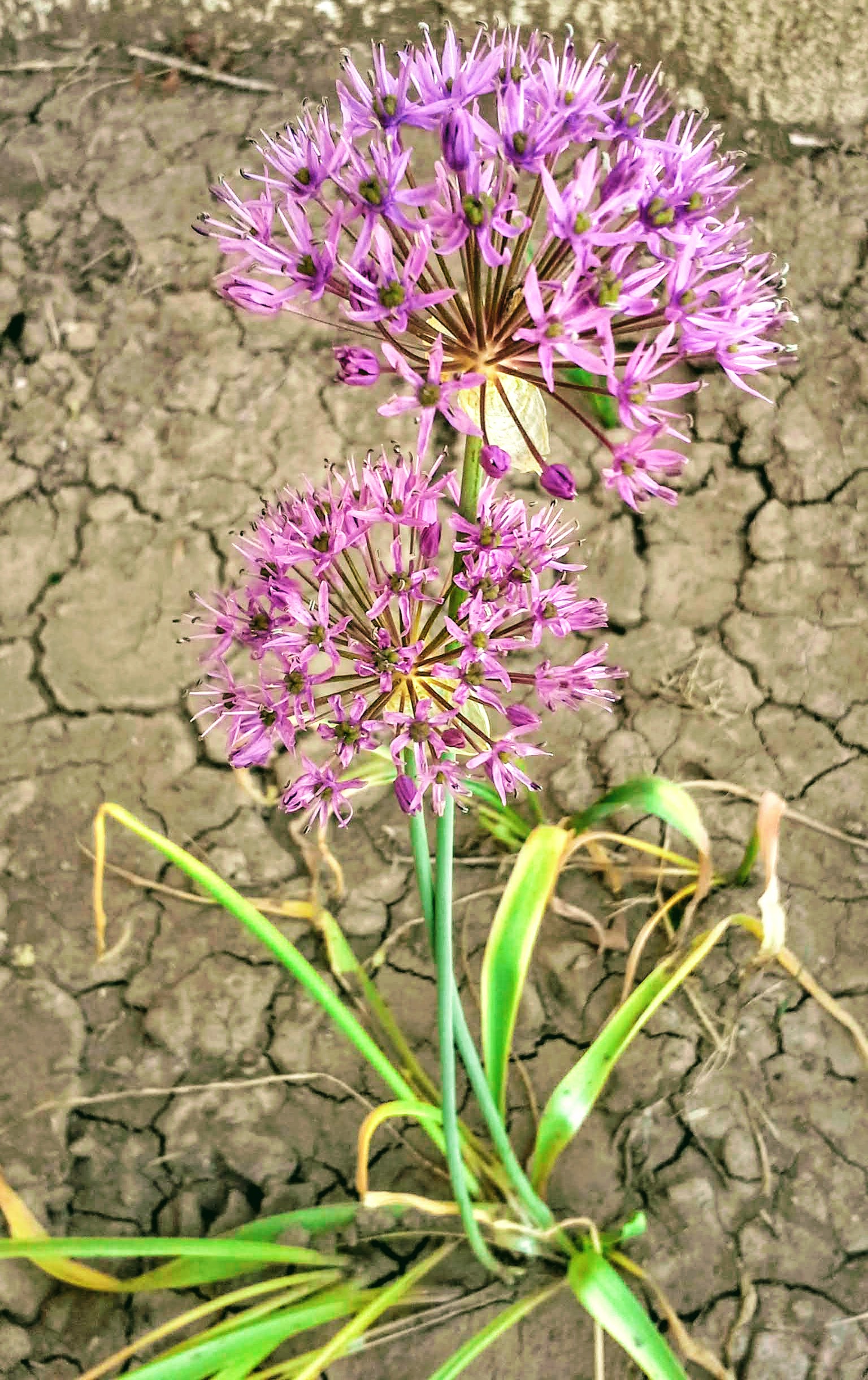
The Bob

In the following scene from A Spark of Heavenly Fire, my novel about a novel disease, investigative reporter Greg and his editor Olaf are talking about an article on the pandemic Greg is hoping to write.

—-

“How’s the research coming, Greg?” Olaf asked, a shade too heartily.

“I feel as if I’m drowning in paper.”

“So I see,” Olaf said, laying a hand on the stack of articles. “Mind if I look?”

“Help yourself. They belong to the newspaper.”

Olaf settled himself in his customary chair with a handful of the papers. A minute later, he raised his head.

“How do these guys get anything printed? If my reporters turned in work as incomprehensible as this, they’d be out of here so fast they’d think they were flying.” He glanced at the papers and shook his head. “Even the titles are incomprehensible. ‘Imitating Organic Morphology in Micro-fabrication.’ I don’t even know what that means.”

“Me neither,” Greg said, thinking if he had to wade through this sort of stuff to learn about the red death, the earth would fall into the sun long before he read half of it.

Olaf tossed the sheaf of papers back onto Greg’s desk. “Better you than me.”

“What do these guys do?” Greg asked. “Take a course in obfuscation?”

“Probably. Convoluted writing and obscure terms are a way of intimidating the uninitiated, keeping the profession closed to non-scientists, and adding to the scientific mystique. Just think, if diseases had names like Bob and Carol and Ted and Alice, doctors wouldn’t make anywhere near the amount of money they do now.”

Greg laughed. “That’s an idea. They do it for hurricanes, why not everything else?” He mimed seizing the phone and dialing. “Mr. Olaf? I can’t come in today. I’ve got the Bob.” He hung up his imaginary receiver and looked inquiringly at his boss.

Olaf nodded. “Works for me.”

—–

And it works for me. From now on, I’m going to call this current novel virus “The Bob.” No insult meant to any Bob living or dead, but I need a different name to call this disease because I am already sick of seeing its name wherever I go on the internet and hearing it out in public. And anyway, I named the disease many years ago back when I didn’t know any Bobs.

***

Pat Bertram is the author of Grief: The Inside Story – A Guide to Surviving the Loss of a Loved One. “Grief: The Inside Story is perfect and that is not hyperbole! It is exactly what folk who are grieving need to read.” –Leesa Healy, RN, GDAS GDAT, Emotional/Mental Health Therapist & Educator.

Bent’s Old Fort

In 1833, William and Charles Bent and Ceran St. Vrain, built the original fort on what was then the border of Mexico so they could trade with Plains Indians and trappers. For many years it was the only primarily white settlement on the Santa Fe trail between Missouri and Mexico. The fort was abandoned in 1849 because of disease and disasters. It was resurrected in 1976. The reconstruction was based on archaeological excavations, various drawings and diaries. Supposedly, the original plans for the fort were found in an attic in Germany, though I don’t know it that’s the truth or was merely an interesting story peddled to visitors.

My visiting friends and I went on an excursion to see the fort. I didn’t think it would be much of an adventure since the fort is a reconstruction and not the real thing, but once I stepped inside the gates, I was glad I went.

I felt as if I’d stepped back in time.

The whole place was as authentic as possible, with a general store

And stores

A blacksmith shop, with the huge bellows hanging from the ceiling on the upper right and attached to the adobe stove on the left

The maze of catwalks and ramps leading to the various sections on the second floor

The guard tower from the outside looking in

And the from the inside looking out

The resident peacock

and peahen.

In the summer, there are some encampments where the fort is filled with the various characters, such as the Bent brothers, as well as fur traders, the blacksmith, and the blood-letting doctor rather than the single character who entertained us. Should be fun!

***

Pat Bertram is the author of Grief: The Inside Story – A Guide to Surviving the Loss of a Loved One. “Grief: The Inside Story is perfect and that is not hyperbole! It is exactly what folk who are grieving need to read.” –Leesa Healy, RN, GDAS GDAT, Emotional/Mental Health Therapist & Educator.
Living in my Own Story

I am feeling very déjà-vu-ish these days, as if I’m living in the pages of one of my books. (A Spark of Heavenly Fire is the story of a quarantine in Colorado where hundreds of thousands of people are dying from an unstoppable disease called the red death. Insomniac Kate Cummings struggles to find the courage to live and to love. Investigative reporter Greg Pullman, is determined to discover who unleashed the deadly organism and why they did it, until the cost — Kate’s life — becomes more than he can pay. This is a story of survival in the face of brutality, government cover-up, and public hysteria. It is also a story of love: lost, found and fulfilled. And is available on Amazon. https://www.amazon.com/gp/product/1630663662/)

Now that was a real pandemic, my red death. What we’re going through now is . . . I don’t know what it is, but it seems more fictional than my fictional disease. Truly, this panic over a rather tepid pandemic has me mystified. Maybe young folks would have an excuse because they haven’t lived through any of the previous named flus (Russian, Swine, etc.) , but most of them seem to be blasé since they are not being hit hard. But for the rest of us? I really don’t get it.

The Russian Flu killed 1 million from 1889 to 1890

The Spanish Flu killed 40-50 million from 1918-1919 (20% of the world’s population)

The Asian Flu killed 1.1 million from 1957 to 1958

The Hong Kong Flu killed 1 million between 1968-1970

The Swine Flu killed 200,000 between 2009 to 2010

Seasonal Flu (the various flus that hit us every year) kill between 300,000 to 600,000 every year.

The Coronavirus has killed 6,500 from Nov 2019 to March 15. 2020, which means we’re almost halfway through the typical period it takes for one of these named flus to run its course. People keep citing statistics, such as the rapid spread rate, the extreme potency of the organism to prove how important the hype is. And yet it is nowhere near as potent or rapid spreading as all the previous flus no one cared about.

The closest thing to this particular reaction that I have seen was the swine flu of 1976. There was a panic to create a vaccine with the ultimate goal of vaccinating 80% of the citizens of the USA. They reached 25%. And all that panic came from a single death. One death. That’s it. The vaccine caused more deaths than that, along with major problems for a lot of the vaccinated people, including an increase in reports of Guillain-Barré Syndrome. Because of that ridiculous mess, and because of being forced to get such a dangerous vaccine or risk losing my job, I will never follow the party line (either party line) when it comes to any sort of flu, epidemic, or pandemic, no matter how wild or how tepid.

Yes, I know. People are dying. For them and those who care about them, it’s a sad and terrible thing, but going by strictly by the numbers, it’s not that big of a thing. And it might never be. I’m not saying taking precautions is wrong, because it isn’t. In fact, most of the precautions, such as washing one’s hands, staying home when sick, and distancing oneself from those who are ill are things we should have all been doing anyway. If we had, there’s a good chance the deaths from seasonal flu would not be nearly as great.

Even if it turns out there are 200,000 to a million deaths from this thing, it’s still pretty much status quo for a virus, whether novel or known.

The main difference between this and previous outbreaks is, as one friend pointed out, an overactive media and an even more overactive social media, both of which seem to revel in riling people because riled people are involved people. (Involved in the story, that is, not necessarily involved in finding solutions to the story.)

I love the internet. I love interacting with people all over the world. But this current reaction has me wanting to hunker down and quarantine myself from all the hype.

Luckily, a friend is coming to stay for a couple of days, so I’ll have other things to think about than living in my own story.

***

Pat Bertram is the author of Grief: The Inside Story – A Guide to Surviving the Loss of a Loved One. “Grief: The Inside Story is perfect and that is not hyperbole! It is exactly what folk who are grieving need to read.” –Leesa Healy, RN, GDAS GDAT, Emotional/Mental Health Therapist & Educator.




