Friday Night, Date Night

I signed up for an online dating site two or three months ago. It took one entire sleepless night to make the decision to do so. I’m not sure what I was afraid of — moving even further beyond my deceased life mate/soul mate perhaps. Or maybe falling in love again and tying my future to another person. (I’m not ready for that. I still need to find out what my life alone will bring.) Although I’m not looking for a serious relationship, I did think it would be fun to meet people, maybe go on a few dates, but the site turned out to be anticlimactic.

Inadvertantly, I’d created a profile that guaranteed I wouldn’t catch anyone’s attention — I told the truth about myself, used more than 95 words, didn’t downplay my intelligence, didn’t show cleavage, didn’t use words like “fun-loving” that could connote an eagerness for mattress games, and most of all, I didn’t lop years off my age.

Not surprisingly, nothing came of my fishing in the online dating pool. Not a single date. Not even a real message or connection, which I find strange. I frequently make connections over the internet. All sorts of interesting people find their way to me online. Many of my offline friends were once solely online friends. Many other online friends will one day become offline friends when we finally meet in person. And yet, on a site geared to bringing people together, I can’t make a single connection.

Still, I wanted a date, so last night I took myself out. Went to a fair. It wasn’t big as fairs go, but it had a Ferris wheel and that’s all I really wanted. Unfortunately, they wouldn’t let me go on the ride by myself. “It’s fair policy,” the ticket taker said. (I’m not sure how fair this fair policy is, since one of me is easily the equivalent of the the two children who climbed aboard at that momeFerris wheelnt.) As I turned away from the wheel, a young woman asked me, “Did he say you can’t go by yourself?” When I said yes, she looked disappointed and replied, “My daughter wants to go on the ride.” “Don’t you want to go with her?” I asked. She shook her head. I volunteered to partner up with her little girl. And she agreed.

So, we rode the Ferris wheel together, this little girl and I. We marveled at how beautiful the fair looked from the air and how small everyone seemed. She told me she was learning sign language and taught me how to say “I love you.” After thanking her for accompanying me and thanking the mother for letting her daughter chaperone me, I wandered around the grounds. Ate a caramel apple. Tossed pelota balls in a basket (all but one jumped right back out). Threw darts at balloons and won a stuffed frog.

I’ve always thought such games a waste of money — I could have bought a nicer frog for a fraction of the cost — but it wasn’t about the frog. It was about the experience. Immersing myself in a night of sponteneity.

On the way home, in the continued spirit of sponteneity, I stopped for an ice cream cone. (I can’t even remember the last time I did that.)

It was a great date. Maybe I’ll do it again some time.

***

Pat Bertram is the author of the suspense novels Light Bringer, More Deaths Than One, A Spark of Heavenly Fire, and Daughter Am I. Bertram is also the author of Grief: The Great Yearning, “an exquisite book, wrenching to read, and at the same time full of profound truths.” Follow Pat on Google+. Like Pat on Facebook.


Talking to a Facebook Friend in Real Time

I’ve met a lot of wonderful people because of opening up and blogging about the loss of my life mate/soul mate. One woman, Shannon Fisher, has become a good friend of the Facebook variety, and tonight I will have a chance to talk to her in real time. I am going to be the premier guest on her new radio show, “The Authentic Woman”. I hope you can turn in at 8:00 pm ET.

Although we won’t we talking about grief (or not much, anyway) that is something we have in common, losing our soul mates. Shannon’s wisdom helped me get through many lonely nights. One night when we were messaging each other about the realization that although we felt connected to our soul mates, an important step in grief (sometime during the third year) is the realization that we are not our mates, Shannon wrote:

That’s the toughest part – realizing that their death has nothing to do with us and that we are all, while connected through a web of energy, uniquely created beings following our own individual path. Regardless of how connected we are to some people in some ways, their path is theirs and ours is ours.

When I felt that disconnect, I was suddenly okay. He was gone. I was here. And it was okay. The fear of letting go is what keeps us in the mire. We let go when we are ready to do so, and not a moment sooner.  Our partners are gone.  We can either live in this world without them, experiencing a full, active life…or half-live a life while we are still connected to our dead great loves through the ether, which we can’t navigate or understand this side of death.

It isn’t a choice; you can’t “just get there.” But you will get there. And everything will suddenly feel new again. You will see possibilities as something toward which you want to leap, and you will suddenly feel untethered and able to make that leap.

Well, I’ve made many leaps during these years of grief, and this radio show interview is just one more leap into the untethered future.

The live show begins at 8:00pm EST here at this link: http://tobtr.com/s/6078195. If you miss it live, then use the same link for the podcast, available immediately after the live interview.

Call ins are welcome. 347-884-8266

AW

***

Pat Bertram is the author of the suspense novels Light Bringer, More Deaths Than One, A Spark of Heavenly Fire, and Daughter Am I. Bertram is also the author of Grief: The Great Yearning, “an exquisite book, wrenching to read, and at the same time full of profound truths.” Follow Pat on Google+. Like Pat on Facebook.
The Academy Awards and Me

The Academy Awards are on tomorrow night, and so am I! I won’t be on television with all the stars, of course, but I will be the star of a radio show that runs at the same time. Maybe I’m exaggerating a bit about being a star, but they are billing me as a special guest, so that has to count for something. I’m also the first guest ever on this new show, which is a great honor.

AW

The Authentic Woman is a weekly radio show that will be airing Sunday nights at 8:00 pm ET, beginning March 2, 2014, on the Authors on the Air Global Radio Network. The show will be hosted by Shannon Fisher, a writer, civic leader and social justice advocate who strives to enact positive change in the world one day, one issue and one person at a time. On her show, Shannon will explore every aspect of the female experience.

Interviewing both well-known public figures and everyday Janes (and Joes), Shannon will delve deeply into the world of writers, artists, community leaders and celebrities. Each week, Shannon and her guests will immerse themselves in themes that have sculpted their own personal perspectives — and their cultural and societal experience as a whole.

Sounds heavy, doesn’t it? But since I’m the guest tomorrow, the show will be conversational. Just two friends talking. And if you call in at (347) 884-8266, then it will be three friends chatting! We’ll be talking about my book A Spark of Heavenly Fire, my life experiences, and my latest interests. (I’ll bet you will be surprised to hear what those interests are! I sure was.)

The live show begins at 8:00pm EST here at this link: http://tobtr.com/s/6078195. If you miss it live, then use the same link for the podcast, available immediately after the live interview.

I can hardly wait! It should be a fun evening.

***

Pat Bertram is the author of the suspense novels Light Bringer, More Deaths Than One, A Spark of Heavenly Fire, and Daughter Am I. Bertram is also the author of Grief: The Great Yearning, “an exquisite book, wrenching to read, and at the same time full of profound truths.” Follow Pat on Google+. Like Pat on Facebook.
To Everyone Who Has Shared This Day With Me

I am always touched by the comments left on this blog from those who are also struggling to live and find meaning after the death of the one person who meant more than anyone else in the world. So often I feel as if I am merely indulging myself by continuing to chronicle my progress through grief and into a renewed interest in life, especially when all I have are dreams and tentative plans that might come to naught. The comments left here show me how narcissusconnected we are, those of us on this difficult path. Although our situations are different, although our grief is individual, many of us face the same blank future that we need to color with dreams, goals, fantasies, interests, and especially a renewed love of life.

It’s as if we are children again, carefully building our futures one dream at a time. As when we were children, these dreams might not come true, but they help us expand our “what is” into new paths of “what might be.”

It could be our time of life that makes this struggle so complex. Although young widows have the same struggles we do, life is still rushing in their veins. Often they have small children, which makes their loss at once easier and more difficult — easier because they have built-in meaning so they don’t have to go searching for it, more difficult because they have to raise the children alone without that special person to share in the joys (and worries) of caring for the young ones. (Please know I am not denigrating anyone’s loss. All losses are unbearably painful, but each of us has our own unique set of collateral losses to deal with.)

As we age, we lose many things we counted on, not just people but jobs, stamina, health, and we need to find a way around these limitations to some sort of revitalization otherwise the last decades of our life would be nothing more than waiting for entropy to win. When grief and the destruction of a shared life are thrown into the mix, it’s even more difficult to find a way through the murk to joy.

And yet, somehow we do find our way. Today is the 47th 27th since the death of my life mate/soul mate. (For those of you who are arithmetic-challenged, that means in one month it will be four years since his death on March 27, 2010.) Despite my complicated and sometimes stressful situation — looking after my 97-year-old father and dysfunctional brother — I am happier than I ever imagined I could be four years ago. And I expect to become even happier.

Life is full with new friends, new activities (mostly physical pursuits, which is odd considering that until recently, I preferred a more literary life), and new dreams.

None of us knows what the future holds, but those of us who have survived a profound loss seem especially aware of that truism, and we try to live each day to its fullest. It’s all we have. It’s all anyone has — this day.

To everyone who has shared this day with me, whether in person or online with a comment, thank you. You have made this day a joyful one.

***

Pat Bertram is the author of the suspense novels Light Bringer, More Deaths Than One, A Spark of Heavenly Fire, and Daughter Am I. Bertram is also the author of Grief: The Great Yearning, “an exquisite book, wrenching to read, and at the same time full of profound truths.” Follow Pat on Google+. Like Pat on Facebook.

High Tea, Afternoon Tea, and Hilari-tea

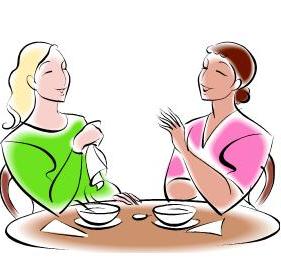
The town where I am temporarily residing hosts a high tea once a month, or at least, that’s what they call this particular social occasion.

Like many Americans who have grown up reading English novels, I know what high tea is — a heavy meal served in the early evening, generally around 5:00 pm when the working class returned home from their labors. What I didn’t afternoon teaknow until just now when I did a bit of research is the reason it’s called high tea — because the baked goods and the meat, potato, and vegetable dishes were served from a high table. Seems reasonable enough.

Afternoon tea is served earlier, around 4:00 pm. From all the English books I have read, I’ve gathered that it is a genteel snack of tea and delicate finger foods such as scones and watercress sandwiches with crusts removed. (I’ve never had a watercress sandwich, but so many fictional characters seemed to dote on them, they must be a true delicacy.) Afternoon tea is considered to be a low tea because instead of being served at high tables, it is served at low tables.

I knew what to expect from this local “high tea,” or at least I thought I did. They enticed me with their description, “Want to escape the daily grind and meet new and old friends over a cup of tea? Join us for tea, coffee, and cookies. Get to know new people. Laughter and conversation are guaranteed.” (I wonder if the pun in the first sentence was inadvertent or a sly dig — escaping the daily grind for tea.)

Being in the mood for conversation and laughter, I dressed up (as dressed up as I ever get, which isn’t “dressed up” by anyone’s definition except mine) and moseyed on over to the town hall for this special occasion. The receptionist greeted me with a blank stare when I asked where the tea was being held. Finally, after a long silence, she directed me to a woman from the Parks and Recreation Department who escorted me to the Recreation Center. And there I found . . .

No one. Just a table with a plastic covering, spilled coffee, and a small package of store-bought scones. High tea, indeed.

Still, it was fun. I talked to the woman from the Parks and Recreation Department for a few minutes until she had to return to work, then I called a friend from the Sierra Club and we chatted for a while.

(You can probably guess what we talked about since it’s been my almost constant topic of conversation lately. Hiking the Pacific Crest Trail. Yep, I’m still talking about that, wondering if it’s at all feasible. She says yes.)

The high-tea didn’t really offer much hilarity, but it did amuse me. I might go again sometime, even if it’s just to grab a scone and visit with myself.

***

Pat Bertram is the author of the suspense novels Light Bringer, More Deaths Than One, A Spark of Heavenly Fire, and Daughter Am I. Bertram is also the author of Grief: The Great Yearning, “an exquisite book, wrenching to read, and at the same time full of profound truths.” Follow Pat on Google+. Like Pat on Facebook.
Amtrak’s New Onboard Writer’s Residency Program

In response to comments on twitter, Amtrak says they are planning to set up an onboard residency for writers. Select writers will get a free trip to give them time to write, and the only requirement as of right now is for the writers to send in a few tweets during the trip.

As soon as I heard of this plan, I tried to sign up, but there is no place to sign up yet, nowhere to submit a request. So far, only a couple of writers have been given a free ride to “test drive” the program, but so many people have professed an interest in a residency that they are currently formulating an outline to expand the program. The main traindrawback for Amtrak, of course, is that while the residency might be free to authors, the rail company will still have expenses, and they will need to recoup those expenses somehow. A drawback that they might not have considered is the sheer numbers of writers in this country. Millions of them. (I mean, millions of us. I tend to forget that I am a writer.) And who wouldn’t want a free train ride to wherever you wanted to go, as well as all that uninterrupted time to write? If they opened the residency to submissions, rather than just pick candidates on twitter (as they did with the first couple of writers), they would have to sift through hundreds of thousands of submissions, especially if they open the program to all writers: published, unpublished, self-published, journalists, bloggers. They would have to decide what would constitute a writer, and what that writer could do for their business. Although they are saying there would be no quid pro quo, they also admit they would be looking for writers with a strong social media presence.

I have a hunch such a program would end up being a lottery, where only a few lucky people would even be considered, either because they caught Amtrak’s attention or because theirs was the first possible request to be considered. Some writers are hoping Amtrak will consider an entire car dedicated to writers. I have a hunch that is a bit optimistic, but who knows — writers conferences are big money. Why not do a conference aboard a train?

I guess it’s just as well there is no place to sign up yet. The train comes through here at 3:00 in the morning, and although I’ve made many friends, no one is such a good friend that they would volunteer to get up so early to drive me to the tracks. And I do mean tracks. There is no train station here. I’d have to stand by the tracks in the dark and hope they stop to let me board.

Still, it would all be part of the adventure. So, Amtrak, if you are reading this, my hands are in the air, and I am waving them wildly, begging, “Choose me, please! I promise to blog about my trip.”

***

Pat Bertram is the author of the suspense novels Light Bringer, More Deaths Than One, A Spark of Heavenly Fire, and Daughter Am I. Bertram is also the author of Grief: The Great Yearning, “an exquisite book, wrenching to read, and at the same time full of profound truths.” Follow Pat on Google+. Like Pat on Facebook.

Simulating the Future

Fiction is a type of simulator, much like a flight simulator, where we can experience life at one remove. Just like a flight simulator, the situations we encounter in fiction (particularly fiction that poses dilemmas) seem real, and they have real effects on our minds. Although this is recent research, I have known it since I first learned to read. I never read fiction just for entertainment. It was more real to me than that — like practice for life. I didn’t see myself as the main character, rather I read myself into the story, trying to figure out how I would act in a similar situation. Unlike many of the youth of my generation, I never had to use recreational drugs to understand what could happen. I knew secondhand through books the possible consequences. I also knew the consequences of teen-age pregnancy, drunk driving, and whatever other trouble kids my age could get into, and it made me cautious. Maybe too cautious. Still, I never got into a mess I couldn’t get myself out of.

As I grew older, potential problems became more serious, and again, books simulated various scenarios I was able to sidestep. I might have continued to be too cautious, but I never saddled myself with avoidable problems such as overwhelming debt. (I was going to change this cliché, but I got an image of debt as a saddle with a banker as the person sitting on the saddle riding me, and I thought it was an apt image, so the cliché stays.)

Popular books, easy books, happily-ever-after books, books without major moral dilemmas never did much for me. In fact, if I read too many of these “junk food” books, I’d get depressed. Oddly, all books now depress me the way these books once did, perhaps because the situations in books no longer act as a simulator. I know I will never be an unwed mother, a single mother, or a woman struggling to handle a family and a career. I know I will never solve a murder, either as an amateur or a professional. I know how it feels to love. I know how it feels to lose the one man who made life worth living, know how it feels to take care of an aged parent, know how it feels to be the subject of a brother’s rage.

But I still have a “flight simulator” — my imagination. Although imagination isn’t as good a simulator as fiction since we tend not to be able to project our true feelings into the future, a life time of reading and living has trained me at least in a small part to imagine how I would deal with certain situations.

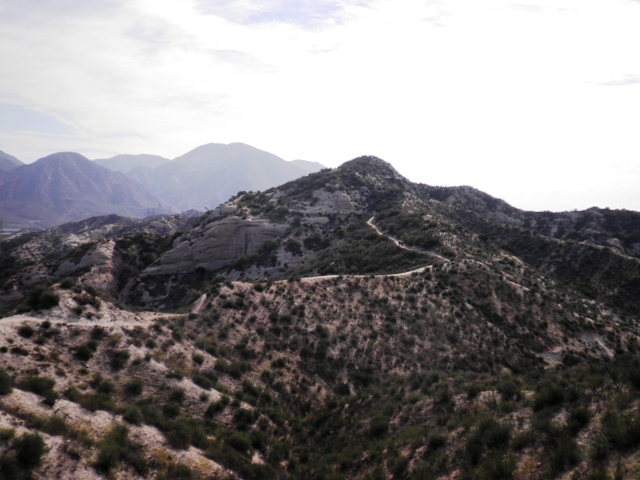
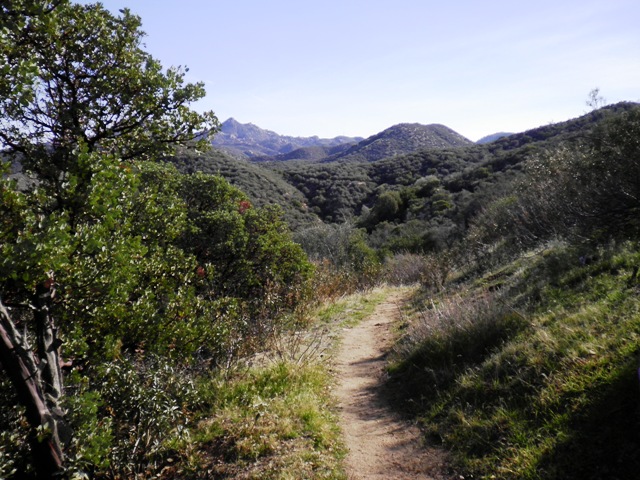
Pacific Crest TrailI’ve been writing lately about my idea of hiking the Pacific Crest Trail. I have been hiking small sections of the trail (some of my typos crack me up — I just wrote “trial” instead of trail, and that is apropos at times of hiking the PCT — a real trial). These Saturday hikes give me a small taste of the dream. But more than that, talking/writing/thinking about walking up to Seattle expands my mind the way reading a good book used to.

If it sounds as if I am backtracking (instead of backpacking), the truth is that as much as the idea intrigues me, I really don’t think I could do it. It’s way too dangerous for someone who isn’t fit and has no camping experience. Besides, I cannot see me wielding an ice axe to keep from falling off a narrow icy trail, cannot see me coming face to face with a grizzly who wants to wrestle me for my scant food supply, cannot see me “out packing” bags of used toilet paper, carrying the stinky package for hundreds of miles until I came across a place where I could dispose of it. Nor am I interested in doing something that takes such massive planning — the preparation takes longer that the 2650-mile hike itself. I want to be spontaneous, just take off walking and keep on walking, and that is so not possible on the PCT. It’s also expensive — hikers typically spend $4000 to $8000 for the 5-6 month jaunt.

Still, I want an epic adventure someday, and I want it for real, not second hand from books — if not the PCT, then perhaps something that stems from this particular simulation. I’ll keep imagining, keep throwing myself into the future, and see what happens.

***

Pat Bertram is the author of the suspense novels Light Bringer, More Deaths Than One, A Spark of Heavenly Fire, and Daughter Am I. Bertram is also the author of Grief: The Great Yearning, “an exquisite book, wrenching to read, and at the same time full of profound truths.” Follow Pat on Google+. Like Pat on Facebook.
Hiking the Pacific Crest Trail

Sometimes I have to laugh at my pretensions. Yesterday I half-jokingly told my sister I was thinking of walking up to Seattle to visit her, a mere 2,500 miles along the Pacific Crest Trail. She, like almost everyone else to whom I have talked about my dream of hiking the PCT, mentioned Cheryl Strayed’s book.

I’d never heard of the book before the idea of hiking the PCT took hold of me and I started telling people about my dream, and I must admit, I was disappointed to discover how much of a bestseller Strayed’s book was. I’d planned to keep a journal of my adventure, posting it to my blog when I reached the major towns along the way (El Cajon, Idyllwild, Big Bear, Aqua Dulce, Tehachapi, Kennedy Meadows, Mammoth Lakes, South Lake Tahoe, Sierra City, Chester, Burney, Mount Shasta, Etna, Ashland and White Pass). And perhaps, someday publish it as a book. A bestselling book, of course.

But, as I told my sister, since Strayed’s book is already published, on bestseller lists, with a movie about to come out, my book would merely seem a “me too,” as if I were as if I were riding on her coattails.

And here is where I had to laugh at myself. What does her book and her success have to do with me? I have never written a single word about my journey because, of course, there is no journey. I haven’t walked a single step on my way to Seattle. I don’t know if I will ever walk a single step. (I have hiked approximately 14 1/2 miles of the trail, but I wasn’t going anywhere, just walking with a group of Saturday hikers.) Unlike Strayed, I am not a young woman. I don’t know if my body or any parts thereof would hold up to such a grueling feet. (I know that’s a misspelling, but I kept the typo because . . . how perfect!) Even if I were to hike to Seattle or at least a part of the way, I don’t know if the story of my travels would lend themselves to a book — you need more than just a recounting of adventures to be readable. You need heart, soul, uniqueness, growth.

Perhaps it would be a good idea for me to read Strayed’s book, but the truth is, I want my own epic adventure, not an echo of someone else’s. Still, I have been doing research for the journey. And what I’ve been reading has given me pause.

Some of the worst weather in the country can, and does, occur on the Pacific Crest Trail, so you always have to carry equipment for foul weather, even during the summer. You need an ice axe, and knowledge how to self-arrest to keep from sliding into oblivion. Waterways can be too swollen to cross. (My feet got soaked last weekend just from trying to cross a tiny rivulet, not much more than a puddle.) Long stretches of the trail have no water source at all — none — though it is recommended that hikers drink a gallon of this non-existent water a day. And even where water is plentiful, you need a water purifier that is effective against giardia and bacteria. You need wilderness permits. You need a bear canister to protect your food in bear territory. (Yep, long sections of the trail wind through bear country.) And you need food, lots of food — a through hiker, one who travels the whole trail or long sections of it, needs up to 5000 calories a day, and you have to be prepared since there are few places to replenish supplies — sometimes you have to hike more than 200 miles in the wilderness before crossing any sort of road.

Yikes. No wonder more people have scaled Mount Everest than have through-hiked the Pacific Crest Trail.

And yet, the idea still appeals to me. So what if I have to hole up in one of the few towns along the way until the snow melts? It shouldn’t be a problem for me since I wouldn’t even attempt such a thing as walking to Seattle until/unless I were completely free, and I’m not. I still have responsibilities.

But one day, when I have nothing else to do . . .

Perhaps.

***

Pat Bertram is the author of the suspense novels Light Bringer, More Deaths Than One, A Spark of Heavenly Fire, and Daughter Am I. Bertram is also the author of Grief: The Great Yearning, “an exquisite book, wrenching to read, and at the same time full of profound truths.” Follow Pat on Google+. Like Pat on Facebook.
In Every True Woman’s Heart

I used to be a guest on various internet radio shows, but I got burned out on the whole idea, so I haven’t been accepting any invitations. When the shows were less than an hour and focused mostly on me, they were fun, but so many of the shows featured several guests and a couple of hosts, so it was hard to know who was supposed to be talking. Also, shows with many guests to be very long, and I am not fond of talking on a phone for any length of time.

Still, when Shannon Fisher invited me to be the first guest on a new show she will be hosting, I immediately agreed. I’ve never met Shannon in person, but we are good friends. We’ve often talked about life and death via Facebook and this blog, and I admire her greatly. She’s on the board of directors of UniteWomen.org, director of Unite Against Rape, and active in various other organizations. And now she’s accepted a position as host of a show on Authors on The Air.

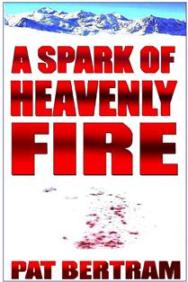
A Spark of Heavenly FireNot only was I invited to be Shannon’s first guest, but A Spark of Heavenly Fire was chosen to be the first book featured on her new show: “The Authentic Woman – with Host Shannon Fisher – Perspectives on the Female Experience.”

Washington Irving wrote: “There is in every true woman’s heart a spark of heavenly fire, which lies dormant in the broad daylight of prosperity; but which kindles up, and beams and blazes in the dark hour of adversity.” As I read these words a decade ago, I could see her, a drab woman, defeated by life, dragging herself through her days in the normal world, but in an abnormal world of strife and danger, she would come alive and inspire others. And so Kate Cummings, the hero of my novel A Spark of Heavenly Fire was born. But born into what world?

I didn’t want to write a book about war, which is a common setting for such a character-driven story, so I created the red death, an unstoppable, bio-engineered disease that ravages Colorado. Martial law is declared, rationing is put into effect, and the entire state is quarantined. During this time when so many are dying, Kate comes alive and gradually pulls others into her sphere of kindness and generosity. First enters Dee Allenby, another woman defeated by normal life, then enter the homeless — the group hardest hit by the militated restrictions. Finally, enters Greg Pullman, a movie-star-handsome reporter who is determined to find out who created the red death and why they did it.

Kate and her friends build a new world, a new normal, while others, such as Pippi O’Brien, Greg’s fiancée, think of only of their own survival, and they are determined to leave the state even if it kills them.

The world of the red death brings out the worst in some characters while bringing out the best in others. Most of all, the prism of death and survival reflects what each values most. Kate values love. Dee values purpose. Greg values truth. Pippi, who values nothing, learns to value herself.

The women drive the book, their sparks of heavenly fire lighting up the bleak world of quarantined Colorado, showing us love in all its guises: caregiving, motherly love, friendship. romantic love, love of life.

It’s fitting that that this book is being highlighted because Shannon herself is a true woman who embodies the spark of heavenly fire the world so desperately needs.

So look for me online on March 2, 2014 at 8:00pm ET at “The Authentic Woman – with Host Shannon Fisher – Perspectives on the Female Experience.”  I’m sure Shannon and I will have much to talk about!

***

Pat Bertram is the author of the suspense novels Light Bringer, More Deaths Than One, A Spark of Heavenly Fire, and Daughter Am I. Bertram is also the author of Grief: The Great Yearning, “an exquisite book, wrenching to read, and at the same time full of profound truths.” Follow Pat on Google+. Like Pat on Facebook.

The Logistics of a Life on Foot

Although I’ve been Dreaming of Life on Foot, hiking around the USA on the National Trails System, the logistics seem unmanageable. To hike just the Pacific Crest Trail would take a minimum of six months, assuming I could walk 10 to 20 miles a day through often-rugged terrain. And that assumption is very optimistic. I get exhausted just walking a mile or two up steep hills. Still, if walking were a way of life, I could walk a mile, rest a while, walk another mile since there would be no reason to hurry to finish the trail. Well, that’s not true. There is one reason — winter. People try to finish the trek in six months so they don’t have to deal with inclement weather — neither the heat of desert summer nor the harsh climes (and climbs) of mountain winter.

Like other through-hikers, I could probably send food ahead so that I wouldn’t have to cart a wagonload of provisions. I could probably map out the watering holes (and from what I have heard, some of these holes are little more than stagnant puddles). I could perhaps even get in shape for such a trip (though the trip itself would get me in shape). But so many other problems seem insurmountable. For example, what would I do with my car? Do I park it at the trailhead and hope it is still there (and the battery still charged) when I return? And if so, how do I return to the car? Would it be better to put the vehicle in storage, and hope I can find a ride to the trailhead? Or do I sell it, and use rental cars in between jaunts? (Since I don’t have a charge card, renting cars isn’t really an option.)

And what about connectivity? I suppose I could just take off and forget about computers and phones and such, but this blog is important to me. I could write my blogs on the trail, and then post them when I got back to civilization, but that could be many weeks, or even months. I could get a solar charger, which would probably be necessary since a working phone would be nice to have in an emergency, but I have a hunch most of the trail(s) would be off the grid anyway.

And what about mosquitoes? Mosquitoes love to feast on me, but my body hates them. I get sick from even a single sting. And I’m allergic to mosquito repellent, even — especially — citronella oil. Until my current (temporary) relocation to the desert, I have always had to be careful to be inside by dusk. It’s only because this seems to be a mosquito-free area that I’ve been able to go walking at night with the Sierra Club. So the idea of camping out in bug season is a bit ludicrous. Can’t you just see me, trying to hike, swathed in yards and yards of mosquito netting?

And what about my eyeglasses? Do I need to have extra pairs with me or stashed in my sent-ahead supply boxes? The same with shoes. Do I break in two or three pairs of shoes, and have those packed in the supply boxes, too? I am not on any medication, but I do take supplements to keep me healthy. Do I forgo those and hope I don’t get colds or allergies or pains that don’t go away?

I thought my original idea of living on the road — perhaps sampling the trails or visiting all the national parks and in between staying at motels or extended stay hotels — was complicated, but that plan seems simple in comparison to a life on foot. I would be out in the wilds for just a few days at a time, I would be not too far from my car (which would provide emergency shelter or an emergency getaway), and I would be able to access my blog and recharge my phone every few days. I could even pass out gifts with information about my books to everyone I see. That was the original purpose of an extended trip — to promote my books — but the idea seems to metamorphose the more I think about it.

And there is a lot to think about. Of course, since my current responsibilities might not end for several years (I am looking after my 97-year-old father, and there is a good chance he could live to be 100), I have plenty of time to wonder, and dream, and prepare for whatever the future might have in store for me.

***

Pat Bertram is the author of the suspense novels Light Bringer, More Deaths Than One, A Spark of Heavenly Fire, and Daughter Am I. Bertram is also the author of Grief: The Great Yearning, “an exquisite book, wrenching to read, and at the same time full of profound truths.” Follow Pat on Google+. Like Pat on Facebook.



