Restless Sleep

A friend sent me a cartoon of a woman reading in bed, with the caption: I tried everything to get to sleep last night. Well, everything except closing the book and putting it on the nightstand. Let’s not get too crazy.

I had to laugh at that because oh, it’s so true! At least some of the time, anyway. Last night was not one of those times.

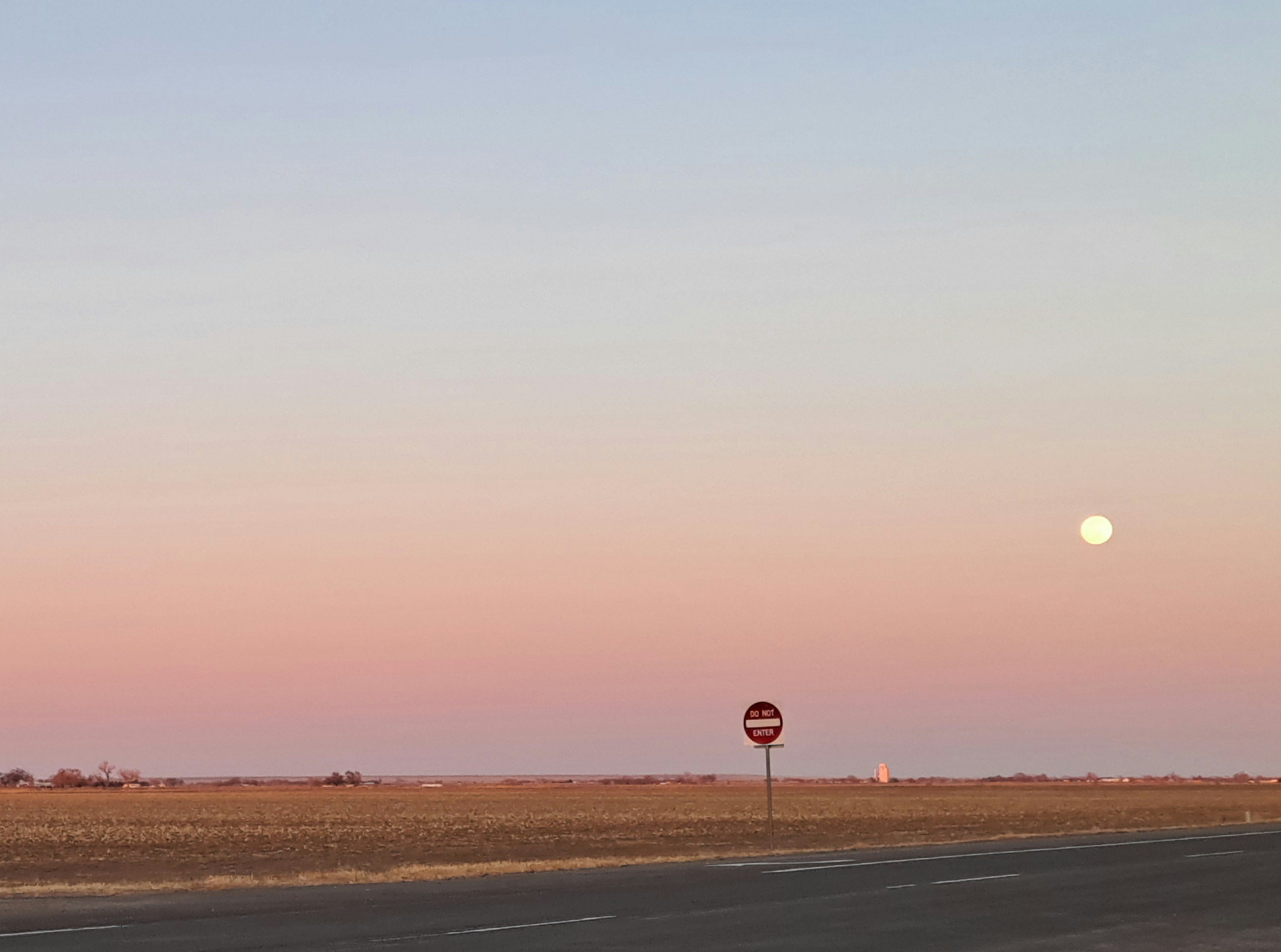
I did close my book and put it on the nightstand, tired physically and tired of the tiresome story, but I still found myself too restless to sleep. My allergies were acting up, which exacerbated the touch of insomnia, but the problem was mostly external. I find that when a storm is moving in, I get restless and unable to sleep. The same thing happens with a full moon. And last night, there was both a snow storm and a full moon. I’m lucky I managed to fall asleep at all. Or maybe not. I woke up stiff and sore, so whatever sleep I did manage to get wasn’t exactly relaxing.

Fortunately, even though it’s very cold today, the clouds are moving away. And the moon is on the wane. I shouldn’t have a problem sleeping until the middle of next week when another storm hits the area.

It has been an interesting winter so far, with the middle of the week becoming very cold, warming up to a relatively nice weekend, and then dropping back into the midweek cold spell. Spring will be here in four and a half weeks, and it will be interesting to see if this same pattern holds true, though spring around here doesn’t really mean a whole lot because the last freeze doesn’t come until the beginning of May.

Still, change is in the air, but hopefully not too much change. It would be nice to get a good night’s sleep tonight. Who knows, I might even get crazy enough to close my book and put it on the nightstand earlier than usual!
***

Pat Bertram is the author of Grief: The Inside Story – A Guide to Surviving the Loss of a Loved One. “Grief: The Inside Story is perfect and that is not hyperbole! It is exactly what folk who are grieving need to read.” –Leesa Healy, RN, GDAS GDAT, Emotional/Mental Health Therapist & Educator.
Talking Ourselves Out of Things

When talking with a friend the other day, I happened to mention the supplements I was taking for immune system support, but then I had to admit that I don’t always take them. She said, “It’s easy to talk ourselves out of things.” And boy, isn’t that the truth! She and I both try to stretch every day, but we find it easy to talk ourselves out of doing it. Too tired. Not enough time. Too lazy. I tell myself it doesn’t matter, that a day or two won’t make any difference, and it’s true. A day or two won’t make any difference, either in the case of the supplements or the exercise, but a day or two tends to become three or four or even more.

Even that wouldn’t be a problem — many people go their whole lives without exercising or taking supplements — but I’m to the age where if I let these things go too long, I might not get back to them, and then there would be a problem. The exercises particularly are helping since so many are geared toward strengthening knees and back, and when these go, you end up with a whole mess of problems. When you’re young, you can slide for years, but there comes a time when there might not be years, and if you don’t do it now, you might never be able to. (And if you don’t do it now, you will guarantee that you will never be able to.)

I’ve spent a lot of time the past couple of decades around the elderly, and I see how their lives changed because of injuries or illness or lack of exercise. Many times, of course, the changes came no matter what they did, but other times, life got to be too much, and they just gave up and gave in. Gave up on trying to better themselves on their own; gave in to the doctors and all the medications the doctors prescribed, as well as all the medications the doctors prescribed to offset the side effects of the original medications.

Obviously, I have no idea what the future holds for me. But I do know if I take care of myself now as well as get into the habit of making an effort when that’s the last thing I want to do, the future could be a bit healthier for me.

To that end, I’m trying to force myself into accountability. Not force myself to exercise (stretching and walking) or take the supplements, or eschew sugar, or get off the computer early enough so that it doesn’t affect my sleep. Just the accountability. Keep a record of when I do the things I should do for my health and well-being. That way, maybe I will stop talking myself out of doing those things, and just do them.

Admittedly, some of these things, such as taking a walk every day, are affected by my crazy work schedule, but for right now, I just want to get into the habit of accountability. Though chances are, in a couple days or so, I’ll talk myself out of doing that, too, because it really is easy to talk ourselves out of doing things.

***

What if God decided S/He didn’t like how the world turned out, and turned it over to a development company from the planet Xerxes for re-creation? Would you survive? Could you survive?

A fun book for not-so-fun times.

Click here to buy Bob, The Right Hand of God.

Anxious About Anxiety

Despite the title of this piece, I am not anxious about anxiety, or anything, actually. I just thought the title a clever one for an essay about worry at things and worrying about things.

In a comic strip from 1992, Calvin told his buddy Hobbes that he prayed for “The strength to change the things I can, the inability to accept what I can’t, and the incapacity to tell the difference.”

A blog reader sent me the link to that cartoon, and when I read it, I couldn’t help laughing out loud. It seems so apt, particularly now when I am trying to puzzle out my water meter situation. Actually, it’s not truly that situation I’m trying to puzzle out, but my response to it. Like so much else I have little control over, I tend to worry at such things, like a dog worrying at a bone.

I figure I have two choices. The first is to learn not to worry at things, though it’s not only a lifelong habit but also an inherited one, and those are hard to break. My dad solved his tendency to worry at things by writing notes to himself, and as long as he had those notes, he could generally let the matter go

His notes were sort of a running joke. My mother told me she found a note he’d written for himself after they were engaged with the date of their nuptials and the message to “Marry Stella.” (He used her real name, of course, not “Stella.”) It appalled her, so she’d asked him, “Do you really think you’d forget to marry me?” He said, “No, but I didn’t want to take a chance.”

Now that I myself write notes to get things out of my head, his note writing isn’t as amusing. But it does show that my worrying at things is honestly come by.

My second option, if I can’t break myself of the habit of worrying at things (and truly, “worrying at” things is a vast improvement over “worrying about” things) is simply to accept that it’s the way I am.

This situation has made me wonder what my old elderliness will be like. (As opposed to my current “young” elderliness.) My father was on anti-anxiety medications, and perhaps it might have been a good thing because although he didn’t seem anxious to me, he did worry at things a lot. This seems to be a characteristic of many old elderly — an inability to accept things they cannot change and the incapacity to distinguish those things from what they might be able to change. (Though with the oldest of the elderly, there is little they can change.) And since they also worry about death and dying, many physicians routinely prescribe anti-anxiety pills whether the person needs it or not.

I hope I am wise enough at that age (and in control enough of my own life) to forego the doctor’s interference with my worrying. As I thought when I found out about my father’s prescription, if a person can’t worry about death and dying at the end of his life, when can he? In fact, shouldn’t he be worrying about it? Or maybe not worrying, but thinking about it in preparation for the end? Apparently, not, according to my father’s doctor. A fretful old person is harder to deal with than one who is sedated, which I do understand. It really is hard dealing with someone who doesn’t comprehend the changes they are going through, can’t comprehend why their life isn’t totally their own, and can’t comprehend why they can’t comprehend.

It seems then, that there might be a third option in regard to my “worrying at” things: Learn to live with a whole lot of incomprehension.

As for the water meter situation: As it stands now, the water company guy insists it isn’t the meter’s fault. My contractor (who knows this house almost as well as I do) thinks the problem is at the meter. So, I wrote a note to myself about the situation in case the matter isn’t resolved, then I’m going to try to forget it and let those two men duke it out at high noon during a showdown at Bertram’s corral.

***

Pat Bertram is the author of Grief: The Inside Story – A Guide to Surviving the Loss of a Loved One. “Grief: The Inside Story is perfect and that is not hyperbole! It is exactly what folk who are grieving need to read.” –Leesa Healy, RN, GDAS GDAT, Emotional/Mental Health Therapist & Educator.

Just a Kid

One’s concept of old and young seem to change as the years pass. I remember when I was very young asking my aunt how old she was. I think she was in her forties, but she answered, “Twenty-nine.” Then she and my mother laughed. I had no idea what the joke was. To me, back then, twenty-nine was unfathomably old. And now? Unfathomably young.

For many years, I looked young for my age, so the one time I asked for a senior discount that was advertised, I thought there might be a problem proving I was old enough, but the clerk (just a kid) told me she’d already given it me. What a come down that was! I never bothered asking for a discount again; I didn’t think my ego could handle it.

Now I do look my age, even to my age-adjusted eyes. Even if I didn’t look old, I’d know I was because people seem so dang young. I watch the news sometimes with the lady I help care for, and it seems to me that people reading the news are a bunch of children playing at being newscasters. They’re not that young, from mid-thirties to early forties but still, they look like kids to me. But then, to the woman I care for, I look young. “You’re just a kid,” she tells me.

Not that it matters, really. I once was young, and now I’m not. It’s all part of the cycle of life.

Oddly, unlike my aunt, I never told anyone I was twenty-nine. Even when I was twenty-nine, I doubt I told anyone my age. The topic just doesn’t come up. Or perhaps other people aren’t as rude as I was when I was young. Come to think of it, I don’t know what prompted me to ask my aunt her age. I really wasn’t at all rude when I was young. I’m not rude now that I’m not young, either.

This last part has nothing to do with age, but is a follow-up to my water meter dilemma. The meter reader was just here. He checked the meter, and says it’s working fine, that I have no leaks though somehow the meter shows another 4,000 gallons used in the past three weeks, which is impossible. Normally, one person uses about 3,000 gallons a month, and that includes, all indoor and some outdoor water usage, which is what I use in the summer. But it’s winter, and in the winter, I use half of that amount.

I suppose this is more proof that I’m not just a kid anymore; if I were, I wouldn’t have to deal with this mess.

***

Pat Bertram is the author of intriguing fiction and insightful works of grief.

Special Day

Today was a special day. Actually, all days are special in their own way, even those filled with agony and anguish, though I don’t know why they would be special except perhaps that painful days tell us we are alive, even though momentarily we might wish we weren’t.

But today wasn’t a day of body aches or heartaches. It was an easy day, pleasant, special in its uneventfulness.

It was a lovely day outside, which gave me an opportunity to stretch my legs. So often in the almost two years since I damaged my knee (while sleeping, of all things!) I took small steps to keep from damaging the knee further. Lately, though, I’ve been reminding myself to use the whole sphere of my being.

We live in a personal sphere, the space taken up by outspread arms and legs. As we age and become more fearful of missteps, and as we try to protect painful limbs as I did, we shrink into the center of our spheres, shortening our stride, hunching into ourselves. Grief was that way for me, too, pulling me into my center as if to protect me from further blows. It took me many years to finally straighten and open myself up to my whole personal sphere. And to open myself to life.

Striding out has its own problems, I am sure, such as a tendency not to pay attention or to pay attention to the wrong things, so I use my Pacerpoles to help with my stride and my safety as I walk. Unlike most trekking poles or walking sticks, the action of the Pacerpole is more natural, with the emphasis behind the trunk instead of in front. (Similar to using ski poles). These poles make me feel more like a regular person than like an old lady who is so feeble she needs two canes. They also make the walk more of a full-body exercise, which is good, as well as taking some of the weight off my knees, which is even better.

But I am getting away from my point about this being a special day. As I said, the weather was lovely. My main meal was tasty and relatively easy to prepare. (I added chicken and vegetables to a broth I’d previously made.) Although the book I read was rather weird (I’m still not sure what the point of it was except that it was a different sort of ghost story about soldiers lost in Cambodia during the Vietnam war), I was delighted to have the time to finish it so I could start another one by a different author that might be more to my liking. (Interestingly, the first book was called The Reckoning the second The Great Reckoning. I liked the serendipity of those titles.)

And now I am here, talking to you about this day that was special in such an unspecial way, and that’s nice, too.

***

Pat Bertram is the author of Grief: The Inside Story – A Guide to Surviving the Loss of a Loved One. “Grief: The Inside Story is perfect and that is not hyperbole! It is exactly what folk who are grieving need to read.” –Leesa Healy, RN, GDAS GDAT, Emotional/Mental Health Therapist & Educator.

Posted in bloggingculturelife. Tags: alone but not lonelyliving aloneno one to care when I leave 

The Privilege of Being a Caregiver

Occasionally, I have time to read at work when the woman I take care of is napping, but I can’t read anything involving since I need to keep one eye (or ear) open in case she wakes and needs help. So I’ve been reading the forty-year-old Reader’s Digest Condensed books I found on her shelves. I read most of the books in unabridged book form when they were originally published, though I can’t recall many of the stories — that was about 15,000 books ago! I remember the covers, though, as well as the titles and authors, so that’s something, I suppose. Still, whether I’ve read the books before or not, reading them now gives me something to do.

Normally, I wouldn’t bother with the condensed books — it doesn’t take me very long to read a full-length novel, and though I can’t tell when reading the condensed version what has been edited out, I can’t really get into the story. The things that are left out must be the sort of thing that pulls me in and keeps me reading a book at a single sitting, because the condensed versions certainly don’t do that. Sometimes I go for weeks without a chance to read at work, so one of the stories I’m reading can sit there for ages without my being compelled to find out how it ends.

Normally, I wouldn’t have anything to say about condensed books because they simply are not a part of my life, but now they are. Sort of. In the same way that the news and commercials have crept into my life because sometimes I watch Judge Judy or the news with the client, which means lots and lots of commercials.

The good thing about the condensed books is I don’t end up with earworms or brainworms or sticky music or stuck song syndrome from them as I do from the commercials. You know what earworms and all those other terms are: they are all names for the bits of ditties that get stuck in your head that you can’t get out. The term earworm was created over 100 years ago, so apparently, this is an ongoing problem — one I got rid of after I stopped taking dance classes and before I started elder sitting. Oddly, the earworms that most infest my brain are from commercials for various drugs. No wonder people can remember what drugs to ask their doctor about — a whole lot of time and money is spent creating those earworms.

Sometimes I mute the commercial, but that is such an unfair trick to play on the elderly — they have no idea what happened when the sound suddenly stops. So I deal with the earworm, and the condensed books. They are such a small price to pay for the privilege of being a caregiver.

***

Pat Bertram is the author of Grief: The Inside Story – A Guide to Surviving the Loss of a Loved One. “Grief: The Inside Story is perfect and that is not hyperbole! It is exactly what folk who are grieving need to read.” –Leesa Healy, RN, GDAS GDAT, Emotional/Mental Health Therapist & Educator.
Lusting After Wanderlust

A friend and I had tea together today, which was so nice, we couldn’t figure out why we didn’t do it more often, though the truth is, we are both busy and our schedules don’t often coincide.

We both live alone, and one of the things we talked about was getting feeble and if there would come a time when we would need to text each other (or text someone, anyway) every day to let them know that we are okay. My next-door neighbors pay attention to the shade in my computer room; if it’s up, they know I’m awake and okay. If it’s closed in the morning or the lights don’t come on at night, they will text me to make sure I’m okay, so I do have that bit of security. More than a bit, actually. It’s very comforting to know that my neighbors would notice if something happened to me.

My friend and I soon decided to change the subject because it was too depressing talking about getting feebler, and besides, it didn’t really seem all that relevant because both of us were feeling good today. Good meaning no real problems. Good meaning not old. Good meaning feeling the way we always did.

Walking home, there was even a spring in my step, and it seemed as if I could do anything I used to do. Until I turned on the computer at home and saw photos from a hiking group I belong to and never unjoined because it seemed too much like giving up. Seeing those photos of various individuals walking on trails way beyond civilization, gave me a bad case of wanderlust.

I might still feel as if I can do what I used to, but the truth is, hiking alone in the wilderness is out of the question. But oh, I do miss those adventures! There was nothing like it, being out alone among the rocks or trees, following a trail wherever it led, nothing to do but put one foot in front of the other and breathe in the freedom. Although I wish I lived closer to a wilderness area, as I did when I lived near the desert, or when I spent that summer in Crescent City with a friend who so generously dropped me off at the beginning of a trail and picked me up at the other end, I suppose it’s just as well I don’t live closer. It’s hard enough yearning for wilderness trails that are beyond reach; it would be almost unbearable if the trails were but a hand’s breadth away and yet I couldn’t trust myself to hike alone.

I might feel differently someday. My knees aren’t really giving me any problem, and I’m gradually getting back in the habit of walking (weather and work permitting) so who knows what I’ll be able to do in the future. And who knows what I won’t be able to do since generally people don’t get younger with the passage of time. But I don’t want to think about that.

Still, walking is good. Trying to get into hiking shape is even better. If nothing else, it will give me something to focus on rather than a possibly feeble future.

***

What if God decided S/He didn’t like how the world turned out, and turned it over to a development company from the planet Xerxes for re-creation? Would you survive? Could you survive?

A fun book for not-so-fun times.

Click here to buy Bob, The Right Hand of God.

Nightly Recap

During the past year or so, I’ve gotten into the habit of talking to Jeff at night when I am pulling back the bedcovers to get ready for bed. I don’t really tell him anything important; I just say a few words about my day or how I feel about things such as growing older or his being gone or anything else I feel like mentioning. I don’t think he’s listening — if he still exists somewhere, I sure as heck hopes he has something better to do than hang around and listen to me whine — but still, I talk to him, or rather I should say, I talk to his picture.

Occasionally I think it’s a bad habit and one I should break, because after all, it is a bit . . . not crazy, exactly, but off in some way . . . to talk to a picture. On the other hand, it’s not hurting anyone, least of all me, so why not continue? I’m not trying to hold on to him. After almost twelve years, it’s very obvious to me that he is gone. I’ve also built a good life for myself, so it’s not as if I am yearning for the past. I’m simply voicing the highlights (or lowlights) of my day. Although talking to a photo of a dead guy is basically the same as talking to myself, doing so gives me the feeling of imparting my feelings to someone other than to me.

This habit makes me wonder how important such a time of storytelling is, even if it is one-sided. In previous eras, clans and tribes, communities and families, would gather together around the fire in the evening and tell stories about their day. It was a way of saying, “I am here. I am living. I have meaning.” It was also a way of defining the clan, of gathering all their stories into one pot.

People living alone in houses or apartments seems to be a relatively new phenomenon. In previous eras — post-clan and pre-industrial age — families would gather in those members who were left alone, such as widows and maiden aunts and elderly patriarchs, but now, so many people, both young and old, are left to fend for themselves. Not that I want it any different for myself; it’s just an observation about changes through the ages, and how for most of human occupancy on this earth, we told our stories at night.

Whether it was a cultural evolution or written in our genes, it does seem as if this nightly recap is necessary. Oh, we can live without it — I did for over a decade before I developed this new (old) habit — but looking back over the many thousands of years of human interactions, this gathering of people and stories and thoughts seems important to our mental health or at least our sense of self and self-worth.

Of course, I could just be alibiing my habit, finding reasons that my behavior is reasonable, but still, I wonder.

***

Pat Bertram is the author of Grief: The Inside Story – A Guide to Surviving the Loss of a Loved One. “Grief: The Inside Story is perfect and that is not hyperbole! It is exactly what folk who are grieving need to read.” –Leesa Healy, RN, GDAS GDAT, Emotional/Mental Health Therapist & Educator.
Too Old to Shovel Snow?

I read an article today in the local paper that said a person should probably stop shoveling snow after they turn 45 years old, and definitely stop after 55. It sounds like an ad for snowblowers, though this was advice from a doctor, not a hardware store. (And anyway, snowblowers create their own risks.) The strenuousness of shoveling is exacerbated by the cold, so shoveling overstresses the heart, increases blood pressure, and constricts the arteries, which puts anyone with heart problems in the danger zone for a heart attack, and oh, yes: apparently studies have shown that perhaps 85% of adults have some sort of underlying arteriosclerotic cardiac disease even though most don’t know it. All this leads to approximately 1,000 heart attack deaths from shoveling every year, as well as thousands of other injuries, including approximately 4,000 back injuries from overextension of the back.

It doesn’t really help knowing this, because there is so much left unsaid. Are those who die sedentary folk who suddenly put their body through the tremendous workout of shoveling snow? If a person is otherwise healthy and physically active, is it still a problem to shovel snow after 45, or 55, or even 65? If you are aware of your physical limitations, can you do small sections of the work at a time without harm?

Mostly, though, it doesn’t help me knowing about the risk of heart attacks and other injuries because I am the only one here to shovel the snow, though occasionally a neighbor will do my walk along with his (but not often because he isn’t a kid, either). “Shoveling,” in my case is rather a misnomer. We mostly get light dry snow around here, so a couple of good sweepings with a stiff broom — one in the middle of a storm and one at the end — keep the need for shoveling to a minimum. And if by chance I do have to shovel, I push the snow with a bent-handled shovel (which is ergonomically designed to reduce stress on the back). And I stop frequently to look around and enjoy the day, because clearing my ramp and sidewalk are about the only times I go outside during snowy times. (I am cognizant of iciness and falls risks, so even if I feel like going out for a walk in such weather, I generally don’t.)

I reduce my snow-related risks in other ways to make up for possible shoveling hazards, such as not driving at all when the roads aren’t completely clear, and I wear heavy all-weather hiking shoes and use trekking poles if I do have to walk on treacherous surfaces.

It’s ironic, now that I think of it: this article was on the same page as an article about the dangers of climate change in Colorado, though (facetiously speaking), you’d think that less snow would be healthier for us considering the dangers of snow removal.

***

Pat Bertram is the author of intriguing fiction and insightful works of grief.

Hitting the Floor. Or Not.

Although the afternoon temperatures today got up into the forties, they were still in the thirties (Fahrenheit) when I set out for the library this morning. I had to pick my way over some slick spots, but for the most part, it was an easy walk, even with a heavy load of books in my pack. It was actually a lovely morning — blue skies and still air — and I was bundled appropriately in winter gear, so when I got home, I dropped off my books and went for a longer walk.

I noticed that I walk slower than I did a couple of years ago, but I moved well and with little effort, so I felt pretty good about myself.

For a while, anyway.

I was reading one of the books I picked up today, a mystery about a woman who researched personal histories for people. The book started out fine, with a lot of the history of New Mexico (before it was named New Mexico), but then the character got in too deep. At one point, her room was broken into, and her new friend (who just happened to have been in Special Forces) told her to stay behind him. Worried about people with guns, he said, “If I tell you to drop, you immediately hit the floor.”

I laughed out loud. So much for feeling good about myself! The character was young and could do what she was told, but if I were in her shoes? Well, first of all, I wouldn’t be in her shoes. I’m not that interested in other people’s histories so I wouldn’t be ferreting out their secrets. Second of all, I can’t imagine ever knowing someone that young and capable who was interested enough in me to make sure I was safe and on the ground when bullets began to fly. And third of all . . . um, hit the floor? If I were ever in such dire straits, I’d be done for. By the time I managed to get down on the floor below the level of gunshots, I’d be riddled with holes. Even assuming adrenaline would be rushing through my system, making me feel as if I could do anything, well, the truth is, I couldn’t. There’s too much I simply can’t do, and quickly getting down on the floor is one of them. It’s the same if I ever were in a situation where I’d have to run for my life. Hobble for my life? Possibly. Walk faster than normal? Probably. Run? Definitely not.

I don’t know why I laughed at the bit about “hit the floor,” because it really isn’t funny that I wouldn’t be able to drop quickly in an emergency. Still, I don’t generally end up in situations where a gun is pointed at me, and I do try to be careful and to be cognizant of people around me. Nevertheless, it’s a sobering thought (as well as a laughable one, obviously) about how age has caught up to me. I realize there are people my age who can drop to the ground and/or outrun larcenous folk, but I am not one of them, and though my knees are doing well and acting the way knees are supposed to act, they are, like the rest of me, not young.

I won’t have to worry about such things tomorrow, that’s for sure. With the winter advisory and wind chill warnings, I doubt I will be leaving the house. I’ll still do my knee therapy, of course, and spend a couple of minutes on the elliptical, but that’s about it.

Mostly, I’ll spend the day reading about younger folk getting into — and out of — trouble, and hope I don’t hurt myself laughing.

***

Pat Bertram is the author of intriguing fiction and insightful works of grief.