How do you give readers the background information they need?

All my books seem to have a character like Teach, my learned con man from Daughter Am I, who tends to be a lecturer. The hardest part of editing that particular book was to take out everything that wasn’t essential to understanding the story. I worry that Teach’s talk about the history of gold is a bit much, but there is no way to understand why the gold was buried without understanding the history of the era. I did try to space the information to add a bit of suspense at times or to offer a respite from the action at other times.

For Light Bringer, I had to present various conspiracy theories, and instead of having a character like Teach to “teach” the theories, I created a discussion group, each member of which believed a different theory and vociferously defended it while denigrating what the others believed. It was a fun way to present the information without an extended information dump.

Here are some responses from other authors about giving readers the background information they need. The comments are taken from interviews posted at Pat Bertram Introduces . . .

From an interview with Donna Galanti, Author of “A Human Element”

I try to tease them with only a few descriptive details of backstory and setting as I go along. Give them only what they need at the time. Readers want to feel smart. They like to fill in the blanks, as long as there aren’t too many blanks. I try and look at all backstory and gauge if it serves the story. If it doesn’t out it goes. By introducing questions early on with giving just enough information to keep the story going, we involve the reader, take them along for the ride, and…build suspense. Hopefully!

From an interview with Sam Lopez, author of “Dead Sea”

Disputes between characters can provide helpful information but if there is no conflict, then sometimes you just have to spell out what needs saying.

What about you? How do you deal with exposition and give readers the background information they need?

(If you’d like me to interview you, please check out my author questionnaire http://patbertram.wordpress.com/author-questionnaire/ and follow the instruction.)

***

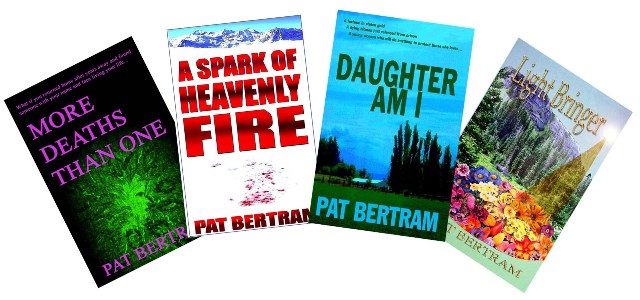
Pat Bertram is the author of the suspense novels Light Bringer, More Deaths Than One, A Spark of Heavenly Fire, and Daughter Am I. Bertram is also the author of Grief: The Great Yearning, “an exquisite book, wrenching to read, and at the same time full of profound truths.” Follow Pat on Google+. Like Pat on Facebook.

Sample Sunday

If you’ve been wanting to check out my books, now is your chance to read the first chapter of each novel online. Who knows, you might get so intrigued you will want to buy one of the  book to take with you to the beach this summer or read on an airplane. (Or, for my friends in the southern hemisphere, you might decide one is the perfect companion to read by the fire on a chilly winter’s eve.) I hope you will enjoy sampling a “Pat Bertram” book.

More Deaths Than OneBob Stark returns to Denver after 18 years in SE Asia to discover that the mother he buried before he left is dead again. At her new funeral, he sees . . . himself. Is his other self a hoaxer, or is something more sinister going on?

Click here to read the first chapter: More Deaths Than One

***

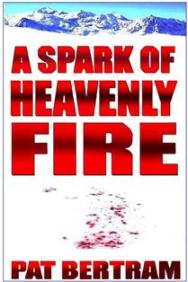
A Spark of Heavenly FireIn quarantined Colorado, where hundreds of thousands of people are dying from an unstoppable, bio-engineered disease, investigative reporter Greg Pullman risks everything to discover the truth: Who unleashed the deadly organism? And why?

Click here to read the first chapter of: A Spark of Heavenly Fire

***

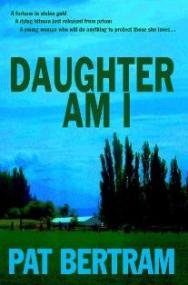
DAIWhen twenty-five-year-old Mary Stuart learns she inherited a farm from her recently murdered grandparents — grandparents her father claimed had died before she was born — she becomes obsessed with finding out who they were and why someone wanted them dead.

Click here to read the first chapter of: Daughter Am I

***

Thirty-seven years after being abandoned on the doorstep of a remote cabin in Colorado, Becka Johnson  returns to try to discover her identity, but she only finds more questions. Who has been looking for her all those years? And why are those same people interested in fellow newcomer Philip Hansen? And what do they have to do with a secret underground laboratory?

Click here to read the first chapter of: Light Bringer

***

Pat Bertram is the author of Light Bringer, More Deaths Than One, A Spark of Heavenly Fire, and Daughter Am I.All Bertram’s books are available both in print and in ebook format. You can get them online at Second Wind Publishing, Amazon, B&N and Smashwords.  At Smashwords, the books are available in all ebook formats including palm reading devices, and you can download the first 20-30% free!

Does your understanding of the story you are writing change during the course of the book?

Before I wrote A Spark of Heavenly Fire, I did extensive research into pandemics and into the government’s response to such emergencies (I based my fictional response on actual executive orders that Clinton signed), so there wasn’t much change in my understanding of these matters during the course of the book, but there was a big difference in my thoughts about what “they” want us to know and what they don’t. When I learned about Pingfan, the Japanese biological warfare installation where they did horrendous experiments on POW’s and nearby villagers, I thought I’d stumbled onto something really explosive. Yet, as happened to a character in A Spark of Heavenly Fire, the very next novel I picked up used Pingfan as a setting. It got me to thinking about the nature of cover-ups, and many of the discussions in the last half of the book were actual discussions I had with a friend while I was writing the book.

Here are some responses from other authors about how their understanding of the story changes during the course of the book. The comments are taken from interviews posted at Pat Bertram Introduces . . .

From an interview with Sherrie Hansen, Author of “Love Notes”

I start the story, my characters finish it. Themes come to me as the book goes on, and often, when it’s totally finished. Sometimes I have to rewrite the beginning of the book, because by the time I’m done, I know the characters so well that I think they would never say or do the things they did at the beginning of the book.

From an interview with Cynthia Vespia, Author of “Sins And Virtues”

Sometimes. That makes it fun though. You expect it to go one way and instead it veers off course and takes you to an entirely new level. For me, when that happens, it feels like I’m reading it myself.

From an interview with Alan Place, Author of “Pat Canella: The Dockland Murders”

My understanding is constantly changing as the character evolve their own lives, I never try to force them to do things that I feel don’t fit.

What about you? Does your understanding of the story you are writing change during the course of the book?

(If you’d like me to interview you, please check out my author questionnaire http://patbertram.wordpress.com/author-questionnaire/ and follow the instruction.)

***

Pat Bertram is the author of the suspense novels Light Bringer, More Deaths Than One, A Spark of Heavenly Fire, and Daughter Am I. Bertram is also the author of Grief: The Great Yearning, “an exquisite book, wrenching to read, and at the same time full of profound truths.” Follow Pat on Google+. Like Pat on Facebook.

Describe your writing in three words

Three words to describe my fiction writing:

colorful, character-driven, conspiratorial

Here are some responses from other authors about three words they would use to describe their writing. The comments are taken from interviews posted at Pat Bertram Introduces . . .

From an interview with Donna Galanti, Author of “A Human Element”

Haunting. Dark. Hopeful.

From an interview with Siobhán Nolan, Author of “Old Man Harry”

Silly, relatable, fanciful.

From an interview with Andrew Scorah, Author of “Homecoming Blues”

Dark, gritty, cool

What about you? How would you describe your writing in three words?

(If you’d like me to interview you, please check out my author questionnaire http://patbertram.wordpress.com/author-questionnaire/ and follow the instruction.)

***

Pat Bertram is the author of the suspense novels Light Bringer, More Deaths Than One, A Spark of Heavenly Fire, and Daughter Am I. Bertram is also the author of Grief: The Great Yearning, “an exquisite book, wrenching to read, and at the same time full of profound truths.” Follow Pat on Google+. Like Pat on Facebook.

What to Do When You’ve Finished Writing Your Book

Someone asked me what to do once they have completed their book and gone over it and fixed everything that needed to be fixed.

The first thing you do is celebrate. You’ve accomplished something wonderful!

After that, what I suggest (and what I do) is let the book lie fallow for six weeks or so, then go over it one more time, looking at every single sentence, every bit of dialogue, checking to make sure each is important to the story and are the very best sentences possible. This is especially important with dialogue. In real life, we often can’t think of the perfect thing to say until the opportunity is long past, but ochampagneur characters don’t have to be so tongue-tied. We have hours — days — to come up with the perfect response for them to make.

Since you’ve spent so much time on the book, you know what you are trying to prove. For example, in a mystery, you are often trying to prove that someone is a killer, has a good motive, but deserves to get caught by your hero; in a romance, that the two main characters belong together. Go through the book and remove all stray commentary and side stories that do not show who your characters are and do not help prove whatever it is you are trying to prove.

If you are a first-time novelist, get rid of your first chapter. When people start out writing a book, they tell much about the characters at the beginning under the assumption that readers need all that information to understand the story. They don’t. I bet you will find that everything in the first chapter shows up later in the story when it’s important for the reader to have that particular bit. If not, you can always add a sentence or two at the proper moment. By deleting that first, probably redundant chapter, it puts readers right smack dab in the middle of the action and makes them a part of the story.

Next, even if you aren’t a first-time novelist, go through the book and get rid of your weakest scene. This will make your story tighter and more powerful.

Then read the story aloud, paying attention flow, bad grammar, typos, anything that makes you (or the person you are reading to if you managed to corner someone) pause or that pulls you out of the story. Make those changes.

Now you are ready to decide what you want to do. Self-publish? Find an agent? Submit to small independent presses? If you want to self-publish, sorry, I can’t help. I don’t have any interest in such matters, and so never bothered to figure out how to do it.

If you want to try for an agent or a publisher, learn how to write query letters. That’s your basic tool for getting them interested in your work. Then search for agents and publishers and pay attention to their requirements. Don’t send more (or less) than they ask. Preditors and Editors is a good place to start, as is Association of Authors’ Representatives.

When your book is published, however it happens, I bet you think you can finally relax now that the hard part is behind you. Wrong! Now the even harder part of promotion begins.

Best of luck, whatever you decide to do.

See also:

Grammar Guide for Self-Editing
Self-Editing — The List From Hell
How to Write a Query Letter
What Works When It Comes to Book Promotion?

***

Pat Bertram is the author of the suspense novels Light Bringer, More Deaths Than One, A Spark of Heavenly Fire, and Daughter Am I. Bertram is also the author of Grief: The Great Yearning, “an exquisite book, wrenching to read, and at the same time full of profound truths.” Follow Pat on Google+. Like Pat on Facebook.

Rubicon Ranch: Secrets — The Story Continues!

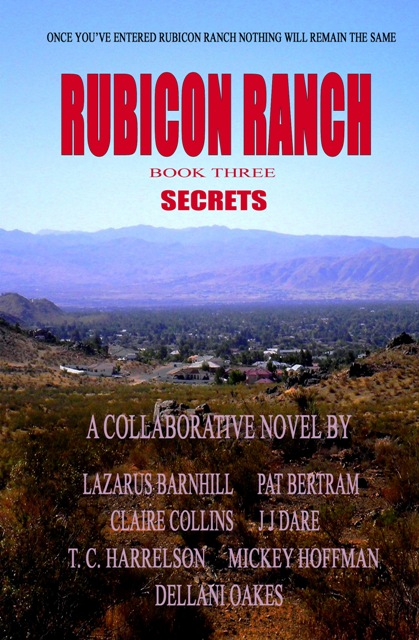
RRBookThreemidsizeRubicon Ranch is a collaborative and innovative crime series set in the fictional desert community of Rubicon Ranch and is being written online by the authors of Second Wind Publishing.

In the current story, the  body of a local realtor is found beneath the wheels of an inflatable figure of a Santa on a motorcycle. The realtor took great delight in ferreting out secrets, and everyone in this upscale housing development is hiding something. Could she have discovered a secret someone would kill to protect? There will be suspects galore, including a psychic, a con man, a woman trying to set up an online call-girl service, and the philandering sheriff himself. Not only is the victim someone he had an affair with, but he will also have to contend with an ex-wife who has moved back in with him and a jilted lover, both with their own reasons for wanting the realtor dead.

We hope you will enjoy seeing the story develop as we write it. Let the mystery begin! Whodunit? No one knows, not even the writers, and we won’t know until the very end! If you don’t want to miss further chapters, please go to the blog and click on “sign me up” on the right sidebar to get notifications of new chapters.

(If the Christmas theme seems unseasonal, well . . . considering how long it takes to write a book at the rate of a chapter a week, in a few months, the season will catch up to us!)

Chapter 9: Melanie Gray
by Pat Bertram

Monday, December 23, 9:15am

Melanie stood in the center of her living room and tried to empty her mind of all thoughts. She lunged forward with her right leg, bent her right knee, arched her back, reached high with her hands, and breathed slowly and deeply. Usually this yoga warrior pose made her feel strong and invincible, as if the power of the universe were coursing down her arms and throughout her body, but today she felt only disbelief.

Could I have killed Nancy Garcetti?

Yesterday morning, she’d gone outside to do a few stretches in the bitter pre-dawn air to wake her sluggish mind and prepare for her last marathon day of writing. Shivering from the cold and still groggy from a mere three hours of sleep, she made the unforgivable mistake of not paying attention to her surroundings.

A hand touched her shoulder, and a woman’s voice whispered in her ear. “I know you killed your husband.” Without thinking, Melanie spun around, leading with her elbow, and caught the woman beneath her chin. The woman’s head snapped back. She staggered. Fell.

Melanie stood over her, breathing hard and trembling from the adrenaline rush. When she got control of herself, she held out a hand to help the woman up. The woman ignored the offer of assistance, staggered to her feet, and hissed, “You’ll be sorry.” By then Melanie’s eyes had adjusted to the gloom, and she recognized the real estate agent.

Melanie took another breath and tried to focus on her warrior pose, but she couldn’t get Nancy out of her mind.

The last time she had seen Nancy alive, the woman had been tottering up the street. Could she have managed to get as far as the house with the Santa, then crawled against the blow-up figure for protection against the quickening winds, and died there?

Melanie hadn’t struck the woman with the full force of her strength, so that jab couldn’t have killed her. But perhaps Nancy hit her head on one of the rocks lining the driveway and bled into her brain. She wished Alexander were there so she could ask him about the possible effects from such an injury, but he if were still alive, she wouldn’t have had the brief and possibly deadly altercation with Nancy.

Oddly, last night when she found the body, she hadn’t made the connection to her tussle with Nancy, but had assumed the real estate agent’s death had been outright murder. It wasn’t until she woke at three o’clock after a short fitful sleep that the horrible thought took hold. Could I have killed Nancy Garcetti?

Melanie lowered her arms to her side, straightened her knee, and pulled her left leg even with her right. She stood still, feeling lost. Alexander was dead. She’d finished her book about Morris Sinclair’s ignoble life and gruesome death. She’d even finished the book about the Mojave Desert Alexander and she had been working on when he was killed. Now the only thing left for her to do was to find out who had assassinated him. And she didn’t know where to start.

The sound of a distant voice caught her attention. The voice sounded tinny, as if from a cheap radio. As it grew louder, she could make out the words. “We are coming up on the house of Morris Sinclair, but first you will see where Melanie Gray lives.” By then the voice was blaring, sounding as if it were right outside her door. Melanie ran upstairs to look out her office window. A bus idled in the middle of the street, a banner draped across its side—DESERT DEATH TOUR. Bland faces peered through the windows.

The tour guide continued, “Melanie Gray has a talent for finding dead bodies, and maybe even for making them dead. As you know, Melanie was married to Alexander Gray, the award-winning photographer. It is alleged that this Black Widow murdered her husband for his wealth. They say she is so deadly, she could have killed him with a single blow.”

Melanie gasped. Black Widow? Is that what they were calling her? Did people really believe she killed Alexander for his wealth? What wealth? He had no money. In fact, after he was gone, their publisher had insisted she finish the desert book by herself since Alexander had spent their advance. And he hadn’t died by her hand. Someone skilled in the ways of death had cut all four metal brake lines in his car so that when Alexander slammed on the brakes, he instantly lost hydraulic pressure in both the front and rear brakes at the same time. The sheriff had told her that with today’s vehicles, cutting the brakes that way  is almost impossible for a professional to do, and completely impossible for an amateur. She certainly couldn’t have done it.

But she could have killed Nancy.

Her gaze followed the road to the house where she’d found Nancy’s body, and she saw a wisp of smoke. She wondered if the people who lived there had made a fire to cozy up to. If she had a fireplace, that’s what she would do today. This was a perfect weather for sitting in front of a fire, watching flames dancing, thinking of nothing.

Then she realized the smoke was coming not from the chimney, but from the house itself. And flames glowed in the windows.

She ran down the stairs, fumbled for her cell phone, and tried to call 911, but she had no signal. She dashed outside. The tour bus was idling in front of the Sinclair house and the guide was giving a surprisingly ungarbled version of Morris’s death. Of course, the truth—that the horror writer had been killed and dismembered in a way that mimicked his stories—was hard to top.

“Call 911,” she screamed, trying to make herself heard over the guide’s recitation.”

A little boy pressed his face against the window, mouth open, tongue out, and stared at her.

“Where’s your mother?” Melanie shouted.

The youthful gargoyle crossed his eyes and disappeared beneath the window.

The bus let out a belch, then moved on down the road. It stopped in front of the burning house, and the occupants craned their necks toward the spectacle.

A few minutes later, a woman wearing a pink lace-trimmed top tucked into fitted jeans jogged up to Melanie, and said breathlessly, “I called 911. What’s going on?”

It took Melanie a moment to recognize her neighbor. Moody Sinclair had cut her long dark hair and dyed the shorn locks a strawberry blonde. Chandelier earrings dangled from her ears and eyeglasses perched on her nose. She looked pretty and normal and very young.

“Fire.” Melanie said absently, listening to the siren in the distance.

“Stucco houses with tile roofs don’t burn.” Moody walked silently besides Melanie for a moment. “Arson maybe?”

The siren grew louder as the fire truck turned onto Delano Road. The driver honked the horn as it sped up the street. All the dogs in the neighborhood added their howls to the cacophony. Melanie scrambled to the side of the road, losing track of Moody, who had dashed to the other side of the street.

Now that the firefighters had arrived, there was no reason for Melanie to continue toward the scene, but she found herself drawn to the action.

As Moody had said, the structure of the house wasn’t burning, but flames bursting through the windows made it seem as if the place were wrapped in fire. Even standing apart from the crowd, Melanie could feel the heat.

The blow up figure of Santa on the motorcycle slowly melted, then dissolved into a puddle of red, white, and black. Whatever remained of the crime scene after the sheriff’s department had finished with it was now gone. Could the house have been torched for that very reason—to destroy evidence? But in that case, why not just burn the Santa and his environs?

Melanie backed away from the inferno. This really didn’t have anything to do with her. If she had killed Nancy, the real crime scene lay several houses down Delano Road.

She headed back to her rental house, wishing she could leave this benighted area.

Then suddenly she stopped short. She could leave. She had money enough to go anywhere. The real problem was figuring out where to go. If her reputation as a Black Widow followed her, then what difference did it make where she lived? At least in Rubicon Ranch, she was just one of many stops on a desert death tour. Besides, Alexander had been killed not far from here, so this is where she needed to begin her investigation into his murder.

She trudged up her driveway, and stopped to see where Nancy had fallen. She saw no
blood on the rocks, but that didn’t prove her innocence. It only meant no one could find any evidence against her.

Unless someone had seen her hit Nancy?

She looked around. Everyone in the neighborhood—residents and squatters alike—seemed to have congregated up by the fire. Only one woman trudged past her house, looking as if she could handle anything or anyone. Hefty, with biceps like hams poking out of a sleeveless top. Bleached blonde hair that looked heavily permed. Cigarette dangling from a bright red mouth.

Melanie smiled to herself. Compared to all the necorphiliacs and vampire-wannabes on the loose in the neighborhood, this woman seemed almost elegant.

But then, perhaps she really was a fine lady on the downward swing of life. Who knew what lay behind anyone’s façade? Everyone had secrets. Everyone had things they wanted to hide from view.

Even me.

But still, if Nancy had died because of her, who had stolen the real estate agent’s purse, and who had set the fire?

***

Pat Bertram is the author of the suspense novels Light Bringer, More Deaths Than One, A Spark of Heavenly Fire, and Daughter Am I. Bertram is also the author of Grief: The Great Yearning, “an exquisite book, wrenching to read, and at the same time full of profound truths.” All Bertram’s books are published by Second Wind Publishing. Connect with Pat on Google+

I’ve Been Published in Urdu!

Well, I myself haven’t been published in Urdu — three of my 100-word stories were.

In February, Mubashir Zaidi, a Pakistani writer and journalist, contacted me and said he was planning on publishing a book of 100-word stories. He selected one hundred such stories from different sources and books to convert into Urdu, and asked permission to use a few of mine. I told him that as long as he listed me as the author, he could use the stories. He promised me he’d send me a couple of copies of the finished book, and on May 2nd, he sent them. It took one day to get from Dubai to New York and an entire month to finally get to me. (Don’t know what the problem was, but it took many phone calls to “speed” the books on their way.)

The book is called “Namak Paaray” after  a crunchy salty snack of Pakistan and India, indicating that you can finish reading a story in the time it takes to finish a ‘Namak Para.’ (The snack is featured on the cover.)

So, here it is, “The Kiss” by Pat Bertram in Urdu. (According to Mubashir, Urdu is written from right to left. It has same alphabets as Arabic and Persian but all three languages have different words. Hindi, on the other hand, has a different script but same words as Urdu.)

Since I’m sure you’re no more able to read Urdu than I am, here is a translation:

The Kiss

When Jack entered her flower shop, all Jen could do was stare. It had been years since she’d seen him, years she’d spent regretting their final quarrel, yet she still felt the same attraction. His heavy-lidded gaze told her he felt it, too.

He held out a hand, and she let him draw her close for a kiss that spanned the years. She snuggled into his embrace. Everything would be perfect now that they were together again.

“How did you know I was here?” she asked.

“I didn’t. I just came in to buy flowers.”

“For me?”

“For my wife.”

***

Pat Bertram is the author of the suspense novels Light Bringer, More Deaths Than One, A Spark of Heavenly Fire, and Daughter Am I. Bertram is also the author of Grief: The Great Yearning, “an exquisite book, wrenching to read, and at the same time full of profound truths.” Follow Pat on Google+. Like Pat on Facebook.

A Barebones Kind of Writer?

As a project for a writing group, we were supposed to post the last sentence of a couple of our chapters, but it was hard for me to find last sentences that say much. It’s usually my second and third to last sentences that have the meat, with a final, very short sentence to deliver the punch, such as these chapter endings from Light Bringer.

She thrust the magazine at Mac. “This isn’t a picture of my parents.”
But the frantic beating of her heart told her it was.

She turned around slowly, and clutched at her chest.
The ghost cat was inside the house.
And so was something else.

Wisdom lay stretched out on the borrowed couch, eyes closed in feline bliss. The skin on its belly rippled gently as if being caressed by unseen fingers. A chuckle reverberated in its chest.

“Shakespeare was right,” Emery said. “‘Hell is empty. All the devils are here.’”

Still, I did manage to find several ending sentences that were a bit longer than most and even made a sort of sense by themselves:

Lying awake, staring at the dust motes dancing in the moonlight, he thought he could hear voices murmuring in the wind.

After the sun set, they headed home in a rich, warm alpenglow that turned the world to gold.

A skinny, hairless cat with luminous silver eyes sat on the porch and stared at them, a quizzical look on its face.

Could it be that they were all following a script of someone else’s devising?

They were met with a burst of color, a song of pure joy that seemed at odds with the harsh environment of the laboratory they had entered.

Hugh shot them a disgusted look, then he and Keith plunged into the light.

Hmmm. I might have to change my opinion about my writing. I always thought I was a barebones kind of writer, but there seems to be a bit of poesy to my descriptions, especially with longer passages, such as this one:

She looked just as he remembered. The lithe body that moved as gracefully and effortlessly as a song wafting on a breeze. The shoulder-length brown hair that glimmered red and gold in the sunlight. The smile, big and bright and welcoming. Only her clothes—a pale green blouse and cotton shorts—struck a discordant note, as if he were used to seeing her in more exotic attire.

“Hello,” she said when he neared. The single word sounded as musical as an entire symphony.

“Hello,” he said, a goofy grin stretching his face. He felt a harmonic resonance and knew, once again, they belonged together.

After several seconds, her smile faded. “Do I know you?”

“Of course. We met . . .”

He gazed at her. Where had they met? Though it seemed as if he had always known her, they must have met somewhere, sometime; but when, in his pathetic little life, could he have met anyone so special? It slowly dawned on him he couldn’t have—not until this very moment.

Ducking his head, he whispered, “I’ve made a terrible mistake. We don’t know . . . We’ve never . . .”

***

Where to buy Light Bringer:

Second Wind Publishing

Amazon

Barnes & Noble Nook

iStore (on iTunes)

Palm Doc (PDB) (for Palm reading devices)

Epub (Apple iPad/iBooks, Nook, Sony Reader, Kobo)

***

Pat Bertram is the author of the suspense novels Light Bringer, More Deaths Than One, A Spark of Heavenly Fire, and Daughter Am I. Bertram is also the author of Grief: The Great Yearning, “an exquisite book, wrenching to read, and at the same time full of profound truths.” Follow Pat on Google+. Like Pat on Facebook.

What Makes a Novelist?

All it takes to be a writer is to write, and going by the proliferation of blogs on the Internet, almost all of us are writers.

Being a novelist is something completely different. You need to be a writer, certainly, but you also need to know the elements of storytelling, how writingbto create characters that come alive, how to describe a scene without losing the momentum of the story. And then you need to put it all together into a cohesive whole that engages the reader’s attention.

But most of all, you need to actually write the novel, to put your idea into words and get it down on paper or into your word processor. That takes discipline. So does rewriting the same novel perhaps a dozen times until you get it right. Because, as we all know, there are no great writers, only great rewriters.

You do all that, and then one day your novel is finished. You’re proud of yourself for having accomplished something many people only dream about, then the terrible truth comes crashing into you with all the force of a linebacker’s tackle: no one cares. Perhaps your family and friends will care, but even from them you will hear the same self-absorbed comments you get from strangers.

You know the comments I mean:

  1. I could have written a book, but . . .
  2. I always thought my life would make a good book . . .
  3. I wrote a book: My diary.
  4. I’ve written a book; it’s all up here in my head, I just have to get it down on paper.
  5. So? I’ve written a hundred books; they’re all packed away in my closet.

Taking their lack of support in stride, you send out your opus to find you’ve reached another level of indifference. On this level, you are not the only person who had the discipline, the ability, perhaps even the talent to have written a good novel; you are one of hundreds of thousands, perhaps millions. And the agents and editorial assistants who have to plow through those mountains of words don’t care; they haven’t the energy.

If you are lucky, one day your manuscript will be on the right desk at the right time, or maybe you’ll decide to forget the traditional publishers and self-publish. And then you really hit that wall of indifference because in this new world of the published, every single person has written a book.

Being published does not make you a novelist. Even the most rudimentary novels can be published nowadays so there is no special accolade to being published, no special sign that you have passed into the realm of being a novelist. Nor does becoming a success make you a novelist since some of the most execrable fiction on the market — bad writing, paper-doll characters, and scenes that hang lifelessly in the background like dusty drapes — make their authors a fortune.

So what does make a novelist? Maybe caring about the craft. Maybe caring to get it right rather than just writing something and throwing it out there in the hopes that no one will notice the lack of skill. Maybe writing the story only you can write and not setting out to be a King/Koontz/Clancy clone.

Maybe just . . . writing.

***

Pat Bertram is the author of the suspense novels Light Bringer, More Deaths Than One, A Spark of Heavenly Fire, and Daughter Am I. Bertram is also the author of Grief: The Great Yearning, “an exquisite book, wrenching to read, and at the same time full of profound truths.” Follow Pat on Google+. Like Pat on Facebook.

What advice would you give other novelists about book promotion?

I don’t generally give advice about book promotion since so many authors are better at selling books than I am, but if I had to, I’d tell other novelists to have patience, stamina, and willingness to give up part of their writing time for promotion. Unless a writer has the benefit of a major publisher’s publicity department, and sometimes even then, he/she will have to spend time promoting their book. It’s not enough to have a blog dedicated to self-promotion or to add thousands of friends on Facebook. You have to give people something to get something — write interesting articles, comment on articles other people write, get to know your Facebook connections. And most important of all, check out Book Marketing Floozy. http://marketingfloozy.wordpress.com It’s an indexed blog with how-to articles on every facet of promotion.

Here are some responses from other authors about advice they would give to other novelists about book promotion. The comments are taken from interviews posted at Pat Bertram Introduces . . .

From an interview with Debra Purdy Kong, Author of “The Opposite of Dark”

I’d advise writers to use patience and not expect too much right away. Promotion means engaging with others and building a rapport with potential readers. It means building a solid, longterm platform through social networking, blogging, and designing your website. It can seem daunting, but if you limit your time each day, then you won’t risk burnout. And burnout is a big factor for writers who are also actively promoting!

From an interview with Joylene Nowell Butler, Author of “Broken but not Dead”

If you’ve gone to all the trouble of writing and revising and querying, why not market? Why not spend hours blogging and visiting other blogs and establishing a connection to like-minded writers? I’m still astonished when authors tell me they don’t have time to blog and they certainly don’t have time to visit other blogs. They just want to fill your inbox with news of their book and why it’s important for you to buy it. They’re targeting the wrong people. Writers write, readers buy books. Yet how many emails do you receive in a week telling you why you should buy their book?

Promotion is about creating a presence online. But it’s also about getting out and doing readings, signing copies, writing related articles, doing online, radio and newspaper interviews, joining evening events where the opportunity to read arises. It’s about fairs, bazaars, contests, giveaways, and anything else you think will put you and your book in the public eye.

What about you? What advice would you give other novelists about book promotion?

(If you’d like me to interview you, please check out my author questionnaire http://patbertram.wordpress.com/author-questionnaire/ and follow the instruction.)

***

Pat Bertram is the author of the suspense novels Light Bringer, More Deaths Than One, A Spark of Heavenly Fire, and Daughter Am I. Bertram is also the author of Grief: The Great Yearning, “an exquisite book, wrenching to read, and at the same time full of profound truths.” Follow Pat on Google+. Like Pat on Facebook.