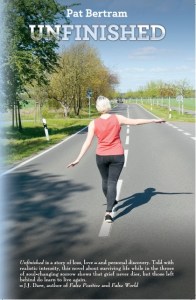
UNFINISHED

Amanda Ray thought she’d grow old with her pastor husband David, but death had other plans. During David’s long illness and his withdrawal from her, Amanda found solace in the virtual arms of Sam Priestly, a college professor she met at an online support group for cancer patient caregivers. Amanda thought that when their spouses were gone, she and Sam would find comfort in each other’s arms for real, but though David succumbed to the cancer that riddled his body, Sam’s wife, Vivian, survives. Vivian had been in the process of divorcing Sam when she fell ill, and after the diagnosis, Sam agreed to stay with her until the end. Since Sam plans to continue honoring his vow, Amanda feels doubly bereft, as if she is mourning two men.

Rocked by grief she could never have imagined, confused by her love for Sam and his desire for her to move near him, at odds with her only daughter, Amanda struggles to find a new focus for her suddenly unfinished life. As if that weren’t enough to contend with, while clearing out the parsonage for the next residents, Amanda discovers a gun among her devout husband’s belongings. Later, while following his wishes to burn his effects, she finds a photo of an unknown girl that resembles their daughter.

Having dedicated her life to David and his vocation, this evidence that her husband kept secrets from her devastates Amanda. If she doesn’t know who he was, how can she know who she is? Accompanied by grief and endless tears, Amanda sets out to discover answers to the many mysteries of her life: the truth of her husband, the enigmatic powers of love and loss, and the necessity of living in the face of death.

Although the feelings of grief Amanda experiences are based on my emotional journey during my first two months of profound grief, the story itself is fiction. I can’t imagine what it would be like to have to deal with not only the loss of one’s mate, but the loss of the idea one had of one’s mate. Well . . . yes, I guess I can imagine how it would feel, because I wrote the novel! I hope you will read UNFINISHED. It’s an important book because too few fiction writers portray the truth of new grief, and that lack leaves the newly bereft feeling isolated and as if they are the only ones dealing with grief’s craziness.

You can you can purchase both a print version and Kindle version of UNFINISHED (published by Stairway Press) on Amazon:  https://www.amazon.com/dp/1941071651/

***

Pat Bertram is the author of Grief: The Inside Story – A Guide to Surviving the Loss of a Loved One. “Grief: The Inside Story is perfect and that is not hyperbole! It is exactly what folk who are grieving need to read.” –Leesa Healy, RN, GDAS GDAT, Emotional/Mental Health Therapist & Educator.

Oops

Oops. I’d completely forgotten I was supposed to be writing a 1920s murder mystery for a dinner in February, and it needs to be done by the middle of January.

When I agreed to do write the mystery, I had plenty of time, but I frittered that time away on . . . well, on living. So now I’m trying to catch up.

I sort of have an idea of who will be the victim, who the killer is. I know where all this takes place: one night at a speakeasy. I know an Italian dinner will be served. I know there will be a representation of at least some of the iconic elements of that 100-year-old decade besides the speakeasy: jazz, gangsters, flappers. Other than that, I haven’t a clue how to go about concocting such a mystery. Obviously, the first part of the dinner is about laying the background for the characters and why someone wanted to do the dastardly deed. Then, even more obviously, there needs to be a dead body. And finally, at the end, there needs to be a way for everyone to figure out who did it.

I’m not sure how to lay the clues. Or what the clues should be. I could write this as a mystery story, and then extrapolate the guessing game from that, but considering how long it takes me to write fiction, it might not be done until next year, especially since they want it to be funny, and funny takes longer.

Still, that’s not a bad idea, writing the mystery as a story. Once I have the whole story, I could possibly work backward. More importantly, it would give me bits of dialogue to hand out to guests, because it’s hard to tell people what they need to be saying if I don’t know.

All done in less than a month? With Christmas coming? Yikes!

Maybe I can start tomorrow. But no, I am helping with a fundraiser at the museum. Maybe Monday? But Monday I am going to the big city (or what passes for a big city in these parts) with a friend who has a doctor appointment. Maybe Tuesday? But Tuesday, I am going to a meeting to help brainstorm ideas for AARPs Livable Communities program.

It’s beginning to look as if the mystery will have to write itself.

***

Pat Bertram is the author of Grief: The Inside Story – A Guide to Surviving the Loss of a Loved One. “Grief: The Inside Story is perfect and that is not hyperbole! It is exactly what folk who are grieving need to read.” –Leesa Healy, RN, GDAS GDAT, Emotional/Mental Health Therapist & Educator.
 

100 Word Story: A Different Perspective

Tom milled around the prison yard with the other inmates, waiting for the sound of death. There would be no stay of execution for their condemned friend, who would die in a most barbaric way.

“They don’t care that he’s innocent,” Tom said. “As are we all. The system is guilty, but no one wants to buck tradition.”

The thud of the axe made him flinch. He bowed his head out of respect for the dead.

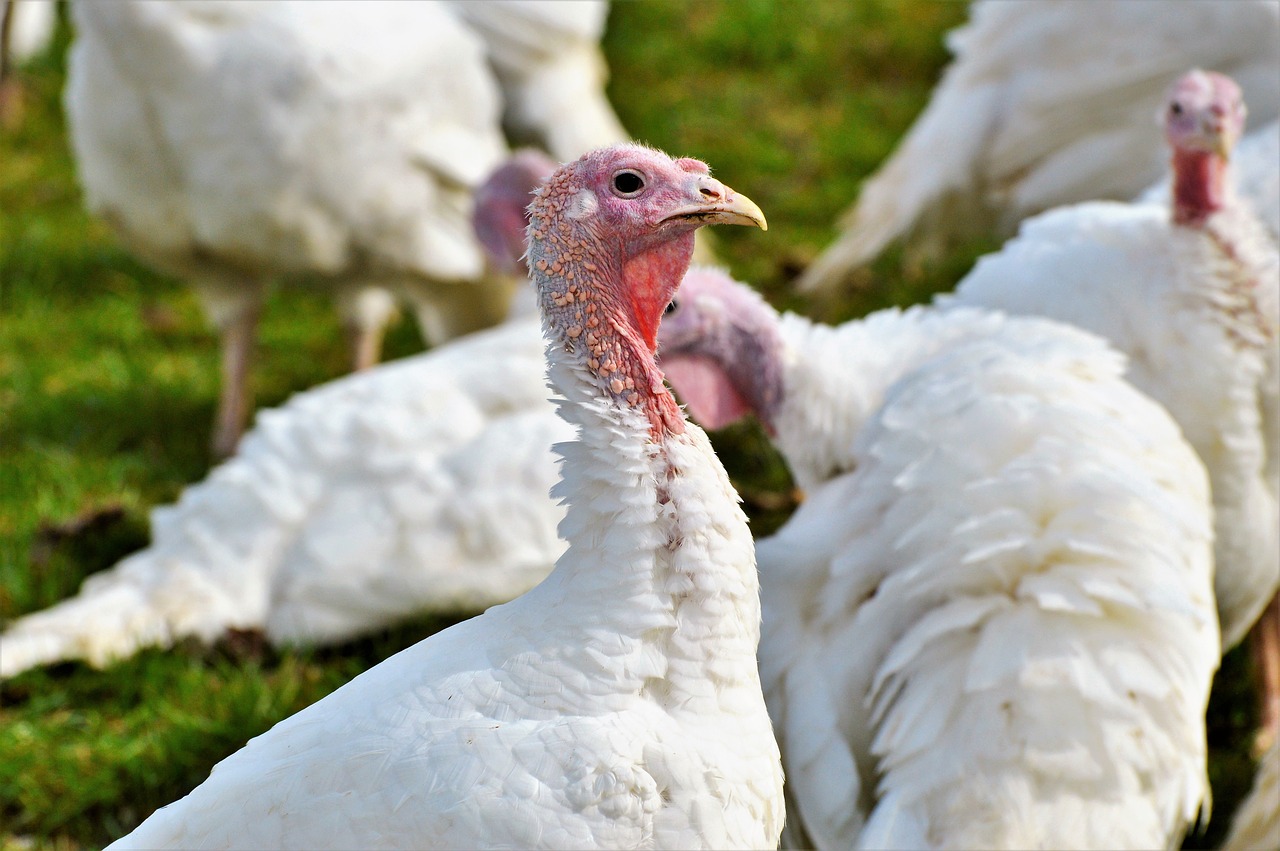
In the silence, he heard the executioner’s voice drifting through the chicken wire fence. “It’s a big turkey. We’ll have a grand Thanksgiving feast.”

***

Pat Bertram is the author of Grief: The Inside Story – A Guide to Surviving the Loss of a Loved One. “Grief: The Inside Story is perfect and that is not hyperbole! It is exactly what folk who are grieving need to read.” –Leesa Healy, RN, GDAS GDAT, Emotional/Mental Health Therapist & Educator.
Friends Reading Friend’s Books

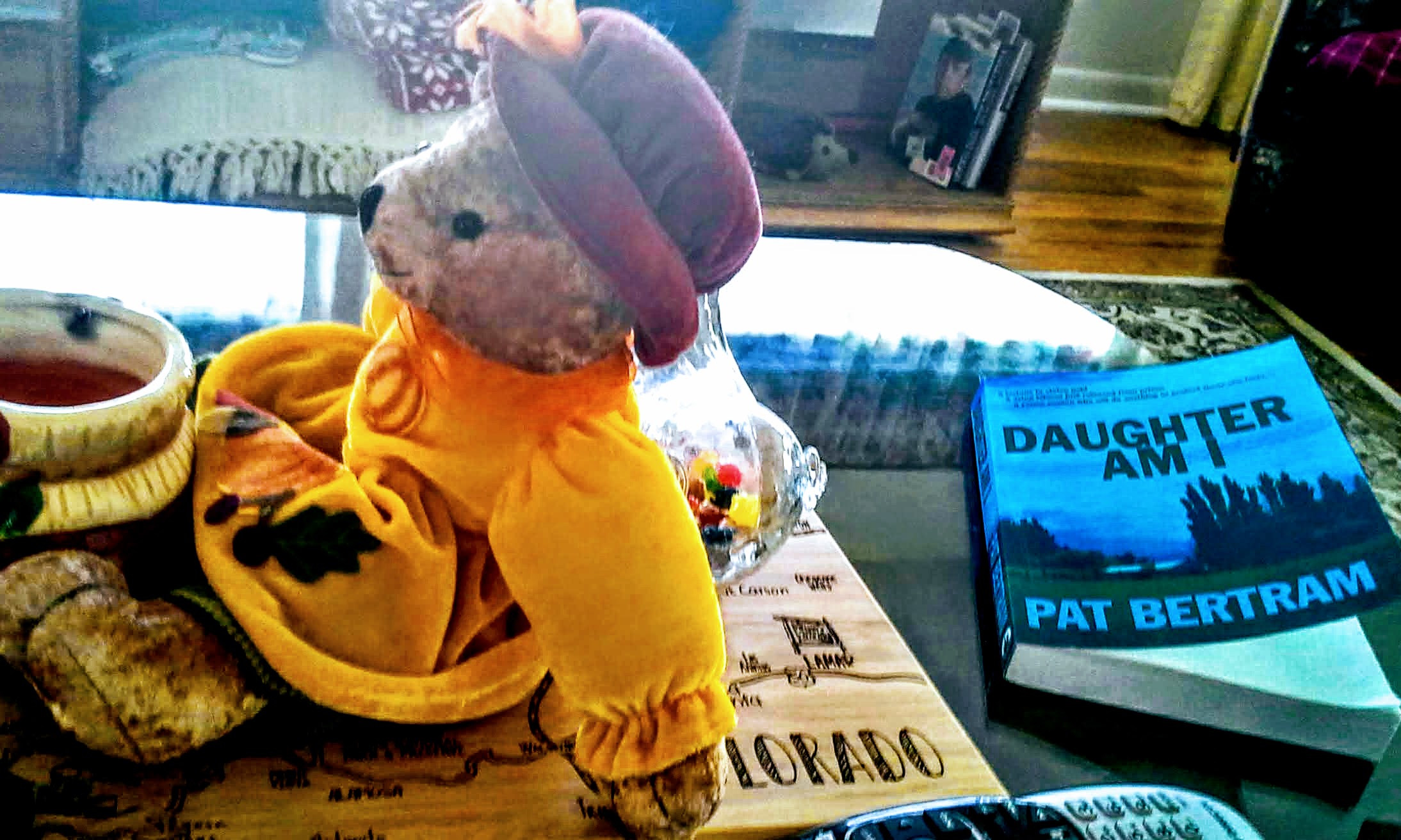
I visited with a friend this afternoon — I wanted to show her some ornaments I’d bought from another friend, to see if she wanted me to order any for her — and I was amused to see my book on her coffee table. The book is certainly in good company! And it sure tickled me to know she’d been reading it.

It really has been nice, having people I know read my books. Luckily, so far, they’ve liked what they read.

Luckily, too (for you anyway), I have nothing else to say on the matter, so you can spend your time doing something more interesting than reading blogs on the internet. Like reading one of my books, perhaps?

Here is the link for Daughter Am I: https://www.amazon.com/gp/product/B002ZVOH2Y/

And here is the link for my author page on Amazon: https://www.amazon.com/Pat-Bertram/e/B002BLUHUY/

***

Pat Bertram is the author of Grief: The Inside Story – A Guide to Surviving the Loss of a Loved One. “Grief: The Inside Story is perfect and that is not hyperbole! It is exactly what folk who are grieving need to read.” –Leesa Healy, RN, GDAS GDAT, Emotional/Mental Health Therapist & Educator.
A Long Slow Conversation

For the most part, despite writers’ groups and online discussions, writing is a solitary occupation. You spend years writing a book, months rewriting it, and perhaps a year or two editing it. (Unless you are participating in National Novel Writing Month as hundreds of thousands are doing this November, then you spend . . . gasp! . . . a whole month writing your book!)

During the time you are writing, you have only your vision to sustain you. You wonder if anyone will ever buy the book. You wonder if anyone will like it. You don’t need acclaim, because writing is an end in itself. Still, readers connect the circle between you and the culmination of your vision, and in an odd sort of way, they finish the book. They take your vision and make it their own.

Many writers don’t consider readers during the writing process. They write solely for themselves and are proud of that fact, but what they don’t realize is how often their story fails to reach beyond the confines of the cover to allow the reader to participate in the story.

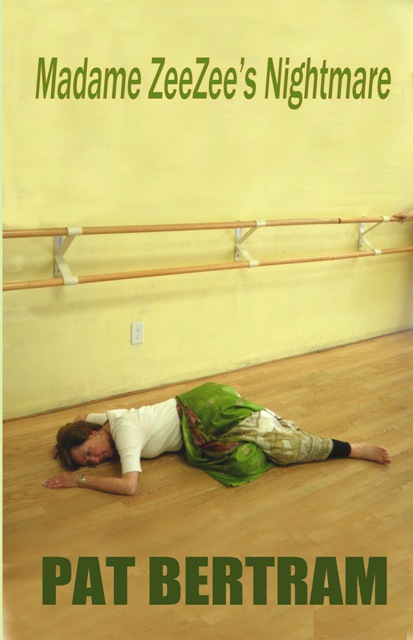
I write for myself in that I can only write what I can write. Even though I know the kinds of books that sell in great numbers, I’ve never been able to make that leap. My mind simply rebels — it wants to write what it wants and when it wants. Currently, my mind doesn’t seem to want to write any story; it simply wants to steep in the story I am presently living: new house owner. One day, though, a new story will pop up that I want to write. (I’m already trying to figure out who in my new town will be the victim of my next “Nightmare” story, the sequel to Madame ZeeZee’s Nightmare.)

Although I can only write what my mind will allow, I still take potential readers into consideration. I wonder what readers will think. Will they understand my references? Will they find the humor? Is my writing clear enough? I like thinking that perhaps someday a reader will share this as yet unwritten product of my mind.

Malcolm R. Campbell, author of Conjure Woman’s Cat, wrote: “Whether it’s a book, poem, post, review, article or news story, I always hope somebody will say something. One never knows. It’s a slow conversation, so much time having gone by between the moment when something was written and the moment when somebody tells you they found it.”

Such a wonderful description of writing/reading — a slow conversation. I know I’ve read many books where I felt the author and I were having a conversation, silent though it may be. I read and I think about what I read.

It’s quite a heady realization that now I am a writer with readers of my own. I hope they enjoy our long, slow conversation.

***

Pat Bertram is the author of Grief: The Inside Story – A Guide to Surviving the Loss of a Loved One. “Grief: The Inside Story is perfect and that is not hyperbole! It is exactly what folk who are grieving need to read.” –Leesa Healy, RN, GDAS GDAT, Emotional/Mental Health Therapist & Educator.
 

Colonel Mustard in the Library with a Candlestick

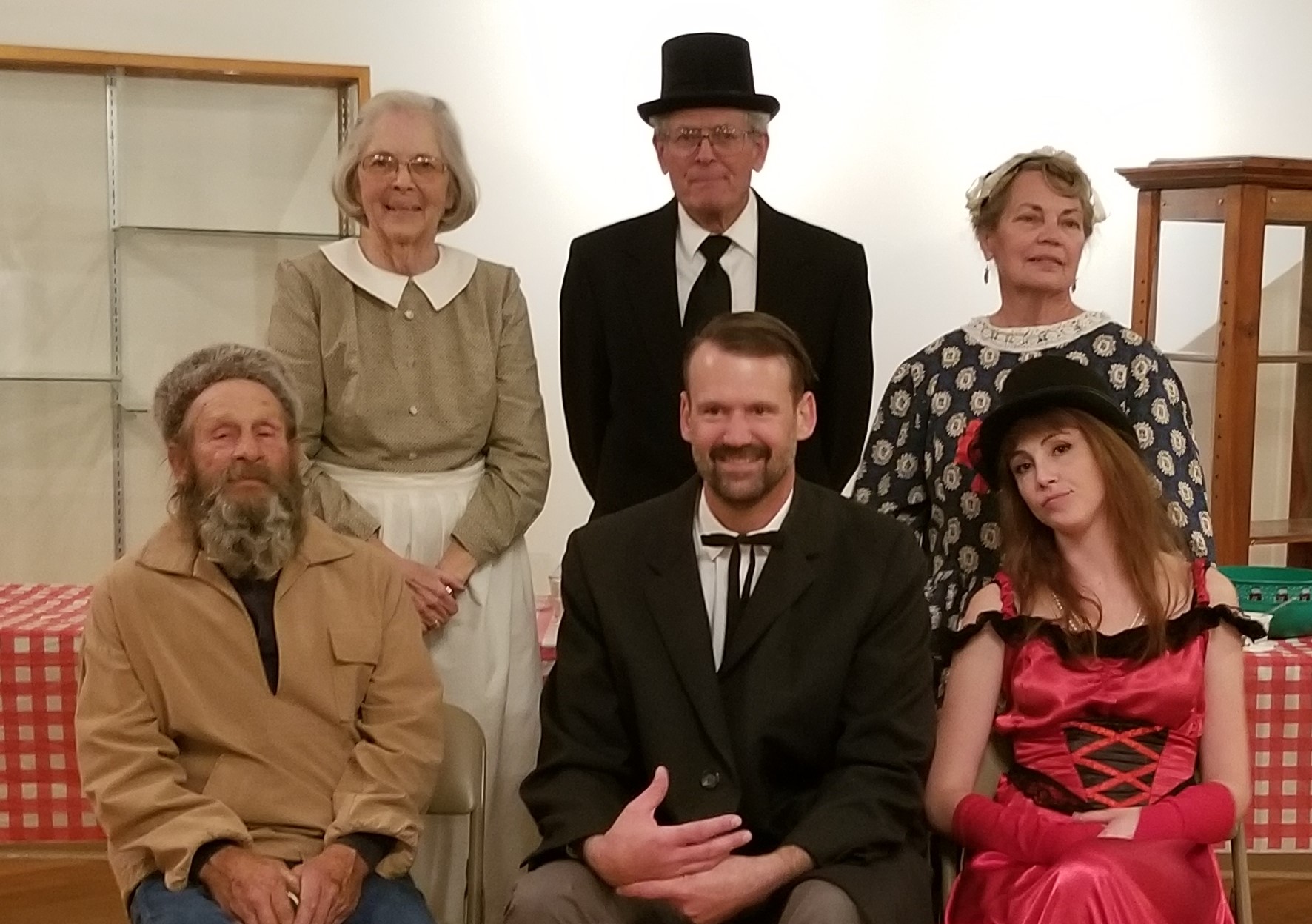
I’ve blogged several times lately about the mystery I wrote for a family night in the local historical museum. Yesterday I posted the scenario, so if you want to try your hand at figuring out who did it, you can find the list of suspects and their alibis here: Spur of the Moment Murder Mystery.

(For history buffs, the historical allusions in the game are correct — Clay Allison did kill Deputy Faber. Rutherford B. Hayes had just been publicly inaugurated as the nineteenth president of the United States, and he’d lost the popular vote but won the most electoral college votes after a ferociously disputed ruling by a Congressional committee. The suffragette referendum in Colorado had just been defeated. Clay Allison had surrendered after the Civil War, and some accounts say he escaped the firing squad the night before he was to be killed; other accounts say he was pardoned. In real life, he died ten years after this fictional murder — he was thrown from a freight wagon and a wheel rolled over his head. I am sure he would have preferred my scenario to the ignominy of his actual death.)

So, in our little game, who did kill desperado Clay Allison?

Well, Colonel Mustard didn’t do it, and he didn’t have a candlestick, and he wasn’t in the library. He was, in fact, in the bar at the time of the murder. The bartender attests to that.

Mrs. White did not kill Clay. She was, as she claimed, hosting a suffragette meeting in the schoolhouse. Flyers and posters attest to the meeting.

Professor Plum did not kill Clay. His birth date, clearly stated on the suspect list shows that he could not have shown up in town until decades after Clay was killed since he was not born until after the murder.

Miss Scarlet did not kill Clay. She was, as she claimed, with Mr. Green.

Mr. Green did not kill Clay, because although he denies knowing Miss Scarlet, it is apparent he is lying. A photo shows the two of them together, and the bartender can attest to their relationship. So, since he is a proven liar and Miss Scarlet is a proven truth teller, we have to believe that the two were together when Clay was killed.

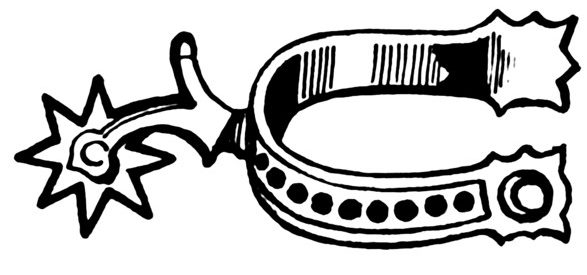
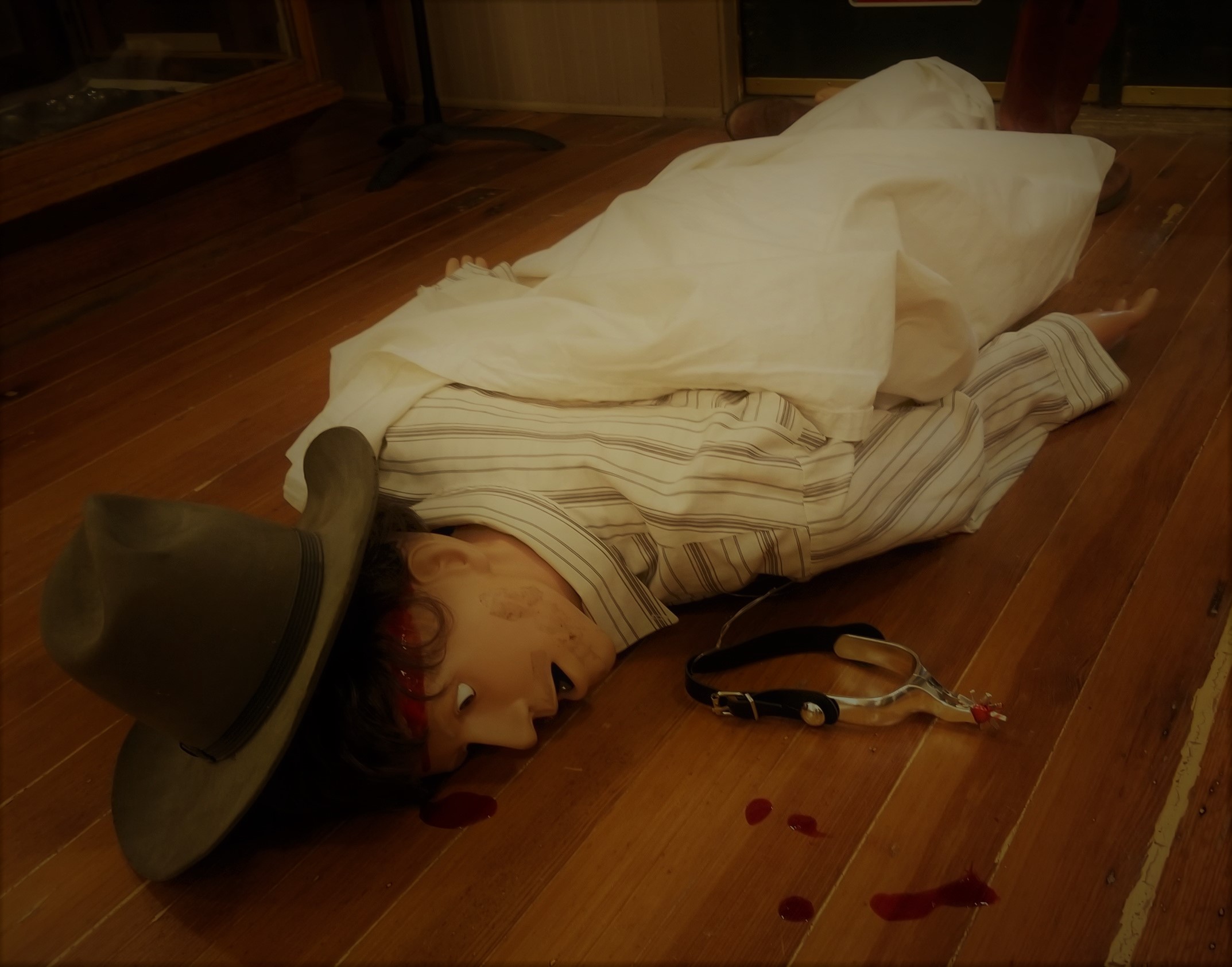
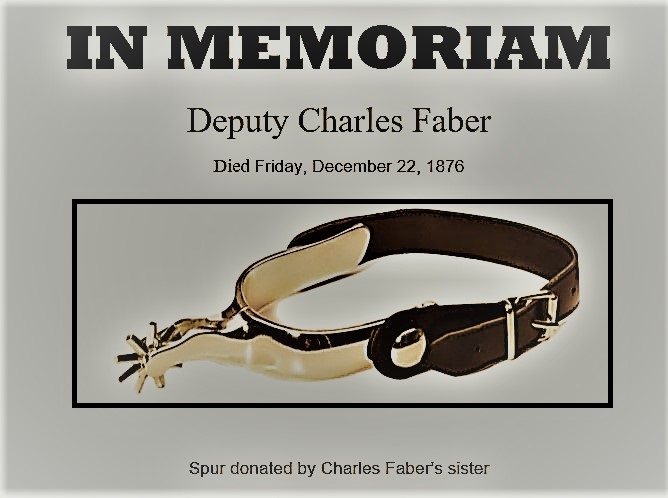
So that leaves Mrs. Peacock. Mrs. Peacock killed Clay. She was furious that Clay went free after the judge ruled that Clay Allison’s actions in killing her brother Deputy Farber were self-defense. Apparently, after donating one of the deputy’s spur to the sheriff’s department, she continued to carry the other one around. We don’t know if she’d planned to kill Clay or if she did it on the SPUR OF THE MOMENT!

***

Pat Bertram is the author of Grief: The Inside Story – A Guide to Surviving the Loss of a Loved One. “Grief: The Inside Story is perfect and that is not hyperbole! It is exactly what folk who are grieving need to read.” –Leesa Healy, RN, GDAS GDAT, Emotional/Mental Health Therapist & Educator.
Spur of the Moment Murder Mystery

I missed the murder I created for the museum because I still haven’t gotten over my cough, so I’m reprising the mystery here. This is the scenario I wrote:

It is Monday, March 5, 1877. Rutherford B. Hayes has just been publicly inaugurated as the nineteenth president of the United States. Hayes lost the popular vote but won the most electoral college votes after a ferociously disputed ruling by a Congressional committee. People are out late, some celebrating the victory, some drowning their sorrows at having a Republican in office.

At 9:10, Clay Allison was killed outside the jewelry store, and at 9:15 pm, revelers discovered the body.

There are many suspects.

Colonel Mustard, the blacksmith, born in 1832, was at the garrison in Gainesville, Alabama when Clay and his Confederate unit surrendered at the end of the Civil War. Mustard swears that Clay had escaped the night before he was to go before a firing squad, and this does not sit right with the Colonel. The Colonel says he was in the saloon when Clay was killed.

Mrs. White, schoolmarm, born in 1824, says Clay deserved to be shot for mangling the English language. Clay had bragged that he was a shootist, and Mrs. White says there is no such word. She also says she was at a suffragette meeting that evening at the schoolhouse. The suffrage referendum had just been defeated in Colorado, and she and other women in town were determined to get suffrage for women in Colorado.

Mrs. Peacock, candy-shop lady, born in 1842, is the married sister of Deputy Charles Faber. Clay had gunned down the deputy after the deputy had demanded Clay and his brother relinquish their guns. Mrs. Peacock is not only grieving the loss of her brother, but is fuming that Allison went free after the judge ruled Clay Allison’s actions self-defense. She claims to have been home alone.

Professor Plum, a professor at Colorado College in Colorado Springs, born in 1878, is writing a book about Clay Allison. He came to town to learn more about what actually happened between Clay and Deputy Faber. Plum claims that Clay was long dead by the time he arrived in Las Animas to do his research.

Miss Scarlet, dance hall girl, born in 1860, hated Clay Allison for promising her marriage and a life of respectability and then reneging on the deal. She claims to have been with Mr. Green when the incident occurred.

Mr. Green, bank teller, born in 1847, says he was not with Miss Scarlet, had never even met her. He claims to be an upstanding citizen with pretentions to being bank president one day, though he does admit that Clay Allison tended to play fast as loose with the ladies in town, and should be shot on general principles.

Rules:

Look for clues in the above suspect list and in the photographs provided. FYI: the bartender corroborates the alibies of anyone who said they were in the saloon.

Check off the characters as you learn they didn’t do the dirty deed. When you sort out the truth from the lies, whoever is left, then, must be the killer. Keep in mind, not everyone will tell the truth.

o Colonel Mustard
o Mrs. White
o Mrs. Peacock.
o Professor Plum
o Miss Scarlett
o Mr. Green

***

Mr. Green and Miss Scarlet

___________________________________________________________________________

So, who dunnit? Who killed Clay Allison?

In case anyone wants to figure out who the killer is, I’ll wait until tomorrow to post the solution.

***

Pat Bertram is the author of Grief: The Inside Story – A Guide to Surviving the Loss of a Loved One. “Grief: The Inside Story is perfect and that is not hyperbole! It is exactly what folk who are grieving need to read.” –Leesa Healy, RN, GDAS GDAT, Emotional/Mental Health Therapist & Educator.

More Murder Mystery in the Museum

Thanks to everyone who has contributed ideas to the murder mystery game we have planned for the local museum. Although I was able to use only one or two of your ideas for the game, I will keep the rest to help me with the book. (I’m thinking that my next book should be based on this museum experience, though instead of a fake body, we find a real body.) The book will be in the present, so I should be able to make use your ideas such as time zone variances and medical conditions; unknown twins, seamen, and parrots.

Meantime, I’ve been researching Clay Allison, and I found suspects in the history of the times. (After all, it is an historical museum event.) I’ve figured out how to present the clues for everyone except Colonel Mustard and Mrs. Peacock, but if I don’t, I don’t suppose it matters. In the end, it could come down to a guessing game. This, then, is what I have written so far:


Spur of the Moment Murder Mystery

It is Monday, March 5, 1877. Rutherford B. Hayes has just been publicly inaugurated as the nineteenth president of the United States. Hayes lost the popular vote but won the most electoral college votes after a ferociously disputed ruling by a Congressional committee. Citizens of the town are out late, some celebrating the victory, some drowning their sorrows at having a Republican in office.

Revelers discovered the body of Clay Allison outside the jewelry store at 9:00pm. There is no lack of people who want Clay Allison dead.

Mrs. Peacock, born in 1842, is the married sister of Deputy Charles Faber. Clay had gunned down the deputy after the deputy had demanded Clay and his brother relinquish their guns. Mrs. Peacock is not only grieving the loss of her brother, but is fuming that Allison went free after the judge ruled Clay Allison’s actions self-defense. She claims to have been home alone with her husband.

Colonel Mustard, the blacksmith, born in 1832, was at the garrison at Gainesville Alabama when Clay and the others in his Confederate unit surrendered at the end of the Civil War. Clay claimed he’d been pardoned, though Colonel Mustard maintains that Clay had escaped the night before he was to go before a firing squad. Twice Clay had escaped justice, and that does not sit right with the Colonel.

Mrs. White, schoolteacher, born in 1824, was overheard telling a friend that Clay Allison deserves to be shot for mangling the English language. Clay had bragged that he was a shootist. “Shootist?” said Mrs. White. “He just made up that word.” Mrs. White claims to have been at a suffragette meeting that evening at the schoolhouse. The suffrage referendum had just been defeated in Colorado, and she and other women in town knew they’d have to form a political coalition to work on getting suffrage for women in Colorado.

Professor Plum, a professor at Colorado College in Colorado Springs, born in 1878, is writing a book about Clay Allison. He came to town to talk to Clay, though Clay seemed disinclined to tell him the truth of his life, which enraged the Professor. Professor Plum was seen in the vicinity of the jewelry store around the time of the murder, though this seems to have been a nebulous sighting at best.

Miss Scarlet, dance hall girl, born in 1860, hated Clay Allison for promising her marriage and a life of respectability and then reneging on the deal. She claims to have been with Mr. Green when the incident occurred.

Mr. Green, bank teller, born in 1847, says he was not with Miss Scarlett, had never even met her. He claims to be an upstanding citizen with pretentions to being bank president one day, though he does admit that Clay Allison tended to play fast as loose with the ladies in town, and should be shot on general principles.

Rules:

Look for clues in the above history, in the various exhibits, by talking to the characters. Check off the characters as you learn they didn’t do the dirty deed. Whoever is left, then, must be the killer.

o Mrs. Peacock.
o Colonel Mustard
o Mrs. White
o Professor Plum
o Miss Scarlett
o Mr. Green

So who killed Clay Allison? How was he killed? Why was he killed?


And there you have it (as of right now anyway), my murder in the museum scenario. It’s subject to change of course, if I come up with more history or better ideas.

***

Pat Bertram is the author of Grief: The Inside Story – A Guide to Surviving the Loss of a Loved One. “Grief: The Inside Story is perfect and that is not hyperbole! It is exactly what folk who are grieving need to read.” –Leesa Healy, RN, GDAS GDAT, Emotional/Mental Health Therapist & Educator.
 

A Murderer at the Museum

I’ve been trying to figure out how to set up a live murder mystery evening sans dinner, sans skit, just a simple game similar to Clue. The best way I’ve come up with so far, is to finger six or seven suspects, tell why they hated the victim, and offer alibis for each. Visitors will be given this brief history, along with a check list of suspects so they can cross off those they know couldn’t have done it.

I spent the afternoon at the history museum trying to find a mystery and decided to kill off Clay Allison, a self-proclaimed shootist, ten years before he actually died. (He died at 45 when he fell off a wagon —literally — and a wheel ran over his neck.) Considering that Allison killed a deputy in this county and was never prosecuted (the killing was considered self-defense though the deputy had been doing his job as a lawman at the time of the gunfight in the saloon), I figure a lot of local folk back then would have liked to dispatch the evildoer.

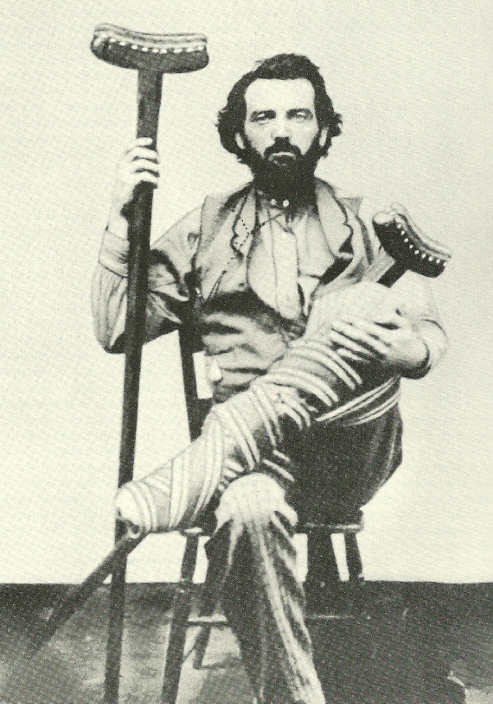
Or maybe he did himself in — after all, he’d once shot himself in the foot as evidenced below.

Although it’s easy leaving clues and red herrings, the difficulty comes in proving which of the alibis are correct. (It’s much easier proving them wrong.)

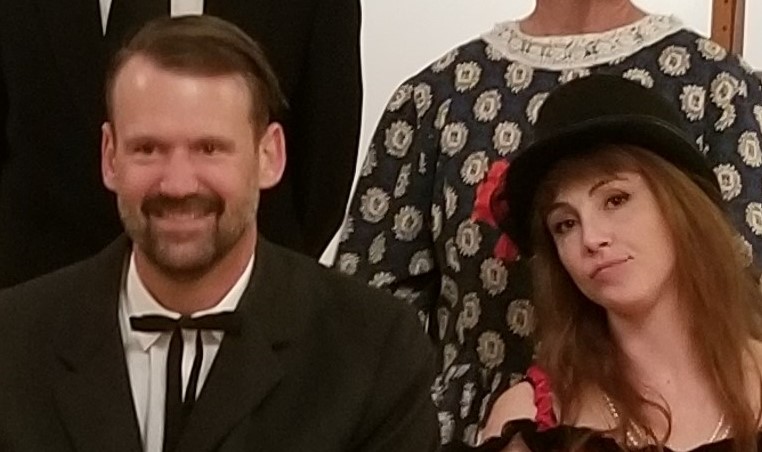
At the suggestion of one writer friend, one of the suspects will be out of time/place (he will have been born after the shoot-out), and the only clue of his innocence will be his date of birth. One woman, a dance hall girl, will say she was with the local chiropractor, and though he will deny it, a photo of the two of them will be hung somewhere in the museum.

And that’s as far as I’ve got. One suggestion I considered was to use the time zone change. Although today it would work since the dateline is only an hour or two away, back then, it would have been a couple of days hard ride, so I haven’t been able to make that work.

Since this is more of a scavenger hunt than a live Clue game or skit, the clues to who didn’t do it need to be visual so they can be scattered around the museum. Luckily, I still have a couple of weeks to figure this out.

***

Pat Bertram is the author of Grief: The Inside Story – A Guide to Surviving the Loss of a Loved One. “Grief: The Inside Story is perfect and that is not hyperbole! It is exactly what folk who are grieving need to read.” –Leesa Healy, RN, GDAS GDAT, Emotional/Mental Health Therapist & Educator.
UNFINISHED is on Sale at Amazon!

If you have a stack of Amazon gift cards that are burning a hole in your pocket, the paperback edition of my novel Unfinished is on sale today.

The story: Amanda Ray thought she’d grow old with her pastor husband David, but death had other plans. During David’s long illness and his withdrawal from her, Amanda found solace in the virtual arms of Sam Priestly, a college professor she met at an online support group for cancer patient caregivers. Amanda thought that when their spouses were gone, she and Sam would find comfort in each other’s arms for real, but though David succumbed to the cancer that riddled his body, Sam’s wife, Vivian, survives. Vivian had been in the process of divorcing Sam when she fell ill, and after the diagnosis, Sam agreed to stay with her until the end. Since Sam plans to continue honoring his vow, Amanda feels doubly bereft, as if she is mourning two men.

Rocked by grief she could never have imagined, confused by her love for Sam and his desire for her to move near him, at odds with her only daughter, Amanda struggles to find a new focus for her suddenly unfinished life. As if that weren’t enough to contend with, while clearing out the parsonage for the next residents, Amanda discovers a gun among her devout husband’s belongings. Later, while following his wishes to burn his effects, she finds a photo of an unknown girl that resembles their daughter.

Having dedicated her life to David and his vocation, this evidence that her husband kept secrets from her devastates Amanda. If she doesn’t know who he was, how can she know who she is? Accompanied by grief and endless tears, Amanda sets out to discover answers to the many mysteries of her life: the truth of her husband, the enigmatic powers of love and loss, and the necessity of living in the face of death.

Although the feelings of grief Amanda experiences are based on my emotional journey during my first two months of profound grief, the story itself is fiction. I can’t imagine what it would be like to have to deal with not only the loss of one’s mate, but the loss of the idea of one’s mate. Well . . . yes, I guess I can imagine how it would feel, because I wrote the novel! I hope you will read UNFINISHED. It’s an important book because too few fiction writers portray the truth of new grief, and that lack leaves the newly bereft feeling isolated and as if they are the only ones dealing with grief’s craziness.

You can purchase the print version of UNFINISHED (published by Stairway Press) here: https://www.amazon.com/dp/1941071651/

***

Pat Bertram is the author of the suspense novels Light Bringer, More Deaths Than One, A Spark of Heavenly Fire, and Daughter Am I. Bertram is also the author of Grief: The Great Yearning, “an exquisite book, wrenching to read, and at the same time full of profound truths.” Connect with Pat on Google+. Like Pat on Facebook.