Moonflower

Last night wasn’t the full moon — that was the previous night, August 11th — but it might as well have been. Not only did the moon look full, it acted full. Or maybe I should say it acted on me as if it were full because I had a rough time falling asleep. (Apparently, I am subject to some sort of full-moon insomnia.) Luckily, this afternoon I had nothing planned except to read, so when I dozed off with a book in my hand, it wasn’t a problem. What was a problem is that when I awoke, I felt disoriented, not knowing day or time or what I was doing.

The disorientation lasted only a moment. By the time I got my eyes pried open and dragged myself away from the uneasiness dreaming always causes me, I was fine.

As for last night, when I couldn’t sleep, I went outside to look at my moonflower in the moonlight. It was too dark to take a decent picture, so I was glad to find the plant still blooming when I got up this morning. It faded quickly in the bright sun, but luckily, I now have a pictorial memory of the flower, though I might not need such a visual memory because it seems as if there are several more buds that will be opening in the coming evenings, so I will have the real thing.

Moonflowers are a perennial subtropical plant. In colder climes, like this one, it’s an annual, but because of its self-seeding nature, it acts as a perennial. The plants grow readily and quickly, and if the flowers aren’t lopped off, the seeds in their prickly casing can be easily harvested to grow more plants. Or to keep the existing plant from taking over since it has a weed-like nature (probably why I can grow it so easily).

Moonflowers are members of the nightshade family and, as you can probably tell by the trumpet-like shape of the flower, are kin to morning glories. “Moonflower” is rather a romantic name, but the plant’s other names are enough to make a person shudder (or, if ingested in great enough quantities, make a person hallucinogenic and maybe even dead): datura, jimsonweed, thornapples, devil’s weed, devil’s trumpets, hell’s bells.

Now that I know all those names, I remember doing this same research when I lived near the desert because datura grew as weed around there. Since this climate is similar to that one, I need to be careful so this plant doesn’t become invasive. Still, it’s a beautiful flower, and as long as I can control it (though my ability to control anything in my yard remains dubious), it makes a pleasing addition to my garden, even when the moon isn’t full.

***

What if God decided S/He didn’t like how the world turned out, and turned it over to a development company from the planet Xerxes for re-creation? Would you survive? Could you survive?

A fun book for not-so-fun times.

Click here to buy Bob, The Right Hand of God.

A Good One

When I was young, I had a five-book boxed set of Pollyanna books. Every time I got sick and so couldn’t go to the library for a fresh stack of books, I reread the ones on my shelf. Despite having read the Pollyanna books perhaps a hundred times, the whole “glad game” thing never took hold in my life. I simply could not see the benefit of being glad you didn’t need the crutches you received instead of the doll you wanted. I thought gladness should be effortless rather than a struggle to find something good about bad times.

Ever since Jeff died, though, I tried to play my own version of the game (though I didn’t know that’s what I was doing) by finding something to appreciate every day. I needed a way to ground myself because so often during those first years I felt as if I were teetering on the edge of the abyss, and without a firm footing, I feared I would topple into that bottomless black pit.

The lessons learned back then have served me well. I make sure to appreciate every flower that comes up, every blade of grass that shimmers in the sun. In a glass half full/half empty sort of way, I try to see what’s there rather than what isn’t. For example, to see the plants and sections of grass that are doing well instead of worrying about the areas of the yard that are desiccating no matter what I do.

Some days, however — like today — I find it hard to appreciate much. It’s been too hot for too long; it’s too much work trying to keep the weeds from taking over; and it’s too hard to focus on what is still growing rather than what once was doing well but is no longer thriving.

I took this same curmudgeonly attitude on my walk today to check out how my friend’s roof was coming along. The job site was deserted, but I could easily see why — the roof has been re-sheeted, ready for to be shingled whenever the rest of the roofing materials are delivered. On my way back home, I stopped to pick up an item at the dollar store, and when I checked out, the clerk said, “Have a good one.” Sometimes I can let that idiocy go, but on a day when I cannot even appreciate that I have glass, let alone whether it’s half full, I find it impossible to hold my tongue.

“Have a good one what?” I asked. The clerk had to think about that one for a minute, then said hesitantly, “Day?” The thing is, all the elderly people I have taken care of become fixated on their bowels (mostly because moving them has become a difficult non-daily task for them), so they are always pleased when they “have a good one.” Anyway, the clerk finally said, “Have a good day,” but then as I turned to leave, she said again, “Have a good one.” I just looked at her and shook my head.

Some things are just not worth dealing with.

Although I have temporarily given up on trying to keep the weeds in check, temporarily given up on caring about the less-than-appealing areas of my yard, I still do manage to find something to appreciate if only in passing, such as the lance-leaf coreopsis, pictured below. Now that was something effortless to be glad about — the original seeds were strewn three summers ago, and these perennial plants raise themselves without any help from me.

So maybe the “good one” the clerk told me to have was this flower. In that case, I should have thanked her for the pretty bloom instead of giving her a semi-rough time.

Anyway, have a good one, whatever “one” it is that you want to be good.

***

Pat Bertram is the author of Grief: The Inside Story – A Guide to Surviving the Loss of a Loved One. “Grief: The Inside Story is perfect and that is not hyperbole! It is exactly what folk who are grieving need to read.” –Leesa Healy, RN, GDAS GDAT, Emotional/Mental Health Therapist & Educator.

Second-Class Mind

In a book I just finished reading, a teacher accused a grown character of doing a job anyone could do. As he said, “You have a first-class mind. Or if you want to quibble, a good second-class one.” That tickled me for some reason, perhaps because that would be how I’d like myself described, as having a good second-class mind. For sure, no one ever accused me of being a genius, of having a first-class mind. In fact, one teacher in high school said to me, “I bet you think you have a high IQ, but you don’t. It’s average.” Why a teacher would tell a student that — no, let’s be specific. Why a teacher would tell me that, I don’t know. I do know that teachers always thought I was an overachiever, as if my good grades came from constant study. In fact, one teacher told my mother that I worked too hard and that I should take it easier. I’m sure that confused my mother since she never noticed me studying or doing homework, but then, teachers never saw me for anything other than a passable, passive child who didn’t cause trouble.

I’ve been decades away from the influence of teachers who underestimated me, and yet, perhaps they were right. Like the character in the book, I haven’t been doing much with my good second-class mind. In fact, if you must know (which is a silly way to preface a comment because no one “must” know anything about me), I’ve been spending this lazy summer afternoon dozing . . . cough, cough . . . I mean reading. Or should it be the other way around? I’ve been spending this lazy summer afternoon reading . . . cough, cough . . . I mean dozing.

Either way, it’s not the day that’s lazy, but me. In my defense, I was anything but lazy this morning — watering, weeding, chatting across my fence with neighbors.

At least this afternoon was more productive than yesterday afternoon. I have a OneDrive account that I set up when I got a new computer so I could easily transfer my files, and now that my free space is filling up, they want me to start paying for the service. Instead, I spent an hour or so deleting redundant files and folders, and I accidentally deleted an important folder — my blog photos. Come to think of it, it’s not that important since all the photos have been uploaded to my blog, but still, I didn’t want to delete it. I had marked the folder as one to save on my computer no matter what, but apparently, when I deleted it from OneDrive, it still deleted it from my computer. And since the folder in its entirety wasn’t in my recycle bin (each file was listed separately), I had to restore the entire recycle bin. It took my computer hours to get everything back where I had it.

Not that what I did had any importance, it’s that the net result of my falling asleep this afternoon while reading had the very same results as yesterday’s attempt to clean up computer files.

So what does all this have to do with having a good second-class mind? Nothing really except it goes to show that whatever class mind I have (even, perhaps, no class at all), I’m not using it.

***

What if God decided S/He didn’t like how the world turned out, and turned it over to a development company from the planet Xerxes for re-creation? Would you survive? Could you survive?

A fun book for not-so-fun times.

Click here to buy Bob, The Right Hand of God.

Procrastination

I’ve been procrastinating, not having anything in particular to write about. I don’t want to bore people with talk of my yard and garden, and I certainly do not want to continue crying about the brown sections of my lawn that are not improving but instead are getting worse. It’s not as if it’s a major catastrophe, not when people in devastated areas are losing not only their lawns, but their homes and even their lives. Still, I do find it depressing, seeing all that brown when just a couple of months ago those same spots were such a vibrant green. And, of course, the death of anything is hard for me to take. (I’m one of those who truly will not kill a fly.) The unsightly patches wouldn’t be so hard to take, I think, if I could immediately address what worries me, as I always like to do, but it will be a month or even more before I can start reseeding.

So when a friend stopped by to see if I wanted to go on a trip with her, I was glad of an excuse to continue procrastinating. Unfortunately, I had to turn down her invitation since she was leaving tonight and I wasn’t at all prepared to be gone for several days, but it was nice chatting with her.

Then I roamed around the internet for a while and stumbled upon an interesting interactive site: https://dinosaurpictures.org/ancient-earth#0. You can put in the name of your city, and it will show you what that bit of Earth looked like at various times over the past 750 million years. Now that certainly put my concerns into perspective!

And anyway, there is still much for me to enjoy in my yard. In fact, today when I was clearing out weeds, I saw what I thought was a rock, but when I picked it up, I discovered it was a cucumber. Most of the cucumbers on the vine are tiny, no more than an inch or two, so I have no idea how that one grew so fast.

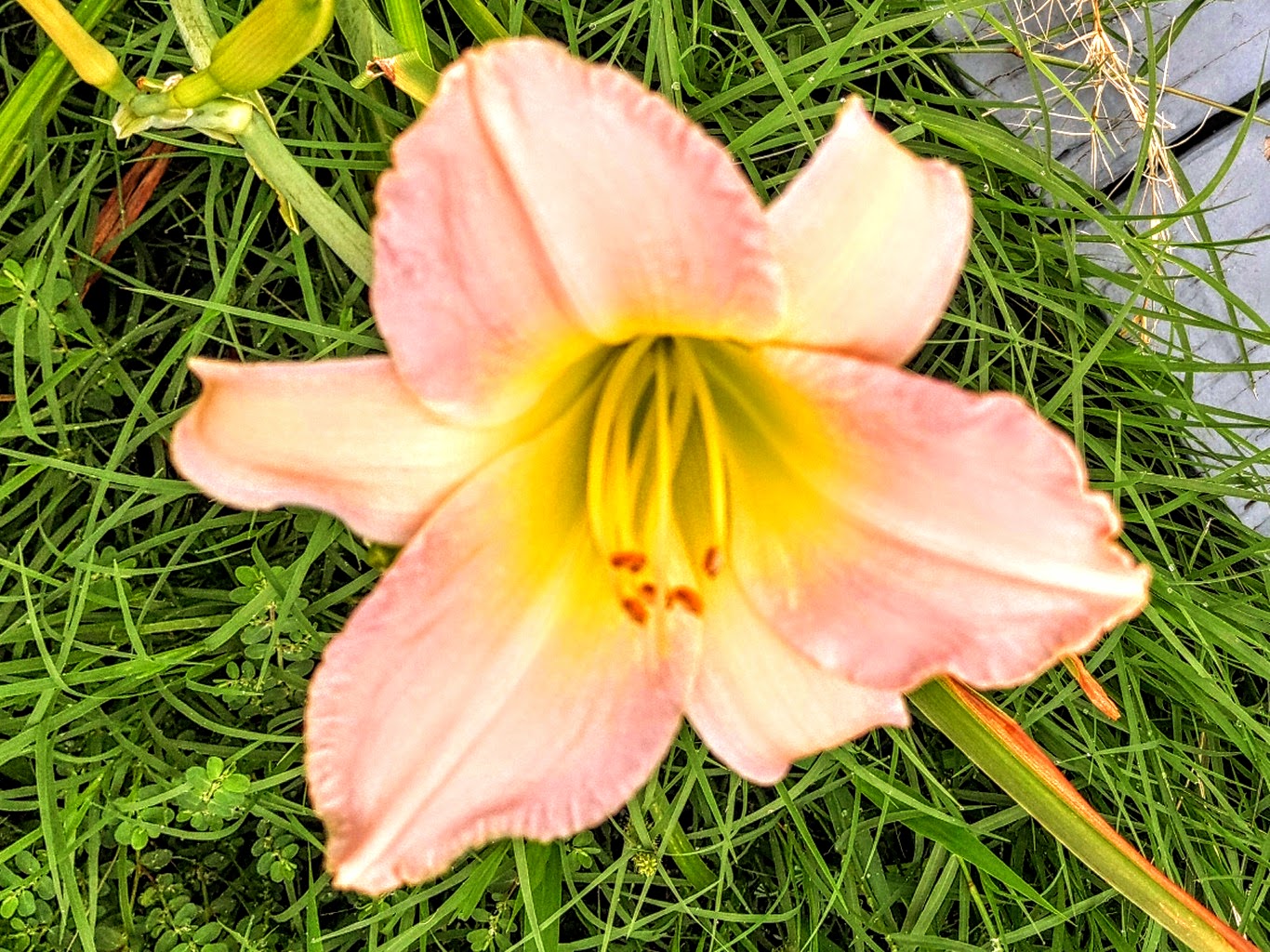
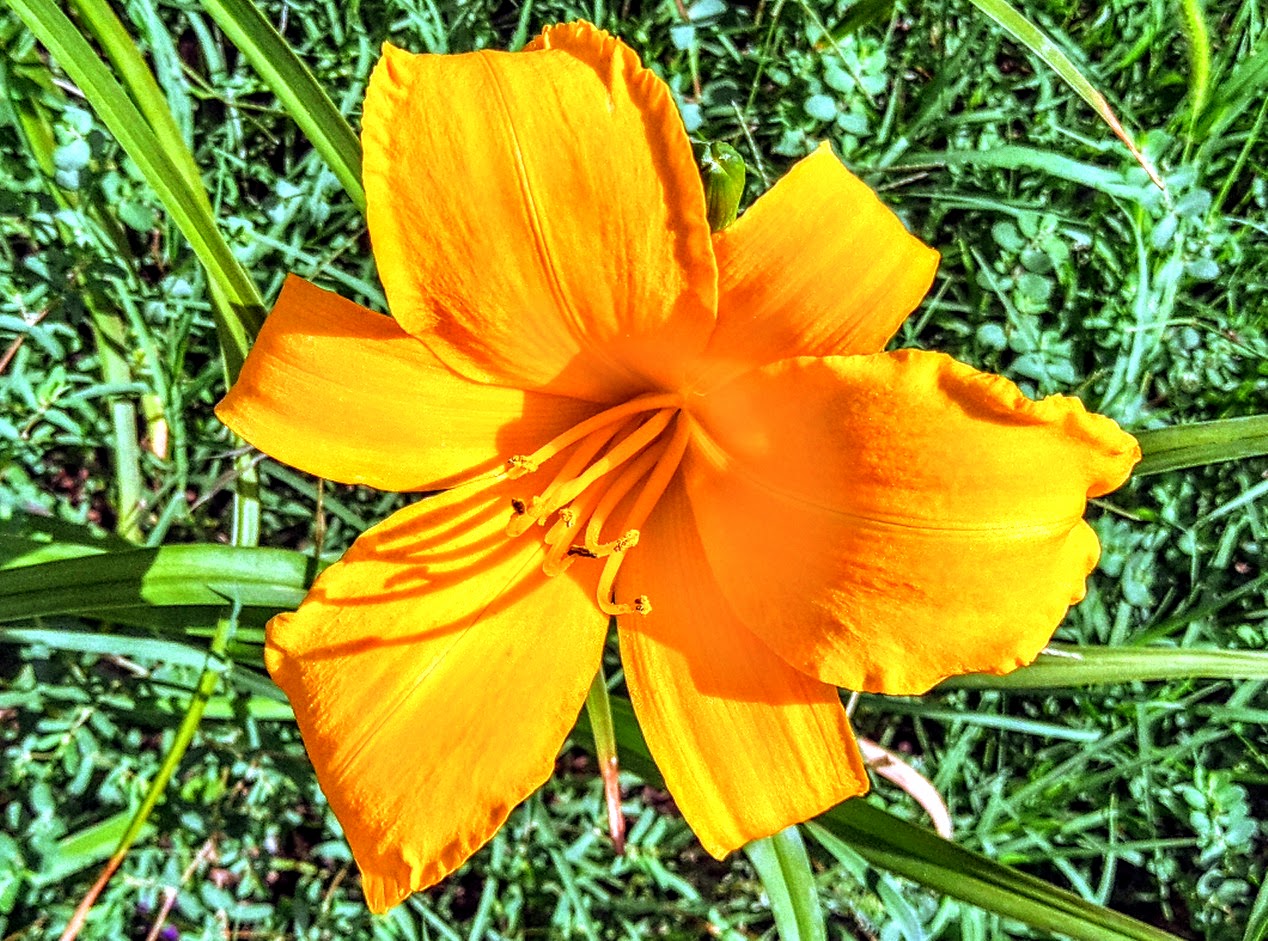
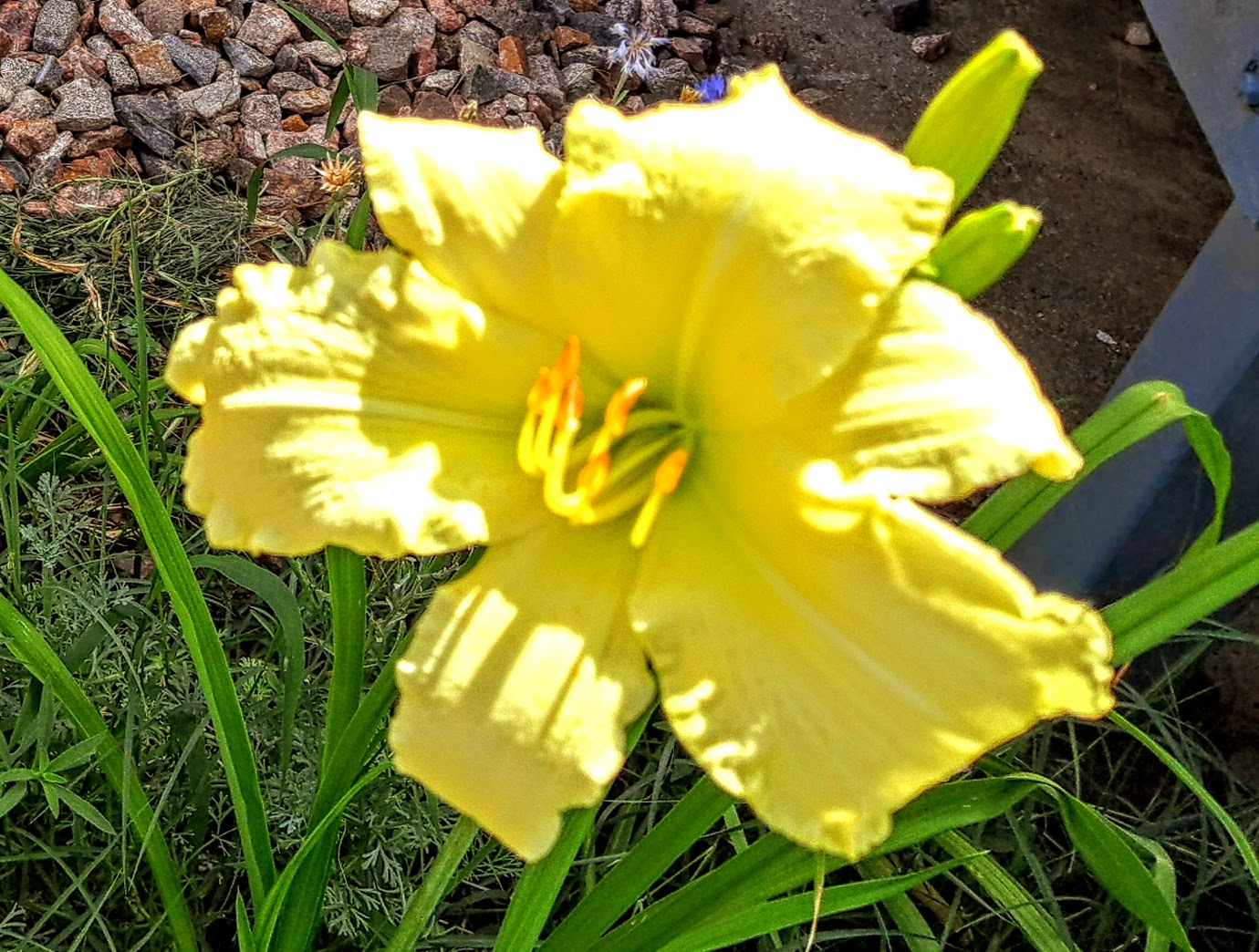
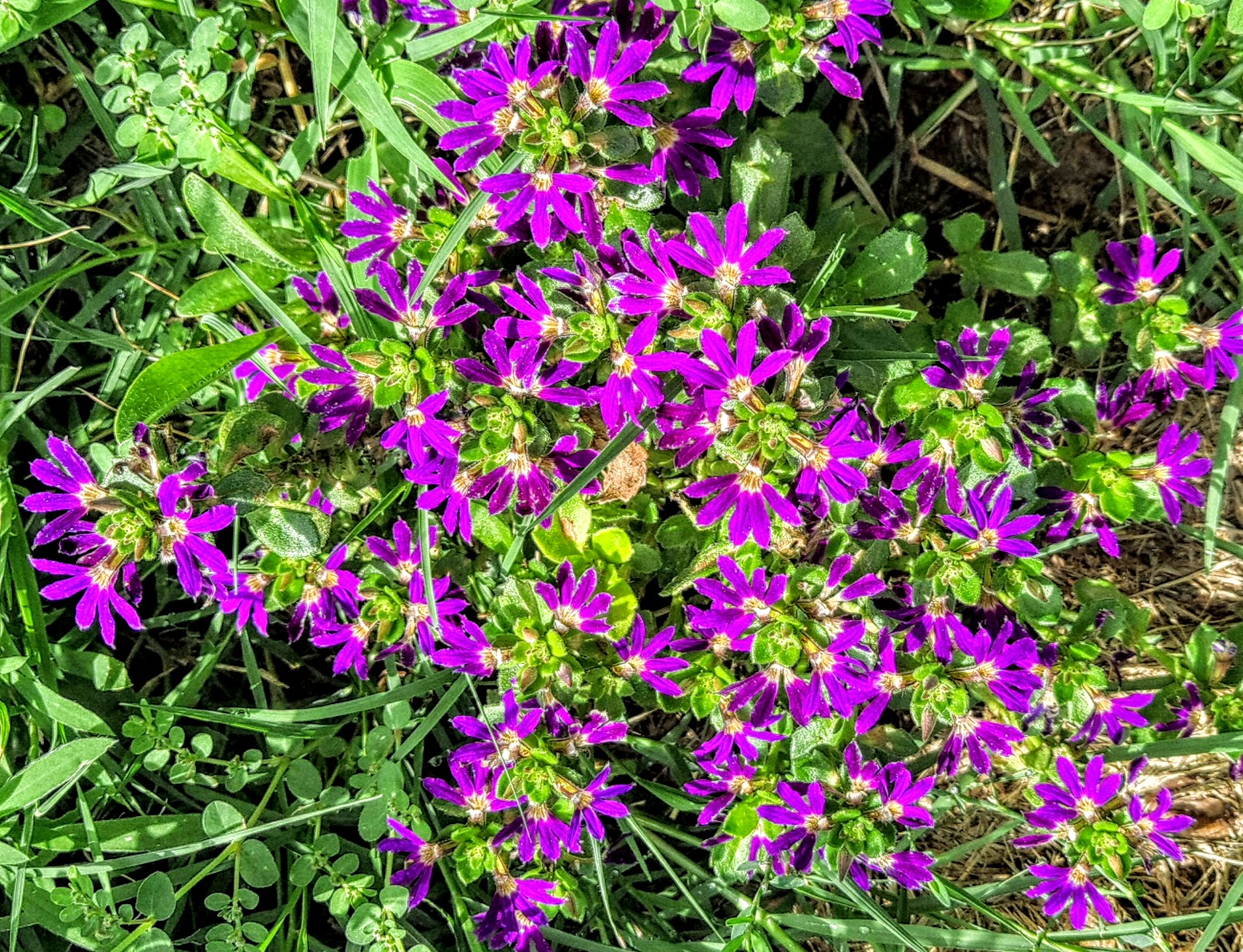
And there are always a few flowers to cheer me up.

Well, what do you know — I just noticed that even with all the procrastination, I’ve managed to write enough to fill a blog post! Yay!

***

Pat Bertram is the author of Grief: The Inside Story – A Guide to Surviving the Loss of a Loved One. “Grief: The Inside Story is perfect and that is not hyperbole! It is exactly what folk who are grieving need to read.” –Leesa Healy, RN, GDAS GDAT, Emotional/Mental Health Therapist & Educator.

The Weed That’s Eating Colorado

So many of the weeds that are taking over this area were brought to this country on purpose. For example, the tamarisk was brought over from Europe to control erosion, and now it’s considered an unkillable monster that sucks up tremendous amounts of water that could be better used for native plants. Some people still think it was a good bargain because it will grow in salty and alkaline soils that other plants avoid, but then, the tamarisk helped create those dry salty basins in the first place. It’s no wonder it’s on the invasive plants list.

People are more familiar with the problem of kudzu, the plant that ate the south. Kudzu is native to Japan and Southeastern China, and was also brought over to control erosion. The vine grows as much as a foot a day! Yikes. I’d hate to have to deal with that sort of growth. I’m having a hard enough time with my own nemesis, kochia.

Around here the weed is known erroneously as ragweed, though the weed I spend so much time digging up is a completely different plant. It took me a while, but I finally tracked down the name, one I’d never heard of, though I’m not sure why. Kochia might not be eating Colorado, but it is so ubiquitous, it sure seems as if it is consuming the state!

Kochia, also known as fireweed because of its red foliage in the fall, was brought over here from Eurasia in the 1900s as an ornamental garden plant. I suppose it might be pretty as a red shrub, but I’ve never seen it turn red. It mostly dries out in the fall, turns into a tumbleweed, and spreads its seeds however far it roams. I’ve discovered it’s easiest to pull the kochia plants when they are small, though after it rains, even plants as tall as two feet can easily be pulled up. If they are left alone, they can grow as tall as seven feet. And by then, I’d need a machete to chop them down because there is no way I could ever pull up such a weed! Luckily, I’ve managed to stay on top of the growth, though just this morning I found a whole bunch of one- and two-foot weeds hidden away behind bushes and tomato plants.

It is a drought resistant-plant, so anyone around here who doesn’t take care of their yard ends up with a kochia forest. And when it rains, watch out! Those things grow fast, though luckily, not as fast as kudzu.

As much of a problem as kochia is in Colorado, you’d think people would be trying to eradicate it, but instead, some farmers in the Southwest grow it for forage. Makes sense, actually, since it is drought resistant and its feed value is just slightly less than alfalfa. But I don’t need the forage. Nor do I look forward to all the seeds from my neighbor’s kochia-infested yard finding a home on my property. At least I have a fence, so any tumbleweeds will have to find another resting place.

I don’t suppose it really matters what the name of this weed is — it is what it is, and a name doesn’t change anything — but with a name I can at least find out what I am dealing with.

And what I am dealing with is a rapidly spreading, drought-resistant invasive plant that really isn’t very pretty.

***

Pat Bertram is the author of intriguing fiction and insightful works of grief.

Just Flowers

If a picture is worth 1,000 words, then this post is worth 6,000 words. Wow! I didn’t realize I had that much to say today!

***

What if God decided S/He didn’t like how the world turned out, and turned it over to a development company from the planet Xerxes for re-creation? Would you survive? Could you survive?

A fun book for not-so-fun times.

Click here to buy Bob, The Right Hand of God.

Unplanned Joys

Today was a day of unplanned joys. You can’t plan such a day. Well, you can I suppose, but too many things have to come together, and some of those things — such as the weather — can’t be counted on. But today, the weather was perfect. Truly a joy.

Despite the lovely weather, I wanted a change from my typical morning of weeding. Not that the weeds were all gone — they’re not, and may never be gone, though come winter, they should go dormant along with almost everything else. But I needed to do something different, so I decided to clean my house. There was only a thin veneer of dust, but once that veneer was gone, it became apparent just how dingy the floors and furniture had become. But now, what a joy! Everything sparkles like new, or as new as a 94-year-old house can be.

Still charged with energy, I took a brief walk — also unplanned until the very minute I put on my walking shoes and headed out the door. When I came back, a friend came to visit. Admittedly, the visit had been planned. Because of her health issues, I hadn’t seen her for a long time, and we needed to catch up. We sat out in my gazebo, enjoying each other’s company, the lovely day, and the cool breeze. It was great seeing her, and even greater seeing how well she’s doing. (That part was one of the unplanned joys since I had no idea what to expect.)

After she left, I took a brief break for lunch, and then I got a text from another friend who wanted to know if this was a good time to visit. She and the woman she looked after had been wanting to come see my yard and try out my gazebo, but the weather has been a problem — too windy or too hot or too rainy. Well, today was none of those things, and so they finally were able to come.

I enjoyed showing off my yard and flowers, trying (but not succeeding) to disregard the areas of dead grass. I know I’ve said I won’t let those brown spots bother me, but it’s hard not to notice the dullness in comparison with the bright emerald green of the healthy areas. Luckily, my friends only looked at what was there, not what wasn’t.

Before they left, I showed them around my house. Which makes me wonder — did cleaning the house today somehow put all these unplanned joys into effect? Or was it merely a happy chance that today of all days, I felt like cleaning? Not that it matters — it just felt good to know the house looked its best.

And now, here I am, visiting with you. That, too, is a joy, though a planned one.

***

Pat Bertram is the author of intriguing fiction and insightful works of grief.

Imagine a Rainy Climate

I spent several hours this morning clearing out weeds and weedy grasses. I didn’t even make a dent — the growth (except for some things I want to grow) is overwhelming. I can’t imagine living in a climate where it rains all the time, though this past week where it’s rained so much (and yes, it did finally rain last night about 1:30 AM), I’ve had a glimmer of what it would be like. There would be a lot of good things about it — no time spent watering, no coaxing plants to grow in the arid climate, no dealing with plants dying because of a single day’s neglect. And it would be a lot cooler. Maybe. But keeping on top of weeds and such? Yikes.

My current plan is to do what I can, and when the annuals start dying off this fall, dig up the whole area where the weeds are now too deep seated for me pull easily, and replace them with a different sort of plant. I’m finding that I prefer clumps of flowers, like echinacea, New England asters, and four o’clocks, to single flowers because they are easier to weed. They also tend not to be as weedy, so that helps.

The wild four o’clock is blooming, mostly when I’m not around, but I did capture a couple of the flowers late yesterday afternoon. They are pretty, and when blooming in masses, must be awesome.

I hadn’t planned to write another gardening post so soon, and I certainly didn’t want to bore people with talk of the weather, but this morning’s exertions wore me out, and so there’s not much else in my head to blog about.

Maybe tomorrow, I’ll have some wisdom to impart.

Or not . . .

***

Pat Bertram is the author of Grief: The Inside Story – A Guide to Surviving the Loss of a Loved One. “Grief: The Inside Story is perfect and that is not hyperbole! It is exactly what folk who are grieving need to read.” –Leesa Healy, RN, GDAS GDAT, Emotional/Mental Health Therapist & Educator.

Playing the Rain Game

I’ve been playing a new game lately called, “Will it rain?” It’s a simple game, with no rules, no challenges, no rewards. All I do is track the possibility of storms with a weather app. You’d think it would be simple, a quick check to see what the day’s weather would be, and then the weather happens.

But not here, not now. Last night when I went to bed, there was a 75% chance of it raining in the early morning hours. It didn’t rain, so I checked the app when I got up, and it said there was a 95% chance of rain before noon. Again, it didn’t rain. So I checked the app again, and it said there was a 50% percent chance of rain by 3:00 o’clock. Not only did it not rain, but the sun came out and the temperature shot up about ten degrees more than was forecast. Now the app says 15% chance of rain after 7:00.

So, will it rain? Apparently, no one knows.

It wouldn’t matter what the forecast is, but with so many rain days that turned out to be non-rain days, I should probably water my lawn, but I certainly don’t want to oversaturate it. When we were getting rain, I got mushrooms in my lawn, and the brown spots where the grass died didn’t get any less brown.

I’ve decided worrying about the lawn is a foolish occupation of my worry time. Not that I schedule a time to worry, you understand, it’s just that there always seems to be something niggling at me. In the fall, I will have to reseed a few areas where the grass has receded (it hasn’t just receded, it’s flat-out disappeared, but I liked the reseed/recede homophone). I will also have to dig up the Bermuda grass that is launching a full-scale attack on the finer grass, so it doesn’t really matter if I have five spots to reseed or ten spots. So, since it’s already in the schedule, it’s not worth worrying about.

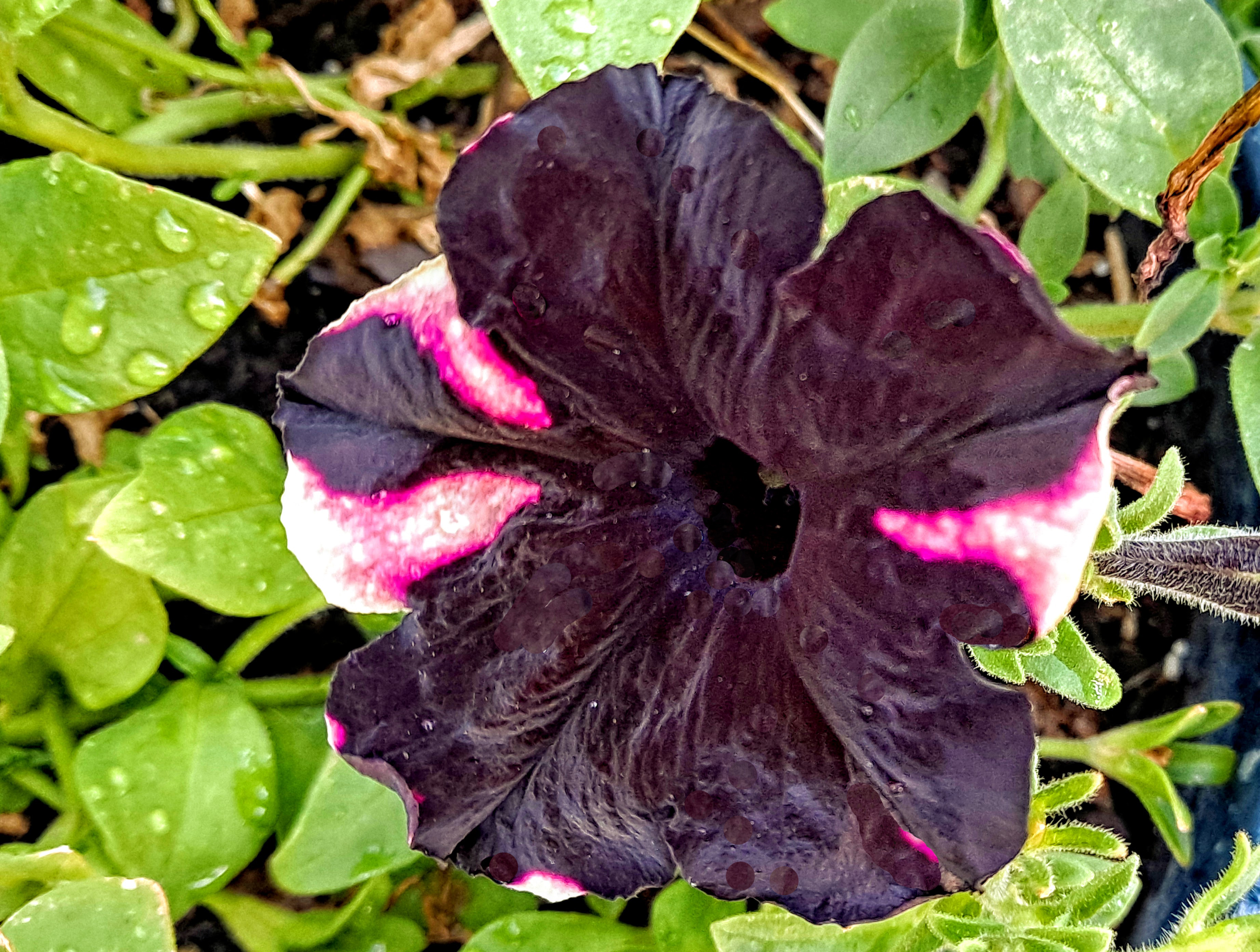
I had been wondering about when to mow with all the rainy days we were supposed to have, but today, when the sun came out, I went out and did the chore. I also took photos of flowers, which I’m sure comes as no surprise to you. The dark purple petunia with the pink highlight is one of the petunias that grew itself from last year’s petunias, though those petunias had no pink highlights.

Tomorrow looks as if it will be a repeat of today, starting out with a 68% chance of rain, so lucky me — I get to play the game again.

***

What if God decided S/He didn’t like how the world turned out, and turned it over to a development company from the planet Xerxes for re-creation? Would you survive? Could you survive?

A fun book for not-so-fun times.

Click here to buy Bob, The Right Hand of God.

Monsoon Season Flowers

I was surprised, many years ago, to learn that Colorado had a monsoon season. “Monsoon” always made me think of places like Thailand and Singapore with their afternoon deluges that brought traffic to a standstill, and Colorado seldom gets that sort of rain, which makes “monsoon” seem a strong word for the weak rains we sometimes get in July and August.

Although most people associate “monsoon” with deluges, a monsoon is actually a shift in the wind. In the case of Colorado, that wind shift brings moisture from the Gulf of California and the Gulf of Mexico into the state. According to the Colorado Climate Center, the monsoon “usually happens when a strategically centered high pressure (with clockwise flow around it) and low pressure (with counterclockwise flow around it) settle in over the region.”

The erratic and unpredictable nature of this North American monsoon is why the forecasters seem unable to tell us when or where or how much it’s going to rain. There have been days recently when they predicted 10% chance of rain, and we ended up with a steady downpour. Other days they have predicted a 90% chance of rain, and we ended up with nary a drop. And some days the forecast changed so frequently, no one and nothing had any idea what was going to happen, not even the weather itself.

This week, rain or no, we seem to be centered solidly in the monsoon wind pattern. The days are still and dry, but most evenings we have at least a splattering of rain. A couple of nights ago it rained for several hours, the longest rain we’ve had all year. It rained a bit last night, and after a respite of — perhaps — no precipitation tonight, there’s a chance of rain every evening for the rest of the week.

I have learned a couple of things during this monsoon week: 1) the browning of certain areas of my lawn isn’t due to lack of moisture, and 2) this is not a good time of year for hanging baskets. I’ve had to settle those hanging plants firmly on the ground so they don’t take flight in the late-night winds. By the time the winds are gone and I hang up my plants again, it will probably be too late in the season for flowers. Still, plants are nice, wherever they are.

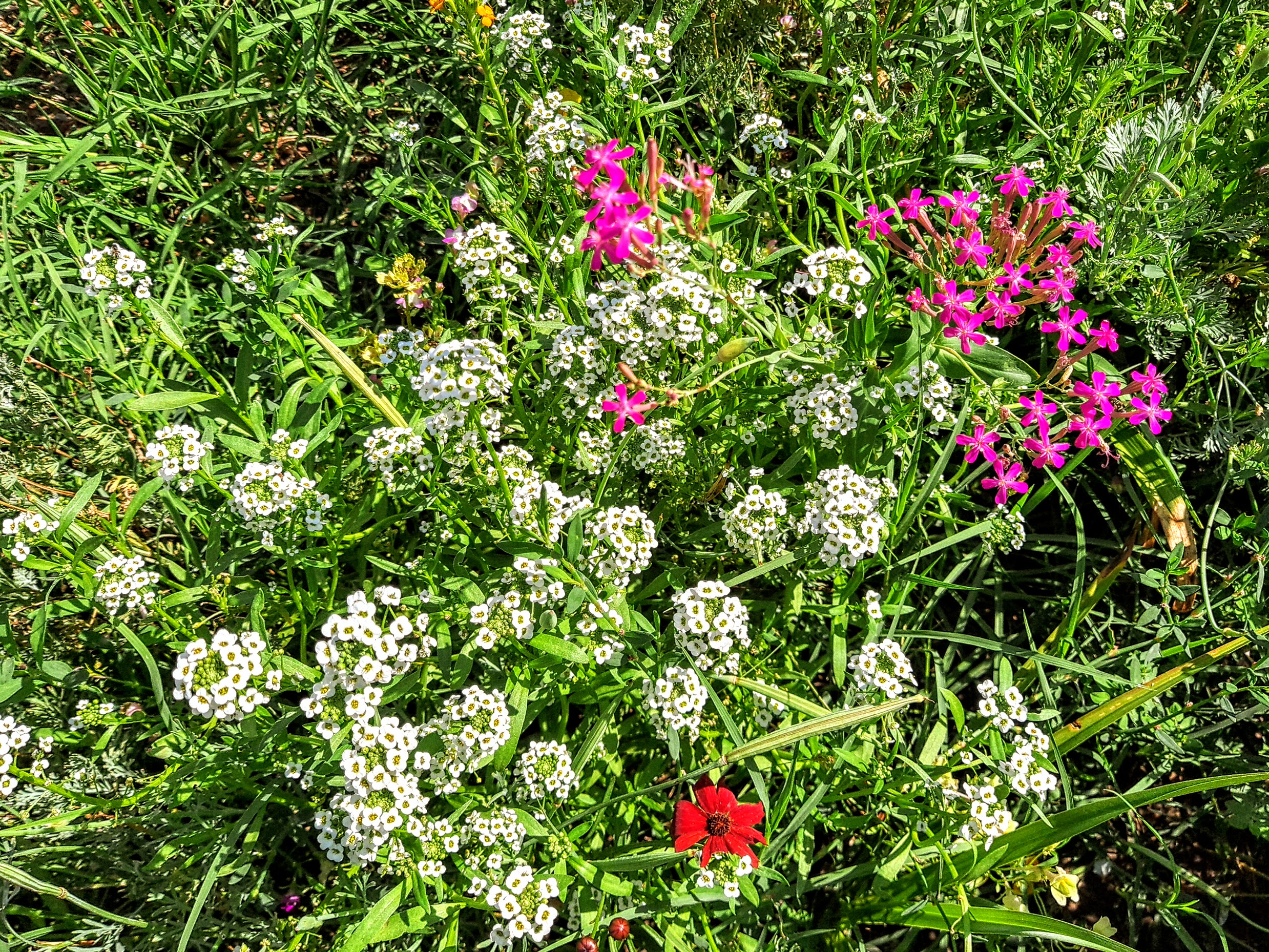
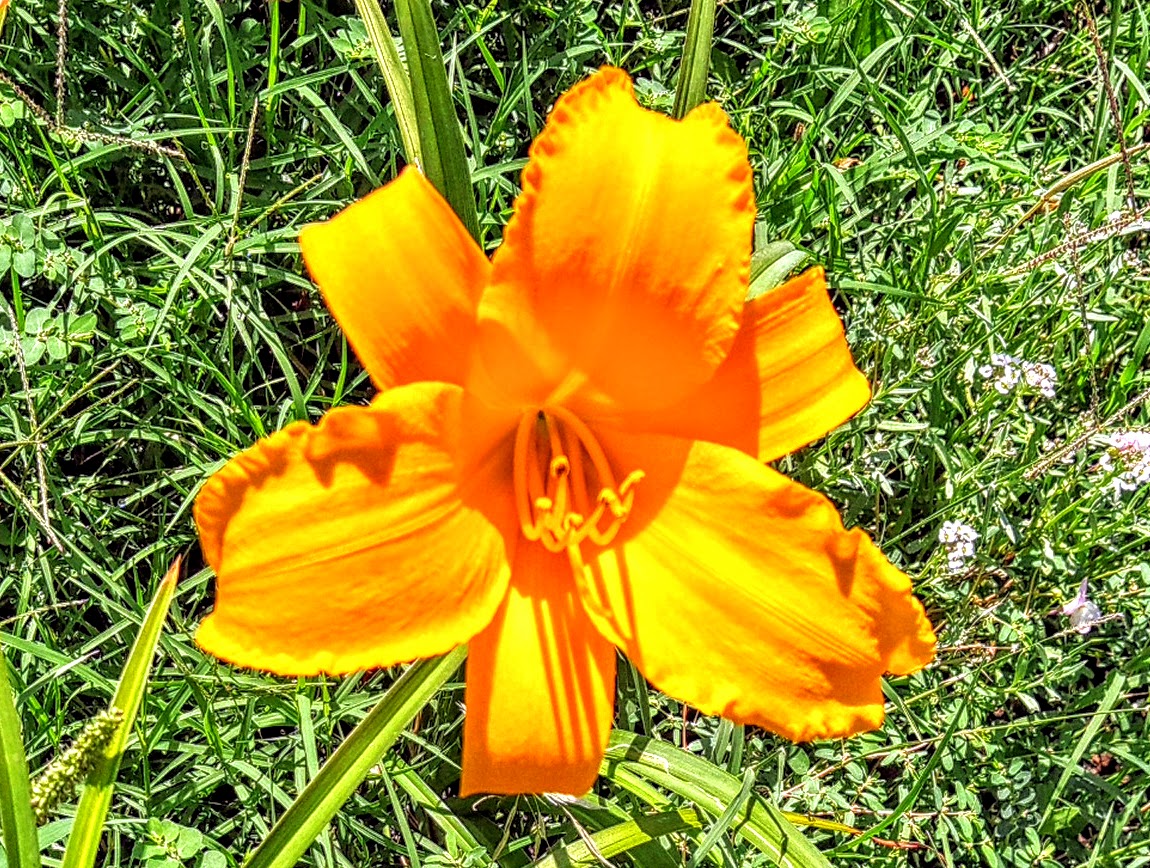
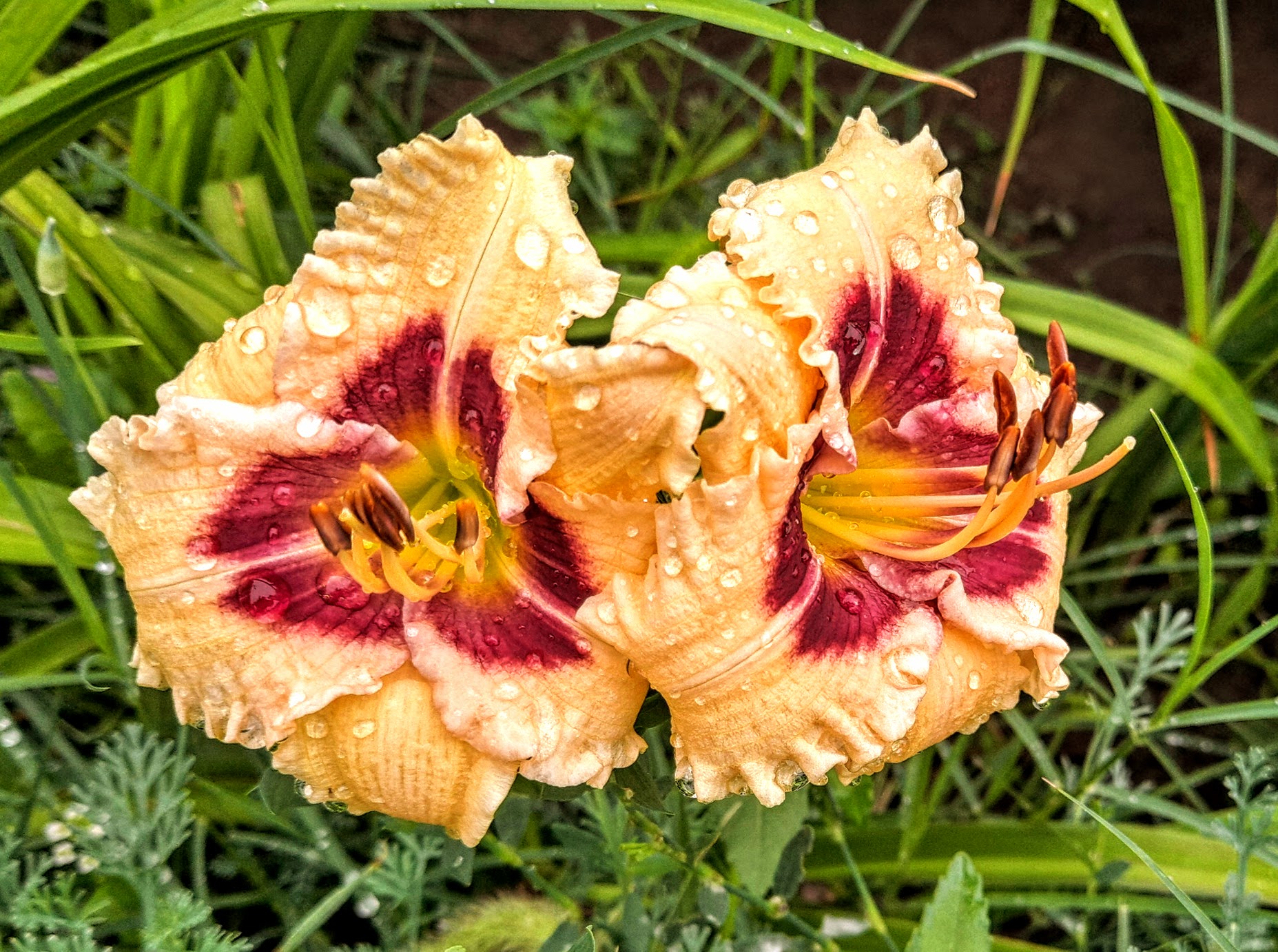
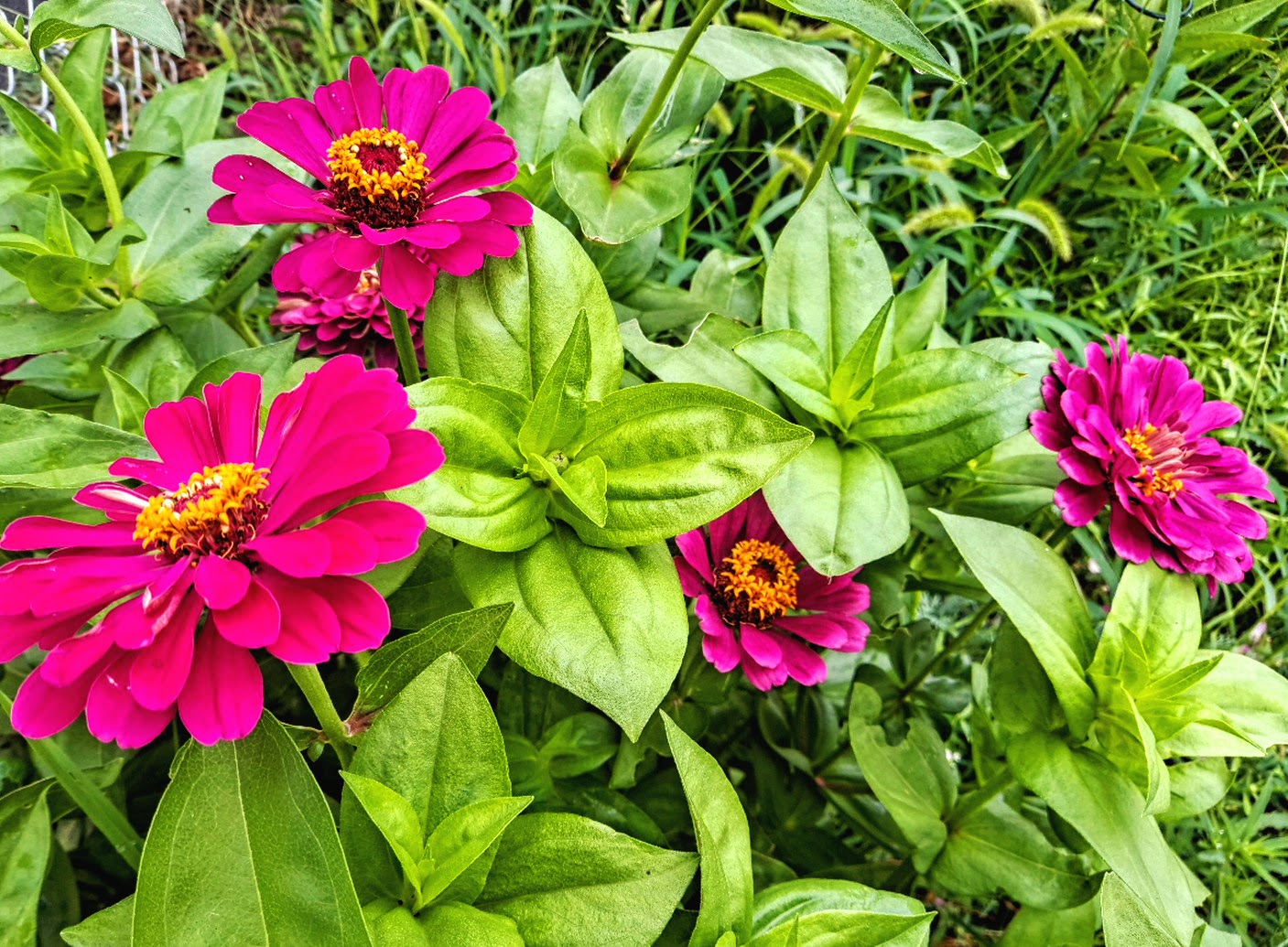
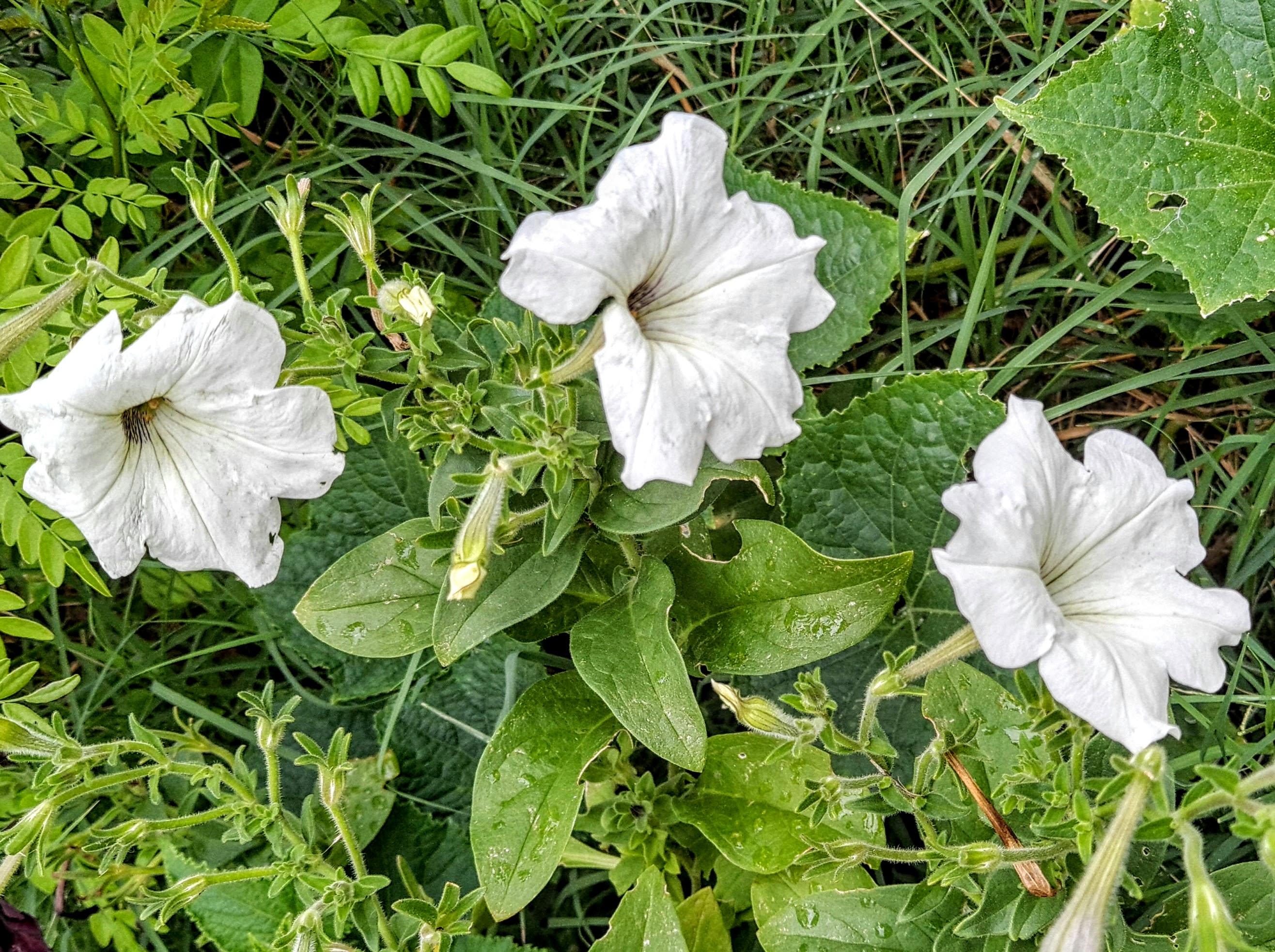
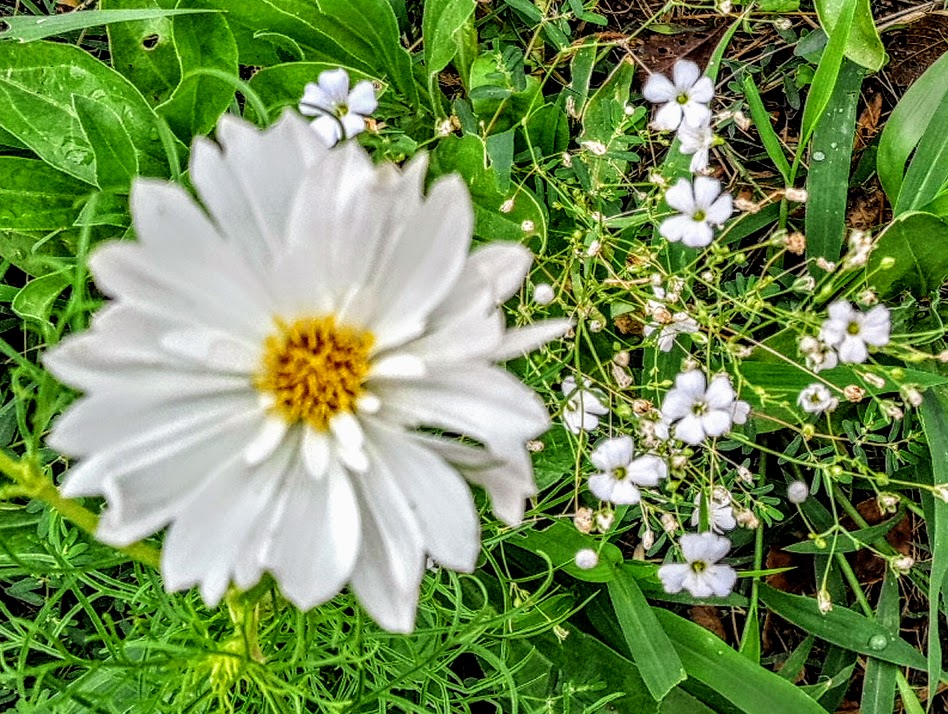
Well, some plants. The rain sure is making the weeds spring up! And it’s making the already sprung-up weeds grow horrendously fast. I’ve cleared out the tallest weeds, though my garden patches have been neglected. Luckily, as you can see, I still managed to find a few flowers to photograph.

Incidentally, all the white flowers pictured are volunteers, planting themselves where they’ve been assured a warm (and wet) welcome.

***

Pat Bertram is the author of Grief: The Inside Story – A Guide to Surviving the Loss of a Loved One. “Grief: The Inside Story is perfect and that is not hyperbole! It is exactly what folk who are grieving need to read.” –Leesa Healy, RN, GDAS GDAT, Emotional/Mental Health Therapist & Educator.