Utterly Bizarre

Reading my own books is utterly bizarre. I’ll be going along, involved in the story, loving what I’m reading, wondering what’s coming next. Whenever I’d stop to take a breath, it would stun me to realize I wrote the book. How is that even possible? Not the writing — I remember writing and rewriting and re-rewriting More Deaths Than One, for example, but except for a brief synopsis, the same one on the cover — “What if you returned home after years away and found someone with your face living your life . . .” — the story was completely new to me.

I do remember wondering if More Deaths Than One might be a tad amateurish, but I’m not finding that at all. Well, there is the girl with the eyes that sparkle perhaps too often, but even today, I wouldn’t know a different way of showing, from the hero’s point of view, how much he lit up her life. And there is . . . hmm, I don’t know . . . maybe a bit of passive storytelling, but I remember thinking that I wanted the relationship between the boy and girl to be of paramount importance as they discover the truth rather than a thriller-like chase. Whatever the case, I can no longer judge the merits of my books except for the very personal one of getting to read — and enjoy — these books as if for the first time.

I mentioned before that the “Pat Bertram” books were written by someone else, someone I’d been years before. In the case of More Deaths Than One, that someone is the person I was twenty-years ago, before Jeff died, before I went to California to take care of my father, before dance classes, before buying a house, before gardening. There’s been a lot of living in the past twenty years! No wonder there’s such a huge disconnect between the author I was and the reader I am.

Although the books were written in part for a future me, since back then (and still today) I have a hard time finding books that speak to me, I feared reading them again. What if I hated them? What if they struck me as abysmal as most books do nowadays? What if I were embarrassed by non-existent storytelling abilities? But whew! That’s not been an issue. (Well, I am a bit embarrassed by the sex scenes in More Deaths Than One. This is the only Pat Bertram book that has any, and as I’m beginning to see, they are an integral part of the character, but still . . .)

I have found a few changes to my submitted manuscripts (like the ones in Bob: The Right Hand of God that make me look as if I don’t know what I’m doing when in fact it was an editor who made the changes), a few words in both A Spark of Heavenly Fire and More Deaths Than One that mysteriously became hyphenated (more editor’s work, I suppose), and a stray typo or two. Despite those minor imperfections, the books all seem professional to me.

But yes, it’s utterly bizarre to be reading a book I wrote, breathlessly waiting to see what happens next. And it’s even more bizarre to be blown away by the ending. Whooo.

***

Pat Bertram is the author of Grief: The Inside Story – A Guide to Surviving the Loss of a Loved One.
Reading the Books I Wrote

I’m continuing to read my books. Not the books in my personal library (which consists of a single bookcase) but the books I wrote.

It’s funny to think that this is most I have enjoyed reading in years. Even though I read and wrote about the Wheel of Time book series, I’m not sure I actually enjoyed reading the books. It was more of a puzzle for me, a game, a thing to study and to learn from, a way to pass the time.

But my novels? Pure enjoyment! Admittedly, since I was the one who wrote the books, they probably find an echo in my psyche even though what I remember barely qualifies as an elevator pitch (a one or two sentence synopsis). But I don’t know if that matters. It feels as if I am coming to them fresh, not as if I wrote them, not as if I’d read them years ago, but as if I’d vaguely heard of them once upon a time.

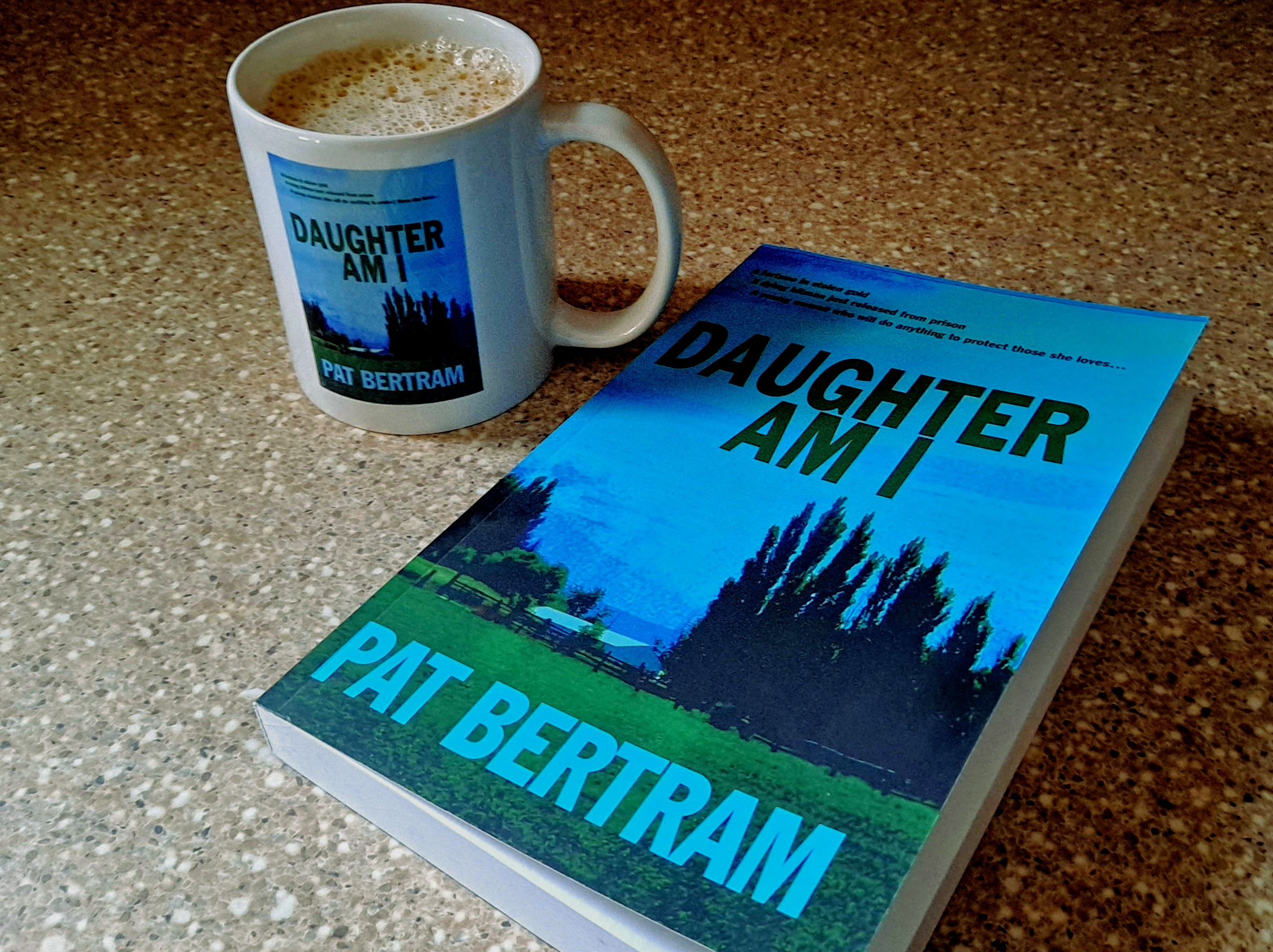
I’m working backwards. I started with the most recently published novel, Bob, The Right Hand of God, and am now reading Daughter Am I. There are only two more books for me to read — the first two I wrote — and I’m already feeling the loss. I was used to having nothing to read that I truly enjoyed — I just read for no other reason than to read — but already I have become addicted to the surprises inherent in my books.

The biggest surprise, of course, is how thoroughly I have forgotten these books. Odd, but true. The next biggest surprise is that I really do know how to write and know how to tell a story. I have no idea why I’d begun devaluing my writing ability over the years, unless it’s because of that non-selling thing. Still, other obscure writers manage to hold onto the idea of their own worth, so it’s good to at least get that feeling back. I do understand to an extent why the books languish. There’s nothing shocking, such as with the Shades of Grey franchise, to catapult them into fame. There’s no horde of people looking to read anything new in their preferred genre, such as with the Wheel of Time readers, because my books have no distinctive genre. And none of my characters are ever despicable enough to command bestselling attention. They are kind folk who are nice to each other. The stories are never about their interpersonal conflicts, but their joint conflict with an outside antagonist, who generally isn’t all that despicable, either.

Whether other people will ever come to like my books, it’s enough that I do. The stories are fun with plenty of twists and turns. Just when I think I know where the stories are going, they head in a different direction. And the endings have all come as a total surprise to me. Not just the ending, but the twist that comes after I thought it was all over.

Now that the shock of how much I enjoy reading my novels has passed, I find myself second guessing what I am reading. In Daughter Am I, is there too much story telling going on? The old gangsters that the hero Mary has managed to gather around her love talking about the old days, and one long-winded fellow named Teach lives up to his name and has tendencies to lecture. But is that a drawback or a necessary part of Mary learning who she is and where she came from? I don’t know. Luckily, the book is finished. Published. And all that’s left for me to do is what I did with the others — simply sit back and enjoy the ride.

And what a ride! At its most basic, Daughter Am I is a modern version of the Hero’s journey. The hero, Mary, goes on a dangerous journey to learn about her recently murdered grandparents. Instead of wizards and other magical folk, her mentors and allies are six old rogues (gangsters and con men in their eighties) and one used-to-be nightclub dancer. By journey’s end, all their lives have been transformed. For a more detailed description of the quest, click here: Daughter Am I and The Hero’s Journey | Bertram’s Blog.

***

Pat Bertram is the author of Grief: The Inside Story – A Guide to Surviving the Loss of a Loved One.
Feeling Like a Poseur

For a long time, I’ve felt like a poseur, embarrassed to admit I had written books. I’ve hesitated to even look at any of my published works lest I find out how mediocre they are, and proving that yes, I am a poseur. I don’t know when the embarrassment at calling myself a writer took hold. In a blog post in June of 2018, I wrote that “when it comes to writing, I don’t feel like a fraud” so it started sometime after that.

A lot of people, especially successful women, are beset by “imposter syndrome,” where they feel as if they don’t belong in the position they are in, but that isn’t my case. First, I’m not successful, and second, I’m not in any position — I stopped writing books years ago. For many months, I even stopped blogging. Can one be a writer if one isn’t writing anything, isn’t even selling the books that are already written?

Whatever the answer to that, the non-sales of books all these years whispered to me that perhaps I really was simply posing as an author rather than being one in truth. And somewhere deep down, I figured if I admitted I was a non-successful author, then I’d have to admit that maybe I wasn’t a good enough writer after all.

I don’t know where I got the courage (desperation at not having anything to read?), but I’ve been reading my books lately, something I’ve never done once they were published. I’ve been amazed by how good they are. Well written. Interesting stories. Characters that have to deal with life-changing events. Even though I’ve mostly forgotten the stories except for a brief synopsis, it’s possible that something in me recognizes the books as ones I’ve written and so see something that is not there, but I don’t think so. I tend to think they really are as good as they seem.

Unfortunately, they don’t seem like the types of books that will appeal to many people, which makes sense since I started writing them when I could no longer find the books I liked to read. (You’d think that would be a clue to their salability, wouldn’t you?)

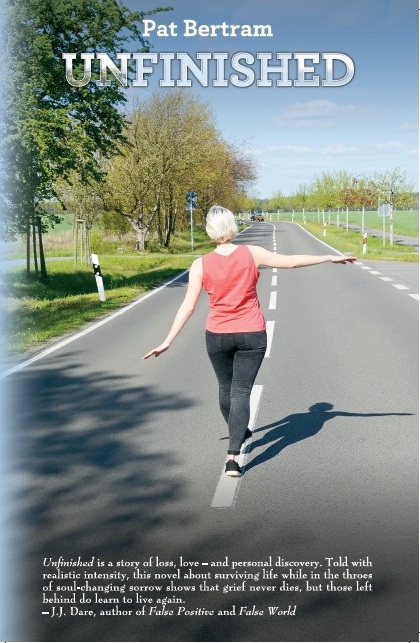
The first two I read, Bob: The Right Hand of God and Light Bringer, are books that take place in familiar earthly circumstances but develop an otherworldly strangeness about them. The last one I read, Unfinished, is very earthly, nothing strange about it except the portrayal of the insanity of new grief. Whenever, as a reader, I’d get annoyed by her tears or frustrated by the disconnect between reality and her perception of it (knowing her husband was dead but still expecting to encounter him alive), the scene and the energy would change to some other facet of her struggle to cope and so keep me interested.

One thing that was well done, I think, was showing how she’d been affected by the horror of her husband’s last year — she’d been left in limbo because he didn’t want anything to do with her and in fact often couldn’t remember who she was and yet, like a child, needed her care. Toward the end of that year, she’d engaged in a cyber affair with a guy who was going through the same thing she was. She thought she was done with grief and was starting over, yet when her husband died, all the feeling she’d been denying descended on her, and there she was, torn between two impossible loves. And finding out her husband had secrets of his own was just topping on that whole unpalatable cake.

I hesitated to read the book, thinking it would be too depressing, but she started to find her way through that emotional mess, and the book ended on a hopeful note.

I really liked the book. Although not a lighthearted story, it was very well written and definitely did what I wanted it to do — show the insanity of new grief.

Luckily, the next book I read will be lighter since one thing I do know is that this was the heaviest of the lot.

It really is an interesting experience reading these books. I know I wrote them, but since I forgot them, I can come at them as if they were written by a stranger. And truly, the author is a stranger; someone I was long ago but no longer am. No wonder I feel like a poseur.

***

Pat Bertram is the author of Grief: The Inside Story – A Guide to Surviving the Loss of a Loved One.




