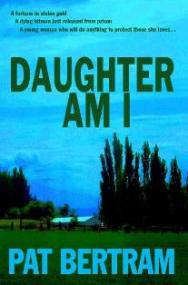
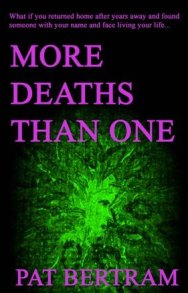
Today is the sixth anniversary of the death of a dear friend’s life mate/soul mate, and I keep thinking of her and the sorrow this day is bringing her. Not that keeping her in my thoughts will help her get through the day — or maybe it will. Sometimes it’s enough to know that another person understands the significance of the day, shares the tears, feels the jolt of realization at how long the loved one has been gone.
Because of this virtual vigil, I am abnormally attuned to literary death references.
In one novel I read in the last couple of days, the widow of less than a year admitted she still sometimes cried in the night, and her clueless friend said, “that’s okay. It won’t be okay a year from now, but for now, it’s still okay.” That sure gave me pause. Why wouldn’t it be okay? Crying in the night isn’t the same thing as hiding oneself away in the dark, refusing to face life. And it isn’t the same thing as having a screaming fit in the middle of a grocery store. It’s a realistic response to the death of a great love two or three or six years later.
Then today, I read a book where the man was still devastated by the loss of his wife after eight years. And it struck me how very odd it is that grief diminishes with time, rather than grows. Every year of that fellow’s bereft life stretched out like the desert he lived in, every year taking him further away from her, every year an eternity of aloneness. As the years slog on, one after the other, shouldn’t the pain of the loss grow, like layers of water color washed one on top the other until the shape of the missing part of one’s life is darkly hued?
And yet, the opposite is true. The shock, the PTSD, the hormonal and chemical changes that grief induces, the inability to breathe easily, the need to scream, the sheer immensity of the goneness all do recede. We find new ways of living, new ways of filling the emptiness (or trying to fill it), and we get on with our lives. And yet, the dead are still dead. And every year of our life is one more year they are dead.
Whether the dead are gone forever, gone back to the seed of energy from which they emerged, or still live in some otherworldly form, they are still gone from this life. Gone from our lives.
Eventually, we will be gone too, but meantime, that loss is always there.
Some people who remarry have to squelch any remaining feeling of loss because their new spouses don’t understand the shadow place the dead still hold in our lives. Others are lucky enough to marry those who understand. But whether or not there is a new love, it does not diminish the old one.
And yet, through some miracle of grief, our pain does not increase through the years, but instead, the water colors lay softly on our lives, reminding us of what we had, reminding us of the love we still feel.
***
(Pat Bertram is the author of the suspense novels Light Bringer, More Deaths Than One, A Spark of Heavenly Fire, and Daughter Am I. Bertram is also the author of Grief: The Great Yearning, “an exquisite book, wrenching to read, and at the same time full of profound truths.”)













 The effects of his leaving are still rippling in her life and the lives around her. I have yet to meet the woman except online, won’t meet her offline for another few weeks, but because of the shared experience of losing our life mates — our soul mates — we have become friends. Would she have chosen him over me and all the other friends she has made since he left? In a heartbeat. And yet here we are, two of the left-behinds, dealing with life as best as we can, making the most of a situation we did not choose, snatching at whatever happiness comes our way.
 We discussed possible flaws to assign to our classmates, then my friend said, “You know what’s wrong with you, don’t you.” I gave a rueful smile because I knew what she was going to say even before she said it: “You’re too sensitive.” (I don’t know how to work sensitivity into the story equation, so for now, I’m thinking my character’s flaw will be disdain, which I have to confess I sometimes feel when people say things that are patently untrue.)
 There are people in my life. Friends. A couple of siblings who contact me occasionally. And people all around the world care for me — in fact, I will soon be meeting some of those people — but they are either living with their “anchors” or are struggling with their own particular brand of aloneness.
 When I was in Crescent City, wandering through the Redwood Forest and meandering along the beach, I couldn’t imagine ever being unhappy again. And yet, here I am, slowly sliding into . . . Grief? Sorrow? Loneliness? Emptiness? Depression? Not really sure. I do know I am prone to Seasonal Affective Disorder, where the closing in of the darkness makes me SAD. (Which is why I always celebrate the end of the creeping darkness.) And allergies affect my mood more than they affect my sinuses. (Never have figured that out. In fact, my severe allergy reactions have sometimes been mistaken for mono or Chronic Fatigue Syndrome.) It’s also possible the balance of life is kicking in — what goes up must come down, and I was “up” when I was up north. And now I am down in the southern part of the state.