Vulnerability and Upsurges of Grief

Lately I have been experiencing an upsurge of grief so strong it feels as if Jeff died a short time ago and is just out of reach. If I could only stretch my arm a bit farther. . . and farther . . .

But no matter how far I reach, he is gone. In one month it will be seven years. Always the weeks leading up to an anniversary are hard, but this year is much harder. I even had to resort to writing Jeff a letter last night, which is something I haven’t done in years. The letter writing helped enough that I will probably repeat the exercise until I get through this difficult time.

Because of this blog, I have been in touch with many people who have lost their mates, and I discovered that a common occurrence was a huge upsurge of grief at 18 months just when we thought we were over the worst of it. My current upsurge makes me wonder if there is a significance to the seventh anniversary. It’s been said that because of the constant changing of cells in our bodies, every seven years we have undergone a complete changeover. After the loss of a life mate/soul mate, it takes 3 to 4 years to find a renewal of life. I call that time the half-life of grief because half the physical connection is gone. Does this mean that at seven years, any remaining iota of his physical presence in my life and body is now gone and hence this grief upsurge?

This morning while texting with a friend, I mentioned my upcoming anniversary. She thought my grief had less to do with the number seven and more to do with increased vulnerability because of my poor shattered arm and my needing “a soft place to lean.” (She also thinks I should be documenting what I’m going through for a possible future book that might help others who are dealing with a similar situation, but this blog is all the documentation I will need.)

She could be right about my needing a soft place to lean. Ever since my fall, I had been feeling a bit of an upsurge in grief, both for my arm and for my now long-gone shared life, but it wasn’t until I lost my occupational therapist (the one person I had to lean on) to bureaucracy that I began this downward slide into profound grief. But also, coincidentally, that is when I began the downward slide to the anniversary.

Whatever the truth of the matter, this current upsurge surprised me because I thought I left such deep sorrow in the past. You’d think after all these years of learning about grief firsthand, there would be no more surprises left for me, but grief does what it wants.

People tell me to get over it, to move on, not to be sad, and in recent years I have been doing all those things, even went on a great adventure. But now, suddenly, I am in a place of “not doing.” I have to be very careful with the fixator attached to my arm. Because the pins go through skin and muscle and all the way through bone, the insertion points are prone to infection, and it is a full-time job keeping them clean. I want to hurry up with my hand exercises, to try to quickly get back as much range of finger motion as I can, but too much stress and stretch aggravates those puncture wounds. So here I sit, isolated, alone with my hand-me-down Nook filled with books, and my computer. (Though the poor Nook is threatening to quit on me, and my aged computer is struggling to keep up with today’s technology.)

I don’t feel quite so sick or so lost in the post anesthetic fog as I did the first couple of months after the fall, and I only take pain pills now to help control the pain so I can sleep. I hope that one day soon I can go back to writing. I try to put myself in a happy place, and it seems as if it’s been years since I’ve been happy, it was only a few months ago. Last October. Writing. Finishing my dance novel.

When I started working on my grieving woman book, I couldn’t help feeling sad for that poor woman and all she went through, so it did not bring me much happiness. But now that my normal state is sadness, writing might offset some of the sorrow. It does amuse me, though, thinking that this grief upsurge, so reminiscent of the early months, puts me in the proper frame of mind to write about a brand-new widow. Also amusing, though in a more ironic way, I can’t figure out how to end that woman’s story, just as I can’t figure out how to end mine.

Luckily, I have a treat in store for me today — I am going grocery shopping! A friend who comes to town occasionally to help with her aging mother makes time to help me with errands, and today is the day! I will revel in the company, the laughter, the largess spread out all around me, and be grateful for this chink in my isolation.

And tonight, if tears flow once again, I will write Jeff another letter, thank him for letting me share his life, and tell him how glad I am that at least one of us is spared any further pain and sorrow.

But dammit, I miss him.

Apparently, I always will.

heart

***

(Pat Bertram is the author of the suspense novels Light Bringer, More Deaths Than One, A Spark of Heavenly Fire, and Daughter Am I. Bertram is also the author of Grief: The Great Yearning, “an exquisite book, wrenching to read, and at the same time full of profound truths.”) Connect with Pat on Google+. Like Pat on Facebook.

Sisyphean Tasks

Sisyphus, a king from Greek mythology, was condemned to an eternity of rolling a great boulder to the top of a hill. Every time Sisyphus fulfilled his sentence, the darn boulder rolled back down, and he had to push it up again, hence the term “Sisyphean task.”

I know exactly how Sisyphus feels. Every day I work my fingers trying to form a fist, and though I manage to get them folded a bit, the next morning they are stiff again, and I have to start all over. It’s not just the fingers I have to work on, but also the elbow, though now the elbow does move a little more smoothly than it has been, and the shoulder, which is out of whack from the sling and the weight of the splint and fixator.

The odd thing about not being able to make a fist is that the doctor said it would probably be two years before I could comfortably create a real fist, and every time I manage to fold my fingers into a semblance of a fist, I wonder how could this possibly take more than a year and think I should be fine in a week, maybe or two. And every day I start from the same place, work myself up to bending the fingers at the joints, and it never gets any better than that. So despite my determination, it could take two years. And I haven’t even started working on the wrist yet.

The external fixator is still screwed into my bones, and will be attached to my arm for another month. The fixator prohibits all wrist movement and most finger movements, and since it’s been on for three months with an additional month to come, there will be a lot of stiffness to work out over the next couple of years. Stiffness isn’t the only problem, though. With this many bones that were broken and pulverized, with this many tendons and ligaments that were damaged, it’s amazing that I will have any use of the arm and fingers. Knowing that, and being grateful for what I do still have, does not really make it any easier.

Making things even more difficult, I’m counting down to the seventh anniversary of Jeff’s death. I didn’t think I would still be feeling such strong grief after so long, but such is the nature of the beast. Grief does what it wants, and apparently, this year, once again, it wants to be felt. Last year I was on the road, mystified by the sadness I felt that this time of year. But then I was thinking of other things besides why I was free and unencumbered and able to take that trip.

The anniversary, the arm, the fixator, the isolation, the loneliness, the loss of my occupational therapist, are all combining to make this a rather sorrowful time. I do manage to pacify myself with games, with reading, with walking on the few nice days that we’ve had, and with hug therapy. (Lacking a living being to hug, I’ve been hugging a large Teddy bear I found on my trip, which is a trifle more satisfying than hugging a pillow. And it works to a certain extent — something about the pressure, I think.) And occasionally I play with watercolors. But all those activities put together don’t make much of a life. Still, my main focus has to be on healing, on keeping the  skin around the fixator pins from getting infected (another almost impossible task), and on keeping the rest of me from atrophying while the healing is taking place.

I wish I could be one of those writers who could put everything out of her head and just write, and perhaps I could if I were writing anything but a book about a grieving woman. I’m afraid if I continued writing right now, I’d get so deeply into the story, I’d never pull myself out of grief. (I’m not sure that’s even true, but it sounds good.)

Besides, I have the Sisyphean task of opening and closing my fingers.

This post sounds almost emotionless, and in no way shows the spurts of tears that come out of nowhere, the moments of a great yearning for . . . I don’t even know what. Jeff? Perhaps, but I wouldn’t want to disturb his rest with my prickly problems. (I said piddly problems, but my speech recognition software wrote prickly, and I like that word choice better.) Someone to care? There are a lot of people in my life who care, but not in the personal way than a mate does, or in the personal/professional way the occupational therapist did. Maybe it’s just a feeling I miss and need, but I don’t know what that feeling is or how to get it back.

And so life goes on, one Sisyphean task after another.

sisyphean-task

***

(Pat Bertram is the author of the suspense novels Light Bringer, More Deaths Than One, A Spark of Heavenly Fire, and Daughter Am I. Bertram is also the author of Grief: The Great Yearning, “an exquisite book, wrenching to read, and at the same time full of profound truths.”) Connect with Pat on Google+. Like Pat on Facebook.
“I Can’t Do This!”

So often during the early years of my grief, my blog writing would be precipitated by a bout of crying. In subsequent years, I’ve tried to be more upbeat in my posts, but always a bout of crying would inspire another blog post and yep, you guessed it — today is one of the crying times.

In my previous post, “A Halcyon Time,” I told you about the occupational therapist who’s been visiting me for an hour a couple of times a week. She’s been helping me take a shower, massaging my incisions, teaching me a few therapeutic exercises I can do to keep my fingers and elbow working as much as possible. She’s helped subdue my fears, hugged me when I needed it, and brought a note of sanity into this whole insane experience. She’s treated me as more than just a client — she really seemed to care — and oh, how I needed that! It’s been years since someone cared for me in such a personal, hands-on way, and it’s made this time of home-bound healing palatable.

So why the tears? I just found out that Monday will be her final visit. My insurance won’t pay for any more days, and though she has fought for me a couple of times already and got the visitations extended, she has reached the end of what she is allowed to do, so I’ve been cut loose. I feel so terrible, so tearful. I haven’t even started the hard part of this whole healing journey. The fixator is still on, and once it comes off, it’s going to take a long time — maybe years, painful years — before I am back to a semblance of normal, and even then I will only regain about 50% mobility.

I’m screaming to myself, “I can’t do this!” (this being the next stages of recovery by myself), though I know I can. I’ve done so much I didn’t think I could do during the past seven years.

I still remember those first two months after Jeff died. I was all alone, in the worst agony I’d ever experienced, barely able to breathe, totally lost, and feeling as if half my soul had been amputated. I kept screaming “I can’t do this!” But of course, I did whatever needed to be done. I dealt with the mortuary, the bank, the government. I disposed of his clothes and other “effects.” Packed my stuff. Had a yard sale. Got rid of most of the things I didn’t think I would need. Traveled 1000 miles to go take care of my father. All within two months of Jeff’s death. All while screaming “I can’t do this!”

So yes, I know I can do this. Whatever happens in the next couple of months will in no way match the agony of those long ago months, and even if it did, there is something unbreakable in me that will allow me to do whatever needs to be done. But truly, it would’ve been so much easier with the counsel and support of that occupational therapist.

I hate to admit it, but I’m scared. I’m afraid of the next stage of healing and then going into old age alone with a disability (even a minor one), and more immediately, I’m afraid of falling back into the despair of loneliness and isolation.

There are people in my life who care, but it’s not like having a partner, either in life or in healing. I always knew, of course, the occupational therapist was only a temporary angel, yet I’d hoped to have her support until I felt well enough to continue on my own. Still, as with all partings, I am grateful for the time we had together. (Oddly, I don’t even know how I got involved with the home health service. I think one of the doctors at the hospital prescribed the service so a nurse would check on me since I was going home alone, and the therapist came along as part of the service.) It felt great being in someone’s concern, even if only two hours a week. I know I was darn lucky to have had her in my life the last three months, but now I am bereft.

A friend asked, “Do you think the loss of your OT is triggering the start of your annual grieving? Or it could be you are grieving only her, a caregiver who is gone. I know you feel the loneliness more acutely right around this time of the year, especially as it gets closer to your anniversary. If one could only push a button to fast-forward through these wretched months.”

She’s right — I do feel the loneliness more acutely at this time of year, and it’s possible that the nearness of that terrible anniversary, the seventh anniversary of Jeff’s death, is exacerbating my grief for the loss of therapist’s support, but even without that anniversary I would still feel the loss and the coming isolation. (Without her, I go weeks without seeing anyone.)

But there is no doubt the echo of that one devastating loss magnifies any current losses.

The death of a lifemate/soul mate creates a soul quake that leaves behind a huge void. When I went to stay with my father and discovered that he was living a scant 15 miles from the San Andreas Fault, at first I panicked, and then out of curiosity I went in search of the fault line. Unlike the image I had in my mind of a big crack in the earth, signs of the fault were much more subtle, such as red soil miles from where it originated, but in one place where the earth split, I found a leftover cavity filled with water. (It’s called a lake, though truly, it seems more like an elongated pond than a lake.)

Now that my soul quake has mostly healed, it has left behind a similar cavity inside me, and that cavity seems filled with tears, creating an underground lake or well that seeps to the surface of my life too frequently for comfort. And yet without the comfort of those tears what do I have? Only my ability to plod ahead, I suppose.

And plod ahead, I will.

?????????????

***

(Pat Bertram is the author of the suspense novels Light Bringer, More Deaths Than One, A Spark of Heavenly Fire, and Daughter Am I. Bertram is also the author of Grief: The Great Yearning, “an exquisite book, wrenching to read, and at the same time full of profound truths.”) Connect with Pat on Google+. Like Pat on Facebook.
Grief Is a Process that Keeps on Taking

In a blog a couple of days ago, I mentioned that while our current culture emphasizes inclusivity, it manages to exclude a forgotten segment of our society — widows and widowers, especially older ones. I suppose this makes sense because so many people who embrace inclusivity are young folk, and they cannot even imagine the problems of losing the one person who matters more to you than anyone else and then being left to grow old alone.

The primary sociological problem of being widowed (as opposed to the emotional, spiritual, psychological problems of losing your life mate) is being forcedly single in a coupled world. The “triggers” reminding us of our lonely state are ubiquitous. Ads almost always show couples; even ads geared toward older people show couples. Ads about supporting one another in illness show couples. Books and movies often focus on couples. Songs constantly remind us of the importance of love, that loving someone can give our life meaning, that you’re nobody unless someone loves you.

We are showered with studies proving that sleeping (both literally and euphemistically) with someone enhances your health, that daily hugs make you healthy and strong, that merely being in the room with another person has health benefits. That’s all fine and dandy, but what does that have to do with the bereft? Once you’re alone, you can go weeks, sometimes months, without touching another person. (Did you ever wonder why the elderly like hospitals? People touch them. It’s not as simple as that, of course. Or perhaps it is.)

Many people find that the loss of their spouse creates a ripple of other losses, such as loss of their friends, especially if their friends were other couples. If they were a two-income family, suddenly the income is significantly reduced, and yet they end up paying double for many things such as hotel rooms. The bereft are often left on their own, without the resources they need, but even if that is not the case, they now have all the problems not just of widowhood, but of singlehood.

I recently came across an article that explains why being single is not so great. The article mentions five specific points.

  1. Single people make less than married people for doing the exact same job. Sometimes single people are seen as slackers, even if they’re not and sometimes the boss thinks that the person with a spouse and kids needs more money. The discrepancy can be as much as 27%.
  2. Single people work more. They are not allowed time off under the Family and Medical Leave Act, they don’t have as many excuses to take off from work, and of course they are often expected to work holidays and weekends because they don’t have family obligations.
  3. Single people pay more taxes. Married people can file as individuals to get the best tax rate, and more than half of married people get a bonus of up to $1300 a year.
  4. There is a social stigma to being single according to a recent study by Rutgers University. People wonder what’s wrong with you. Single men are considered stupid and dishonest. Single women are more likely to be harassed and treated badly at restaurants.
  5. Worst of all, single people don’t live as long as married folk are more likely to get sick. Married people have better immune systems, they generally have the choice of two insurance plans which gives them the best care, they have a support system (emotional as well as practical), and they have someone to help care for them when they are ill.

So, for all you folks who are lucky to still be married, who have not been forcibly removed from your spouse by death, don’t tell your widowed friends to get over it or to move on. Unlike a gift that keeps on giving, grief is a process that keeps on taking.

***

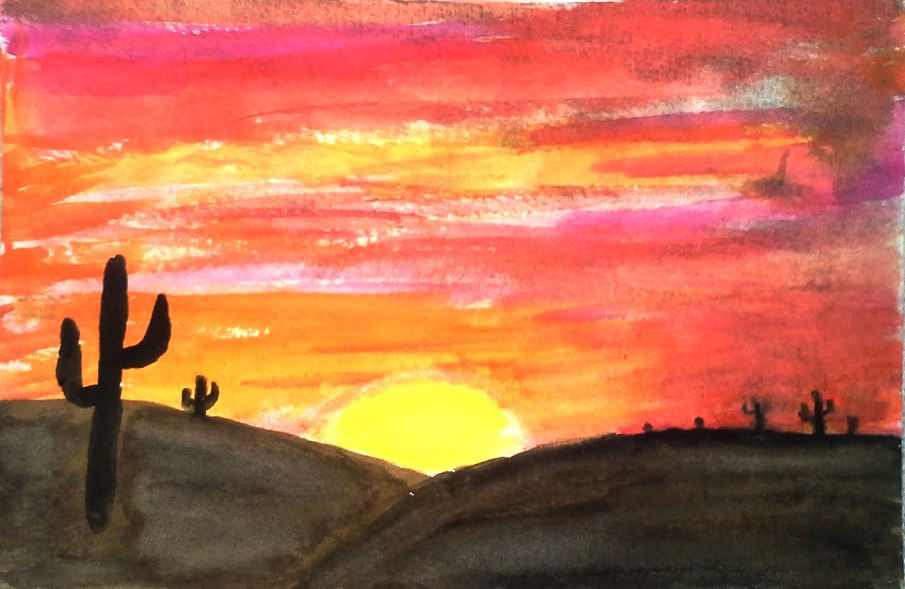
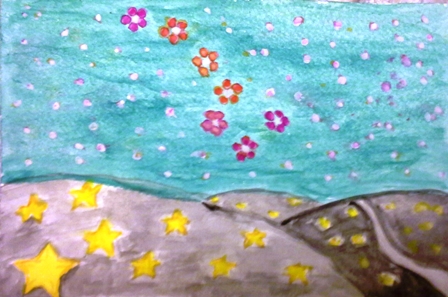
On a brighter note, here is my latest watercolor.

20170113_173153-1

***

(Pat Bertram is the author of the suspense novels Light Bringer, More Deaths Than One, A Spark of Heavenly Fire, and Daughter Am I. Bertram is also the author of Grief: The Great Yearning, “an exquisite book, wrenching to read, and at the same time full of profound truths.”) Connect with Pat on Google+. Like Pat on Facebook.
Trying to Fill the Hole in My Book

When my life mate/soul mate died, I went into a tailspin of grief that lasted years. It came as a shock to me because I thought I was stoic and had my feet so solidly on the ground that I would be sad and lonely and then get on with the business of grief. The sort of grief I felt, I had never heard of before. I’d seen a few characters in movies shrieSunrise/Sunsetk in agony at their husbands’ funerals , but these theatrics always seemed more for effect than as a sign that half their soul had been ripped away.

The few mentions of grief in novels were pretty lame. One book said, “She went through the five stages of grief.” That was the only mention of how the woman felt after the death of her husband, and it especially seemed phony because there are not five stages of grief or seven. There are an infinite permutation of emotions that come again and again in ever widening spiral until finally the spiral is wide enough you don’t feel the loss every moment of every day.

A character in another book cried one night, then woke up the next morning, with a determination to be done with tears, and she was. Again, this was a phony reaction. Sure, we can be determined to be done with tears, but grief has physical life of its own, throwing hormones out of whack and interfering with brain chemistry. Those physical effects cannot be ignored. They are there whether you want them or not. It’s not just that we go through grief, but grief also goes through us.

So, being both a writer and a woman who experienced grief, I decided I needed to write a novel about a woman going through grief. I wrote much of it during National Novel Writing Month the November after his death so I could show the emotions while they were fresh. To do the daily word counts required to “win” the challenge, I wrote whatever chapter came to mind.

Now, all these years later, I’m trying to put those scattered chapters into a reasonable facsimile of a novel. I’ve had to get rid of thousands of redundant words, had to winnow out many of the paragraphs that talked about her pain rather than showing her going through grief, and I have to struggle to make her likable even though she doesn’t much like herself. (Many of us don’t like ourselves when we are grief-stricken.) We are so bludgeoned into believing that we must be upbeat at all costs, that crying is for sissies, that emotions are to be controlled, that a character going through grief sounds like a whiner or a loser or a weakling.

I had envisioned the ending of the book as her driving off alone, probably because since I am alone, I can’t envision a different life. And anyway, it’s too soon for her to hook up. If I keep that same ending, I have a huge hole in the book, not just a lack of about 25,000 words, but a lack of character growth. You can’t have a woman whining and crying and screaming for most of a book, and then suddenly, it’s over with. What a cheat for the reader! If you suffer through all that sorrow, you need a bigger payoff. (Of course, in life there generally is no payoff, but in a story, there needs to be.)

So, this is what I’ve been doing the past couple of weeks when I haven’t been blogging — trying to figure out how to dig myself out of the hole. No success yet. Although I wanted to finish this book, I might have to set it aside when I get all those original chapters typed up and inserted into the proper place in the story. You can’t survive with a hole in your heart where love once lived, and a book can’t survive with a hole in its heart, either. I do have a cyber romance for her. I suppose I could fill that out a bit. I also have a a mystery about why her husband has a gun — I suppose I could fill that out too.

But still, the hole is there.

Could it be because I still have a hole inside me? If so, there’s not much I can do about it. Apparently, that hole is here for good.

***

(Pat Bertram is the author of the suspense novels Light Bringer, More Deaths Than One, A Spark of Heavenly Fire, and Daughter Am I. Bertram is also the author of Grief: The Great Yearning, “an exquisite book, wrenching to read, and at the same time full of profound truths.”) Connect with Pat on Google+. Like Pat on Facebook.

If You Want To Help Me, Buy My Books!

People often say that helping others makes you feel better, and it’s true, you do feel better. I used to try to help people, but then a rebellious thought hit me. Wasn’t it a bit arrogant to assume we know what other people needed? Has anyone asked the ones who are helped how they feel about receiving such help? Sure, in dire situations like the Louisiana floods, people rally around, as they should. But in everyday matters? Shouldn’t we wait to be asked before we decide someone needs to be helped? I’ve seen situations where the elderly are “helped” into being dependent, and the quality of their lives diminishes dramatically. Sometimes people no matter what their age rebel at a being given a helping hand, preferring to do for themselves. Which is at it should be.

I was perusing blog posts this morning, when I came across a post that mentioned me. The blogger referred to an open letter to blog readers I’d written where I said “So what if I still have a hard time being around coupled people? That’s my problem, not yours. So what if I still feel lonely and sorrowful after six years? That too is my problem, not yours. The truth is, missing one’s mate is something that lasts a lifetime. Think of all the good things (and bad) you have experienced during the past six years of your couplehood. Well, guess what? I haven’t had any of those experiences. I have done a lot of interesting things, but no matter what I do, what I experience, how I grow or stagnate, I do alone because my mate is gone. And if that still affects me, what difference does it make to you?”

I didn’t think I sounhandsded needy in that post, and I certainly didn’t feel needy. (Exasperated, maybe, but not needy.) Apparently, though, the blogger was upset that some of my friends still expected me to get over Jeff’s death and move on. Which was fine — I didn’t mind her being upset even though I wasn’t particularly bothered by what my friends said, especially since that wasn’t the gist of my article. (The gist was that I am a writer. Everything anyone does to me or around me belongs to me and provides ink for my pen.) What upset me was the conclusion to her post where she wrote that she and a couple of partners were starting a business and how they “wanted our business to help people like Pat.”

I’ve been online friends with this woman ever since we fell into the grief maelstrom about the same time, so I understand her desire to help others, but her assumption that I needed help made me uneasy. Diminished me. As if I she thought I couldn’t handle my life.

Her post reminded me of the beginning of my grief cycle, where people would write and say they wished they could take my pain away, or that they bled for me. I hated that. My grief is my own. I didn’t want anyone to take it away from me. I don’t need help, not that kind.

Right after Jeff died, a lot of people offered to help, but they wanted to help by giving advice. The one person who really did help found out I was defeated by the thought of cleaning that big house by myself before I moved out, so she showed up with a friend and carload of cleaning supplies and spent an entire day cleaning. Now, that’s help! But other kinds of help? No. I’m not interested, thank you. Unless you want to buy my books, of course.

Truly, if you want to offer me a helping hand, buy my books! Write reviews of my books. Do something to promote my books. What I need is a living, and since I am a writer, I would prefer to make a living from my books.

The rest of my life, for now anyway, I’m handling just fine on my own.

***

(Pat Bertram is the author of the suspense novels Light Bringer, More Deaths Than One, A Spark of Heavenly Fire, and Daughter Am I. Bertram is also the author of Grief: The Great Yearning, “an exquisite book, wrenching to read, and at the same time full of profound truths.”)

Open Letter to Blog Readers

To Whom it May Concern:

This is my blog, and I am allowed to say whatever I wish. When I first began blogging, the posts were impersonal — comments about the books I was reading, the books I was writing, and writing hints I garnered along the way.

mailboxThen, after the death of my life mate/soul mate, I got personal, very personal, explaining everything I was going through. Some people took offense at this, and I endured well-meaning suggestions to “get over it” because I knew my posts were helping people.

Now that my sorrow and loneliness treat me much gentler, I still write about how I am feeling and what I am doing about those feelings. The problem is that people I have met offline read my blog occasionally, which was not the case in the beginning, so I have been censoring some of my posts to make sure I don’t hurt anyone’s feelings. Well, apparently, I have gotten some backs up anyway, so no more censoring.

If you are upset by anything I say, remember, this is not necessarily about your truth. It’s about my truth. If I feel slighted, why shouldn’t I mention the slight especially if I don’t use your name? The only time I ever use anyone’s name is if the person is well known or an author who could use a bit of publicity, and so far, none of them feel hurt by anything I have said. If you don’t like what I write, if you take it personally, don’t read this blog. If you know me at all, you know I never knowingly hurt people. But I cannot sort out my truth if I don’t mention the things that trigger a spate of emotionalism or a feeling of unbelonging.

And there are a whole lot of triggers.

So what if I still have a hard time being around coupled people? That’s my problem, not yours. So what if I still feel lonely and sorrowful after six years? That too is my problem, not yours. The truth is, missing one’s mate is something that lasts a lifetime. Think of all the good things (and bad) you have experienced during the past six years of your couplehood. Well, guess what? I haven’t had any of those experiences. I have done a lot of interesting things, but no matter what I do, what I experience, how I grow or stagnate, I do alone because my mate is gone. And if that still affects me, what difference does it make to you?

I’m not asking you to feel sorry for me. I’m not asking you to make allowances. I’m not even asking you to notice what I am going through. But here’s a hint: if you don’t want me to write about what affects me, then don’t do things that affect me adversely.

I am a writer. Everything anyone does to me or around me belongs to me and provides ink for my pen.

***

(Pat Bertram is the author of the suspense novels Light Bringer, More Deaths Than One, A Spark of Heavenly Fire, and Daughter Am I. Bertram is also the author of Grief: The Great Yearning, “an exquisite book, wrenching to read, and at the same time full of profound truths.”)

Women Adrift

I hadn’t been posting my blogs about my internal journey lately. For the first time, I’ve actually deleted a post or two without publishing it, not wanting to look as if I were unbearably pathetic. Although it might seem like it, I am not really unhappy. (I’d be a lot happier if it weren’t so hot and I could walk off my melancholy, but I am not so foolish as to go hiking in the desert in 105+ weather.) I have, however, been going through a small grief upsurge lately, nothing much, just riding the waves of emotion. This particular time of sadness hasn’t been so much about the loss of my life mate/soul mate, though that particular trauma has colored my whole life and probably will color it for the rest of my days.

Part of this particular upsurge has come about because now that I am back at dance class, I’ve been spending too much time with a group of married women, mostly older women who are still married to their high school or college sweethearts though there are a couple who are divorced and remarried. While I have been struggling to deal with one loss after another, their lives have mostly continued on the same track. As I listen to their chatter about their houses, travel plans, the care and feeding of their men. I feel . . . unbelonged. I don’t know how to deal with this particular issue. Maybe skip class occasionally when I get too overwhelmed? Mostly, I handle the situation by concentrating on the steps and trying to ignore the rest of what is going on, but the constant reminder that I am alone still gets to me.

It wasn’t until today, though, speaking to a woman my age who is dealing with some of what I have been going through, that I realized the greater problem, a problem I haven’t yet figured out how to resolve.

This other woman came to the high desert about the same time I did. Like me, she gave up her life in a cooler climate and moved here to take care of an aged parent. Like me, she is now lost. She has been here too long to go back and pick up the life she was living. After all these years, she has too much to lose by leaving, but she doesn’t have enough to keep her here, not enough to make this place (especially in the 105 degree heat) feel like home.

Where do you go when you have no real ties anymore?

I met a few other such women on my trip, women tent campers who had nothing but a restlessness born of unbelonging. They too had left what they had known and moved in with an aged parent to care for that parent until that parent’s death. The fact that we designated daughters were not married, were widowed, or otherwise lived alone, and so it fell upon us to make the move, does not mitigate the circumstances. We were uprooted when we went to be a caregiver, and uprooted again when the caregiving came to an end.

And so we drift.

This particular facet of my life has been mostly subsumed into the whole grief spectrum, but it is something separate from all the other losses, something I haven’t had to face it until now. After my dad’s death, I stayed at his house until it was sold, did some housesitting, visited friends, and then rented a room until it was time to take my cross-country trip. Now that the trip is ended, at least until the end of the summer, I have to face the truth. I have too much to lose by leaving, but it’s not enough to hold me here.

And so I drift.

***

(Pat Bertram is the author of the suspense novels Light Bringer, More Deaths Than One, A Spark of Heavenly Fire, and Daughter Am I. Bertram is also the author of Grief: The Great Yearning, “an exquisite book, wrenching to read, and at the same time full of profound truths.”)

The Miracle of Grief

Today is the sixth anniversary of the death of a dear friend’s life mate/soul mate, and I keep thinking of her and the sorrow this day is bringing her. Not that keeping her in my thoughts will help her get through the day — or maybe it will. Sometimes it’s enough to know that another person understands the significance of the day, shares the tears, feels the jolt of realization at how long the loved one has been gone.

Because of this virtual vigil, I am abnormally attuned to literary death references.

In one novel I read in the last couple of days, the widow of less than a year admitted she still sometimes cried in the night, and her clueless friend said, “that’s okay. It won’t be okay a year from now, but for now, it’s still okay.” That sure gave me pause. Why wouldn’t it be okay? Crying in the night isn’t the same thing as hiding oneself away in the dark, refusing to face life. And it isn’t the same thing as having a screaming fit in the middle of a grocery store. It’s a realistic response to the death of a great love two or three or six years later.

Then today, I read a book where the man was still devastated by the loss of his wife after eight years. And it struck me how very odd it is that grief diminishes with time, rather than grows. Every year of that fellow’s bereft life stretched out like the desert he lived in, every year taking him further away from her, every year an eternity of aloneness. As the years slog on, one after the other, shouldn’t the pain of the loss grow, like layers of water color washed one on top the other until the shape of the missing part of one’s life is darkly hued?

And yet, the opposite is true. The shock, the PTSD, the hormonal and chemical changes that grief induces, the inability to breathe easily, the need to scream, the sheer immensity of the goneness all do recede. We find new ways of living, new ways of filling the emptiness (or trying to fill it), and we get on with our lives. And yet, the dead are still dead. And every year of our life is one more year they are dead.

Whether the dead are gone forever, gone back to the seed of energy from which they emerged, or still live in some otherworldly form, they are still gone from this life. Gone from our lives.

Eventually, we will be gone too, but meantime, that loss is always there.

Some people who remarry have to squelch any remaining feeling of loss because their new spouses don’t understand the shadow place the dead still hold in our lives. Others are lucky enough to marry those who understand. But whether or not there is a new love, it does not diminish the old one.

And yet, through some miracle of grief, our pain does not increase through the years, but instead, the water colors lay softly on our lives, reminding us of what we had, reminding us of the love we still feel.

***

(Pat Bertram is the author of the suspense novels Light Bringer, More Deaths Than One, A Spark of Heavenly Fire, and Daughter Am I. Bertram is also the author of Grief: The Great Yearning, “an exquisite book, wrenching to read, and at the same time full of profound truths.”)

Happy or Sad — It’s All Part of the Adventure

Sometimes I wonder if it’s time for me to stop talking about the ups and downs of my life, just stick with . . . I don’t know . . . upbeat thoughts, perhaps. I won’t, though. I do not believe it is either healthy or wise to always put on a smiling face. Life is good, but it is also cruel. Life is happy, but it is also sad. Life is easy, but it is also hard. How can we ignore the parts of life that might not be comfortable?

The truth is, although I can handle the downs of my life, the emotion lows, most other people can’t. It makes them uncomfortable. And rightly so. People who are smug in their couplehood don’t want to have to think of being the one left behind. People who own houses do not want to admit that some people might be homeless (not in a disfunctional sort of way, but in simply a roofless and rootless sort of way) through no fault of their own. People who are surrounded by family don’t want to know what it is like to be a generation of one.

Perhaps oddly, I have never considered happiness something to pursue. It seems more of a hindsight sort of thing, realizing after the fact that one was happy, which makes happiness a thing of the past, not the present, and therefore irrelevant. Being unhappy at times in the present is not a crime. Sometimes not being particularly happy is a proper response. Most reasonable people, in a hurricane, try to get out of the wind, not revel in the devastation. And above all, I am reasonable.

It is not just the loss of the brother closest to me in age ten years ago, the loss of my mother nine years ago, the loss of my life mate/soul mate six years ago, the loss to mental illness of my older brother two and a half years ago, and the loss of my father one and a half years ago. It’s also the loss of my livelihood (my life mate and I were in business together; although I am a writer, I am not one of the lucky ones who make a living at it). The loss of my home — twice (once six years ago when I came to the desert to take care of my dad, and then again a year and a half ago when my dad died.) And the loss of the feeling of purposefulness more times than I can count. (Lost the feeling of purposefulness that came from building a coupled relationship, from taking care of the sick and the dying, from grieving.)

Considering all that pain and loss, I do not think it is unreasonable to still have times of sadness. To still have times when death makes me cry. (I ran over a snake this morning, couldn’t stop in time, and I cried over the pain and eventual loss of that beautiful creature.)

I do not need to be cured. Happy or sad, I am perfectly fine. Happy is easier, of course, but why does life have to be easy?

I often mention my difficulty finding a place to live, but it only bothers me sporadically. Like when the outside temperature is over 100, and I am exhausted. Then life gets daunting. Meantime, I am staying in an incredible part of the desert, at the foot of the Ord Mountains. I have to drive the worst road imaginable, but I have made new friends, hiked some glorious terrains (and gloriously hot terrains), will go hiking tomorrow with a woman who can show me hidden trails. I am negotiating with a fellow for a room in his house for next month (and space in his garage!). And if that falls apart, I will stay here on the road from hell another month. And if that becomes impossible? Well, something else will come along. Or not.

Happy or sad. Comfortable or uncomfortable. Easy or hard. It’s all part of the adventure.

***

(Pat Bertram is the author of the suspense novels Light Bringer, More Deaths Than One, A Spark of Heavenly Fire, and Daughter Am I. Bertram is also the author of Grief: The Great Yearning, “an exquisite book, wrenching to read, and at the same time full of profound truths.”)

***