Desert Revelation: Dealing with Life on My Own

People often tell me how sorry they are that I’ve had no signs from my dead life mate/soul mate, but the truth is, even if he does still exist somewhere, there is no reason for him to try to contact me. A sign from him wouldn’t change anything, not his life, not his death, not my missing him. And it wouldn’t change my life.

I am not an Ebenezer Scrooge who needs to be shown the effects of my evil ways, nor am I a George Bailey who needs to be shown the effects of my benevolent ways. I do the best I can each day, trying to be kind to others, trying to be kind to myself.

All my life, I’ve studied religions, philosophies, mythologies. I’ve even had strong beliefs at various times, and have lived accordingly, though those beliefs have shifted through the entire spectrum of theological thought. I haven’t just been living haphazardly with nothing in my head but me me me. Whatever lies beyond this life, whether we retain our individuality or our energy becomes part of the “everything,” it isn’t germane to my life here on Earth since this is the only life I know. Understanding the truth of my existence won’t change anything I do.

I still question, of course, because that’s what my life is all about — quest(ion)ing. As with all quests, it’s the journey that counts, not the elixir of truth you find at the end. Even if you were shown the truth ahead of time, until you become the person who understands that truth, the truth remains obscure.

And so is this blog post — obscure. But I don’t mean it to be. I’m just trying to put today’s desert revelation into words. I am still prone to strange and mystical thoughts on my daily walks in the desert, though the thoughts could be the result of heat baking my brain instead of true insights. But this one feels true.

As much as I would like to talk to my mate, to find out how he’s doing, to know if he’s glad he’s dead, it wouldn’t change anything. I call him my soul mate because while he was alive, we had an incredibly strong connection, but I don’t think he’s actually sharing my soul. He’s his own person, on his own quest, and the further I get from our shared life, the more I feel the truth of that. Besides, I have my own quest to deal with, and it’s all I can handle right now.

Grappling with Death

A friend has been dealing with a spate of deaths in her life, and she’s trying to understand the purpose of them. I hope she succeeds. Death is so very hard to deal with, and the worst part is the seeming senselessness of it. I’ve been grappling with the subject for more than two years now, ever since the death of my life mate/soul mate, and I haven’t a clue what the purpose of death is. Well, of course, I understand the purpose on a global scale — the species needs to be constantly revitalized — but on a more personal scale, what is the purpose of these deaths? Of any death?

I know why my life mate had to die — his body was destroyed by an invading army of malignant cells, and he could no longer function — but is there any purpose to his death?

There certainly isn’t any purpose for me. I thought I’d feel free once I no longer had to live under the constraints of his illness, and maybe someday I will feel free, but for now, I’m lonely, sad, angry at times, and miss him always. Perhaps his death is a growth experience for me, but if he hadn’t died, I wouldn’t have needed to grow in this particular direction. And anyway, his death is way to big a price to pay for something so paltry.

Was there a purpose for him other than to be done with his suffering? This leads me to the equally unanswerable question of why he had to suffer in the first place. Who chose for him to suffer? He sure as heck didn’t — he did everything he could to live a healthy life, but pain dogged him all his years. (I’m sorry, but if your belief system suggests that we choose our pain, I don’t want to hear about it.)

Even if there is a purpose to death, one that we are ill equipped to understand, who chooses who gets to live and who has to die (or is it better phrased, “who gets to die and who has to live?”). Is there a moving finger writing our deaths, or is it blind chance? Blind chance doesn’t seem to be any way to run a universe, but what do I know? I don’t even know how to run something as commonplace as a car. I can drive, but making the car run when something goes wrong is beyond me.

Maybe someday my friend and I will be able to understand the purpose of death, but I doubt it, at least not while we are alive. (I just realized — every time I write about some facet of death, I post it under the category of life. I wonder if there is a clue in that.)

Two Years, Two Months, Two Weeks, And Two Days of Grief

Two years, two months, two weeks, and two days. That’s how long my life mate/soul mate has been dead, and I still can’t make sense of it all — our meeting, the years we shared, his death, my continued life.

Neither of us had every expected (or wanted) to share a life with anyone, and yet we spent more than three decades together. Our meeting was almost miraculous. In a fit of loneliness, he wished he had someone, and the next week, I walked into his store. We started out with such hope, but our life together was no fairy tale. Much of it was wonderful, more vital than anything I could ever have imagined, yet we were trapped by various failures, not the least of which was his increasingly poor health. I was so tired of it all, so exhausted by trying to hold myself together, that a few times that last year I wished he’d die and get it over with. I never said it aloud, of course, but he knew. How could I have been so horrid? Shouldn’t I have been more patient? Wiser? Kinder? It’s a terrible thing, knowing I am not the woman I thought I was.

During the last few weeks of his life, we reconnected, and I remembered why I loved him.

And then he was gone.

I don’t understand how he can be dead. Well, obviously, I understand the biology of it — I watched him die a bit every day for a lot of years — but the man I knew in the form I knew is gone. Forever. I can’t wrap my mind around that. Even worse, I am forgetting him. My memories are drifting off-center, and I no longer feel the truth of him.

People used to tell me that he still exists in memory, but if so, he is dying a bit more every day. There could come a time when I don’t remember him, when I only remember his absence. I can feel it happening already. Some days now it seems as if he were a stranger I knew long ago rather than a person with whom I spent most of my waking hours for more than half my life. I don’t know whether I should cling to the memory of him, even if it is skewed, or if I should let the memory of him fade and simply deal with what life brings me every day.

I don’t understand my continued life, either. Was I really that woman? That woman who watched a man slowly die, who wanted the suffering to end, yet whose love was so ineffectual she couldn’t make him well or take away a single moment of his pain? That woman so connected to another human being she felt shattered into a thousand pieces after his death? That woman who screamed the pain of her loss to the winds? All these months later, I still don’t know how to deal with his death. Don’t know why I continue to be sad. Don’t know why I feel his absence acutely when I barely remember him.

Mostly I’m trying to look at the future as an adventure, but I’ve had so many immense changes in my life in the past few years, with more on the way, that I feel as if I have no foundation to build on. That feeling, at least, is not true. I have the foundation of all I have done, all I have learned, all I have become — what I don’t have is certainty and security (though no one really does).

And most of all, what I don’t have is him. But perhaps I never did? It could be we were simply passing by and stopped to visit awhile before we continued our journeys. Alone.

“I don’t worry about a thing because I know nothing is going to be all right.”

A friend told me about an old woman who was the most joyful person she knew, though the woman had suffered grievous losses in her life. I couldn’t fathom how the woman could be so joyful, and yet now I can. . . . almost. Perhaps the woman knows that everything comes to an end. Perhaps she knows that the little things are important. Perhaps she has found herself in all of the losses.

Or, like me, perhaps she has an awareness of death, of knowing, deep down, that her life will end, maybe even badly. Since I’ve become steeped in the grief culture, I’ve heard stories of terrible deaths, either doctors keeping people alive past any usefulness or alertness, or the person’s own will keeping them alive long after they wanted to be done with it. I’ve heard stories of so much pain and suffering that it’s amazing any of us ever manage to smile let alone be joyful in such a world.

We all know we are going to die, but after the death of someone we are profoundly connected with, we KNOW deep within our psyches. People tell me not to dwell on death, and I don’t. It’s more that the knowledge of death now is a part of the very fabric of my being and can never again be unknowable. This knowledge makes life on Earth seem both more and less significant, which adds a strange flavor to my days. I don’t know how this knowledge will affect me long term, but there is freedom in knowing that things will end.

I heard a song today by Mose Allison. “I don’t worry about a thing because I know nothing is going to be all right.” It sounds cynical, but it isn’t necessarily negative unless you give up and stop trying to do whatever you can. Does it matter what success you had here on earth when you are dead? Does it matter how many toys you had when you died? Of course not. It only matters that you lived.

It’s like writing — all stories are the stories of someone’s life, and as such, end in death. What we as writers do is end the book at an upbeat point for a happy ending and an ironic place for a more tragic ending, but still, life continues on past those significant moments.

I know how my life is going to end — the same way all of our lives are going to end. It will end in death. I’ve always been a bit of a worrier, but with death on the horizon (the far horizon, considering my longevity genetics) worry seems a bit foolish. All that counts is today — not future successes or failures, not future acquisitions or losses. Just today.

There is peace in that, maybe even joy.

New Steps on the Journey Through Grief

I’ve reached a new level of grief. I’m still sad, but I can barely remember why. I still feel the absence of my life mate/soul mate, who died two years and two months ago, yet I can barely remember the living man. The life I shared with him is receding, as if it happened to someone else. There is still a hole in my life and a decided lack of “life” — no sparks kindling new ideas, no electricity of excitement, no radiance — but I no longer have anything with which to compare that lack of life. It’s as if these sad and lonely days are the way it has always been for me.

During those years when we were together, I had someone to talk to, someone who could help put life into a different perspective, and now there is just me. To tell the truth, I still talk to him, but he never offers a different perspective. I used to feel a tenuous connection to him (or at least to our shared past) when I talked to him, but now I have no idea if I’m even talking to him or simply talking aloud.

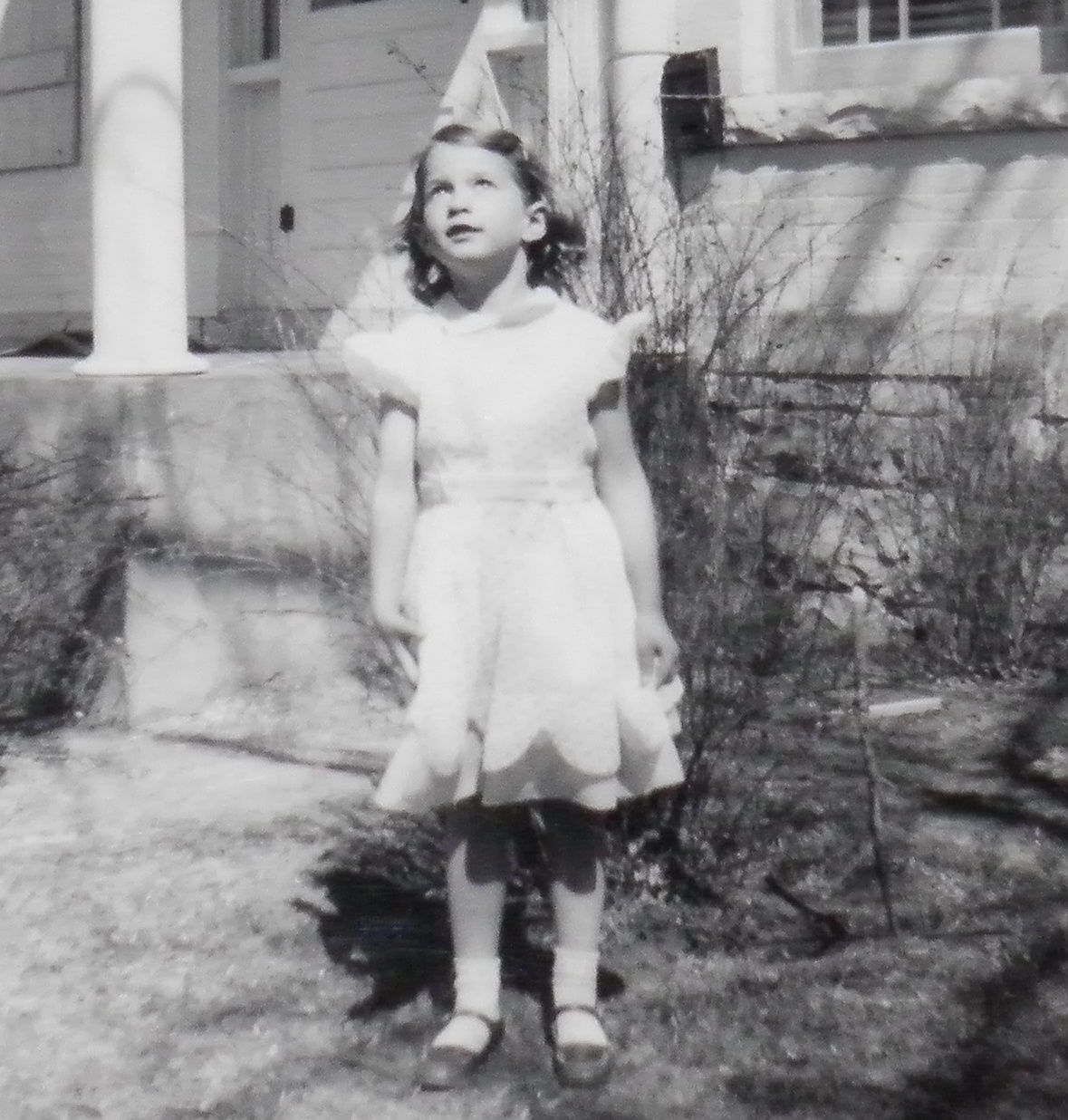
With our shared life moving further into the dim past and my memories of him fading, I worry that I will forget him. I know I’ll forget the person I was when I was with him. No matter how I change, I’m always just me, and yet, (for example) I cannot remember this little girl, cannot remember being her. She has receded far into my past. Or perhaps she’s become subsumed into my current persona? Either way, she no longer exists even in memory. And so will the person I was with him disappear as I move further into the future without him.

The irony is that I was in such pain after his death that I made a special point to experience new things so I could create new memories. I thought new memories would help cushion the severity of the break between our shared life and my life alone, yet those very memories are taking me further away from him.

I might not completely forget him. I have moments when I flash onto a vivid image of him, and as heartbreaking as those moments are (because I am reminded once again that he is dead), they are all I have left of him except for some of his things. It seems cruel that their things outlive the dead. Shouldn’t people live longer than things? Or else, shouldn’t the things disappear when our loved ones do? And yet, as my memories fade, the things I kept of his and the things I kept of ours, such as our household goods, will be all I have to remember him by.

Every new step on the journey through grief brings its own grief. It saddens me that he is forever receding from me. Yet I am still here, and I must live. I can’t cocoon myself in memories of him and our life together. I can only go on doing what I have been doing — experiencing new things and making new memories, even if they take me further away from him.

Two Years and Two Months of Grief

I never expected to feel so sad two years and two months after the death of my life mate/soul mate, and I never expected to still be so easily brought to tears. But then, I never expected most of what I’ve experienced with grief, especially since I tend to be more contemplative and stoic than emotional. As I’ve learned, though, grief might manifest as emotion, but it is so much more than that — it’s a restructuring of the world as we know it, a reconfiguring of reality. And that takes a lot of energy, both mental and physical. And it takes time. A person who was a major part of our life is gone, ripping a hole in our reality, and our brains are struggling to patch the hole (or at least to figure a way around it), which causes an incredible amount of stress.

Part of that restructuring is a new consciousness of death. We all know we are going to die, but after the death of someone we are profoundly connected with, we KNOW deep within our psyches. This knowledge makes life on Earth seem at once more significant and less vital (or do I mean more vital and less significant?), which is why so many of us bereft struggle for meaning. Some of us will eventually settle back into every day life, but for the rest of us, life will always seem a bit off, as if a part of us knows we are aliens in an alien land.

Mostly, I’m doing okay. If we were to meet, you’d have no idea of my ongoing sadness. I don’t try to hide it, it’s just that the sadness has become such a part of me that it doesn’t impede my living. I can smile and laugh and chat as if everything were fine, and it is, for that moment. But when I am alone and not focused on a task, sorrow percolates to the surface. Sometimes our life together seems very far away, as if it were only a dream born of loneliness, but this ongoing sadness reminds me of the truth — I once was with someone I loved deeply, and now I’m not.

I never feel his presence, but his absence hovers beside me as if it were a living thing. When I make a salad, I am aware that he is not washing the vegetables for me. When I am at the grocery store, I am aware that he is not helping pick out what we need. When I am exercising, I am aware he is not in the room. When I need someone to talk to, I am aware he cannot respond. When I watch one of his many video tapes, I am aware he is not sitting next to me. Every time I use something of ours, even something as inconsequential as a spoon, I am aware that he has no need of the article.

I don’t purposely think of such things. In fact, the awareness is not a thought. It’s just that everything I do and everything I own echoes with his absence. Maybe someday even the echo will die away and all I’ll have of our shared life are fading memories. But no matter how I feel or what I forget, I’ll always be grateful that an extraordinary man shared his life with me.

***

Pat Bertram is the author of the suspense novels Light Bringer, More Deaths Than One, A Spark of Heavenly Fire, and Daughter Am I. Bertram is also the author of Grief: The Great Yearning, “an exquisite book, wrenching to read, and at the same time full of profound truths.” Connect with Pat on Google+. Like Pat on Facebook.

Grief: Haunted by the Hard Questions

One of the more confusing aspects of grief after the loss of a life mate, a child, or someone we were deeply connected to is that we are haunted by the hard questions. Who are we? Why are here? Is this all there is? Where did our loved ones go? Will we see them again? What is the meaning of life, and probably most haunting of all, what is the meaning of death?

Many of my fellow bereft read everything they can find about such matters of the spirit, but I didn’t — I’d spent years on a quest for truth and reality, and I’d come to believe that God is the spirit of creativity that fuels the universe, and we are each a part of that creativity. I was content believing that our spirit/energy returned to the whole . . . until my life mate/soul mate died. Then all of a sudden, I didn’t want that to be the truth. I wanted him to continue existing as him, as the man he was.

I do think there is a deeper reality, I’m just not sure our conscious selves are a part of it. We are a product of our genetics, our hormones, our brains (anyone who has had to cope with an Alzheimer’s sufferer or a loved one who had cancer in their brains, and found a stranger in that familiar body, knows how much the brain controls who we are). So what  survives, if anything? The part of us we never knew — the un-sub-conscious? If so, how would we know who we were after we were dead? Is it just the energy in our bodies that is released? If so, for sure we would not know who we were.

On the other hand, without some sort of afterlife, life simply does not make sense. What’s the point of it all? To survive? For what — more survival until there is no more survival? To help others? Why? So they can survive? For what?

If there is life after death, what do you do with eternity? You have no ears to hear music, no eyes to read or watch a movie, no legs to walk, no hands to caress another, no mouth to talk, no brain to think. Sounds like a horror movie to me. And what will we do if we meet again? Bask in each other’s light? That would get boring after a minute or two.

When we met — my soul mate and I — I still believed in a cosmic plan, and I had the feeling that he was a higher being come to help me on my quest to the truth. But now? I no longer believe there is a universal truth, and I don’t think he’s waiting for me, though I act as if he is. It’s better than believing that he is gone forever.

And perhaps he does still exist in some form. What do I know? One thing I have learned from my grief is that a human life is a spectrum. You don’t notice it so much when you are both alive, because you are both in the moment, both always the people you have become and not yet the people you are becoming. But when one of you dies, his becoming ceases, and you see his life as a whole. The person he was when you met is every bit as alive in memory as the person he was the minute before he died. The youthful man, the middle-aged one, the healthy one, the sick one are all merely spaces on the spectrum of his life.

It’s possible the spectrum of a human life is the same sort of spectrum as light — beginning long before the visible part appears and ending long after the visible part disappears. Of course, the non-visible parts of the electromagnetic spectrum aren’t light but sound and radiation and other invisible waves, so whatever exists outside of the visible human spectrum might be something completely different from we can ever imagine.

It’s also possible that our bodies are like television channels, receptors for certain wavelengths, so that our “souls” actually reside outside our bodies, but still, the selves that we know are defined by life in our bodies. So, again, we come back to the same question, what of us survives?

Grief is an isolating experience, made more so by our spiritual quest. While our family and friends continue on their same daily path, we find ourselves going in a completely different direction. There are no answers to our questions, but still, they haunt us, and we try to figure out a way for it all to make sense.

But life will never make sense because we are still here and our loved ones are gone. Where is the sense in that?

The Two-Year Anniversary of the Worst Day of My Life

The worst day of my life was not the day my life mate/soul mate died. That particular day was sadly inevitable, one I actually had looked forward to. He’d been sick for so long and in such pain, that I was glad he finally let go and drifted away. After he died, I kissed him goodbye then went to get the nurse, who confirmed that he was gone. She called the funeral home, and I sat there in the room with him for two hours until they finally came for him. (They came in an SUV, not a hearse. And they used a red plush coverlet, not a body bag.) I might have cried. I might have been numb. I don’t really remember. All I know is that I sat there with him until almost dawn. I couldn’t even see his face — they had cleaned him and wrapped him in a blanket — so I just sat there, thinking nothing.

The worst day of my life came fifty-five days later, exactly two years ago. I spent all day cleaning out his closet and drawers, and going through boxes of his “effects.” He had planned to do it himself, but right before he could get started, he was stricken with debilitating pain that lasted to the end of his life, and so he left it for me to do. I would not have undertaken the task so early in my grief, but I had to leave the house where we’d lived for two decades and go stay with my 95-year-old father, who could no longer live alone.

I knew what to do with most things because my mate had rallied enough to tell me, but still, a few items blindsided me, such as photos and business cards from his store To Your Health (where we met). Every single item he owned was emotionally laden, both with his feelings and mine. The day was like a protracted memorial service, a remembrance of his life, a eulogy for “us”.

How do you dismantle someone’s life? How do you dismantle a shared life? With care and tears, apparently. I cried the entire day, huge tears dripping unchecked. I have never felt such soul-wrenching agony. I’ll never be able to do anything else for him, so the work and my pain was my final gift to him. I was glad I could do that one last service, but I sure don’t want to ever go through anything like that again.

The only good thing about living the worst day of your life is that every day afterward, no matter how bad, will be better than that day.

I’m not particularly sad today — the sadness came yesterday. Despite it being Saturday, my sadder day, and a day of sporadic tears, I woke with a smile. I’d dreamt we were cleaning out the house (which is odd considering that I did not remember until afterward that today was the anniversary of when I went through his effects). In the midst of the usual chaotic dream images, there was one short clear moment. We were sitting side-by-side. He smiled at me, kissed me gently, and I rested my head on his shoulder.

This was the first time in almost two years that I’d dreamt about him. It was lovely seeing him again, if only in my dreams.

There Are Worse Things Than Not Being Happy

The other day I saw a quote on Facebook: Just because I am laughing, it doesn’t mean I’m happy. Just because I’m smiling, it doesn’t mean I don’t want to cry. I just believe in not emphasizing the negative.

There are worse things than not being happy — living a lie, for example. According to a team of researchers led by Iris Mauss at the University of Denver, “Valuing happiness is not necessarily linked to greater happiness. In fact, under certain conditions, the opposite is true. Under conditions of low (but not high) life stress, the more people valued happiness, the lower were their hedonic balance, psychological well-being, and life satisfaction, and the higher their depression symptoms.”

In other words, living a lie and pretending to be happy is exhausting and stressful and can make you even more unhappy.

Other studies have shown that we are seldom happy in the present. We are happy in retrospect. Think of some of the happy times in your life. Back then, were you aware you were happy? Chances are, you were involved in living and didn’t bother to stop to think how you were feeling. Happiness is elusive. If we go chasing it, we don’t always find it. If we stop chasing it, happiness often finds us. And even if happiness doesn’t find us, being unhappy is not necessary emphasizing the negative.

When my life mate/soul mate died, I had no intention of sharing my unhappiness here on this blog. I’d intended to keep it private, but I became so frustrated with writers whose characters blithely went on with life despite devastating losses, that I figured someone ought to tell the truth about how it feels to lose the one person who connects you to life. Because of my grief writing, I gained support, friends, and a mission — to tell people that it is okay to grieve, that it is important to grieve, and that they will survive. If I had kept my grief to myself and pretended everything was okay in my life, I would have missed out on these positive results, and in the end, I would have been even more unhappy.

It has also been a blessing to be able to reach out to other bereft. Grief is so isolating that it brings comfort to know that others have felt this same sort of all-encompassing loss, and the only way to do that is to be vulnerable and show the hurt. This is not being negative. It is being realistic.

Being realistic sometimes seems pessimistic, sometimes optimistic, but it is neither. It’s seeing the truth of the matter. A pessimist magnifies the negative side of the truth, and the optimist magnifies the positive side, but neither are being realistic. Nor does being realistic adversely affect the outcome of a situation, because a realist knows that no matter how bleak the future looks, there is always a possibility that things will work out.

There is a chance that I will find happiness in the future or it will find me, and if not, well . . . at least I won’t have the stress of living a lie.

When You Lose the Person Who Connects You to the World, What do You Become?

“When you find that one person who connects you to the world, and that person is taken from you, what do you become then?” —John Reese (Person of Interest)

John Reese might be fictional (at least I assume so; I had never of Person of Interest until I saw this quote) but his question is one many of us bereft are pondering. When that one person is first taken from us, we wonder how we are going to survive. We never figure it out, but still, the days pass, then the weeks, months and years, and we realize that somehow we did it. We survived. Then the question facing us is what do we become.

I’m still waiting to find out the answer. So far, I seem to be just . . . me. Sadder, but me. I keep hoping that grief will bring some sort of mind/soul expansion that will allow me to become . . . well, something other than the same person I have always been. I hope for wisdom, perhaps a glimpse into the eternal mysteries, maybe a greater understanding. But so far, such experiences remain beyond my grasp.

I am trying to re-establish a connection to the world, though. For a long time, I felt as if I were balanced on one foot, the other suspended above the void. Occasionally I still have that stepping off into nothingness feeling, but mostly I’ve been trying to concentrate on actually being on Earth. To notice my connection to the world. To feel the ground beneath my feet. To be aware of my breath mixing with the air around me. To feel the wind against my face and the sun against my back. All these things connect me to the world whether I feel connected or not.

During the past few days, I’ve noticed that I’m letting go of the past, or at least feeling an easing of its grip. I haven’t wanted to let go of the past because in the past I was loved. I had mate — a life mate, a soul mate, a play mate. In the past I wasn’t alone. Nothing can bring back the past, and to be honest, I don’t want to bring it back. In the past, my mate was miserable, in pain, dying by inches every day. But without the past, or my connection to the past, what will I become?

Or is that the wrong question? Perhaps the important question is not what I will become, but what will I be at any given moment. If I try to live each moment as it comes, whether it comes with tears or a smile, with heartache or peace, then perhaps all these moments of being will lead to becoming.