Lingering Effects of Grief

Even as my pain subsides, even as my memories of a coupled life fade, the effects of grief linger.

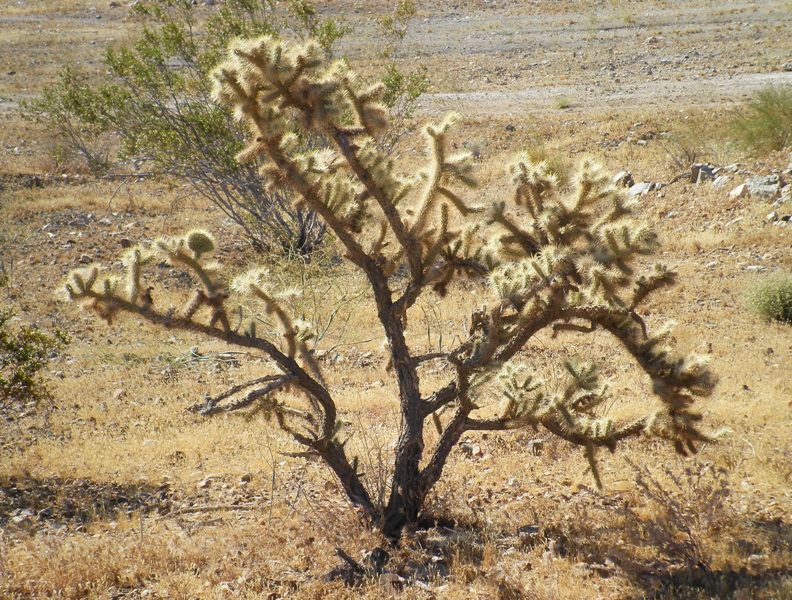
When the significant person in your life dies, the tearing away of their presence from your soul creates ripples of changes in your life. In my case, after the death of my life mate/soul mate, I relocated a thousand miles from our home, exchanging a mountainous climate for a desert one. As difficult as that change was, it turned out to be the easiest, probably because my long walks in the desert help me feel connected to the earth. Other changes are harder to deal with, such as loneliness and sorrow, a heightened sense of mortality, and mood swings.

During most of my life, I tried to keep my emotions on an even keel in the belief that what goes up must come down, but now such control seems beyond me.

At the beginning of my grief, I got a newsletter from hospice warning about mood swings and explaining that euphoria followed by despair is common. I didn’t pay much attention to the article because I was not prone to euphoria. I was grief-stricken, heartbroken, and soul-shattered, and I stayed that way for months on end.

Now, though, I can laugh one minute and cry the next. I succumb to irritability more often than I would like. And I am overly sensitive. Things that once I could have taken in stride now bring me to tears, as if something in me, an equalizer, perhaps, is broken. The bloody stump where he was ripped from my psyche is healing, but I am still very tender and sore, and that makes me subject to the vagaries of emotion. (Though I still haven’t experienced any euphoria.)

I don’t like this part of the process. Well, of course not. No part of the grieving process is fun, but there is a big difference between the agony of a soul crying out, “Where are you? Can you hear me?” and the pettiness of a woman upset because someone who promised to call didn’t.

Apparently, part of me believes that I paid my dues with my great loss, and now I deserve to have everything go my way. But life is not like that. Life does not keep a balance sheet.

I know that as I continue to assimilate my grief, I will eventually regain my equilibrium and find a way to deal with the minor heartaches and setbacks of life. But for now, all I can do is cling to the wildly swinging pendulum and hope I can manage to hang on until I find peace once again.

Life, Grief, and Entropy

For just a moment yesterday, while I was walking in the desert, all seemed clear to me. Well, all as related to my grief that is. I could see that things happened the way they needed to. My life mate/soul mate and I could not continue the life we’d been living. We were trapped in an untenable situation, not just because of his health and our finances, but because the place we were living was stifling us. There was nowhere to walk except a 600-yard-long road, nothing to do we hadn’t already done a hundred times, nothing to see that we hadn’t seen a thousand times, but we couldn’t leave. He was too sick to survive a move. Besides, he was comfortable where he was.

Those years of entrapment seemed to go on forever, the only changes being a continual worsening of his health, a continual increasing of his pain, and a continual deadening of my senses.

We were living a classic example of entropy. Entropy is a measure of the amount of energy that is unavailable to do work, and it tends to increase in closed systems. In other words, in a closed system, things break down and stop working. Because of his health, we could not do anything to stop the entropy of our lives. We could only endure.

And then one day, he was set free from his pain-wracked body and cancer-ridden brain. And I was set free from the horror of entropy.

It seemed to me, yesterday, that our lives worked out as they should have. That in a terrible way, we both got what we needed.

I felt at peace most of the day, but the feeling didn’t hold. Last night, the thought “But he’s dead!” hit me. And so sorrow descended once more.

I can see, though, that such moments of clarity will increase until I can finally accept that yes, he is dead, but so what? Someday, I will be dead, too. Meantime, I live to battle entropy another day.

Grief: The Twenty-Seventh Twenty-Seventh

My life mate/soul mate died of inoperable kidney cancer on the 27th of March, 2010, and today is the twenty-seventh twenty-seventh I have managed to survive. Some such dates are fading — I no longer count the days or weeks, no longer count my sad Saturdays (he died on a Saturday, and always on Saturday, I feel an upsurge of sorrow), but I am still very aware of the day of the month he died.

This twenty-seventh month marks a big change. For the first time in my long odyssey, I am more grateful for what I had with him than I am sorrowful for what I didn’t have. I can even smile when I think of him, though I don’t think of him as often as I used to. For the first two years of my grief, he consumed my thoughts. It was as if I were afraid to stop thinking of him, lest he disappear completely from life and memory. Despite that vigilance, my memories of him are fading, and while I still feel the sorrow, still feel the immense hole in my life, I am forgetting the particulars. Forgetting, even, what he looked like.

This forgetting seems like a death in itself, but I can’t keep him here by thinking of him. Though I wish with all my being that he were strong and healthy and living, he is gone. And I am not.

In recognition of this, I have put away the only two photos I have of him. I could not bear to look at the pictures for the first fifteen months after he died, but I gradually inured myself to the sight of them. For a while, the images brought me comfort, but now they only remind me of my sadness. Maybe someday I will set out the photos again; meantime, I am learning to survive without this crutch. The photos might not be a crutch so much as a reminder, or maybe simply something to talk to, but whatever these pieces of paper are, they are not him.

I am still beset by tears and fears, and there’s a chance I always will be. His death seemed to open a crack in the EveryThing, and I could almost feel the winds of eternity. Some of the wildness of my grief and the accompanying panic came from this contact with a truth I am not yet capable of understanding. I don’t know what I will become because of the experience, but even though I don’t feel any different, I know I have changed in some fundamental way.

I am weary of trying to find my way, weary of trying to work around the immense hole he left behind, weary of trying to emphasize the good in my life. Perhaps one day, I won’t have to expend so much effort to find ways and reasons to live. I will simply . . . live.

Grief: Finally Grateful

Two years and three months after the death of my life mate/soul mate, I am finally beginning to understand that this is my life and my life alone.

Sharing a life with someone might shroud the basic aloneness for a while, but after the person dies, it eventually becomes apparent that your destiny belongs only to you. (Because, obviously, if it belonged to both of you, he would still be here.)

Surviving a mate is hard on many counts. The sheer agony of his being ripped from your life leaving you feeling amputated. The bewilderment and angst that come with confronting death. The collateral losses that go along with losing a mate, such as the loss of one’s connection to the world, the loss of one’s best friend, the loss of someone to share the burden of decisions and chores. But beyond the obvious hardships are the more subtle problems of loving someone who is no longer alive, of continuing to worry about their wellbeing, of feeling bad for them that their life was cut short. (Much of my grief was for him, a posthumous empathy for his suffering and for his dreams that never came to fruition.)

I do not know the truth of his death — perhaps he is sunning himself on some cosmic beach or playing with a couple of galactic cats. Perhaps he is glad to be dead, assuming he even knows that he is. The corollary to this being my life and my life alone is that his life is his alone. Despite all that we did together, all that we shared, all that we were together, I am no longer part of his life.

In some ways, his death set me free. Our lives had become so constrained because of his illness and our financial concerns, that it trapped both of us in a world that was barely tolerable. (I was going to say that it was unbearable, but we did bear it.) His death brought an end to that world for both of us, though losing him catapulted me into the world of grief.

I am not over my grief — I never will be — but my sorrow is being assimilated into my life, and I am coming closer to an acceptance of the gift of freedom he gave me. I am still prone to tears and fears, but finally, after all these months, I am able to think of him and smile, and be grateful that he shared his life with me.

I Am Crying, Forever Dying

I had a grief upsurge yesterday, probably because I haven’t been grieving much and it’s been building up, but the upsurge itself was instigated by a song.

It started with my session of dance therapy (I call it that, but all I do is prance around for two or three songs in an effort to add a bit of lightness to my step and my life). The first song was “Cry Cry Cry” by Highway 101.

I wonder if he knows what he’s done to me
I’m gonna love that boy till the day I die
Till the day I do I’m gonna cry cry cry.

What a mood brightener! But I managed to get through that song dry-eyed. I even managed to get through the second song without tearing up — “You’re in My Heart” by Rod Stewart

You’re in my heart, you’re in my soul
You’ll be my breath should I grow old
You are my lover, you’re my best friend
You’re in my soul

Yikes. Not the song to cheer up a woman who has lost her mate. But the third one did me in — “Sailing” by Rod Stewart.

Can you hear me, can you hear me
Through the dark night far away?
I am dying, forever crying
To be with you, who can say.

Even worse, I found myself haunted by those words all day yesterday and into today. Oddly, though, I transposed the words, and what went around and around in my head was “I am crying, forever dying.”

Out walking in the desert today, I had a bit of a mystical revelation. (Or sunstroke. It was hot out there.) What if that’s the truth of it? We are forever dying? Not just now in this lifetime, but forever? What if life is the aberration, and dying (not death) the norm?

Some scientists say the universe is dying, that there are more stars dying out than being born. Maybe someday, when it’s all over, there will be another big bang, and the whole cycle will start again. Perhaps each cycle is a single breath of “The EveryThing.”

I guess what I’m saying is maybe life as we know it is more of a static state than dying is. With dying comes transformation.

Did I mention that it was very HOT in the desert?

Dreaming of the Dead

I don’t often dream about my deceased life mate/soul mate, but last night was an exception. Perhaps my bloggerie yesterday, where I mentioned a revelation I had while walking in the desert, instigated the dream. The revelation — that having a sign from him wouldn’t change my life, that I’m already doing the best I can to be the best person I can be — was a pivotal point for me. Or perhaps it was because I’ve been going through the movies he taped and have thrown away some I know I will never watch. Whatever the reason, it was good being with him again for a few minutes.

I don’t think the dream was a sign from him, nor do I think he actually visited me. In fact, I knew it was a dream while dreaming.

In the dream, we were going somewhere on foot, and I realized that it would be cold before we got back, so I went inside to get a coat. In my closet were two of his coats — a jacket and a trench coat, which I have in fact kept. As I was pulling the jacket off the hangar, I remembered that I had gotten rid of most of his things after he died, and I panicked, wondering how to tell him that his stuff was gone. I left the room, and met one of the moderators of the grief group I had attended. He asked how I was, so I explained the situation, then I added, “It’s a good thing this is a dream, otherwise he would be really angry.”

In the dream, I was glad not to have to tell him his things were gone, and I’m glad I don’t have to tell him in real life. Even though he told me what to do with most things, he never told me what to do with his tape collection, and I don’t know what he would think of my throwing any of them away. But he is beyond caring about such things now.

Part of me wants to get rid of everything that reminds me of him — which would mean getting rid of everything I own. But part of me thinks there might come a day when having our things around me might help connect the disparate parts of my life — the years with him and the future years without him.

It still seems bizarre to me that a person’s things outlast him. In this age of obsolescence, you’d think it would be the other way around. Besides our household goods, his tape collection, and various things I have not been able to get rid of yet, I have a great many papers  in his handwriting — recipes, the list of video tapes, a foot-high stack of notes from his studies into health and nutrition, and various other notes I come across from time to time. Oddly, for something so personal, an unexpected glimpse of his handwriting doesn’t sadden me, which is a good thing. I’m sad enough as it is.

Desert Revelation: Dealing with Life on My Own

People often tell me how sorry they are that I’ve had no signs from my dead life mate/soul mate, but the truth is, even if he does still exist somewhere, there is no reason for him to try to contact me. A sign from him wouldn’t change anything, not his life, not his death, not my missing him. And it wouldn’t change my life.

I am not an Ebenezer Scrooge who needs to be shown the effects of my evil ways, nor am I a George Bailey who needs to be shown the effects of my benevolent ways. I do the best I can each day, trying to be kind to others, trying to be kind to myself.

All my life, I’ve studied religions, philosophies, mythologies. I’ve even had strong beliefs at various times, and have lived accordingly, though those beliefs have shifted through the entire spectrum of theological thought. I haven’t just been living haphazardly with nothing in my head but me me me. Whatever lies beyond this life, whether we retain our individuality or our energy becomes part of the “everything,” it isn’t germane to my life here on Earth since this is the only life I know. Understanding the truth of my existence won’t change anything I do.

I still question, of course, because that’s what my life is all about — quest(ion)ing. As with all quests, it’s the journey that counts, not the elixir of truth you find at the end. Even if you were shown the truth ahead of time, until you become the person who understands that truth, the truth remains obscure.

And so is this blog post — obscure. But I don’t mean it to be. I’m just trying to put today’s desert revelation into words. I am still prone to strange and mystical thoughts on my daily walks in the desert, though the thoughts could be the result of heat baking my brain instead of true insights. But this one feels true.

As much as I would like to talk to my mate, to find out how he’s doing, to know if he’s glad he’s dead, it wouldn’t change anything. I call him my soul mate because while he was alive, we had an incredibly strong connection, but I don’t think he’s actually sharing my soul. He’s his own person, on his own quest, and the further I get from our shared life, the more I feel the truth of that. Besides, I have my own quest to deal with, and it’s all I can handle right now.

Grappling with Death

A friend has been dealing with a spate of deaths in her life, and she’s trying to understand the purpose of them. I hope she succeeds. Death is so very hard to deal with, and the worst part is the seeming senselessness of it. I’ve been grappling with the subject for more than two years now, ever since the death of my life mate/soul mate, and I haven’t a clue what the purpose of death is. Well, of course, I understand the purpose on a global scale — the species needs to be constantly revitalized — but on a more personal scale, what is the purpose of these deaths? Of any death?

I know why my life mate had to die — his body was destroyed by an invading army of malignant cells, and he could no longer function — but is there any purpose to his death?

There certainly isn’t any purpose for me. I thought I’d feel free once I no longer had to live under the constraints of his illness, and maybe someday I will feel free, but for now, I’m lonely, sad, angry at times, and miss him always. Perhaps his death is a growth experience for me, but if he hadn’t died, I wouldn’t have needed to grow in this particular direction. And anyway, his death is way to big a price to pay for something so paltry.

Was there a purpose for him other than to be done with his suffering? This leads me to the equally unanswerable question of why he had to suffer in the first place. Who chose for him to suffer? He sure as heck didn’t — he did everything he could to live a healthy life, but pain dogged him all his years. (I’m sorry, but if your belief system suggests that we choose our pain, I don’t want to hear about it.)

Even if there is a purpose to death, one that we are ill equipped to understand, who chooses who gets to live and who has to die (or is it better phrased, “who gets to die and who has to live?”). Is there a moving finger writing our deaths, or is it blind chance? Blind chance doesn’t seem to be any way to run a universe, but what do I know? I don’t even know how to run something as commonplace as a car. I can drive, but making the car run when something goes wrong is beyond me.

Maybe someday my friend and I will be able to understand the purpose of death, but I doubt it, at least not while we are alive. (I just realized — every time I write about some facet of death, I post it under the category of life. I wonder if there is a clue in that.)

Two Years, Two Months, Two Weeks, And Two Days of Grief

Two years, two months, two weeks, and two days. That’s how long my life mate/soul mate has been dead, and I still can’t make sense of it all — our meeting, the years we shared, his death, my continued life.

Neither of us had every expected (or wanted) to share a life with anyone, and yet we spent more than three decades together. Our meeting was almost miraculous. In a fit of loneliness, he wished he had someone, and the next week, I walked into his store. We started out with such hope, but our life together was no fairy tale. Much of it was wonderful, more vital than anything I could ever have imagined, yet we were trapped by various failures, not the least of which was his increasingly poor health. I was so tired of it all, so exhausted by trying to hold myself together, that a few times that last year I wished he’d die and get it over with. I never said it aloud, of course, but he knew. How could I have been so horrid? Shouldn’t I have been more patient? Wiser? Kinder? It’s a terrible thing, knowing I am not the woman I thought I was.

During the last few weeks of his life, we reconnected, and I remembered why I loved him.

And then he was gone.

I don’t understand how he can be dead. Well, obviously, I understand the biology of it — I watched him die a bit every day for a lot of years — but the man I knew in the form I knew is gone. Forever. I can’t wrap my mind around that. Even worse, I am forgetting him. My memories are drifting off-center, and I no longer feel the truth of him.

People used to tell me that he still exists in memory, but if so, he is dying a bit more every day. There could come a time when I don’t remember him, when I only remember his absence. I can feel it happening already. Some days now it seems as if he were a stranger I knew long ago rather than a person with whom I spent most of my waking hours for more than half my life. I don’t know whether I should cling to the memory of him, even if it is skewed, or if I should let the memory of him fade and simply deal with what life brings me every day.

I don’t understand my continued life, either. Was I really that woman? That woman who watched a man slowly die, who wanted the suffering to end, yet whose love was so ineffectual she couldn’t make him well or take away a single moment of his pain? That woman so connected to another human being she felt shattered into a thousand pieces after his death? That woman who screamed the pain of her loss to the winds? All these months later, I still don’t know how to deal with his death. Don’t know why I continue to be sad. Don’t know why I feel his absence acutely when I barely remember him.

Mostly I’m trying to look at the future as an adventure, but I’ve had so many immense changes in my life in the past few years, with more on the way, that I feel as if I have no foundation to build on. That feeling, at least, is not true. I have the foundation of all I have done, all I have learned, all I have become — what I don’t have is certainty and security (though no one really does).

And most of all, what I don’t have is him. But perhaps I never did? It could be we were simply passing by and stopped to visit awhile before we continued our journeys. Alone.

“I don’t worry about a thing because I know nothing is going to be all right.”

A friend told me about an old woman who was the most joyful person she knew, though the woman had suffered grievous losses in her life. I couldn’t fathom how the woman could be so joyful, and yet now I can. . . . almost. Perhaps the woman knows that everything comes to an end. Perhaps she knows that the little things are important. Perhaps she has found herself in all of the losses.

Or, like me, perhaps she has an awareness of death, of knowing, deep down, that her life will end, maybe even badly. Since I’ve become steeped in the grief culture, I’ve heard stories of terrible deaths, either doctors keeping people alive past any usefulness or alertness, or the person’s own will keeping them alive long after they wanted to be done with it. I’ve heard stories of so much pain and suffering that it’s amazing any of us ever manage to smile let alone be joyful in such a world.

We all know we are going to die, but after the death of someone we are profoundly connected with, we KNOW deep within our psyches. People tell me not to dwell on death, and I don’t. It’s more that the knowledge of death now is a part of the very fabric of my being and can never again be unknowable. This knowledge makes life on Earth seem both more and less significant, which adds a strange flavor to my days. I don’t know how this knowledge will affect me long term, but there is freedom in knowing that things will end.

I heard a song today by Mose Allison. “I don’t worry about a thing because I know nothing is going to be all right.” It sounds cynical, but it isn’t necessarily negative unless you give up and stop trying to do whatever you can. Does it matter what success you had here on earth when you are dead? Does it matter how many toys you had when you died? Of course not. It only matters that you lived.

It’s like writing — all stories are the stories of someone’s life, and as such, end in death. What we as writers do is end the book at an upbeat point for a happy ending and an ironic place for a more tragic ending, but still, life continues on past those significant moments.

I know how my life is going to end — the same way all of our lives are going to end. It will end in death. I’ve always been a bit of a worrier, but with death on the horizon (the far horizon, considering my longevity genetics) worry seems a bit foolish. All that counts is today — not future successes or failures, not future acquisitions or losses. Just today.

There is peace in that, maybe even joy.