Raining Deer

This is the season where deer seem to rain down on us by the bucket loads, where they reign in various decorations, where they are often seen yoked together by reins.

You’d think reindeer would refer to those reins but the “rein” part of reindeer comes from the old Norse word for the creature: hreinn, so a literal translation of reindeer is actually “reindeerdeer”.

Reindeer used to run wild in Britain, but became extinct long before the Celts and Anglo Saxons showed up. Now they live primarily in the Arctic tundra and northern boreal forests (boreal seems to mean just south of the arctic, but I don’t guarantee that definition.)

But where did the idea of flying reindeer come from?

Some folks have postulated that while reindeer don’t make the fabled winter trip, people do. Donald Pfister, a biologist who studies fungi at Harvard University, suggests that Siberian tribesmen who ingested fly agaric may have hallucinated into thinking that reinddeereer were flying. Making a correlation to Santa is the idea that Shamans in the Siberian and Arctic regions dropped into locals’ teepeelike homes with a bag full of hallucinatory mushrooms as presents in late December, and since the doors of these places were often blocked by snow, the shamans came down the smoke holes. Add to that mix the fact that the mushrooms were red with white trim (spots, not fur) and the possibility of the shamans taking on reindeer spirits, you have a story not exactly fit for children. But it could explain why Santa lives at the North Pole — that’s where the story originated. (I always thought he lived there because if he lived anywhere else, Denver, for example, it could be easily proven that there is no Santa Claus.)

In 1821, the first known reference to flying reindeer found its way into the Santa myth (an interweaving of St. Nicholas and the Dutch Sinterklaas). The author of the poem “A New Year’s Present, to the Little Ones from Five to Twelve Number III” was kept a secret, but the editor of the piece claimed the author heard from his mother, an Indian of the area, that reindeer could fly. (“ ‘Twas the Night Before Christmas” was published in 1923.)

Well, I hung my stocking by the chimney with care (I had to, otherwise it would have fallen down), though I have no hope that some red-suited fellow will soon be filling it. In fact, I hope he doesn’t. Would scare me half to death to see a stranger inside this house.

***

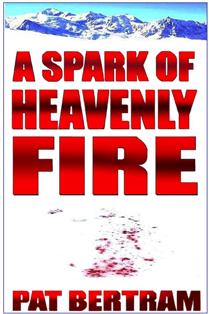
Pat Bertram is the author of the suspense novels Light BringerMore Deaths Than OneA Spark of Heavenly Fire,andDaughter Am IBertram is also the author of Grief: The Great Yearning, “an exquisite book, wrenching to read, and at the same time full of profound truths.” Connect with Pat on Google+. Like Pat on Facebook.

Bah Humbug

I went to see a movie at a theater today, the first time in maybe thirty years. (Yeah, came as a shock to me too when I realized that.) And it might be another thirty years before I go to a movie theater again — for sure the friend I went with will not invite me a second time. I didn’t have the proper attitude, I guess.

We saw a kid’s Christmas movie that was cute enough, but it seemed like just another stale story with an emphasis on the importance of believing in Santa Claus. Maybe the problem for me is that I never did get the whole Santa Claus thing, don’t understand why it is so vital to believe that particular myth especially since Santa has nothing to do with what used to be a religious celebration.

Although I never thought of Santa as real, I didn’t feel any less magic during the season because of the lack. In fact, I do not know of a single classmate who did believe the Santa Claus myth. There really was no way to believe since our parents insisted on our writing thank you notes to everyone who gave us a present. And for me, since I have always had a need to understand and an overweening sense of fairness, it made sense that the rich kids got a lot of presents and the not so rich only a few. But if Santa really did bring the gifts — well, he played favorites and so wasn’t worth believing in.

Mostly, for us, Santa was a store decoration, a cartoonish symbol of the season. What occupied our childish imaginations were the lights, the tree, the stockings, the crèche, the department store windows, the bustle to buy what gifts we could, making a Christmas list for our parents, the wonderful smell of holiday treats baking, the speculation of what the gifts under the tree might be, and even sometimes, the majestic church service.

And yet almost every kid’s Christmas movie emphasizes the need to believe in Santa Claus. Often, the child character is starting to disbelieve, but after meeting Santa or going to the North Pole or getting a visit from an elf, magically the child’s belief in the red-garbed gent is reinstated, which to me negates the whole theme of believing. If you see that something exists, it’s not “believing” — it’s “knowing.” If the child character sees such a mythical place as the North Pole peopled with elves and flying reindeer, then the belief would be fortified even if the kid didn’t see Santa, so again, a choice to belief in Santa is no stretch of the imagination.

I suppose belief is an important attribute, but what one believes should be more significant than a once-a-year mythic character.

Yeah, I know — I don’t have the proper attitude. It was just a kid’s movie, after all, and not at all worth mulling over. And yet, here I am, bah humbugging.

***

Pat Bertram is the author of the suspense novels Light Bringer, More Deaths Than One, A Spark of Heavenly Fire, and Daughter Am I. Bertram is also the author of Grief: The Great Yearning, “an exquisite book, wrenching to read, and at the same time full of profound truths.” Connect with Pat on Google+. Like Pat on Facebook.

The Continued Deforestation of America

I’ve been sorting through files that belonged to Jeff, my life mate/soul mate, files that I couldn’t sort through right after he died. It felt voyeuristic then, and it feels voyeuristic now because the pictures, notes, cartoons a person saves tells a lot about that person, more maybe than they would want anyone to know. Still, I didn’t want to throw out that particular file without going through it just in case there was something I might need. (Though how I could need something I’d never seen before, I couldn’t tell you.)

I’m glad I did. I came across the photos posted below, photos that took my breath away. I remember reading stories in grade school history and reading classes about settlers, and the stories always seemed to begin or end with the hardy souls cutting down trees and clearing the land. This legend was so ingrained, it wasn’t until my twenties I realized the truth. What????? They cut down trees for farmland????? Trillions and trillions of trees — for what? The American dream of owning a piece of land? The insanity of it all is . . . well, insane. Yes, I know — persecutions in Europe, religious and political freedom, etc, etc, etc, but unconscionable for all that.

Coincidentally, I recently wrote a piece about how wilderness areas are being called irrelevant now, but I guess the truth is, wilderness areas have always been irrelevant to this country. Once people had cut down all the eastern trees, they set out to tame the west. And here we are today — tamed into submission. Is it any wonder I am committed to finding the wildness within?

Jeff and I planted hundreds of trees. I have a hunch most of them have been cut down by now, but still, we did our part to reforest America. And that is something to be proud about.

Forests in 1620

forests 1850

forests 1999

***

Pat Bertram is the author of the suspense novels Light Bringer, More Deaths Than One, A Spark of Heavenly Fire, and Daughter Am I. Bertram is also the author of Grief: The Great Yearning, “an exquisite book, wrenching to read, and at the same time full of profound truths.” Connect with Pat on Google+. Like Pat on Facebook.

Wake Up and Die Right

At an exercise class today, we talked a bit about the murder mystery I’m going to write about the class (assuming I get myself in gear), and then we did warm up exercises while the teacher sorted through her music to find the recording she wanted to play. When she couldn’t find the right DVD, she muttered, “Wake up and die right,” which stopped me in my tracks.

“What did you say?” I asked, not sure I heard correctly. She repeated the phrase, and I laughed. I’d never heard the saying before, and coming as it did right after a discussion about our fictional murder, it seemed even more amusing. And a bit gruesome.

Wake up and die right. Oh, my.

Odd words, phrases, and sayings often stay with me, rattling around in my brain until I can make sense of them. (In fact, just yesterday I railed against the appalling sentiment, “He deserved to die.”) The more I thought about “wake up and die right,” the more it made sense. We die right if at the end, we have no regrets. We die right if we’ve lived life to the fullest and used ourselves up, if we’ve danced and laughed, if we’ve enjoyed the company of those who enrich us, if we feel the sunsets and smell the rain-washed air. (If you live in the desert, of course, that rain-washed air comes so infrequently you better smell it when you can because it might be many months before you get another chance.)

Wake up and die right. Oh, yes.

Apparently, the saying came from World War II. Soldiers who let their attention wander were told to “Wake up and die right” — to pay attention, to fight, to get a grip, to die like a soldier if necessary. The adage migrated to the general population and seems to have been prevalent during the late forties and early fifties, but its use faded as memory of the war years became supplanted by other invasions with other jargons — the Beatles, the Viet Nam “police action,” the drug wars.

Today, more than sixty years after the maxim had been laid to rest, it came to life once again. I suppose in a way, it’s reminding me to just sit down and write the book about the class because, of course, I would regret not having written the story. I just need to wake up and do it so my designated victim can die right.

***

Pat Bertram is the author of the suspense novels Light Bringer, More Deaths Than One, A Spark of Heavenly Fire, and Daughter Am I. Bertram is also the author of Grief: The Great Yearning, “an exquisite book, wrenching to read, and at the same time full of profound truths.” Connect with Pat on Google+. Like Pat on Facebook.

The One / Three / Five / Seven / Ten / Fifty Exercises You Should Never Do

A couple of weeks ago, I came across an article entitled, “The One Exercise You Should Never Do.” The never-do was one of those machine exercises that strengthens and bulks up your quadriceps without also strengthening the hamstrings. I didn’t pay attention to the exercise since I never do it and never would do it, so I have only a vague idea of what the exercise is (seated knee extensions, I think). The reason for not doing the exercise interested me, however: not only does the machine put an unnatural strain on the knees, if you build-up the quadriceps without also building up the hamstrings, the powerful muscles in front of the thighs pull at the knees in an unnatural manner.

I wanted to read that article again because I referenced the unnatural weight issue in my Planning Sponteneity post, but I couldn’t find the citation. Instead, I found a whole slew of articles telling me what exercises to do and what not to do — The One Exercise You Should Never Do. The Three Exercises You Should Never Do. The Five Exercises You Should Never Do. The Five Exercises You Should Always Do. The Seven Exercises You Should Never Do. The Ten Exercises You Should Never Do. The Fifty Exercises You Should Never Do. Yikes. What a morass!

One article said to never do Smith Machine Squats, whatever those are. It also listed five must do weight-training exercises: lunges, pull-ups, planks, squats, and burpees. For you uninitiated, “burpees” does not refer to a seed company, but is an exercise you probably know as “squat thrusts.” Despite the endorsemennapt in this article for burpees, other articles say that burpees are the one exercise you should never do.

Some say never do squats, or rather deep squats. Some say never do crunches, some say crunches are a great exercise. Some say never jog, others say to jog. Some say never jump on concrete. (No one, of course, disagrees. Jumping on concrete is a great way of destroying your knees.) Some say seated exercise is the best way of protecting your back, knees, etc. Others say we sit enough and don’t need to do any more sitting. Some say don’t use light dumbbells. Some say never use a Smith machine, others suggest various exercises such as Smith Machine Squats. Some say never do overhead triceps extensions with dumbbells, others recommend doing them. Some say never do clean and jerk, others recommend doing them. Some say don’t ever do bridges, others say do them. Some say don’t do the dead lift because it’s too hard on your back, others say to do it. Others say to eschew working out at a moderate pace for long periods of time.

It seems to me that the exercises to never do are those you don’t like doing. If you don’t like doing them, there’s probably a reason, perhaps they hurt or are they are beyond your ability or strength. And the exercises to do are the ones you will do.

So, where do I fit in all these must-dos/never-dos? Of the first five must-do exercises, the only one I do is the plank: a pose similar to the beginning of a push-up, only you balance on your toes and forearms (or knees and forearms, which is all I can do) for a certain number of counts. It’s also simple and safe, though I can’t attest to its effectiveness. I just do it. As for squats — I can barely do a grande plié, which is sort of a squat without weights. And the only thing close to a lunge I do is a yoga warrior pose, again without weights. And I don’t even want to talk about burpees. I hated doing them in gym class when I was a kid, so even if I could do them (which I can’t) I wouldn’t. I could probably do a pull up if I lost three fourths of my body weight, but maybe not since I’d be too emaciated to do anything, not even pull myself up out of bed.

As for the rest, I use light dumbbells — eleven pounds each for a total of 22 pounds (but only because I’m too lazy to set up my barbells, which would be heavier. Jeff always did that and now somehow I just can’t find the will to do it for myself). Using light weights with many repetitions builds strength, where heavy weights with few repetitions build bulk, or at least that’s what I’ve read. I generally walk at a moderate pace because that way I can walk longer with no pain. And yes, moderate walking burns fat without eating muscle. (Ever wonder why there are no bulky long distance runners?)

All this talk of exercise has worn me out. I think I’ll go take a nap.

***

Pat Bertram is the author of the suspense novels Light Bringer, More Deaths Than One, A Spark of Heavenly Fire, and Daughter Am I. Bertram is also the author of Grief: The Great Yearning, “an exquisite book, wrenching to read, and at the same time full of profound truths.” Connect with Pat on Google+. Like Pat on Facebook.

All is Well, Safely Rest

The story of “Taps” might seem a bit of a stretch for Mother’s Day, but my mother has been gone for six and a half years now, so death is on my mind today.

Apparently, there are all sorts of myths circulating about this touching bugle call. One such story claims that in the middle of a battle near Harrison’s Landing in Virginia, a Union officer found a dying soldier and dragged him back to camp. When he lit a lamp, he saw that the man was a confederate soldier, and that he was dead. He turnedtaps the man over and drew in an agonized breath. The soldier was his son. The boy was supposed to be studying music, not fighting for any army, let alone the confederate army.

The heartbroken father wanted to give his son a full military funeral. His request was granted, but since the son was an enemy soldier, he was only allowed a single musical instrument. The father chose a bugle, and he asked the bugler to play the few notes he’d found in his son’s pocket.

The truth is a bit more prosaic. Taps is a revision of an older bugle call, “Scott’s Tattoo,” first published in 1835. In 1862, Gen. Daniel Butterfield worked with his bugler, Private Oliver Willcox Norton, to rearrange the tattoo, lengthening some notes, shortening others. When the new call met with Butterfield’s satisfaction, the General ordered “Taps” to be sounded at night in place of the traditional French tune “Light’s Out” they’d been using. When buglers from neighboring brigades heard the call, they visited Norton and asked for copies of the music. Within months, both Northern and Southern forces were sounding “Taps” at the end of the day.

There are no official words to the music, but these are the ones most of us know:

Day is done, gone the sun,
From the hills, from the lake,
From the sky.
All is well, safely rest,
God is nigh.

All is well, Mother. Safely rest.

***

Pat Bertram is the author of the suspense novels Light Bringer, More Deaths Than One, A Spark of Heavenly Fire, and Daughter Am I. Bertram is also the author of Grief: The Great Yearning, “an exquisite book, wrenching to read, and at the same time full of profound truths.” Connect with Pat on Google+. Like Pat on Facebook.

Secret Stairs (Part III)

[Continuation of Secret Stairs (Part I) and Secret Stairs (Part II)]

The third and final leg of the journey to search for secret stairs in Hollywood took us to the Temple Hill neighborhood. There weren’t a lot of steps to climb (only 108 compared to the more that 300 in Whitley Heights), but there were many steep hills that could have used a few stairs to make the hike easier.

This is an area was once the home of various spiritual centers, including Madame Blavatsky’s Theosophists and the Vedanta Temple:

On Vine Way, we found this graceful and winding set of 47 easy steps:

snd these private steps:

We continued to Holly Mont Drive where we saw Hollymont Castle, once Barbara Stanwyck’s estate and now owned by pianist Derek Grey. We met a man who claimed to be Derek Grey’s twin brother, and he could have been, for all I know. He confirmed that the castle was haunted.

Across from the castle was a set of 61 steps that divided into two narrow stairways.

I was disappointed when the search for secret stairs ended for the day. I’ve never known that stairs could be so romantic. I’ve seen very few staircases in the past twenty years — there was no real need for them in the high flat areas I’ve lived, and whatever steps I encountered were banal, simply a way to get from one place to another. Now I will keep an eye out for stairways, and wonder about all who have set foot on those steps.

***

Pat Bertram is the author of the suspense novels Light Bringer, More Deaths Than One, A Spark of Heavenly Fire, and Daughter Am I. Bertram is also the author of Grief: The Great Yearning, “an exquisite book, wrenching to read, and at the same time full of profound truths.” Follow Pat on Google+. Like Pat on Facebook.

Secret Stairs (Part II)

[A continuation of Secret Stairs (Part I)]

Secret. There is something about the very word that rouses our curiosity, making us wonder what dire (or delightful) truths are being kept from us. Secret societies. Secret meetings. Secret codes. Secret stairs.

Secret stairs? I’d never even heard of such a thing until a friend invited me on a trip to search out some of the secret stairs in Los Angeles. Apparently, there are many secret stairways in steep hilly neighborhoods. In the days before cars took over the city, these stairs allowed people to get down the hill to schools, markets, and trolley cars. In fact, many of the houses in these neighborhoods had no other access to the outside world than these public staircases.

We saw once public stairways, such as these steps that now go up to someone’s back yard in Whitley Heights:

Stairs

We saw remnants of stairs:

We climbed stairs that meandered through a park,

old wooden stairs,

faux wood stairs,

painted stairs.

And we took these concrete stairs up to my favorite part of the hike,

this lovely secluded walkway.

There are so many wonders in the world, secret and otherwise, that it’s amazing we go about our ordinary lives without stopping more frequently to gasp at the awe of it all.

To be continued . . . Secret Stairs (Part III)

***

Pat Bertram is the author of the suspense novels Light Bringer, More Deaths Than One, A Spark of Heavenly Fire, and Daughter Am I. Bertram is also the author of Grief: The Great Yearning, “an exquisite book, wrenching to read, and at the same time full of profound truths.” Follow Pat on Google+. Like Pat on Facebook.

Secret Stairs (Part I)

A friend invited me to go on a trip with her for a “secret stairs” hike in Hollywood. Even though I didn’t know what the hike was about, of course I said “yes.” I have developed the habit of saying yes to anything anyone invites me to do, even if my first inclination were to hesitate or even say no, a practice that has led me to many wonderful places and activities that I would never even thought of experiencing. Even if I weren’t already primed to accept, I’d have gone — I’ve never been able to resist anything “secret.” There are a vast number of secrets in the world, including life itself, and being gifted with an insatiable curiosity, I try to ferret out those secrets, but considering that so many secrets are . . . well, secret . . . by definition, I wouldn’t know that they even exist. And there, in a few simple words, I was being offered a chance to discover a hitherto unknown secret.

Secret stairs. Even the phrase evokes feelings of adventure, wonder, mystique.

Apparently, there are many secret stairways in Los Angeles in the steep hilly neighborhoods that were built back before cars took over the city. These stairs allowed people to get down the hill to schools, markets, and trolley cars. In fact, many of the houses in these neighborhoods had no other access to the outside world than these public staircases. The stairs were largely forgotten until Charles Fleming published his book Secret Stairs: A Walking Guide to the Historic Staircases of Los Angeles.

A friend has been doing all of the walks — 42 of them — and has finished all but the last few. The walk she invited me on was a combination of #36 and #35 in Fleming’s book. (It was such a lovely day, she decided to do two of them.)

We started out with an unplanned stop by a bit of sidewalk graffiti that seemed oddly appropriate:

Sidewalk Sayings

Our first scheduled stop was the historic Highland Towers apartments, where William Faulkner is supposed to have lived when he worked on such films as The Big Sleep and To Have and Have Not:

We passed the Hollywood Heritage Museum, and walked up Milner to the first secret staircase — the Whitley Terrace steps, an L-shaped staircase with 160 steps.

Whitley Terrace steps

At about the ninetieth step, there was a landing with fabulous views of the High Tower residential area — not that I know what the area is, but it was an interesting sight:

High Tower Residential Area

I paused at the top to take a photo of the steps we had just climbed before searching out the next set of secret stairs in Hollywood. (Hint — the key to walking up huge flights of outside stairs is to stop periodically to marvel at flowers or take photos of . . . anything. That way you can catch your breath without having to admit that you have reached your limit.)

Whitley Terrace Stairs

To be continued . . . (But of course, you already knew I’d be continuing this saga since the title says “Part I” and you can’t have a “Part I” without a “Part II”.)

Secret Stairs (Part II)

Secret Stairs (Part III)

***

Pat Bertram is the author of the suspense novels Light Bringer, More Deaths Than One, A Spark of Heavenly Fire, and Daughter Am I. Bertram is also the author of Grief: The Great Yearning, “an exquisite book, wrenching to read, and at the same time full of profound truths.” Follow Pat on Google+. Like Pat on Facebook.

A Dearth of Matches

Early in the twentieth century, Ivar Kreuger, a match manufacturer and financier, managed to corner the match market. Through various deals, he ended up with the exclusive rights to sell matches in many countries, including most of Europe, but this monopoly was not enough for him. Back then, it was a common practice for two or three people to light their cigarettes from the same match. Ivar realized that if he could somehow keep that third person from using the match, he could greatly increase his sales, so he had his advertising department start the rumor that it was unlucky to light thflameree cigarettes from the same match. Tales were told of dreadful things happening to the third person who used a match, like the bride who had been left at the altar and the soldier who was killed after each had lit a cigarette from a match that two others had already used. Even today, the superstition that it’s unlucky to light three cigarettes from the same match persists.

Oddly, though the superstition still exists, matches don’t. I needed some matches yesterday, a couple of books or even a box of old fashioned kitchen matches, and I didn’t find a single one. One major retailer sold fireplace matches, the long kind, but they were out of stock. A convenience store/mini market didn’t have any. The clerk said they usually had some, but were out. I even went to a smoke shop. Where there’s smoke, there’s fire, right? Wrong. No matches.

I used to collect matchbooks, but when I had to leave my home of twenty years and put my stuff in storage, I got rid of the matches. I thought it was too dangerous to pack them away, but now I wish I had them, for curiosity’s sake if nothing else.

Matches were an incredible invention. I remember reading stories about frontier days, and how if the fire went out, they had to get live embers from a neighbor’s fire, protecting it through all the miles of travel. There were flints, of course, and before that, rubbing two sticks together, but eventually people realized that it’s a lot easier to start a fire with two sticks if one was a match. Other means of lighting fires are more prevalent now, which perhaps explains the scarcity of matches, but still, it seems odd that a simple little tool that was once so valuable it sparked a financial empire is so hard to find today.

***

Pat Bertram is the author of the suspense novels Light Bringer, More Deaths Than One, A Spark of Heavenly Fire, and Daughter Am I. Bertram is also the author of Grief: The Great Yearning, “an exquisite book, wrenching to read, and at the same time full of profound truths.” Connect with Pat on Google+. Like Pat on Facebook.