Remembering

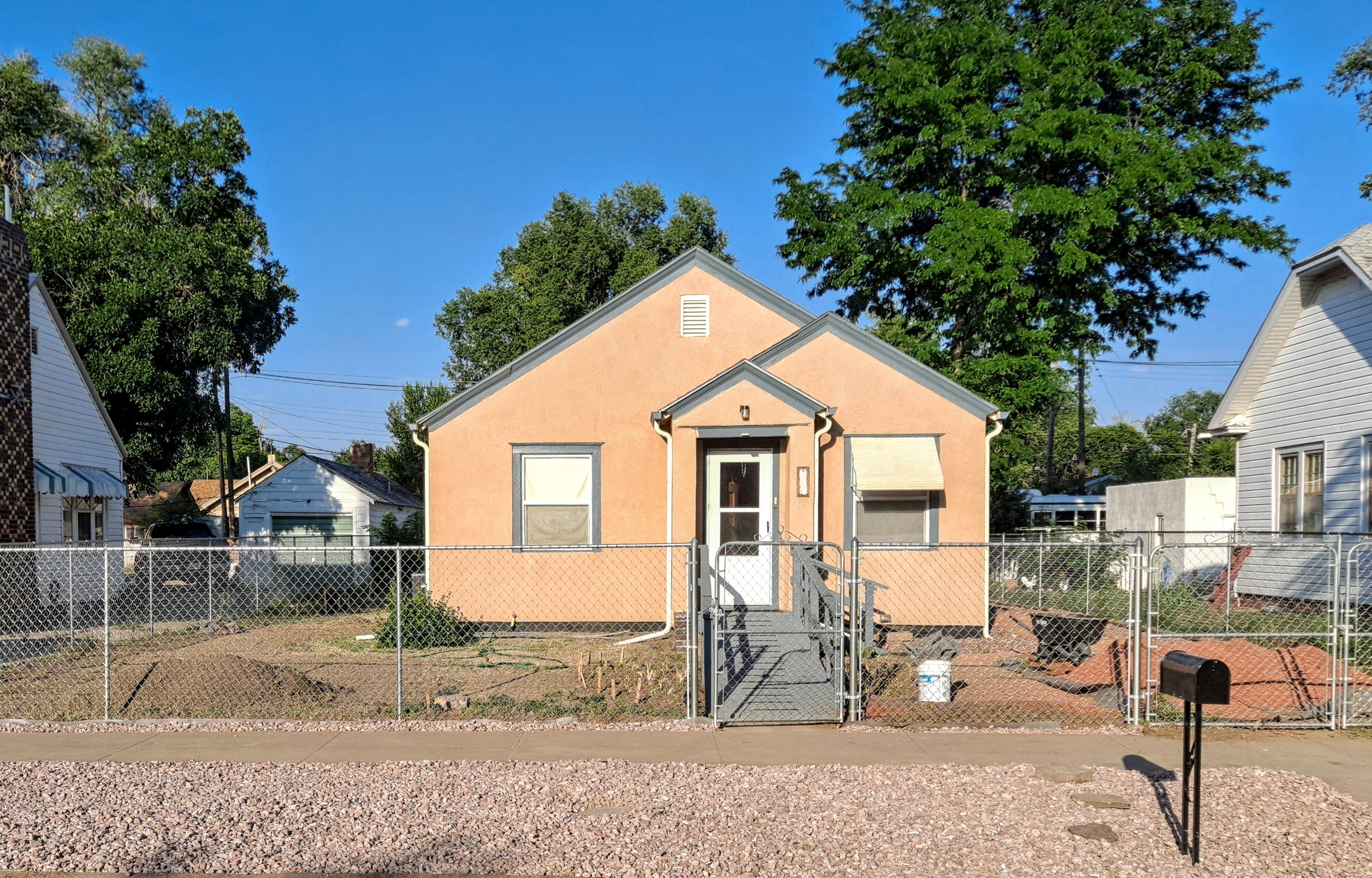
During the past couple of years, I have tried to concentrate more on what I have gained rather than all that I have lost. The tally is still vastly weighted on the loss side, but good things have happened, such as finding a house and creating a home for myself.

The past few days, however, melancholy has gotten hold of me, and I remember the losses. I don’t know whether the plethora of dark clouds and rainy days are responsible or if it’s merely one of “those” times. That this is Memorial Day is entirely coincidental. In fact, I didn’t even remember it was Memorial Day until I went to the library and found it closed. Besides, although Memorial Day has become a day to remember all our dead, its original intent was a day for remembering those who died for their country in any of its various wars.

It’s true that most of my “losses” are loved ones who have died in the past decade or so — my parents, my brothers closest to me in age, and Jeff, of course — but there are other profound losses during those same years that still shape my life, such as the destruction of my arm (though I have become used to the deformity and the remnants of pain), the lack of dance classes, the inability to hike long distances, and losing my home not once but twice (once when Jeff died and once when my dad died). The home loss is especially poignant in an area where families have remained for generations. They might not have lived their whole lives in this very town; they might have come from a nearby town, but to someone who is new to the area, this seems inconsequential. It’s not as if they moved hundreds of miles. They are still within reach of where they grew up, within reach of family and memories.

But this isn’t about them. It’s about me feeling the losses and me feeling lost. Although I didn’t list it with my losses above, I think one of the greatest losses is of myself. Grief changes a person. Being semi-nomadic changes a person. Being isolated changes a person. Owning a home changes a person. I am getting used to who I have become and am still becoming, but it’s not the me I remember being all those years with Jeff. Somehow, our being together allowed me to be a truer version of me than I’d ever been before. I tend to think I am again living a true version of myself, but it’s a different version, one that sometimes strikes me as being . . . not me.

It might be that I spend too much time alone. Although I am comfortable living alone, I must admit I still miss having someone to do nothing with. Sometimes I have someone to something with, but those days of doing nothing in particular with someone are long gone. There are so many little nothings in a day — miniscule victories or insignificant happenings that aren’t worth talking about, but that we want to mention anyway. And there are times when we’re sad or lonely or restless, and just want a moment’s connection — perhaps nothing more than a shared look — before continuing our daily tasks. I can call people or text them, but it’s not the same thing. By the time I make the connection, the moment of nothing has become something.

I don’t mean to sound as if I feel sorry for myself. I don’t really, at least, not much. I just think it’s important to occasionally stop and remember what once was and is no longer.

***

Pat Bertram is the author of Grief: The Inside Story – A Guide to Surviving the Loss of a Loved One. “Grief: The Inside Story is perfect and that is not hyperbole! It is exactly what folk who are grieving need to read.” –Leesa Healy, RN, GDAS GDAT, Emotional/Mental Health Therapist & Educator

The Sounds of Unsilence

I’ve never understood windchimes. As mobile art, they are rather intriguing, but when you add in the wind part, they are aggravating as all heck. But that must just be me. Obviously, other people find them pleasing otherwise there wouldn’t be so ubiquitous.

Still, there aren’t many people whose sound of choice is silence. There are a lot of noises I can’t tolerate, such as outdoor machinery, but at least there seem to be a purpose to those noises, and once the job is done, the noises cease. (And now that I have the semblance of a yard, I too am making noise with a yard machine.) With windchimes, though, the noise is arbitrary, based on whatever the wind is doing, and in a windy climate? Ouch. Those things are almost constant.

Luckily, the windchime currently aggravating me doesn’t disturb my sleep. In other places I’ve lived, the windchimes were so constant, they invaded my dreams, so I could never get away from them until I finally was able to move. Even more luckily,, come summer, the air conditioner will be on at least part of the time. The air conditioner has always been a rather hard choice for me to make — silence and sweat, or noise and coolness — but this year, having it on will help drown out the windchimes.

I wish it was just a matter of getting used to the chimes, but it’s not a so much that I prefer silence, but that windchimes, even the so-called tuned ones, grate on my nerves like fingernails on a blackboard. (Do young people today even know what that sound is, or have whiteboards replaced the old-fashioned blackboards?)

From what I remember of last summer, the early morning hours are fairly still, with the winds picking up later in the afternoon. Or perhaps I’m remembering the desert where I was living before I moved here. In that area, I know, the winds picked up as the day went on. Either way, I’ll find quiet times to go outside and sit. Or not. It could be that I’ll just go out to do whatever work I need to do, then come and hide inside where it is relatively quiet.

The windchime problem has given me an idea for a book, though. The poor protagonist is at wits end because of the noise, and she talks of shooting them. People misunderstand and think she’s talking of shooting her neighbors, and then they end up dead. But I wouldn’t want to harm my neighbors even in literary fun because that would seem to bring bad Karma, especially since we’re all planning on hanging around here until the end, whatever that end might be.

***

Pat Bertram is the author of Grief: The Inside Story – A Guide to Surviving the Loss of a Loved One. “Grief: The Inside Story is perfect and that is not hyperbole! It is exactly what folk who are grieving need to read.” –Leesa Healy, RN, GDAS GDAT, Emotional/Mental Health Therapist & Educator

Showing My Life

People often express concern about my posting photos of my house and my yard. They think I am setting myself up for theft or home invasion or some such, and perhaps that’s true. However, most people who read this blog don’t know exactly where I live — in fact, most live in distant parts of the United States or in other countries — and those who do know where I live, know because they have actually been to the house. Despite that, I realize anyone can find anyone nowadays, probably with just a few keystrokes, so it behooves all of us to be careful.

In a way, posting photos works in my favor because although my rooms look inviting, it’s quite obvious there’s nothing of value in the house. The furniture is old, handed down from relatives; the kitchenware was inexpensive when I bought it decades ago; and whatever tools I have are both handed down and inexpensive. Still, when it comes to a more expensive tool (expensive compared to old rakes and shovels, but still relatively cheap), such as the lawn mower I use, I make sure not to post any photos, though truly, that’s not the sort of thing that goes missing around here. The tools people like to steal are the sort they can pocket and perhaps pawn — or maybe even pawn off on an unsuspecting buyer.

I am careful, though, at least as careful as I know how to be. If I were to go on a trip, I wouldn’t talk about it until I returned home again. It really is nuts the way people post their vacation photos while they are away, as if to tell the world, “No one’s home. Feel free to break into my house.”

I did post photos when I took my cross-country trip, but even then, I waited until I’d moved to my next stop before I posted the previous stop’s photos on the off chance (the off, off, off chance) that someone would be stalking me. At the time, I had no home, so it didn’t matter if people knew I was away, but I had enough people telling me how dangerous it was for a woman to travel alone that I took a few precautions. I’m glad nothing dire happened, and even more than that, I’m glad I took the trip. Although I thought that trip would be the first of many, it turned out to be the first of merely a few. I tend to think my traveling days are now over, especially since I spent my travel money on a garage. But truly, if I do ever take off, I won’t be announcing to the world that my house is empty.

Still, whether I heed people’s warnings or continue showing my life, I do appreciate the concern. It’s nice to know people care.

***

What if God decided S/He didn’t like how the world turned out, and turned it over to a development company from the planet Xerxes for re-creation? Would you survive? Could you survive?

A fun book for not-so-fun times.

Click here to buy Bob, The Right Hand of God.
If At First You Don’t Succeed

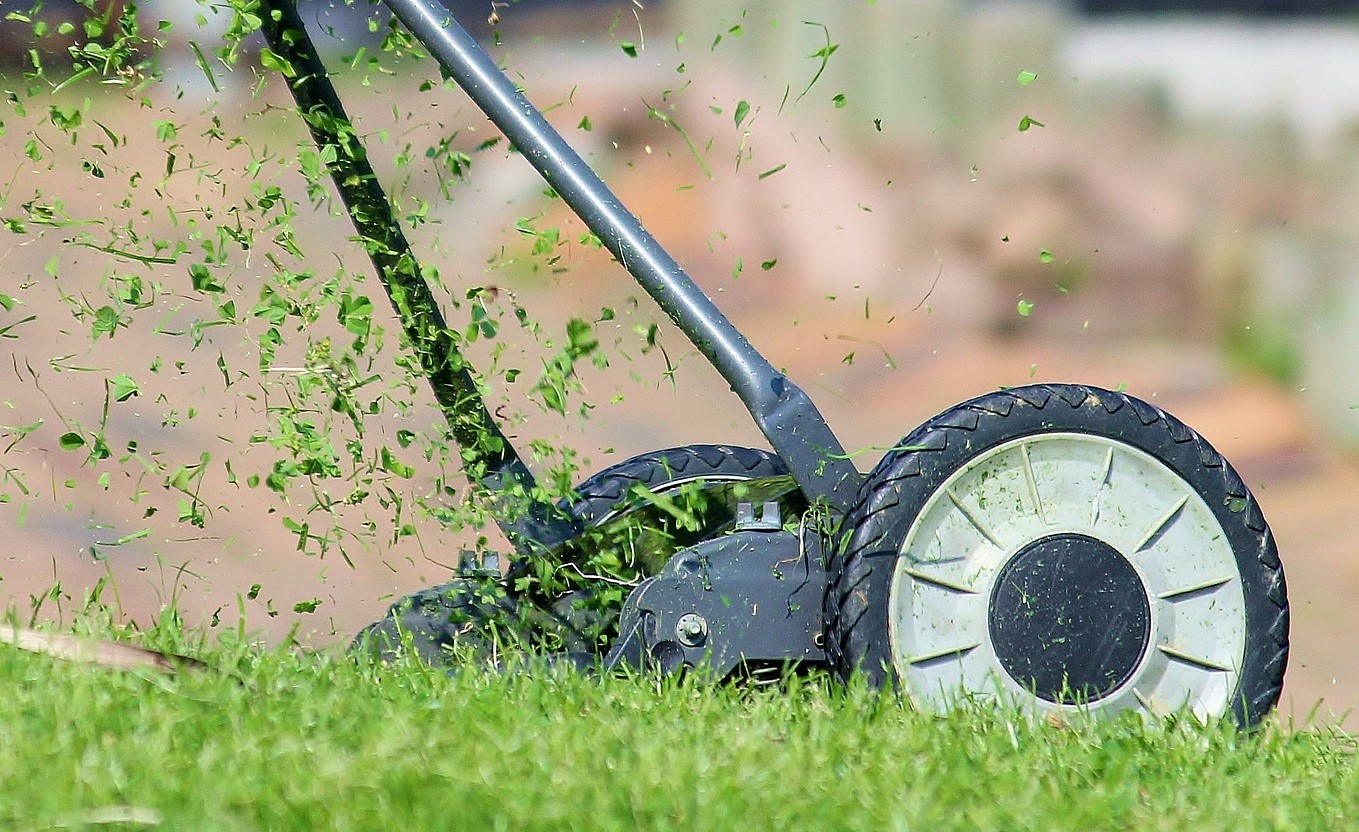
My brother left a lawnmower here the last time he visited, almost two years ago. I’m sure he planned to come back and help with the yard whenever he traveled this way, but then The Bob intervened, and he hasn’t been back.

Last year, it was so dry, I didn’t have to worry about a lawn. To be honest, I have no lawn to worry about even now, but last year I didn’t even have any weeds in the yard, so the lawnmower just sat immobile.

Well, this year, with all the rain, the weeds are growing rampant. Even a bit of grass is growing. And it all needed to be cut back. For some reason, I felt nervous about using the machine since I’d never used it and didn’t remember how. Still, I dragged out the lawnmower, found the manual my brother left with me, and proceeded to read the instructions. The machine had been put into storage mode, meaning it was locked and folded and set in an upright position to get it out of the way. It took me a while to find all the right parts, first in the manual and then on the machine, and get it back to working condition.

I thought I’d read the instructions properly, but when I tried mowing, the blades never engaged. I called my brother to see if he could figure out what I was doing wrong, but he didn’t have the time right then. So I went back and read the instructions again.

And then it clicked. Literally. I had to push this button, pull that lever, and like magic, the thing turned on and I managed to get my weeds aka “my lawn” mowed.

No wonder the thought of mowing the lawn made me nervous. I’m out of the practice of concentrating, and it takes concentration to read instruction manuals and try to decipher the graphics.

It just goes to show, if at first you don’t succeed, read the instructions, and if you still don’t succeed, read them again.

My next venture will be to see if I can figure out the string trimmer. The right-of-way between the sidewalk and the street is overgrown with woody weeds and tall tree sprouts growing out of the roots of a tree that had been chopped down, and it all needs to be cut back, but that’s a project for another day.

***

Pat Bertram is the author of Grief: The Inside Story – A Guide to Surviving the Loss of a Loved One. “Grief: The Inside Story is perfect and that is not hyperbole! It is exactly what folk who are grieving need to read.” –Leesa Healy, RN, GDAS GDAT, Emotional/Mental Health Therapist & Educator

Rainy Days and Cloudy Skies

Rainy days and Mondays . . .

And Tuesdays. And Wednesdays. And probably Thursdays and Fridays, too.

Unlike what the song intimates, all those things don’t get me down, but recently, the days been cloudy enough that if I had a tendency to get depressed from cloudy days and rain, this certainly would have been the time. Luckily, I don’t have that problem, though I do have another problem, sort of an odd one. Many plants either need full sun or some shade, and when there’s no sunshine, it’s hard to know where the plants should go.

You’d think after two years and two months living here in this house, I’d know where the sunny and shady spots in the yard are, but those spots move. What’s shady in the winter is full sun in the summer. And vice versa.

I’d planned a container garden to go in a triangular area between my house and the back ramp. I couldn’t put it there because the workers hadn’t yet finished graveling that area, which turned out to be a good thing. It’s almost always in the shade (at least from what I remember back when we had sunny days), and the plants I bought need full sun. So I put the containers on either side of my garage door, thinking they will get sun in the afternoon. The trouble is, since it’s cloudy every afternoon, I can’t tell how much sun the plants would get. I do know that area is shaded by the garage in the morning; I figure that in itself should tell me the plants won’t get full sun, so today I moved the containers to what I hope is a sunny location.

I have to laugh at how I almost outsmarted myself. I put gravel at the bottom of the containers to help with drainage and to make the pots heavy enough not to get blown over in the high winds we often get, and they were almost too heavy for me to move. If they’d been any heavier, I’d have had to ask for help. (It’s not that I have a problem asking for help, but I do have a problem with waiting around for help to arrive when I am focused on getting something done, so it’s generally easier to do things myself.)

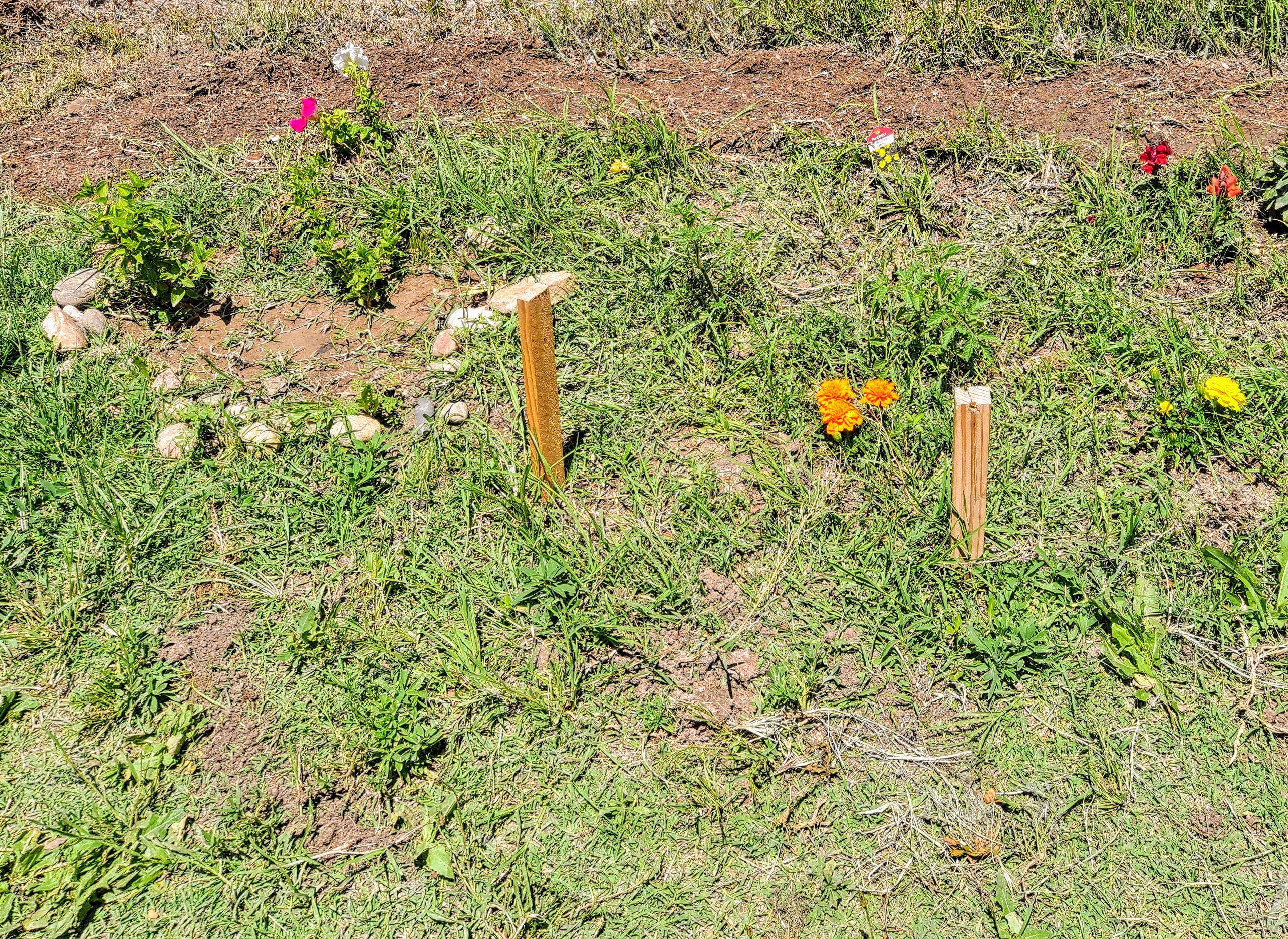
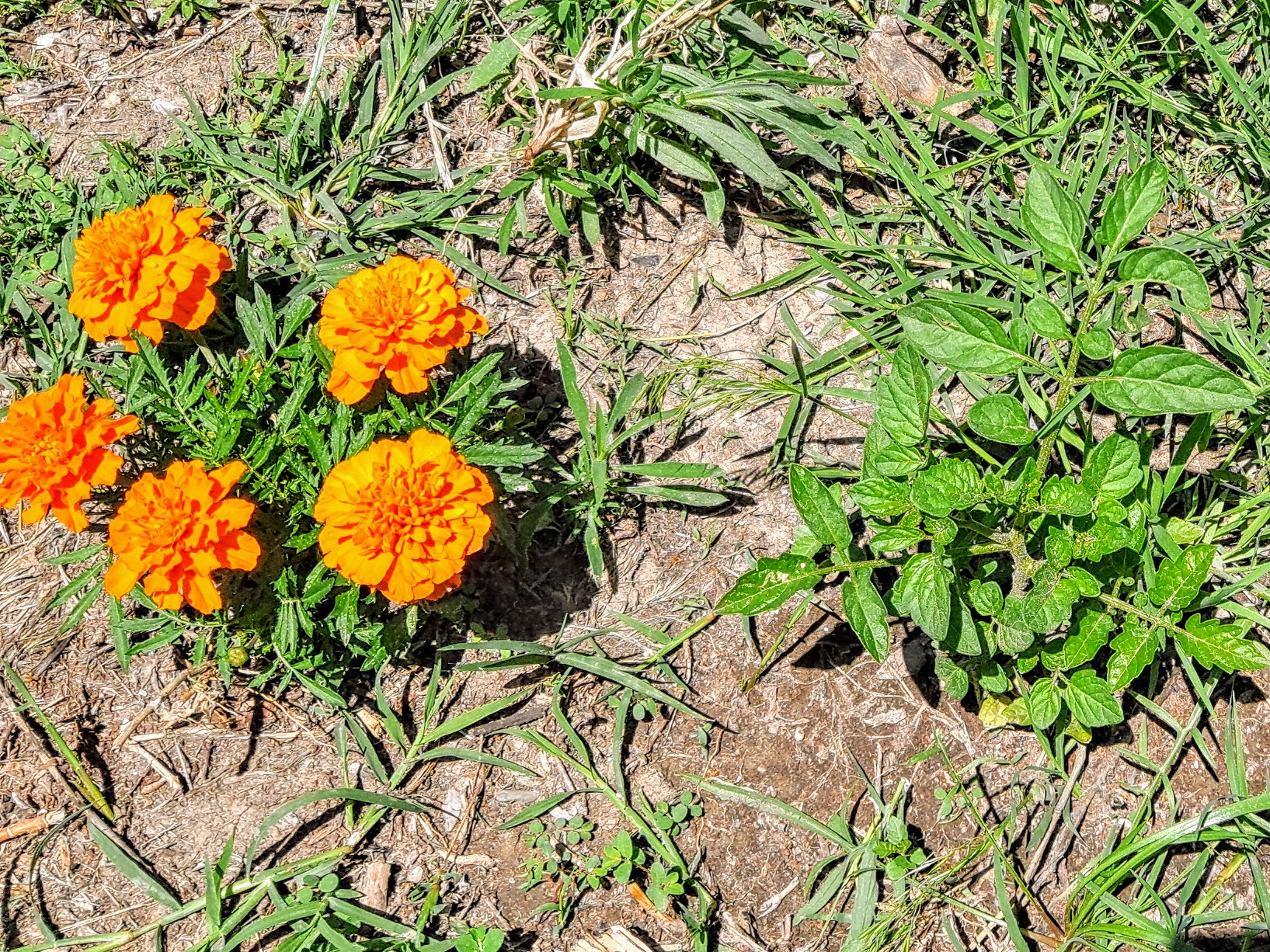
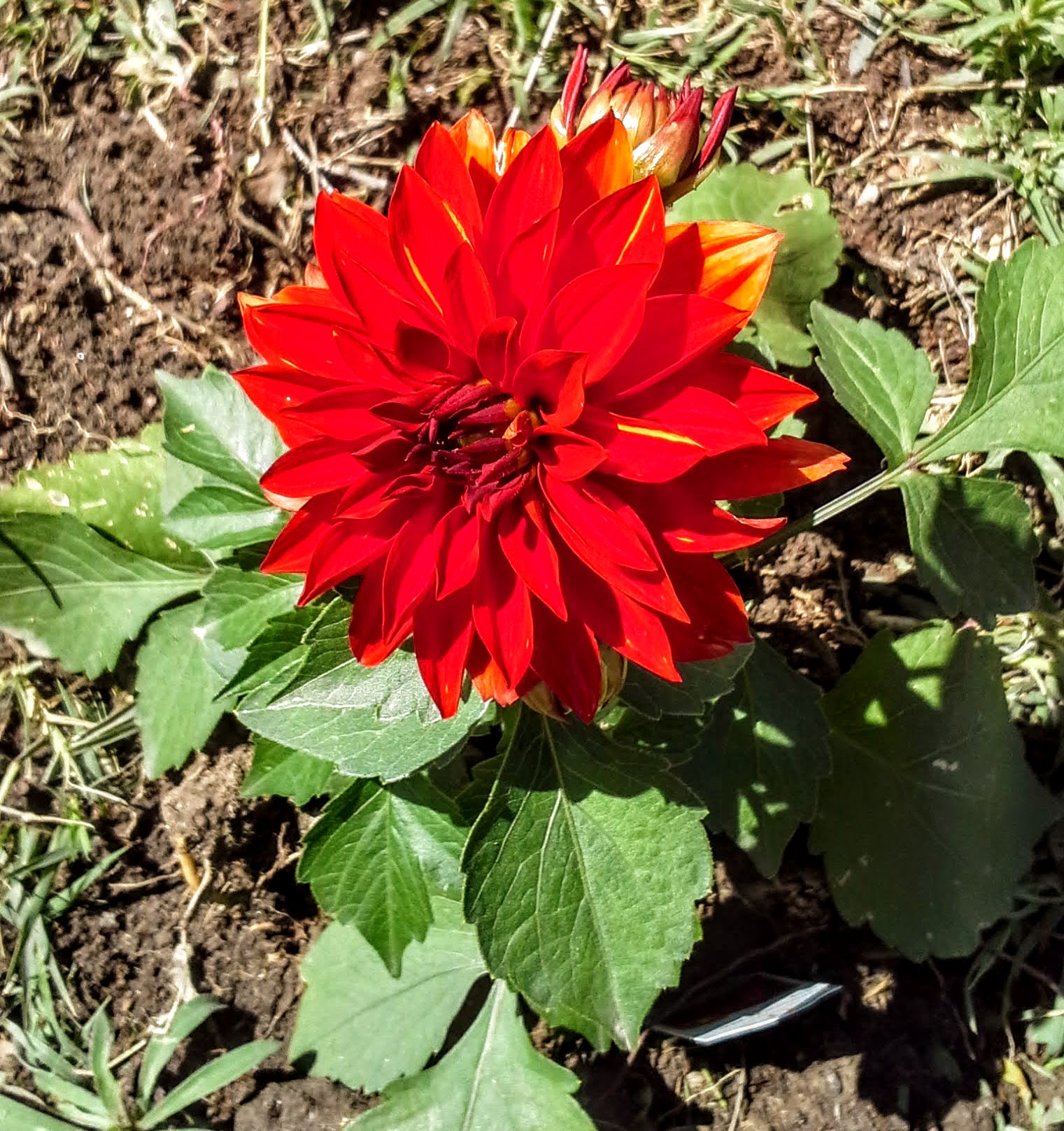
Apparently, without knowing what I was doing, I got the dahlia in the right place because it is doing well. Such a cheery color! Next time I’m by the hardware store I’ll check to see if they have any more. I do enjoy seeing spots of color in my yard.

We’re supposed to have a few rain-free days, which will be nice. The drainage in this town is terrible — I had to walk several extra blocks out of my way yesterday to be able to go the two blocks from where I live to where I work because so many of the streets, gutters, and sidewalks were awash with rainwater. Hip boots would have helped, for sure!

It’s funny that new people who come to town always try to get things changed, such as painting murals or setting out trash containers or opening even more pot shops than are already here, but no one addresses the drainage issue. I tried. I even went to some town council meetings when the new mayor was setting out his objectives. The matter was actually brought up by other people so I didn’t have to be one of those people who move to town and immediately try to change things. Although everyone at the meeting agreed there is a problem and that the standing water exacerbates the mosquito problem, nothing is being done. I suppose it’s too expensive — it would be something the town would have to pay for, while those who paint murals do it on their own dime.

But I’m getting off track here. The point is . . . hmm. I’m not sure. Rainy days and cloudy skies and lack of sunshine and gardening, I suppose.

***

Pat Bertram is the author of Grief: The Inside Story – A Guide to Surviving the Loss of a Loved One. “Grief: The Inside Story is perfect and that is not hyperbole! It is exactly what folk who are grieving need to read.” –Leesa Healy, RN, GDAS GDAT, Emotional/Mental Health Therapist & Educator

Gardening As Exercise

Gardening is often touted as good exercise, though when I was young and able to run and hike and even lift weights, I didn’t understand why it would be so.

Well, now I do understand. I spent a couple of hours this morning pulling weeds and digging a few holes for planting, and I could barely do anything the rest of the day because everything between my ankles and neck hurt. It’s possible the aches have more to do with my relative lack of exercise lately than the gardening itself, but it does show me that gardening can work a variety of muscles as well as beautifying a yard.

Most of my yard is still a mess. There are bare spots that were torn up by the various machinery used by the workers I hired. They are supposed to bring in fill dirt, but haven’t done it yet. That’s only one of the many things they haven’t done, but I have hopes that some year they will finish all they promised.

Meantime, I am planting bushes, trees, shrubs, flowers — whatever vegetation I can get my hands on.

When I bought the house, a relative who has experience designing gardens volunteered to do the landscaping. She did all sorts of research, and I was excited when she finally came, expecting her to help me work on the yard. But no. She wanted to . . . actually, looking back, I don’t know what she wanted to do. All I know is that she shrugged off the yard with a simple sentence, telling me that planting can’t be started until the hard things are in place.

I paused here to look that up online, belatedly wondering if she were leading me on, but apparently, she was right. Topping a to-do list of landscape design essentials is that you have to do all the hardscaping before you set any plants in place.

Even assuming that the hardscaping is the first step, that’s not how I’m going about things. I’ve been told I’m contrary. I’ve also been told I march to a different drummer. To me, it’s not about either of those things but doing what I can when I can.

Even before the fence went up, I started transplanting lilac seedlings from a neighbor’s yard. (With his permission, of course.) I also transplanted some of his larkspur, which have now reseeded themselves for the second spring in a row. In fact, they are filling in the “island” between my two sidewalks. The garden I had originally planted around that area became defunct when the sidewalks went in, or so I thought. Apparently, clearing out the weeds and grass and tilling the soil made the seeds from the original larkspur take hold.

The bushes that are planted along the fence were dug up and transplanted from the area off the alley where the driveway now is. They went in before the pathways — those who laid the rock worked the paths around the plants that were already there.

The same will be done for the rest of the yard. I am creating a swath of garden on the left-hand side of the sidewalks, and eventually, another path will sweep alongside that swath.

There are some parts of the yard that I am not even thinking about at the moment and won’t until a bit more of the hardscaping is done, but it doesn’t matter. I have more to do right now than I can easily accomplish in the next couple of years.

It’s odd — the property doesn’t look all that big, but each small section I am working on seems to loom large. There is no way any one person could landscape this place in a matter of weeks or even months, and I certainly don’t expect that from myself or the people doing the hardscaping. (I like that word, have you noticed? I’d never heard it before, and it’s a fun one.)

This is a project for a lifetime.

I remember reading a story once about a woman who planted a hillside of daffodils — acres of them. People came from miles around to see her hill of daffodils. There was only a single sign in the field, and that said “One at a time.” Apparently, everyone wanted to know how she’d planted so many daffodils, and she must have gotten tired of the question. Hence, the sign.

That’s my gardening philosophy — one at a time. Over the months and years, some things will die, others will take hold, so I’ll have a changing landscape. Meantime, I am learning to accept what grows here and what doesn’t (and how little control I have over either). Except for weeds — that I don’t always accept. Unfortunately, although I like to think everything has the right to grow, I have to draw a line somewhere, and I don’t appreciate anything — or anyone — encroaching on territory that is not theirs. So I pull up whatever encroaching weeds I can. (No poisons. I haven’t crossed that line yet.)

Yesterday a neighbor mentioned that in five years, after everything grows up, I will have a beautiful yard. That’s something worth working toward.

Besides, all that exercise will be good for me.

***

Pat Bertram is the author of Grief: The Inside Story – A Guide to Surviving the Loss of a Loved One. “Grief: The Inside Story is perfect and that is not hyperbole! It is exactly what folk who are grieving need to read.” –Leesa Healy, RN, GDAS GDAT, Emotional/Mental Health Therapist & Educator

The Nature of Nature

I was frustrated yesterday at how slowly everything moves when it depends on nature, whether human nature or . . . nature. Trees and bushes grow slowly, humans work slowly, at least sometimes. That’s their nature. About the only things that move fast when it comes to a garden or landscaping are weeds.

Generally I don’t mind that the contractor has me at the bottom of his list of priorities. So much of his work is seasonal or comes from county contracts, so I understand those things have to come first. I also understand that workers come and go. When he has a lot of workers, he takes on extra jobs to keep them all busy, and then when his guys take off in the middle of a job, he’s left playing catch-up. I’m also mostly okay with their sporadic work because that way I can keep up with my part of the landscaping, working small areas at a time.

Besides, my yard was never supposed to be a quick project. I’ve always known it would be a life-long endeavor to find plants that will grow under my care and to wait for flowers to spread and bushes, shrubs, and trees to fill out and grow to a pleasing height.

Despite knowing all that, sometimes I find it hard to accept the human nature part of this endeavor. I suppose, of course, I could find someone else to do the work, or rather a lot of “someone else”s. These people do it all, whether home repair, concrete work, building, plumbing, landscaping, whatever. And if I have an emergency, they come immediately, which is important since I’m a first-time homeowner with not a clue how to do anything or even how to find someone to get things done. Still, I get frustrated.

But that was yesterday.

Today I’m back to being patient and waiting for things to work out in their own time, though I do reserve the right to nag when necessary.

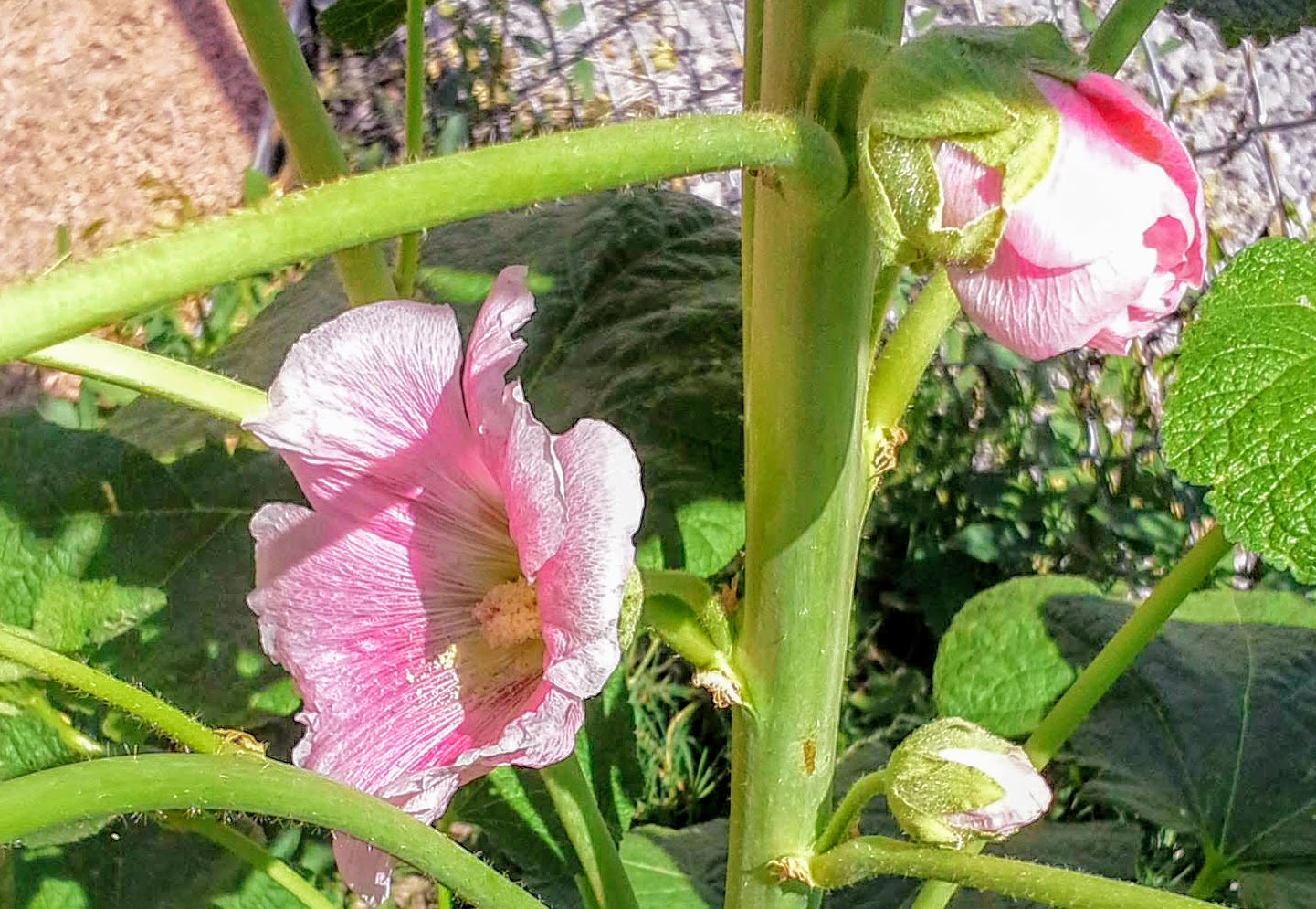
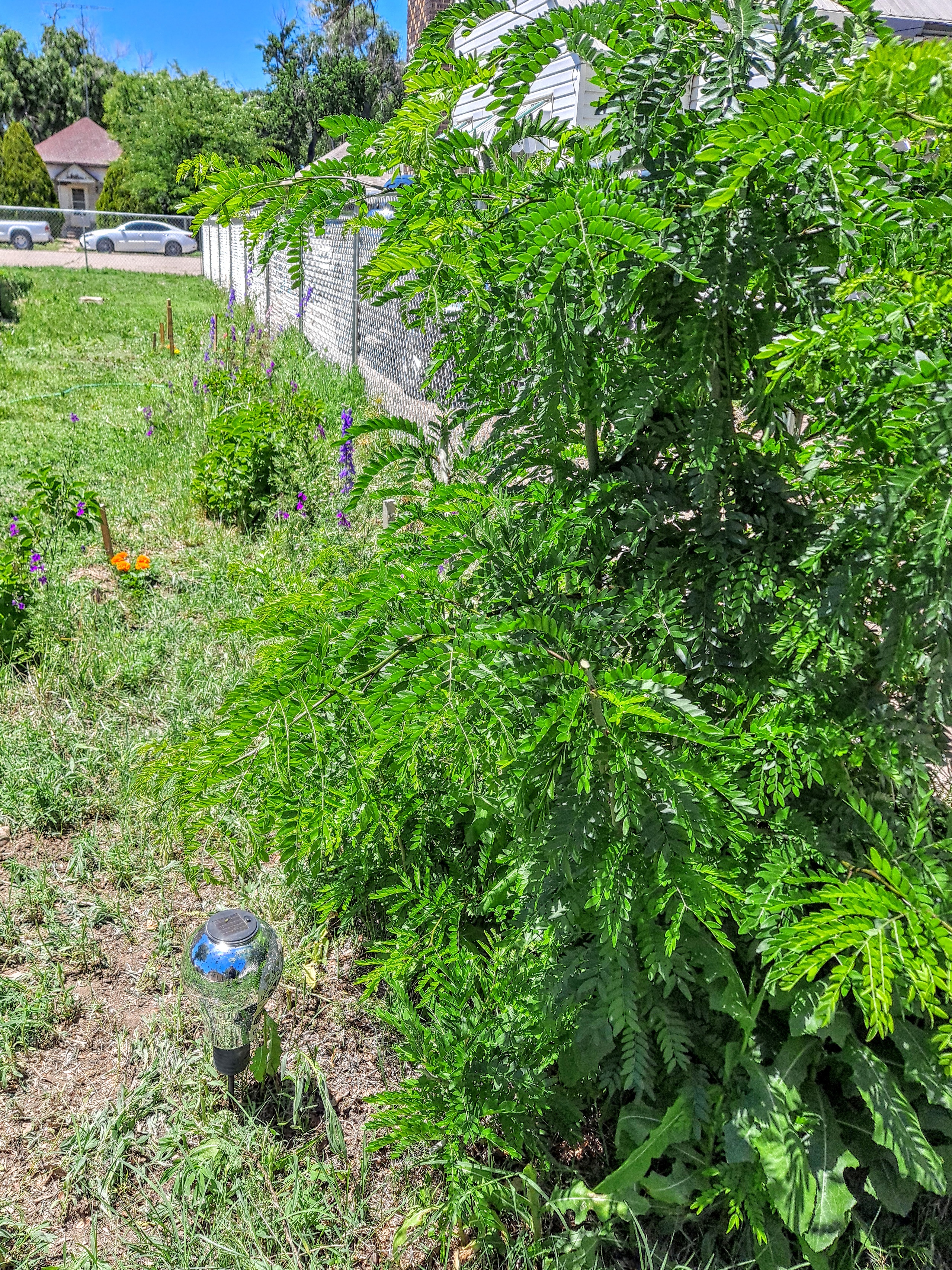
I think it also helps that the people I bought the greengage plum trees from were helpful. As it turns out, one tree is doing great. One is mostly dead except for a bit of growth just above the graft site. One is alive but barely. They gave me credit for the dead tree and told me how to deal with the still dormant tree. Mostly it reminded me of the importance of patience when it comes to the nature of nature, because the truth is, when something does finally work out, like the lilac bush pictured below, it’s worth it.

***

Pat Bertram is the author of Grief: The Inside Story – A Guide to Surviving the Loss of a Loved One. “Grief: The Inside Story is perfect and that is not hyperbole! It is exactly what folk who are grieving need to read.” –Leesa Healy, RN, GDAS GDAT, Emotional/Mental Health Therapist & Educator

My Rocky Garden

Ever since I moved to my house, whenever I came across a rock in the yard, which was frequently, I’d toss it onto a pile with the other rocks I’d gathered. I used some of them to form circles around small plants, like my hen and chicks, so that neither I nor anyone else would trample the plants. But still the pile grew. So today I decided to do something about it.

There’s a large rock in the yard that some people say is the fossil of a sea slug. I didn’t know what else to do with it, so I piled a bunch of rocks around the maybe fossil to emphasize it, because no matter what it is, it is interesting. It’s sort of hidden in the back of the garden, but there is no way I’d ever be able to move the thing. Maybe I’ll find tiny flowers to plant around the base of the structure to make it even more interesting, but for now, I’m happy with my rock formation.

I’d planned to paint a few rocks solid colors to form rock flowers, but I didn’t get around to it, so I made the flowers anyway. Now that I look at the rock flowers, I see they don’t need to be painted. They’re fine as they are. As the lilacs grow and take over the area, I might go ahead and paint the rocks to make them stand out more, but they are fine for now.

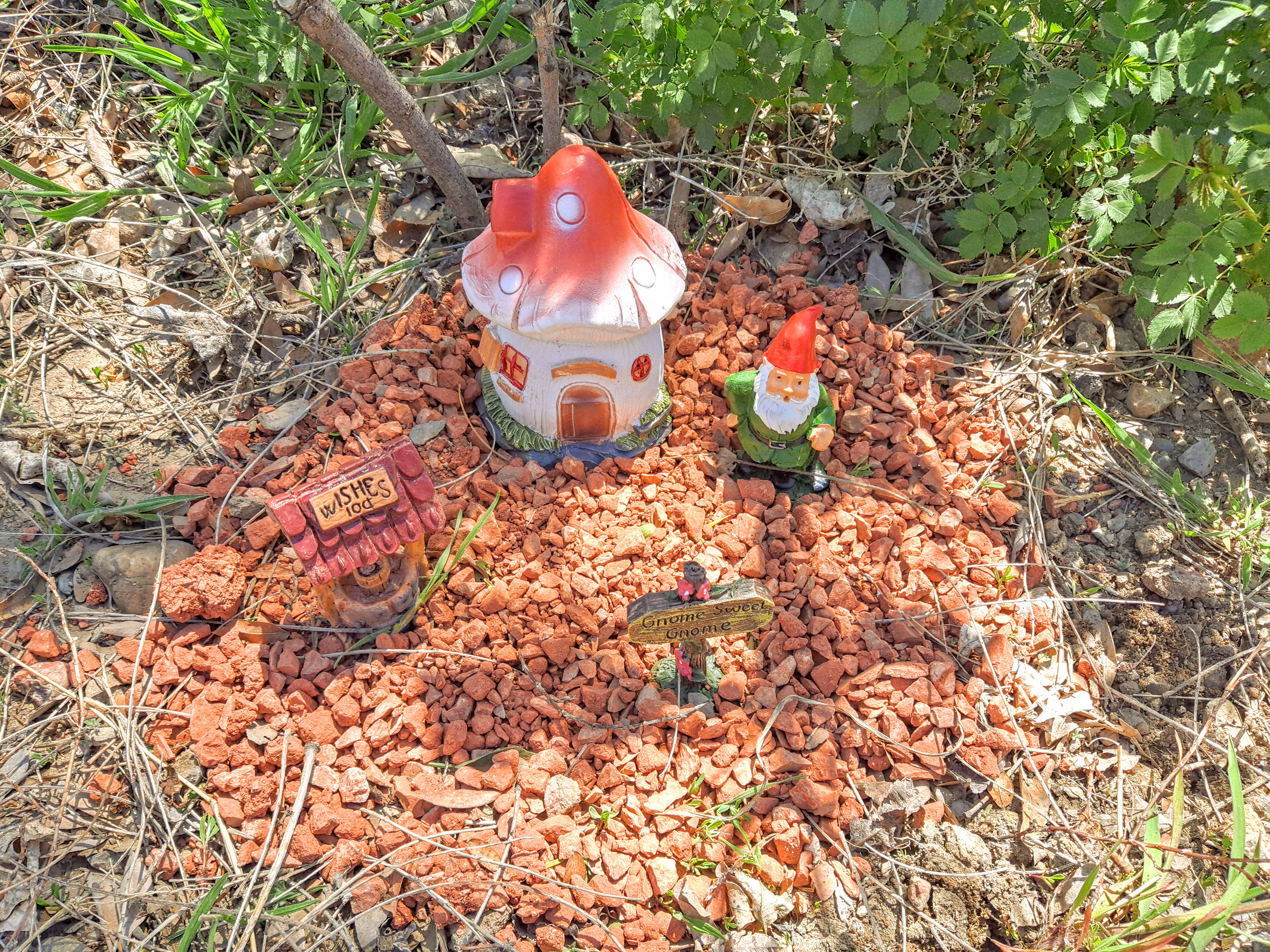
And then there is my lovely little gnome home, a gift from a neighbor. I’m hoping the figures are in a secluded enough spot that the winds will leave them alone, but I’ll keep my eye on the little guy and rescue him if necessary.

Now, of course, I’m worn out. Even though these were all relatively small rocks and pebbles — the largest about six or seven inches in diameter, the aggregate weight was more than I’ve lifted and carried for a couple of years. I’m surprised my knees held out, but they must have been as glad to see the garden take shape as the rest of me was.

Although I would have liked a real rock garden, my rocky garden will still be something to enjoy.

***

What if God decided S/He didn’t like how the world turned out, and turned it over to a development company from the planet Xerxes for re-creation? Would you survive? Could you survive?

A fun book for not-so-fun times.

Click here to buy Bob, The Right Hand of God.
Winter Redux

In the light of a warm spring day, it’s hard to remember the harshness of winter. It’s even harder to believe that winter weather will be returning in just a few days.

Winds will be bringing in a new storm, and snow is forecast. The lowest temperature on those supposed snow days will only be about 32 degrees Fahrenheit, so I wouldn’t believe snow was coming (and not just because of the bright day) except for the fact that I put away my snow shovel today. It’s been residing in my enclosed back porch for the winter to make it easy to grab when it snowed. Previously when I left it in the garage, I couldn’t get to it. Not only did snow pack in around my back door, but I needed the shovel to shovel my way to the garage to get the shovel.

But now it’s back in the garage, hanging up on my newly installed tool bar. I didn’t know if I should take a photo of the bar since it would show my oh, so valuable, discount store tools, but decided it would be okay since I doubt anyone would want them. What people steal are small power tools that are easy to sell, and the only thing powering my tools is me. And to be honest, that power source is not worth much of anything.

No one will be here working for the next few days. They have a lot of tree work that needs to be done before the winds hit, but maybe they will come on the windy days.

Meantime, I am enjoying the work that has been done.

It’s amazing to me how nice the place is shaping up to be. I never imagined owning a house, never imagined a garage for my aged car, and I certainly never imagined a landscaped yard (though there will be some wild and weedy spots) and yet it seems that I will eventually have all three — not just the house and garage, but a nice yard.

In my pre-grief years, I’d never been one to talk about the good things in my life thinking it was akin to bragging, but now I know it’s about acknowledging my blessings and being grateful for the way my post-grief life is going.

And I am definitely grateful.

Who knows, I might even be grateful for the coming winter redux.

***

Pat Bertram is the author of Grief: The Inside Story – A Guide to Surviving the Loss of a Loved One. “Grief: The Inside Story is perfect and that is not hyperbole! It is exactly what folk who are grieving need to read.” –Leesa Healy, RN, GDAS GDAT, Emotional/Mental Health Therapist & Educator

More Work Done!

A couple of workers showed up today to continue working on my yard, and they did enough that it actually looks like they are making progress.

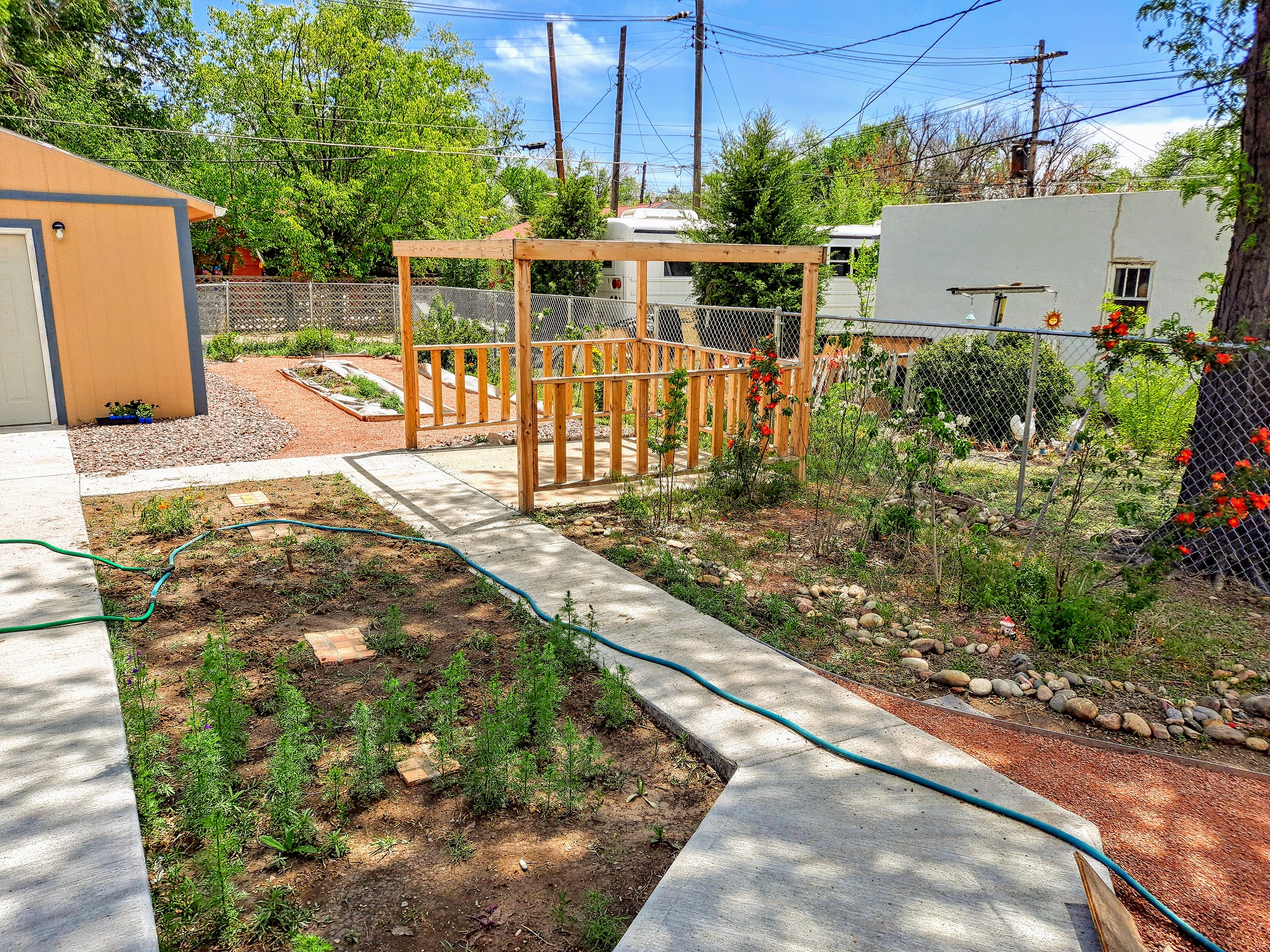
This following picture is the side of the house where a long disused driveway used to be. The crib-like structure toward the end of the pathway is a gazebo being built over a concrete slab that was in front of the old garage. There were enough materials leftover from building the new garage — including shingles — that it’s mostly paid for. I’m not sure I will ever use the gazebo, but it’s something I’ve always wanted. Besides, a concrete slab is a terrible thing to waste.

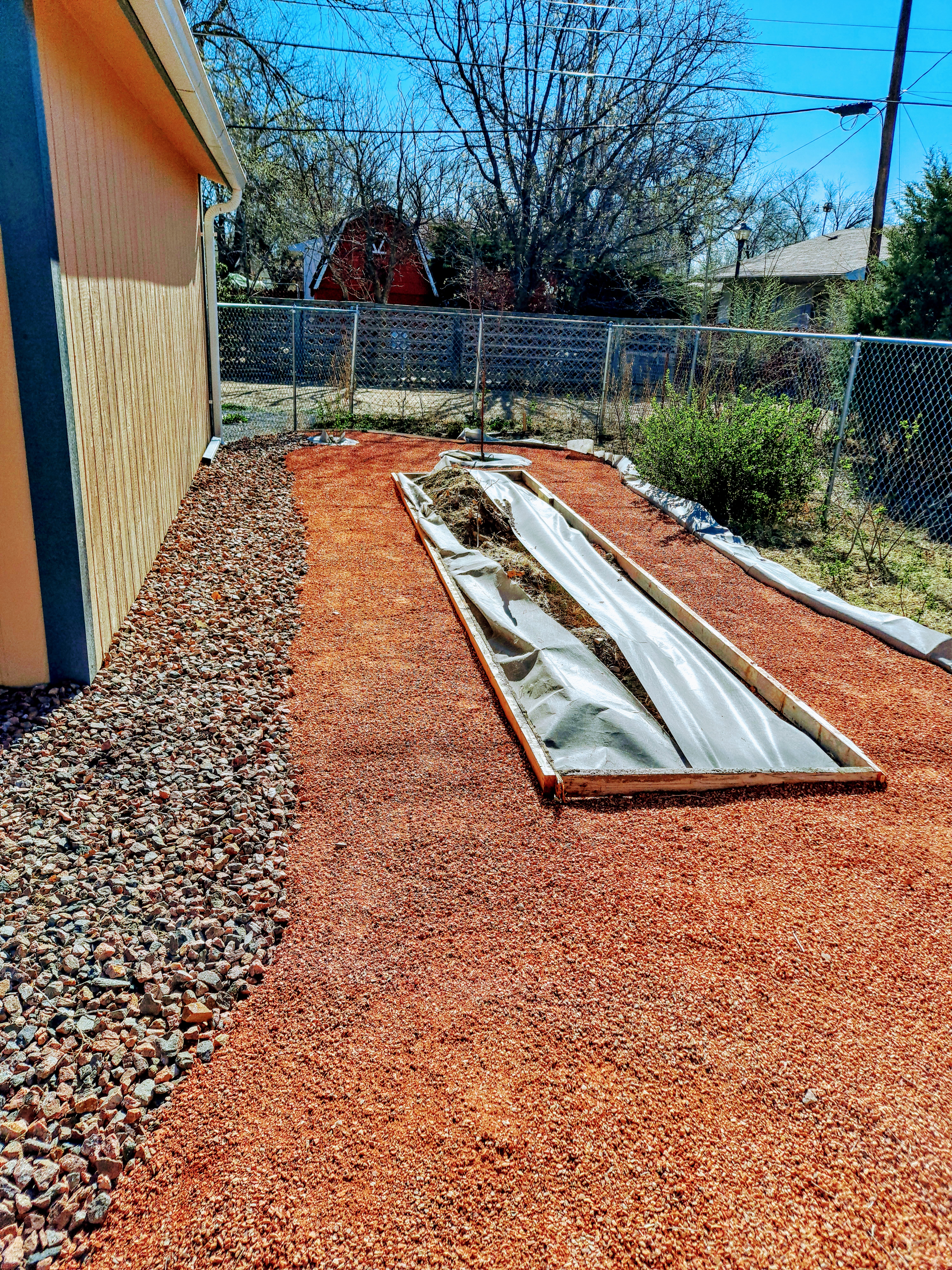
This second photo is the rear of the yard where the old garage used to be. The squared off space in the center of the red pathway will eventually be a raised garden.

I do have another garden spot (the “island” between my back sidewalks) though who knows how much I will ever be able to do with it. Getting down on my knees, even with the help of a garden kneeler is, I am afraid, a thing of the past. This May, when the risk of frost is past, I’ll probably just toss out some seeds, water the area, and see what happens.

Meantime, I am enjoying watching my “estate” take shape.

***

Pat Bertram is the author of Grief: The Inside Story – A Guide to Surviving the Loss of a Loved One. “Grief: The Inside Story is perfect and that is not hyperbole! It is exactly what folk who are grieving need to read.” –Leesa Healy, RN, GDAS GDAT, Emotional/Mental Health Therapist & Educator