Just When You Thought Facebook Couldn’t Get Any Scarier . . .

Just when you thought Facebook couldn’t get any scarier, they rolled out “graph search,” a more detailed way of searching for people, photos, and anything else posted on Facebook.

According to How to Avoid Digital Life Doom with Facebook Graph Search, an article by Tom Mason on a Trend Micro blog (Trend Micro is the virus protection I use), this new graph search is so powerful that anyone, even if they are not your FB friend or a friend of a friend, can find out enough information about you to steal your identity — name, date of birth, where you live, even if you’re at home at a particular moment. People can find out what apps you are using. They (or you) can search for people by city, age, gender, availability, and build a potential dating pool.

This doesn’t worry me because I want people to find me. Not me personally where I live, but me online. I want them to know I am an author, my books are published by Second Wind Publishing, and I have a blog. (Well, several blogs, to be honest.) I’ve been careful about what information I post online. I use a pseudonymous birthday, don’t post my address, leave my hometown ambiguous, remove tags from any photo I am tagged in, hide the pages I’ve “liked”, but other than that, my life is an open book. Or should I say an open blog? I mostly use this blog as a personal journal, posting my thoughts and feelings, the ups and downs of my life’s journey, even my hopes (or lack thereof) for the future.

I don’t really worry about “big brother” watching me. Anyone who did surveillance of any kind on me would be bored to tears after a few days. (That’s depressing, actually. Shouldn’t a woman sliding down the banister of middle age have at least some secrets she doesn’t want anyone to know? Maybe that should be a goal for my remaining decades — learn how to lead a mysterious life, full of intrigue with secrets that need to be protected at all costs.)

Be sure to check out Tom’s article if you want to know to protect yourself from “graph search” abuse.

***

Pat Bertram is the author of the suspense novels Light Bringer, More Deaths Than One, A Spark of Heavenly Fire, and Daughter Am I. Bertram is also the author of Grief: The Great Yearning, “an exquisite book, wrenching to read, and at the same time full of profound truths.” Follow Pat on Google+. Like Pat on Facebook.

Fodder For the Facebook Machine

I have a discussion group on Facebook, Suspense/Thriller Writers, that is constantly evolving because of the site’s ever-changing policies, and what was once fun, has now turned into a burden.

In the beginning, when I was new to Facebook, the groups were pretty much worthless. They were mostly discussion groups where no one discussed, but I found a way to make it work. At the time, FB had separate areas for links and promos and such. I was fine with whatever anyone wanted to post — I just wanted the discussion group. And it was a great discussion group. Each week I’d ask a different author to pose a topic, I’d email the group members, and we’d have an interesting discussion. I learned a lot from those people.

Well, Facebook couldn’t leave well enough alone. They changed the group format, and since our original groups didn’t fit in with their new format — we had too many members — they planned to get rid of all of us. Eventually enough people complained, and they let our groups remain, but they changed them completely — got rid of the discussion forum, took away the ability for Facebookgroup administrators to send messages to the group, and combined everything else into one huge mess on the wall.

Members of the group left in droves. They couldn’t stand the constant barrage of promotion. Finally, we decided to ban any sort of promotion from the wall and turn it into strictly a writing discussion group. (No publishing, formatting, or promotion questions are allowed — this is strictly a group to discuss the craft of writing.) It actually worked well. As a thank you to the members for adhering to our rules, I set up a separate event every Saturday. Well, FB decided there was something wrong with that, and took away my ability to set up events. So I set up a separate group for promotion.

All went fine for a while until FB decided to change things again. Instead of ignoring groups, they decided to promote them — and the groups with the most members got the most promotion. Sounds great, right? Wrong! Now every author on FB who has a book to promote is made aware of our group, and we’ve been inundated with new members. Members, I might add, who don’t pay attention to the group rules, which are pinned to the top of the wall for all to see. (It’s amazing to me how often someone will “like” the rules or comment about how great the no promo rule is, and then immediately post a promo. I guess people think rules apply to everyone else but them?)

I spend way too much time every day deleting promos and banning those who posted the promo link. I used to give people the benefit of the doubt, but if I didn’t ban them, they’d simply post something else. (Doesn’t anyone get the point of soocial networking? You don’t constantly beat people over the head with the links to your books. You get to know them and then let them find you.)

I realize that FB is not a public site — we are all fodder for the great FB machine, and are subject to whatever changes they deem necessary — but all these machinations are burdensome. Still, the group is worth saving. How often on the internet, and especially Facebook, do you find a group of people who help each other with the craft of writing? So I’ll just deal with the frustration and hope that eventually the gods of Facebook decide to turn their attention elsewhere.

***

Pat Bertram is the author of the suspense novels Light Bringer, More Deaths Than One, A Spark of Heavenly Fire, and Daughter Am I. Bertram is also the author of Grief: The Great Yearning, “an exquisite book, wrenching to read, and at the same time full of profound truths.” Follow Pat on Google+. Like Pat on Facebook.

Unplugged!

I did it! Yesterday, I turned off the computer. Stayed unplugged for twenty-four hours. That was the best part of the day — being unplugged. I’ve lost much of the joy I used to get from the internet — it now seems to be mostly a chore. Even the computer games I’ve been playing are more tic than entertainment. So it was great being offline.

I wish I could say that my fishing for life expedition was as successful as being unplugged, but it was hellish. I’d agreed to drive a family member halfway to Santa Barbara. I decided that since I was halfway there, I should go all the way. Spend a quiet evening at the ocean. Take a walk by myself on the beach. Have a leisurely meal alone. Just wing it. But you know what they say about the best-laid plans of mice and men (and women) . . . well, my plans couldn’t have gone more awry.

What should have been an enjoyable trip was ruined by my companion’s ceaseless vitriol toward the people he believes have wronged him. And a quick trip ended up taking eight hours because we went the scenic route. Got to Santa Barbara after dark. Drove around looking for a place he could camp or people he knew, but everything had changed in the past twenty years, so he decided to return with me. By that time, I had no thread of enjoyment (or patience) left, so I came right back instead of spending the night. Got here at 3:30 in the morning (listening to his harangues all the way).

When you fish, you never quite know what you get. Well, despite everything, I did catch some life. I saw lovely views if just through the windshield — mountains by sunlight, ocean by moonlight. I learned how easily homicidal tendencies can rise in even a generally passive person. (I mean really, fourteen ceaseless hours? I might even have gotten off scott-free.) I learned that no matter how badly you feel for someone and would like to help, sometimes there is nothing you can do.  And I discovered I’m nowhere near as nice or as kind as I think I am.

As you can see, today, I’m plugged in again, and let me tell you — the best thing about it is that it is QUIET! (I have the sound turned off so I never hear any of the typical computer noises.)

Ah. Silence.

***

Pat Bertram is the author of the suspense novels Light Bringer, More Deaths Than One, A Spark of Heavenly Fire, and Daughter Am I. Bertram is also the author of Grief: The Great Yearning, “an exquisite book, wrenching to read, and at the same time full of profound truths.” Follow Pat on Google+. Like Pat on Facebook.

Gone Fishing

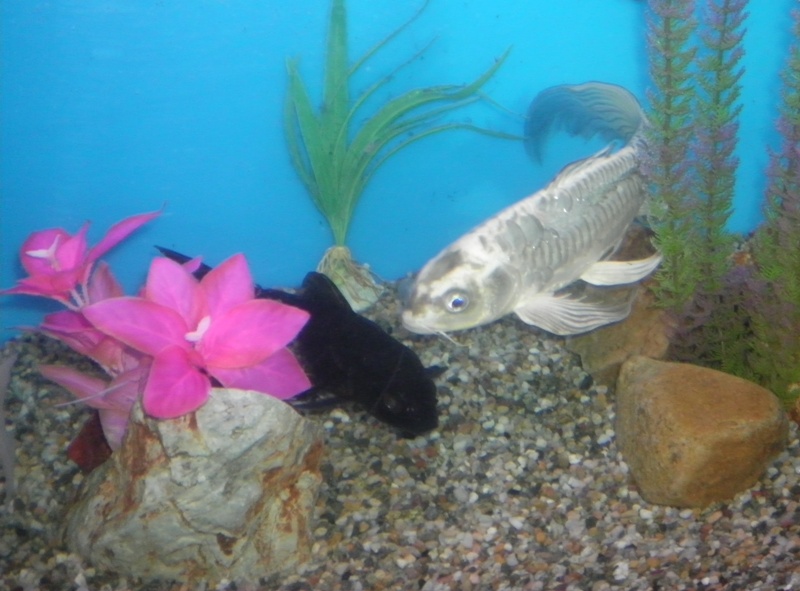
I’m going to turn off my computer for the next twenty-four hours and take myself on a fishing trip. Not to fish for fish, of course — such a hobby is only peaceful for the one fishing; the poor fish are scared, hurt, and fighting for their life — but fishing for life. See what happens when I am disconnected from my usual online pursuits. Just take off for a day. Go wherever. See what I can see. Feel what I can feel.

If you want to contact me, leave a comment and I’ll get back to you tomorrow. Or whenever.

fishes

***

Pat Bertram is the author of the suspense novels Light Bringer, More Deaths Than One, A Spark of Heavenly Fire, and Daughter Am I. Bertram is also the author of Grief: The Great Yearning, “an exquisite book, wrenching to read, and at the same time full of profound truths.” Follow Pat on Google+. Like Pat on Facebook.

Move It Or Lose It! Back Up Your Files

In a recent post on the Second Wind Publishing blog, Move it or Lose it –by Sheila Englehart, Sheila talks about the importance of backing up files. Sheila Englehart’s paranormal novel Warning Signs was recently published by Second Wind Publishing, but some of her earlier works can never be published. As Sheila says:

fire damageRight now. Be honest. Exactly where are your treasured works saved? Desk drawer? Pen holder? Coffee mug? Decorative wooden box? External hard drive on the desk next to your computer?

I know that you’ve read many articles about the importance of back-ups and where to store them, but did you take action?

A storm just ripped through my neighborhood. Trees tore through power lines, blocked roads, and demolished homes. As I watched the 80 foot trees behind my house part like blades of grass, my first thought wasn’t getting to the basement for safety. No.

Is my backup in the safe? If a tornado takes my house, where would the safe land? … Continue reading →

***

Now that you’re back after reading Sheila’s article (if you cheated and didn’t read her article, please go read it) . . .

I do back up my files, but I’m not as careful as I should be. The disks and external drive are within a couple of feet of my computer, though I do send files from time to time to myself as attachments on emails. (That reminds me, I haven’t sent the most current version of my WIP to myself in a while. I’ll go do that right now.)

I have a partial manuscipt of another book I started a few years ago, but that is still on paper. I’d better type it up one of these days. Soon.

I hope you will take heed and back up your treasured works.

***

Pat Bertram is the author of the suspense novels Light Bringer, More Deaths Than One, A Spark of Heavenly Fire, and Daughter Am I. Bertram is also the author of Grief: The Great Yearning, “an exquisite book, wrenching to read, and at the same time full of profound truths.” Follow Pat on Google+. Like Pat on Facebook.

Big Brother of the Publishing World

Lots of buzz going around about Amazon lately. They bought Goodreads, the readers social networking site. Stephen King has refused to let his latest book be turned into an ebook. Amazon is supposedly offering a refund to anyone who bought Jaime McGuire’s book now that she is going with a traditional publisher (the refund is at her expense of course). Amazon is trying to corner the new domain market for things such as dot books (.books).  Amazon has acquired a patent for a means to sell “used” ebooks. Amazon and Warner are teaming up to create a fan fiction platform so fans can make money off their derivative fiction. And on and on and on.

I don’t know what of that is true. Some, of course, maybe even all of it. But the overlying truth is that Amazon is the largest retailer on the planet, and they sbookseem to have no plans to curtail their expansion. (People hate Walmart. Why don’t they hate Amazon? I’ve never been able to figure that out. Maybe because Walmart has competition so people can afford to hate Walmart but Amazon is a force beyond reckoning? Or because Walmart has salespeople we see where Amazon’s employees are hidden behind computer screeens?)

As the world’s largest retailer, Amazon has become the controlling partner in the publishing industry, having a say in almost every facet of the business.

Major publishers fight Amazon and bow to them at the same time since their books are sold in great numbers on the site.

Small presses need Amazon, both its Create Space printing arm and its ability to reach readers.

Self-publishers love Amazon because it allows them to “publish” without ever having to do the work of actually publishing their book. (They compare themselves to Dickens and Grisham, though both those men published their books and peddled them on their own without the help of a super-giant monolithic business.)

People think of Amazon as a sales platform, similar to a blog platform, when Amazon is no such thing. They are a retailer, taking the works that others have created, and selling them (or even giving them away). Because people don’t understand the business of Amazon (the business of Amazon is Amazon) they tend to think that it is a service, and when Amazon flexes its considerable financial muscle, these people start complaining.

My publisher uses Amazon, of course. In this book climate, it’s suicidal not to. And as long as my publisher is willing to publish my books, that’s the way things will be, but if they ever turn me loose, I have no intention of republishing on Amazon. I’m not even sure I’d turn my books into ebooks. I might truly self-publish via Crate Space as I’ve heard it called — pay to have the books printed up — and then . . . well, no point in getting ahead of myself. I have a publisher for now, and maybe forever.

A friend, however, is planning on taking her ebook rights back from her publisher and self-publishing via Amazon since she is convinced she can do a better job on her own, and perhaps she might. At the moment, Amazon seems to be favoring self-published authors, and yet, what Amazon gives, Amazon can take away.

I’ll leave you with the same advice I gave her: be careful. You might be fine, but just be aware that Amazon/Kindle isn’t the sinecure it sometimes seems.

***

Pat Bertram is the author of the suspense novels Light Bringer, More Deaths Than One, A Spark of Heavenly Fire, and Daughter Am I. Bertram is also the author of Grief: The Great Yearning, “an exquisite book, wrenching to read, and at the same time full of profound truths.” Follow Pat on Google+. Like Pat on Facebook.

Paeans to Teachers, Mothers, and Ancient Civlizations

Mike Simpson, chief editor of Second Wind Publishing, posted a blog today about the heroism of the teachers of Moore Oklahoma using their bodies in an effort to protect their students from the wrath of nature, and teachers of Sandy Hook Elementary in Newtown, Connecticut, trying to shield their students from a gunman. He says, “Can you imagine such fierce love, such a totally unreserved willingness to perish for the children they taught? Servicemen and women go to combat knowing that they may be killed or desperately wounded. In the face of that, our nation recognizes their courage and lauds them with high honors—rightly so. Yet when a teacher goes into a classroom intending to impart a daily dose of education to a group of children and ends up putting herself or himself in the path of death for the sake of those kids, I ask myself: is there any individual anywhere who should be more highly honored? In moments of crisis and tragedy, our truest selves emerge. And if we ever wanted to know the “stuff” of which the teachers of Moore and Newtown are made, we found out with perfect clarity.”

“Where the Wind Comes Whistling Down the Plains, Teacher” by Mike Simpson is a blog post worth reading.

While you’re at the Second Wind blog, check out Mother’s Day 2013 by J. Conrad Guest and A Day in Turkey with the Hittites by Mickey Hoffman. Mickey’s travelogues are among the best I have seen/read, making me feel as if I were in these exotic places with her.

And, what the heck, while you’re there, you might as well also check out What is Your Character’s Favorite Color? — by Pat Bertram. It’s an older post, doesn’t really fit in with the theme of this article of paeans, but it is a perennial favorite of the Second Wind blog readers, so that’s sort of a paean.

***

Pat Bertram is the author of the suspense novels Light Bringer, More Deaths Than One, A Spark of Heavenly Fire, and Daughter Am I. Bertram is also the author of Grief: The Great Yearning, “an exquisite book, wrenching to read, and at the same time full of profound truths.” Follow Pat on Google+. Like Pat on Facebook 

Any Pinterest Users Out There?

Pinterest is supposed to be one of the hottest socialnetworking sites, but what exactly is the point? I know you use it like a bulletin board to pin photos and such that interest you, sort of lke a scrapbook, but then what?

And what if you don’t see things you like? That’s my problem — I don’t like “things.”

I get that it’s a fun site for most people, gives them something to play around with or dream about, but then what?

If you’re an author, how does that help you connect to readers? Or doesn’t it?

An author needs to be mindful of his or her “brand.” How does Pinterest help with branding?

Do you use Pinterst? What do you use it for? Do you find it fun, annoying, fascinating?

(This photo is from Second Wind Publishing’s Pins.)

Wild_Rose_-_saying

***

Pat Bertram is the author of the suspense novels Light Bringer, More Deaths Than One, A Spark of Heavenly Fire, and Daughter Am I. Bertram is also the author of Grief: The Great Yearning, “an exquisite book, wrenching to read, and at the same time full of profound truths.” Connect with Pat on Google+. Like Pat on Facebook.

Pick a Flower and See What Ebook You Won!

Second Wind is celebrating May with a giveaway. Pick a flower and win a free ebook from Second Wind Publishing! Each number represents a Second Wind novel — even numbers for romance and chick lit; odd numbers for mystery, mainstream, and adventure. So, do you feel lucky? Go the the Second Wind blog (just click on the photo) and follow the directions. You won’t get a real flower, of course, since they are only virtual, but you will get a coupon for a free ebook in the format of your choice. (You need to post the number on the Second Wind blog, or else you won’t get your free ebook.)

Best of luck to you!

Offer ends May 15, 2013.

Doxxing Is Not What a Doxy Does

It’s amazing all the redundant terms people come up with to describe the invasive activities they do on the internet. The latest is doxxing. Sheesh. Sounds like something a doxy would do, but doxxing is the barely legal practice of scouring through public documents, finding persofloozynal information about people, and posting it on the internet. Doxxing stems from the .dox ending for documents, and is a form of cyber stalking and even identity theft.

In this era of “sharing” so often things only we used to know are now available to everyone courtesy of sites like Facebook. Banks used to ask for your mother’s maiden name as an identity check, but now if you list your mother as a relative on FB, everyone knows her name. And, unfortunately, social security numbers are prevalent and easy for those in the know to find. For many years, social security numbers were used freely as sort of a national identity number, and were required for most documents, even if the paper had nothing to do with social security. A case in point — my optometrist always demanded the number even though I didn’t have insurance for eye exams and was going to pay cash. (I finally wised up and instead of fighting it, gave him a scribbled and unreadable number.)

And of course, if you have the above information, you can use it to log into credit bureaus, pretending to be the person you are stalking (Let’s call it what it is, and forget the oh-so-cute appellation of “doxxing”). And the credit bureaus yield even more information.

Luckily for us non-celebrities, chances are we will never be subject to such behavior. I mean, what prurient interest would posting my phone number arise in those who have never heard of me? (Or in those who have heard of me, for that matter.) None. Zero. Zilch.

Just in case I ever do become a celebrity (it could happen even if only in an alternate universe), I protect myself the best I can by posting only information I want people to have, such as my name, books, blog, and web addresses. And you can too. Even though some sites demand your true birth date, who’s to say if you give a phony one? And why do you have to list your mother’s real name or your pets’ names, especially if you use either of them in security questions or passwords?

Things to think about to keep from pondering on the preponderance of cyber appellations . . .

***

Pat Bertram is the author of the suspense novels Light Bringer, More Deaths Than One, A Spark of Heavenly Fire, and Daughter Am I. Bertram is also the author of Grief: The Great Yearning, “an exquisite book, wrenching to read, and at the same time full of profound truths.” Connect with Pat on Google+. Like Pat on Facebook.