When I was young, I thought it unfair that those who liked physical activity, who preferred sports and exercise and dancing to all other activity, should reap the rewards of beautiful bodies and glowing health. We bookworms might have reaped the rewards of a deeper empathy, but who cared about that? Though we had sluggish bodies with low energy reserves that were easily depleted, we were always urged into doing what didn’t come naturally, as if the athletic folk were somehow superior. And maybe they were, but they were only doing what came naturally, as did those of us who read.
 It still don’t think it fair that both groups do what comes naturally, but if we in the non-athletic group want to achieve better health or better muscle tone, we have to put ourselves through a regimen that is not only beyond our meager physical resources, but sometimes downright painful. I don’t believe the good things in life should be accompanied by pain, especially because if it’s a pain we cannot like, we will soon give up.
For a long time, I followed groups of women on Facebook who thru-hiked (or attempted to thru-hike) the Pacific Crest Trail and the Appalachian Trail, and so often it seemed that those who finished the hikes were those who loved the challenge of the trail and who enjoyed even the pain of it. (And apparently, there is a lot of pain to work through, which is why thru-hiking is as much a mental challenge as it is physical.)
This is National Novel Writing Month, where perhaps millions of “book athletes” are running their own sort of marathon, attempting to write 50,000 thousand words in a single month. Oddly, though I am a writer, such an effort is beyond my imaginational resources, and is even painful. There is no way I can dredge that many cohesive words out of the depths of my mind and there is no way I can focus on the story for so long. My untrained mind begins to wander. And so does my untrained body.
I recently read an article that claimed it is the pain we are willing to sustain, the pain we want in our life that determines our happiness. Those who love working out in the gym or running marathons or dancing until their feet bleed, will be rewarded with gorgeous bodies, good health, and grace. Those who love writing for hours on end will be rewarded with a finished book at the end of a month.
Me? I never liked pain of any kind, though I am willing to make an effort. I enjoy physical activity, such as dancing and walking, but when it gets to the point of pain, I lose interest. (Which is probably a good thing since so often pain means damage and sustained pain means irreparable damage.) I do write, but only what I like and when I like. (Even though I know the sort of books that would catapult me to the level of being able to support myself through writing, I can’t sustain the emptiness and pain that kind of writing would bring me. The people who get the rewards from writing those books are the ones who love it.) I had considered doing NaNoWriMo, but here it is, the second half of the month, and I pretty much forgot to do it. (That’s my problem. I forget. Once upon a time, I ran a mile every day, but then life took a different turn, and I simply forgot to get out in the morning and run. It took me years before I remembered, and by then it was too late.)
Luckily, with both walking and dancing, many of the rewards come from effort and dedication and concentration rather than sustained pain.
Still, I do accomplish some things while avoiding pain. I have written hundreds of thousands of words and walked thousands of miles. I’ve learned dances and even danced on stage.
My life is not pain free, of course. No matter how much I have tried to avoid pain and embrace comfort, pain came anyway. (After a certain age, aches are a given.) Oddly, because of it, I am now more wiling to do things that might be painful than I once was, but even so, pain is not something I value.
And anyway, maybe the point is not pain so much as energy, not what pain we are willing to sustain, but what sort of energy we have to spend. Some people simply do not have the energy resources for a physical life. Some simply do not have the energy resources for a mental life.
But somehow, we all muddle through, doing the best we can, doing what comes naturally, even doing a bit that doesn’t come naturally.
***
(Pat Bertram is the author of the suspense novels Light Bringer, More Deaths Than One, A Spark of Heavenly Fire, and Daughter Am I. Bertram is also the author of Grief: The Great Yearning, “an exquisite book, wrenching to read, and at the same time full of profound truths.”)
 There are people in my life. Friends. A couple of siblings who contact me occasionally. And people all around the world care for me — in fact, I will soon be meeting some of those people — but they are either living with their “anchors” or are struggling with their own particular brand of aloneness.
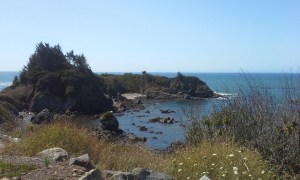 When I was in Crescent City, wandering through the Redwood Forest and meandering along the beach, I couldn’t imagine ever being unhappy again. And yet, here I am, slowly sliding into . . . Grief? Sorrow? Loneliness? Emptiness? Depression? Not really sure. I do know I am prone to Seasonal Affective Disorder, where the closing in of the darkness makes me SAD. (Which is why I always celebrate the end of the creeping darkness.) And allergies affect my mood more than they affect my sinuses. (Never have figured that out. In fact, my severe allergy reactions have sometimes been mistaken for mono or Chronic Fatigue Syndrome.) It’s also possible the balance of life is kicking in — what goes up must come down, and I was “up” when I was up north. And now I am down in the southern part of the state.
 But that wasn’t the worst of my ordeal at this woman’s house. The worst was the refrigerator. Rotten fruits and vegetables. Fuzzy green unidentified leftovers. Ancient bottles and jars that were long expired or would have been if they had expiration dates. (I think expiration dates on all packaged food came much later.) I got sick every single time I went over there and I wanted to quit, but one of my parents insisted I fulfill my obligation. The other parent, in a rare moment of sticking up for me, argued that I shouldn’t have to do something that made me ill. Odd that I can’t remember which parent wanted me to go and which took my side, but it no longer matters. It was so very long ago.
 r bedroom I will be renting comes with a lock and a key. And anyway, no internet means no distractions, so perhaps it would lead to working on my book.